
Experts Matter. Find Yours.
Connect for media, speaking, professional opportunities & more.
FAU College of Business Experts Available to Discuss May Unemployment Numbers
Professors in Florida Atlantic University’s College of Business are available to discuss U.S. unemployment figures that are scheduled to be released by the Bureau of Labor Statistics on Friday, June 5. The U.S. unemployment rate jumped to 14.7 percent in April in response to the coronavirus pandemic. It’s the highest level since the Great Depression, and analysts fear it could be years before the economy fully recovers. If you are a journalist covering this important story about employment and the economy of Florida and America – let our experts help. Rebel Cole, Ph.D., a Lynn Eminent Scholar Chaired Professor of Finance, has expertise in financial institutions, commercial banking and small business finance. He spent 10 years working in the Federal Reserve System. Cole has been interviewed by numerous national media outlets, such as The Wall Street Journal and The Palm Beach Post. William Luther, Ph.D., an assistant professor in FAU’s Economics Department, has expertise in economic growth, monetary policies, business cycles and cryptocurrencies. He has authored more than two dozen articles. Luther’s research has obtained media interest across the nation, including recent coverage by Politico and Florida Trend. Both Professor Cole and Luther are available to speak with media – simply click on either expert’s icon to arrange an interview today.


United Nations’ Sustainable Development Goals fall behind initial hopes, lacks needed funding
In 2000, United Nations member states adopted eight Millennium Development Goals (MDGs), which featured a number of ambitious global initiatives, such as eradicating extreme poverty and hunger, and achieving universal primary education in all countries around the world. As these goals were extremely aspirational, most were far from met by the target date. However, by 2015 significant progress was made in a few areas, such as increased official development assistance (foreign aid), reduced trade barriers for developing country exports, and new debt-reduction strategies for some of the heaviest indebted countries. By the target date of the MDGs, the most notable outcome was the number of people living in extreme poverty around the world had been reduced by 50% since 1990. To keep the sustainable development agenda moving forward, at the end of 2015, the United Nations member states adopted 17 new Sustainable Development Goals (SDGs) to be met by 2030. Since the adoption of the SDGs in 2015, some progress has been on two of the SDGs: eliminating preventable deaths among newborns and children under the age of 5, and getting children into primary schools. These are both important initiatives and progress should be celebrated, says Matt Bluem, assistant dean of graduate programs and MBA director of Saint Mary's University of Minnesota's School of Business and Technology. Unfortunately, progress on the other 15 goals has not kept pace. With just 10 years until the target date for meeting all 17 SDGs, it is becoming increasingly clear that most of these goals will not be met. According to the UN, the biggest challenge in meeting the SDGs is funding. An additional $2-3 trillion is needed to help meet funding requirements. A recent report by the Brookings Institution states that sub-Saharan Africa alone would need hundreds of billions of dollars in additional financial support every year in order to meet the SDGs by the target date of 2030, Bluem says. U.N. Secretary-General António Guterres has argued that public investment by governments is not enough, insisting that private industry is going to need to get involved. To meet the aggressive SDGs, the private and public sectors will need to work together to bring about the investment and policy change. In order to encourage governments and the private sector to put the resources and effort necessary into meeting the SDGs, it is imperative to let world leaders know that goals such as the SDGs are important to the international citizenry, Bluem says. Are you a journalist covering this topic and interested in an interview? That’s where we can help. Matt Bluem, Ph.D., assistant dean of graduate programs and MBA director, has taught business and marketing courses at Saint Mary’s University of Minnesota since 2008. Prior to Saint Mary’s, he worked in both the banking and the nonprofit sectors, most recently with a non-governmental organization (NGO) with operations in more than a dozen countries. Bluem is an expert in political and economic development and is available to speak with media. To arrange an interview with him, simply click below to access his contact information.


It's time to face the reality about the future of artificial intelligence
According to research from International Data Corporation, revenues for big data and business analytics solutions are forecasted to reach $260 billion in 2022. An increase in the use of artificial intelligence (AI) will result in $2.9 trillion of business value by 2030, according to a study by Gartner. “Progressive thinking businesses and organizations cannot afford to ignore the growing applications of artificial intelligence (AI) and data analytics,” says Michael Ratajczyk, the program director for B.A. and M.S. Business Intelligence and Data Analytics programs at Saint Mary’s University of Minnesota. “Sometimes machines can do it better than humans. As people say, machines don’t sleep, they don’t take vacation, they don’t get sick, and they don’t go on camping trips. They do what they’re told and a machine can do the work with far more precision — and without 20 years of training.” AI is here to stay, and it will be up to businesses and humans to adapt, adopt, and adjust to the future — especially in the areas of agriculture, transportation, and health care, where there is great potential for growth. “Businesses can’t afford to ignore AI to remain competitive, and students can’t afford to not keep up with AI trends either,” according to Ratajczyk. “Soon AI will be addressed in all business classes. It’s true that sometimes people can be replaced by machines, and that can be good for businesses and bad for employees. There will always be a need for those who can program AI software, and to prepare, analyze, interpret the data and, importantly, there needs to be a balance between technology and the human touch.” There’s a lot to learn about AI and how it will play a role in very near future. So, if you are a reporter covering this topic — then let our experts help. Michael Ratajczyk works with both undergraduate and graduate business intelligence and data analytics students at Saint Mary’s University. He’s an expert in the field and is available to help with any of your coverage or questions. To book an interview with Michael, simply click on his icon to arrange a time.

It was a train running full speed and showed no signs of stopping – but America’s economy hit a bump last week and it sent a lot of people from Wall Street and beyond into a panic. The 800-point drop in the Dow Jones seemed to be the first sign of another severe recession. But before everyone cashes out, experts from Western Governors University are hoping we take a look back through the ages before rushing to worry. “What does history teach us? Even before the Great Depression of the 1930s, Nicolai Kondratieff discovered that the capitalist economy, going back to the 18th century was characterized by waves, or business cycles,” says Dr. Rashmi Prasad, Dean and Academic Vice President of Western Governors University's College of Business. “The Federal Reserve, under leadership of Ben Bernanke, claimed that while the business cycle had not been repealed, a ‘Great Moderation’ had emerged in the world post-1982. Independent central banking and the rise of the service economy were among the reasons cited. In a great irony of history, Bernanke was front and center as Chairman of the Federal Reserve during the ‘Great Recession’ of 2008-2009. Business cycles seem to be inevitable for capitalist economies. Will we return to the Great Moderation of 1982-2007, or are we in a new period of regular Great Recessions? Central Banks stabilize and soften the down-cycles of recessions, but the price of managing the Great Recession of 2008-09 has been the dramatic expansion of central bank balance sheets–no new investment cycles–property or finance often leads to recession.” So, where do we stand and what can we expect in the short-term? Prasad adds this perspective: “Conventional economic thinking indicated inflation by now, which may have added to interest rates and constrained the amount of debt that was sustainable. Rapidly rising interest rates posed the risk of a deep and extended downturn. If interest rates can be managed and kept low, then the next down-cycle could be shallowed and prolonged as monetary policy has little scope and fiscal deficits are already very high. Risks for a major downturn exist in extremely high debt levels and central bank balance sheets, but still may be a decade or two away, awaiting triggers that we cannot yet predict.” Are you a journalist covering the economy and do you need expert perspective and opinion for your stories? That’s where Western Governor’s University can help. Dr. Rashmi Prasad is Dean and Academic Vice President of Western Governors University's College of Business. He is an expert in the fields of economic and financial data and business analytics. Dr. Prasad is available to speak with media regarding the state of America’s economy – simply click on his icon to arrange an interview.


Cord blood awareness – let our experts help with coverage
July is Cord Blood Awareness Month. In the simplest of terms, cord blood is found in the blood vessels of the placenta and the umbilical cord and collected after a baby is born and after the umbilical cord is cut. The benefits of cord blood transplantation are many, according to the Human Cord Blood Stem Cell Core Laboratory at Augusta University: Can be stored for personal use (biological insurance) or donated for others to use Important for ethnic minorities for whom bone marrow donors are difficult to locate Less risk of infectious disease contamination Less stringent HLA-matching required for use in transplantation Fewer side-effects after transplantation Cord blood transplantation can be used in the treatment of leukemia and other blood disorders, sickle cell disease, bone marrow failure diseases, immune deficiency diseases, neuroblastoma and more. “Cord blood is useful because it is a source of stem cells that form into blood cells. Cord blood can be used for transplantation in people who need regeneration, that is, ‘regrowth,’ of these blood-forming cells,” says Keith Wonnacott, Ph.D., chief of the Cellular Therapies Branch in FDA’s Office of Cellular, Tissue, and Gene Therapies. “For instance, in many cancer patients, the disease is found in the blood cells. Chemotherapy treatment of these patients kills both cancer cells and the healthy blood-forming stem cells. Transplanted stem cells from cord blood can help regrow the healthy blood cells after the chemotherapy.” – USFDA website Cord blood and stem cell research are often in the news and sometimes even the subject of serious debate. Are you a journalist looking to cover Cord Blood Awareness Month, or do you have questions for ongoing stories? That’s where our experts can help. Dr. Jatinder Bhatia is an expert on infant nutrition, neonatology, and ECMO for the Medical College of Georgia at Augusta University. Dr. Bhatia is available to speak with media regarding cord blood, its uses and the research behind it – simply click on his icon to arrange an interview.

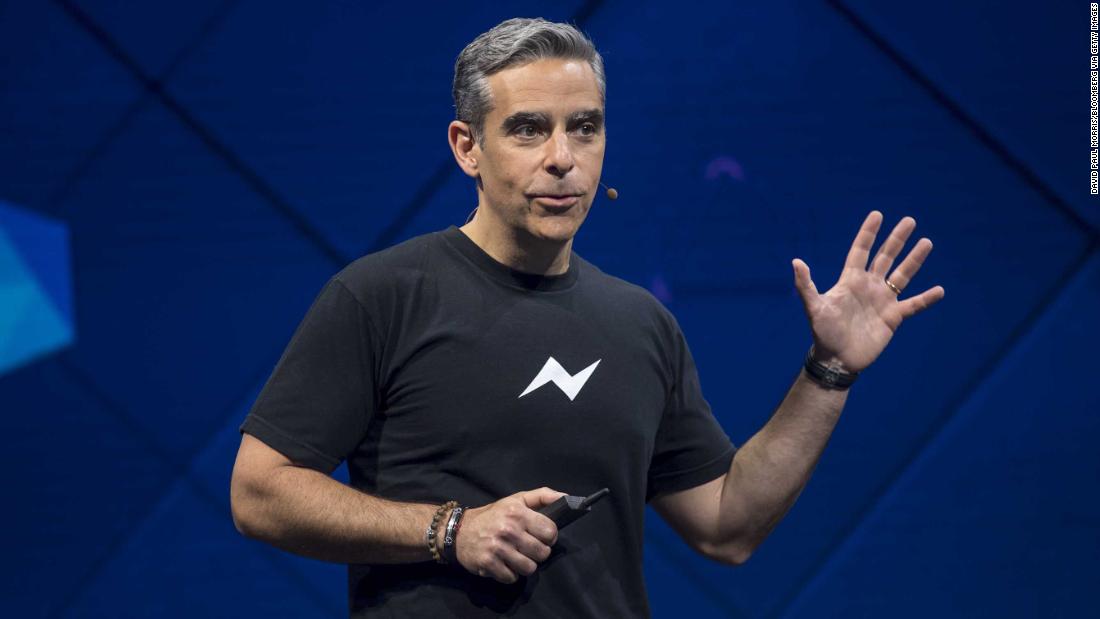
It’s not the first time Facebook has faced Congress. This time, the social media giant came to Washington to discuss its new Libra cryptocurrency. As their new venture into the Fintech industry. Libra, claims Facebook, will keep a customer’s money safe by using the blockchain process. However, the talks didn’t seem to generate a lot of ‘likes’ by members of either party on the Hill. Many lawmakers questioned Facebook (FB) executive David Marcus about why people should trust the company to manage their money and why they should trust Facebook to lead the way on a major new fintech regulation that could fundamentally change global financial systems. "Facebook's motto is move fast and break things," Sherrod Brown, the Committee's senior member, said. "They've moved fast and are helping to undermine our democracy. Now they're expecting us to trust them with our paychecks." July 16 – CNN There are concerns about the currency undermining the federal reserve, about control, regulation and responsibility. But should lawmakers be that worried? What are the potential consequences to Libra launching? What are the benefits? And why is Facebook even going down this path? There are a lot of questions to be asked – and if you are a reporter covering this topic, our experts can help. Eric Overby's research focuses on the transition from physical to electronic modes of interaction and its effect on market efficiency. Eric is available to speak to media regarding blockchain or any other technology related topics – simply click on his icon to arrange an interview.


Trained and happy - are you investing in your staff?
A new report released this June overwhelmingly shows that Canadian companies need to invest in their employees if they want to grow. The Navigator: Made for the Future Report surveyed 2,500 businesses in 14 countries and territories - 200 of them in Canada. The survey found that in Canada: Nearly half of those surveyed plan to boost spending on skills training for their staff in the next two years. 47% said their companies planned to spend more on training employees. 42% said they'd spend more on employee satisfaction and well-being. While 54% of the surveyed Canadian business leaders said their companies would make investments that fall under the category of research, innovation and technology, Dan Leslie, deputy head of commercial banking for HSBC Bank Canada, said the results show that technology is only half the story. "Tech adoption brings improvements but also creates the need for new skills," Dan said. "The priorities have shifted since some of our last surveys away from trade or capital investment and more toward investment around the well-being of their workforce." "Given labour market experts predict that many of the jobs people will hold in the future haven't even been invented yet, investing in adaptable employees is good business sense", Dan said. CBC June 26 How much should businesses be investing? What's the cost of programs and training? Is there a tax benefit or assistance small companies can access to assist with costs? Does location play a factor? There are many questions to be answered, and that's where our experts can help. Andrea Bruley, Senior Manager at Freelandt Caldwell Reilly LLP, is an expert in the areas of owner managed business, mentorship, accounting and not-for-profit accounting. You can contact Andrea regarding this topic by clicking the contact button below. Sources:

Experts in the media - Will Facebook, Google take over blockchain?
Banking and big tech are going ‘all-in’ on blockchain initiatives – and it is getting a lot of attention from investors, regulators and the industry. In an announcement this week, Facebook stated it was moving full speed ahead with its cryptocurrency ‘Libra”. With this announcement, Facebook isn’t just moving into the cryptocurrency space—it’s also setting itself up as a financial services company. Unlike many other cryptocurrencies, Libra will be specifically designed for use as a payment medium, rather than a speculative asset. Bitcoin, Ethereum, and other digital currencies are generally difficult to transfer back and forth for everyday payments, partly because the price of the tokens is based primarily on market demand. The value thus fluctuates dramatically. If it works, Libra should be much less volatile since it will be pegged to traditional financial assets, including a raft of government-issued currencies. Slate, June 18, 2019 Recently, Dr. Eric Overby, associate professor of information technology at Georgia Tech's Scheller College of Business was interviewed by Blockchain Tech News to get his perspective on what to expect now that Google and Facebook are adopting blockchain as part of their platforms. The interview is attached below. Eric Overby's research focuses on the transition from physical to electronic modes of interaction and its effect on market efficiency. Eric is available to speak to media regarding blockchain or any other technology related topics – simply click on his icon to arrange an interview.

Why it just makes ‘cents’ to know your financial ABCs early in life – let our expert explain.
Managing money, understanding interest and how to avoid debt – all these elements make up some of the very basics of financial literacy. However, despite a humming economy and record low unemployment, more and more Americans are falling deeper into debt. Just recently, CBS News reported that roughly 4 in 10 Americans can’t cover an unexpected bill of 400 dollars. Something desperately needs to be done about not just how we are handling our money – but when we are taught the how banking, money and personal finances work. It’s a topic of concern and one that is gaining traction. Showbiz moguls Will Smith and Nas invested in a financial literacy app for teens (see attached article). The issue is finally on the radar of leaders in Washington and throughout the country as well, with 19 states now requiring financial education to graduate, according to the Council for Economic Education, up from 13 in 2011. Can these efforts make a real impact and reverse the tide of financial illiteracy? How did America get to this point? Is this about our spending habits and access to credit or a lack of education? And if we don’t correct the curse – what could it mean for our economy? There are a lot of questions and that’s where our experts can help! Professor Jonathan Clarke is an award-winning teacher and researcher in the fields of investment banking, finance and analysis. Clarke created a personal finance course that is offered to all Georgia Tech students that provides the importance of budgeting, basics of credit, as well as more advanced financial topics such as investing and trading. He’s an expert in the field and is available to speak with media about economics and the importance of financial literacy – simply click on his icon to arrange an interview. He has also developed a one-week summer course for high school students – Wall Street on West Peachtree and annually assists the Boy Scouts with obtaining their finance badge.

Expert perspective on a trade war with China and how it could impact a Trump presidency
Trade negotiations between the United States and China have continued to deteriorate over the last few weeks. In efforts to pressure the Chinese to make reforms to trade-related issues such as forced technology transfer and intellectual property rights, the United States has raised tariffs on nearly all Chinese exports. While there is a consensus among experts that these trade issues harm U.S. producers and must be dealt with, there is not universal agreement that a trade war is the best way to make it happen. Who will feel the effects? It is apparent that both consumers and producers in the U.S. will feel the effects of the trade war. Producers will not be able to absorb the increased costs from the raising tariffs and will need to pass them along to consumers. Consumers will begin to see the prices increase on a host of retail goods, such as clothing and apparel, toys, and home goods. Partners replaced? In addition, as the Chinese retaliate with increased tariffs on U.S. exports, such as agricultural goods, producers from other countries with lower tariffs are stepping in to take the place of the U.S. exporters. For example, Brazilian soybean producers are more than happy to sell their product to China at a lower cost. Once lost, it may be difficult for U.S. farmers to regain these important Chinese markets. A political price to pay? It appears that the effects of the trade war may hit the Trump administrations base, in agricultural and manufacturing regions, disproportionately. However, the administration may see the trade war as beneficial to Trump’s 2020 reelection campaign, as Trump is being perceived as being tough with the Chinese and holding them accountable to unfair trade practices. That appears to resonate with his base. However, it remains to be seen how long his base will continue to support this approach as both producers and consumers continue to feel the economic pinch of the growing trade war with China. There’s a lot to know about the short and long-term impacts of a trade war with China and that’s where or experts can help. Matt has taught business and marketing courses at Saint Mary’s University of Minnesota since 2008. Prior to Saint Mary’s, he worked in both the banking and the non-profit sectors, most recently with a non-governmental organization (NGO) with operations in more than a dozen countries. Matt is an expert in political and economic development and is available to speak with media. Simply click on his icon to arrange an interview.