Experts Matter. Find Yours.
Connect for media, speaking, professional opportunities & more.

Canadian's Digital Behavioral Shifts in Relation to the The Coronavirus Pandemic
This article is part of a series of insights that reveal a Canadian perspective on the impact of the COVID-19 pandemic on consumer behavior and significant audience shifts across digital platforms. Things are moving fast. Following our last update regarding digital media consumption during the Coronavirus pandemic, this article will highlight some of the major category changes reflected as of the week March 16 - 22, 2020. Key Insights from Our Analysis Digital consumption continues to grow: the visits and minutes curve is not flattening Key content categories such as news, social media, and government are being driven by higher engagement: metrics include visits and duration More engagement with news sites: sites categorized as local, business/finance, and general news are main drivers Categories that focus on entertaining, kids, food, financial advice, and children’s education are also seeing growth: growth comes from increases in aggregate unique visitors, visits and minutes Automotive manufacturers, real estate, sports and travel entities have seen decreases: however, they are poised for major increases and a bounce back. Mobile platforms are driving growth: some differences between desktop and mobile engagement Canadian's total digital consumption continues to grow When we analyzed Canadian total digital media consumption to compare the percentage change between the week of March 16, 2020 and the first weeks of January 2020, February 2020, and March 2020, we found that overall digital engagement is not flattening. Even comparing the beginning of March against mid-March, we can see visitation, visits, and engagement continuing to grow. Looking at the total digital consumption trend over time, we can see growth in total minutes spent online while total visits have remained relatively flat. Media Consumption Growth by Category There are several content categories that we are seeing major growth in each of the time periods: These digital categories of news/information, social media, entertainment, government and games are showing continuous growth. The need for ongoing news and information updates, government information, flocking to social media to bring community together and message, and the need to be entertained with visitation and engagement on Entertainment and Games Entities. News and Information Category Insights To look at the news/information category a bit closer – it is amazing to see the category growth over the past few weeks of Canadians going to news entities to get updates. The hockey stick growth from the start of March 2020 is very evident. The news and information growth is being driven by local news, general news, and business/finance news. That being said – technology, politics, and weather are also seeing growth. Through these time periods, we are also seeing some other categories that are showing significant growth. Many of the categories are a result of many Canadians being home bound and isolated, and with families with kids having the kids at home. Platform Variance for Media Consumption One of the areas that we have been asked most about is whether we find any variances between desktop and mobile platforms. When reviewing the data, there is greater engagement with mobile platforms in the week of March 16 compared to other weeks. Amidst the global COVID-19 pandemic, we are seeing a significant increase in digital consumption amongst Canadian consumers. The data trends show Canadians are flocking online with significant growth in news entities, instant messaging, social media, government resources, entertainment, music destinations, video, and financial websites. What this means for marketers and advertisers is a significant opportunity to reach Canadians who are highly engaged and are looking for relevant and timely content. It comes down to delivering the right message, at the right time, in front of the right audience, in brand safe environments.



Racial and LGBT bias persists in ridesharing drivers despite mitigation efforts
Despite efforts by ridesharing companies to eliminate or reduce discrimination, research from the Indiana University Kelley School of Business finds that racial and LGBT bias persists among drivers. Platforms such as Uber, Lyft and Via responded to drivers' biased behavior by removing information that could indicate a rider's gender and race from initial ride requests. However, researchers still found that biases against underrepresented groups and those who indicate support for the LGBT community continued to exist after drivers accepted a ride request -- when the rider's picture would then be displayed. In other words, their efforts shifted some of the biased behavior until after the ride was confirmed, resulting in higher cancellation rates. Understanding whether bias has been removed also is important for ridesharing companies as they not only compete against each other but also with traditional transportation options. "Our results confirm that bias at the ride request stage has been removed. However, after ride acceptance, racial and LGBT biases are persistent, while we found no evidence of gender biases," said Jorge Mejia, assistant professor of operations and decision technologies. "We show that signaling support for a social cause -- in our case, the lesbian, gay, bisexual and transgender community -- can also impact service provision. Riders who show support for the LGBT community, regardless of race or gender, also experience significantly higher cancelation rates." Mejia and co-author Chris Parker, assistant professor in the information technology and analytics department at American University in Washington, believe they are the first to use support for social causes as a bias-enabling characteristic. Their article, "When Transparency Fails: Bias and Financial Incentives in Ridesharing Platforms," is published in Management Science. They performed a field experiment on a ridesharing platform in fall 2018 in Washington, D.C. They randomly manipulated rider names, using those traditionally perceived to be white or Black, as well as profile pictures to observe drivers' behavior patterns in accepting and canceling rides. To illustrate support for LGBT rights, the authors overlaid a rainbow filter on the rider's picture profile. "We found that underrepresented minorities are more than twice as likely to have a ride canceled than Caucasians; that's about 3 percent versus 8 percent," Mejia said. "There was no evidence of gender bias." Mejia and Parker also varied times of ride requests to study whether peak price periods affected bias. They found that higher prices associated with peak times alleviated some of the bias against riders from the underrepresented group, but not against those who signal support for the LGBT community. They believe that ridesharing companies should use other data-driven solutions to take note of rider characteristics when a driver cancels and penalize the driver for biased behavior. One possible way to punish drivers is to move them down the priority list when they exhibit biased cancellation behavior, so they have fewer ride requests. Alternatively, less-punitive measures may provide "badges" for drivers who exhibit especially low cancellation rates for minority riders. But, ultimately, policymakers may need to intervene, Mejia said. "Investments in reducing bias may not occur organically, as ridesharing platforms are trying to maximize the number of participants in the platform -- they want to attract both riders and drivers," he said. "As a result, it may be necessary for policymakers to mandate what information can be provided to a driver to ensure an unbiased experience, while maintaining the safety of everyone involved, or to create policies that require ridesharing platforms to monitor and remove drivers based on biased behavior. "Careful attention should be paid to these policies both before and after implementation, as unintended consequences are almost sure to follow any simple fix."


Chatbots can ease medical providers' burden, offer trusted guidance to those with COVID-19 symptoms
COVID-19 has placed tremendous pressure on health care systems, not only for critical care but also from an anxious public looking for answers. Research from the Indiana University Kelley School of Business found that chatbots -- software applications that conduct online chats via text or text-to-speech -- working for reputable organizations can ease the burden on medical providers and offer trusted guidance to those with symptoms. Researchers conducted an online experiment with 371 participants who viewed a COVID-19 screening session between a hotline agent -- chatbot or human -- and a user with mild or severe symptoms. They studied whether chatbots were seen as being persuasive, providing satisfying information that likely would be followed. Their results showed a slight negative bias against chatbots' ability, perhaps due to recent press reports. When the perceived ability is the same, however, participants reported that they viewed chatbots more positively than human agents, which is good news for health care organizations struggling to meet user demand for screening services. "The primary factor driving user response to screening hotlines -- human or chatbot -- is perceptions of the agent's ability," said Alan Dennis, the John T. Chambers Chair of Internet Systems at Kelley and corresponding author of the paper, "User reactions to COVID-19 screening chatbots from reputable providers." "When ability is the same, users view chatbots no differently or more positively than human agents." Other authors on the paper, forthcoming in the Journal of the American Medical Informatics Association, are Antino Kim, assistant professor of operations and decision technologies at Kelley; and Sezgin Ayabakan, assistant professor of management information systems, and doctoral candidate Mohammad Rahimi, both at Temple University's Fox School of Business. Even before the pandemic, chatbots were identified as a technology that could speed up how people interact with researchers and find medical information online. "Chatbots are scalable, so they can meet an unexpected surge in demand when there is a shortage of qualified human agents," Dennis, Kim and their co-authors wrote, adding that chatbots "can provide round-the-clock service at a low operational cost. "This positive response may be because users feel more comfortable disclosing information to a chatbot, especially socially undesirable information, because a chatbot makes no judgment," researchers wrote. "The CDC, the World Health Organization, UNICEF and other health organizations caution that the COVID-19 outbreak has provoked social stigma and discriminatory behaviors against people of certain ethnic backgrounds, as well as those perceived to have been in contact with the virus. This is truly an unfortunate situation, and perhaps chatbots can assist those who are hesitant to seek help because of the stigma." The primary factor driving perceptions of ability was the user's trust in the provider of the screening hotline. "Proactively informing users of the chatbot's ability is important," the authors wrote. "Users need to understand that chatbots use the same up-to-date knowledge base and follow the same set of screening protocols as human agents. ... Because trust in the provider strongly influences perceptions of ability, building on the organization's reputation may also prove useful."

Cancellation of non-conference college football games may lead to a new battle in the courtroom
The Big Ten Conference's decision to cancel all non-conference football games for the upcoming season -- and the possibility that schools in other major conferences may soon follow -- raises a number of potential legal issues, says Nathaniel Grow, associate professor of business law and ethics at the Indiana University Kelley School of Business. “Depending on the terms of the schools' college football scheduling agreement, the university cancelling the game may still owe the other school some level of compensation for breaking the agreement,” Grow said. “If the cancelling university refuses to pay, then it would not be surprising if the other school would elect to file a lawsuit.” A nationally recognized expert in the field of sports law, Grow studied has studied this issue, the subject of a 2010 article in the Journal of College and University Law. "The ultimate outcome of such a lawsuit would hinge largely on the specific terms of two affected schools' contract. In general, though, two provisions of the contract would likely prove to be the most important. First, most scheduling agreements will include some sort of liquidated damages provision, a clause that specifies that one side of the agreement must pay the other party a certain amount of money should the contract be broken. Often times, these contracts will provide that the breaching party must only pay the other school in the event that the opponent is unable to replace the cancelled game on its schedule with one against a sufficiently suitable alternative opponent. "The other relevant clause in these scheduling agreements is likely to be the force majeure provision, sometimes referred to as an ‘Act of God’ clause. Under these provisions, schools may be excused from cancelling a game without penalty if circumstances arise that make playing the game unduly difficult or impossible (for instance, a hurricane or other major weather event). The applicability of such a provision will also vary depending on the specific wording employed in the contract, and whether the clause permits a team to cancel a game on the basis of either a pandemic or a change in conference policy regarding the playing of non-conference games." Grow can be reached at 812-855-8191 or grown@iu.edu.

STORY: By the Numbers - CAA looks back on key initiatives from the pandemic
It’s been almost five months since COVID-19 started to dominate headlines in Canada and many people and businesses had to adapt to quickly changing circumstances. As one of Canada’s largest membership organizations, with multiple areas of business, CAA had to navigate the changes in various industries in order to keep CAA members safe. The initial response As a travel company, our agents helped to rebook hundreds of passenger travel itineraries as flights were cancelled and borders closed. CAA’s travel insurance company, Orion Travel Insurance, worked with thousands of insureds to extend their trip cancellation and interruption insurance policies while offering additional protection for travel suppliers’ vouchers and credits. As the community spread of COVID-19 started to take hold, CAA had to make the difficult decision to implement contact-free service and ask members to seek alternative transportation from their breakdown location, all in the interest of keeping members and drivers safe. To help do our part to curb the spread of the virus, a decision was made in early March to close all of CAA’s retail stores across south-central Ontario. While the state of emergency had not yet been implemented by the province, we felt it was the right thing to do. All CAA associates across the company quickly adapted to work from home. Shortly after, a state of emergency went into effect in Ontario and CAA was established as an essential service both for roadside and insurance operations. A Responsibility to do something good Once the safety of CAA operations was taken care of, we quickly started looking at how else we can make a difference during this difficult time. First, we committed to supporting healthcare workers and first responders by offering free roadside assistance during this crisis. We then leveraged our network of trucks to deliver vital food and supplies to those in need. CAA worked with several large organizations in need, such as food banks, Meals on Wheels, Mobilizing Masks for Healthcare Workers and other community service groups, to assist with delivering vital supplies where they were needed urgently. CAA also felt that it was important to stay connected and check in on the vulnerable members of our community who are struggling most. We created Operation Outreach to proactively reach out to a group of CAA members who were over the age of 75. The initiative was overwhelmingly positive with members appreciating the call and opportunity to interact with someone. One member even offered to join our outbound-calling team and to help check in with others. As the pandemic continued, we noticed that another important way we could give back and help people in need was through our insurance coverage. We saw that Canadians everywhere were feeling the profound social, emotional and financial effects of COVID-19, and so CAA Insurance looked at every possible way to help people save money. We are the only insurance company offering a 10% rate reduction on both home and auto policies, as well as a $100 Auto Insurance Relief Benefit. Unlike other insurers, we made sure that the rate reduction would be valid for the duration of the 12-month policy term. By the numbers Everything that was accomplished throughout the pandemic was possible thanks to the hard work of dedicated Associates and the enduring support of our Members. While many Members may join CAA for roadside or to sign up for insurance, they are also contributing to the community. The COVID-19 pandemic presented an opportunity for us to support our Members and the communities in which they live. We are pleased to share the impact that was made throughout this time.

With an economy on life support – is inflation inevitable?
As countries around the globe are flooding their respective economies with enough cash to hold back the financial tsunami that could be felt by COVID-19 … will all that cash inevitably come with an unfortunate consequence like inflation? Those who work the markets and do their best to see into the future … think so. With the world economy forecast to shrink 6% this year, it may seem like a strange time to fret about inflation. And sure enough, market-based gauges suggest an uptrend in prices may not trouble investors for years. U.S. and euro zone inflation gauges indicate that annual price growth will be running at barely over 1% even a decade from now. So if inflation really is, as the IMF put it in 2013, “the dog that didn’t bark”, failing to respond to all the central bank money-printing unleashed in the wake of the 2008-9 crisis, why should investors prepare for it now, especially as demographics and technology are also conspiring to tamp down inflation across the developed world? The answer is that some think the dog really will bark this time, partly because - unlike in the post-2008 years - governments around the world have also been rolling out massive spending packages, in a bid to limit the impact of the coronavirus pandemic. “We will be pushing, pushing, pushing on the string and dropping our guard, then 3-5 years from now...that’s when the (inflation) dog will start barking,” said PineBridge Investments’ head of multi-asset Mike Kelly, who has been buying gold on that view. “Gold worries about such things long in advance. It has risen through this coronavirus with that down-the-road-risk top of mind,” he added. June 22 - Reuters It’s a daunting and stressful scenario. How much inflation could America expect and what would it mean to household incomes and spending? What industries would be further devastated by this? Is there any way to reverse inflation or is there an upside to it for some? If you are a reporter covering this topic – then let our experts help. Jeff Haymond, Ph.D. is Dean, School of Business Administration and a Professor of Economics at Cedarville and is an expert in finance and trade. Dr. Haymond is available to speak with media regarding this topic – simply click on his icon to arrange an interview.


STORY: CAA named the most trusted brand in Canada in the annual Gustavson Brand Trust Index
The Canadian Automobile Association (CAA) has been named the most trusted brand in Canada in the annual Gustavson Brand Trust Index, released today. This is the fourth consecutive year that CAA is one of the top two most trusted brands in Canada, beating out several hundred other prominent international and Canadian brands. This year, CAA tied for first place with Mountain Equipment Coop (MEC), another Canadian, membership-based, not-for-profit organization. Further, CAA finished first, for the third year in a row, in the insurance category of this year’s Index. Conducted by the Peter B. Gustavson School of Business at the University of Victoria, the sixth annual Gustavson Brand Trust Index asked more than 7,800 consumers to score 342 prominent companies and brands, across 27 industry sectors, on a range of brand value measures.

Whistle stops or Zoom chats – What will a campaign for the 2020 election look like?
The race for 2020 is on. President Donald Trump has already scheduled his first rally in the very red-leaning Oklahoma whereas Joe Biden has been conducting digital town-halls and online events in his effort to reach voters. Campaigning for president is a billion-dollar ordeal. It usually means months and months on the road; a different message being brought to a different audience and usually in a different state each night from August until November. For President Trump, it seems he’s charging, head down – despite what many critics and officials have to say. Yet Trump has continued to travel — even to states that still have restrictions — and announced this week that he’ll resume his signature campaign rallies beginning next Friday in Tulsa, Oklahoma. The state, which was among the earliest to begin loosening coronavirus restrictions, has a relatively low rate of infection but has seen cases rising. “They’ve done a great job with COVID, as you know, the state of Oklahoma,” Trump said Wednesday. Campaign officials chose the location knowing Republican Gov. Kevin Stitt would raise no objections. Stitt’s most recent reopening phase places no limits on the size of group gatherings. The campaign hopes the location will all but guarantee a large crowd, since Oklahoma is one of the most Republican states in the nation and Trump has never held a rally there as president. Still, the reality could not be completely ignored. “By clicking register below, you are acknowledging that an inherent risk of exposure to COVID-19 exists in any public place where people are present,” Trump’s campaign advised those signing up for the rally. “By attending the Rally, you and any guests voluntarily assume all risks related to exposure to COVID-19 and agree not to hold Donald J. Trump for President, Inc.” liable for illness or injury. Trump is also planning events in Arizona and Florida — states where cases are on the upswing. In Arizona, hospitals have been told to prepare for the worst as hospitalizations have surged. Trump this month decided that he would no longer hold the marquee event of the Republican National Convention —- his acceptance speech — in North Carolina after the state refused to guarantee that he could fill an arena to capacity with maskless supporters. It’s being moved to Jacksonville, Florida. June 12 – Associated Press But as the Trump campaign seems to be sticking to the old school playbook – what will the Democrats do? Can campaigning on-line be effective? Do voters really need to see a person and shake a hand to make a decision who to vote for? Is it better to be safe or sorry when there is so much at stake? If you are covering – then let our experts help with your questions and stories. Mark Caleb Smith is the Director of the Center for Political Studies at Cedarville University. Mark is available to speak with media regarding the DNC Primary, running mates and the upcoming election. Simply click on his icon to arrange an interview.

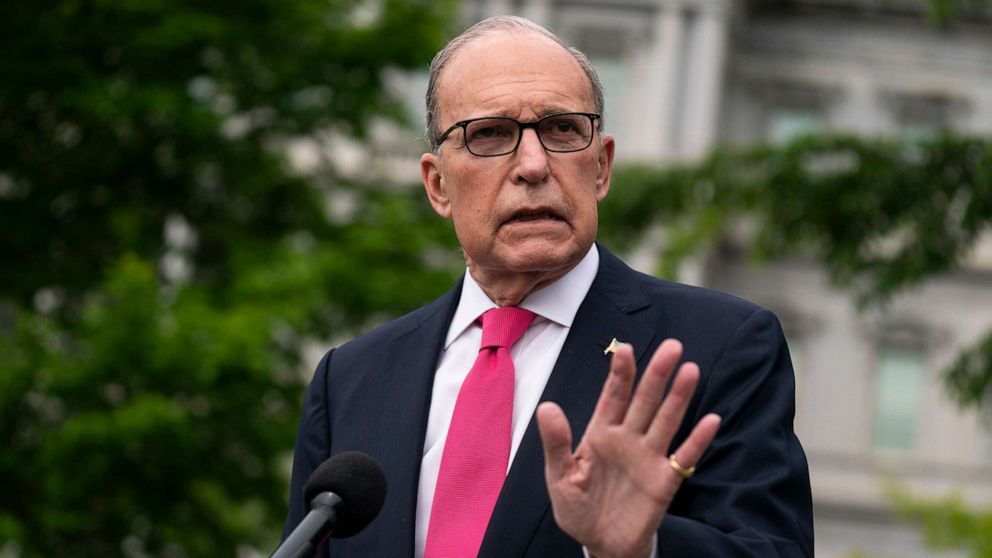
FAU College of Business Experts Available to Discuss May Unemployment Numbers
Professors in Florida Atlantic University’s College of Business are available to discuss U.S. unemployment figures that are scheduled to be released by the Bureau of Labor Statistics on Friday, June 5. The U.S. unemployment rate jumped to 14.7 percent in April in response to the coronavirus pandemic. It’s the highest level since the Great Depression, and analysts fear it could be years before the economy fully recovers. If you are a journalist covering this important story about employment and the economy of Florida and America – let our experts help. Rebel Cole, Ph.D., a Lynn Eminent Scholar Chaired Professor of Finance, has expertise in financial institutions, commercial banking and small business finance. He spent 10 years working in the Federal Reserve System. Cole has been interviewed by numerous national media outlets, such as The Wall Street Journal and The Palm Beach Post. William Luther, Ph.D., an assistant professor in FAU’s Economics Department, has expertise in economic growth, monetary policies, business cycles and cryptocurrencies. He has authored more than two dozen articles. Luther’s research has obtained media interest across the nation, including recent coverage by Politico and Florida Trend. Both Professor Cole and Luther are available to speak with media – simply click on either expert’s icon to arrange an interview today.


Governmental response to the pandemic shuttered much of the regional economy toward the end of the first quarter of 2020, stated Michael Toma, Ph.D., Fuller E. Callaway professor of economics, in Georgia Southern University’s Q1 2020 Economic Monitor. Economic growth ground to a halt as seven of the eight indicators of current economic activity in the region fell. Significant declines were recorded in airplane boardings, hotel sales and port activity. The business forecasting index fell sharply in the first quarter, as initial claims for unemployment insurance skyrocketed during the last week of March. All six leading indicators declined, and further signs of economic damage will be forthcoming in second quarter data, noted Toma. “Looking ahead, the regional economy will experience sharp contraction in the second quarter, likely extending into the third quarter of 2020,” he continued. “The speed of rebound and recovery will be influenced primarily by how people react to governmental easing of restrictions on business activity. More substantial economic recovery will be delayed until such time that business owners, employees and consumers develop a greater level of comfort interacting with each other in the public domain.” If you are a reporter looking to know more about the Georgia economy, including areas such as: Regional expansion Employment trends Tourism and Expected deterioration of local business Then let our experts help with your coverage. Michael Toma, Ph.D., is Georgia Southern University's Fuller E. Callaway professor of economics and is available to speak with media about this topic – simply click on his icon to arrange an interview.