
Experts Matter. Find Yours.
Connect for media, speaking, professional opportunities & more.

CFOs & earnings misrepresentation
The quality of a company’s earnings is determined by controllable factors, such as internal controls and corporate governance, and noncontrollable factors, such as industry and economic conditions. But CFOs also have considerable influence over the communication and presentation of those earnings. In a new research study, Ilia Dichev, Goizueta Foundation Chair, professor of accounting, and coauthors John Graham (Duke U), Campbell R. Harvey (Duke U), and Shiva Rajgopal (Columbia U) note that discretion in accounting methods allows CFOs to misrepresent earnings. CFOs are motivated to misrepresent earnings in order to increase stock price and meet earnings targets, as well as boost their own compensation and career profile. The authors conducted a survey of 375 CFOs to explore their definition of earnings quality and ways to determine earnings misrepresentation. The authors concluded that “in any given period, a remarkable 20% of companies intentionally distort earnings, even while adhering to GAAP (generally accepted accounting principles).” The study found a number of red flags for earnings misrepresentation, including “a lack of correspondence between GAAP earnings and cash flows from operations, and unexplained deviations from peer and industry norms.” Source:



Synergies between product placements and TV ads
As television watchers get inundated with commercials, the temptation to flip the channel grows. In the hopes of better connecting with consumers, advertisers are increasing their efforts to get product placements directly into TV shows. In a research study, David Schweidel, Goizueta Term Chair, Caldwell Research Fellow, and associate professor of marketing, and coauthors Natasha Zhang Foutz (U of Virginia) and Robin J. Tanner (U of Wisconsin) took a look at how the synergy between product placements and traditional commercials can keep viewers from flipping past the ad. The trio found that by simply putting a product in a television show and then immediately following it up with a commercial featuring the same product, viewers were more likely to stay tuned to the commercial. “The audience loss during the ad decreases by 5%,” they note. The effect was intensified when differing products from the same brand were shown in a program and then in a commercial immediately following the TV show. They write, “This indicates a positive synergy between the two activities that can reduce audience decline by more than 10%.” When products of different brands were featured in a television program and in a subsequent commercial, audience loss increased. Source:


For business leaders engaged in negotiations, it’s essential to constantly analyze and revisit their negotiation strategy to avoid many of the errors typically made in the process. In the Handbook of Conflict Management Research, Erika Hall, assistant professor of organization & management, and coauthors Brian Lucas (U of Chicago) and Leigh Thompson (Northwestern U) offer a window into negotiation methods and some of the mistakes negotiators make along the way. The trio discovered and defined three specific errors that occur in negotiations, including what they label as domain myopia, the self-preoccupation effect, and the script hijack effect. Domain myopia is described as the “tendency for negotiators to fail to see meaningful parallels across negotiation situations that might appear different on the surface, but have meaningful underlying similarities.” Hall and her coauthors also describe the self-preoccupation effect, where negotiators let their emotions win the day and subsequently lose perspective. The third scenario that they define is the script hijack effect, which they describe as “the tendency for negotiators to feel compelled to follow a script, often based on stereotypes.” According to the authors, the problems they document apply across a variety of industries. Source:


Supply network structure and systemic risk
Demand uncertainty can present a serious challenge for any business, especially when it comes to managerial decisions on inventory. But when an economic downturn happens, the challenge becomes systemic. According to research by Nikolay Osadchiy, assistant professor of information systems & operations management, and coauthors Vishal Gaur (Cornell U) and Sridhar Seshadri (Indian School of Business), systemic risk is more greatly felt depending on where a company sits in the supply chain. The trio discovered that while an economic downturn presented a serious hurdle for retailers, wholesalers, and manufacturers alike, manufacturers were more prone to systemic risk given their placement upstream in the supply chain. Manufacturers had “a more dispersed customer base,” which the authors noted was more closely “associated with higher systematic risk.” Manufacturers also experienced greater systemic risk due to the effect of aggregation of orders over time. They wrote, “A market shock in one period may affect sales over several periods due to lead times and time lags in managerial decision making.” Source:


Using social media to assess public sentiment
Large corporations, government agencies, and political campaigns increasingly are using social media listening platforms and software to monitor public sentiment online. According to research from David Schweidel, associate professor of marketing, and Wendy Moe (U of Maryland), the information gleaned from social media can provide useful insights for decision making, but only if the “comments are measured appropriately.” Since prior marketing research has focused on one social media venue or failed to acknowledge the differences in multiple social media venues, Schweidel and Moe discovered that these measurements of public sentiment fell short. Instead, they analyzed brand sentiment for an enterprise software company and a telecommunications business across a variety of social media platforms. Accounting for factors that varied across different social media platforms, the authors derived a measure of general brand impression (GBI). They showed that general brand impression was a leading indicator of shifts in brand tracking studies and stock price movements. Taken together, Schweidel and Moe’s “measure of GBI effectively captures movement in the underlying sentiment toward the brand.” Source:

Four Traps to Avoid When an Acquirer Comes Calling
If you are keen to sell your business and are hoping to entice buyers to offer up maximum value for your company – there are a few tips to know and traps to avoid before getting started. Once word gets out, you’ll need to be prepared and ready to impress. Recently, Ed Reilly, Managing Partner and co-founder of Freelandt Caldwell Reilly LLP published a column where he taps into his years of experience in transactions and acquisitions to offer up some sage advice to anyone who may be considering selling their business. Please see the attached article and give it a read. To contact Ed directly, simply click on his icon to arrange an appointment regarding this topic. Source:

With the shine coming back on nickel – what will it mean for Ontario’s local and wider economies.
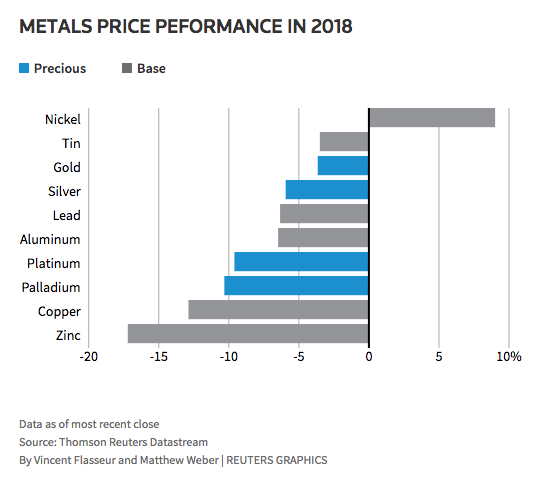
It’s boom or bust in the nickel business. From cycles, to slumps to super-cycles and even the most recent decade-long crash, it appears the time for nickel to rebound is near. The last big boom at the turn of the 21st Century saw nickel soar above 20 dollars per pound. It led to multi-billion dollar takeovers of smaller mining companies by industry giants and saw local economies flourish as bonuses skyrocketed, overtime was uncapped and investments in service, supply, innovation and industry support were elevated almost exponentially. Today, with analysts projecting the price of nickel to at least double over the next four years, what can local and provincial economies expect? After a 10-year slump can we expect the same rush to invest and spend? Will companies be more cautious and what will it mean for investors, the markets and businesses. There are a lot of questions and speculation out there about just how big of a splash there will be if nickel finally makes its comeback. And that’s where the experts from Freelandt Caldwell Reilly LLP can help. Ian Fitzpatrick is a Chartered Professional Accountant and a Chartered Business Valuator. He is an expert in advising business owners and entrepreneurs on all aspects of corporate sales, mergers, acquisitions, litigation, succession and ownership issues. To contact Ian directly, simply click on his icon to arrange an appointment regarding this topic. Source:

6 Facts We Learned Working with Migrants and Refugees Around the World Working with migrants and refugees is our business at Catholic Relief Services. CRS was founded in 1943 to assist refugees during World War II. Seventy-five years later, we are still coming to the aid of people escaping conflict, violence and natural disasters. While CRS doesn’t resettle refugees in the United States (these programs are run by the Catholic Church’s Migration and Refugee Service and Catholic Charities), our rich history has taught us valuable lessons on how to best help families fleeing crisis. 5. Adults Need Work and Income. We know from experience that people find pride and purpose in helping earn an income for their families, no matter how small. Refugees and migrants are looking for a hand-up, not a handout and being integrated with their host communities benefits everyone. Caroline Brennan is the Emergency Communications Director for Catholic Relief Services. In her role, she travels to and/or works in areas facing natural or man-made emergencies. See her contact information at the bottom. 6. The Poorest Countries House the Most Refugees and Migrants. Although media stories can give the impression that the U.S. is swamped with migrants, the reality is that 85% of the world’s refugees are in the developing world. The country with the largest refugee population is Turkey, with almost 3 million. One in 3 people in Lebanon is a refugee. The Bidi Bidi Refugee Camp in Uganda alone is home to 229,000 South Sudanese who have fled civil unrest. Richer nations like the U.S. should look at the lessons of how these countries with far fewer resources welcome and host refugees. Caroline Brennan is the Emergency Communications Director for Catholic Relief Services. In her role, she travels to and/or works in areas facing natural or man-made emergencies. See her contact information at the bottom. The experts at Catholic Relief Services are available to help with any media coverage or insight that is required regarding this ongoing news story and issue that is continuing in America. Simply click on any of their icons to arrange a time for an interview. Source:


6 Facts We Learned Working with Migrants and Refugees Around the World - Facts 3 and 4 Working with migrants and refugees is our business at Catholic Relief Services. CRS was founded in 1943 to assist refugees during World War II. Seventy-five years later, we are still coming to the aid of people escaping conflict, violence and natural disasters. While CRS doesn’t resettle refugees in the United States (these programs are run by the Catholic Church’s Migration and Refugee Service and Catholic Charities), our rich history has taught us valuable lessons on how to best help families fleeing crisis. 3. Support the Family. The family unit provides the primary support for children during the traumatic refugee experience -- whether it is witnessing violence or crossing a desert on foot. CRS focuses on keeping families together. This means housing a family together and using any services provided – from trauma counseling to income generation – to boost family cohesion. Shannon Senefeld is a global development expert at CRS. She has published and presented extensively on international children’s issues and the importance of strengthened family care for children’s development. See her contact information at the bottom. 4. Kids Need School and Play. CRS is dedicated to keeping up children’s education, to provide stability and normality and give them hope for the future so they can be productive citizens wherever they end up. Kids need to be kids, too. Whether they are in a camp or any sort of migrant or refugee holding center they need a space to play. Caroline Brennan is the Emergency Communications Director for Catholic Relief Services. In her role, she travels to and/or works in areas facing natural or man-made emergencies. See her contact information at the bottom. The experts at Catholic Relief Services are available to help with any media coverage or insight that is required regarding this ongoing news story and issue that is continuing in America. Simply click on any of their icons to arrange a time for an interview. Source:

6 Facts We Learned Working with Migrants and Refugees Around the World: Facts 1 and 2 Working with migrants and refugees is our business at Catholic Relief Services. CRS was founded in 1943 to assist refugees during World War II. Seventy-five years later, we are still coming to the aid of people escaping conflict, violence and natural disasters. While CRS doesn’t resettle refugees in the United States (these programs are run by the Catholic Church’s Migration and Refugee Service and Catholic Charities), our rich history has taught us valuable lessons on how to best help families fleeing crisis. 1. People Do Not Want to Leave Their Homes. An astonishing 1 in 110 people have been forced to flee their home (UNHCR). They only do that when they feel they have no other choice. Most people the world over give the same reason for starting their perilous journey across borders -- violence. That’s true for millions fleeing conflict in South Sudan and for tens of thousands fleeing gang violence in Central America. Most often, people flee to other parts within their country first. Only when they see no other option do people leave their country. Rick Jones is the agency's Youth and Migration Advisor in Latin America and the Caribbean. He also specializes in issues affecting Central American migration, including gang violence, poverty, and internal displacement. See his contact information at the bottom. 2. Don’t Separate Families. Based on extensive experience with refugees and migrants, CRS agrees with the criticism of the former U.S. policy of separating children from their parents. Decades of research shows that this is so traumatic for children it can lead to long-term psychological, and even physical damage. Shannon Senefeld is a global development expert at CRS. She has published and presented extensively on international children’s issues and the importance of strengthened family care for children’s development. See her contact information at the bottom. The experts at Catholic Relief Services are available to help with any media coverage or insight that is required regarding this ongoing news story and issue that is continuing in America. Simply click on any of their icons to arrange a time for an interview. Source: