
Experts Matter. Find Yours.
Connect for media, speaking, professional opportunities & more.

The impact of corporate vs. independent foundations
Debate continues as to whether corporate or independent foundations are more impactful, despite the shared interest in supporting charitable services. In research from Justin Koushyar, doctoral candidate in organization and management (2017), Wesley Longhofer, assistant professor of organization and management, and Peter Roberts, professor of organization and management, the trio determines that the answer is mixed. They used data from a matched random sample of corporate and independent foundations that operated across the United States in 2005 and 2009. With deeper pockets, corporate foundations were able to raise more funds than their nonprofit counterparts. Company sponsorship of a philanthropic foundation also meant that they could operate with lower overhead. However, Koushyar, Longhofer, and Roberts found that corporate foundations are “more dispersed and less relational, and they tend to be governed by more ephemeral groups of officers and trustees.” Simply put, corporate foundations have fewer longterm attachments to the charitable organizations they support. Additionally, “market-based motivations” may influence how they give. Corporate foundations do tend to provide smaller individual grant amounts than independent foundations. These “stakeholder effects” are even more dramatic for the foundations linked to larger publicly traded companies. Source:




CFOs & earnings misrepresentation
The quality of a company’s earnings is determined by controllable factors, such as internal controls and corporate governance, and noncontrollable factors, such as industry and economic conditions. But CFOs also have considerable influence over the communication and presentation of those earnings. In a new research study, Ilia Dichev, Goizueta Foundation Chair, professor of accounting, and coauthors John Graham (Duke U), Campbell R. Harvey (Duke U), and Shiva Rajgopal (Columbia U) note that discretion in accounting methods allows CFOs to misrepresent earnings. CFOs are motivated to misrepresent earnings in order to increase stock price and meet earnings targets, as well as boost their own compensation and career profile. The authors conducted a survey of 375 CFOs to explore their definition of earnings quality and ways to determine earnings misrepresentation. The authors concluded that “in any given period, a remarkable 20% of companies intentionally distort earnings, even while adhering to GAAP (generally accepted accounting principles).” The study found a number of red flags for earnings misrepresentation, including “a lack of correspondence between GAAP earnings and cash flows from operations, and unexplained deviations from peer and industry norms.” Source:

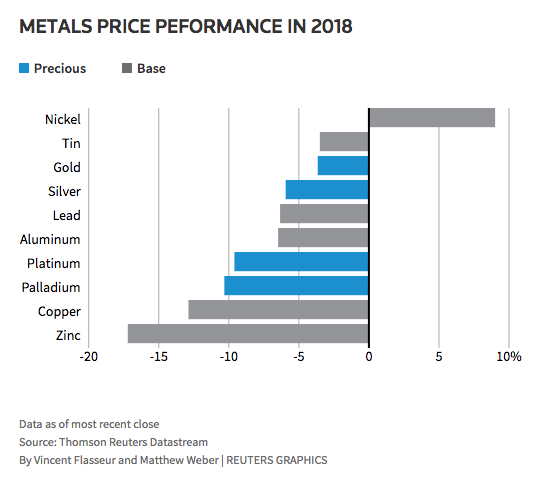
With the shine coming back on nickel – what will it mean for Ontario’s local and wider economies.
It’s boom or bust in the nickel business. From cycles, to slumps to super-cycles and even the most recent decade-long crash, it appears the time for nickel to rebound is near. The last big boom at the turn of the 21st Century saw nickel soar above 20 dollars per pound. It led to multi-billion dollar takeovers of smaller mining companies by industry giants and saw local economies flourish as bonuses skyrocketed, overtime was uncapped and investments in service, supply, innovation and industry support were elevated almost exponentially. Today, with analysts projecting the price of nickel to at least double over the next four years, what can local and provincial economies expect? After a 10-year slump can we expect the same rush to invest and spend? Will companies be more cautious and what will it mean for investors, the markets and businesses. There are a lot of questions and speculation out there about just how big of a splash there will be if nickel finally makes its comeback. And that’s where the experts from Freelandt Caldwell Reilly LLP can help. Ian Fitzpatrick is a Chartered Professional Accountant and a Chartered Business Valuator. He is an expert in advising business owners and entrepreneurs on all aspects of corporate sales, mergers, acquisitions, litigation, succession and ownership issues. To contact Ian directly, simply click on his icon to arrange an appointment regarding this topic. Source:


Why companies need to hire social workers
Corporate social responsibility, work-life balance, inclusion did not even exist a few decades ago. And now, large and even midsize companies have corporate officers in charge of those areas. Source:


What are the pros and cons of landing Amazon HQ2?
Thursday Atlanta appeared on the shortlist for Amazon's second corporate headquarters. What would that mean for the city? Two Goizueta experts break down the finance and the real estate angles. Source:



Baylor Experts Share New "Phone Snubbing" Research. This time it's "Boss Phubbing!"
Baylor University marketing professors and smartphone use experts James A. Roberts, Ph.D., and Meredith David, Ph.D., published their latest study – “Put Down Your Phone and Listen to Me: How Boss Phubbing Undermines the Psychological Conditions Necessary for Employee Engagement” – in the journal Computers in Human Behavior. Roberts and David are known nationally and internationally for researching the affects of smartphone use on relationships. “Phubbing (phone snubbing) is a harmful behavior,” Roberts said. “It undermines any corporate culture based on respect for others. Thus, it is crucial that corporations create a culture embodied by care for one another.” Their newest study examines “boss phubbing” (boss phone snubbing), which the researchers define as “an employee’s perception that his or her supervisor is distracted by his or her smartphone when they are talking or in close proximity to each other” and how that activity affects the supervisor-employee relationship. “Our research reveals how a behavior as simple as using a cellphone in the workplace can ultimately undermine an employee’s success,” the researchers wrote. “We present evidence that boss phubbing lowers employees’ trust in their supervisors and ultimately leads to lower employee engagement.” The study found: * 76 percent of those surveyed showed a lack of trust in a supervisor who phubbed them * 75 percent showed decreases in psychological meaningfulness, psychological availability and psychological safety * The lack of trust and decreases in those key areas led to a 5 percent decrease in employee engagement Roberts and David suggest several steps that managers could take to change the culture and mitigate the negative effects of smartphone use. * Create a culture in which supervisors do not feel pressure to immediately respond to emails and messages from their superiors while meeting with their employees. * Structure performance criteria in a manner which motivates bosses to build healthy superior-subordinate relationships. This might include annual ratings by their subordinates. * Train supervisors and employees on the importance of face-to-face interactions and sensitize them to the potentially negative consequences of phubbing on employee attitudes and engagement. * Set formal smartphone policies by setting clear rules for smartphone use, access and security – and detail specific consequences for violating those rules. Source:


Changes are Coming – Is Your Private Business Prepared?
Last July, the federal government revealed its plans to overhaul the system of taxation for private businesses, their shareholders and family members. The original proposals were very broad based and essentially targeted every Canadian controlled private corporation. The proposal documents addressed four main areas: • Income sprinkling • Constraining access to the lifetime capital gains exemption (LCGE) • Converting capital gains into dividends • Corporate reinvestment Since then there has been a lot of publicity, debate, political rhetoric and push-back from tax professionals, business owners, farmers, doctors, Chambers of Commerce and other organizations representing small businesses. But what will these changes mean for private business; why were these proposed changes put forward and, if the tax system needed to be overhauled, was this way the proper approach? There are a lot of questions out there and none are easily answered. That’s where the experts from Welch LLP can help. Don Scott, FCPA, FCA is a Partner and the Director of Tax Services for Welch LLP. He is recognized as an expert for his extensive knowledge in the area of Personal and Corporate Tax Planning and is a regular with local and national media. Don is available to speak regarding these new laws and what they may mean – simply click on his icon to arrange an interview. Source:


Women in the Workplace – Still an Unfair Playing Field
It’s a trend that has many reeling and wondering how to correct: many women working in the financial services industry on Wall Street today don't believe there are opportunities to advance to the most senior positions. This comes as corporate, academic and government leaders push for greater gender diversity at American companies. A study by Lean In released today showed some startling statistics. Women in the Workplace 2017 took pipeline data from 222 companies employing more than 12 million people. As well, more than 70,000 employees completed a survey designed to explore their experiences regarding gender, opportunity, career and work-life issues. The results were not good. The report showed: “Women remain significantly underrepresented in the corporate pipeline. From the outset, fewer women than men are hired at the entry level. At every subsequent step, the representation of women further declines, and women of color face an even more dramatic drop-off at senior levels. This disparity is not due to company-level attrition or lack of interest: women and men stay at their companies and ask for promotions at similar rates.” In fact, from entry level, women represent 47 percent of all entry level hires, but only one in five women will become a C-Suite leader. For women of color, that number diminishes to one in 30. The report also shows that women are less likely to be promoted, receive raises or be supported throughout their careers. So, what will it take to reverse this trend and make corporate America an equal playing field for all? What barriers need to be removed and what policies need to be changed? Is this a cultural shift, should it be regulated and can it be done? The situation is clearly unfair and there are many questions to be asked. Yet answers and solutions are by no means simple or easy to come by. That’s where experts from Missouri State University can help. Dr. Shannon Wooden is a gender studies expert. She is also a published author. Dr. Wooden can speak about the gender pay gap and why companies need more female representation in senior and board levels. Click on her icon to contact her. Source:

Earlier this week, Equifax announced a second breach of customer's personal data. That brings the total number of people who have had their personal information either seen shared or stolen to a whopping 145.5 million. To put that into perspective - that's the collective populations of Georgia, California, Texas, New York, Florida, Illinois, Pennsylvania, and Missouri combined. Goizueta Business School Expert Kevin Crowley says competitors could take advantage of this drop in confidence but don't look for another firm to swoop in and try to purchase Equifax at a low price. Source:


On July 18, 2017 the federal government announced proposed tax changes which will have a significant impact on business owners. The main premise of the proposed changes is that the government feels it is unfair that an employed person with a T4 cannot do the same tax planning as a business owner; the proposed changes will limit what a business owner can do to save or defer tax. Here is a list of the areas that are impacted from the proposed changes for business owners: income splitting, capital gains exemption, pipeline planning, and the investment of retained earnings. These proposed rule changes are far reaching and will have a significant impact on small business owners/entrepreneurs, the very people often recognized for driving the economy and employment. The government has requested commentary from all stakeholders, but the consultation period is short – comments must be received by October 2, 2017. Don Scott, FCPA, FCA is a Partner and the Director of Tax Services at Welch LLP in Ottawa and is an expert in the fields of business, corporate taxation and finance. He is an excellent speaker and is available to speak with media regarding this important topic. Simply click on Don’s icon to arrange an interview. Source: