
Experts Matter. Find Yours.
Connect for media, speaking, professional opportunities & more.

Sevki Cesmeci, Ph.D., associate professor of mechanical engineering in the Allen E. Paulson College of Engineering and Computing at Georgia Southern University, has been selected to take part in the 2025-2026 Governor’s Teaching Fellows (GTF) Academic Year Program in Georgia. This program is designed to provide Georgia’s higher education faculty with expanded opportunities for developing teaching skills and innovative pedagogies. “I am grateful to have been nominated by Provost Reiber as Georgia Southern University’s sole nominee,” Cesmeci said. “I have been deeply passionate about both research and teaching during my time at Georgia Southern, and I am grateful for the opportunity to contribute meaningfully to both.” GTF chose only 16 faculty members from across Georgia’s higher education institutions. Cesmeci’s innovative teaching strategies and methods were integral to his nomination. His work with leading textbook publisher McGraw Hill was one project that garnered recognition, as he worked with professors across the country to create an online, application-based activity (ABA) for fluid mechanics problems. “ABA is a next-generation learning method based on a storytelling-teaching strategy,” Cesmeci said. “Students are challenged with questions and guided through detailed feedback at each step of the solution.” In addition to research accolades, Cesmeci has been recognized for his teaching excellence at Georgia Southern with the 2022-2023 Georgia Southern University Award of Excellence in Student Success and the 2023-2024 Allen E. Paulson College of Engineering and Computing Faculty Award for Teaching. Through his participation in GTF, Cesmeci plans to integrate artificial intelligence tools into the mechanical engineering curriculum. “Unlike disciplines such as computer science and electrical engineering, mechanical engineering curricula have been slower to adopt contemporary and innovative tools,” Cesmeci said. “I hope to leverage this experience in the GTF program to enhance curriculum development at Georgia Southern, sharing insights and best practices to advance mechanical engineering education.” Hosted at the University of Georgia, GTF brings together faculty from accredited private and public institutions across the state for a series of interactive seminars focused on teaching practices, faculty development and course design. Throughout the program, fellows will work on a course design or instructional improvement project aimed at enhancing student learning. “I look forward to engaging with fellow educators, refining my teaching strategies and bringing new insights back to Georgia Southern students,” Cesmeci said. If you're interested in learning more and want to book time to talk or interview with Sevki Cesmeci then let us help - simply contact Georgia Southern's Director of Communications Jennifer Wise at jwise@georgiasouthern.edu to arrange an interview today.


Brent Feske, Ph.D., has been named associate vice president for Research in the Office of Research and Economic Development, effective March 1. Feske has served as the interim associate vice president for Research since Sept. 1, 2024. In this short time, he has already significantly impacted the University’s research enterprise. As interim associate vice president for Research, Feske prioritized engaging with the people in his office and the colleges conducting research. “I’ve settled in and moved past the introductory phase,” he said. “I feel I’ve gained a strong understanding of each college’s needs, wants, and aspirations. Together, we’ve laid a solid foundation, and I’m excited to see how our scholarship enterprise can grow and how the Office of Research and Economic Development can help each college reach its full potential.” With nearly twenty years of experience as a dedicated faculty member, Feske brought valuable leadership to the Office of Research and Economic Development. Under his guidance, the office increased internal funding mechanisms to support research, doctoral students and external grant writing. He has also led improvements in how research expenditures are captured and properly coded, providing a clearer picture of the Georgia Southern research landscape. Additionally, he has played a key role in expanding the pre-award team, ensuring better support for faculty and staff throughout the grant submission and award process. “I’m thrilled to have Dr. Feske permanently join the team,” said Vice President for Research and Economic Development David C. Weindorf, Ph.D. “His experience as an administrator and a faculty member really does give him a 360-degree view of the research enterprise and makes him uniquely qualified to lead and help us grow in every aspect. We’ve already accomplished so much, and I can’t wait to see what comes next.” If you want to book time to talk or interview with Brent Feske about his new role, then let us help - simply click on his icon now or contact Georgia Southern's Director of Communications Jennifer Wise at jwise@georgiasouthern.edu to arrange an interview today.


Will AI undermine or support writing and critical thinking?
As artificial intelligence reshapes the way we write and think, a central question emerges: Is AI helping or hindering our ability to engage in independent, critical thought? Joshua Wilson, professor of education at the University of Delaware, investigates this topic in a new paper that examines the risks of AI dependency and discusses the need for AI literacy in education. Wilson explores how AI impacts cognitive development through writing — highlighting both the promise and peril of AI-powered tools like ChatGPT. His expertise centers on how these tools interact with foundational models of writing and learning and what that means for education, workforce readiness and civic engagement. In his new paper, Wilson warns that while AI can support higher-order thinking by automating basic writing mechanics, it also risks eroding critical thinking if students and professionals come to rely on it uncritically. He is a leading advocate for AI literacy in education – training individuals not just to use AI, but to think with it. Wilson is available for interviews with reporters, particularly those covering the intersection of AI, education and society and investigating the risks of cognitive offloading in an AI-saturated world. To reach Wilson directly, visit his profile and click on the contact button.


Have you ever dreamed of being an Olympic athlete? Perhaps you have wondered what it would feel like to stand on that podium in front of the world as your national anthem plays. For most Olympic athletes, the journey begins very early in life. But imagine what it would be like if you started training for this event in your 60s? Read on if you want an edge to discover how to win the Retirement Games and still pass the drug test (let’s face it, peeing is not an issue for many at that age)! Here is your chance to get on the podium at the most crucial game of your life. On Your Marks, Get Set, Ready, Go! Retirement was more like a coffee break five decades ago—brief, predictable, and over before your muffin cooled. In 1975, the average Canadian could expect to live about 73.53 years. Fast forward to 2025; we're clocking in at nearly 83.26 years. Even juicier? The lastest research shows half of today's 20-year-olds in Canada are expected to live past 90. That’s why we need to think of retirement these days, not as a sprint; instead, it’s an ultramarathon with hills, potholes, and the occasional pulled hamstring. Most of us never expected to be training for it in our sixties, but here we are—so pull up your compression socks and move. The starter's pistol is about to fire, whether you're ready or not! Surprise! You're Retired While you may dream of selecting your retirement date like a fine wine, many face the reality of a boxed kind instead. Approximately 6 in 10 Americans retire earlier than they planned. Research from the Transamerica Center for Retirement Studies shows that many individuals experience unexpected early retirement due to personal health issues, employer discretion, or family-related circumstances. https://www.cbsnews.com/news/retirement-age-in-america-62-claiming-social-security-early/ Sometimes, it's a health scare, a loved one’s illness, or a harsh employer downsizing. Nobody whispers the term "ageism," but when companies replace senior employees with younger, more affordable talent (or AI bots), it’s not subtle—it’s math.As Morgan Housel reminds us in his bestseller, The Psychology of Money, "The most important part of every plan is planning for your plan, not going according to plan." Expect the unexpected. Train as if retirement could sneak up on you—because it just might. Get Fit, Stay Sharp: Health is the First Leg of the Race Physical and mental health are the fuel for your retirement. The rest doesn’t matter without them; we’re not just talking about lifting weights. (Though, yes, lift some weights.) Regular physical activity provides numerous benefits for older adults, including a reduced risk of dementia and enhanced cognitive function. Exercise can help maintain brain health, reduce mental decline, and even reverse some age-related brain shrinkage. Additionally, physical activity can improve mood, reduce anxiety, and enhance balance and coordination, leading to a better quality of life. • Strength training enhances bone density, metabolism, and mental health. (Source: Mayo Clinic) • Flexibility and balance? Try yoga or tai chi. Harvard Health says they reduce pain and stiffness. • Mental fitness? Cue up Wordle, Canuckle (the Canadian cousin), or Sudoku. • Dancing? It's beneficial for your brain and your swagger • Listening to music or playing an instrument can reduce stress and boost memory. Gold Medal Tip: Motivation is overrated; action is everything. Don’t be a couch potato. A new study conducted at the University of Pittsburgh School of Medicine shows that older adults who spend more time sedentary — such as sitting or lying down — may be at a higher risk for lower cognition and in areas linked to the development of Alzheimer’s disease, no matter how much they exercise! So make sure you show up, move, and the motivation will catch up. Wealth Training: Stop Hoping, Start Budgeting Here's a shocker: Retirement doesn't mean your expenses magically disappear. According to Steve Willems' podcast “10 Retirement Myths You May Not Want to Believe,” most retirees don’t spend less. Aside from the mortgage, spending remains surprisingly consistent, especially during the Go-Go years (ages 55-75)”. We like what we like: groceries, entertainment, travel, and stylish or comfortable clothes are still on our shopping lists. That’s why many of us in retirement will need to pay more attention to spending and budgeting. Check Obligation Spending Retirement is the perfect time to reevaluate expenses from obligation rather than genuine need or joy. Here's a thoughtful way to frame that idea: Retirement is the season of freedom, so why are you still paying for things that feel like a burden? Now that you’re no longer earning a regular paycheck, every dollar matters more than ever. This means it’s time to take a closer look at obligatory expenses. These might include: • Helping adult children financially (even when it stretches your budget) • Donating to every fundraiser or cause just because someone asked • Hosting large family gatherings that leave you exhausted and over budget • Maintaining memberships, subscriptions, or traditions that no longer bring you joy. (We talk a lot more about this in a previous post What’s your Retirement Plan B While generosity is admirable, it shouldn’t jeopardize your financial security or peace of mind. Retirement should focus on investing in what truly matters to you now, rather than keeping up appearances or adhering to outdated expectations. Here’s a gentle mantra to adopt: “I’ve earned the right to say no with love and confidence.” Freeing yourself from obligation spending doesn’t mean becoming stingy; it means becoming intentional. Give where your heart feels full, not where your guilt feels heavy. After all, you didn’t work all those years to keep writing checks out of habit. Balance Beam- Budget What’s your plan when overtime isn’t an option and the budget doesn’t balance? Start with a good old-fashioned reality check: • Write down ALL expenses. • Tally up your income. • Look for a surplus (yay, trip!) or a shortfall (boo, time to pivot). Look at Canadian Government Pensions • Here's the math. Old Age Security (OAS): Max is about $713/month or $8,556/year. And don’t forget the dreaded government clawback (formally known as the Old Age Security Pension Recovery Tax which starts at ~$90,997. • Canada Pension Plan (CPP): The average monthly payment is $758, while the maximum is $1,364 per month or $16,368 per year. So with these two programs combined, provided you meet requirements, as a senior, you're looking at somewhere between $17,000–$25,000/year before tax. If your lifestyle needs a bit more jazz hands, here’s how to bridge the gap: DIY Income Builders: • Slash debt. Every dollar you don't spend is one you keep. • Downsize and bank the equity. • Buy or build an ADU and rent it. I have written more about ADU's here. • HELOC or Reverse mortgage (borrow strategically). • Withdraw from investments (4% rule). • Monetize your skills: consulting, tutoring, or writing that novel you started in 1993. Gold Medal Tip: Track your joy per dollar. If you’re going to spend, make it worth it. Rewire, Don’t Retire: Finding Purpose The biggest myth of retirement? That doing nothing feels good forever. (Spoiler alert: it doesn’t.) Passion is your GPS. It guides you towards what fills your heart. Whether you write poetry, walk dogs, or paint birds wearing tiny hats, your joy matters. And legacy? That’s just purpose with staying power. There’s science to support the benefits of this lesson. A study in JAMA Psychiatry found that people with a sense of purpose had a lower risk of mortality and disability Purpose-Driven Paths: • Volunteer: Look for a cause that fires you up. • Get a part-time job: Perhaps you can fill in at a local bookstore, garden center or be a barista? • Hobbies: Take up painting, pottery, or poetry. • Go Back to School: Many Universities such as The University of Toronto offer free, non-credit courses through programs as part of their community outreach. Seniors (over 60) enrolled at York University may have all or part of their academic fees waived at the domestic fee rate for York University degree credit courses as part of their mature student program. • Spend real time with people you love, maybe your grandkids or elderly parents. • Reconnect with old friends – not just on Facebook, but in person • Get out of your backyard and see the world Gold Medal Tip: You're never too young (or too old) to chase what lights you up. Start a business, get that degree you always wanted, and write that book. Go. For. It. Support: No One Trains Alone Retirement can be lonely. As we age, friends pass, routines fade, and isolation creeps in. That’s why your squad matters more than ever. Find Your Pod: • Family & Friends: Set expectations. Ask for help. Host Sunday dinners. Stay connected. • Fitness & Social Clubs: Join a walking group or participate in a gym class, followed by regular post-sweat coffee. • Faith Communities: Spirituality and structure in one. Sing in the choir. Serve at events. • Third Places: As sociologist Ray Oldenburg says, these are neutral hangouts like libraries, community centers, or your local café. They’re tied to lower loneliness and better mental health. Think of Cheers: “Where everyone knows your name!” Gold Medal Tip: Your local pickleball court or knitting circle might just be your new training ground. Attitude Training: Stop Acting Your Age Here’s a radical thought: Maybe we feel old because we act old. Want to stay young? Stay curious, try new things. Try line dancing, pickleball, bird watching, improv, or learning to code. Yes, code. What was the worst advice our mothers gave us? “Act your age.” Nonsense! Whoever said, “You’re only as old as you feel” was on to something – but let’s take it up a notch: How about you’re only as old as your playlist! The Power of a Youthful Attitude in Retirement A successful retirement isn’t just about savings accounts and spreadsheets — it’s about mindset. A positive, youthful attitude is one of the most powerful (and overlooked) assets you can carry into retirement. Even if you don’t feel youthful or optimistic, “fake it ‘til you make it” is more than just a catchy phrase—it’s a strategy. The goal isn't to accurately describe your aches, fears, or fatigue but to set yourself up for success! Science backs it up: a positive outlook boosts health, sharpens cognition, and increases longevity. From a practical perspective, optimism makes it easier to try new things, adapt to change, and enjoy the present—all essential in retirement. So, if the voice in your head says, “I’m too old for that,” try responding with, “This is my time.” You begin to build because what you tell yourself matters, as does what you believe. Retirement is your reward. Approach it like the vibrant, capable, unstoppable human you are because attitude, not age, sets the tone. Gold Medal Tip: You’re only as old as the last thing you tried for the first time. Try something ridiculous, I double dare you! Final Stretch The Retirement Games are here, and let me be crystal clear: this isn’t amateur hour. This is your Olympic moment, with medals awarded for stamina, strategy, and a solid sense of humour. Whether you're rounding the first turn at 45 or doing your victory lap at 75, now is the time to train. You’ve built strength, stretched your budget, flexed your purpose muscle, assembled your dream team, and rebooted your mindset. Now it’s time to lace up, lean in, and live life to the fullest. This isn’t about perfection; it’s about preparation. You won’t achieve a podium finish through wishful thinking; you’ll attain it through action, adaptation, and a great deal of repetition. So, put on your metaphorical tracksuit (or actual tracksuit if it's laundry day) and begin training with determination. The gold medal retirement isn’t just possible—it’s within reach. Cue the confetti cannon. You’re not just aging—you’re advancing. And champions, as we know, don’t retire… they rewire, recharge, and rewrite the playbook. On Your Marks, Get Set, THRIVE! Don’t Retire … Re-Wire! Sue


When an invitation to sit on the Georgia Governor’s Council of Economic Advisers arrived in an informal email from a colleague, Michael Toma, Ph.D., welcomed the chance to share his ongoing research on the economic health of southeastern Georgia with Gov. Brian Kemp, the Georgia House of Representatives and Senate leadership and their constituents. However, when he joined a small group of colleagues from around the state in a legislative office near the capitol in Atlanta late last year, the opportunity felt far from casual. “It does seem like it’s an honor because I looked around the table and there were only 10 or so of us from the entire state of Georgia,” said Toma, the Fuller E. Callaway professor of economics in Georgia Southern University’s Parker College of Business. “It’s nice to be invited to join this council informing the executive and legislative branches of government about economic conditions in the state of Georgia. I know the southeastern part of the state, so it’s nice to be recognized and be invited to speak about this region to a state-level audience.” The Governor’s Council of Economic Advisers is a select group of mostly higher education economists from various University System of Georgia institutions, in addition to the chief economist from Georgia Power, who meet annually. Toma, who specializes in macroeconomics and regional economics, is well known for his expertise throughout Savannah and the surrounding region. Since 2000, he has written and distributed The Economic Monitor, a quarterly publication housed within Georgia Southern’s Economics Department and Center for Business Analytics and Economic Research. The economic analysis offers a snapshot of the Savannah Metropolitan Statistical Area economy, including Bryan, Chatham and Effingham counties, and informs business owners across the Coastal Empire. He also regularly speaks to chambers of commerce and business groups in the region. In the governor’s council meeting, which was televised to state legislators, the economists took turns speaking about their respective areas of expertise to Gov. Kemp as part of an educational process and annual update for the executive and legislative branches. “The academics from the different institutions discussed economic conditions in their regions of the state,” Toma said. “I highlighted the activity here in Savannah, the growing manufacturing base and the wages associated with the Hyundai plant being injected into the regional economy, and the build-out of the supply chain for the Hyundai plant. “I discussed manufacturing development in the context of broader economic growth within the region that’s layered on top of our normal growth pattern, and that the economic development initiative is starting to pay the dividends it was anticipated to pay.” Following each individual presentation, the governor held an open forum for all in attendance to speak more fluidly with the group. “He had questions for the panel in general about small business activity,” stated Toma. “So I was able to characterize the ecosystem for small businesses in Chatham County. “He said that was a great report.” Toma holds a Ph.D. in economics from George Mason University. He joined Georgia Southern on the Armstrong Campus in Savannah in 1997. If you're interested in learning more about this topic and want to book time to talk or interview with Michael Toma then let us help - simply click on his icon now or contact Georgia Southern's Director of Communications Jennifer Wise at jwise@georgiasouthern.edu to arrange an interview today.

UD researchers launch open-source tool to boost global food security and water sustainability
Efficient water usage in agriculture is crucial for sustaining a growing human population. A better understanding of the systems that support agriculture, farmers and farmlands allows for food production to become more efficient and prosperous. That's what makes the Monthly Irrigated and Rainfed Cropped Areas Open Source (MIRCA-OS) dataset so important. MIRCA-OS offers high-resolution data on 23 crop classes — including maize, rice and wheat — and helps researchers, students and farmers examine irrigation, rainfall and croplands and how they interact with global water systems. Co-authored by Endalkachew (Endi) Kebede, a doctoral student in University of Delaware’s Department of Geography and Spatial Sciences, a recent paper focused on MIRCA-OS was published in Nature Scientific Data. Kyle Davis, assistant professor in the Department of Geography and Spatial Sciences and the Department of Plant and Soil Sciences, served as a co-author on the paper and coordinated the study. “We first developed a comprehensive data library of crop-specific irrigated and rainfed harvested areas for all countries,” Kebede said. “This involved two years of gathering data from a wide range of international, national and regional sources. Through this process, we produced a tabulated crop calendar, annual harvested area grids and monthly harvested area grids for all irrigated and rainfed crops.” “The amount of effort that Endi put in to gather, process and harmonize all of this data is truly incredible,” Davis said. “His effort is a very important contribution to the scientific and development communities.” Doctoral student Endalkachew Kebede (left) and Assistant Professor Kyle Davis. (Photo credit: University of Delaware) Cropland accounts for 13% of Earth's total habitable land, and the preservation of cropland is important in feeding the growing global population. “Crop production has been a widespread human activity for a few thousand years, and it has a huge role in global food security,” Kebede said. “But it also has unintended impacts on the environment, such as overutilization of water resources, pollution through rivers or the effects on soil and the environment.” MIRCA-OS can play a crucial role in helping to better understand croplands and agriculture, allowing the global population to be successfully fed while minimizing the agricultural effects on the environment. In addition to the data included on cropland and water resources, MIRCA-OS allows researchers to view social aspects like poverty and unemployment through an agricultural lens, creating a better understanding of the interconnectivity of agriculture and social issues. MIRCA-OS is an updated version of the earlier MIRCA2000 dataset. Kebede said the MIRCA2000 was released nearly two decades ago, so renewing the data gives users more accurate and timely information. Both datasets specialized in examining irrigation and rainfall, but the MIRCA-OS added two new complexities to their data. First, MIRCA-OS is open source, meaning it is publicly available for anyone to use, download, or modify. Kebede said the added accessibility allows the technology to contribute to anyone's work, whether it be a student, a researcher or a farmer. “Anybody can use, update it, or upscale it to the special skill they’re interested in,” Kebede said. “Some might use it for research, some might use it to create policies and some might use it to practice agriculture.” To arrange an interview with Davis, visit his profile and click on the contact button.


ExpertSpotlight: Queen Victoria and Why Canada Celebrates Her Legacy Today
Victoria Day, celebrated annually on the Monday preceding May 25, marks the birthday of Queen Victoria and serves as the unofficial start of summer in Canada. While often recognized as a festive long weekend, the holiday has deep historical roots tied to Canada’s identity as a constitutional monarchy and its colonial legacy. As Canadians reflect on this tradition, it also opens the door to critical conversations about the British Crown’s historical role in shaping the nation—including its enduring impact on Indigenous Peoples. This observance remains a timely opportunity to explore how history, colonialism, and reconciliation intersect in modern Canada. Key story angles include: The Origins of Victoria Day: Tracing the establishment of the holiday in 1845 and Queen Victoria’s significance to Canadian nationhood and imperial identity. Queen Victoria’s Reign and the British Empire: Examining how the expansion of the empire under her rule affected the development of Canada and its governance structures. Impact on First Nations Peoples: Analyzing the Crown’s role in treaty-making, land dispossession, and the assimilation policies that Indigenous communities continue to confront. Victoria Day in Contemporary Canada: Exploring how the holiday is celebrated today, including regional variations and the growing conversation around its relevance. The Crown’s Evolving Role in Reconciliation: Investigating how the monarchy’s historical ties to colonization are being reexamined in light of Canada’s commitment to truth and reconciliation. Monuments, Memory, and Public Debate: Highlighting recent movements to reassess statues, place names, and celebrations linked to colonial figures like Queen Victoria. As Canada navigates its evolving relationship with the monarchy and Indigenous communities, Victoria Day offers a meaningful occasion to revisit the country’s past and consider how its historical narratives are remembered and reshaped. Check out our experts here : www.expertfile.com


University-wide mental health services strengthened by Georgia Southern’s JED Campus initiative
As a result of Georgia Southern’s commitment to increasing student awareness and access to mental health resources, the University has recently been named a full JED Campus (JED) Member university. Georgia Southern recently completed a four-year partnership with JED, a national collegiate mental health program that guides colleges through a collaborative process of building comprehensive systems, programs and policy development with customized support to build upon existing student mental health, substance use and suicide prevention efforts. Along with the JED efforts, Georgia Southern has significantly increased student awareness and access to mental health resources. A recent report shows that 83% of Georgia Southern University students agree that the administration is listening to the concerns of students around health and wellness. This is a 15% increase since 2020. In 2020, the University System of Georgia launched several system-wide initiatives and resources to increase the mental health awareness and resources for all of its institutions. One of these initiatives was to fund the enrollment of all institutions in the JED Campus program. This included the creation of a JED campus team, an initial campus mental health climate study conducted by the Healthy Minds Institute on behalf of JED, the completion of a Georgia Southern self-study, a campus site visit by JED and the development and completion of a four-year strategic plan. “Engaging in the four-year JED Campus process has enabled Georgia Southern to strengthen and expand its university-wide commitment to the mental health of our students, faculty and staff,” said Jodi K. Caldwell, Ph.D., Counseling Center executive director & JED Campus team lead. “The JED team remains committed to growing Georgia Southern’s efforts in providing awareness, education, resources and support for the well-being of our community. We are grateful to the University System of Georgia, whose support funded this opportunity for all USG institutions and to the support of our Georgia Southern administration.” Recently, the University has increased awareness and resources through programs like the H.E.R.O. Folder. Students aware of mental health outreach efforts grew from 40% to 60%, and those knowing where to seek professional help increased from 78% to 84%, according to the JED feedback report. Additional findings can be found in the full report at the bottom of this article. Georgia Southern will now be considered an alumni of the program, and will continue several of the programs and initiatives launched with JED. If you're interested in learning more about Georgia Southern's partnership with JED and want to book time to talk or interview with Jodi Caldwell then let us help - simply click on her icon now contact Georgia Southern's Director of Communications Jennifer Wise at jwise@georgiasouthern.edu to arrange an interview today.

NASA Asks Researchers to Help Define Trustworthiness in Autonomous Systems
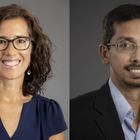
A Florida Tech-led group of researchers was selected to help NASA solve challenges in aviation through its prestigious University Leadership Initiative (ULI) program. Over the next three years, associate professor of computer science and software engineering Siddhartha Bhattacharyya and professor of aviation human factors Meredith Carroll will work to understand the vital role of trust in autonomy. Their project, “Trustworthy Resilient Autonomous Agents for Safe City Transportation in the Evolving New Decade” (TRANSCEND), aims to establish a common framework for engineers and human operators to determine the trustworthiness of machine-learning-enabled autonomous aviation safety systems. Autonomous systems are those that can perform independent tasks without requiring human control. The autonomy of these systems is expected to be enhanced with intelligence gained from machine learning. As a result, intelligence-based software is expected to be increasingly used in airplanes and drones. It may also be utilized in airports and to manage air traffic in the future. Learning-enabled autonomous technology can also act as contingency management when used in safety applications, proactively addressing potential disruptions and unexpected aviation events. TRANSCEND was one of three projects chosen for the latest ULI awards. The others hail from Embry-Riddle Aeronautical University in Daytona Beach – researching continuously updating, self-diagnostic vehicle health management to enhance the safety and reliability of Advanced Air Mobility vehicles – and University of Colorado Boulder – investigating tools for understanding and leveraging the complex communications environment of collaborative, autonomous airspace systems. Florida Tech’s team includes nine faculty members from five universities: Penn State; North Carolina A&T State University; University of Florida; Stanford University; Santa Fe College. It also involves the companies Collins Aerospace in Cedar Rapids, Iowa and ResilienX of Syracuse, New York. Carroll and Bhattacharyya will also involve students throughout the project. Human operators are an essential component of aviation technology – they monitor independent software systems and associated data and intervene when those systems fail. They may include flight crew members, air traffic controllers, maintenance personnel or safety staff monitoring overall system safety. A challenge in implementing independent software is that engineers and operators have different interpretations of what makes a system “trustworthy,” Carroll and Bhattacharyya explained. Engineers who develop autonomous software measure trustworthiness by the system’s ability to perform as designed. Human operators, however, trust and rely on systems to perform as they expect – they want to feel comfortable relying on a system to make an aeronautical decision in flight, such as how to avoid a traffic conflict or a weather event. Sometimes, that reliance won’t align with design specifications. Equally important, operators also need to trust that the software will alert them when it needs a human to take over. This may happen if the algorithm driving the software encounters a scenario it wasn’t trained for. “We are looking at how we can integrate trust from different communities – from human factors, from formal methods, from autonomy, from AI…” Bhattacharyya said. “How do we convey assumptions for trust, from design time to operation, as the intelligent systems are being deployed, so that we can trust them and know when they’re going to fail, especially those that are learning-enabled, meaning they adapt based on machine learning algorithms?” With Bhattacharyya leading the engineering side and Carroll leading the human factors side, the research group will begin bridging the trust gap by integrating theories, principles, methods, measures, visualizations, explainability and practices from different domains – this will build the TRANSCEND framework. Then, they’ll test the framework using a diverse range of tools, flight simulators and intelligent decision-making to demonstrate trustworthiness in practice. This and other data will help them develop a safety case toolkit of guidelines for development processes, recommendations and suggested safety measures for engineers to reference when designing “trustworthy,” learning-enabled autonomous systems. Ultimately, Bhattacharyya and Carroll hope their toolkit will lay the groundwork for a future learning-enabled autonomous systems certification process. “The goal is to combine all our research capabilities and pull together a unified story that outputs unified products to the industry,” Carroll said. “We want products for the industry to utilize when implementing learning-enabled autonomy for more effective safety management systems.” The researchers also plan to use this toolkit to teach future engineers about the nuances of trust in the products they develop. Once developed, they will hold outreach events, such as lectures and camps, for STEM-minded students in the community. If you're interested in connecting with Meredith Carroll or Siddhartha Bhattacharyya - simply click on the expert's profile or contact Adam Lowenstein, Director of Media Communications at Florida Institute of Technology at adam@fit.edu to arrange an interview today.


Experts in the Media: With Kemp bowing out of mid-terms is Georgia staying blue?
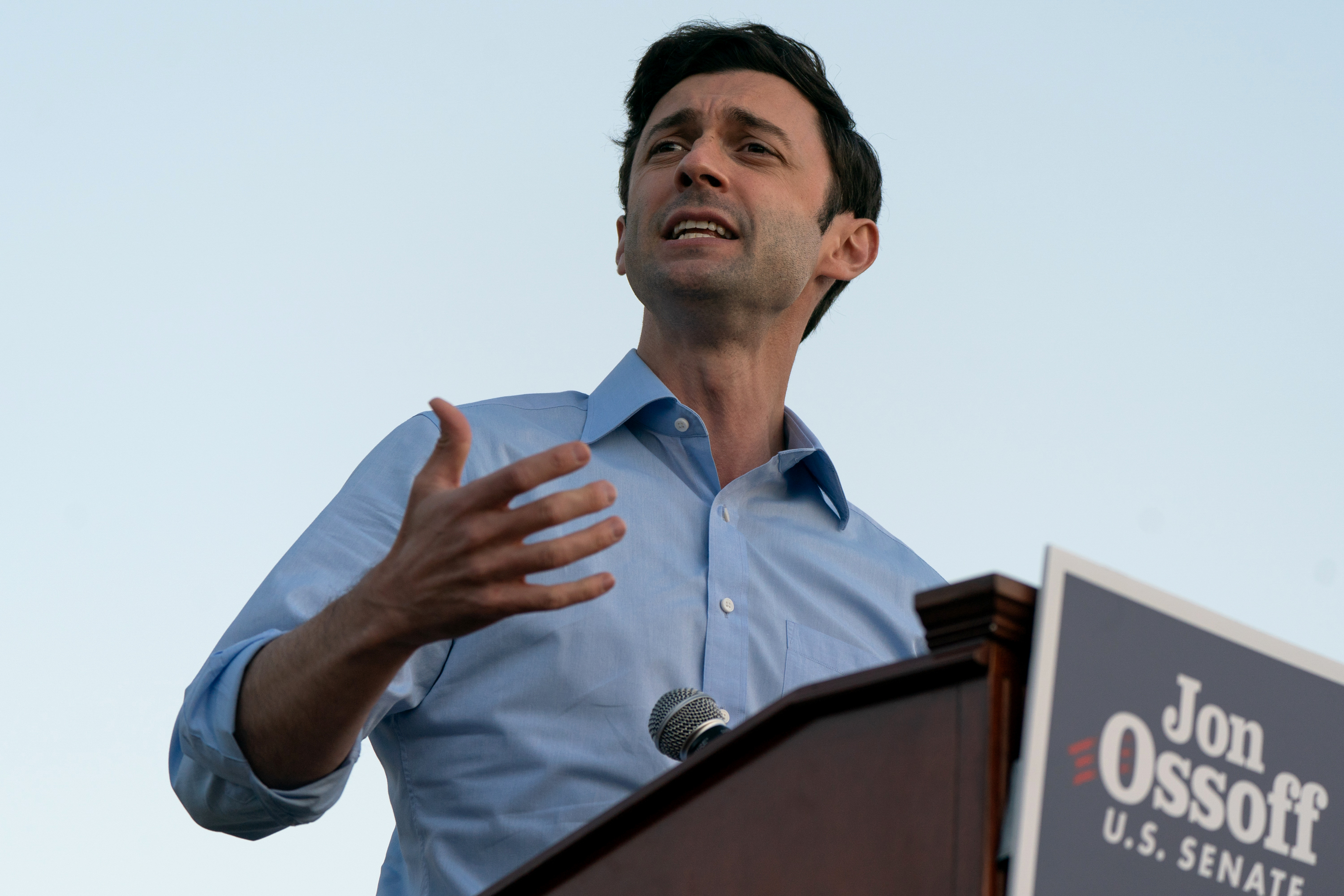
Control of the Senate is key for most administrations, and with a razor-thin edge favoring the Republicans, any pickup to keep control of the Senate after the mid-term elections is a priority. However, with a heavy favorite in Gov. Brian Kemp stepping away from the chance to run for the GOP, many are speculating the once traditionally Republican stronghold could stay blue under the Democrats with the re-election of Sen. Jon Ossoff. It's a topic that has political watchers and media trying to cover and figure out as parties get ready to get back on the campaign trail for next year. It's also why journalists and news outlets like Newsweek are connecting with experts like William Hatcher, PhD, for expert opinion and perspective. An award-winning scholar, Hatcher is the chair of the Department of Social Sciences and a professor of political science. His research focuses on the connection between public administration and the development of local communities. Kemp's decision not to challenge Ossoff in the state's 2026 Senate race could be a boon to Democrats' chances of holding the seat in the battleground state, according to recent polls... Kemp's announcement follows months of speculation about whether he would challenge Ossoff, a Democrat first elected in 2020. Polls suggest Kemp would have been the strongest candidate against Ossoff and that other potential Republicans trail the incumbent senator in a hypothetical matchup. "Given that Kemp was perhaps the strongest candidate to face Ossoff, his decision to not run will make it difficult to find another candidate that would be as competitive. However, the election is over a year away, and in politics, a lot can happen in that amount of time," William Hatcher, chair and professor of social sciences at Augusta University, told Newsweek on Tuesday. A poll from the Atlanta Journal-Constitution found that Kemp led Ossoff by 3.3 points (49% to 45.7%), Ossoff led three other prospective challengers. That poll surveyed 1,426 respondents from April 24 to April 27, 2025, and had a margin of error of plus or minus 2.9 percentage points. Hatcher said the state Republicans face a "limited" bench to challenge Ossoff, but whoever prevails will eventually have to defend Trump's "unpopular economic policies that will most likely adversely affect states like Georgia, particularly his recent commentary on leveling tariffs on the film industry – a industry that has a significant presence in Georgia." May 06 - Newsweek The race is obviously already on for the mid-term elections in November of 2026, and if you're a journalist looking to cover Georgia politics, let us help. William Hatcher, PhD, is available to speak with media - simply click on his icon now to arrange an interview today.

