
Experts Matter. Find Yours.
Connect for media, speaking, professional opportunities & more.
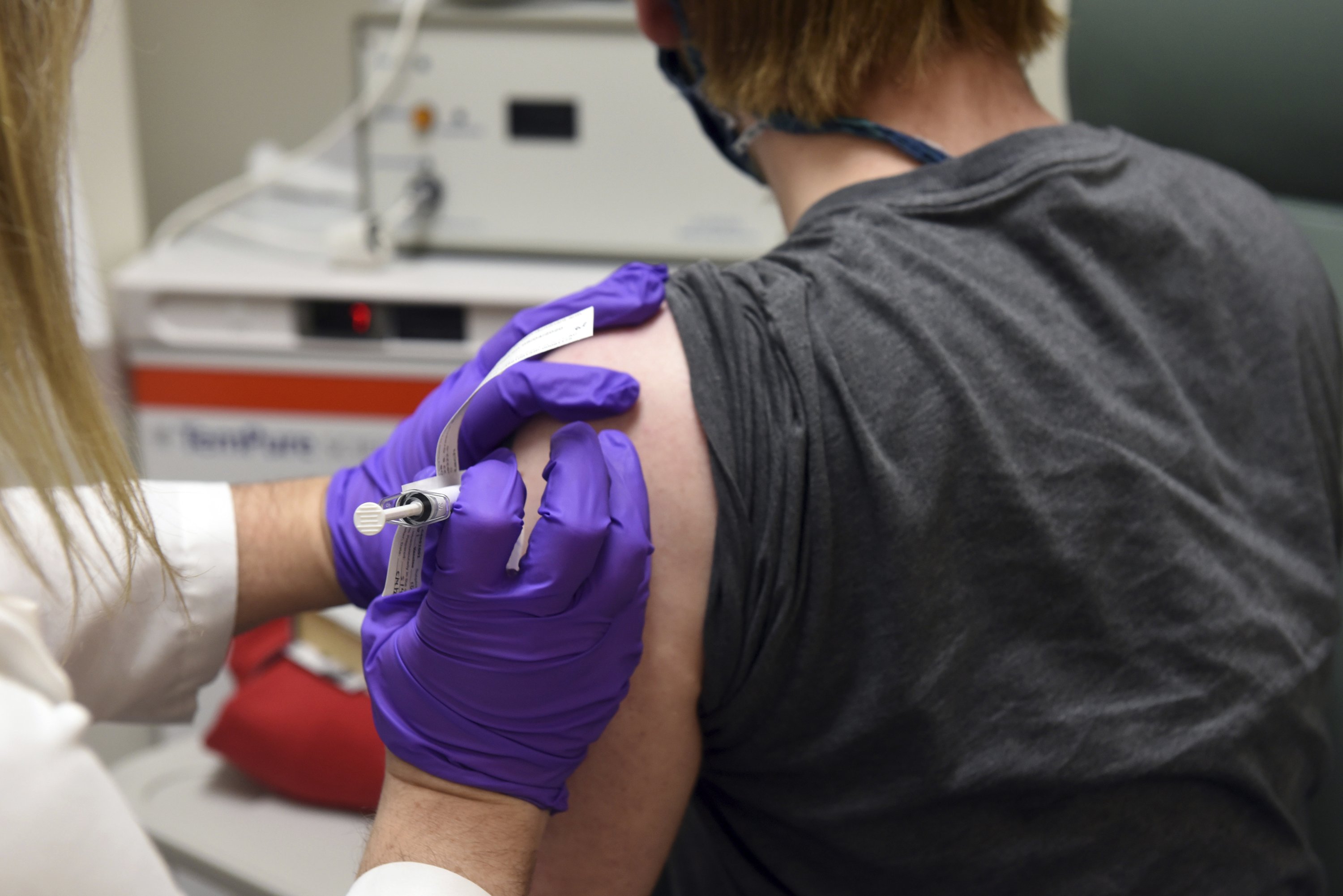
Are we on the verge of a vaccine? Let our COVID-19 expert explain if you are covering
It’s breaking news that is dominating headlines, impacting financial markets and perhaps finally relieving some of the anxiety that has been growing across America since late winter. On Monday, Pfizer announced that early results from its coronavirus vaccine indicate that it is 90 percent effective at preventing COVID-19. The pharmaceutical giant expects to be applying as soon as this month for emergency use approval from the Food and Drug Administration. If you are covering this breaking news and need to know about: What is the testing process for vaccines? How they are developed? What is involved in final approval? How will it be administered? And how quickly will it take to show positive results in our population? Then let the experts from UConn help with your coverage. Dr. Paulo Verardi is a virologist who specializes in vaccine research and development. He is an Associate Professor at UConn and a member of the Center of Excellence for Vaccine Research. Dr. Verardi is available to speak with media regarding this emerging development – simply click on his icon now to arrange an interview today.



Businesses must have a strategy for a messy tomorrow
John Kim is a Senior Lecturer in Organization & Management at the Goizueta Business School at Emory University. He is a management consultant with more than 20 years of experience working with executives to make difficult decisions and implement sustainable change. Recently, John published a piece that details a ‘Strategy for a messy tomorrow’ where he outlines how businesses must have a strategy development and implementation for an unpredictable business world. The piece is attached and a must read, especially in these turbulent and unpredictable economic times. In the article, he focuses on three key points: 1.Beware of False Choices “One thing we try to teach here at the business school is to be careful of false choices. Business is incredibly dynamic. Every industry is now a technology business, and the corporate playbook that evolved to protect profits is quite outdated.” Kim notes that Thomas Friedman poetically described this new normal in his 2005 book The World is Flat, and over the last 15 years, competition has only accelerated because of the explosion of two resources: cheap money and data. Kim notes that it’s a great environment to start or fund a business because interest rates have been low for the last 10+ years. There are dozens of new entrants in all industries, and all parts of the value chain, who are often well-funded, flexible, and are not weighed down by legacy business models and assets. The big winners are the customers who have increasing choice, lower prices, and great value capture. 2.The Challenging Environment From his corporate experience, Kim sees two significant challenges to strategy implementation. First, senior leaders turn over quickly. “It’s hard to have consistency of vision and leadership and implementation when there is such a movement in the C-suite with someone moving in and someone moving out every 5–6 months. So, it’s not a surprise that a lot of strategies either don’t follow through or there are too many cooks in the kitchen, and strategy gets a little bit muddled as a result.” Secondly, when the strategy does eventually make it to the ground-floor and needs to be executed, things have often moved on, and the market responses are rarely the ones you expect. Riffing on Peter Drucker’s famous quote on uncertainty, Kim explains to his students that, “Instead of trying to think of something brilliant to do tomorrow, why don’t you think of something very actionable today that prepares us for what we know will be a totally messy, crazy, unpredictable tomorrow.” 3.A Business Executive’s Response The business executive’s job is to not only set the direction, build a climate of trust, and create the energy for change—but also to be willing to test the assumptions and constraints around a given problem. Increasingly the answers will lie outside of a given industry, and thus require leaders to be broader in their horizon-scanning and more open to alternative paths forward. If you are interested in learning more about why business do indeed need a a strategy for a messy tomorrow – the let us help. John Kim is available to speak regarding this topic – simply click on his icon now to arrange an interview today.



Cheap Energy Can Be a Bridging Fuel Needed to Get to the Endpoint of Renewable Energy Sooner
Far from banning fracking, the Biden/Harris ticket appears to be allowing it if not tacitly supporting it. This is not a contradictory stance to their aggressive renewable energy policy, according to Scott Jackson, a visiting professor of chemical and biological engineering at Villanova University's College of Engineering, who previously directed the microbial enhanced oil recovery program at DuPont Corporation. "Rather, it is recognition that cheap energy—especially natural gas produced as a result of fracking—can be a bridging fuel needed to get to the end point of renewable energy sooner," Jackson says. No one can dispute that the share of our energy coming from less efficient/more polluting coal has dropped dramatically despite the current administration’s attempts at supporting the coal industry. The reason is obvious—cleaner burning energy (less CO2 emissions) from gas fired turbine generators make more economic sense. Gas fired turbine generators are economical at a smaller scale and provides an energy source that can be rapidly turned on or off at any time. This helps to counterbalance the intermittency of renewable energy and, in some sense; this has allowed greater adoption of renewable energy. The cheapest energy source on the planet is land based wind power. The market has responded to this and now renewables make up 19 percent of our electricity. This percentage was thought to be impossible just a few years ago. Wind power energy payback time (time needed to recoup the energy invested) is measured in months and not years, and investors understand this. A much greater share of renewables (wind and solar) is very doable and makes economic sense. Jackson notes that development of cheap energy storage technology will help and must be implemented once economies of scale are achieved, however, a national power grid capable of moving energy from the wind- and sun-rich Midwest to the West Coast and East Coast will improve the reliability of renewables to the point where as much as 70% of our electricity can be sourced renewably—without new storage capacity (2018 study by the National Renewable Energy Laboratory). Improvements in battery technologies and economy of scale are starting to drive down the costs of electric transportation and storage. Eventually, natural gas sourced power generation will not be competitive to renewables," notes Jackson. "Despite the current low price of gasoline, in part as a result of fracking used in oil fields, electric cars are far more economical to operate. Companies like BP, Exxon-Mobile and Shell recognize that they are energy companies and are pivoting to more renewable sources of energy. "Ultimately, our government has a responsibility to invest in the technologies of the future that make economic sense—as renewables do—and not support the more costly and outdated fossil fuel industry," says Jackson.


Covering CRISPR, gene editing – and what it might mean for generations to come? Our experts can help
The two scientists who took the concept of gene editing to the forefront were recently rewarded with the Nobel Peace Prize in Chemistry. The efforts of scientists Emmanuelle Charpentier and Jennifer Doudna and the development of clustered regularly interspaced short palindromic repeats have taken a vaguely titled idea named CRISPR into the modern conversation. Since then, this process has transcended itself into medicine, agriculture and a host of other scientific applications being used around the world today. There is a lot to know about CRISPR: How does it work, what are the risks and what are the potential rewards that have yet to be discovered? There is also a lot of concern about how gene editing could transform life and future life as we know it. If you are a journalist looking to know more about CRISPR, Augusta University has the expert you need for your questions and coverage. Dr. Paul Langridge is an acclaimed scientist specializing in morphogenesis, CRISPR, signal transduction, and cell and molecular biology. He is an expert when it comes to the topics of gene editing and has used the same technologies that the Nobel winners also used in their research. Langridge is available to speak with any reporters looking to cover this topic; simply click on his icon to arrange an interview today.


Continuing to Learn and Explore American History
In the United States, students take several American history courses throughout their K-12 experience. So, why should students bother to continue taking American history courses in college? For Southern Utah University's Dr. Mark Miller, the answer is simple. “When I teach a history course, I am always looking for ways to point out how an issue or event in the past is relevant to something going on in today's world,” said Dr. Miller. “With this year's presidential election going on there have been plenty of examples to tie into regarding past politics and past political crises we have lived through as Americans.” Dr. Miller has conducted some exciting research that will be published in 2021. His upcoming articles includes: “Polygamy under the Red Cliffs: Women’s Voices and Historical Memory at Centennial Park” in Utah Historical Quarterly, “A River Again: Fossil Creek, Desert Fishes, and Dam Removal in the American Southwest” in Pacific Historical Review, and “‘One Territory, Many Peoples:” Racial and Ethnic Groups and the Development of Arizona Territory” in The Smoke Signal. “I think my work on plural marriage and environmental history shows that history is never dead,” said Dr. Miller. “It reveals that in current debates history is quite important. What happened in the past still informs the present. Since both of these topics are quite controversial today, I think historians provide a valuable service by exposing the history behind debates over allowing polygamy in modern America or whether we should make trade offs in development and water use to preserve unique species. Knowledge of people who practice plural marriage and their religious history as well as the history of preservation efforts toward endangered species is vital to all participants in the debates.” Dr. Mark Miller is a professor of history and the department chair of History, Sociology, & Anthropology at Southern Utah University. His research and teaching specialties include United States History, American West, Borderlands, Indigenous Culture and History, World Civilization, and Latin America. He has published articles and books on modern American Indian History, most recently Forgotten Tribes (2006) and Claiming Tribal Identity (2013). He has published articles on race and ethnicity, on indigenous identity and politics in several journals. Dr. Miller is familiar with the media and available for an interview. Simply visit his profile.

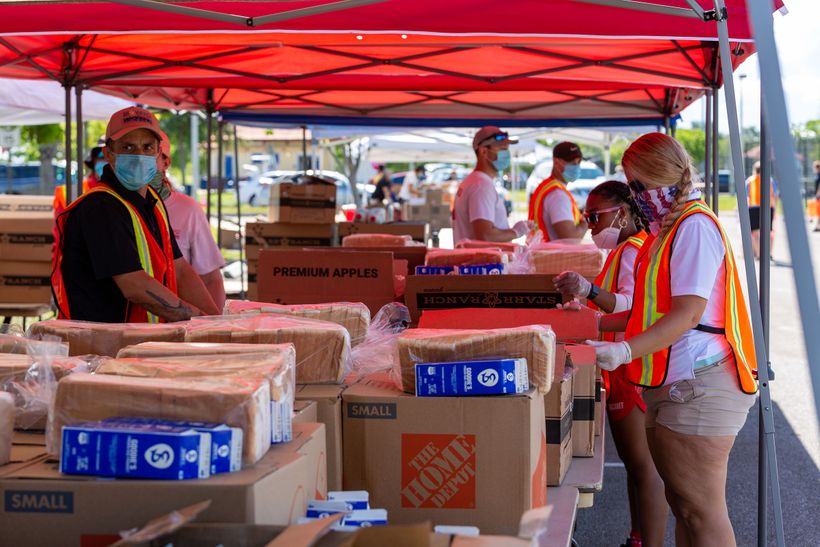
Volunteers receiving government aid while unemployed face scrutiny, bias from public
With the worldwide spike in unemployment caused by the COVID-19 pandemic, many people may turn to volunteerism as a way to pass their newly found free time. But new research suggests that volunteers who also receive government aid are often judged negatively as "wasting time" that could be used to find paid employment. "We found that aid recipients are scrutinized to a greater extent than those who are working, including the underemployed, with observers demonstrating a strong bias toward believing that aid recipients should be using their time to pursue employment opportunities above all else," said Jenny Olson, an assistant professor of marketing at the Indiana University Kelley School of Business and corresponding author of the research forthcoming in the International Journal of Research in Marketing. "This is beyond education, personal leisure, and spending time with family and friends. "As a result, they are given less latitude in how they use their time, and can even be seen as more moral for choosing not to engage in prosocial behaviors, when such behaviors take time away from gaining paid employment," Olson added. "The simple act of volunteering among aid recipients -- versus not mentioning volunteering -- not only shapes judgments of the individual aid recipients, but this information can also impact views toward federal tax policy more broadly." Although volunteering is a positive activity that partially combats the negative stereotype of a welfare beneficiary, Olson and her colleagues found that it also sparks anger among observing consumers, with aid recipients being perceived as being "less moral for choosing to volunteer." Factors that minimize these judgments include being perceived as taking strides toward gaining employment via education and being perceived as unable to work. Other co-authors of the paper, "How Income Shapes Moral Judgments of Prosocial Behavior," are Andrea Morales of Arizona State University, Brent McFerran of Simon Fraser University in Canada and Darren Dahl of the University of British Columbia. The research was supported in part by grants from the Social Sciences and Humanities Research Council of Canada. According to a 2019 report from the Organisation for Economic Cooperation and Development, public spending on government assistance averaged more than 20 percent across 36 countries in 2018. Many countries -- including those in Asia, Europe, and the Americas -- have seen a rise in the number of people receiving benefits over the years, a total now reaching into the billions. The extent to which the welfare state is supported depends, in no small part, on public sentiment. Previous research has shown that support for government spending on welfare programs is directly related to how the voting public perceives the beneficiaries. This is the first paper to document a link between prosocial behavior and support for federal spending on welfare programs. "Given that individuals perceive opportunity costs for their own time, it stands to reason that they perceive them for others as well," Olson said. "Because government programs are supported by 'their' taxpayer dollars, observers often feel justified in suggesting how aid recipients spend their time." The research shows that consumers prefer different patterns of tax redistribution as a function of viewing aid recipients making nonfinancial choices. Specifically, consumers support allocating fewer tax dollars toward supporting government assistance programs after hearing about an aid recipient who volunteers his time. Researchers conducted nine studies across three countries. They randomly presented participants with scenarios about hypothetical aid recipients and asked them to offer judgment about how the recipients used their time, such as engaging in volunteer activities or sending out resumes. Participants were asked how they viewed target individuals on a morality index and how they felt about them emotionally. For interviews with Jenny Olson, contact George Vlahakis at 812-855-0846 or vlahakis@iu.edu.

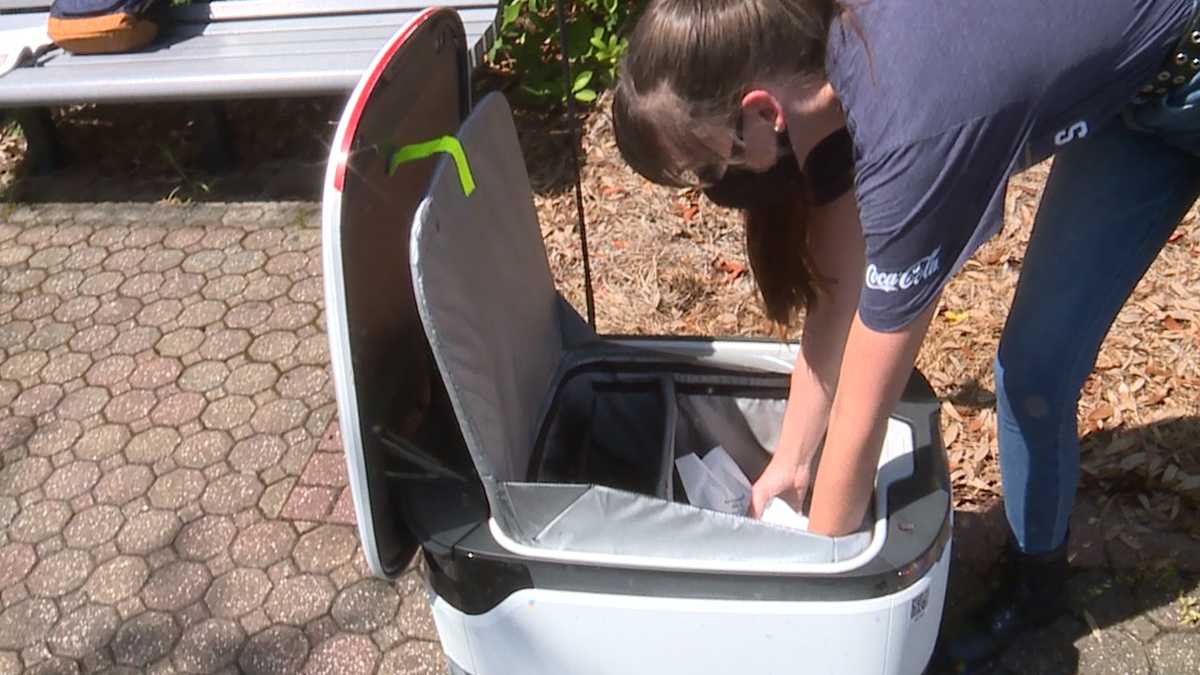
Six-wheeled robots independently navigating the streets and sidewalks on Georgia Southern’s Statesboro Campus may look a little strange. But it will soon be commonplace as these ground robots, which look like a cooler on wheels, have been mapping routes to campus locations in preparation for contactless food delivery this fall. Thanks to a partnership with Starship Technologies, Georgia Southern is the first university in the state to provide faculty, staff, and students with 20 autonomous delivery robots to deliver food from on-campus dining locations to designated pickup locations. Since August, Starship’s robots have been delivering food ordered on the Starship app from University dining facilities and places such as Starbucks, Market Street Deli and Sushi with Gusto to patrons around campus. The robots, which are energy efficient, can have their location and delivery time tracked by recipients through the app. They can also maneuver around obstacles such as pedestrians. “My hope is that it brings a sense of enhanced safety and convenience to our students,” said Clint Bridges, IT Business Owner at Georgia Southern University. “While we are all living through the COVID-19 pandemic, we are hoping that the robots will allow for easier social distancing. The fact that students can order a meal from their residence hall room and have it delivered by an automated delivery vehicle keeps them close to home where they can feel the most at ease and still enjoy a meal from one of our dining locations on campus.” Starship Technologies officials say the robots have been proven to be popular. “Students are looking for ways to get food delivered in the safest and most convenient way possible at the moment,” said Ryan Tuohy, senior vice president of Business Development at Starship Technologies. “Our robots are fast, friendly and help make life a little bit easier, especially in these challenging times.” If you are journalist and would like to know more about how Georgia Southern is constantly innovating and discovering new ways to safely enhance the on-campus experience for students - simply reach out to Georgia Southern Director of Communications Jennifer Wise at jwise@georgiasouthern.edu to learn more and arrange an interview today.

Georgia Southern University – is thinking BIG when it comes to entrepreneurs and small business
Through the CARES Act and the U.S. Department of Commerce, Georgia Southern University’s Business Innovation Group (BIG) has received $300,000 in grant funding to expand its services to the region in an effort to help communities and businesses respond to and recover from the economic impact of the coronavirus pandemic. “This will really allow us to help businesses and entrepreneurs throughout the entire state ideally get access to the skills, knowledge and services that Georgia Southern has to offer,” said Dominique Halaby, DPA, director of BIG. Over the next two years, BIG will use these funds to expand their services through the Georgia Enterprise Network for Innovation and Entrepreneurship (GENIE). “We’re hoping that we can demonstrate to budding entrepreneurs and small business owners that Georgia Southern can help them develop and grow,” Halaby said. “We are hopeful that in two years’ time people are going to have a heightened aerial view of awareness for Georgia Southern and our Business Innovation Group services, but more importantly, that they are going to get the type of resources to be able to launch the business that they’ve always wanted to launch.” Halaby said offering these resources to the region is important for economic growth. “Any time that we have an ability to do something, we have a responsibility to do it,” Halaby said. “The needs of our community are great. Our ability to service those needs by connecting those with the resources on our campus and with the skills that we have fostered within BIG puts us in a very unique position. This way, we are able to provide services to help as many entrepreneurs and to help as many people looking for jobs as we possibly can.” BIG will also use part of the grant funding to work with Georgia Southern faculty to strengthen patent and licensing activity. “We’re working with our intellectual property committee and through the University to let faculty know that if they’ve got a concept, that BIG can help them flesh that out. We can work with them to do an analysis to see the marketability for their concept and determine if it’s patentable or licensable,” Halaby said. If you’re a journalist looking to know more about how Georgia Southern University is assisting regional businesses or its Business Innovation Group (BIG) – then let our experts help with your coverage. Dominique Halaby, DPA, is the Director of the Business Innovation Group (BIG) at Georgia Southern University. In 2015, BIG was recognized as a Gold Award Winner in Entrepreneurship by the International Economic Development Council. Simply click on his icon now to arrange an interview today.


New System of Infrared Sensors Maintains Privacy While Keeping Patients Safe
Short of cameras, there are few tools at the disposal of health care providers or loved ones to remotely monitor patient safety within hospitals and assisted living care facilities. This challenge was on Bob Karlicek's mind when he and a team of other researchers developed a new system of infrared sensors that is able to provide real-time data about a person’s movements in a room while also maintaining their privacy. “We can thread this balance of information and privacy,” said Karlicek, the director of the Center for Lighting Enabled Systems & Applications (LESA). “It turns out that lighting and light field sensing give us a tremendously powerful tool for figuring out where people are and estimating what they are doing, but without creating an image of who they are.” The system relies on what Karlicek calls occupant-centric control. More specifically, a set of sensors uses infrared light to measure distances between sensors and objects in order to identify where someone may be in a room. This information can help determine if a person is standing, sitting, or lying down on the floor. It can also distinguish between where people are standing and how they are interacting with other people. Such measurements could alert a caregiver that someone has fallen or document the last time someone checked on their loved one. The use of infrared light to measure distance is not a new concept. What’s novel about this approach, Karlicek said, is the development of a very inexpensive sensor that has data analytics built right into it, allowing the sensors to collect data, process it, and communicate with each other in order to track movement within a room. Karlicek is available to discuss this technology and other efforts LESA is working on to make buildings more capable, efficient, and helpful to the people who use them.



Virtual Reality-Based Surgical Simulations Could Make Patients Safer
Suvranu De, the director of the Center for Modeling, Simulation, and Imaging in Medicine at Rensselaer, has dedicated more than a decade of research to making surgery safer by developing virtual reality-based surgical training simulations that closely mimic the optics and haptics a surgeon may encounter in the operating room. A new $2.3 million grant from the National Institute of Biomedical Imaging and Bioengineering of the National Institutes of Health will further his research in this space, by supporting the development of a collaborative virtual reality-based surgical simulation environment that allows medical professionals to practice technical, cognitive, and interpersonal skills as a team. “People will be wearing head-mounted displays, and they will be immersed in a virtual operating room working on a virtual patient as a team,” De said. “We want to have an expert team in the operating room focused on the treatment of a patient, and not just a team of experts.” Conceptually, this approach is similar to crew resource management practiced by aviation pilots, which has led to a significant reduction in aircraft accidents. The Virtual Operating Room Team Experience (VORTeX) simulation system will provide realistic distractions, interruptions, and other stressors that medical professionals may encounter in an operating room. Traditionally, this type of simulation training has required mannequins, instructors, and a dedicated space, as well as significant coordination and resources. In contrast, the VORTeX system will be both distributed and asynchronous – allowing participants to join the simulation from different locations, and instructors to review the simulation and provide feedback at their convenience. Machine learning algorithms will be used to crunch the data and provide feedback to participants, who will be able to return to the virtual environment to review their performance. De is available to discuss how this type of virtual training is developed and implemented.