
Experts Matter. Find Yours.
Connect for media, speaking, professional opportunities & more.

7 Tips for Executing Expertise Marketing
Now that you understand the value of expertise and have defined who your experts are, you might find yourselves asking, “What’s next?” Our research with hundreds of organizations reveals that there are major gaps in the way organizations present their expertise and how it impacts the effectiveness of their digital content. The challenge for many marketers is that they don’t know how to approach the creation and publication of expert content, but it starts making a lot more sense when you look at the bigger picture. Expertise marketing is about evolving our content marketing initiatives to deliver a more engaging experience to audiences. And because it’s so closely related to content marketing, it borrows several of the core principles we already use for our digital channels – but with an expert spin. At the end of the day, we’re simply collaborating with experts to ramp up the credibility, authenticity and integrity of your digital presence. The Core Principles of Expertise Marketing In the list below, you can see that expertise marketing shares a number of best practices with content marketing. The difference is in how we execute them and the quality of the end product. By following these seven core principles of expertise marketing, you’ll be able to create and deliver the content your audiences are looking for. Discoverable: If you work in the digital space, you know how important search is to your success. Experts produce a wealth of structured information that can be optimized to improve your rank on Google and increase your overall market visibility. Rather than limiting content to an About Us page or corporate intranet, you should make it more discoverable by publishing it across multiple areas of your website. Personal: Expertise marketing takes an inclusive approach to getting expert content mobilized across the organization. But even when we ask our experts to create content, we tend to attribute the outputs to the organization rather than the individual. When showcasing the work of your key employees, it’s important to personally recognize this. It builds trust with your audiences. Remember that people want to deal with people so let your experts be recognized and they will support your growth. Relevant: Organizations often miss opportunities to position their expertise for breaking news and emerging stories. In many cases, you may be an expert in the field, but if your content doesn’t align with current news topics, broadcasters and reporters won’t know to come to you for insights. Your overall readiness to speak to the topics in today’s news cycle greatly impacts customer engagement and your potential for earned media. Credible: Journalists and other audiences looking for expert sources require proof that your employees and their content are trustworthy. It’s not enough to have a headshot and bio on your About Us page. Enhanced profiles should be easy to scan and complete with important fields like education, certifications, research, publications, awards and media/speaking appearances. Visual: If you want interaction, you’ll need to first get your audiences’ attention. Rich media such as video, social media feeds and interactive content are proven to outperform text which can be tedious for audiences to read. It’s now critical to feature multimedia assets in a way that creates a more dynamic presence and maximizes audience engagement. Curated: Audiences are consuming more digital content than ever and it takes a lot of work to feed the content beast. Rather than rushing to market with sub-par content, organizations need to think about how their content serves a range of audiences looking for expertise. Is your content aligned with today’s emerging topics? Is it specialized enough to be relevant? Is it up to date or does it look tired? Audiences are becoming more discerning and even Google is determining search rank based on these factors. Distributed: As specialized third-party search sites grow in popularity, organizations need to ensure that expert content isn’t confined to a single website. This means thinking about social channels, directories, and reputable sites that help get your message out there. By dynamically synchronizing your expert content across internal and third-party sites, you’ll increase your reach, drive more visitor traffic and initiate better digital conversations. Download the Complete Guide to Expertise Marketing For a comprehensive look at how expertise marketing benefits the entire organization and drives measurable return on investment, follow the link below to download a copy of ExpertFile’s Complete Guide to Expertise Marketing: The Next Wave in Digital Strategy or download one of our tailored Guides for Corporate & Professional Services, Higher Education Institutions, Healthcare Institutions or Association & Not-for-Profits.



EXPERT PITCHING 101: The Power of Spotlights
Of all the angles and perspectives, when pitching your experts, you need to figure out how yours stands out amongst the rest. How are you getting the perspectives of your subject matter experts out there? Have you figured out your 'bench strength' to know who can comment on what and how? Do you have a good way to get your people out there to the public? Sadly, when asked these questions, most PR and Marketing professionals struggle to give you a straight answer with confidence on how they get their people to comment on certain storylines. With a defeated tone, I often hear, “Well – we have our resident rock star, Professor Jones, who does most of our media interviews” often followed by, “but he’s not always the best person for the story.” Although, most organizations have a list of subject matter experts, they are often over-reliant on the same ‘go-to’ people. Here’s why: First, these people are tried and true. For media, it’s a big deal when contacting an expert for comment - especially if the interview will be conducted on camera. So, why risk the chance of speaking with someone new? The second thing, it’s time consuming. It’s easy to find a previous expert pitch in an email and forward it on to someone new. However, gathering this content for each new person every time an individual is being pitched is very time consuming and difficult to manage. Especially, when this content is strewn across the web and you need to add links for videos on YouTube, books on Amazon, articles on ResearchGate, presentations on SlideShare etc. Once you’ve found the right person for the story, and you’ve aggregated the necessary background content to send, you must tie the loose ends and make the person contextual and relevant. Why is this person the best individual to comment on the story? What angle is this person going to provide? What sort of background qualifies this person to being the subject matter expert on the topic? Don’t worry, help is on the way At ExpertFile, we’ve heard the stories about organizations missing out on opportunities to get national or international media coverage because of their small team. These understaffed teams don’t have enough bandwidth to continuously pitch their people and comment on storylines. Their websites don’t paint a full picture of their experts’ abilities and knowledge. So, we got together with these PR, Marketing and Comms people, and looked to develop a solution. Then we created “Spotlight” - putting all of the necessary tools into the hands of PR, Marketing and Communications teams. Spotlight allows you to contextualize the relevance of your expert with a the story. Write your expert pitch to explain why that person is the best to comment on that topic, and the angle they’d be able to provide. Combine that with rich media profiles created by the ExpertFile team, you now have a central home for all of your experts’ content, and it provides a more engaging representation. So, when the media are vetting, they can now watch a video of that individual speaking in front of a camera, see their latest Media Appearances to know they have experience talking to reporters, and a Contact button for the quickest way to reach that individual, while simultaneously routing to any other internal stakeholders. This last part is important to consider as every story has many angles. Take the recent United Airlines debacle, where a passenger was viciously pulled out of his seat due to the plane being overbooked. Aside from the traumatic events from the video that surfaced of the incident, after the dust settled media are left scrambling to find out more on the protocol for overbooked flights, the global impact (there was a big uproar in China due to initial reporting that he was of Chinese descent), and the economic impact on the company. Which means, you don’t need to limit yourself to an aviation expert in order to comment on an aviation story. Every story has multiple angles - this lets you offer up a unique perspective, pitch a concept others are not covering and insert your expert into an already crowded narrative. Spotlight helps you grow those invisible experts into great sources, and it helps you efficiently pitch when you have resource constraints. Spotlights in Action Since the launch of the ExpertFile News Digest service, we’ve seen some significant results for our customers. We've only been with ExpertFile a short time. We've been using Spotlights from the News Digest and have noticed a lot more attention from media. They're easy to request - and the turnaround is fast. We recently were asked to comment on the Supreme Court nominee and booked a radio show thanks to a Spotlight. It’s been a great way to get additional exposure for Augusta University. We've only been with ExpertFile a short time. We've been using Spotlights from the News Digest and have noticed a lot more attention from media. They're easy to request - and the turnaround is fast. We recently were asked to comment on the Supreme Court nominee and booked a radio show thanks to a Spotlight. It’s been a great way to get additional exposure for Augusta University. -Kelly Jasper Senior Digital Media Coordinator - Augusta University With Spotlights we are seeing immediate pick-up of the stories we want to be part of. It’s letting us tell the Cambrian College story to a wide audience. As well, we’re noticing one Spotlight generates multiple media contacts. Once one outlet sees or reads our expert weighing in on a trending topic - the others follow. It’s an earned media coup. -Shawn Poland Associate Vice President, College Advancement - Cambrian College Once I integrated my Spotlights onto the Emory University business school website, it was so simple for me to have the ExpertFile Newsroom team whip up a pitch and publish it. Especially with limited resource on my team, it’s been a huge help to get my people out there in a more efficient manner. -J. Michael Moore Senior Communications Manager, Emory University - Goizueta School of Business Want to see an example of how to pitch your expert? Send your storyline to success@expertifle.com and we will have our Newsroom team send you a draft Spotlight ASAP. Is there anything that I missed? I’d love to hear what’s worked for you to get your people speaking with the media.


With 2018 in full swing there’s no sign that the issue of fake news is going away. In fact, it continues to plague major social platforms such as Facebook as well as the traditional media players. This erosion of trust begs the question – how can we ensure the right experts on important topics are at the center of the conversation? If your organization has experts, there is a silver lining. There has never been a more important time for experts – the real ones – not the “fake it till you make it” collection of posers and promoters that have read a blog on personal branding. We’re talking about the people who have put in their 10,000 hours of researching, building and publishing. Presenting your top people in a more visible, engaging and approachable way presents huge opportunities for you to build trust and deepen relationships with a variety of audiences, including customers and partners – not just the media. However, to really capitalize, you have to look closely at how audiences interact with your expert content. Based on our work with thousands of experts and their organizations, we’ve prepared a list of key trends and predictions you need to watch if you’re a communications and digital media professional. Trend 1: Organizations are measuring their “Internal Bench Strength”. The power behind any organization is its people, but many organizations fall short in taking stock of their roster of experts who are capable of building voice and reputation with key audiences. Communicators are increasingly turning to internal pulse surveys and annual assessments that better identify competencies, professional interests and attitudes across the organization. Smart organizations are using surveys to create an efficient roster of internal experts and match them to the news cycle. Identifying a “core group” of go-to experts who will best benefit from programs such as media training and carefully mapping key topics to experts will ensure the organization is aligned to support communications objectives – both for proactive story development and responding quickly to breaking news opportunities. Trend 2: Organizations are starting to function more like newsrooms. As newsrooms in the print and broadcast world continue to be streamlined and downsized, organizations can play a key role in helping journalists by making relevant content and credible sources more accessible. Incorporating better search features that allow journalists to quickly find experts using simple keyword searches is an important starting point. Showcasing experts in the context of key news events in a content hub with interesting story angles are increasing in popularity Trend 3: Next generation newsroom platforms will change how media find expert sources. Journalists have a challenging role today amidst a backdrop of fake news and increasing cynicism about the credibility and sources of information. They still have the same day deadlines, but with an increased responsibility to get the story right, so reliable sources are critical to their success. So it’s not surprising that journalists, television bookers and producers are gravitating to solutions that make it easier for them to discover, evaluate and connect with expert sources. We recently integrated our ExpertFile global directory into the Associated Press newsroom software which is used by thousands of print, broadcast and digital newsrooms around the world. The AP, as the world’s leading news organization, recognizes the pressures that publishers and broadcasters are under. They are committed to technology advances that help news organizations. Few journalists have the time to rummage around in poorly designed corporate websites and university faculty directories looking for the best expert. And if you think it’s just junior reporters using these online tools think again. We’re seeing seasoned journalists from top media outlets including The New York Times, CNN, Time Magazine, NBC, The Washington Post, the BBC, NPR Radio and the CBC making regular use of the ExpertFile platform. The bottom line: If you aren’t thinking about broader distribution of your expert content beyond your website you are missing out. Trend 4: New search technologies are helping organizations cut through the content clutter. Searching for the right person based on attributes such as key topics, publications, or geography inside an organization remains a challenge – even for those organizations that have invested heavily in content management solutions and intranet platforms. The organic and onsite search user experience has become a top issue for marketing and IT teams. Audiences who have been spoiled by “Google-like simplicity” expect to find relevant information, or they’re gone within seconds. That’s why many organizations are investing in new search technologies powered by machine learning to provide faster discovery and connections with their subject-matter experts. Last year we built Elasticsearch features right into our platform to save our clients the time and money of doing this for themselves. Search remains one of the biggest opportunities to quickly drive more market attention and audience engagement, as well as to improve internal collaboration between experts. Trend 5: Video will continue to outperform all other forms of content. There’s nothing quite like video to drive the value of owned content. But remember that video is becoming essential to boosting earned media. We’re continually impressed by the new research that continues to emerge on the power of video content. Last fall, LinkedIn reported audience engagement numbers for its new video feed feature that showed 20 times more engagement for video vs. all other forms of content on its platform. As more audiences demand video content, so does the demand in television newsrooms for broadcast-ready experts. That’s why we also partnered with Dejero to help broadcasters who use their platform to search for experts suitable for interviews. If you are looking to get more television coverage, then you have to invest some of your budget on video to showcase your experts. We predict that the most successful organizations will adopt a video-centric approach to storytelling, creating snackable multimedia content that connects with a range of audiences. Many marketers are overthinking video as something requiring a massive production with a big annual shoot”. That doesn’t work for audiences such as journalists who are feeding a real-time news cycle. Our simple advice – look carefully at your video strategy and identify opportunities to use video across your digital properties in areas such as your homepage, media room and even landing pages. We’re interested to hear how your organization is capitalizing on these trends to better promote your experts to key audiences. For more information on how ExpertFile can help your organization incorporate the latest software and services innovations into your thought leadership and expert marketing strategies please drop us a line at dtaenzer@expertfile.com.

Showcase Your Experts to Generate Media Attention and Grow Business
This blog was initially posted by our friend David Meerman Scott on his blog, read it here Some of your most important assets for securing interest in the media as well as educating your buyers are the experts who work at your organization. As a part of a virtual newsroom or other appropriate place on your site and blog, highlighting your employees is a great way to generate attention. When reporters are looking to quote someone in a story, having a name, photo, bio, and examples of content makes it much more likely they will want to conduct an interview. This is especially true when you are newsjacking. Similarly, when buyers are exposed to the smart people employed at your company, they will be more likely to trust and want to do business with you. Yet most companies feature only the senior management team on the site, not those with particular and interesting expertise. University of Ontario Institute of Technology shines spotlight on faculty researchers For example, the University of Ontario Institute of Technology (UOIT), a public research university located in Oshawa, just outside Toronto, was founded in 2002. That makes it one of Canada’s newest universities. With an enrollment of more than 10,000 students, UOIT offers a range of undergraduate programs, plus graduate programs in science, engineering, health, and information technology. But because it is such a new institution, the marketers and public affairs people at UOIT have to work extra hard to make sure that potential students, donors, partners, and other constituents know about the school. Unlike other universities, UOIT cannot rely on decades of families that send their children and grandchildren to the institution and support it with financial contributions. So one way the school reaches out to new audiences is by promoting with the media the many faculty experts who teach and do research at UOIT. “We focus on the experts within the institution,” John MacMillan, director of communications and marketing at UOIT told me. “We have very few resources, but we have a lot of really interesting people who are focused on very exciting things, like using big data and looking at issues of disability and how it relates to the insurance industry, among other things. We are able to reach the media and people who are organizing conferences or booking speaking engagements.” MacMillan uses the ExpertFile software platform as a way to easily showcase UOIT thought leaders in what they call their Expert Centre. He publishes, promotes, and measures the expert content as a tool to engage business prospects, media, and conference organizers. “We needed to have a way of getting out those important stories that we know are of interest to media, to producers, to editors, but also in many ways to partners, to institutions that might be interested in working with us,” MacMillan says. “And we needed to have a way that did a better job of telling our story to those various groups.” MacMillan started with 26 profiles for faculty in the Expert Centre, and is steadily expanding to a planned goal of 200 profiles. He says that an ideal expert is one who is already comfortable with digital technology. “We’re amplifying the presence of each of those faculty members—whether they are involved in multimedia, whether they have their own websites, or whether they have their own followings—and presenting them in a way that gets some response. Part of their success as faculty members lies in establishing their bona fides with granting authorities or with the government or with others. The Expert Centre augments their legitimacy.” Adding credibility to your newsjacking efforts Having profiles available to the media also helps your newsjacking efforts. When you comment on something that’s newsworthy and a reporter finds it via search, they often want to know biographical information on the person before they quote them. Having a link to the bio of the author of that timely blog post is a great way to add credibility and to increase the liklihood of being quoted. As an example of the action that can come from an Expert Centre profile, MacMillan cites Dr. Isabel Pedersen, an associate professor at UOIT and Canada research chair in Digital Life, Media, and Culture. “She focuses on a sociological perspective of wearable computing devices,” he says. “Her research looks into questions like: ‘When we wear gadgets on our body, how will that shift the reality for us? How will it change the way we interact with other people? How will it allow us to participate in digital culture?’ She is one of the early profiles that we created because she is one of our Canada Research chairs, a distinguished researcher who is working on an area of particular national and international importance.” Dr. Pedersen’s Expert Centre profile contains her bio, photo, links to her Twitter and Google Plus feeds, and a list of past speaking engagements, as well as video content, previews of her book Ready to Wear, and articles she has published. The profile attracted the attention of a reporter from IEEE Spectrum magazine, the publication of the world’s largest professional association dedicated to advancing technological innovation and excellence. “They were working on a story about wearable technology, and they wanted to interview her,” MacMillan says. “That’s a magazine from the U.S. that has a much broader readership than anything we’d be able to position her for, and it came along as a result of somebody seeing her profile and deciding that they wanted to speak with her. That’s an example of where we’ve been able to use our resources in a very efficient way, in a manner that gets a story out well beyond our own physical boundaries and that tells about the uniqueness of the work that’s going on at this university.” A lesson learned from the early days of the UOIT Expert Centre was the importance of having the profiles appear in a consistent voice. “When we started out, our assumption was that the individual faculty members or individual experts would develop their own profiles,” MacMillan says. “We realized that would result in a lack of consistency, so we hired a writer, and her job was specifically to interview our experts and to create a story for each of those experts so that when someone does look at this, they’re looking at a consistent story, a consistent tone, and a consistent brand for the university. I’ve learned from creating our Expert Centre that I share some one of the same challenges as faculty members: if you don’t manage your digital presence actively, someone will do it for you. I like to think that our Expert Centre has helped our faculty to curate their digital content as much as it’s helped our university to strengthen its brand.” The ExpertFile platform Your employees are a great resource for generating interest in the media as well as a way to show potential customers and partners that you are doing interesting work. Showcasing them is easier with the ExpertFile platform, a SaaS application that helps organizations make their experts more visible. In my mind, ExpertFile is to showcasing people what HubSpot is to showcasing content. What’s traditionally held many organizations back is that until now, there hasn’t been an online platform to simply organize the growing base of expert content that is being produced across organizations every day. Yet this content is what many audiences are looking for. They want to easily reference everything from biographies to speaking engagements, to social feeds and multimedia assets. “Experts are a great way to humanize an organization and make it more approachable, yet many marketers struggle with how to best showcase these people online,” notes Peter Evans, founder and CEO of ExpertFile. “Adding expert profiles to various sections of your website such as your media room is an ideal way to create more engagement on your site and drive valuable speaking, media and customer inquiries. Experts are quickly becoming the new frontier for content marketing.” Disclosure: I am on the advisory boards of both HubSpot and ExpertFile. Peter Evans, ExpertFile CEO, is a friend.

Part 2: Collaborating with Faculty Experts: A How-To Guide for Marketing Departments & Deans
In my last blog post, I shared some strategies that marketing departments can use to collaborate with their faculty experts (Read Part I). This post will reveal the final five principles that will help you collaborate with your faculty and get better results. 6. Show Quick Wins to Get Momentum As the old saying goes, “nothing succeeds like success.” We all like to back winners. So while you won’t immediately see massive changes across the board on day one, it’s important to show progress. Expert marketing programs deliver significant results over the long run but you must communicate the early wins you achieve in the first few months to create internal momentum. Remember it’s not just about the numbers. It’s just as important to provide qualitative information on the market interactions you are generating for your experts. For instance look at these early indicators: Contribution – Who’s participating in contributing content to your expert center? Look at key types of files such as publications, videos and presentations. Engagement – Also consider sending stats out to your experts showing which profiles get the most amount of web traffic. Other Results – Speak to activities where you used your expert content to do outbound story pitches to media. Also mention coverage you are getting, or speaking engagements that resulted from inquires received from your expert profiles. For instance, one of our ExpertFile clients, very soon after launching their expert center received an inquiry from a major engineering publication for one of their professors, a direct result of their participation in the Expert Center. Communicating this to other faculty drives engagement. Tip: Send out a quick “Leaderboard” email showing the top five or ten experts who rank highest in completed profiles. This public recognition will get noticed. 7. Opt-In your Experts For Various Research, Writing & Speaking Contributions The famous “help me, help you” quote from Jerry Maguire sums up the importance of collaborating effectively with your experts. They are very busy people; meeting them halfway will ensure mutual success. Get some face time: Emails with requests to send information often will go ignored. Instead invest the time to set up a quick meeting at their office to review and update their expert profile to make sure it’s up to date. Locate new projects that are in progress such as publications or speaking engagements and set a date to check-in with them. Identify Opportunities: Identify their key research interests and passions to see where they can help in contributing to the overall content mix. Organize Your Content Contributions: Build out a list of key areas for each expert where they can “opt-in” to contribute to your expert marketing programs. Think about various areas they can help as a researcher, writer, or speaker for both internal and external events. Remember, there are many jobs to be done across campus that go way beyond media interviews. Identify who can write blog posts, contribute to content in a research capacity, or even review story pitches. Track these commitments and follow up with your experts and you will see the payoff. Many experts want to help, but it’s important to approach them and organize your interactions with them in an efficient manner for success. Content planning frameworks are a great way to track this information. 8. Put Your Experts in the Spotlight Want to see better results from your media relations efforts? Organize your experts based on areas of interest. Once you’ve curated that list, you can align your experts with breaking news events and other opportunities on your editorial calendar. Here’s how it looks: Set up a “Topic Cloud”: List all the areas of interest that your faculty experts want to speak on. Make sure the terms you use are relevant to what journalists are searching for on Google. Start at a high level and then drill down for a structured taxonomy of terms. For instance if you have a medical expert who speaks about ebola you also should index them under the term “infectious disease” as journalists also use this search term when looking for sources. Align Your Experts with an Editorial Calendar: An editorial calendar allows you to plan content well ahead of time so you can promote upcoming research, publications and other announcements. Mapping experts to these events in advance will deliver better quality output and engagement. For example, there are always stories that recur every year, things like tornadoes, taxation, gas prices and the like. Preparing for these stories allows you to have your angle ready, along with creative assets such as images and videos that will engage targeted audiences. With this work already done, you will have time to attend to other pressing matters. Get Ready to Pounce on Breaking News: The benefits of real-time marketing and helping journalists write the next paragraph of a breaking story are immense, but this is a game of speed. Matching the right expert to the right media opportunity requires this type of pre-planning to identify who the go-to people are within your organization. 9. Develop a Scorecard: Identify Some The Expert Metrics You want to Measure Here are the categories you need to pay attention to as you evaluate your progress as an organization: Contribution – Show stats on how you are seeing growth in published content assets. Track the growth in areas such as the number of published expert profiles, % completion of profiles and growth of published content in categories such as videos, PowerPoint presentations, and whitepapers. Engagement – Ask your digital team to provide stats on the number of profile views each expert is receiving monthly. Try ranking some of your top experts and send out a note congratulating them. Also try to spot trends such as traffic spikes related to topics that may be of interest to the media. These metrics can help you decide what topics you focus on when producing content or promoting your experts to journalists. Inquiries – Requests to contact your experts can come from a variety of audiences, and all can be valuable for internal departments ranging from media relations and advancement to recruiting. It’s important to evaluate what types of requests you are receiving. You can sort and route these requests more efficiently with an online form. Some suggested categories you can track include: Media Inquiries Speaking Inquiries Expert Witness Inquiries Student or Parent Inquiries (classify by type i.e. Graduate Students, Foreign Students) Donor Inquiries Partner Inquiries Research Collaboration Inquiries Results – While it can be difficult to close the loop on all requests that you generate from your expert marketing efforts, try linking the source of your inquiries back to results. For instance, if you are doing clip reports, highlight specific media coverage that resulted from your efforts. You should also look at other important data such as student inquiries and donor connections that are made through your expert marketing programs. This will help you justify the return on investment and perhaps allow you to secure additional budget and resources from various groups in the organization who benefit. 10. Make Your Experts Feel Special: Don’t Forget Rewards and Incentives Anyone running a successful expert marketing program will tell you that it’s important to embrace some of the “softer” people skills to get results. It is essential to provide feedback and recognition to contributors to keep them motivated to help you. Remember that your experts are in constant demand, so you are competing for their most limited resource – their time. Here are some key things you should consider when working with your experts: Be Visible: Walk the campus and take an active interest in the work your experts are doing. Face-to-face meetings are an important part of enlisting support. Educate Them on Their Value as Experts: Help your experts understand how their contributions can impact areas related to media coverage, student enrolment, donor and alumni relations, and government and corporate sponsorships. Offer Assistance: Help them manage their online presence in your expert center. Make it as simple as possible to update content such as presentations, videos and speaking engagements. Recognize Key Contributions: Send personal notes to experts to thank them for their help. You can also do a shout out via email to a list of key contributors.

Want to get more media engagement? Hire a former journalist.
Last week we announced the arrival of a former award-winning journalist, Conway Fraser who is ExpertFile’s new media advisor. I owe some of our clients for my introduction to Conway. About six months ago, some of our clients were singing the praises of a former journalist with a unique approach to media coaching with a variety of corporate, healthcare and higher education clients. I had the pleasure of sitting in on a workshop session that he delivered earlier this summer, and was instantly hooked. As the session unfolded, it became obvious that Conway’s approach to storytelling is uniquely enriched by his journalistic experience. I’ve always had a profound respect for reporters who have been in the trenches, producing credible, engaging stories on tight deadlines. While journalists receive some accolades, (Conway has a Gemini-Award for his work in TV, the Canadian equivalent to the Emmys) it remains a craft that is under-appreciated. Journalists are at the whim of the 24 hour news cycle, under huge pressure to file credibly researched stories in record time. And sadly, as the market increasingly moves from broadcast dollars to digital dimes, news outlets are squeezing their journalists even further as too many of their colleagues depart the profession. While disturbing, this trend is the new reality. While technology is largely to blame for this trend, we can also see ways that technology can help journalists. It’s one of the reasons we created ExpertFile – to help journalists quickly find relevant and credible expert sources. It’s clear why Conway and I hit it off right away. He was instantly drawn to our platform and the obvious benefits it provides to journalists. We also share the belief that there are even more ways ExpertFile can help them. In his short time with us, Conway has already helped us envision some exciting new ideas for our technology and professional services platform that will benefit both journalists and our enterprise clients who promote their experts to the media. He will also be producing some important content related to best practices here on the ExpertFile Blog that will surely appeal to many of our clients. There’s nothing quite like having a seasoned journalist with over 20 years experience in national broadcast radio and TV around to keep you on your toes. I can’t wait to see what Conway and our fellow ExpertFilers end up producing together. Please join me in welcoming Conway to the ExpertFile community. Let me know if we can make an introduction!

Part 2: How Duke University doubled their media hits by showcasing faculty
Last week we shared the first five major rules of Expert Marketing that are currently being used by Duke University to double their media hits (READ PART I). We also developed some strategies and best practices for higher education institutions to better market their experts. In this blog post, we are going to share our team’s final insights into how to better leverage your experts. Rule #6: Create Once, Publish Everywhere At one time we just had to focus on creating a news site. That’s now expanded to a multi- screen environment that requires we thread content into sites that are being accessed from desktops, mobile devices and even digital signage that is often scattered throughout the campus. Sit down with your digital team and map out how to distribute media across multiple channels such as social networks, news-feeds, homepages, faculty sites, as well as faculty profiles in your expert center or speakers bureau. Many schools still don’t have the “responsive” capability to push their news content out to mobile users. Insiders Tip: Duke applies a “create once publish everywhere” model to ensure that time-crunched journalists can easily connect with their expert commentary, whether they access the website’s desktop or mobile versions, or through a wide range of social channels. Rule #7: Get Your Expert Quotes Ready for the Real-Time News Cycle Organizing a system with your faculty to publish pre-approved expert quotes on your website can pay huge dividends, as news outlets have fewer reporters covering more territory. Many of our clients tell us they are seeing less experienced reporters who have much less time to research and interact with media departments. Having pre-approved quotes ready to go makes it much simpler for media, making you much more attractive to them. This pre-planning can minimize the strain on faculty experts during class hours. An added bonus is that it also minimizes misquotes. Insiders Tip: Duke University aims to provide daily quotes on its website by midday as part of its “news tips” section. While these quotes generally take less than one hour to produce, they have proven most effective. Almost all of their news tips have been used by the media since they started producing them in June 2014. Rule #8: Promote Your Core Areas of Expertise First With so much going on throughout the campus there are a lot of opportunities to promote a diverse range of topics to the media. However, it’s really important to identify the core topics where you have expert commentary in demand. The best media relations people have established their school as go-to sources for select topics. You should also stake your claim. What groundbreaking research can you find on the campus that relates to key news events? Think about what reporters need to communicate to their audiences. Do you have faculty who are credible, approachable and engaging on these topics? Invest the time with your team to develop a master topics list and tune this list regularly based on upcoming faculty contributions and news cycle developments. Insiders Tip: Duke University identified a number of key factors that contribute to the media take-up rate such as the degree of media interest in a story; the relative supply of experts available to media and timing considerations. While it’s impossible to control all these variables, They learned, based on trial and error, that concentrating on core topics where they have an academic focus such as politics, law and the environment generated more coverage. Rule #9: Focus your Editorial Calendar on Key Event Anniversaries It is important to get the mix right when looking for media opportunities. While it will always be to your advantage to leverage breaking news if you can mobilize your faculty experts, there is also a predefined editorial flow to the news across a calendar of special and recurring events. It’s crucial that you get some of these major opportunities on the calendar and develop a campaign to enlist faculty experts. For example, Black History Month and the Super Bowl are both annual recurring events happening in February. It’s good to map these along with other special events that are periodically staged or non- recurring such as a G8 Summit or the upcoming papal visit to the US. If you can mobilize your experts to provide value for media who need to start researching these events well in advance you increase your chances of coverage. Insiders Tip: The Duke University media relations team actively monitors upcoming anniversaries and other timely events that reporters are likely to write about. Events that have the potential to generate stories that Duke can leverage with their experts are reviewed by the communications team in twice weekly scrum meetings. Rule #10: Leverage Tools such as Twitter to Grow your Media Contacts Much of the success you will have with faculty experts hinges on your ability to take your message to the market. So it’s important to focus on grooming and growing your media contacts. Besides buying access to media lists from vendors such as Cision, PR Newswire, Marketwired and Meltwater; don’t forget about Twitter. It provides a huge opportunity to build a list of influencers and key opinion leaders. Using a simple topic and hashtag searches on Twitter, you can begin to map various clusters of people who are following specific news beats that may be relevant to your institution. Remember that media outlets tend to follow other media outlets for story angles and media sources. Having a well organized list of people that have interacted with you in the past is a large part of distributing your news faster to a larger audience. It’s important to do Twitter searches to research specific reporters you want to pitch to see where their interests lie. Insiders Tip: Duke University refines its media lists continually using Twitter. It looks at the social graph of reporters who make use its online news tips to identify other journalists to add to their database.
Confronting the Fake News Phenomenon with Credibility
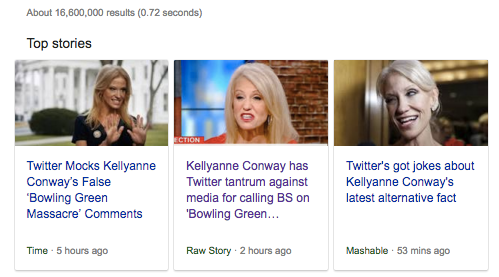
Fake news is suddenly big news. A quick browse this morning and the topic is featured in articles and stories in The Guardian, CNN, Forbes, Reuters, iPolitics and The New York Times. Explaining fake news, finding its source, its effectiveness and how to counter it are all top of mind priorities for journalists, politicians and even technology leaders. Fake news is eroding the trust the public has in its leaders and media and something must be done soon. We need to see a return of intelligence and knowledge to present true facts. In this new era, issues such as climate change, economic data, security, crime and healthcare policy -people without qualifications are being asked to speak on topics that require years of study, research, and experience. Opinions — not always informed opinions — are taken as fact. To reverse this trend, institutions need to work with the media to present a more balanced set of perspectives. We need to see academics, physicians, professionals, and leaders in their respective fields contribute more to these big conversations. It won’t be easy, but it is possible. ExpertFile is the world's first marketing platform and search engine for expert content. The company specializes in providing media access to thought leaders and thousands of experts who are objective, credible and whose opinions are sought and respected worldwide. Now more than ever – the public needs trustworthy sources of accurate and unbiased information. Peter Evans is the CEO and Co-founder of ExpertFile. His experience and expertise has made him a leader in the realms of innovation, marketing and digital software. He is a respected speaker and a sought-out panelist for technology, marketing and innovation events throughout the world. Peter is available to speak to media regarding fake news and how technology companies are fighting back. Simply click on his icon to arrange an interview. Source:

What Are IDC's Top 10 Canadian ICT Predictions for 2020? Attend our Webinar to Find Out
Watch a sneak preview video for our upcoming Canadian ICT Predictions 2020 Complimentary Webinar Wednesday Dec 4, 2019 12PM - 1PM EST The countdown leading up to our Canadian ICT Predictions 2020 is on. We're less than a week away from unveiling top 10 predictions that will impact the ability of Canadian organizations to compete and grow in 2020. We're excited to present what's next for Canadian technology to help you strategize for next three years and beyond. We'll cover fact-based predictions for AI, edge solutions and what technologies will be considered the norm for digital businesses. We'll also explore how automation will reshape the Canadian workforce, what's likely to happen with 5G, and much more. We'd love for you to join us live. Don't Miss Out! Register Today If Wednesday, December 4, 2019 doesn't work with your calendar, register now and we'll send you a link to watch the webinar replay.


Baylor Expert Shares Six Lessons We Can Learn From Mr. Rogers About Being a Good Neighbor
WACO, Texas (Nov. 14, 2019) – In this polarized time, when it requires little effort to tear a stranger apart on social media or lash out at a family member because of a difference of opinion, the gentle cadence of Fred Rogers singing a simple song about neighbors loving and helping each other is a welcome respite. The much-anticipated movie, “A Beautiful Day in the Neighborhood,” starring Academy Award-winner Tom Hanks as Rogers – known to generations simply as “Mr. Rogers,” the host of “Mister Rogers’ Neighborhood” – will be released in theaters on Nov. 22. The official movie trailer posted on YouTube has drawn nearly 12 million views. Civics education expert Brooke Blevins, Ph.D., associate professor of social studies education and chair of Baylor University’s department of curriculum and instruction, said the renewed focus on the beloved and soft-spoken TV personality, who died in 2003, might be coming at just the right time. “When you watch Mr. Rogers, time slows down, and you are able to take a deep breath as complicated issues become more understandable and the beauty of relationships is reinforced,” Blevins said. “Imagine if we all walked into the world with the belief that each person was inherently worthy. Imagine if our goal was to help each other recognize that we are worthy of being loved. Imagine if we sought to listen more than we spoke,” she said. “I imagine if this was the case, that our conversation would change, our understanding of those around us would shift, and our national conversations would be more civil.” Below, Blevins shares six lessons we can learn from Mr. Rogers about being better citizens. Each person is worthy to be loved and heard. Like Mr. Rogers, we must recognize that each person we interact with is worthy to be loved and listened to. We must recognize that each person has unique experiences, fears, losses and triumphs that shape the way they understand what’s happening around them. We need to do much more listening and far less talking. We should work together to tackle tough issues in reasoned and evidenced-based ways with civility and a genuine desire to understand those around us. Use your platform for good. Mr. Rogers was deeply committed to creating a better world. Mr. Rogers did not take his role on TV lightly. He saw it as an opportunity to help young people make sense of the world around them and to become more knowledgeable and engaged citizens. He saw television as an opportunity to create community and a shared sense of purpose. As he once noted, “The space between the television screen and whoever happens to be receiving it, I consider that holy ground. A lot happens there.” Lessons we often think are for children are for adults as well. Mr. Rogers was a teacher, a pastor and a friend. His lessons were drawn from the everyday experiences of children’s lives, from current political events to personal and emotional trials children experience. Not only were these lessons for children, but for their parents who were also watching. His lessons focused on cultivating civic discourse, reasoned judgment and evidence-based decision-making, but most importantly, his lessons cultivated understanding and empathy for one’s neighbor. In his conversations and examples, he drew on our shared humanity to help young people make sense of an ever-changing world. Slow down. In a time of fast-paced and often silly cartoons that were designed to move quickly from scene to scene, Mr. Rogers maintained a much slower and thoughtful pace. A pace that was compelling to both young and old alike. He explored issues slowly and with depth, without the silly antics that are so often used to keep children and adults’ attention. He used his time with viewers to develop a relationship that valued their experience and honored their emotional complexity. He sent the message that all people are inherently valuable and are capable of loving and being loved. It’s OK to discuss tough issues – even with children. But be civil and understanding when you do it. As an ordained minister and gifted musician, Mr. Rogers utilized his vocational skills to create a safe space in which difficult conversations could occur. He never shied away from the tough conversations. From issues such as divorce, death, assassination and even 9-11, Mr. Rogers’ helped young people navigate emotionally traumatic events with both knowledge and compassion. Mr. Rogers knew that by talking about our fears, losses and misunderstandings, we could work together to build a better future. As he wrestled with these issues, he asked questions, he inquired, he listened, and he had children do the same. He had a deep-rooted commitment to helping children navigate their world. Be a good neighbor. Being a good neighbor is caring about those around you. It’s not just about tolerance, but truly seeking to understand those in your community. Being a good neighbor means helping those around you recognize that they play an important part in making the world a better and more just place. It means working together to solve complex issues and cultivate a world in which all people can fulfill their true purpose. ABOUT DR. BROOKE BLEVINS Brooke Blevins, Ph.D., teaches both undergraduate and graduate courses in secondary education, social studies education and multicultural education. As a former secondary teacher, she has a passion for equipping teachers with the resources needed to engage in humanizing social studies education. Dr. Blevins also serves as the co-director for the iEngage Summer Civics Institute, for which she and co-founder Dr. Karon LeCompte have raised more than $250,000 in grant funding. Dr. Blevins’ research focuses on social studies education as a means to prepare active and engaged citizens. In her work, Dr. Blevins examines how to prepare teachers to develop both political clarity and pedagogical content knowledge that encourages them to engage in transformational based and humanizing social studies education. In addition, Dr. Blevins also is interested in how to educate and empower young people to become active civic participants through participation in action civics and digital technologies. ABOUT BAYLOR UNIVERSITY Baylor University is a private Christian University and a nationally ranked research institution. The University provides a vibrant campus community for more than 17,000 students by blending interdisciplinary research with an international reputation for educational excellence and a faculty commitment to teaching and scholarship. Chartered in 1845 by the Republic of Texas through the efforts of Baptist pioneers, Baylor is the oldest continually operating University in Texas. Located in Waco, Baylor welcomes students from all 50 states and more than 90 countries to study a broad range of degrees among its 12 nationally recognized academic divisions. ABOUT BAYLOR SCHOOL OF EDUCATION Founded in 1919, Baylor School of Education ranks among the nation’s top 20 education schools located at private universities. The School’s research portfolio complements its long-standing commitment to excellence in teaching and student mentoring. Baylor’s undergraduate program in teacher education has earned national distinction for innovative partnerships with local schools that provide future teachers deep clinical preparation, while graduate programs culminating in both the Ed.D. and Ph.D. prepare outstanding leaders, teachers and clinicians through an intentional blend of theory and practice. Visit www.baylor.edu/soe to learn more.
