
Experts Matter. Find Yours.
Connect for media, speaking, professional opportunities & more.

IDC Quarterly Tech Brief: Your Guide For The Digital-First World
September 2021 Editor's Comments Happy September! We hope you got a chance to recharge and enjoy the summer. Now that we’re looking into the last half of 2021, our experts agree that we’re not going back to the pre-pandemic normal, but we can’t help but be optimistic with recent news on vaccinations, lifting of restrictions, kids going back to school, and some of us returning to the office. As the world slowly moves from a pandemic to a digital-first state, we will see permanent shifts in the way we live, work, play and learn. IDC expects the next 3 years to remain highly fluid due to the growing range of global challenges. And now, more than ever, business and government leaders will need to operate and invest in increasingly digital-first markets, while building digital infrastructures, enabled by an intelligent, empowered, and a well-connected workforce. In this edition of IDC Canada's Quarterly Tech Brief, we’ll explore insights on the digital-first world, best practices, and digital transformation stories from Canadian tech leaders at our upcoming IDC CIO Series webinar on September 22, and as usual, we also reveal the latest research, survey results and market forecasts. And last but not least, we're happy to announce IDC Canada's biggest technology event of the year, IDC Connections 2021 is coming up on November 4th. Save your seat today! FEATURED IDC CIO Panel Series – Part 2: Building Resiliency & Innovation into Your Canadian Journey Join us on Wednesday, September 22 at 2 p.m. ET for the latest session of our IDC CIO Panel webinar series where we will dive into what digital resiliency means for you, and how to leverage the latest Digital Infrastructure and Digital Innovation trends to your advantage. Hear from industry-leading tech executives, Antoine Haroun, CIO at the Peel District School Board, Irene Zaguskin, CTO at The Printing House, and Michael Kurek, VP of Sales & Operations, Data Center Solutions at Dell Technologies as they unpack how the pandemic accelerated their digital transformation journey, and their best practices for planning and managing IT during uncertain times. Our experts will also host 3 sessions around how the Future Enterprise operates in a Digital-First World, a look ahead at the forces of change heading into 2022, the Future of Digital Infrastructure, and the need to strive for a balance between digital innovation and resiliency to remain relevant and competitive. Your Canadian Research Checklist Here are some of our most popular Canadian reports of the quarter to help you understand changing market conditions and succeed in 2021. ✓ IDC Market Glance: Service Providers in Canada, 2Q21 ✓ The Rise of Canadian Cloud Ecosystems ✓ Canadian Cybersecurity Market Snapshot, 2Q21 ✓ Canadian Cybersecurity Buyer Persona: Managed Security Services Benefits ✓ Canadian Managed Cloud Services Adoption, 2021 Forecast Highlights ✓ Canadian Wireless Services Forecast, 2021–2025: Wireless Wars 18 ✓ Canadian Internet of Things Forecast, 2021–2025 ✓ Outlook for Canadian SaaS Applications, 2021 ✓ Worldwide Managed Cloud Services Forecast, 2021-2025 ✓ IDC's Forecast Scenario Assumptions for the Canadian ICT Market, April 2021 IDC THOUGHT LEADERSHIP: DIGITAL RESILIENCY SCORECARD Explore IDC's new Digital Resiliency Scorecard Does resiliency still matter in a "post-pandemic" world? Quite simply, it does. In IDC's recent Digital Resiliency Benchmark Survey, we found that 65% of U.S. buyers and 55% of Worldwide buyers have plans to invest in resiliency over the April 2021-April 2022 timeframe. Watch The Digital Resiliency Scorecard webinar to learn more ICYMI: BLOG HIGHLIGHTS FROM THIS QUARTER Future of Customer - More Human Experience - Over 34% of executives point to transforming the customer experience as the top business function. Learn more about the Future of Customer framework with IDC’s Keyoor Adavani. Read More → Major Smartwatch Market Consolidation: A Canadian Take - In May Google announced a new unified smartwatch platform in partnership with Samsung. Learn how this partnership is expected to shake up the market dynamics in Canada with Shahd ElAshri. Read More → Telesat Vying For LEO Constellation Leadership - A new commercial space race has begun and among the entrants for Low Earth Orbit (LEO) satellite constellations, Telesat is an emerging leader in this multi-billion-dollar market. Learn more from IDC's Lawrence Surtees. Read More → Federal Budget Innovation Goals and What’s Next for Recovery - COVID-19 fast-tracked innovation and digitization. See how the federal budget plans to support digital transformation, and learn how customer centricity and AI can set you apart from the competition with IDC's Mark Schrutt. Read More → UPCOMING VIRTUAL EVENT IDC Connections 2021 Canada: Accelerating Your Path to a Digital-First Enterprise Mark your calendars! IDC Connections is back this year and we can't wait for you to take a front-row seat. Don't miss an afternoon full of IDC experts' insights, special guests, networking, and hear from the tech leaders who are driving this new era of rapid transformation. This year's highlights include: A special closing keynote on the Future of Sports and Entertainment with Humza Teherany, Chief Technology & Digital Officer at Maple Leaf Sports & Entertainment Creating digital innovation & experiences at your organization, with IDC's Chief Research Officer, Meredith Whalen Embracing digital infrastructure, with IDC Canada's Dave Pearson Leveraging new industry ecosystems, with IDC Canada's Nigel Wallis Guidance from our popular CIO Best Practices Panelists PODCASTS WORTH A LISTEN Find out why clients are raving about our new podcast series! In an era seemingly filled with uncertainty, the Future Enterprise podcast is a must-listen. It's a podcast for business and tech executives, aimed at helping you leverage technology to achieve innovative, disruptive, and productive business outcomes. Listen in as IDC host, Joseph Pucciarelli, Group Vice President & IT Executive Advisor interviews C-level executives from around the world on their digital transformation initiatives touching on each of the "Future of X" digital initiatives. Senior IDC research leaders often join in the conversation. Listen Now → Thanks for being a part of our IDC Quarterly Tech Brief Newsletter community! Don’t forget to subscribe to be notified quarterly when the next issue comes out.

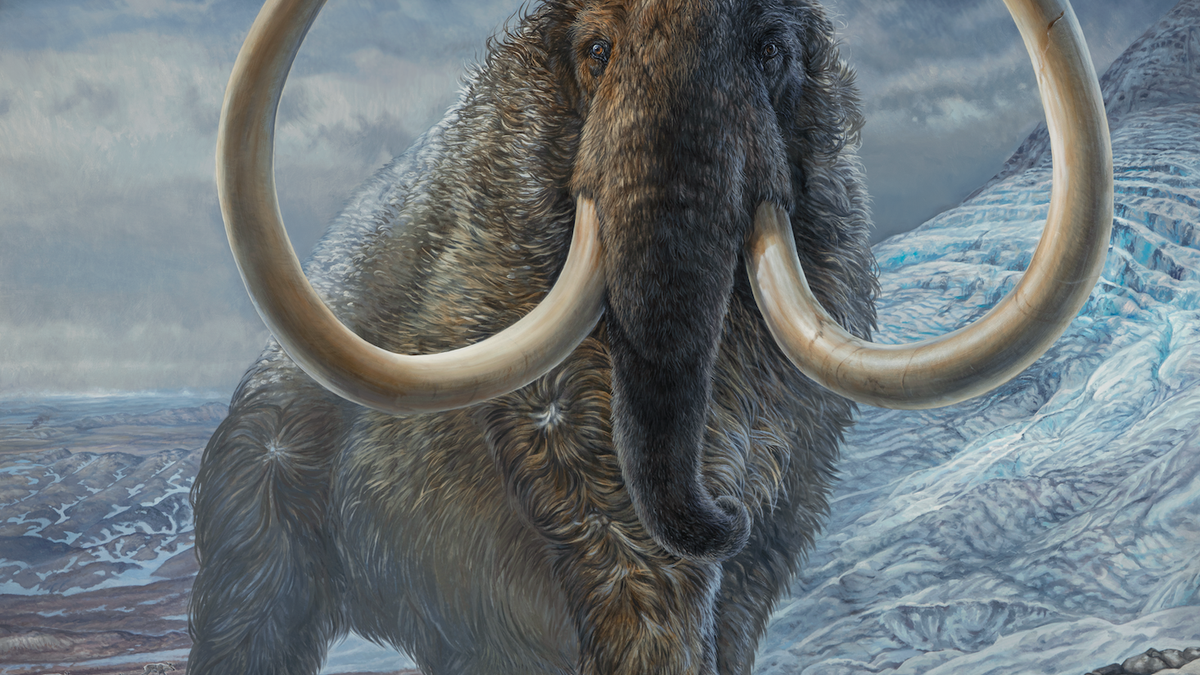
Stepping back in time — Georgia Southern expert helps uncover day-to-day life of the woolly mammoth
It’s been an exciting time for those studying the now extinct animals that used to roam the continent. And recently, Katy Smith, associate professor of geology and curator of paleontology at Georgia Southern University, was asked to lend her expertise to a team of scientists who are piecing together the life and times of the massive wholly mammoth that once roamed the earth. We might not be able to study a walking, breathing woolly mammoth in real life, but what if we could track its movements and get a sense of where it traveled, from its birth to its death? For the first time ever, scientists have done just that. An international team of researchers published a paper this week in the journal Science that reveals the 28-year movement history of a male woolly mammoth. With exciting detail about where it roamed throughout northern Alaska, its seemingly favorite locations—as it returned time and time again—and where it eventually died, this paper offers unparalleled insight into an animal that lived approximately 17,000 years ago. August 12 - GIZMODO A full article is attached and is a captivating read. If you are a reporter looking to learn more or cover this interesting subject – then let our experts help. Contact Georgia Southern Director of Communications Jennifer Wise at jwise@georgiasouthern.edu for an interview with Katy Smith today.


Environmental scientist on heat wave in western U.S.
Jonathan Gilligan, Associate Professor of Earth & Environmental Science and Civil & Environmental Engineering at Vanderbilt University, is available for commentary on the recent heat waves and how climate change plays a role. Professor Gilligan's research focuses on global climate change and environmental policy. He also serves on Vanderbilt's Climate Change Research Network, which focuses on the reduction of carbon emissions from individuals and households. He can speak to how climate change is affecting our temperatures and future related trends we might see.


Records are going up in flames - is there any break to America's current heat wave?
To call it a heat wave may be an understatement. But as June ends and July rolls in, a blanket of hot and humid weather is covering most parts of America with temperatures not seen since the end of the Great Depression. The trend has scientists and meteorologists looking for answers. AccuWeather's team of expert forecasters were describing the then upcoming heat wave as "unprecedented," "life-threatening" and "historic" as early as the middle of last week, and these descriptions have been accurate in the first days of the Northwest scorcher. The weekend marked the beginning of the extended stretch of extreme temperatures. Portland, Oregon, a city that typically experiences temperatures in the middle to upper 70s in late June, soared to a staggering 112 degrees Fahrenheit on Sunday, breaking the all-time record high of 108 set just a day before. Prior to the current heat wave, the highest temperature ever recorded in the city was 107 set once in July of 1965 and twice in August of 1981. Portland is also expected to obliterate its daily record high of 100 on Monday and possibly set an all-time high temperature record for the third straight day. AccuWeather is predicting a high of 113 on Monday, which would make it the hottest day ever recorded in the city. The highest temperature ever recorded in the state of Oregon is 117, which was set in Umatilla on July 27, 1939. June 28 - AccuWeather And as Americans keep an eye on the mercury that continues to rise, there’s a lot of questions to be asked: Is this a weather phenomenon? Has climate change showed its hand? Are these new temperatures the new normal for the summer months? How can cities and communities adapt to these drastic conditions? And is there any turning back these rising numbers? If you’re a journalist looking to learn more about this topic, then our experts are here to help. Dr. Pamela Grothe is an assistant professor in the Department of Earth and Environmental Sciences as the University of Mary Washington, who earned a Ph.D. in the Paleoclimatology Lab at the Earth and Atmospheric Sciences department at Georgia Institute of Technology. She’s also an #expert in climate change and specializes in how cities can cope and adapt to hotter temperatures and stay livable places. Dr. Pamela Grothe is available to speak with media – simply click on her icon to arrange an interview.



America in the 1950’s was all about building highways to pump up the post-war economy and make sure everyone could criss-cross a connected America by car. Urban planners didn’t hesitate to bulldoze neighborhoods that were in the way of this progress. However, history shows that most of those communities that were destroyed housed Black and lower income residents. The result left areas with hot pavement, few green spaces and little tree canopy to provide shade. Recently, UMW’s Pamela Grothe joined the host of With Good Reason to talk about how America needs to undo these past mistakes and make better choices. Grothe recently worked with Jeremy Hoffman, chief scientist at the Science Museum of Virginia, who also appears on the episode, and UMW 2021 graduate Allison Grant on research that explores how redlined communities in Richmond, Virginia, designed to keep Black residents in less desirable neighborhoods, show records of being significantly hotter over the last 30 years than white neighborhoods, which has resulted in more heat-related health issues for Black and lower income residents. Aside from jumping in a pool, trees are our best bet to cool summer heat. Pamela Grothe says we have to be intentional about putting trees in the right places. If you’re a journalist looking to learn more about this topic, then our experts are here to help. Dr. Pamela Grothe is an assistant professor in the Department of Earth and Environmental Sciences as the University of Mary Washington, who earned a Ph.D. in the Paleoclimatology Lab at the Earth and Atmospheric Sciences department at Georgia Institute of Technology. She’s an #expert in climate change and is available to speak with media – simply click on her icon to arrange an interview.

#SaveThePandas… and Save the Snakes, Too!
Every third Friday in May, the United States celebrates Endangered Species Day—a day set aside to draw attention to and share the importance of wildlife conservation and restoration efforts for all imperiled species. Aaron Bauer, PhD, a professor of biology at Villanova University, holds the record for identifying and naming the most species of gecko found on the planet. Dr. Bauer reinforces the importance of the “national day,” pointing out that, “it is too easy for most people to forget about endangered species, especially when the state of human affairs is so pressing. Having a day to focus society on this particular problem is a good reminder that we are not alone on Earth.” Dr. Bauer wants to use Endangered Species Day in 2021 to bring attention to species that people might not realize are endangered. He observes that “the tendency is for people to focus on the big charismatic organisms, like tigers, gorillas and whales. However, there are endangered species in every group of animals, plants and even fungi. These do not get enough attention because they lack the mass appeal of pandas and parrots, but raising awareness in general can help by generating support for agencies and projects devoted more broadly to conservation.” So, which animals need our care and attention this Endangered Species Day? “Scientists have become aware that amphibians, like frogs and salamanders, are in decline around the world,” says Bauer. “More than 30 years of research has demonstrated widespread declines, and today more than a third of their 7,000-plus species are threatened or endangered. Many more are too poorly known to even assess their conservation status. Many reptiles are likely in the same situation.” According to Dr. Bauer, some animals are so under-studied, scientists can’t be sure which species are becoming endangered. “We know that many turtles and nearly all crocodilians are endangered, but we don’t know much about the situation for lizards and snakes, which make up the vast majority of the 11,000-plus reptile species (especially because snakes are much maligned in popular culture).” So, how, with only one day of focus, can the average person make a difference for endangered species? Dr. Bauer recommends “starting them young.” He calls activities at zoos and other public outreach organizations “a wise investment of energy as kids that grow up knowing and caring about environmental issues, including endangered species, are likely to continue to care and to pass on their views in adulthood.” “Endangered Species Day is a reminder that a large percentage of the world’s biota is imperiled and, as stewards of the planet, it is our responsibility to try to improve their situation,” said Dr. Bauer. “Especially since we are mostly responsible for their current plight.”


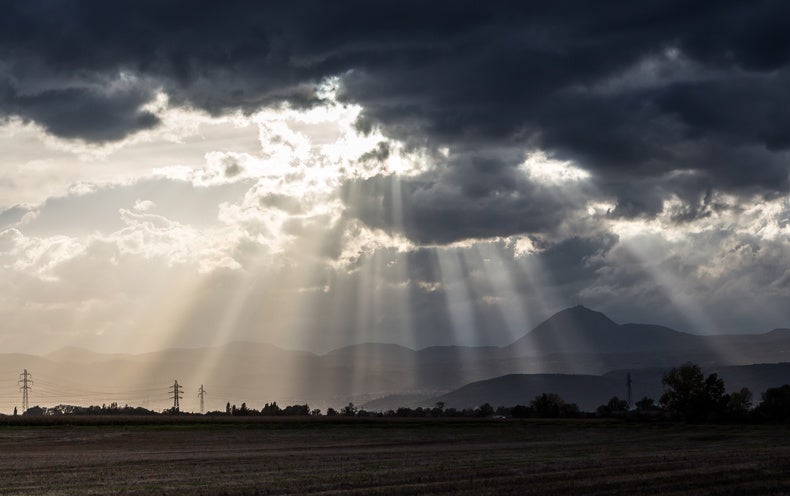
Solar geoengineering - it’s a topic that has caused an ethical lightening storm in the science community. The concept is complex. Should the world take on the crisis of climate change by attempting to artificially attempting to cool the earth? It’s an idea that has the National Academies of Sciences, Engineering and Medicine seeking a billion dollars in the next five years to investigate the theory. It’s a topic that is somewhat controversial, and journalists are looking to leading experts from across America for expert insight, opinion and perspective. Prakash Kashwan, a political scientist at the University of Connecticut, said he felt the report could have better emphasized the seriousness of some concerns over others. Uncertainties about the impacts of solar geoengineering on global weather patterns have the potential to affect some regions of the world more severely than others, he pointed out. Some experts have raised concerns about potential effects of geoengineering on monsoon rainfall in parts of Asia and Africa, he said. More than 2 billion people around the world rely on these rainfall patterns to support their water and agricultural needs. These kinds of issues should be given special weight, Kashwan suggested. "Some uncertainties are much more highly consequential for the global society, and especially for the poor and vulnerable," he told E&E News. Kashwan also reiterated concerns about potential political effects. While the report makes clear that geoengineering is not a substitute for climate mitigation, he suggests that this doesn't necessarily prevent policymakers from using it in that way. "The problem is the extent to which researchers are really helpless in deciding how research is used in the political system," he said. "That part has yet to be fully appreciated." Kashwan suggests that more dialogue might be warranted before funding a national research program, with greater input from both the international community and political experts who can weigh in on the ways that geoengineering research might affect political decisions. March 26, Scientific American It's a captivating idea – but it could have political, social and ethical consequences. Dr. Kashwan has also been interviewed by The New York Times. If you are a journalist looking to learn more about solar geoengineering, its possibilities and the reasons some scientists are worried – then let us help with your coverage. Prakash Kashwan is an Associate Professor of Political Science at UConn and an expert in the areas of environmental and climate justice, planetary justice, global commons, climate governance, and climate geoengineering governance. Dr. Kashwan is available to speak with media regarding this topic – simply click on his icon now to arrange an interview today.

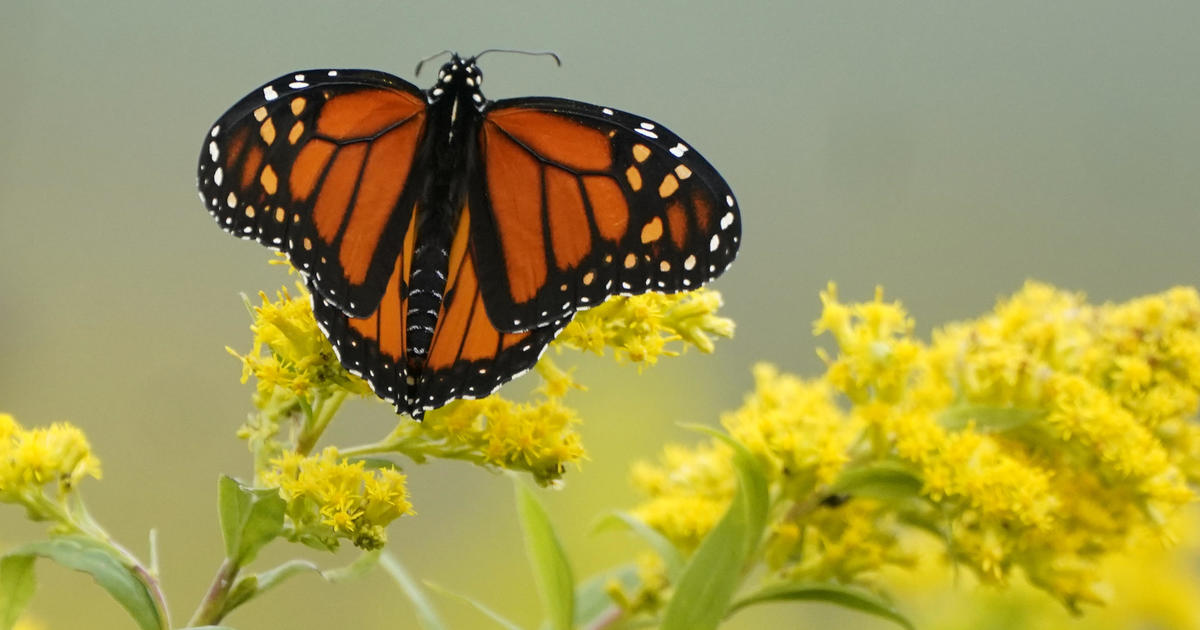
It’s as if there’s an all-out war on the world’s insects – and experts from across the country are all buzzing with some very bad news. Recently, University of Connecticut’s Professor of Ecology and Evolutionary Behavior, David Wagner was featured on CBS National News in an in-depth story about the potential apocalypse the world’s insect kingdom faces. “The world's vital insect kingdom is undergoing "death by a thousand cuts," the world's top bug experts said. Climate change, insecticides, herbicides, light pollution, invasive species and changes in agriculture and land use are causing Earth to lose probably 1% to 2% of its insects each year, said University of Connecticut entomologist David Wagner, lead author in the special package of 12 studies in Monday's Proceedings of the National Academies of Sciences written by 56 scientists from around the globe. The problem, sometimes called the insect apocalypse, is like a jigsaw puzzle. And scientists say they still don't have all the pieces, so they have trouble grasping its enormity and complexity and getting the world to notice and do something. Wagner said scientists need to figure out if the rate of the insect loss is bigger than with other species. "There is some reason to worry more," he added, "because they are the target of attack" with insecticides, herbicides and light pollution… Insects "are absolutely the fabric by which Mother Nature and the tree of life are built," Wagner said. January 12 - CBS News The story is attached above – and must-read material for anyone concerned about insects and the vital role they play in just about every aspect of our world. If you’re a journalist looking to know more about this topic and would like to contact Dr. Wagner – simply click on his icon now to arrange an interview today.


With Hurricane Season Underway, What Have Engineers Learned from Previous Storms?
With hurricane season already underway and projected to be active, communities need to make sure they have learned the lessons from previous major storms so that they are prepared for the next one. As the technical director for the Network for Earth Engineering Facility at Rensselaer Polytechnic Institute and an expert in centrifuge modeling, Tarek Abdoun can provide that insight. Abdoun led a research team that used physical models within the Rensselaer centrifuge to determine how some of the levees in New Orleans failed during Hurricane Katrina. Those findings have provided engineers with a better understanding of how levees respond to extreme floods. Abdoun is available to talk about what engineers have been able to learn since Katrina, and how that makes levees and dams safer.


Baylor Cultural Critic and Author of “Living with the Living Dead” Talks Books and Pop Culture During COVID-19 Time at home is increasing as shelter in place orders and working from home become the norm for many people during the COVID-19 pandemic. During this season of uncertainty, many turn to books, movies and other pieces of pop culture pass the time. Greg Garrett, Ph.D., professor of English at Baylor University and expert cultural critic, supports pop culture and literature as important to meaningfully escaping current fears as well as contextualizing experience and emotions. “A great novel, movie or memoir is a gift when we need distraction, but it can also offer us the dramatic reminder that these are the things that make us truly human: love, community, compassion and faith,” Garrett said. “The world may be shifting beneath our feet, but we’re going to be fine as long as we keep the important things in view.” In a Q&A with Garrett, he gave insight on what can be learned from zombie pandemic pop culture, touched on how literature has fit culturally into pandemic history and offered advice on books to pick up during extra free time at home. Q: You’re the author of “Living with the Living Dead: The Wisdom of the Zombie Apocalypse.” What can we learn from zombie pandemic pop culture? A: Our most pervasive form of pandemic literature in recent years is the story of the Zombie Apocalypse, which has been told in novels, movies, games and comics. It’s been the inciting conflict of “The Walking Dead,” and the underlying threat in “Game of Thrones,” two of the most popular television series in history. One of the attractions of zombie literature is that zombies can serve as a metaphor for lots of things at once: for pandemic, sure, but also for economic unrest, political chaos, terrorism and other things that keep us up at night. But as Max Brooks, author of the seminal zombie novel “World War Z: An Oral History of the Zombie War” (2006), notes: however difficult our lives might be at this moment, at least the dead are not wandering the earth and trying to eat us! We can, Brooks says, close the book, turn off the TV, and at least be secure in that. A book like “World War Z” or a movie like “Sean of the Dead” (2004) or “Zombieland” (2009) can soothe some of our tension since this story of a world coming off the rails is our story, yet clearly not our story. Q: How does literature fit into cultural history events like pandemics? A: One of the most important gifts that great stories can give us is the realization that we’re not alone in our experience, and that, in fact, our experience is not unprecedented. Anyone wanting to understand that this dark time is not in fact the darkest time should read historian Barbara Tuchman’s masterful “A Distant Mirror: The Calamitous 14th Century” (1978), which explores the Black Death of 1348-50, a pandemic so awful it killed a third of the populations of Europe and the Middle East. Daniel Defoe’s “A Journal of the Plague Year” (1722) is a novel recalling the horror of the Black Death in London some 60 years prior to its writing. In that book, Defoe’s narrator says he writes about his choices in such detail because he believes that they might be “of moment to those who come after me.” That is, he hopes his story might be of use to future sufferers like ourselves, and it is. Q: Literature can also provide escape from tough times. What other books should we be reading right now? A: In the zombie spirit, you could read “Pride and Prejudice and Zombies,” a 2009 parody by Seth Grahame-Smith of the Jane Austen novel. But if you’re simply seeking meaningful escape from our current story, you couldn’t do much better than reading (or re-reading) the actual “Pride and Prejudice” (1813), one of my favorite novels. I can’t wait to fall back into the world of the Bennets and worry about something besides viral curves and travel bans. During the weeks we expect to be largely confined to the house, my family and I are making reading lists. Mine includes Ernest Hemingway’s “The Sun Also Rises” (1926) and James Baldwin’s “The Fire Next Time” (1963), both of which I plan to teach in my American lit class at Baylor this fall, and Toni Morrison’s “Beloved” (1987), which will scare me and break my heart in ways that have nothing to do with this pandemic. ABOUT GREG GARRETT, PH.D. Greg Garrett, Ph.D., professor of English at Baylor University, is a popular theologian and cultural critic as well as the author of two dozen novels, memoir and nonfiction books including “Living with the Living Dead: The Wisdom of the Zombie Apocalypse” (Oxford University Press, 2017). ABOUT BAYLOR UNIVERSITY Baylor University is a private Christian University and a nationally ranked research institution. The University provides a vibrant campus community for more than 18,000 students by blending interdisciplinary research with an international reputation for educational excellence and a faculty commitment to teaching and scholarship. Chartered in 1845 by the Republic of Texas through the efforts of Baptist pioneers, Baylor is the oldest continually operating University in Texas. Located in Waco, Baylor welcomes students from all 50 states and more than 90 countries to study a broad range of degrees among its 12 nationally recognized academic divisions. THE COLLEGE OF ARTS & SCIENCES AT BAYLOR UNIVERSITY The College of Arts & Sciences is Baylor University’s oldest and largest academic division, consisting of 25 academic departments and seven academic centers and institutes. The more than 5,000 courses taught in the College span topics from art and theatre to religion, philosophy, sociology and the natural sciences. Faculty conduct research around the world, and research on the undergraduate and graduate level is prevalent throughout all disciplines. Visit www.baylor.edu/artsandsciences.

