
Experts Matter. Find Yours.
Connect for media, speaking, professional opportunities & more.
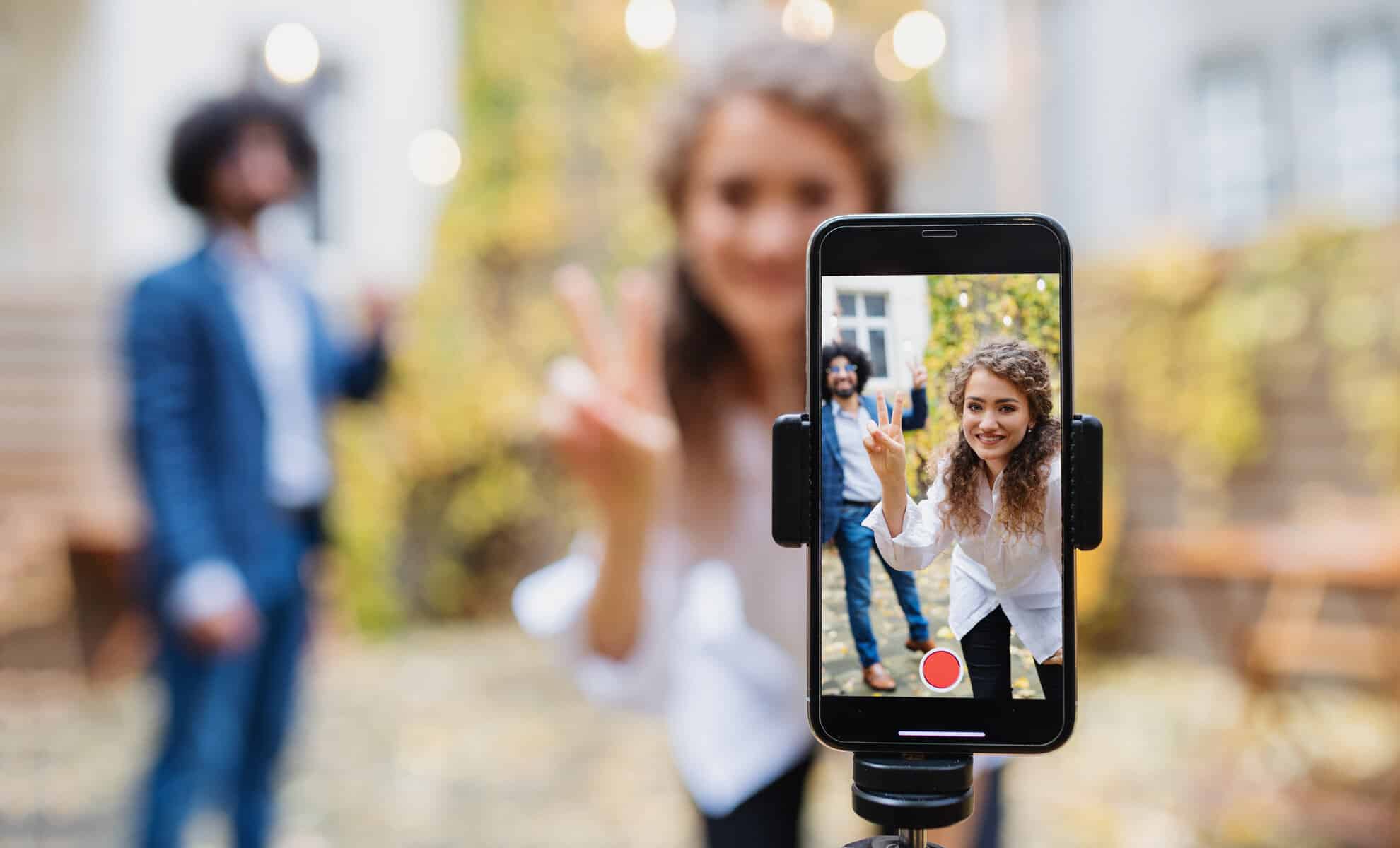
Emory Experts - Why Companies Invest in Local Social Media Influencers
Companies seek local influencers to pitch products. Even though most influencers amass geographically dispersed followings on social media, companies are willing to funnel billions of sponsorship dollars to multiple influencers located in different geographic areas, effectively creating sponsorships that span cities, countries, and in some cases even, the globe. The desire to work with local influencers has spawned advertising agencies that specialize in connecting companies with influencers and may soon redefine the influencer economy. This trend has merit, our research team finds. In a new Journal of Marketing study, we show a positive link between online influence and how geographically close an influencer’s followers are located. The nearer a follower is geographically to someone who posts an online recommendation, the more likely she is to follow that recommendation. To investigate whether geographical distance still matters when word of mouth is disseminated online, our research team examined thousands of actual purchases made on Twitter. We found the likelihood that people who saw a Tweet mentioning someone they follow bought a product would subsequently also buy the product increases the closer they reside to the purchaser. Not only were followers significantly associated with a higher likelihood to heed an influencer’s recommendation the closer they physically resided to the influencer, the more quickly they were to do so, too. We find that this role of geographic proximity in the effectiveness of online influence occurs across several known retailers and for different types of products, including video game consoles, electronics and sports equipment, gift cards, jewelry, and handbags. We show the results hold even when using different ways to statistically measure the effects, including state-of-the-art machine learning and deep learning techniques on millions of Twitter messages. We posit that this role of geographic proximity may be due to an invisible connection between people that is rooted in the commonality of place. This invisible link can lead people to identify more closely with someone who is located nearby, even if they do not personally know that person. The result is that people are more likely to follow someone’s online recommendation when they live closer to them. These online recommendations can take any form, from a movie review to a restaurant rating to a product pitch. What makes these findings surprising is that experts predicted the opposite effect when the internet first became widely adopted. Experts declared the death of distance. In theory, this makes sense: people don’t need to meet in person to share their opinions, reviews, and purchases when they can do so electronically. What the experts who envisioned the end of geography may have overlooked, however, is how people decide whose online opinion to trust. This is where cues that indicate a person’s identity, such as where that person lives in the real world, come into play. We may be more likely to trust the online opinion from someone who lives in the same city as us than from someone who lives farther away, simply because we have location in common. Known as the social identity theory, this process explains how individuals form perceptions of belonging to and relating to a community. Who we identify with can affect the degree to which we are influenced, even when this influence occurs online. Our findings imply that technology and electronic communications do not completely overcome the forces that govern influence in the real world. Geographical proximity still matters, even in the digital space. The findings also suggest that information and cues about an individual’s identity online, such as where he/she lives, may affect his/her influence on others through the extent to which others feel they can relate to him/her. These findings on how spatial proximity may still be a tie that binds even in an online world affirm what some companies have long suspected. Local influencers may have a leg up in the influence game and are worth their weight in location. For these reasons, companies may want to work with influencers who have more proximal connections to increase the persuasiveness of their online advertising, product recommendation, and referral programs. Government officials and not-for-profit organizations may similarly want to partner with local ambassadors to more effectively raise awareness of—and change attitudes and behaviors towards—important social issues. Goizueta faculty members Vilma Todri, assistant professor of Information Systems & Operations Management, Panagiotis (Panos) Adamopoulos, assistant professor of Information Systems & Operations Management, and Michelle Andrews, assistant professor of marketing, shared the following article with the American Marketing Association to highlight their new study published in the Journal of Marketing. To contact any of the experts for an interview regarding this topic, simply click on their icon to arrange a time to talk today.




Metal-Breathing Bacteria Could Transform Electronics, Biosensors, and More
When the Shewanella oneidensis bacterium “breathes” in certain metal and sulfur compounds anaerobically, the way an aerobic organism would process oxygen, one of the materials it can produce is molybdenum disulfide, a material that could be used to enhance electronics, electrochemical energy storage, and drug-delivery devices. Shayla Sawyer, an associate professor of electrical, computer, and systems engineering at Rensselaer, has centered much of her research on the unique abilities of this bacterium. Her lab’s exploration in this area could be an important step toward developing a new generation of nutrient sensors that can be deployed on lakes and other water bodies. Compared with other anaerobic bacteria, one thing that makes Shewanella oneidensis particularly unusual and interesting is that it produces nanowires capable of transferring electrons. “That lends itself to connecting to electronic devices that have already been made,” Sawyer said. “So, it’s the interface between the living world and the manmade world that is fascinating.” Sawyer is available to talk about this unique and innovative area of research, and the potential to develop the next generation of electronics and sensors.


Declaring a New Year's Resolution for 2019? Baylor Experts Can Help
WACO, Texas (Dec. 17, 2018) – As 2019 approaches, many Americans are considering ways to improve themselves via New Year’s resolutions. Whether it’s personal, like losing weight or clearing clutter, or it’s professional, such as being a better manager or breaking away from smartphones, the options are wide-ranging. Here is a listing of Baylor University research that might help advise those seeking positive change in the coming year. First and Foremost, Resolve not to Over-resolve Only 10 to 20 percent of people keep their resolutions, says Sara Dolan, Ph.D., associate professor and graduate program director of clinical psychology. She advises setting “bite-sized goals instead of a massive behavior change.” Rather than giving up sugar completely or going all out at the gym, she advises achieving small successes before moving on. Ask Yourself: “Do I really want to work from home?” Many U.S. employees believe working from home – or at least away from the office – can bring freedom and stress-free job satisfaction. A 2018 Baylor University study says, “Not so fast.” The research, led by Sara Perry, Ph.D., assistant professor of management in Baylor University’s Hankamer School of Business, found that: Autonomy is critical to protecting remote employees’ well-being and helping them avoid strain. Employees reporting high levels of autonomy and emotional stability appear to be the most able to thrive in remote-work positions. Employees reporting high levels of job autonomy with lower levels of emotional stability appear to be more susceptible to strain. “Any organization, regardless of the extent to which people work remotely, needs to consider well-being of their employees as they implement more flexible working practices,” the researchers wrote. Read more here. Save Money by being a Better Negotiator In today’s retail climate, where stores struggle to keep up with online competition and customers can compare prices with the ease of their smartphones, the price tag is just a starting point for negotiations, said negotiation expert Emily Hunter, Ph.D., associate professor of management in Baylor’s Hankamer School of Business. “No longer do you need to pay sticker price for everything you buy. The customer is now empowered to have a say in pricing, and even hourly retail workers are often empowered to give price discounts when requested,” Hunter said. Hunter said negotiations – whether in a retail setting or in the workplace – require confidence. “Many people are hesitant to negotiate because they don’t know how or they are worried about the other person’s reaction (Will they think I’m greedy?),” she said. “But practice can increase your confidence in your ability to negotiate. Rejection is less common than you fear, and retail stores especially are often willing to work with you.” She offered the following tips to increase the chances of greater deals at the check-out counter. Resolving to Be More Generous in the New Year Many Americans already have enough “stuff,” and the gift-giving season sometimes adds to that collection of things we really don’t need. Instead of always receiving, how can we resolve to be more generous in the New Year? “Whatever our station, however much money or resources we have, we all have something to share and something to give,” says Andy Hogue, Ph.D., senior lecturer in Baylor’s Honors College who teaches a course on philanthropy and the public good. “I like the idea of thinking in terms of a New Year’s resolution, sort of resolving to be more generous and helping people to think in those ways.” Hogue offers individuals and families four ways to develop a spirit of generosity in the New Year. Home Cooking Saves Money, Encourages Better Diet The more home-prepared foods used, the less risk there is of eating too many calories and fat calories, says Baylor University nutrition expert Janelle Walter, Ph.D., professor of family and consumer sciences and Nutrition Sciences Program coordinator. Home cooking also saves money and allows for more fruits, vegetables and dairy products — which often are missing when pre-prepared products are used — as well as less fat, sugar and salt. Some tips for prepping at home are making a precise list, lining up recipes and lists of ingredients, shopping when you aren’t hungry and preparing five main dishes at a time to see you through a few days. Involve your family in choosing foods, shopping and preparing foods, Walter says. Many simple and quick recipes are on online sites, she said, referencing these from Southern Living. Consider a New Approach to Dieting Meredith David, Ph.D., assistant professor of marketing in Baylor’s Hankamer School of Business, researched successful dieters and how they were different from others. Her research results have received national attention. “Our research shows that instead of creating rules to avoid one’s favorite treats, dieters should focus on eating healthy foods that they enjoy,” David said. “Dieters who restrict themselves from consuming the foods they love most may be setting themselves up for failure. Instead, they may be better off by allowing occasional ‘treats’ and focusing attention on healthy foods that they enjoy and making it a point to include those tasty but healthy foods in their diet.” Read the full article. Be Humble and Helpful In hard times, you know how much a helping hand means — and how humbling those times can be. So it might be good to resolve to look for opportunities to assist in 2019, while remembering not to pat yourself on the back for doing so. A decision to help someone else is influenced by time pressure, number of bystanders, empathy or a person's own distress — but that’s not all, says Baylor researcher Wade Rowatt, Ph.D., professor of psychology and neuroscience. “While several factors influence whether people will volunteer to help, it appears that humble people, on average, are more helpful than individuals who are egotistical or conceited.” Cultivate Patience — and Better Mental Health People who are more patient toward others also tend to be more hopeful, grateful and satisfied with life, says Sara Schnitker, Ph.D., associate professor of psychology and neuroscience. And there is more than one type of patience, including interpersonal patience — dealing with annoying people without losing your cool; handling life hardships — such as illness or unemployment — without frustration or despair; and coping with such daily hassles as traffic jams, computer woes and long lines. In her research, Schnitker invited undergraduates to two weeks of patience training, where they learned to identify feelings and their triggers, regulate their emotions, empathize and meditate. If you want to build your own patience, she recommends following three steps: identify, imagine and sync. First, take a moment to slow down an identify how you are feeling and why you might be feeling that way. Second, try to imagine or reappraise the situation from a different perspective or in a new way that helps you to be calm. Finally, sync with your purpose. Try to connect how what you are doing or enduring helps you pursue larger goals or your life purpose. When Ailing, Talk to A Doctor Instead of Searching the Internet for Answers Rather than heading to the doctor — or even the medicine cabinet — some people turn first to the Internet when they are ailing , according to a Baylor University researcher. Especially for folks who have trouble handling uncertainty, "cyberchondria" — the online counterpart to hypochondria — worsens as they seek answers, says Thomas Fergus, Ph.D., an associate professor of psychology and neuroscience in Baylor's College of Arts & Sciences. “They may become more anxious. And the more they search, the more they consider the possibilities,” he says. Doubts about health also can trigger worries about medical bills, disability and job loss, he said. And that can lead to a Catch-22 of more Googling (sometimes of questionable sources). Rather than giving in to cyberchondria, resolve to call your doctor — and take what you read with a grain of salt. In Conflicts with your Significant Other, Relinquish Power During spats with your spouse or significant other, the most common thing people want is not an apology, but a willingness to relinquish power, says Keith Sanford, Ph.D., professor of psychology and neuroscience in Baylor University's College of Arts & Sciences. That comes in many forms, among them giving a partner more independence, admitting faults, showing respect and being willing to compromise. Following closely behind the desire for shared control was the wish for the partner to show more of an investment in the relationship by such ways as sharing intimate thoughts or feelings, listening and sharing chores and activities, Sanford said. Sleep Better in the New Year Writing a “to-do” list at bedtime may aid in falling asleep, according to a Baylor University study by Michael K. Scullin, Ph.D., director of Baylor’s Sleep Neuroscience and Cognition Laboratory and assistant professor of psychology and neuroscience. Scullin's 2018 research compared sleep patterns of participants who took five minutes to write down upcoming duties versus participants who chronicled completed activities. Scullin suggests that writing a list may allow the brain to “offload” them instead of cycling through them repeatedly. Other hints: Use the bed for sleep rather than studying or entertainment; keep a regular sleep schedule; avoid electronics near bedtime; don’t take long day naps; and stay away from stimulants at least six hours before bedtime. Clear Out Clutter Without Getting Frazzled “Don’t try to organize the entire house in one weekend,” said Elise King, assistant professor in the department of family and consumer sciences. “You are much more likely to complete a task, especially one that you’ve probably been avoiding, if you break it into small goals. Don’t try to clean out an entire room over a weekend; instead, focus on the desk one week, the closet the next, and so forth.” Finally, involve your family, strive to make organization a routine — and reward yourself for your efforts. Break Away from the Smartphone Baylor marketing researchers James Roberts and Meredith David, Ph.D. have conducted numerous studies on the effects of smartphone technology on relationships. Their studies on “phubbing” – phone snubbing – have garnered national and international interest, given the pervasiveness of smartphone technology and its impact on relationships. Their studies have found: Bosses Who “Phone Snub” Their Employees Risk Losing Trust and Engagement “Phubbing” can damage romantic relationships and lead to higher levels of depression People who are phone snubbed by others are, themselves, often turning to their smartphones and social media to find acceptance “Although the stated purpose of technology like smartphones is to help us connect with others, in this particular instance, it does not,” David said. “Ironically, the very technology that was designed to bring humans closer together has isolated us from these very same people.”


