
Experts Matter. Find Yours.
Connect for media, speaking, professional opportunities & more.

Aston University graduates among highest paid in the country, new data reveals
"We continue to regularly meet with industry to ensure that the content of our courses meets the needs of the labour market, which is reflected in these findings." Saskia Loer Hansen, Deputy Vice-Chancellor Engagement Median earnings of employed Aston University graduates are £33,400 five years after graduation - the 20th largest in the UK Range of subject disciplines offered at Aston University have high median salaries Graduates from allied health subjects had the 5th largest median salary five years after graduation at £37,200. Graduates of Aston University are among the highest paid in the country five years after graduating, according to new data released by the Department for Education. The 2021 Longitudinal Education Outcomes (LEO) data shows that employed Aston University graduates have the 20th largest median salary overall five years after graduation at £33,400, compared with £24,900 sector average Subject level data in the LEO reveals that graduates from allied health subjects at Aston University had the fifth-largest median salary five years after graduation at £37,200, which is over £11,000 more than the sector average. It’s also good news for sociology and social policy graduates, with the median earnings in those subjects at £32,500 five years after graduation, the fourth largest in the country. Graduates from the materials and technology courses at Aston University earn a median salary of £42,000 five years after graduation which reflects the performance of the University’s logistics graduates. Speaking on the LEO data, Saskia Loer Hansen, Deputy Vice-Chancellor Engagement at Aston University, said: “We are delighted to see this recognition that our graduates are highly employable and go on to secure fulfilling and well-paid jobs once they have graduated. “It is fantastic to see the University appearing in the top 20 when it comes to median salaries five years after graduating, with an increase of £200 compared to last year’s results. “This is the 5th year of LEO and Aston University has always fared well and is among the top 20 largest median salaries five years after graduation for the 2nd year in a row. “We continue to regularly meet with industry to ensure that the content of our courses meets the needs of the labour market, which is reflected in these findings. It once again shows Aston University offers great value for money when it comes to employability. “We also work hard to ensure that students have a positive learning experience when they study with us and I am confident that the quality of this experience contributes to the great longer-term employment outcomes for Aston University graduates as measured by LEO.” The LEO analysis also shows that the University’s new graduates quickly earn good incomes with a median salary of £23,000 one year after the end of their courses, which is £4,400 higher than the sector average of £18,600.


Is a four-day workweek on the horizon?
Is Thursday about to become the new Friday? UConn’s Robert Bird spoke with the Washington Post about the possibility of a four-day workweek and what might be the driving force behind it: New Zealand's and Finland's prime ministers have floated the idea of a four-day workweek. The U.K. Labour Party in 2019 campaigned on the idea that workweeks would be shortened in the next decade. A number of employers have also begun to move in that direction. On Tuesday, Kickstarter announced it would reduce employees' hours without reducing pay next year, reported the Atlantic. Microsoft in Japan instituted a temporary three-day weekend in August 2019 - which resulted in a reported 40% increase in productivity, according to the company, and reduced electricity consumption and paper printing. "A five-day workweek was never a given," Robert Bird, a professor of business law at the University of Connecticut, told The Washington Post, adding that unions fought hard to scrap the six-day workweek norm in the early 1900s. "A five-day workweek was never something that was unchangeable or immutable." "Younger people are demanding more out of their work environment than just a paycheck," he said. "They want to work with someone who believes in their values - and the expression of a four-day workweek sends a signal that the company cares about work-life balance in a significant and meaningful way." June 25 – Washington Post It’s an interesting concept, and one that will be getting a lot of attention. If you are a journalist looking to cover this topic, let our experts help with your stories. Robert Bird is an expert in the areas of corporate compliance, employment law, legal strategy, business ethics, and corporate governance. Professor Bird is available to speak with media – simply click on his icon now to arrange an interview today.


Aston University – inspiring more women into engineering careers
• Aston University is celebrating International Women in Engineering Day • College of Engineering and Physical Sciences photography campaign of females as #EngineeringHeroes • Campaign aims to encourage girls into engineering careers A team of female engineering heroes from Aston University’s College of Engineering and Physical Sciences has banded together to encourage girls into STEM careers. As part of International Women in Engineering Day (INWED), the world’s largest initiative to celebrate the achievements of women in engineering, Aston University’s very own team of engineers have shown themselves to be the very best STEM superheroes. Aston University Mechanical Engineering Student and STEM Ambassador Olamide Olabode Dressed in capes and taking selfies for the event on Wednesday 23 June, female ambassadors from the College, in collaboration with the Greater Birmingham and Solihull Institute of Technology, have also put together video content to show off their engineering skills and become ‘heroes’ for girls wanting to do the same. Also launching on the day will be a competition for participating schools linked to Aston University. Girls are being challenged to come up with their own superhero gadget / gizmo idea. Professor Sarah Hainsworth OBE FREng, Pro-Vice Chancellor and Executive Dean of the College of Engineering and Physical Sciences at Aston University, said they were proud to be a part of INWED2021. “It is so important to us to encourage more girls into STEM subjects. Our hope is that through our teaching, and our partnership with the Greater Birmingham and Solihull Institute of Technology with its focus on technical skills for advanced manufacturing and giving students a clear route to technical employment, many will follow in the footsteps of our incredible team and be the STEM leaders of the future. “At Aston University, we work on sustainability for the environment, bioengineering, robotics, machine learning, sensors, communications, artificial intelligence, technologies for future vehicles and the issues that shape our future. On International Women in Engineering Day (INWED 2021), our College of Engineering and Physical Sciences celebrates the amazing contribution of our women colleagues who represent the cutting edge of engineering who are making vital contributions to our health and wellbeing, our society and our planet,” she added. Katy Lewis, marketing manager, said schools invited to take part were from the Aspire to Aston progressive programme, which works with 10 schools in and around Birmingham from areas of high deprivation. “At each of these schools there are up to 40 pupils per year group who have the academic ability to aim for university but lack the knowledge and confidence to do so and are selected for the programme. Our aim is to raise aspirations and normalise the idea of going into higher education, which is why us doing challenges like this one is so vitally important, so we can’t wait to help find the STEM female stars of the future,” she said. Currently the College of Engineering and Physical Sciences has 25% female academic staff (the UK STEM staff benchmark being 17 – 19%). The amount of female students studying the engineering subjects at Aston University has also grown over the past five years from 22% - 27%, above the UK STEM benchmark of 17% – 19%. To find out more about engineering at Aston University, visit ww.aston.ac.uk/eps For more details about the Greater Birmingham and Solihull Institute of Technology, visit this link: http://gbsiot.ac.uk/

Local neighborhood conditions are important for children’s brain development
Growing up in a disadvantaged neighborhood is related to children’s brain structure and neurocognitive performance, according to a study published May 3, 2021 in the journal JAMA Pediatrics. It is associated with the brain’s cortical structure and volume as well as how children pay attention, their executive function, reading, flexible thinking, and other tasks that support learning. These differences could potentially contribute to other inequities during adolescence as well as later in life for these children, though there is no evidence that such neighborhood-related differences are fixed or immutable. Children’s brains exhibit plasticity, meaning that they can change and grow in response to learning and experience. The study’s findings shine a spotlight on the larger population trend and do not serve as a predictor of any individual child’s outcome. “This points to the importance of investing in policies and programs that help improve local neighborhoods and to support and empower communities to promote children’s neurodevelopment and long-term health and well-being,” said Daniel A. Hackman, assistant professor at the USC Suzanne Dworak-Peck School of Social Work and lead author of the study. Researchers from the USC Suzanne Dworak-Peck School of Social Work and the Keck School of Medicine of USC used data from the Adolescent Brain and Cognitive Development (ABCD) Study, collected from October 2016 – 2018. The ABCD Study is the largest long-term study of brain development and child health ever conducted in the United States. “Disadvantaged neighborhoods may lack quality health services, access to nutritional foods, and well-maintained parks and rec facilities,” said Megan Herting, assistant professor in the department of preventive medicine at the Keck School of Medicine at USC and senior author of the study. “They may also expose residents to more pollutants or social stressors.” In addition to Hackman and Herting, study authors include Dora Cserbik, Jiu-Chiuan Chen, and Rob McConnell of the department of preventive medicine at Keck School of Medicine; Bita Minaravesh of the USC Dornsife Spatial Sciences Institute; and Kiros Berhane of the Department of Biostatistics at Columbia University Mailman School of Public Health. Neighborhood disadvantage and the brain The study participants were 8,598 nine- to eleven-year-old children in 21 sites from the ABCD Study, and includes youth from diverse backgrounds, family income levels and neighborhood environments. Using this ABCD data, the multidisciplinary team of researchers tested whether neighborhood disadvantage is associated with neurocognition and brain structure through the National Institute of Health Toolbox Cognition Battery and magnetic resonance imaging (MRI) scans. Neurocognition refers to specific cognitive functions related to particular neural systems, such as executive function, memory, problem-solving and perception. Executive function is the set of cognitive functions that allows people to select behaviors, make efforts to regulate or control their behavior or thinking in given situations, and to focus on goals despite distractions. Brain structure refers to global and regional measures of the brain’s cortex and subcortex, such as volume and surface area. The researchers found that neighborhood disadvantage was associated with worse neurocognitive performance on nearly all tasks and smaller cortical surface area, as well as cortical volumes and subcortical volumes, across the whole brain. The associations remain after adjusting for family socioeconomic status and largely remain after adjusting for perceptions of neighborhood safety. “Our findings aren't specific to the child's home life, as we accounted for socioeconomic factors at each child's home,” Herting said. “But the research suggests neighborhoods may have different levels of social and educational resources and opportunities that can impact a child's neurodevelopment.” Disadvantaged neighborhoods are those in which people generally have lower levels of income, employment and education. Growing up in these conditions can be stressful for children and adults. However, comparing disadvantaged neighborhoods across the country is challenging to social work researchers, who understand that when looking at national samples they may pick up regional differences for which they must account. Neighborhood similarities and differences The impressive scope and scale of the ABCD study made it possible for these researchers to delve into rich local data that enabled them to understand the similarities and differences of disadvantaged neighborhoods within the context of their cities. Hackman, whose research interests include understanding neighborhoods and the context that children and adolescents grow up in, wanted to be able to look at the research question from both the national perspective as well as the local perspective. “This is the first large, national study of neurodevelopment to determine that the role of neighborhood disadvantage is similar across all regions of the country, and we found that what mattered most were the local differences in neighborhood disadvantage within each city, rather than how cities differ from each other overall” Hackman said. “This highlights the broad relevance of neighborhood disadvantage, and the importance of unique local conditions. His interest was even more piqued when he saw a clear narrative emerge from the data. “The consistency of the data was so compelling,” Hackman said. Though disadvantaged neighborhoods may vary from city to city, the researchers found the associations were largely consistent across 21 metropolitan areas within the U.S. For policymakers, a takeaway is that neighborhoods were related to these important aspects of child development everywhere, and that though each city is different, the unique local conditions are important to address. In addition, the global relationship between neighborhood and overall brain structure and neurocognitive performance suggest that intervention approaches may be most successful if they are comprehensive and focused on improving children’s contexts, rather than narrowly targeted to the development of particular cognitive skills. “This research is important as it not only highlights that neighborhoods matter, but it also suggests that promoting neighborhood equity based on the unique local conditions within cities could be important for the short and longer-term health and overall development of children and adolescents,” Hackman said. According to the study, although the magnitudes of association between disadvantaged neighborhoods and neurocognition and brain structure are statistically small, they are potentially meaningful. One reason is because even small effects may have large consequences as they accumulate over time at a population level. Another reason is because these are comparable to, but smaller, than effect sizes for family socioeconomic status in these models. “There is also considerable evidence of resilience,” Hackman noted, as the authors caution that these associations are not predictive at the individual level. In particular, many youth from disadvantaged neighborhoods outperform their peers from more affluent neighborhoods, and also have larger cortical surface area and subcortical volume as well. In other words, living in a disadvantaged neighborhood is not deterministic and does not automatically predict any pattern of neurocognition and brain structure for any individual. Instead, the association uncovered by these researchers points to more reasons why improvements to neighborhoods can bring positive change. “Future research is needed to determine if our findings are, in fact, attributable to differences in community-based resources or differences in quality of schooling,” Herting said. “However, our findings do add to a growing literature suggesting the importance of neighborhoods and how they may contribute to place-based disparities in health and well-being in America.”


Social Work is Advancing Addiction Science Research
Tens of thousands of Americans die from drug use and addiction every year, with overdoses killing over 63,000 people in America in 2016, according to the National Institute on Drug Abuse. Add in deaths linked to alcohol overuse and tobacco, and the number climbs above half a million Americans. The collective work of several researchers at the USC Suzanne Dworak-Peck School of Social Work, in collaboration with other USC faculty and outside organizations, is advancing knowledge of substance use disorders. Social work has become a hub where researchers and practitioners drive understanding and improve treatment for this disease that impacts millions of families each year. “Either as a cause or consequence, addiction relates to every problem we deal with in social work,” said John Clapp, professor and associate dean for research and faculty development at the USC Suzanne Dworak-Peck School of Social Work. Addiction’s complexity The social work field is uniquely poised to help effect change because of its holistic approach to individual well-being and the public good. According to Clapp, substance use disorder problems are inherently ecological, impacting and being impacted by individuals, families, peers, neighborhoods, communities and public policy in complex and dynamic ways. Untangling those causes and effects and interdependencies is one part of the solution. The other part is understanding that simple solutions may stay out of reach. “We will not find a one-size-fits-all answer,” said Clapp. Looking at addiction as a genetic, psychological or sociological issue only shows one piece of the overall cause. A comprehensive approach is essential, he said, especially when statistics from the National Institute on Alcohol Abuse and Alcoholism (NIAAA) show alcohol use disorders alone as the third leading cause of preventable death in the world. A hub for addiction science The need for a transdisciplinary response to this worldwide crisis was behind the 2018 creation of the USC Institute on Addiction Science (IAS), a joint venture between social work and the Keck School of Medicine of USC, with membership from 10 different schools, colleges and hospitals. Its vision is to strengthen the discipline of addiction science and improve the lives of those touched by the disease. Clapp is co-director of the institute and one of its founding architects. IAS is quickly becoming the foremost place for a broad effort focused on addiction that brings together researchers from the fields of public health, social work, law, public policy, mathematicians, computer engineers and others in recognition of the promise of new approaches to longstanding problems. The USC Suzanne Dworak-Peck School of Social Work has eight faculty making substantial contributions to the prevention of addiction-related disorders as members of the IAS: Professor Avalardo Valdez, associate professors Julie Cederbaum and Alice Cepeda, and assistant professors Jordan Davis, Shannon Dunn, Jungeun Olivia Lee, Danielle Madden, and Hans Oh. “Social work brings one of the broadest perspectives on the underpinnings and solutions to the addiction crisis,” said Adam Leventhal, director of IAS and professor of preventive medicine and psychology at Keck. “By approaching addiction as a health condition and a social justice issue, social work brings to the table the opportunity for high-impact, multi-modal intervention and social policy approaches, which are needed to address the addiction epidemic.” A holistic approach Social work faculty are raising the bar in addiction science research, developing new and novel approaches to improving outcomes for those affected by addiction. In a study recently published in Addiction, a multidisciplinary team lead by Davis and Clapp found gender differences in the risk factors for relapse following treatment for opioid use disorder. The study was the first in this field to use machine learning techniques to process large data sets and identify risk factors for relapse, said Davis, who also serves as associate director of the USC Center for Artificial Intelligence in Society (CAIS). The findings may result in more personalized treatment for opioid use disorder with lasting results. This dovetails with additional research Davis is conducting with computer science engineers at CAIS to collect and input neighborhood and census data into their models in an effort to better understand how these macro variables affect relapse. “We are finding that data points such as crime statistics, population density and concentrated poverty tend to be some of the most important predictors of relapse, over and above individual-level predictors such as impulsivity, motivation or gender,” Davis said. These findings echo Clapp’s description of addiction as ecological and point to the need for holistic solutions. “These machine learning techniques are helping us gain an apparent picture of what the most important factors are surrounding someone’s recovery,” Davis said. “Environment matters greatly.” Davis is also collaborating closely with Eric Pedersen, associate professor at Keck School of Medicine at USC, on several research efforts examining substance use among veterans. Most recently, they have assembled a survey group of approximately 1,200 veterans whom they survey quarterly about their well-being. A recently conducted survey of the group found that veterans with PTSD prior to the COVID-19 pandemic were now managing their symptoms with more frequent alcohol and cannabis use. Another joint research endeavor between the two is examining the use of mindfulness smart phone apps to help reduce substance use in Operation Enduring Freedom/Operation Iraqi Freedom veterans with PTSD and alcohol use disorder. Where well-being and inequalities intersect Jungeun Olivia Lee also seeks to decode the network of relationships between socioeconomic status, adverse childhood experiences and drug use. Her experience as a social work practitioner working directly with clients drives her motivation to demonstrate to policymakers what she sees as a linkage between unemployment, economic stress and substance use disorders. She is lead author on a paper published in Nicotine & Tobacco Research that found unemployment may advance nicotine addiction among young adults, rather than the idea that nicotine addiction may lead to unemployment. Lee’s research interests lie at the intersection of substance use and co-occurring mental health, social inequalities (such as poverty and low socioeconomic status), and adverse childhood experiences. She is interested in combining these three areas of inquiry to explore their influence on addictive behavior that can persist over generations of at-risk families, such as adolescent mothers and their children. Her memories of working directly with clients struggling with the impact of addiction remain clear in her mind. When Lee hears policymakers and others suggest that individual willpower will solve substance use disorder problems, she has a straightforward response: “People are not born with addiction.” In her view, many factors contribute to the triggered distress, including socioeconomic status and adverse childhood experiences. Lee is exploring an idea with other IAS researchers to investigate the relationship between financial strain and employment uncertainty and addiction. “Individual circumstances, such as losing a job, certainly influence substance use, but policy-level decisions, such as the generosity of unemployment insurance, can mitigate the impact,” she said. Transdisciplinary collaboration with social scientists, psychologists and medical researchers at IAS and across the USC campus enriches and amplifies her work. “We are breaking down discipline-specific silos and bringing new and valuable perspectives to this work,” she said. “The synergy is both useful and inspiring.” Looking ahead Researchers also hope to spark interest in the field among the next generation. A new minor for undergraduate students in addiction science was introduced at USC in Fall 2020. The minor is an interdisciplinary collaboration of the Keck School of Medicine, the USC Suzanne Dworak-Peck School of Social Work, the USC School of Pharmacy and the USC Dornsife College of Letters, Arts, and Sciences. It is designed to provide students with a transdisciplinary approach to understanding and treatment of the broad spectrum of addiction-related problems. The goal of addiction science research and education is to improve the long-term effect of addiction treatment and save lives. As society’s understanding of the cause of addiction grows, researchers like those in the school of social work and the IAS strive to bridge the gap between science, practice and policy to positively impact outcomes for those affected by addiction.
Public health education soars in wake of pandemic
Maybe a silver lining can be found from the COVID-19 pandemic, as interest in public health education is soaring at U.S. colleges and universities, says a nationally prominent public health professor. Public health education has become a logical choice for students when looking at changing public health practice trends and their implications for public health education, explained Gulzar Shah, Ph.D., who authored an invited editorial in the March issue of the American Journal of Public Health (AJPH). Shah is department chair and professor of health policy and community health in Georgia Southern University’s Jiann-Ping Hsu College of Public Health. His editorial is titled “Public Health Education and Changing Public Health Realities in the Public Health 3.0 Era.” “For many of the 19 million college students enrolling annually in public and private colleges in the United States, public health is becoming a logical choice,” he said. “Because of COVID-19, interest in public health careers is soaring, evident from the 20% increase nationwide in Master of Public Health applicants.” The editorial also drew insights from the Association of Schools and Programs of Public Health’s national-level data from schools and programs of public health about the first employment destinations of public health graduates. “The emphasis on aligning public health practice and policy with the Public Health 3.0 framework, in which leaders partner across various sectors to address social, environmental and economic factors that affect population health and health inequity, has attracted the spotlight on generalist, behavioral education and health policy degrees,” Shah noted. “The Public Health 3.0 framework has also underscored the desirability of adopting the Health in All Policies approach and encouraging public health leaders to act as chief health strategists in influencing policies in other sectors affecting population health. Increasing focus on Health in All Policies and higher salary positions in health care may further explain the popularity of health policy and management and health law programs.” If you are a journalist looking to know more about Dr. Shah’s work, and the importance public health education in America of the programs Georgia Southern is offering – then let us help. Dr. Gulzar H. Shah is a Professor and Department Chair, Health Policy and Community Health at the Jiann-Ping Hsu College of Public Health (JPHCOPH), Georgia Southern University. He is available to speak with media regarding this important topic - simply click on his icon now to arrange an interview today.



Election integrity and the Peach State - What does the new voting law in Georgia mean for voters?
It’s a law that passed in record time. Georgia politics is once again capturing the national spotlight and headlines with The Election Integrity Act of 2021. Here’s what it means in a nutshell: “The new law imposes new voter identification requirements for absentee ballots, empowers state officials to take over local elections boards, limits the use of ballot drop boxes and makes it a crime to approach voters in line to give them food and water. "It's like the Christmas tree of goodies for voter suppression," Democratic state Sen. Jen Jordan said on the Senate floor as lawmakers prepared to vote on the nearly 100-page bill Thursday. Republicans cast the measure, dubbed The Election Integrity Act of 2021, as necessary to boost confidence in elections after the 2020 election saw Trump make repeated, unsubstantiated claims of fraud. By Thursday evening, a lawsuit challenging the new law had already been filed by a trio of voting rights groups: the New Georgia Project, the Black Voters Matter Fund and Rise Inc. "In large part because of the racial disparities in areas outside of voting -- such as socioeconomic status, housing, and employment opportunities -- the Voter Suppression Bill disproportionately impacts Black voters, and interacts with these vestiges of discrimination in Georgia to deny Black voters (an) equal opportunity to participate in the political process and/or elect a candidate of their choice," the lawsuit states. March 26 – CNN The new law is under a lot of scrutiny and is getting a lot of coverage. If you are a journalist looking for expert perspective on the legality and legitimacy of new law, what it may mean for future elections in Georgia voters and potentially voters across America, then let us help. Dr. Stephen Farnsworth is a sought-after political commentator on presidential politics. He has been widely featured in national media, including The Washington Post, Reuters, The Chicago Tribune and MSNBC. Dr. Farnsworth is available to speak with media any time regarding the election and its aftermath – simply click on his icon to arrange an interview today.



Georgia Southern's Continuing Education offers credentialing assistance to active-duty military
Active-duty soldiers and National Guard Reserve service members can take advantage of the certification programs offered through Georgia Southern University’s Division of Continuing Education, which is now an approved provider for the Army Credentialing Assistance (CA) program. Together with the Federal Tuition Assistance and Army Credentialing Assistance programs, soldiers can receive up to $4,000 total per fiscal year to cover costs for eligible certifications. The CA can cover the cost of training, materials, study guides, fees, textbooks and certification exams. Georgia Southern is one of the first universities approved in the country, and one of only a handful in Georgia, said Deedee Southerlin, Ed.D., manager of adult programs for Continuing Education. “This program is truly designed to enhance a soldier’s skill set for their current Military Occupational Specialty (MOS) and close the gap between relevant MOS’s and civilian certifications,” she said, noting these types of programs aren’t considered for academic credit, but rather nationally recognized certifications. “If a soldier chooses their certifications for a career post-military, it may help them secure employment quicker,” she added. “Many times when exiting the military, soldiers are really only trained on what their Army role was. These certifications can help them have more of a seamless transition into civilian life.” So far, Southerlin said these programs, which are completely online or virtual, have drawn participants from Georgia, Alaska, Korea, Maryland, Texas and Ohio, among others. In addition, spouses of service members on active-duty may take advantage of the workforce development program, My Career Advancement Account Scholarship (MyCAA), credentialing program as well. If you are a journalist looking to cover how schools like Georgia Southern University are supporting America’s military during and after they have served their duty –simply reach out to Georgia Southern Director of Communications Jennifer Wise at jwise@georgiasouthern.edu to arrange an interview today.
Volunteers receiving government aid while unemployed face scrutiny, bias from public
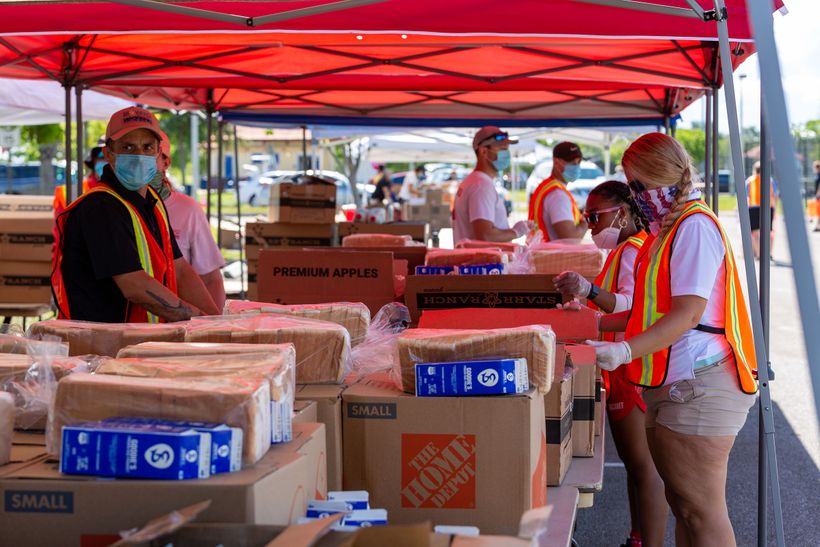
With the worldwide spike in unemployment caused by the COVID-19 pandemic, many people may turn to volunteerism as a way to pass their newly found free time. But new research suggests that volunteers who also receive government aid are often judged negatively as "wasting time" that could be used to find paid employment. "We found that aid recipients are scrutinized to a greater extent than those who are working, including the underemployed, with observers demonstrating a strong bias toward believing that aid recipients should be using their time to pursue employment opportunities above all else," said Jenny Olson, an assistant professor of marketing at the Indiana University Kelley School of Business and corresponding author of the research forthcoming in the International Journal of Research in Marketing. "This is beyond education, personal leisure, and spending time with family and friends. "As a result, they are given less latitude in how they use their time, and can even be seen as more moral for choosing not to engage in prosocial behaviors, when such behaviors take time away from gaining paid employment," Olson added. "The simple act of volunteering among aid recipients -- versus not mentioning volunteering -- not only shapes judgments of the individual aid recipients, but this information can also impact views toward federal tax policy more broadly." Although volunteering is a positive activity that partially combats the negative stereotype of a welfare beneficiary, Olson and her colleagues found that it also sparks anger among observing consumers, with aid recipients being perceived as being "less moral for choosing to volunteer." Factors that minimize these judgments include being perceived as taking strides toward gaining employment via education and being perceived as unable to work. Other co-authors of the paper, "How Income Shapes Moral Judgments of Prosocial Behavior," are Andrea Morales of Arizona State University, Brent McFerran of Simon Fraser University in Canada and Darren Dahl of the University of British Columbia. The research was supported in part by grants from the Social Sciences and Humanities Research Council of Canada. According to a 2019 report from the Organisation for Economic Cooperation and Development, public spending on government assistance averaged more than 20 percent across 36 countries in 2018. Many countries -- including those in Asia, Europe, and the Americas -- have seen a rise in the number of people receiving benefits over the years, a total now reaching into the billions. The extent to which the welfare state is supported depends, in no small part, on public sentiment. Previous research has shown that support for government spending on welfare programs is directly related to how the voting public perceives the beneficiaries. This is the first paper to document a link between prosocial behavior and support for federal spending on welfare programs. "Given that individuals perceive opportunity costs for their own time, it stands to reason that they perceive them for others as well," Olson said. "Because government programs are supported by 'their' taxpayer dollars, observers often feel justified in suggesting how aid recipients spend their time." The research shows that consumers prefer different patterns of tax redistribution as a function of viewing aid recipients making nonfinancial choices. Specifically, consumers support allocating fewer tax dollars toward supporting government assistance programs after hearing about an aid recipient who volunteers his time. Researchers conducted nine studies across three countries. They randomly presented participants with scenarios about hypothetical aid recipients and asked them to offer judgment about how the recipients used their time, such as engaging in volunteer activities or sending out resumes. Participants were asked how they viewed target individuals on a morality index and how they felt about them emotionally. For interviews with Jenny Olson, contact George Vlahakis at 812-855-0846 or vlahakis@iu.edu.

FAU College of Business Experts Available to Discuss May Unemployment Numbers
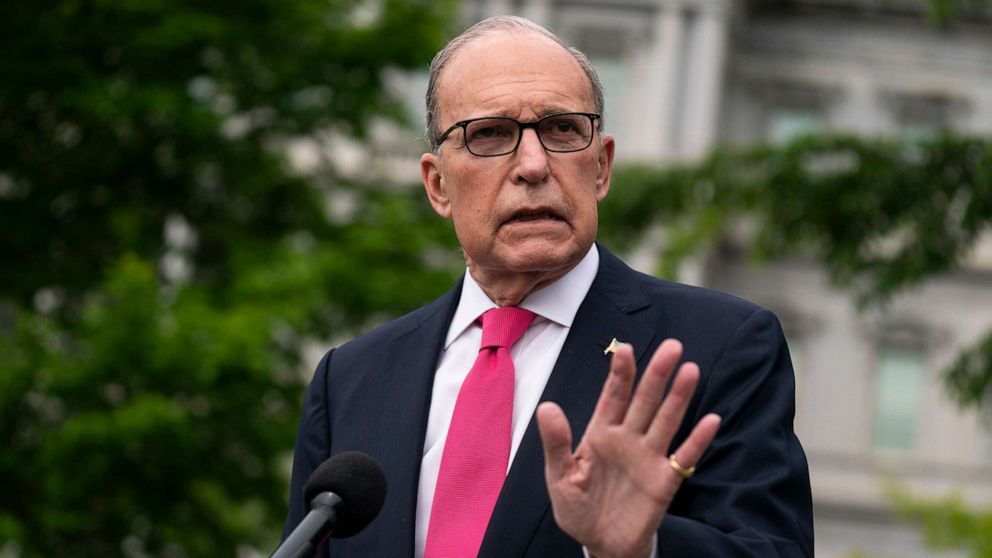
Professors in Florida Atlantic University’s College of Business are available to discuss U.S. unemployment figures that are scheduled to be released by the Bureau of Labor Statistics on Friday, June 5. The U.S. unemployment rate jumped to 14.7 percent in April in response to the coronavirus pandemic. It’s the highest level since the Great Depression, and analysts fear it could be years before the economy fully recovers. If you are a journalist covering this important story about employment and the economy of Florida and America – let our experts help. Rebel Cole, Ph.D., a Lynn Eminent Scholar Chaired Professor of Finance, has expertise in financial institutions, commercial banking and small business finance. He spent 10 years working in the Federal Reserve System. Cole has been interviewed by numerous national media outlets, such as The Wall Street Journal and The Palm Beach Post. William Luther, Ph.D., an assistant professor in FAU’s Economics Department, has expertise in economic growth, monetary policies, business cycles and cryptocurrencies. He has authored more than two dozen articles. Luther’s research has obtained media interest across the nation, including recent coverage by Politico and Florida Trend. Both Professor Cole and Luther are available to speak with media – simply click on either expert’s icon to arrange an interview today.


