
Experts Matter. Find Yours.
Connect for media, speaking, professional opportunities & more.

Solar geoengineering - it’s a topic that has caused an ethical lightening storm in the science community. The concept is complex. Should the world take on the crisis of climate change by attempting to artificially attempting to cool the earth? It’s an idea that has the National Academies of Sciences, Engineering and Medicine seeking a billion dollars in the next five years to investigate the theory. It’s a topic that is somewhat controversial, and journalists are looking to leading experts from across America for expert insight, opinion and perspective. Prakash Kashwan, a political scientist at the University of Connecticut, said he felt the report could have better emphasized the seriousness of some concerns over others. Uncertainties about the impacts of solar geoengineering on global weather patterns have the potential to affect some regions of the world more severely than others, he pointed out. Some experts have raised concerns about potential effects of geoengineering on monsoon rainfall in parts of Asia and Africa, he said. More than 2 billion people around the world rely on these rainfall patterns to support their water and agricultural needs. These kinds of issues should be given special weight, Kashwan suggested. "Some uncertainties are much more highly consequential for the global society, and especially for the poor and vulnerable," he told E&E News. Kashwan also reiterated concerns about potential political effects. While the report makes clear that geoengineering is not a substitute for climate mitigation, he suggests that this doesn't necessarily prevent policymakers from using it in that way. "The problem is the extent to which researchers are really helpless in deciding how research is used in the political system," he said. "That part has yet to be fully appreciated." Kashwan suggests that more dialogue might be warranted before funding a national research program, with greater input from both the international community and political experts who can weigh in on the ways that geoengineering research might affect political decisions. March 26, Scientific American It's a captivating idea – but it could have political, social and ethical consequences. Dr. Kashwan has also been interviewed by The New York Times. If you are a journalist looking to learn more about solar geoengineering, its possibilities and the reasons some scientists are worried – then let us help with your coverage. Prakash Kashwan is an Associate Professor of Political Science at UConn and an expert in the areas of environmental and climate justice, planetary justice, global commons, climate governance, and climate geoengineering governance. Dr. Kashwan is available to speak with media regarding this topic – simply click on his icon now to arrange an interview today.


Power Grid Expert Weighs in on Texas Outages And How to Build a Better System
Having run countless simulations and experiments aimed at building a more resilient power grid, Luigi Vanfretti is well acquainted with the weaknesses in the nation’s current system. This expertise was recently featured in a report about the factors that caused massive, ongoing power outages in Texas. Frozen well heads, gas pipes, and other factors contributed to a “perfect storm” of conditions, Vanfretti said. Some politicians and pundits have floated the notion that the catastrophe was primarily due to frozen wind turbines, but according to Vanfretti, an associate professor of electrical, computer, and systems engineering at Rensselaer Polytechnic Institute, the problem is far more complex. Additionally, the electrical grid in Texas is unique in that it has limited connections to neighboring states, which means there are limitations to how much assistance it can receive during a crisis. “It’s about the ability to route the power,” Vanfretti recently told the Times Union. Vanfretti is an expert in power grid modeling, simulation, stability, and control. His research focuses on creating a smarter, cleaner, more reliable power grid that is capable of integrating renewable energy. Within his Analysis Laboratory for Synchrophasor and Electrical Energy Technology (ALSET) Lab, Vanfretti and his team model the power grid and run simulations in order to develop, test, and improve smart inverters, software, and hardware that will be needed to create the smart grid of the future. You can watch him discuss his research here. Vanfretti is available to speak about what contributed to the devastating outages in Texas, as well as the changes and research necessary to create a more resilient power system.


Big Data Offers New Insights Into Biological Components of Autism Spectrum Disorder
In recently published research, blood sample analysis showed that mothers of children with autism spectrum disorder (ASD) had several significantly different metabolite levels two to five years after they gave birth when compared to mothers of typically developing children. The research team behind this finding was Juergen Hahn, the head of the Department of Biomedical Engineering at Rensselaer Polytechnic Institute, a pioneer in the use of big data to investigate biological components of ASD. Hahn is available to discuss the findings of his recent research, as well as his overall approach to studying autism. Previously, Hahn discovered patterns with certain metabolites in the blood of children with autism that can be used to successfully predict diagnosis. He has since successfully applied his big data approach to evaluating potential ASD treatments. For the recent paper, which Hahn co-authored, his team analyzed blood samples from 30 mothers whose young children had been diagnosed with ASD and 29 mothers of typically developing children. They found differences in several metabolite levels between the two groups of mothers. While the samples analyzed were taken two to five years after pregnancy, these research findings raise the question of whether or not the differences in metabolites may have been present during pregnancy as well. In addition to his specific findings, Hahn is available to discuss the use of big data in improving society's understanding of the biological mechanisms at work in ASD.


Japan Society Presents When Practice Becomes Form: Carpentry Tools from Japan
Installation view at the Takenaka Carpentry Tools Museum, Kobe, Japan. On the occasion of the 50th anniversary of Japan Society’s landmark building, the institution is pleased to present the new exhibition, When Practice Becomes Form: Carpentry Tools from Japan. The exhibition celebrates the spirit of architecture and craftsmanship through Japanese woodworking tools as well as architectural patterns and various models. The site-specific installation, conceived by the esteemed contemporary architect Sou Fujimoto in collaboration with Brooklyn-based Popular Architecture, reinterprets major themes from the exhibition and is in dialogue with the gallery’s spaces, highlighting an enduring connection between traditional Japanese wooden construction and modern architecture. Featuring hand tools and joinery techniques that have been used for hundreds of years to build Japan’s wooden architectural masterpieces (from temples and shrines to teahouses and bridges), the exhibition unpacks how the intangible qualities of craftsmanship, such as consummate experience, knowledge, and the honed skills of master carpenters, have been transformed into significant forms of architecture. A diverse array of tools—planes, chisels, saws—have played an important role in the development of architecture in Japan’s history, and this philosophy extends to Japan’s cultural heritage today. Integral to the process of making by master carpenters (tōryo) is their extensive knowledge of the local environment and of wood as a material. Using natural resources and learning from their predecessors’ practices, they construct buildings using a refined methodology. Their philosophy of sustainability—for example, joinery can be restored or repaired as needed by future craftspeople—has been handed down over generations. Themes emerging from the exhibition have been interpreted by the internationally acclaimed architect Sou Fujimoto. His firm, Sou Fujimoto Architects, is based in Paris and Tokyo, and has been selected as site design producer for the 2025 World Exposition in Osaka, Japan. Fujimoto has designed the Serpentine Gallery pavilion in London (2013) among other internationally recognized projects. For this exhibition, Fujimoto has worked with Popular Architecture to explore the coexistence of nature and architecture. “Japan Society has been a home of cultural exchange, and a meeting place of past and present. In this exhibition, traditional Japanese craftsmanship is revealed in a new light by the design of contemporary architect Sou Fujimoto, and it becomes a precious educational opportunity to learn from this history,” says Yukie Kamiya, Japan Society Gallery Director. The building of Japan Society’s headquarters, designed by the architect Junzo Yoshimura (1908–1997), a major figure in 20th century Japanese architecture, opened to the public in 1971, becoming New York City’s first permanent structure designed by a Japanese citizen. It will commemorate its 50th anniversary in 2021. The building resides on land donated by John D. Rockefeller 3rd (1906–1978), former President and Chairman of Japan Society, who sought to revitalize the organization’s activities after World War II. Rockefeller 3rd and Yoshimura first met in Japan in 1951, and their friendship for over two decades resulted in Japan Society’s current building in Manhattan. Since its opening, the building has continued to serve as the central platform for the interexchange of ideas, knowledge, and innovation between the U.S. and Japan within a global context. In 2011, the building was designated landmark status by the New York City Landmarks Preservation Commission. When Practice Becomes Form: Carpentry Tools from Japan explores the connections between techniques, tools, and forms from traditional practices in Japanese carpentry and contemporary design perspectives. Paying homage to Japan Society’s building, where the arts and cultures of Japan and the United States intersect, this exhibition delves into the artistry and craftsmanship of architectural practice. Complementing the exhibition is a series of related public programs, including lectures, a hands-on workshop, and gallery tours. A digital publication illustrated and designed by Nathan Antolik further expands upon the exhibition. This exhibition is organized by Japan Society in collaboration with Takenaka Carpentry Tools Museum, Japan. The exhibition design is by Sou Fujimoto, in collaboration with Popular Architecture as local architect. About Sou Fujimoto Born in Hokkaido in 1971, Sou Fujimoto graduated from the Department of Architecture, Faculty of Engineering at Tokyo University and established Sou Fujimoto Architects in 2000. He has won several international competitions, including his recent 1st prize for the 2014 International Competition for the Second Folly of Montpellier, France ("L'Arbre Blanc"). In 2019, he was selected as the master architect for the Tsuda University Kodaira Campus Master Plan development. Among his notable projects are the annual summer pavilion for the Serpentine Gallery in London (2013)—the youngest architect to receive the commission; House NA in Tokyo (2012); Musashino Art University Museum & Library (2010); and House N (2008). In 2012, he was part of the Japanese team that won a Golden Lion award for Best National Participation at the Venice Architecture Biennale for their design of alternative housing concepts for homes destroyed by the 2011 tsunami. Most recently, he was selected as site producer for the 2025 World Exposition in Osaka, Japan. About Popular Architecture Brooklyn-based Popular Architecture combines simplicity with innovation across multiple scales ranging from master plans to buildings, interiors, and products. The firm is directed by Casey Mack, RA, LEED AP. After completing his M.Arch at Columbia, Mack worked with the Office for Metropolitan Architecture in Hong Kong and New York. He has taught urban design at the New York Institute of Technology and Passivhaus housing at Parsons School of Constructed Environments. Currently, with the support of the Graham Foundation for Advanced Studies in the Fine Arts, he is writing the book Digesting Metabolism: Artificial Land in Japan 1954-2202 (Hatje Cantz Verlag, 2021).


How the Biden Administration Can Help Save the Planet
With the inauguration of Joseph R. Biden as the 46th president of the United States came a slew of executive orders—and perhaps most notably America's reentry into the Paris Climate Accord. After the Obama administration joined the largest global cooperative agreement to limit the emission of dangerously climate-altering greenhouse gasses in 2015, the U.S. withdrew in 2017 under former president Donald Trump. Villanova University biology professor Samantha Chapman, PhD, studies how "blue carbon" solutions, like the restoration of wetlands, can contribute to slowing the harmful impact of climate change on the planet. Recently, Dr. Chapman broke down the top three things the Biden administration must do to save the planet, since we are, as she puts it, "close to some scary tipping points." #1: Pressure Brazil’s President Bolsonaro to stop the devastation of the Amazon. "The Amazon Rainforest regulates our global climate. It is imperative that through diplomacy and aid, we incentivize developing countries to preserve their intact lands and biodiversity. We can't do this without helping local communities incentivize the people living in these places to save these lands. Road building in forests is a huge cause of our planet's downward slope." #2: Invest in restoration of natural ecosystems. "We must invest resources into coastal wetlands and forests, here and abroad. USAID could be partially retooled in partnership with the United Stated Geological Survey (USGS), which already does this. These natural ecosystems will serve as natural climate solutions and be harbors for threatened species and nice places for humans to recreate. We must restore the opportunity for nature to re-invoke the necessary feedbacks that make the ecosystems work. Sometimes this involves complicated engineering, sometimes it is simpler and means giving nature space to restore. We're trying both." #3: Find ways to make people feel connected to land and nature—and value it. "This is a vague one and not one that I'm sure any administration can do. The pandemic has given me hope on this—I see so many more people out hiking, fishing, walking, and hanging out in parks. When time comes for voting on taxes, people have to remember that these state parks and preserves and even neighborhood parks cost money to staff and preserve. The U.S. has incredible land and nature and yet, in my experience, Americans value and understand it less than other countries. Some of that has to do with our frontier history. We can learn from Native Americans. Appointing Representative Deb Haaland as the secretary of the interior is one good step the Biden administration has taken in this direction." Dr. Chapman emphasizes that despite the uphill battle ahead, she remains hopeful. "Left to heal and helped to heal, the ecosystem processes that sustain our lives and those of the other amazing organisms on our planet can be restored," she notes. "Good things are happening. They just need to happen at a much larger scale."


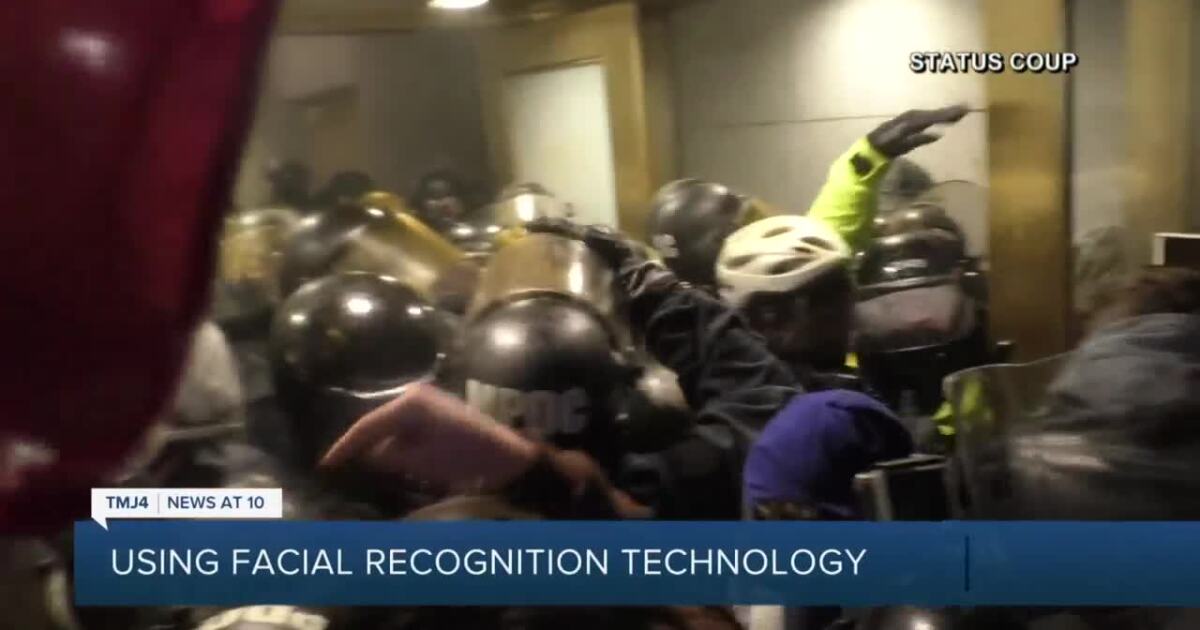
On January 06, America watched with shock as a mob of protesters stormed the gates in Washington, D.C. and invaded the Capitol buildings. For hours, the rioters looted and occupied America’s halls of power and though some were apprehended, many found a way to get out and get back home avoiding arrest. However, media coverage was substantial and some of the protesters were even bold enough to be caught posing for social media. Slowly, authorities are tracking them down, and Dr. Derek Riley, an expert at Milwaukee School of Engineering (MSOE) in the areas of computer science and deep learning, has been explaining how artificial intelligence (AI) technology that’s taught at MSOE is capable of enabling law enforcement's efforts to identify individuals from pictures. "With these AI systems, we’ll show it example photos and we’ll say, 'OK, this is a nose, this is an ear, this is Billy, this is Susie,'" Riley said. "And over lots and lots of examples and a kind of understanding if they guess right or wrong, the algorithm actually tunes itself to get better and better at recognizing certain things." Dr. Riley says this takes huge amounts of data and often needs a supercomputer—like MSOE's "Rosie"— to process it. To get a computer or software to recognize a specific person takes more fine-tuning, Riley says. He says your smartphone may already do this. "If you have a fingerprint scan or facial recognition to open up your phone, that’s exactly what’s happening," Riley said. "So, they’ve already trained a really large model to do all the basic recognition, and then you provide a device with a fingerprint scanning or pictures of your face at the end to be able to fine-tune that model to recognize exactly who you are." Riley says this technology isn't foolproof—he says human intelligence is needed at every step. He added we might be contributing to the data sources some of the technology needs by posting our pictures to social media. "Folks are uploading their own images constantly and that often is the source of the data that is used to train these really, really large systems," Riley said. January 14 – WTMJ, Ch. 4, NBC News The concept of facial recognition and the use of this technology in law enforcement (and several other applications) is an emerging topic – and if you are a reporter looking to cover this topic or speak with an expert, then let us help. Dr. Derek Riley is an expert in big data, artificial intelligence, computer modeling and simulation, and mobile computing/programming. He’s available to speak with media about facial recognition technology and its many uses. Simply click on his icon now to arrange an interview today.


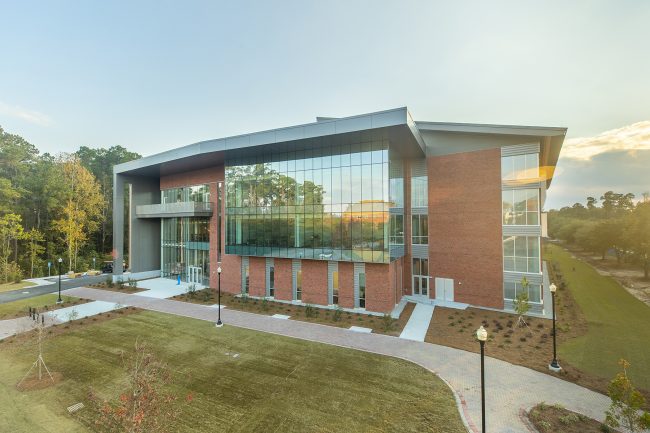
Last Friday, Georgia Southern officially opened its new Engineering and Research Building for students and researchers, a facility that will serve as the epicenter for engineering excellence and innovation in southeast Georgia. The building is designed to facilitate academic and institutional partnerships, inspire creative engineering and accelerate academic success for students in the College of Engineering and Computing. Through the instructional research labs and academic spaces that bridge theory and practice, students will be prepared to solve today’s challenges and to make tomorrow’s discoveries. “Today marks the culmination of years of forethought and investment from a number of state leaders, industry leaders and local advocates, who paved the way for us to be here,” said Georgia Southern President Kyle Marrero. “Leaders who, dating back to the 90s, could see the future of a growing industry, a state on the precipice of being a national leader in technology and innovation, and a critical need to develop talent in applied engineering across south Georgia.” The Engineering and Research Building’s sleek, contemporary environment defined by glass and natural light, soaring high-bay ceilings and modern, industrial feel is strengthened by new, industry-relevant equipment, instrumentation and technology that encourage active learning and sustainability. The highly efficient facility includes sustainable features that complements existing spaces on campus. The three-story building houses applied research spaces with a strong focus on manufacturing engineering, civil engineering, electrical and computer engineering, and mechanical engineering. The workspaces can be easily reconfigured for various uses, projects and applications and provide students with access to industry-grade equipment as well as expanded opportunities for undergraduate research. “The investment of the Engineering and Research Building solidifies Georgia Southern University’s commitment to students in providing a world-class education in the engineering field, while providing the space and resources necessary to facilitate such,” said student Kristifer Bell. “I am enthusiastic to continue my research work and look forward to the interdepartmental collaboration that will be encouraged through the housing of new student and faculty labs under one roof.” The full media release about this historic occasion is attached – and if you are a journalist looking to know more about this facility or Southern Georgia University -- simply reach out to Georgia Southern Director of Communications Jennifer Wise at jwise@georgiasouthern.edu to set and time and date.


Under Armour’s response to a cyber attack achieved the seemingly impossible: Rather than fueling outrage, it actually drew praise. Brunswick’s Siobhan Gorman reports. In late March last year, Under Armour learned that its MyFitnessPal app, which tracks diet and exercise, had a data breach that affected 150 million users. It’s not uncommon for companies to take several weeks—or even months—to publicly announce a cyber attack of that scale. Under Armour did so in four days. Tokë Vandervoort on What Made The Difference 1. Relationships External relationships are how we found out about the breach, and they’re how we knew which advisers and expertise to bring on board right away. We had those in place and had put a lot of effort into maintaining them and keeping them up to date. Internally, the trust we’d built allowed us to move as quickly as we did. Both paid huge dividends. 2. Preparedness I don’t know anybody whose incident response team meets every other week, but ours does. Sometimes we’re just shooting the breeze, but other times we’re asking: “What’s going on in the business? What are you hearing? What’s happening?” We enjoy a great relationship with the product team, the engineering team, the IT security team, the IT team ... It’s not just sharing information, but also getting to know one another, which ties back to the importance of relationships—knowing what’s going on and who to call. 3. Practice We do a table top every year for a data incident. I’ve heard people say table tops are too expensive—we make up our own. Security and privacy get together and create a two- or three-hour game. One year it’ll be a supply chain issue, another year it’ll be a data event. We invite decision-makers from across the organization so that people then have a sense of what it feels like to make decisions without full information and to have to do so under a lot of pressure. People appreciate not just how hard these decisions are, but they know who the other people are, and the issues that they’re confronted with. The companies that have the most confident response are the ones where everybody knows their roles—not some giant team of people who have never worked together. When you have complete clarity of purpose, focus and leadership, you can get anything done.


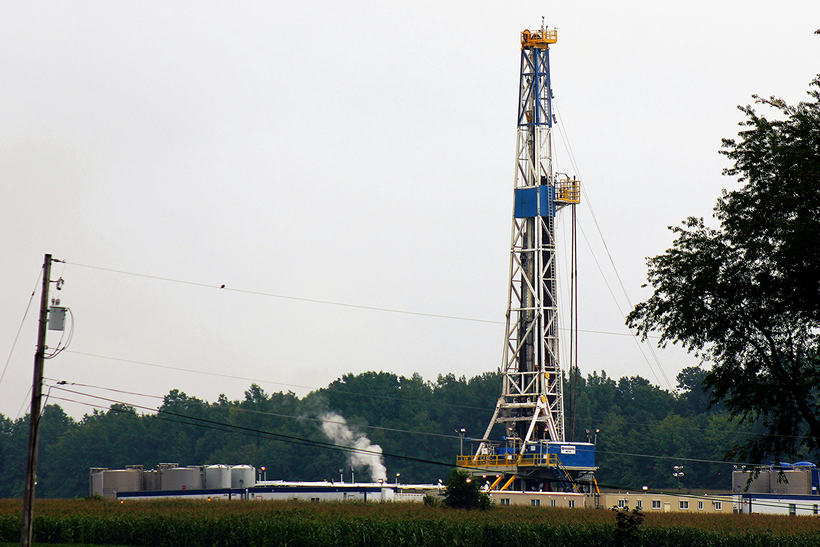
Cheap Energy Can Be a Bridging Fuel Needed to Get to the Endpoint of Renewable Energy Sooner
Far from banning fracking, the Biden/Harris ticket appears to be allowing it if not tacitly supporting it. This is not a contradictory stance to their aggressive renewable energy policy, according to Scott Jackson, a visiting professor of chemical and biological engineering at Villanova University's College of Engineering, who previously directed the microbial enhanced oil recovery program at DuPont Corporation. "Rather, it is recognition that cheap energy—especially natural gas produced as a result of fracking—can be a bridging fuel needed to get to the end point of renewable energy sooner," Jackson says. No one can dispute that the share of our energy coming from less efficient/more polluting coal has dropped dramatically despite the current administration’s attempts at supporting the coal industry. The reason is obvious—cleaner burning energy (less CO2 emissions) from gas fired turbine generators make more economic sense. Gas fired turbine generators are economical at a smaller scale and provides an energy source that can be rapidly turned on or off at any time. This helps to counterbalance the intermittency of renewable energy and, in some sense; this has allowed greater adoption of renewable energy. The cheapest energy source on the planet is land based wind power. The market has responded to this and now renewables make up 19 percent of our electricity. This percentage was thought to be impossible just a few years ago. Wind power energy payback time (time needed to recoup the energy invested) is measured in months and not years, and investors understand this. A much greater share of renewables (wind and solar) is very doable and makes economic sense. Jackson notes that development of cheap energy storage technology will help and must be implemented once economies of scale are achieved, however, a national power grid capable of moving energy from the wind- and sun-rich Midwest to the West Coast and East Coast will improve the reliability of renewables to the point where as much as 70% of our electricity can be sourced renewably—without new storage capacity (2018 study by the National Renewable Energy Laboratory). Improvements in battery technologies and economy of scale are starting to drive down the costs of electric transportation and storage. Eventually, natural gas sourced power generation will not be competitive to renewables," notes Jackson. "Despite the current low price of gasoline, in part as a result of fracking used in oil fields, electric cars are far more economical to operate. Companies like BP, Exxon-Mobile and Shell recognize that they are energy companies and are pivoting to more renewable sources of energy. "Ultimately, our government has a responsibility to invest in the technologies of the future that make economic sense—as renewables do—and not support the more costly and outdated fossil fuel industry," says Jackson.

Taking SD-WAN QoS to the Next Level
Backhauling traffic to a corporate data center has been a defacto approach for ensuring full security treatment across all users and applications. But QoS took a hit when services started moving to the cloud. Michael Cooney, Senior Editor at Network World describes how SD-WANs have provided a solution for that in his article entitled "Fannie Mae’s journey to SD-WAN means less reliance on MPLS and VPNs." In that article, Ken Reddick, Director of Network Engineering at Fannie Mae says “What we are moving to is a cloud-edge environment where user traffic is now sent directly where it needs to go without hitting the data center, and what that has brought us is a four-fold increase in network performance and cut latency by 50%.” SD-WANs are providing a valuable new approach for delivering optimal connectivity between end-users and cloud services, however QoS is still ultimately determined by the underlying physical networks. To take QoS to the next level will require a next generation physical network that is designed to deliver highly predictable end-to-end bandwidth and ultra-low latency. Network designs such as AcceleRoute achieve this through a bufferless architecture that eliminates congestion in the network core. Low latency bandwidth can be dynamically scaled up or down in real-time based on traffic load. Networks such as AcceleRoute provide an ideal underlay network option for SD-WANs by delivering consistently superior service levels regardless of traffic and geography For more information about AcceleRoute, contact: Lesley Gent Director Client Relations, InventionShare™ lgent@InventionShare.com (613) 225-7236, Ext 131 Or visit our website at www.InventionShare.com
