
Experts Matter. Find Yours.
Connect for media, speaking, professional opportunities & more.

'I knew the men murdered in the Amazon—and their alleged killer'
On June 5, 2022, Indigenous expert Bruno Pereira of Brazil and freelance reporter Dom Phillips of Britain went missing while working in a remote part of the Amazon. Since then, a suspect in the case has confessed to their murders. But the story hasn't ended there. As journalists and experts take a closer look, the plot behind the story has thickened with politics, Indigenous rights, and organized crime. Scott Wallace, an associate professor of journalism at the University of Connecticut and author of The Unconquered: In Search of the Amazon’s Last Uncontacted Tribes, has worked extensively in Brazil's Javari Valley. He shared his perspective -- as someone who knew the victims as well as the alleged perpetrator, with National Geographic: The increasingly brazen intruders are no longer small-time players with a net or rifle seeking to put a meal on the family table. Members of the Indigenous patrols say that more and more, poaching crews appear to be highly-capitalized ventures, backed by a shadowy network of outside investors with suspected links to the illicit drug trade. Their fishing boats feature high-horsepower motors, and they carry large quantities of fuel, expensive gill nets, ice, and hundreds of kilos of salt to preserve bushmeat and critically endangered pirarucu, one of the world’s largest freshwater fish. In a rare police action, officers in March intercepted fishermen leaving the reserve with two dozen endangered river turtles, 650 pounds of salted bushmeat, and nearly 900 pounds of salted pirarucu. The evident outlays of cash create both the ability and the imperative for fishermen such as Oliveira to head deeper into the Javari territory, stay there longer, and return with hefty payloads to settle their debts. Unconfirmed reports indicate that Oliveira may have owed a Peruvian financier nicknamed “Colombia” more than $15,000 because a load of his contraband had been intercepted by the Indigenous patrols. As intruders penetrate into the depths of the Javari, Indigenous leaders and their allies fear the growing likelihood of a conflagration involving the uncontacted nomads roaming the forest. “They’re definitely putting the isolados—the isolated ones—at risk,” says Orlando Possuelo, Sydney’s son, who is based in Atalia do Norte and has been working alongside Pereira in advising the Indigenous patrols for the past two years. Poachers are pillaging the animals the isolated groups depend on for survival. And uncontacted groups remain highly vulnerable to contagious diseases, for which they have little to no immunological defense. Finally, and perhaps most immediately, there’s the very real danger of violence. “These fishermen don’t hesitate to shoot,” Orlando says. “If they’re willing to kill outside the reserve, there’s no doubt the lives of the isolated ones are in danger.” An uncontacted Indigenous group would have no way to peacefully communicate with interlopers entering their territory. Their likely first response would be to attack, which could provoke a bloodbath when intruders respond to spears or arrows with far more lethal bullets, says Paulo Marubo. “Anyone knows what the results will be between those carrying firearms and those who do not have them.” The hope of averting that alarming possibility was what led Pereira to risk his life. “The greatest concern that I have is the advance of outsiders—be they for projects authorized by the government or illegal players like loggers, miners, and land-grabbers—into the territories of the isolados,” Pereira told me in a phone call in 2019 after he was ousted from heading the isolated tribes department. “At the same time, you have the crippling of FUNAI and the department to protect the isolated tribes. It’s a very dangerous mix.” Scott Wallace is a bestselling author, photojournalist and educator who covers the environment and vanishing cultures worldwide. Scott is available to speak to media - simply click on his icon now to arrange an interview today.


ChristianaCare is out to revolutionize health care. One of the country’s most dynamic health care systems, ChristianaCare is partnering with two leaders in medical and therapy services to provide comprehensive, integrated virtual health services 24/7 to colleges, universities and other institutions of higher education. Together with PursueCare and SimpleTherapy, ChristianaCare created a bundled health care product that combines general medical services from ChristianaCare’s Center for Virtual Health, mental health and addiction treatment programs from PursueCare and hyper-personalized musculoskeletal care from SimpleTherapy. ‘The future of health care is virtual’ “At ChristianaCare, we know that the future of health care is virtual,” said Sharon Anderson, MS, RN, FACHE, ChristianaCare’s chief virtual health officer and president of ChristianaCare’s Center for Virtual Health. “When college students are able to access medical, behavioral health and musculoskeletal services through their phone or laptop, from their dorm room or a private space on campus, they’ll be more likely to get help when they need it. This is about delivering care to students on their terms, so that they can be healthy and supported with high-quality care throughout their college experience.” Personalized virtual health solutions will be available to students at participating higher education institutions through a customized portal accessible from any computer or mobile device. Students will be able to access assessments, resources and virtual treatment via modules or telemedicine sessions with licensed providers. The offering provides students with unlimited, on-demand care from a multidisciplinary team solving for a multitude of conditions. “For college and university student health services and administrators, this partnership offers a powerful new way to provide comprehensive, affordable health solutions that benefit students,” Anderson said. “In a highly competitive recruiting environment, these solutions are easy to implement and can add tremendous value. We are excited to partner with colleges and universities to strengthen their student health programs by creating a comprehensive virtual care solution to meet their student’s health care needs.” Through a single digital portal, participating students can access internal and family medicine providers from ChristianaCare’s Center for Virtual Health. PursueCare’s Joint Commission-accredited mental health, psychiatric and medication-assisted treatment providers, and SimpleTherapy’s licensed physical therapists specializing in musculoskeletal care, acute or chronic pain management, and strength and mobility training can all be accessed through the portal. Students will also have the option of using PursueCareRx for their pharmacy needs. PursueCareRx is a competitively priced full-service pharmacy that accepts most major insurance and delivers directly to customers. “Young adults face an escalating mental health and substance use crisis,” said Nick Mercadante, founder, and CEO of PursueCare. “Colleges and universities are frequently unable to comprehensively serve the increased need, and research suggests substance use, mental health and suicide carry a significant social stigma. Our goal is to work collaboratively with campus health resources to bring a low-barrier solution students can access privately, any time, on their terms. Additionally, partnering with a world-class health system like ChristianaCare means we can help support whole-person care needs.” “Chronic musculoskeletal disorders have never been more prevalent and traditional care pathways are often ineffective and costly,” said Arpit Khemka, co-founder and CEO of SimpleTherapy. "SimpleTherapy removes barriers for students allowing them to take control of their musculoskeletal health, reducing their need for high-cost, high-risk services, such as surgery and opioids, to manage pain. This results in higher compliance rates and more successful outcomes." Customized and co-branded product The product is designed for colleges, universities and all other higher education institutions. For a flat fee, a school will be able to offer care that is customized and co-branded with school-specific content to be an extension of existing campus health services. It provides curated resources for rapid pre-assessment, on-demand chat and discreet, personalized access to care for students on or off-campus. The innovative patient portal aims to improve and strengthen how schools offer health care solutions to their student population while reducing any potential interruptions of academic and athletic pursuits by making it possible for students to conveniently access care from anywhere. In addition, the offering eliminates social stigma and other access obstacles for students who are at-risk or potentially at-risk, making it more likely that students will avail themselves of treatment options and remain in school. These services are currently licensed to operate in Delaware, New Jersey, Pennsylvania and Maryland. Applications for licenses are underway in other states. ChristianaCare has long been a trailblazer in virtual health. Among its achievements, during the COVID-19 pandemic, ChristianaCare developed a COVID-19 virtual monitoring program that helped 37 companies in 14 states safely reopen with daily symptom monitoring, testing and connections to care for more than 10,000 employees. It’s Center for Virtual Health makes receiving care radically convenient, offering a full continuum of virtual care delivery programs. These programs include virtual primary care, specialty care programs and a Hospital Care at Home Program bringing hospital level of care to a patient’s home. The Center for Virtual Health cares for thousands of patients using state-of-the-art virtual care capabilities supporting patients in receiving care anytime, anyplace, including in the comfort of their own homes. For more information about the program, visit StudentCareSolutions.com.


ChristianaCare Launches Gender Wellness Program for Transgender and Gender Diverse Individuals
Pride Month announcement highlights need for quality health care for LGBTQ+ community ChristianaCare has opened a Gender Wellness Program to provide psychotherapy and support services for individuals age 13 and older who are exploring their gender identity or experiencing gender dysphoria—a sense of incongruence and distress that a person may have because of a mismatch between their gender identity and their sex affirmed at birth. Downloadable: PHOTOS VIDEO The program also provides treatment for any behavioral health condition the individual may be struggling with, such as anxiety and depression. People who identify as transgender have higher rates of suicide attempts than individuals who do not identify as transgender, according to the National Institutes of Health. “ChristianaCare aims to provide the safest, highest quality health care and the best experience possible for our entire community, guided by our values of love and excellence,” said Mustafa A. Mufti, M.D., interim chair of the ChristianaCare Department of Psychiatry. “Caring for our entire community means providing sensitive, compassionate, and state-of-the-art behavioral health and medical care to transgender and gender-diverse individuals. Our Gender Wellness Program will help improve health equity and outcomes for individuals and families who need these services. We know that transgender and gender-diverse individuals face health disparities, and our program will help address that.” The program follows the guidelines of the World Professional Association for Transgender Health (WPATH). WPATH promotes the highest standards of health care for the health of transsexual, transgender and gender-nonconforming people based on the best available science and expert professional consensus. “Our Gender Wellness Program is ready to support anyone age 13 or older who is exploring their gender identity, experiencing gender dysphoria or who needs education and support around social and medical transition,” said Brett E. Herb, DSW, LCSW, program manager of the Gender Wellness Program. Dr. Herb has been in clinical practice for more than 25 years as a psychotherapist and a clinical and administrative manager for numerous behavioral health programs, and has been working with the transgender and gender-diverse populations for the past 17 years. “We provide referrals to compassionate, gender-affirming health care experts,” Dr. Herb said. “Often, families find themselves having to educate their primary care providers, schools, neighbors and family members about how to appropriately care for gender-diverse individuals. Our program provides individuals and families with access to specially trained gender therapists they can trust who can get them the answers they need to help navigate the complexities they may encounter.” The Gender Wellness Program provides referrals to trans-competent primary care providers who prescribe gender-affirming hormone treatment, along with specialists for gynecological and obstetrics care. The program offers individual, couples, family and group therapy sessions. It also provides existing patients with assistance with personal documentation changes and letters of surgical support. “This program has provided me with tremendous support throughout my transition,” said Julie Brown of Wilmington, Delaware. “My therapist empathizes with what I am experiencing in my life, and has guided me through my evolution. The group therapy sessions help me understand that I am not alone. “We form a community, share information and support each other in a safe environment. My child is also a patient of the Gender Wellness Program. Their support has helped him deal with my changes and understand his gender dysphoria.” “Brett Herb and the Gender Wellness Program have helped me grow the confidence I needed,” said Kristopher Snedeker of Newark, Delaware. “Working with the professionals at the program has provided resources to help further my gender transition to become who I truly am.” Gender therapists at the Gender Wellness Program are: Brett E. Herb, DSW, LCSW, Program Manager. Amanda Pope Evans, MSW, LCSW. Katherine Goemaat-Suarez, MSW, LCSW. ChristianaCare is a national leader in LGBTQ+ health care. For the past 11 consecutive years, Christiana and Wilmington hospitals have been recognized by the Healthcare Equality Index as an LGBTQ+ Healthcare Equality Leader. Individuals who would like to learn more can contact the Gender Wellness Program at genderwellnessprogram@christianacare.org or call 302-623-6773. For more on ChristianaCare’s LGBTQ+ health initiatives, visit LGBTQ Health Initiatives.

Beyond the Media Pitch: How to Secure Better Coverage in Today’s Noisy Market
At our webinar earlier this month, we were joined by Wilf Dinnick, a communications and media professional with more than 25 years of global experience as a journalist working in national broadcast, digital and early-stage startups. Wilf has covered major stories for news networks including ABC News, CNN, CBC News and Al Jazeera and is a past winner of the prestigious Edward R. Murrow Award. This vast experience on both sides of the camera has given him a keen understanding of what it takes to secure media coverage in today’s environment. Here are 3 key takeaways you missed: #1 The Odds of your Media Pitch Resulting in Coverage are Disappointingly Low - And the Trend is Not Good Wilf Dinnick discussed the sobering stats from a study of over 400,000 pitches conducted by Propel media that reveal that only ⅓ of emails sent to journalists are opened. But equally disappointing is the fact that only 3% of pitches result in coverage and this trend appears to be continuing. What Dinnick went on to explain is that “journalists see many pitches as an interruption as most fail to clearly demonstrate relevance to the stories they want to publish for their audience. #2 Journalists are Busier than Ever. So You Need to Connect with Them In Places they are Going for Story Ideas and Expert Sources Dinnick also shared some important data that reveals how journalists are spending their time. Where they get their story ideas and how they search for experts. This helps explain the diminishing rate of return on traditional media pitches. For instance, Twitter remains dominant as a platform used by journalists to quickly discover trending stories. So making your story ideas more discoverable with appropriate hashtags on social is an important way to promote your experts in the flow of the conversation as a story is breaking or emerging. Wilf also highlighted the importance of dialling into the daily news cycle by looking in the same areas journalists are going for their ideas. The latest research reveals that journalists find newspapers and magazines most valuable. Why? Sites such as the Washington Post, CNN, BBC, New York Times and Axios are well funded and resourced to develop the longer format, well-researched stories. They often focus on exclusive stories and break important news that is echoed through other outlets. And they set the pace of the news cycle as it echos through regional news outlets where journalists look to localize the story for their audiences. Closely monitoring these sites allows you to be in touch with the key stories and offer clear value to journalists, by offering your experts who can help explain key developments in the context of their research or localize the story for a regional audience. #3 There are Ways to Beat the Odds and Improve your Media Coverage by Following Proven Best Practices When Pitching Despite the poor odds when pitching journalists, there is hope for media relations and PR pros. Dinnick unpacked a number of important best practices that can substantially improve your odds. Drawing on research from a number of media organizations that track journalist engagement, he laid out a number of guidelines that you should be following when putting together your media pitches. Some of these included: Timing Your Pitch Journalists are more receptive to pitches early in the day between the hours of 5am and 11am. This is when the stories are breaking and work is being assigned - and journalists are looking for expert sources. Also, there is evidence that pitching earlier in the week on a Monday or Tuesday yields better results. Keeping it Brief The research Dinnick presented on the profound changes that have been happening in Newsrooms and the overload that journalists are experiencing underscores the importance of being to the point with journalists. That begins with understanding how journalists are spending their day - glued to mobile devices. “This impacts how you need to write subject lines that generate curiosity and fit into mobile devices, given the limited set of characters they can display,” said Dinnick. He also shared stressed research that shows the body copy of a pitch should be under 200 words. Mind the Links Loading a journalist up with lots of links to research, videos, and media coverage in the body copy of your pitch may seem like a good idea to help them evaluative a story idea But this is a no-no. It creates unnecessary clutter and detracts from the key messages you want them to focus on. Instead, journalists report they want as few links as possible. Wilf Dinnick recommends 1-2 links max. It’s important to note that this will present a challenge if you don’t have your content organized into comprehensive expert profiles which include important information that journalists want to see such as past media and speaking appearances, research, publications, education/credentials, affiliations etc. There was a lot to take away from this session which was jam-packed with research and best practices for media relations and PR pros. However, perhaps the most important lesson was how to ”flip” the traditional approach to pitching 180 degrees - starting the pitch process by first developing “owned” content that gets published to your website. As Wilf Dinnick stated, “you have to think like a journalist” as you approach the story ideas you want to pitch. Start with owned content and publish stories that focus on your experts which clearly show them to be relevant and credible while making their work more engaging and human through visual media helps “set the table for the journalist.” If it’s well structured and engaging, it gives journalists the added context they need to immediately understand how your pitch is relatable to their audience. What’s most powerful about this approach is that it helps media relations and PR pros avoid the “earned media trap.” Instead of being overly focused on coverage, we can think more strategically about the value we bring to the organization as storytellers to create quality “owned” content that boosts search engine (SEO) authority and PageRank as well as site engagement with visitors to boost reputation, relationships and revenues. It was clear from the many examples shared by healthcare organizations, universities and associations that this approach is where the real gains can be made. And how media relations and PR pros can show more tangible value to their organizations. Stay tuned for more on this topic of owned content and how it helps improve your media coverage as we explore this in our next post. To see the entire webinar, make sure to sign up for BrightTalk to watch the full webinar here.



Looking for a 'real' expert to explain the latest advances in virtual reality? We're here to help!
Virtual reality is quickly becoming an actual necessity in all facets of technology, education, entertainment and the workplace. It's a popular topic, and Augusta University's Lynsey Steinberg sat down to answer a few questions about how far VR has come and where it's going. VR is changing everyday life for many. What are the biggest advances you've seen in VR use? Virtual reality is rapidly evolving and expanding. It wasn’t too long ago we were excited for the idea of a wireless head set. Now there are companies such as Virtuix creating 360-degree treadmills to interact with your experience in VR and Hypnos VR (a product which releases scents in the air based on the experience in VR). There have been advances of adaptive and stress response simulations based on pupillometry measurements or even integration of physiological sensors for behavioral research. The biggest advancements are solutions that have been unimaginable before that are now entirely possible. It seems the medical field has been a big benefactor of VR. Is this giving students a better way to "learn" about anatomy and other aspects of the field? I believe all experience is valuable to learning. VR is unique in allowing an individual to view as if from their own perspective for virtual experiential learning. We often hear the phrase, “If you could imagine walking a mile in someone else’s shoes,” and now we can provide perspective, allowing another person to view the world as someone with a particular disease or simulate training in a low-risk environment. One example, Fire in the OR, is a VR simulation allowing medical professionals to train safely on how to remove fire danger in the operating room. I believe simulations like these are remarkable examples of how valuable VR can be in education, to remove elements of danger in everyday life. Their research showed 250% improvement rate on fire safety in the OR. A huge industry leader in surgical simulations is Osso VR, creating surgical training procedures for surgeons and hiring some of our Augusta University medical illustration graduates. How is this being applied at Augusta University? The Center for Instructional Innovation created modules with the Medical College of Georgia on handwashing hygiene health and end-of-life care scenarios with the College of Nursing. We encourage faculty to develop multiple methods of interactive modules for the benefit of all learning styles. VR certainly provides engaging and enriching materials for a low-risk environment in instruction. The Center for Instructional Innovation is currently working with the Academic Student Success Center to implement Oculus Quest head sets for anatomy and physiology students to benefit from application use in VR. Augusta University student Henry Oh and his 3D printed pottery from VR sculpture. How else has VR and its use changed the way we go about our daily lives? VR head sets are known in robotics, manufacturing, therapeutic modalities, gaming capabilities, technology in research and education. Any scene you can film in 360 degrees you can now watch in a headset and be fully immersed in the scene (ie: a theater production, a museum tour, an art exhibit, a temple historically preserved, etc). We have gone from telling a story to being immersed in a story. We have been able to utilize VR technology integration and innovation on campus to create enriching learning experiences. We collaborated with our Ceramics department (with Brian McGrath and Raoul Pachecho) to support students in virtual clay sculpting with Adobe Medium. Students 3D printed their works of art after exporting the files from the VR simulation. Where do you see the future of VR? The future developments for integrating systems for haptic feedback will be remarkable integrations. The continued development of behavioral research and integration of gamification is an exciting opportunity in VR as well as the continued development for protocols and appropriate safety procedures. The cross-platform and cross-disciplinary possibilities will allow for creativity to blossom in new world solutions. It is clear, the ongoing need for technical workforce required to create and support more VR and other high-impact technology is rapidly growing. VR is a fascinating topic and if you're a journalist looking to know more by speaking with Steinberg, then let us help. Steinberg is one of the 300 board-certified medical illustrators with experience in hands-on surgery in the operating room, utilizing development in virtual reality, 3D printing, animation, gamification and graphic design while working directly with students, faculty and physicians. Steinberg is available to speak with media -- simply click on her icon now to arrange an interview today.


Georgia Southern students expand communication disorder awareness amidst Deaf Culture Renaissance
At Georgia Southern, a group of students is taking courses to grow the number of interpreters in their communities and their fields. Each student comes to class with their own motivations to learn ASL. “Most of the deaf people, myself included, feel kind of depressed,” signed Angellia Burnett, a volunteer assistant in Georgia Southern University’s American Sign Language (ASL) course. “We miss a lot of things in life, because it has always been a struggle with communication.” Burnett grew up deaf, and is the only person in her family who is deaf. Members of her family speak ASL, but she said many in the Deaf community continue to be left out of family conversations because not everyone will sign all of the time. This leaves Deaf family members feeling isolated even within their own homes. “Not everyone accepts my deafness,” Burnett signed. “They need to know Deaf culture. They need to accept that.” One of the most effective ways of accepting someone is by understanding the challenges they face. Over the past few years, the world has experienced a Deaf culture renaissance, where the inclusion of people who are deaf becomes more mainstream. Recently, the film “CODA,” which stands for “children of deaf adults,” won the 2022 Academy Award for Best Picture. This brought Deaf culture further into the spotlight, opening many eyes into the lives of those with hearing impairments. “What that means is it embraces the entire community,” said Dana Taylor, Ph.D., Georgia Southern adjunct professor and sign language interpreter. “It’s not isolating one group as being different. Individuals get to see the struggles and challenges and the triumphs that people experience.” At Georgia Southern, a group of students is taking courses to grow the number of interpreters in their communities and their fields. Each student comes to class with their own motivations to learn ASL. Some are learning sign language because they have people in their lives with hearing impairments or other communication disorders where sign can be advantageous. Others are there to develop their Sign skills as a professional tool. “If I had a client who spoke ASL, I’d be able to communicate with them better or make them feel more comfortable,” said Ricki Botsford, speech pathology student. “I’ve learned a lot about how broad communication can be, because there are so many ways to communicate outside of the verbal option.” When the students were asked if they had tried learning other languages like Spanish or French, every hand was raised. When asked if they stuck to learning them, all but a few went down. So what makes Sign different? “It’s a lot easier to integrate into every day,” said Adia Greer who’s studying to be an athletic trainer for Deaf athletes. “I can speak it verbally, but I can also sign it. I’ve picked up signing to my cat a lot. She doesn’t understand it, but it allows me to practice.” While the students practice Sign with their pets and favorite TV shows, Burnett continues to come to class to help show her students the world they share, but not the one they see. Georgia Southern has a network of Student Accessibility Resource Centers on the Statesboro and Savannah campuses providing interpreters for students who want to attend classes and interact with their environment, as well as many other resources for students who are hard of hearing. “The whole world needs to learn Sign,” Burnett signed. “I want to see people motivated to learn. I see a lot of Hearing people who are motivated to learn, and a lot of Deaf people that want to help make them successful. I’m really proud that I can help in that.” If you're a reporter looking to know more about this important topic - then let us help with your coverage and stories. Dana Taylor, Ph.D., is available to answer your questions - simply reach out to Georgia Southern Director of Communications Jennifer Wise at jwise@georgiasouthern.edu to arrange an interview today.

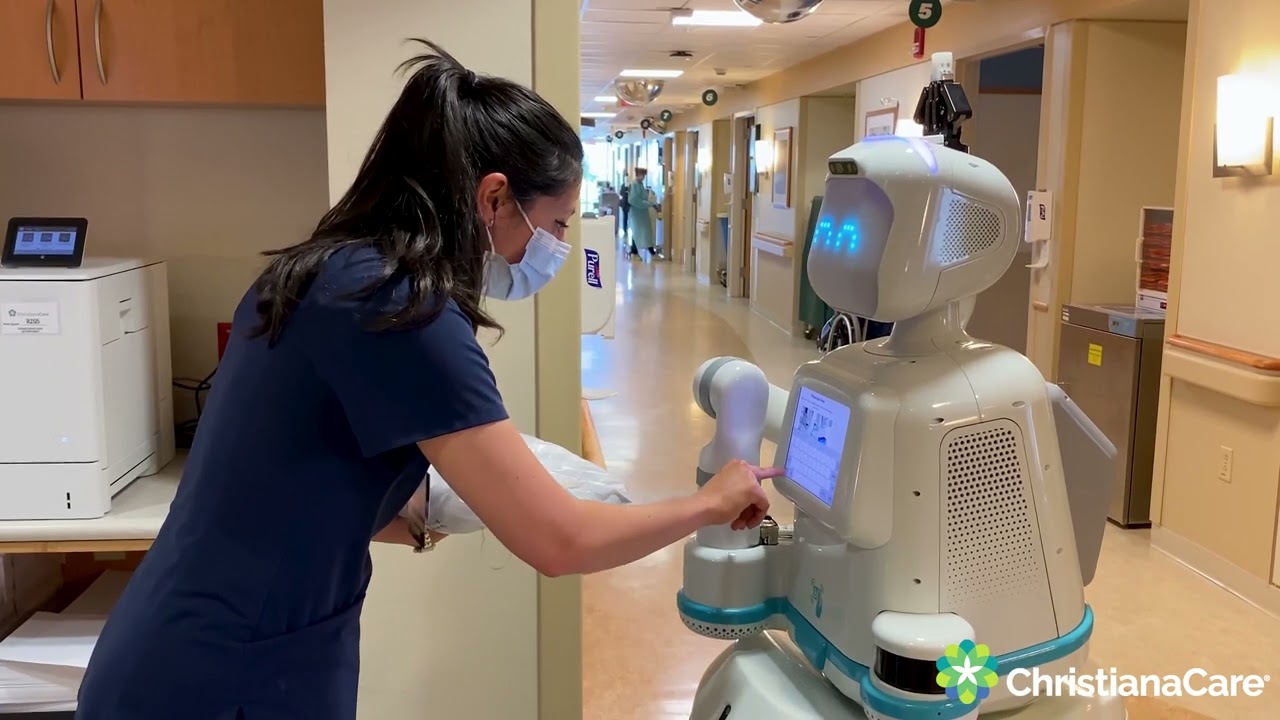
ChristianaCare is the first health system in the Philadelphia region piloting an innovative tool called Moxi, a collaborative robot — or “cobot”— that can assist in the hospital by making deliveries and performing other non-clinical tasks so that nurses and other clinical staff can spend more time focused on what they do best—caring for patients. With a landmark $1.5 million grant from the American Nurses Foundation, ChristianaCare will deploy a total of five Moxi cobots at Christiana Hospital. It is the largest single grant in the history of Nursing at ChristianaCare. Research published in the Journal of Nursing Management shows that nurses spend a significant amount of time — up to 33% of their shifts — on time-consuming but simple tasks such as dropping off lab specimens, collecting supplies or picking up medications from the pharmacy. By taking over these time-consuming but simple tasks, Moxi enables nurses to focus on patient care, where their skills are most needed. “Nurses need the time and space to deliver care and patient education at the top of their license,” said Ric Cuming, Ed.D., MSN, RN, NEA-BC, FAAN, chief nurse executive and president, ChristianaCare HomeHealth. “Moxi will be doing those hunting and gathering tasks such as getting equipment and supplies, which nurses are doing today but don’t need to be doing.” Cobots are designed to share workspace and interact directly with people. In ChristianaCare’s initiative, the Moxi cobots will be integrated with the Cerner Corporation electronic health record (EHR) platform and use artificial intelligence to proactively identify when nurses will need equipment, supplies, medications and lab tests. The Moxi cobots will be deployed to 11 inpatient units, partnering with more than 400 nurses. The American Nurses Foundation grant will enable ChristianaCare to evaluate the impact of cobots on nursing practice with the goal of scaling the technology if successful. “Moxi is not a replacement for a nurse or nursing position — or any position,” Cuming said. “It is an additional resource for nurses and their teams. “With robotic technology, we are using resources wisely and effectively, creating more efficient workflows, reducing repetitive tasks and freeing up nurses’ time for the complex clinical work that they excel at doing.” Reimagining Nursing ChristianaCare is one of 10 grant recipients from the American Nurses Foundation Reimagining Nursing (RN) Initiative. “We are proud that the American Nurses Foundation has the confidence in bold nurse-led ideas that will lead to large-scale, replicable change,” said Katherine Collard, MS, RN-BC, chief nursing informatics officer at ChristianaCare. “This grant will support nurses at ChristianaCare and our nursing colleagues across the nation in realizing their full potential, giving them the tools, resources and power to improve health care now and in the future.” With the American Nurses Foundation grant, ChristianaCare will conduct research on driving nursing outcomes through robotics. “We have a transformative opportunity to generate new knowledge and to move the science forward around robotics in nursing and in health care,” said Susan Birkhoff, Ph.D., RN, nurse scientist at ChristianaCare. “Through research, we will study Moxi’s impact to nursing caregivers that will have broad implications for nursing practice, workforce and education,” she said. ChristianaCare began exploring the potential of robotics to support Nursing with two Moxi cobots acquired in February, funded through the generosity of donors including Good Samaritan, Inc. and E.J. “Woody” Rice. With the grant, said Birkhoff, ChristianaCare will take Moxi to the next “bold frontier,” adding three more cobots with the goal of automating and optimizing nurses’ workflow without interrupting care. With five total cobots, ChristianaCare will be home to the largest number of Moxi robots in health care. The Little Bot That Can Before Moxi can become fully part of the care team, it must learn to navigate the hospital and respond to the nurses’ needs. Using artificial intelligence, Moxi is mapping out Christiana Hospital through sensors and other machine-learning technology so that the cobots can ultimately navigate and work autonomously. “When the Moxi cobots are fully integrated, we anticipate that they will complete up to 200 delivery tasks a day,” Collard said. “By making point-to-point deliveries, Moxi can save nurses hours of time and thousands of steps.” Designed to be compatible with the busy environments of hospitals, Moxi’s features include: Social intelligence: Moxi won’t bump into people or objects in hallways, waves when it sees someone new and happily poses for selfies. Mobile manipulation: Moxi can learn to use its robotic arm to operate existing automatic doors and elevator panels. Human-guided learning: The more Moxi is used, the more Moxi learns and adapts to the environment and specific ways of doing things. Friendly and safe design: With heart-shaped eyes and a friendly appearance, Moxi is designed to navigate safely and get the job done so nurses can focus on patient care. “What Moxi is doing in health systems like ChristianaCare is really transforming the way we think about health care and allowing staff to focus on the people in the hospital as opposed to the tasks,” said Dr. Andrea Thomaz, CEO and co-founder of Diligent Robotics, which created Moxi. “Robots are not something way in the future. Our robots work side-by-side with humans to ease the stress and workload of one of the most demanding jobs in society, nursing. The partnership between Diligent and ChristianaCare shows that the future is now.” Hospital Helper Directly from the Cerner EHR, Moxi will be able to anticipate clinician and patient needs and perform tasks without human involvement. Examples could include: Delivering items to patients based on nurses’ order requests. Making rounds across units to deliver lab samples on collections completed in the electronic health record. Making just-in-time deliveries of pharmaceuticals not stocked on the floor. Prioritizing tasks based on the nursing workload in a unit, so that the busiest nurses will get help first. “Connecting Moxi to the existing technology that clinicians use on a daily basis is key to making it easier to anticipate needs so clinicians can spend more time on patient care,” says Eva Karp, DHA, MBA, RN-BC, senior vice president, chief clinical and patient safety, Cerner. “Moxi could make a real difference in a nurse’s day — alleviating burnout and staffing shortages, which have become especially prevalent since the pandemic.” Incorporating the electronic health record into Moxi is part of the study funded by the American Nurses Foundation. “It’s absolutely in the best interest of our patients that Moxi can work alongside nurses so we can spend more time working directly with our patients to do what we do best,” said Pam Owen, MSN, RN-BC, nurse manager on 7E, one of the pilot units. “And Moxi brings a smile to people’s faces.” Fast Facts About Moxi Works in 22-hour shifts. Needs only two hours of charging time. Weighs about 300 pounds. Can carry a total weight of 70 pounds. Gender-neutral. Pronouns are “it” for a single Moxi cobot and “they” for more than one. Named one of America’s Greatest Disruptors in 2021 by Newsweek and one of the Best Inventions of 2019 by Time Magazine. About ChristianaCare Headquartered in Wilmington, Delaware, ChristianaCare is one of the country’s most dynamic health care organizations, centered on improving health outcomes, making high-quality care more accessible and lowering health care costs. ChristianaCare includes an extensive network of primary care and outpatient services, home health care, urgent care centers, three hospitals (1,299 beds), a freestanding emergency department, a Level I trauma center and a Level III neonatal intensive care unit, a comprehensive stroke center and regional centers of excellence in heart and vascular care, cancer care and women’s health. It also includes the pioneering Gene Editing Institute. ChristianaCare is nationally recognized as a great place to work, rated by Forbes as the 2nd best health system for diversity and inclusion, and the 29th best health system to work for in the United States, and by IDG Computerworld as one of the nation’s Best Places to Work in IT. ChristianaCare is rated by Healthgrades as one of America’s 50 Best Hospitals and continually ranked among the nation’s best by U.S. News & World Report, Newsweek and other national quality ratings. ChristianaCare is a nonprofit teaching health system with more than 260 residents and fellows. With its groundbreaking Center for Virtual Health and a focus on population health and value-based care, ChristianaCare is shaping the future of health care.


How should we measure faculty expertise? This week the UK provides its answer to this question via its highly significant and formal (government-directed) assessment of academic research - which grades academic teams on a scale of 1* to 4* for their ability to deliver, share and create impact globally outstanding research. This process is known as the REF (the Research Excellence Framework) - and the results will be publicly released this Thursday (12th May) with universities themselves finding out how they’ve performed in advance today (Monday 9th May). The process was last carried out 8 years ago and has been delayed by a year due to the pandemic. Why is the Research Excellence Framework (REF) Significant? The Research Excellence Framework steers the level of UK public funds - allocated via research councils - that will be invested in research for each academic department (or so-called “Unit of Assessment”) for the next few years. It is also a way of comparing performance against other universities that are offering similar research expertise, and of strengthening (or weakening) global research reputations. During the next three days, UK universities will be digging into the detail of their REF gradings and the accompanying feedback. There will be some very nervous university leaders and research heads delving into why this peer-assessed review of their research has not gone as well as they expected and why their percentages in each of the four grade areas have dropped - or even been given the “unclassified” career-damaging stamp. How are the REF Scores for Universities Determined? The measurement process is based on three aspects: Quality of outputs (such as: publications, performances, and exhibitions), Impact beyond academia The environment that supports research The preparation, participation, and assessment process takes a massive amount of time, attention and energy. Last time (2014) there were 1,911 submissions to review. Research teams, designated REF leaders and senior staff will have spent long hours across many months preparing their submissions and making sure they are presenting hard evidence and the best case possible to meet the above criteria at the highest possible level. There are 34 subject areas that are covered in the latest REF - and three tiers of expert panels (some with about 20 or more senior academics, international subject leaders, and research users) will have reviewed each submission and compared notes to come to decisions. How do these Key Categories within the REF Contribute to the Rating for a University? The Research Excellence Framework is actually an intensive and highly important approach to expert assessment. These are the key factors and their definitions (with the assigned weighting of each of the criteria in steering final grades): Outputs (60%): the quality of submitted research outputs in terms of their ‘originality, significance and rigour’, with reference to international research quality standards. This element will carry a weighting of 60 per cent in the overall outcome awarded to each submission. Impact (25%): the ‘reach and significance’ of impacts on the economy, society, culture, public policy or services, health, the environment or quality of life that were underpinned by excellent research conducted in the submitted unit. This element carries a weighting of 25 per cent. Environment (15%): the research environment in terms of its ‘vitality and sustainability’, including the approach to enabling impact from its research, and its contribution to the vitality and sustainability of the wider discipline or research base. This element accounts for 15 per cent. Taking a Closer Look at the Categories - Are We Focusing Enough on Research Impact? In 2014 a formal review was carried out in order to improve and evolve the REF process which made a number of recommendations. Most notably the weighting for “impact” was increased by five percent, with “outputs” being reduced by the same percentage. This is certainly a recognition that the external contribution difference that research makes is more important - but is it enough? Should there be greater emphasis on the return on investment from a beneficiaries and user experience perspective? Many argue that academic research should retain a strong element of ‘”blue sky” experimentation - where outright evidence of impact may take several years (even decades) and so can’t demonstrate such immediate value. A particularly notable benefit of the timing of the COVID-19 pandemic and the effect of this in REF deadlines has allowed the extended assessment period for ‘proof of impact’ from 1 August 2013 to 31 December 2020. This is an extension from the previous end date of 31 July 2020. The extension has been put in place to enable case studies affected by, or focusing on the response to, COVID-19 to be assessed in REF 2021. Going back to the original question: how should we measure faculty expertise? It will be interesting to monitor the views and responses of university leaders and faculty members at the end of this week as to whether they feel that - standing back from it all - this UK-centric method of measurement is the best that can be done, a neat compromise or isn’t really what we really need. For more information on the Research Excellence Framework visit www.ref.ac.uk/ Justin Shaw Justin is UK and Ireland Development Director for ExpertFile and Chief Higher Education Consultant at Communications Management. An authority on University strategy and communications, he has worked in and with leadership teams at UK universities for over 30 years. In his role he has advised universities on how to promote their expertise and on communications strategies related to the REF.


School to provide increased access to preventative health services for young students so they can learn, grow and thrive To address health issues at the earliest and most preventable stages, provide whole child health, and advance health equity in the community, ChristianaCare opened a new school-based health center at Kuumba Academy Charter School in Wilmington on Friday, May 6th. The creation of the center, made possible through ChristianaCare’s partnership with the Community Education Building (CEB), which houses Kuumba Academy, means that students at the kindergarten-through-8th grade school will have increased access to an array of health services. “At ChristianaCare, we recognize the comprehensive health needs of adolescents in our community and are committed to partnering and using our resources wisely and effectively to expand our school-based health centers,” said Bettina Tweardy Riveros, J.D., chief health equity officer and senior vice president of Government Affairs and Community Engagement at ChristianaCare. “We know that childhood trauma adversely affects the ability of children to learn and build healthy relationships and it increases their risk of mental health issues and lifelong chronic disease. The opening of our school-based health center at Kuumba Academy means that ChristianaCare can support medical and behavioral health services and wraparound social care our children need, so we can positively influence their health, their education and their futures.” With the latest opening, ChristianaCare now operates 21 school-based health centers throughout the First State, in partnership with the Delaware Department of Health & Social Services, the Delaware Division of Public Health and several school districts. Kuumba Academy students, who spoke at an event Friday to celebrate the grand opening, will have access through its school-based health center to the following: Comprehensive behavioral health services. Crisis intervention and suicide prevention. Substance use disorder treatment. Tobacco cessation. Nutrition and weight management. Physical examinations. Health screenings. Treatment for minor illnesses and injuries. Reproductive health. In addition, Kuumba Academy students also will have access to resources that help their families surmount obstacles such as transportation, challenging appointment times, and worries about cost and confidentiality. “Kuumba Academy remains committed to meeting the needs of the whole child and family,” said Sally Maldonado, head of school at Kuumba Academy, the mission of which is to provide an innovative learning environment for the whole child from kindergarten through eighth grade. “The opening of this school-based health center means that our students and families will have daily access to the high-quality behavior and health services that they deserve, and we are grateful to ChristianaCare and CEB for their partnership. We are beginning to see ourselves on the other side of this pandemic and we are energized to emerge with these newfound partnerships focused on health and wellness for our village.” ChristianaCare has partnered with CEB and Kuumba Academy on community-focused health initiatives in the past. In February 2021, ChristianaCare provided more than 800 vaccinations to community members and staff at CEB. On February 7th of this year, ChristianaCare vaccinated 38 people, including 19 children, against COVID-19. This added to the more than 6,000 vaccinations that ChristianaCare Community Health has administered since 2021. “At CEB, we understand the importance that health plays on a child’s ability to learn and succeed,” said Linda Jennings, CEO at CEB. “We are beyond excited to partner with Kuumba and ChristianaCare to launch the Kuumba Academy School-Based Health Center at CEB and add to the list of holistic and integrated support we provide to students and their families.” Today’s event coincides with Better World Day, an annual, national event on the first Friday in May. During Better World Day, students showcase their learning about initiatives that they believe will have a positive impact on their community and the world. Through collaboration and acts of service, students learn the power of their voice to make change. About ChristianaCare Headquartered in Wilmington, Delaware, ChristianaCare is one of the country’s most dynamic health care organizations, centered on improving health outcomes, making high-quality care more accessible and lowering health care costs. ChristianaCare includes an extensive network of primary care and outpatient services, home health care, urgent care centers, three hospitals (1,299 beds), a freestanding emergency department, a Level I trauma center and a Level III neonatal intensive care unit, a comprehensive stroke center and regional centers of excellence in heart and vascular care, cancer care and women’s health. It also includes the pioneering Gene Editing Institute. ChristianaCare is nationally recognized as a great place to work, rated by Forbes as the 2nd best health system for diversity and inclusion, and the 29th best health system to work for in the United States, and by IDG Computerworld as one of the nation’s Best Places to Work in IT. ChristianaCare is rated by Healthgrades as one of America’s 50 Best Hospitals and continually ranked among the nation’s best by U.S. News & World Report, Newsweek and other national quality ratings. ChristianaCare is a nonprofit teaching health system with more than 260 residents and fellows. With its groundbreaking Center for Virtual Health and a focus on population health and value-based care, ChristianaCare is shaping the future of health care. About Kuumba Academy Charter School Kuumba Academy Charter School’s mission is to provide an innovative learning environment for the whole child from kindergarten through eighth grade. Our directors, staff, and families share the core belief that parents are children’s primary educators. KACS parents, in partnership with teachers and administrators, believe that every child can maximize his or her learning potential given the opportunity to do so. In response to the outcry from Wilmington parents looking for a high-quality public education and increased access to arts education for their children, Christina Cultural Arts Center leaders, parents, and community supporters took action and were granted a Department of Education charter to create Kuumba Academy Charter School (KACS) in 2001. KACS was the first school model in the state that partnered a public charter school with a nonprofit community organization. Christina Cultural Arts Center (CCAC) and KACS form a unique nonprofit/public school partnership committed to educational excellence. Through the innovative union of academics, arts, technology, and family engagement, each KACS student’s individual learning style is nurtured—resulting in creative learners who are agents of positive change in the community. The CCAC/KACS model is regarded by many as the single most significant achievement in Wilmington’s post public school desegregation history. About the Community Education Building (CEB) CEB was established in 2012 after Bank of America donated the former MBNA Bracebridge IV building to The Longwood Foundation. Living up to its commitment of increasing access to education, the Longwood Foundation created CEB as an independent entity, and transformed the space into an ecosystem to support the social, emotional, physical, and academic development of Wilmington’s youth. CEB is an innovative co-location and shared services model. Focused on supporting the entire family, CEB offers vibrant programs and support systems that provide a sound foundation for each student. It serves as a hub for families by offering services such as healthy meals, life coaches, and mental health services. This model leads to deeper family engagement in their child’s learning and allows schools to focus on teaching and learning, not operations and overhead. CEB is an educational ecosystem that holistically integrates programs and resources for students and their families, ensuring that every student has an equitable opportunity to succeed.


In a post-COVID workplace, do employees hold the cards when it comes to work-life balance?
For the most part, COVID-19 is in the rearview mirror for the businesses, restaurants and workplaces it played havoc with for the better part of two years. As Americans pivot back to normal, there are a few things the pandemic may have changed for good. How we work and the dynamics of the traditional American workplace are likely among those permanent changes. For some Americans, the novelty of working from home may shift back to the traditional workplace, but experts say that is dependent on industry, job roles and location. Meanwhile, some employers are now realizing the benefits and efficiencies of working from home with less rigid 9-5, Monday-to-Friday schedules. Employees are working more, costing less and still delivering. The new workplace is a topic that is top of mind. Work-life integration is quickly becoming part of policy and procedure for employers as it remains a priority for employees. "Some employers simply don’t have a choice," said Melissa Furman, a leading management consultant and lecturer in the James M. Hull College of Business at Augusta University. "If they are not recognizing the needs of their employees, they are going to have a hard time recruiting and retaining employees. 'Work-life balance' is a dated term that is recognized by the older generations. "The younger generations are seeking 'work-life integration' and in some cases view their jobs as 'side hustles' to support their career of 'life.'" There are many different mindsets present in the workplace and employers need to better understand the needs and preferences of their employees and “one size does not fit all,” adds Furman. "This environment has created some new/unique challenges for organizational leaders." There are a lot of questions to consider when it comes to how America adapts to the new working environment, and if you are a journalist covering this topic, that’s where Augusta University can help. Furman is a respected leader in management with over 20 years of business coaching, mentoring and higher education administration. She's available to speak with media; simply click on her icon to schedule an interview today.