
Experts Matter. Find Yours.
Connect for media, speaking, professional opportunities & more.

High quality biodiesel produced from microalgae ‘fed’ on leftover coffee grounds Breakthrough in the microalgal cultivation system Could decrease reliance on palm oil to produce biofuel. Two Aston University researchers have produced high-quality biodiesel after ‘feeding’ and growing microalgae on leftover coffee grounds. Dr Vesna Najdanovic, senior lecturer in chemical engineering and Dr Jiawei Wang were part of a team that grew algae which was then processed into fuel. In just the UK, approximately 98 million cups of coffee are drunk each day, contributing to a massive amount of spent coffee grounds which are processed as general waste, often ending up in landfill or incineration. However the researchers found that spent coffee grounds provide both nutrients to feed, and a structure on which the microalgae (Chlorella vulgaris sp.) can grow. As a result, they were able to extract enhanced biodiesel that produces minimal emissions and good engine performance, and meets US and European specifications. The study, Enhancing growth environment for attached microalgae to populate onto spent coffee grounds in producing biodiesel, appears in the November 2022 issue of Renewable and Sustainable Energy Reviews. Up till now, algae has been grown on materials such as polyurethane foam and nylon that don’t provide any nutrients. However, the researchers found that microalgal cells can grow on the leftover coffee without needing other external nutrients. They also found that exposing the algae to light for 20 hours a day, and dark for just four hours days created the best quality biodiesel. Dr Najdanovic said: “This is a breakthrough in the microalgal cultivation system. “Biodiesel from microalgae attached to spent coffee grounds could be an ideal choice for new feedstock commercialisation, avoiding competition with food crops. “Furthermore, using this new feedstock could decrease the cutting down of palm trees to extract oil to produce biofuel. “In southeast Asia this has led to continuous deforestation and increased greenhouse gas emissions.” The research was developed in collaboration with colleagues from Malaysia, Thailand, Egypt, South Africa and India. Their work was supported by the 2020-21 Global Challenges Research Fund (GCRF) block grant funded by the UK Research and Innovation (Aston University).


How to Blend Different Approaches to Peer Learning
Learn about how Dr. Karen Finlay and the team at Hamilton Health Sciences have implemented meaningful peer learning in a safe environment to improve patient care, quality and collaboration in a constructive environment. Learn more here: https://realtimemedical.com/software-solutions/ See more Customer Stories: https://realtimemedical.com/about-realtime-medical/what-customers-are-saying/ #radiology #peerlearning #diagnosticimaging


Evidence that behaviour follow a two-step process when we’re in a crowd We are likely to imitate the crowd first and think independently second Findings will increase understanding of how humans make decisions based on others’ actions. An Aston University computer scientist has used artificial intelligence (AI) to show that we are not as individual as we may like to think. In the late 1960s, famous psychologist Stanley Milgram demonstrated that if a person sees a crowd looking in one direction, they’re likely to follow their gaze. Now, Dr Ulysses Bernardet in the Computer Science Research Group at Aston University , collaborating with experts from Belgium and Germany, has found evidence that our actions follow a two-step process when we’re in a crowd. Their results, Evidence for a two-step model of social group influence, published in iScience show that we go through a two-stage process, where we’re more likely to imitate a crowd first and think independently second. The researchers believe their findings will increase the understanding of how humans make decisions based on what others are doing. To test this idea the academics created an immersive virtual reality (VR) experiment set in a simulated city street. Each of the 160 participants was observed individually as they watched a movie within the virtual reality environment that had been created for the experiment. As they watched the movie, 10 computer-generated ‘spectators’ within the VR simulated street were operated by AI to attempt to influence the direction of the gaze of the individual participants. During the experiment, three different sounds such as an explosion were played coming from either the left or right of the virtual street. At the same time, a number of the ‘spectators’ looked in a specific direction, not always in the direction of the virtual blast or the other two sounds. The academics calculated a direct, and an indirect, measure of gaze-following. The direct measure was the proportion of trials in which participants followed the gaze of the crowd. The indirect measure took into account the reaction speed of participants dependent on whether they were instructed to look in the same or opposite direction as the audience. The experiment’s results support the understanding that the influence of a crowd is best explained by a two-step model. Dr Bernardet, said: “Humans demonstrate an initial tendence to follow others – a reflexive, imitative process. But this is followed by a more deliberate, strategic processes when a person will decide whether to copy others around them, or not. “One way in which groups affect individuals is by steering their gaze. “This influence is not only felt in the form of social norms but also impacts immediate actions and lies at the heart of group behaviours such as rioting and mass panic. “Our model is not only consistent with evidence gained using brain imaging, but also with recent evidence that gaze following is the manifestation of a complex interplay between basic attentional and advanced social processes.” The researchers believe their experiments will pave the way for increased use of VR and AI in behavioural sciences.

MEDIA RELEASE: Ten travel tips Manitobans should consider before flying this summer
Winnipeg MB, July 13, 2022 – CAA Manitoba (CAA MB) has compiled a list of ten things that Manitobans should be aware of if they are considering travelling this summer – both inside and outside the country. “Those who are considering booking a trip should make sure they understand the scope of what travel looks like at the moment,” said Susan Postma, regional manager, CAA Manitoba. “The checklist for planning a trip has changed and we want to help people navigate this new environment. “Airports are experiencing delays with varying degrees of impact, and Manitobans should be prepared.” Through consultation with its top travel agents, CAA MB has identified ten key considerations that potential travelers may not be aware of. Anyone who is considering travel in the current environment should remember that travel requirements and regulations are continually changing. Expect itinerary changes. CAA Manitoba travel agents say our Members are experiencing schedule changes for flights. Subscribe to the airline’s text message service to be immediately notified of any changes, and book connecting flights with more time in between than you normally would if available. A travel agent is also a valuable resource if this happens. Consider packing a carryon instead of checking luggage. Potential baggage delays mean that your luggage may not arrive with you, or take extra time to be unloaded off the plane. If you bring a carryon, make sure it fits the size requirements for all the airlines you are flying on, and with any tour operators. When using a carryon to travel, you still need to follow the 3-1-1 rule: three ounces of liquid, gel, aerosol, cream or paste that fit in one quart-sized resealable bag. If you are checking luggage, make sure your carryon has your hygiene essentials, any medications and perhaps a change of clothing. It will take longer to get through airport security. The old standby of being at the airport one hour before takeoff for domestic flights and two hours before international flights no longer apply. CAA Manitoba currently recommends a minimum of two hours before domestic flight departures and three hours for international flights. While waiting in line, take off your jacket, belt, and empty your pockets so you’re ready to quickly place your belongings in the scanner. Make sure all your documentation is in order before you book. Your passport should still be valid six months after your travel date, as this is required in several countries. Passports themselves are taking longer than usual to renew, so it should be done several months before you travel. Each destination has varying documentation requirements, so make sure you fully understand what information you need to have ready and in what format. Buy travel insurance and understand what is covered. Make sure you have $5 million in coverage for emergency medical situations and that illness related to COVID-19 is included. Understand your entitlements for situations like denied boarding in the event of a positive test, trip cancellation or delays, what luggage is covered and what isn’t. Car rentals need to be booked months in advance. High demand as well as a shortage of vehicles means a shortage of rental cars. Some rental agencies, particularly on the east and west coasts, are not allowing vehicles to be rented in one city and left in another. A travel agent can help you navigate this. Be patient, be kind. Around the globe, airlines are dealing with staff shortages and luggage handling back-ups. Keep in mind that the staff at the airports are there to help you, and that things may take longer than usual. COVID-19 is still a major consideration. Confirm the COVID-19 situation at destination prior to booking. Understand the risk level associated with travel to a particular destination by checking the Government of Canada Travel Advice and Advisories website. Individual travel advisories remain on a country-by-country basis. It is important that Manitobans understand the ongoing uncertainty associated with international travel, whether that be related to the continued community transmission of COVID-19, or state of health care systems in destinations hit hard by the pandemic. Stay connected. It is important to have access to trusted, up-to-date information while travelling so you can monitor changing conditions and requirements and adapt accordingly. Bookmark the Global Affairs Canada website prior to departure and check it regularly while abroad. It is also a good idea to sign up for Registration of Canadians Abroad and stay in touch with a family or friend that has knowledge of your travel plans. Find these and more information at caamanitoba.com/travel. Confirm change and cancellation flexibility with your travel service provider. Many airlines and hotels have been providing more flexibility when it comes to refunds and changes to bookings. Make sure you understand any key dates related to cancellation and changes and whether you are entitled to a refund or a future travel voucher or credit at the time of booking.



MEDIA RELEASE: Ten things Manitobans need to know prior to booking travel abroad
Winnipeg, MB, October, 26, 2021 – CAA Manitoba (CAA MB) has compiled a list of ten things that Manitobans should be aware of if they are considering travelling abroad. “Now that the Canadian government is no longer advising against non-essential travel due to COVID-19, those who are considering booking a trip should make sure they understand the scope of what travel looks like at the moment,” said Kaitlynn Furse, director, corporate communications, CAA Club Group. “The checklist for planning a trip has changed and we want to help people navigate this new environment.” Through consultation with its top travel agents, CAA MB has identified ten key considerations that potential travellers may not be aware of. Anyone who is considering travel in the current environment should make sure they have looked into the following and remember that travel requirements and regulations are continually changing. 1. Confirm the COVID-19 situation at destination prior to booking. Understand the risk level associated with travel to a particular destination by checking the Government of Canada Travel Advice and Advisories website. While the Global Affairs Canada Level 3 Travel Advisory to avoid all non-essential travel has been lifted, individual travel advisories do remain on a country-by-country basis. It is important that Canadians understand the ongoing uncertainty associated with international travel, whether that be related to the continued community transmission of COVID-19, or state of health care systems in destinations hit hard by the pandemic. 2. Understand the type, timing, cost and accessibility of required COVID testing. Every country has different requirements when it comes to the COVID tests that are needed prior to travel, and every country has different testing capacities once you are there. There are also requirements in order to return to Canada. Make sure you understand the difference between molecular PCR and rapid antigen tests, in what time period tests must be taken, the associated costs and locations where these tests are available. 3. Confirm change and cancellation flexibility with your travel service provider. Many airlines and hotels have been providing more flexibility when it comes to refunds and changes to bookings. Make sure you understand any key dates related to cancellation and changes and whether you are entitled to a refund or a future travel voucher or credit at the time of booking. 4. Buy travel insurance and understand what is covered. Make sure you have $5 million in coverage for emergency medical situations and that illness related to COVID-19 is included. Understand your entitlements for things like denied boarding in the event of a positive test and coverage related to isolation expenses. 5. Prepare required travel documentation and the format it must be presented in, for both Canada and your destination. Canadians returning home should have all required documentation loaded onto the ArriveCAN App or website. Each destination has varying requirements, so make sure you fully understand what information you need to have ready and in what format. Make sure you also take into consideration connections and any requirements in the connecting destination due to lay over or delays. 6. Take note of local public health rules prior to departure. Many destinations have measures in place such as curfews and quarantine requirements. You should also understand what the regulations are if you happen to test positive for COVID-19 in the country you are visiting. 7. Be aware of changes between booking and departure. Make sure you reconfirm all the details that were researched prior to booking, to ensure they are still accurate prior to departure. What was true when a trip was booked may not be the case by the time you are ready to travel. 8. Double check all research with the appropriate embassy or consulate. Travel at this time is complex and many factors can change quickly, so ensuring you have the most up to date and accurate information is essential. 9. Plan for extra time. From disembarkment and customs to retrieving luggage and exiting the airport, most things on the travel journey are taking longer than during preCOVID travel times. Also note the check-in and baggage drop off deadline for your flight as it may require you to arrive earlier than anticipated. 10. Stay connected. Fully unplugging while travelling is likely a thing of the past. It is important to have access to trusted, up-to-date information while travelling so you can monitor changing conditions and requirements and adapt accordingly. Bookmark the Global Affairs Canada website prior to departure and check it regularly while abroad. It is also a good idea to sign up for Registration of Canadians Abroad and stay in touch with a family or friend that has knowledge of your travel plans.

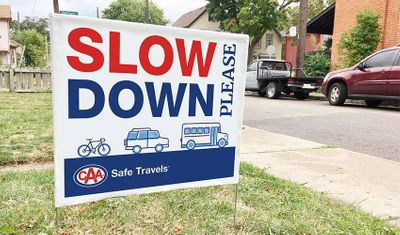
MEDIA RELEASE: CAA urges drivers to protect lives on first national Slow Down Move Over Day
WINNIPEG, May 14, 2019 – CAA is urging motorists to make space for tow trucks providing service on the side of the road on Canada’s first national Slow Down Move Over day. The day promotes a safe working environment for tow truck operators across the country. CAA has long advocated for the protection of roadside assistance workers through Slow Down, Move Over legislation. CAA Clubs across Canada have designated May 14 as Slow Down Move Over day to bring attention to this important issue. “Lack of driver awareness is one of the largest threats to tow-truck operator safety on this day and all others,” said Raymond Chan, government relations, CAA. “Everyone should slow down and move over when they see a tow truck operator on the side of the road.” CAA’s eight Clubs across Canada will be launching public education campaigns and events today to draw attention to the safety risks tow truck operators face. There are approximately 24 million motorists and 15,000 tow truck operators on the road annually in Canada. This leads to thousands of near misses experienced by emergency roadside operators annually and, across North America, nearly 100 tow truck drivers are killed every year after being struck by oncoming traffic while helping stranded motorists with flat tires, breakdowns and collisions. Every tow truck driver knows the number of close calls they've experienced while pulled over on busy roadways. "I figured that was going to be the end, that I was going to be done," said one CAA tow-truck operator after a near-miss during a roadside assistance call. In 2011, the Slow Down Move Over law became part of Manitoba’s Highway Traffic Act. Most provinces and territories have Slow Down Move Over legislation that mandates motorists must slow down and change lanes, if it is safe to do so, to ensure the safety of emergency workers on the roadside, but it is often not observed. Learn more about the Slow Down Move Over Day here: caamanitoba.com/slowdown

The minister for tech and the digital economy met with representatives from Aston University’s College of Engineering and Physical Sciences and Solihull College & University Centre during a visit to the new Greater Birmingham and Solihull Institute of Technology (GBSIoT) Hub on 2 August. Damian Collins MP was given a tour of the new facility by Rosa Wells, executive director for employment and skills and IoT at Solihull College & University Centre. The Institute of Technology focuses on engineering and advanced manufacturing and is a partnership between local further education colleges, universities and industry partners. It will support learners from across the region to progress to high-skill technical jobs in industry through clear, supported pathways. Construction of the GBSIoT Hub building is nearing completion and will be welcoming students in the coming weeks. During the visit, the minister was shown the cyber physical manufacturing rig, a scaled-down version of a factory of the future, which will create a simulated working environment for IoT learners. The minister then met with executive dean Professor Stephen Garrett and deputy dean Professor Kate Sugden for a tour of Aston University’s Advanced Prototyping Facility conducted by senior project manager Paul Gretton. The facility supports businesses by increasing awareness of the opportunities available through 3D printing to improve the efficiency and effectiveness of existing designs, and to develop new products all the way through to producing prototypes. The visit also included a showcase of Aston University’s Autopod, a state-of-the-art autonomous vehicle funded by the Greater Birmingham and Solihull Local Enterprise Partnership and the Institute of Technology which is used for research and as a teaching tool. Professor Garrett said: “Aston University has a proud history of delivering high-quality technical education and world-leading research. We were delighted to be able to showcase our facilities to Damian Collins MP, whilst discussing our commitment to equipping students with the knowledge and skills they need to succeed in STEM careers.” Damian Collins MP said: “It’s been brilliant to visit the pioneering facilities at Aston University today, especially seeing the cyber rig which will give students first class training to enter the industry with confidence. “Having these opportunities will help young people gain skills they need for future jobs, supporting the UK’s world leading advanced manufacturing and digital industries.” The minister toured the facilities at Aston University as part of his wider visit to the Birmingham 2022 Commonwealth Games. For more information about the College of Engineering and Physical Sciences please visit our website.

Babies react to taste and smell in the womb – new research
Scientists have recorded the first direct evidence that babies react differently to various smells and tastes while in the womb Study took 4D ultrasound scans of 100 pregnant women to see how their unborn babies responded to flavours from foods eaten by their mothers The research team, which also included scientists from Aston University, scanned some mothers to see fetal facial reactions to the kale and carrot flavours. Scientists have recorded the first direct evidence that babies react differently to various smells and tastes while in the womb by looking at their facial expressions. A study led by Durham University’s Fetal and Neonatal Research Lab, UK, took 4D ultrasound scans of 100 pregnant women to see how their unborn babies responded after being exposed to flavours from foods eaten by their mothers. Researchers looked at how the fetuses reacted to either carrot or kale flavours just a short time after the flavours had been ingested by the mothers. Fetuses exposed to carrot showed more “laughter-face” responses while those exposed to kale showed more “cry-face” responses. Their findings could further our understanding of the development of human taste and smell receptors. The researchers also believe that what pregnant women eat might influence babies’ taste preferences after birth and potentially have implications for establishing healthy eating habits. The study is published in the journal Psychological Science. Humans experience flavour through a combination of taste and smell. In fetuses it is thought that this might happen through inhaling and swallowing the amniotic fluid in the womb. Lead researcher Beyza Ustun, a postgraduate researcher in the Fetal and Neonatal Research Lab, Department of Psychology, Durham University, said: “A number of studies have suggested that babies can taste and smell in the womb, but they are based on post-birth outcomes while our study is the first to see these reactions prior to birth. “As a result, we think that this repeated exposure to flavours before birth could help to establish food preferences post-birth, which could be important when thinking about messaging around healthy eating and the potential for avoiding ‘food-fussiness’ when weaning. “It was really amazing to see unborn babies’ reaction to kale or carrot flavours during the scans and share those moments with their parents.” The research team, which also included scientists from Aston University, Birmingham, UK, and the National Centre for Scientific Research-University of Burgundy, France, scanned the mothers, aged 18 to 40, at both 32 weeks and 36 weeks of pregnancy to see fetal facial reactions to the kale and carrot flavours. Mothers were given a single capsule containing approximately 400mg of carrot or 400mg kale powder around 20 minutes before each scan. They were asked not to consume any food or flavoured drinks one hour before their scans. The mothers also did not eat or drink anything containing carrot or kale on the day of their scans to control for factors that could affect fetal reactions. Facial reactions seen in both flavour groups, compared with fetuses in a control group who were not exposed to either flavour, showed that exposure to just a small amount of carrot or kale flavour was enough to stimulate a reaction. Co-author Professor Nadja Reissland, head of the Fetal and Neonatal Research Lab, Department of Psychology, Durham University, supervised Beyza Ustun’s research. She said: “Previous research conducted in my lab has suggested that 4D ultrasound scans are a way of monitoring fetal reactions to understand how they respond to maternal health behaviours such as smoking, and their mental health including stress, depression, and anxiety. “This latest study could have important implications for understanding the earliest evidence for fetal abilities to sense and discriminate different flavours and smells from the foods ingested by their mothers.” Co-author Professor Benoist Schaal, of the National Centre for Scientific Research-University of Burgundy, France, said: “Looking at fetuses’ facial reactions we can assume that a range of chemical stimuli pass through maternal diet into the fetal environment. “This could have important implications for our understanding of the development of our taste and smell receptors, and related perception and memory.” The researchers say their findings might also help with information given to mothers about the importance of taste and healthy diets during pregnancy. They have now begun a follow-up study with the same babies post-birth to see if the influence of flavours they experienced in the womb affects their acceptance of different foods. Research co-author Professor Jackie Blissett, of Aston University, said: “It could be argued that repeated prenatal flavour exposures may lead to preferences for those flavours experienced postnatally. In other words, exposing the fetus to less ‘liked’ flavours, such as kale, might mean they get used to those flavours in utero. “The next step is to examine whether fetuses show less ‘negative’ responses to these flavours over time, resulting in greater acceptance of those flavours when babies first taste them outside of the womb.”


New center helps meet growing need for pediatric care in our community Families in northern Delaware and surrounding areas have a new option for pediatric care. Today ChristianaCare opened a new 14-bed Pediatric Care Center that provides 24/7 combined short-stay inpatient and emergency care for children and teens. The new center is located on the first floor of the Center for Women’s & Children’s Health on ChristianaCare’s Newark Campus. “This new facility is an exciting step in our continued journey to create the absolute best care for children and families in our community,” said David Paul, M.D., chair of the Department of Pediatrics. “The Pediatric Care Center will significantly improve access to care for children, enhance the patient experience and address the needs of families who want high-quality care in a child-friendly environment.” The 24-hour Pediatric Care Center will be able to evaluate and manage 90% of the pediatric cases currently seen in the Christiana Hospital Emergency Department. The center expects to care for an estimated 6,300 patients the first year, with volume projected to grow 5% each year. The Pediatric Care Center also provides expert care to children and adolescents with behavioral health emergency needs and appropriate referral sources for follow-up care. “Our new Pediatric Care Center makes it easier than ever for families and children to receive excellent care when they need it, in a special space designed just for them,” said Sharon Kurfuerst, Ed.D., OTR/L, FACHE, system chief operating officer at ChristianaCare and President, Union Hospital. “The center will care for the special needs of pediatric patients, making it convenient for them to receive dedicated, expert resources for hospital-based, non-trauma emergency and inpatient care all in one location.” The 8,400 square-foot facility provides 14 beds for emergency and short-stay inpatient and observation care. “We offer 24/7 pediatric emergency care 365 days a year,” said Megan Mickley, M.D., MBA, FAAP, FACEP, medical director, who is board certified in Pediatrics and Pediatric Emergency Medicine and fellowship-trained in Pediatric Emergency Medicine and Emergency Ultrasound. “The Pediatric Care Center team is a diverse, multidisciplinary group led by pediatric physicians trained in a variety of backgrounds, including emergency medicine and hospital medicine,” she said. “Our goals are not only to provide exceptional quality of care for children, but also to improve access to and expand pediatric care services for our neighbors. We look forward to being a trusted partner for pediatric care in our community.” About the Center for Women’s & Children’s Health The Center for Women’s & Children’s Health, which opened in a state-of-the-art facility in 2020 on ChristianaCare’s Newark campus, represents a new standard of care for our community. It is the region’s only National Community Center of Excellence in Women’s Health and offers innovative, patient-centered care for mothers, babies and families. The center provides private rooms for mothers and families after delivery and is one of the only hospitals in the United States to provide couplet care in the Neonatal Intensive Care Unit, keeping mother and baby together even if they both require medical care.


UConn insect expert David Wagner on the troubling decline of the mayfly
One of the world's oldest flying insects is in trouble. Mayflies are in serious decline and, after 300 million years in existence, their dwindling population should be an alarm bell for all of us. More than just a bug with a short life span flying masterfully near creeks, rivers, and ponds, the mayfly plays a serious role in local ecosystems and the environment at large. A key component in the food chain, the mayfly nymph feeds off of algae, plants, and rotting leaves, cleaning up nature's mess while growing large enough to become a meal itself -- for fish, amphibians, lizards, birds, and even humans. Without mayflies, the ripple effect upwards could mean calamity for the planet. In a recent Washington Post Magazine deep-dive, UConn insect expert David Wagner offered his perspective on the on the plight of the mayfly: I reached out to David Wagner, a biologist and lepidopterist at the University of Connecticut, for context, thinking that perhaps the problems were isolated or overblown. He has studied insects for decades and reviewed numerous scientific studies about them from around the globe. He did not provide much comfort. There’s a growing body of research suggesting that the world is in the midst of its sixth mass extinction, he said. The losses of all kinds of creatures appear to be driven by climate change, habitat degradation, pollution and other ecological stressors. In a paper for the Proceedings of the National Academy of Sciences last year, “Insect Decline in the Anthropocene: Death by a Thousand Cuts,” Wagner and several other scientists delivered a stark warning about the disappearance of insects. The report did not focus on mayflies, but Wagner told me they are among the most vulnerable of the world’s insects because of their need for clean, well-oxygenated water. “Mayflies are reliable ‘canaries in the coal mines’ for freshwater systems,” he explained. “And their future prospects, especially in areas that are drying or warming, are bleak.” September 19 - Washington Post Magazine Dr. David Wagner is an expert in caterpillars, butterflies, moths, and insect conservation, and he's commented extensively on the current decline of insects worldwide. Click his icon to arrange an interview today.

