
Experts Matter. Find Yours.
Connect for media, speaking, professional opportunities & more.
Inside the Italian art heist: Experts explain the global fight to protect cultural heritage
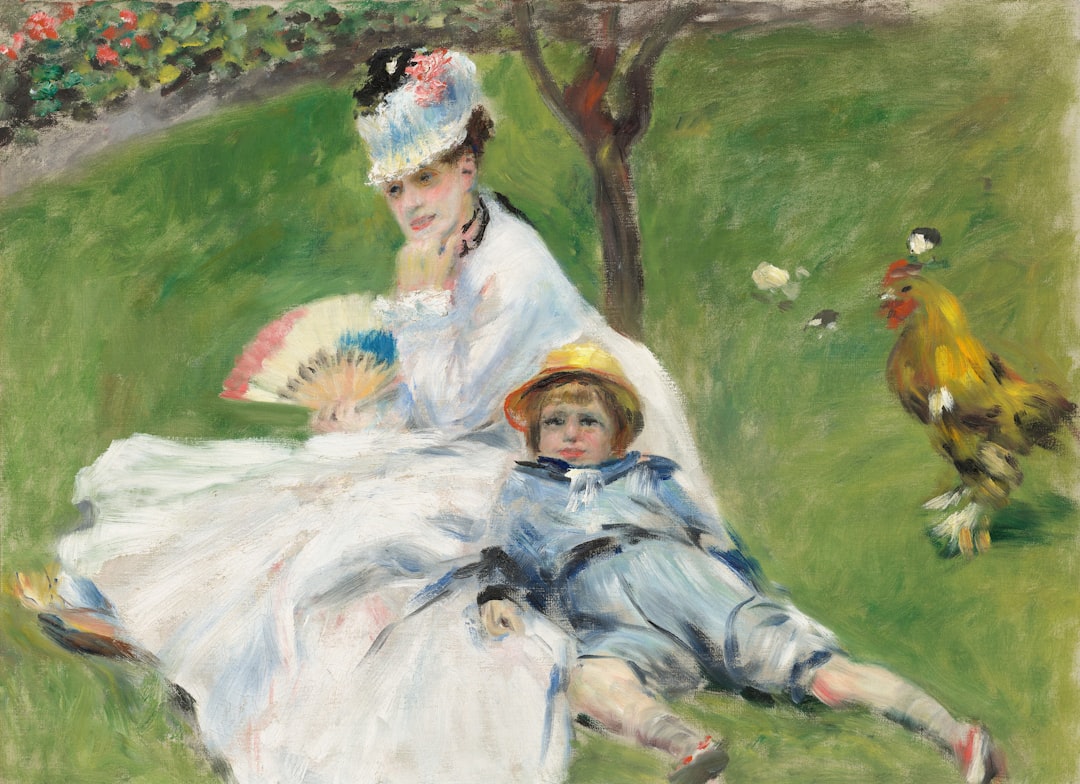
A lightning-fast art heist in Italy has reignited global concerns about museum security and the protection of cultural heritage. As investigators search for stolen works by some of history’s most celebrated artists, University of Delaware experts are available to help journalists unpack the broader implications. Earlier this month, thieves executed a highly coordinated robbery at the Magnani-Rocca Foundation, stealing paintings by Pierre-Auguste Renoir, Paul Cézanne and Henri Matisse in a matter of minutes. Authorities say the operation was swift, targeted and likely premeditated – highlighting the evolving sophistication of art crime. The theft adds to a growing pattern of high-value art crimes across Europe, raising urgent questions about how institutions safeguard collections and what happens when culturally significant works disappear into illicit markets. UD experts are available to provide context, analysis and on-the-record commentary: Debra Hess Norris Chair, Department of Art Conservation A globally recognized leader in art conservation, Norris specializes in the protection, preservation and recovery of cultural heritage. She can speak to: How museums assess and mitigate security risks What happens after a major art theft The challenges of recovering stolen works in international markets How conservation science supports authentication and repatriation Jessica Horton Associate Professor of Art History Horton’s research examines global art histories and the movement of cultural objects across borders. She can discuss: Why stolen artworks matter beyond their monetary value Cultural ownership, repatriation and ethical considerations How art theft disrupts historical narratives and public access The broader cultural consequences of illicit art trafficking While headlines focus on the dramatic nature of art heists, the deeper story is about the fragility of cultural heritage – and the global effort required to protect it. To speak with Norris or Horton, email mediarelations@udel.edu.

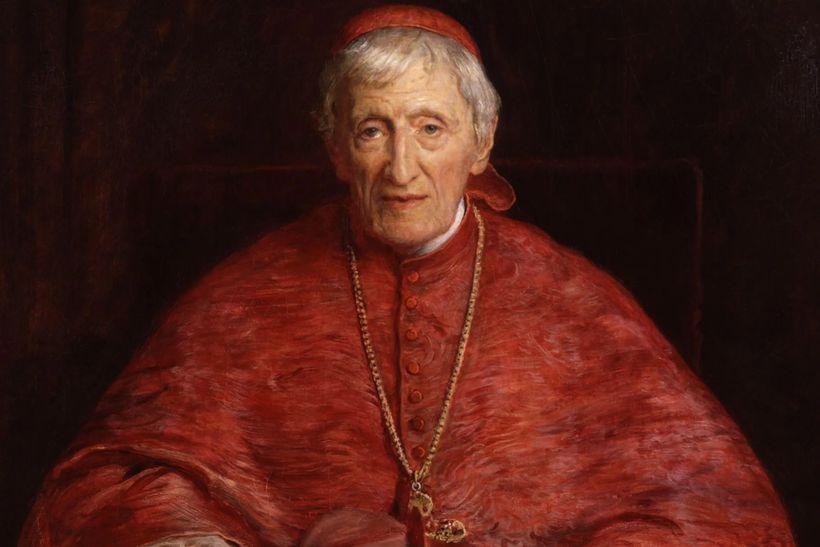
Pope Leo XIV's first year as leader of the Catholic Church was marked by observation, listening and careful communication, and was largely devoid of major doctrinal or political action. As reasonably expected of a new pontiff, he issued his first major document—the apostolic exhortation Dilexi te. He also embarked on his first international trip, traveling to Türkiye and Lebanon, where he celebrated the 1700th anniversary of the Council of Nicaea. But perhaps publicly overlooked was his elevation of a 19th-century saint to Doctor of the Church—a designation reserved for saints found to have made significant contributions to doctrine and spirituality through writings and teachings. After approving it in July 2025, Pope Leo issued that designation to St. John Henry Newman on All-Saints Day, making him only the 38th individual given the title. "The move to make St. John Henry Newman a Doctor of the Church was already underway, but Pope Leo verified it and actually carried it out, bringing Newman into a newfound kind of prominence," said Michael Moreland, PhD, professor of Law and Religion at Villanova University Charles Widger School of Law, and a scholar of St. Newman. A Bridge Between Anglican and Catholic Theology Newman, considered an influential individual in the shaping of modern Catholic theology and education, was not always Catholic. Born in England in 1801, Newman became an Anglican priest in his mid-20s. He later was a prominent leader of the Oxford Movement—one intended to recover elements of traditional Catholic heritage in Anglicanism. It led to the birth of Anglo-Catholicism and caused many Anglicans to convert to the Roman Catholic faith, including Newman himself. Newman was received into the Catholic Church in 1845 and was ordained a Catholic priest in 1847. He would go on to become an influential theologian for his contributions to the ideas of faith, conscience and doctrine. "He established what he called the 'evolution of the doctrine'—the idea that the deposit of faith is not something immobile, but something that grows in awareness over time," said Luca Cottini, PhD, professor of Italian Studies at Villanova University. "He [Newman] was also a person of the university; an intellectual," said Dr. Moreland. "He was known for his voluminous writings on all kinds of issues, including his famous book 'The Idea of a University.'" In 1878, Pope Leo XIII made then-Father Newman—who was not even a Bishop at the time—a Cardinal. Like the current Pope Leo, the elevation of Newman was one of Pope Leo XIII's first acts of government. "It's an astonishing resemblance between our current Pope and his namesake," Dr. Cottini said. "Both recognized this important theologian and his contributions to Catholicism within the first year of their papacy." Newman died in 1890 and is remembered as an influential theologian, scholar and an important bridge between Anglicanism, Catholicism and the modern world. He was beatified in 2010 by Pope Benedict XVI and canonized by Pope Francis in 2019 before Pope Leo XIV elevated him to Doctor of the Church. Newman's Promotion Shrouded in Significance Beyond its relative rarity—only five individuals have been promoted to Doctor of the Church since 1971—Newman's elevation is significant in many ways, according to Dr. Moreland. "He was an Anglican by birth who converted to Roman Catholicism," he said. "He was someone from the English-speaking world, not from continental Europe, and he was from the 19th century, which is relatively recent in this context." Newman is only the second Doctor of the Church from England, and aside from Thérèse of Lisieux, born in 1873, is the only Doctor of the Church born after 1700. Beyond the significance related to Newman himself, Pope Leo's recent action underscored a critical focus of the Church, and evidenced its personal importance to the pontiff himself. "It highlighted Newman's role in education," Dr. Moreland says. "That is something Pope Leo has been formed by in important ways: as a seminary rector, seminary professor and as part of the Order of St. Augustine, which values education highly." At the Mass elevating Newman to Doctor of the Church, Pope Leo also named Newman a co-patron saint of Catholic Education, joining 13th-century priest and theologian St. Thomas Aquinas. He then added Newman’s feast day of October 9—the day he converted to Catholicism in 1845—to the General Roman Calendar, thus bringing his memorial to the global Church. "I think Pope Leo elevating Newman to a Doctor of the Church, along with these subsequent actions, signifies the emphasis he is going to place on education during his papacy," Dr. Moreland said.


Georgia Southern University expert available to provide geopolitical analysis on the Iran war
The Middle East has entered an active state of war marked by a cycle of retaliatory strikes across Iran and the Persian Gulf. Three major uncertainties now dominate the global outlook: the long-term survival of the Iranian government, the fate of Iran’s nuclear infrastructure, and the security of critical oil transit routes. Georgia Southern University Professor of Political Science and International Studies Jacek Lubecki, Ph.D., is available to speak about the military operation in Iran and its implications for regional stability and global security. Lubecki is an expert in comparative politics and military security studies, with a focus on the Middle East and Eastern Europe, particularly Poland. His research examines terrorism, counterinsurgency and military strategy. His work has been published in journals including Europe-Asia Studies, East European Politics and Societies, The Polish Review, The New Ukraine and The Armchair General. He has co-authored several books, including Globalization, Nationalism, and Imperialism: A New History of Eastern Europe (2023), which examines domestic and global security challenges, and Defending Eastern Europe: The Defense Policies of New NATO and EU Member States (2021). Lubecki speaks Polish, English, French, Russian, Spanish, Italian, German and Arabic with varying levels of fluency. Lubecki is available for interviews in person at Georgia Southern’s Statesboro Campus or virtually.


Assisted by sniffer dogs and DNA sequencing, researchers discover three new truffle species
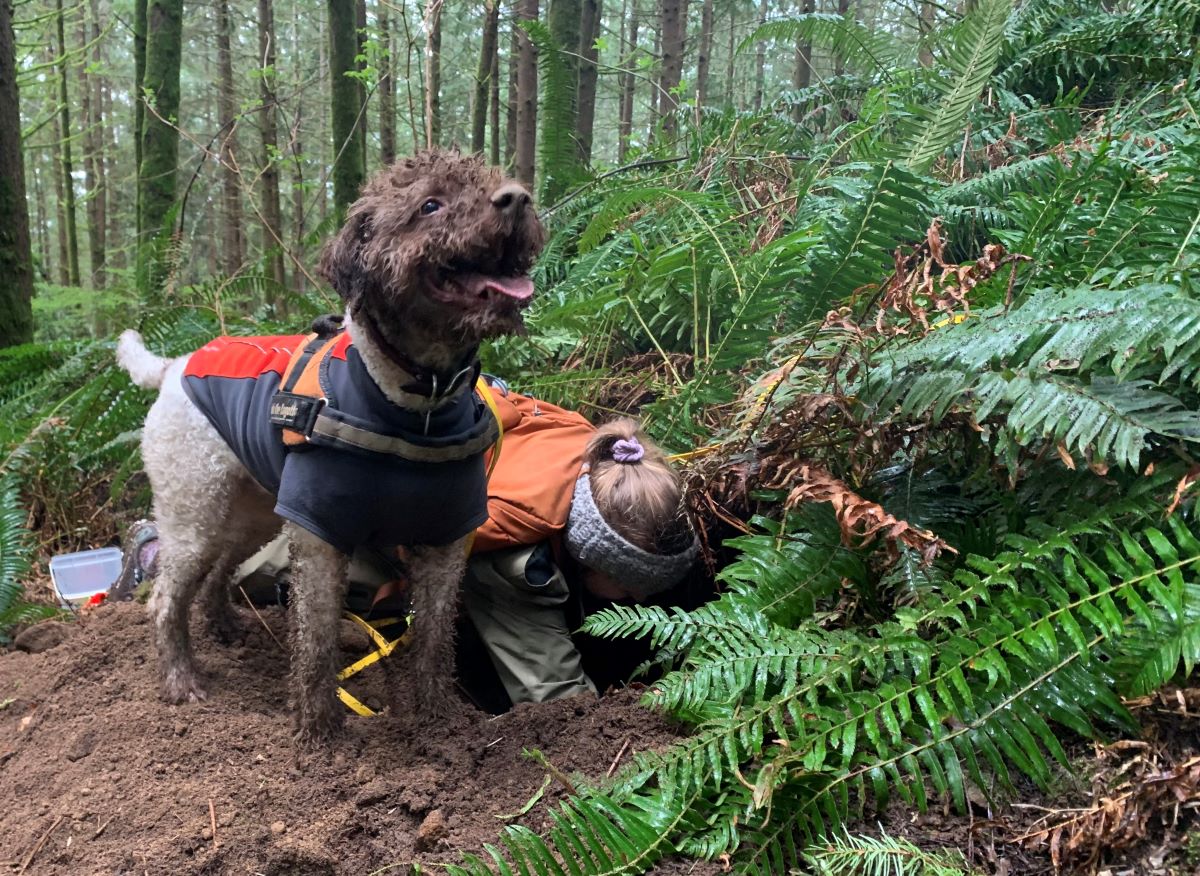
University of Florida biologists studying fungal evolution and ecology have discovered three new truffle species, including one capable of commanding hundreds of dollars per pound within culinary circles. “Our paper confirms what a lot of people had suspected for a long time, which is that the North American truffle species is genetically very distinct from its European relatives.” —Benjamin Lemmond, study co-author and a former UF student The researchers describe their discoveries in a Persoonia. Their work shakes up the Morchellaceae truffle family tree, with key insights related to perhaps the most commercially valuable truffle in North America, the Oregon black truffle. Gourmet chefs, who sometimes grate the odoriferous truffle over dishes or infuse butter with it, have been known to pay as much as $800 per pound for the delicacy. For decades, the Oregon black truffle has been known scientifically as Leucangium carthusianum. It was originally found in Europe and later found in the Pacific Northwest, from California to British Columbia. However, recent genetic testing and field analysis by researchers from UF’s Institute of Food and Agricultural Sciences (UF/IFAS) revealed the North American variety is a distinct species. Scientists are giving this newly recognized species a name honoring the Cascadia region in which it is found: Leucangium cascadiense. “Our paper confirms what a lot of people had suspected for a long time, which is that the North American truffle species is genetically very distinct from its European relatives,” said study co-author Benjamin Lemmond, a former UF student. Lemmond, now a postdoctoral associate at the University of California at Berkeley, began his research into the truffles as a first-year doctoral student studying under professor Matthew Smith of the UF/IFAS plant pathology department. During the COVID-19 pandemic, Lemmond couldn’t access the campus greenhouse where he was conducting an experiment, so Smith secured hundreds of dried truffle specimens from Oregon State University for him to study. The stash included slivers of the Oregon black truffle, a dark-colored, potato-shaped species with tiny, pyramid-shaped warts. When pandemic restrictions relaxed, Lemmond and Smith conducted genetic testing of the Oregon State specimens and others borrowed from Polish, Greek, Italian, French and Japanese collections. Their tests indicated Oregon black truffles from North America had at one point diverged from their European counterparts on the Morchellaceae evolutionary tree, according to the study. They also established the existence of another distinct and very rare species, Imaia kuwohiensis, a pale-colored truffle with dark warts, which is native to threatened spruce-fir habitats in the southern Appalachian Mountains. Their name for the truffle comes from the Cherokee word for the Great Smoky Mountains’ highest peak, Kuwohi. Field tests followed. The researchers wanted to understand the origin of Oregon black truffles’ energy. “Understanding the fundamental, basic biology and life cycle of this truffle is really important,” Lemmond said. “It’s a very valuable commodity, and this knowledge might help us to cultivate the truffle in the future. It also supports long-term conservation and management.” Most gourmet truffles are mycorrhizal, meaning they obtain energy from trees, Lemmond said. It had long been suspected that Oregon black truffles obtain energy through a symbiotic relationship with young Douglas fir trees, but no one had conclusively proven it. Lemmond traveled to the Pacific Northwest and worked with specially trained sniffer dogs capable of detecting truffles buried as deep as 10 inches beneath soil and leaf litter. With the dogs’ help, he unearthed Oregon black truffles nestled among Douglas fir stands. He used fluorescent stain that bonded with the fungal tissue, coloring it green to show where the truffle fungus grew between the cells of the tree root tissue. “The truffle fungi surround the whole root, but the fungus is healthy, and the plant is healthy,” Smith said. “The two trade nutrients back and forth.” DNA sequencing of the roots subsequently proved the truffles rely on the trees as their main source of carbon, according to the study. As the researchers conducted genome sequencing of the Oregon black truffle, they learned of a peculiar find reported by a citizen scientist on iNaturalist, an online science data network: a Leucangium truffle growing among Eastern hemlock trees in Oneida County, New York. It was the first time anyone had ever reported a Leucangium species in the United States, east of the Rocky Mountains, Lemmond said. Lemmond contacted Purdue University, which was preserving the specimen, and requested a sample. The truffle’s physical characteristics, including its dense external hairs and lack of warts, distinguished it from other Leucangium species. DNA analysis confirmed significant variation, too. The researchers named the new truffle species Leucangium oneidaense to recognize the county where it was unearthed. A few years later, just before the researchers submitted their study for publication, someone found a second Leucangium oneidaense specimen growing in Massachusetts, Lemmond said. “It was great timing, and it suggests to me that there are still a lot of undiscovered truffles out there, waiting to be found,” he said.


ExpertSpotlight: Why the Strait of Hormuz Matters: The World’s Most Critical Chokepoint
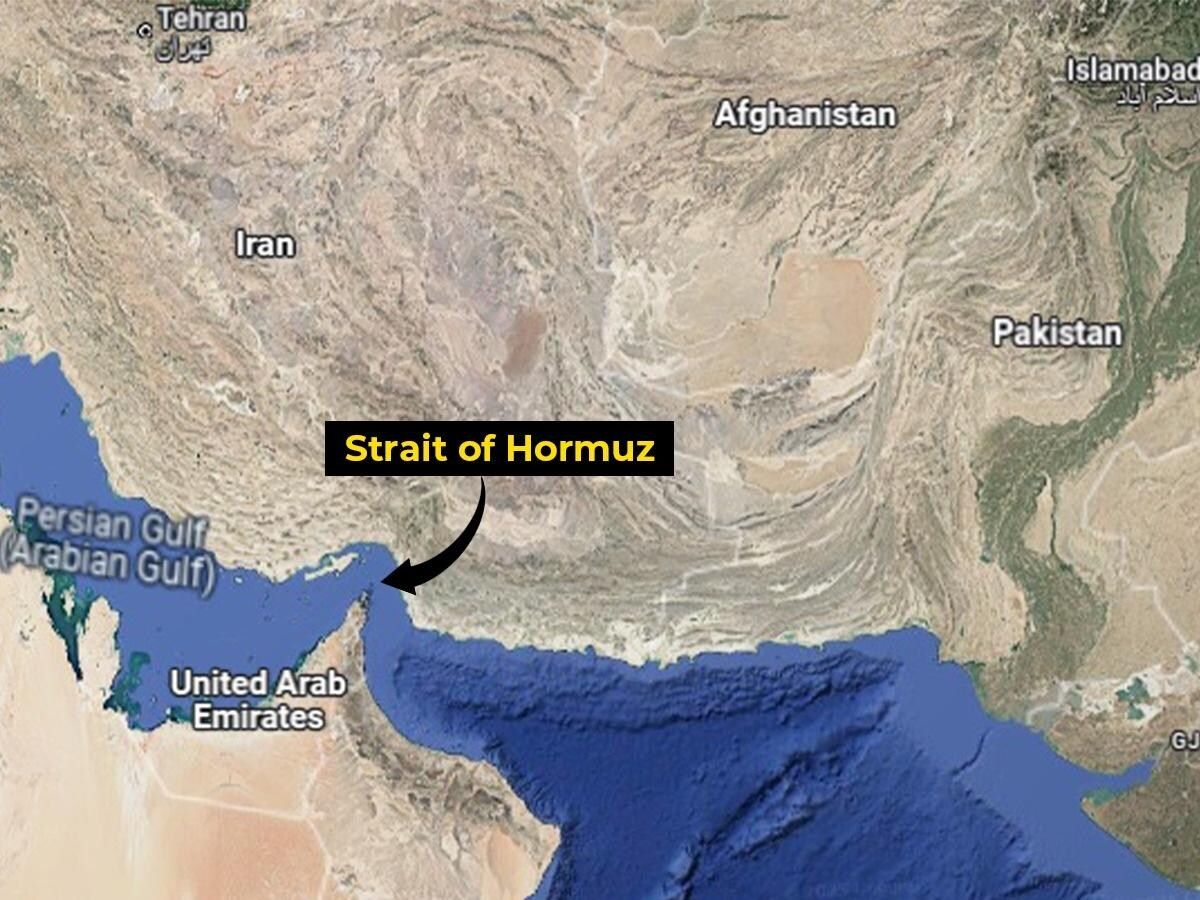
The Strait of Hormuz is one of the most strategically vital waterways on Earth. Just 20 miles wide at its narrowest point, with shipping lanes only a few miles across in each direction, this narrow channel connects the Persian Gulf to the Gulf of Oman and the Arabian Sea. Through it flows roughly one-fifth of the world’s petroleum supply, along with vast quantities of liquefied natural gas, particularly from Qatar. For global markets, the Strait is more than geography, it is a pressure point. Any disruption, even the threat of one, can send oil prices surging and rattle financial markets worldwide. A History Shaped by Empire and Energy For centuries, the Strait served as a maritime corridor linking Mesopotamia, Persia, India, and East Africa. Control over it shifted between regional powers, colonial empires, and eventually modern nation-states. In the 16th century, the Portuguese seized nearby islands to dominate regional trade routes. Later, British naval power asserted influence during the height of imperial shipping dominance. In the 20th century, however, the Strait’s importance expanded dramatically with the rise of oil exports from Gulf states. After the 1979 Iranian Revolution, tensions surrounding the Strait intensified. During the Iran-Iraq War in the 1980s, particularly the so-called “Tanker War” phase, commercial vessels were targeted, highlighting how vulnerable global energy supplies could be. Since then, periodic confrontations between Iran, the United States, and regional powers have kept the Strait at the centre of geopolitical risk. Why It Is So Important Today 1. Energy Security Major oil producers including Saudi Arabia, Iraq, the UAE, Kuwait, and Qatar rely heavily on this route. Even short-term closures could disrupt millions of barrels per day in global supply. 2. Global Economic Stability Because oil is globally traded and priced, disruptions in the Strait impact fuel costs, inflation, shipping, and consumer prices worldwide — including in North America and Europe. 3. Military Strategy The Strait is bordered primarily by Iran to the north and Oman to the south. Iran has periodically threatened to close the passage in response to sanctions or military pressure. The U.S. Navy and allied forces maintain a consistent presence to ensure freedom of navigation. 4. Modern Geopolitical Flashpoint Recent decades have seen drone seizures, tanker detentions, and naval standoffs. Each incident reinforces how fragile global energy logistics can be when concentrated in a single corridor. The Strait as a Symbol of Interdependence The Strait of Hormuz underscores a central truth of globalization: the world’s economies are deeply interconnected and geographically vulnerable. A narrow stretch of water in the Middle East can influence gasoline prices in Ontario, manufacturing costs in Germany, and energy security debates in Asia. It is both a trade artery and a geopolitical lever — a reminder that geography still shapes global power. Expert Angles for Media An expert in geopolitics, energy economics, or maritime security could explore: How vulnerable is the global economy to a prolonged closure? Can alternative pipelines realistically replace Hormuz traffic? What role do regional alliances play in deterring conflict? How does the Strait shape Iran’s negotiating power? What would insurance and shipping markets do in a crisis? The Strait of Hormuz is not simply a map feature — it is one of the world’s most consequential strategic chokepoints. Its stability underpins global energy flows, economic predictability, and international security. If tensions rise there, the world feels it. Our experts can help! Connect with more experts here: www.expertfile.com

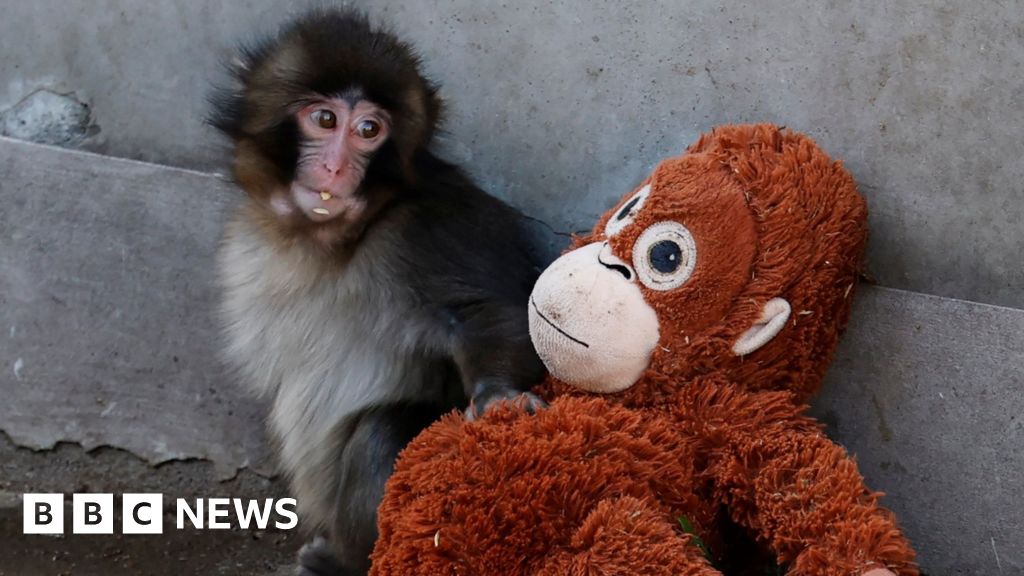
Expert Q and A: Understanding "Punch," The Baby Monkey That Captured The World's Heart
A tiny Japanese macaque named Punch has unexpectedly become one of the internet’s most talked-about animals. Born at a zoo in Japan and rejected by his mother shortly after birth, the young monkey was hand-raised by staff and given a stuffed toy for comfort—an image that quickly ricocheted across social media worldwide. Videos showing Punch tentatively approaching other macaques, sometimes being pushed away or corrected as he tried to socialize, struck an emotional chord. What began as a local zoo update rapidly turned into international headlines, with audiences from North America to Europe weighing in on what they saw as loneliness, resilience and the universal need for belonging. But experts say the story is more nuanced than a viral clip suggests. The interactions that many viewers interpreted as bullying are, in fact, typical components of macaque social development, part of how young primates learn boundaries, hierarchy and group norms. While Punch’s early maternal separation makes his integration more delicate, gradual acceptance into the troop is a positive sign. As internet users continue to share and comment, the moment has sparked broader conversations about animal emotion, anthropomorphism and the realities of wildlife behavior in managed care settings. Florida Tech's Catherine Talbot offered insight into the complexities of animal behavior. Catherine F. Talbot is an assistant professor in the School of Psychology at Florida Tech and co-director of the Animal Cognitive Research Center at Brevard Zoo. Her overarching research goal has been to study the ultimate (evolutionary) and proximate (behavioral, biological, and developmental) mechanisms underlying sociality. Q: Is it normal for mother macaques to abandon their babies, or is this an unusual occurrence? What circumstances can cause this to happen? It’s not necessarily normal, but also not that uncommon in primates, unfortunately. It’s more common in first time mothers that are inexperienced and sometimes lower ranking mothers. A number of factors can increase the likelihood of abandonment including stress on the mother and unfavorable conditions such as limited resources. Q: How does abandonment affect development in young macaques? Early maternal contact is critical for normal behavioral and emotional development. Infants rely on their mothers for nutrition, warmth, protection and learning how to navigate social dynamics. When infants do not have their mothers during critical developmental periods like infancy, in the short term, they tend to have elevated stress responses and difficulty with emotional regulation. In the long-term, it depends on whether the infant is able to form other types of attachment. In the worst-case scenario, they may have increased aggression, abnormal and/or self-injurious behavior, digestive issues and may lack social skills. But primates are resilient, and with social support and gradual integration into a troop, Punch can form new attachments, learn socially appropriate behavior and ultimately live a fairly normal monkey life. Q: Is it obvious to the rest of the troop when a young macaque has no mother? How does this affect integration? Japanese macaques have really complex social worlds, so they are really in tune with the relationships they have with one another and recognize the relationships between other individuals. That can certainly make it more difficult for Punch to be accepted back into the troop – he needs to find some friends and possibly even a surrogate parent. With social support, he should be able to recover from the absence of a mother. It’s really great to see that the care staff stepped in to support Punch as he begins to recovery from the stress of this experience. It’s even more important that Punch is around other monkeys of the same species so that he can continue to learn from them and respond appropriately to social communication cues. I’m thrilled to see that Punch is now making friends. Q: Punch is obviously attached to his stuffed orangutan. We can understand how this happens from our own human experience, but can you explain, on a biological level, how he bonded with this stuffed animal? Primates, including humans, are neurobiologically wired to form strong social bonds with a caregiver very early in life. In many primate species, infants are born highly dependent on their mother. Punch’s attachment to the stuffed orangutan reflects this need for attachment. That physical touch – warmth, softness, graspable limbs, a stable physical presence – can partially activate those same calming biological pathways, including the release of oxytocin which regulates stress and promotes feelings of safety. Without activation in those pathways, Punch would likely experience stronger feelings of separation or loneliness and ultimately social withdrawal. These biological pathways are crucial to proper social and emotional development of any primate species. Any way we can help mitigate those effects for Punch is crucial for successful integration back into his troop. Q: How does sociality among Japanese macaques compare to that of similar species? Japanese macaques live in large multi-male, multi-female social groups that can range from roughly 50 to 150 individuals. Like many macaques species, they form stable, female-bonded societies. Females remain in their natal group (or the group they were born into) for life, inherit their mother’s rank, and form strong kin- based alliances whereas males emigrate to a new group at adolescence. Their societies are organized around matrilines or extended female family lines in which rank is very important. They have strong dominance hierarchies and generally high levels of aggression, but levels of aggression and tolerance can vary a good amount from group to group. Entire matrilines can outrank others, which dictates access to food, grooming partners, and coalitions. Within a single troop, you often see multiple matrilines with long-standing dominance competitions. I sometimes compare it to a Romeo and Juliet-style Montague and Capulet dynamic, where beneath the surface of daily grooming and foraging is a complex political landscape structured by kinship and status. Q: What behaviors can Punch expect from the rest of the monkeys as he continues to integrate with the troop? What behaviors can the troop expect to see from him? As Punch continues to integrate into his troop, I would expect to see some social testing by other members of the group to see how Punch responds- they may use mild aggression like open mouth threats or direct stares (which arethreatening is macaques), brief chases, and displacement from resources like food/resting spots. These will help clarify Punch’s rank and help form and maintain a stable hierarchy. Therefore, I hope to see Punch make at least a few strong social bonds (friends), to help defend him against more intense aggression. As long as he makes a few friends, he should begin to receive more affiliative behavior. Integration is usually gradual as these bonds form and strengthen and these skills develop. I would expect to see more play and grooming with conspecifics and less reliance on his stuffed orangutan as real social bonds start to form. Grooming is especially important for forming and maintaining social bonds and there are already videos showing Punch receiving some grooming from older monkeys, which bodes well for him. He also needs to respond in socially appropriate ways, like grooming others and showing submission to higher ranking individuals. Essentially, he needs to understand and follow the rules of Japanese macaque society. Q: What message do you have as people continue to root for Punch? It's uplifting to see how much support Punch has gained across the world. And while Punch is clearly adorable and so vulnerable that you just want to love him and give him (or other monkeys like him) a home, it’s important to remember that more than anything else, he needs to live with other monkeys so that he can live a life that is true to his species and nature. Unfortunately, many people still have monkeys as pets. The illegal wildlife trade is a multi-billion-dollar industry, ranking as the fourth largest illegal trade after drugs, arms, and human trafficking. Within the United States, it is estimated that there are more than 15,000 nonhuman primates living in unsuitable conditions. Primates are intelligent, sentient beings that need complex communities and relationships to thrive. There currently is no federal legislation that protects primates from private ownership, but the Captive Primate Safety Act (H.R.3199/ S.1594) has been proposed to prohibit the private possession of nonhuman primates and the sale or transportation of nonhuman primates for the wild pet trade. If you're interested in connecting with Catherine and learning more about animal behavior, let us help. Contact Adam Lowenstein, Assistant Vice President for External Affairs at Florida Institute of Technology, at adam@fit.edu to arrange an interview today.

Ocean Tomo Releases 2025 Intangible Asset Market Value Study Results
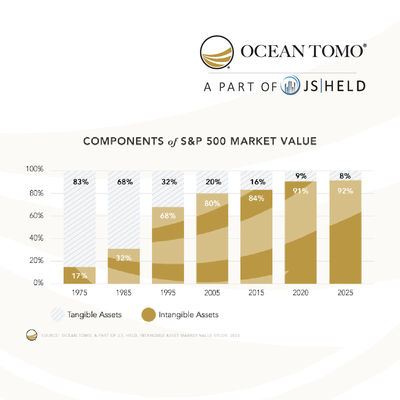
Global consulting firm J.S. Held announces the release of the Ocean Tomo Intangible Asset Market Value (IAMV) study. With this release, the study now reflects a panel of 50 years of data in the US market and 20 years of data in foreign markets. The study examines the components of market value, specifically the role of intangible assets, across a range of global indexes. IAMV is shown as of calendar year end by subtracting net tangible asset value from market capitalization. Commenting on the Components of S&P 500® Market Value, economic expert and study author Matthew Johnson observes, “the composition of corporate value has undergone a fundamental transformation over the past five decades.” In 1975, tangible assets—property, plant, equipment, inventory, and other physical capital—represented 83% of the market value of companies comprising the S&P 500 index, with intangible assets accounting for only 17%. By the end of 2025, this relationship had completely inverted: intangible assets now constitute approximately 92% of S&P 500 market capitalization, while tangible assets have been reduced to a mere 8%. Johnson adds, “This 75 percentage point shift represents what Ocean Tomo has defined as ‘economic inversion’— a wholesale transformation in the nature of value creation whereby economic worth has migrated from what can be ‘touched’ to what can be ‘thought’." The magnitude and implications of this transformation are comparable to the Industrial Revolution of the 18th and 19th centuries. Just as the Industrial Revolution fundamentally restructured economic activity from agrarian and craft-based production to mechanized manufacturing, the intangible revolution has redefined the sources and measurement of corporate value in the 21st century. Ocean Tomo Co-founder and J.S. Held Chief Intellectual Property Officer, James E. Malackowski observes, “While the Industrial Revolution required a century to unfold fully, the intangible revolution has occurred within a single human lifespan, with particularly rapid acceleration occurring in the 1985-2005 period when intangible asset market value increased from 32% to 79%—a remarkable 47 percentage point surge in just two decades.” The 2020-2025 period deserves special attention: S&P 500 IAMV remained stable at approximately 90% despite the Federal Reserve implementing the most aggressive monetary tightening cycle in four decades. Dr. Nikki Tavasoli, PhD, shares, “Traditional financial theory predicts that intangible-intensive firms should be highly sensitive to interest rate changes due to their long-duration cash flows and limited collateral value.” She adds, “The observed stability challenges this prediction and requires explanation, which we address in a forthcoming paper.” In 2005, the IAMV study was expanded beyond the S&P 500 to explore the components of value in several key international markets. Stock market indexes from Europe, China, Japan, and South Korea were selected and analyzed to determine the comparable role of intangible assets. To learn more about the 2025 Intangible Asset Market Value Study, please visit: Media Contact Kristi L. Stathis, J.S. Held 1 786 833 4864 Kristi.Stathis@JSHeld.com JSHeld.com



ExpertSpotlight: The Surprising (and Slightly Dark) History of Valentine’s Day
Valentine’s Day may now be synonymous with chocolates, flowers, and heart-shaped everything, but its origins are far more complex, blending ancient Roman traditions, Christian martyrdom, and medieval storytelling. What began as a mid-winter festival tied to fertility and renewal eventually evolved into a celebration of romantic love - one shaped as much by poets and pop culture as by saints and religious history. Ancient Roots: Before Romance, There Was Ritual Long before Valentine’s cards, ancient Romans celebrated Lupercalia, a mid-February festival focused on fertility, purification, and the coming of spring. The event included symbolic rituals meant to ward off evil spirits and promote health and fertility, far removed from today’s candlelit dinners. As Christianity spread through the Roman Empire, many pagan festivals were re-interpreted or replaced with Christian observances, laying the groundwork for what would become Valentine’s Day. Who Was Valentine, Anyway? There isn’t just one Valentine. Historical records point to multiple early Christian martyrs named Valentine, the most famous being Saint Valentine, executed in the 3rd century CE. One popular legend claims he secretly performed marriages for young couples despite a Roman ban, acts that ultimately led to his execution. While historians debate the accuracy of these stories, they helped cement Valentine’s association with love, sacrifice, and devotion. Love Enters the Story: Medieval Poets Change Everything Valentine’s Day as a romantic holiday didn’t truly take shape until the Middle Ages. English poet Geoffrey Chaucer is often credited with linking February 14 to romantic love in his poetry, helping popularize the idea that it was the day birds chose their mates. From there, the connection between Valentine’s Day and courtly love spread across Europe, especially among the nobility, eventually giving rise to handwritten love notes and tokens of affection. From Handwritten Notes to Hallmark By the 18th and 19th centuries, Valentine’s Day had become a popular occasion for exchanging cards, flowers, and gifts. The Industrial Revolution made printed cards widely available, transforming a once-elite tradition into a mass-market celebration. Today, Valentine’s Day is a global cultural phenomenon, equal parts romance, commerce, and tradition, evolving to include friendships, self-love, and inclusive expressions of connection. It isn’t just about romance, it reflects how traditions evolve over time, absorbing layers of culture, religion, and storytelling. Understanding its history helps explain how societies redefine love, relationships, and celebration across generations. Our experts can help! Connect with more experts here: www.expertfile.com

Aston University economists say Prime Minister can reduce UK trade vulnerability with China visit
Greenland episode exposed UK’s lack of effective response to economic coercion from allies Research shows tariff retaliation would have cost the average UK household up to £324 per year Economists say China visit is “portfolio risk management” – diversification reduces vulnerability. The Prime Minister’s visit to China – the first by a British PM since 2018 – is an opportunity to reduce the UK’s vulnerability to economic coercion, according to new research from Aston University. A policy paper from Aston Business School’s Centre for Business Prosperity analyses the January 2026 Greenland tariff episode, when President Trump threatened and then withdrew tariffs on eight European countries. The researchers found that the UK had no good options: retaliation would have made Britain worse off, while absorbing the tariffs left Europe without credible deterrence. Director of the centre for business prosperity, Professor Jun Du, said: “The Greenland episode was a wake-up call. When your principal security ally threatens economic coercion, the old assumptions about who is safe and who is dangerous no longer hold. “The PM’s China visit should be framed as portfolio risk management – building diversified trading relationships that reduce the UK’s exposure to any single partner. Just as investors don’t put all their money in one stock, countries shouldn’t put all their trade into one basket. A UK with multiple strong partnerships is harder to pressure, whether the pressure comes from Washington or Beijing.” The research found that coordinated UK–EU tariff retaliation would have cost British households up to £324 per year – the worst outcome modelled. But the authors argue that Europe has untapped leverage elsewhere: the US runs a €148 billion annual services surplus with the EU, and mutual investment exceeds €5.3 trillion. Associate professor of economics and co-author, Dr Oleksandr Shepotylo, said: “Tariff retaliation fails because it hurts consumers and distorts the economy – the retaliator suffers similarly to the target. But Europe has cards it isn’t playing. Services, investment screening, and regulatory access are pressure points where Europe can respond effectively.” UK exports to China fell by 10.4% in the year to Q2 2025, with goods exports down 23.1% – the sharpest decline among major trading partners. The researchers argue that this closes off the UK’s largest alternative market at precisely the moment US reliability is in question. The paper identifies three priorities for UK policy: Recognise the permanent incentives behind US tariffs. US tariff revenue hit $264 billion in 2025. Trade negotiations alone cannot resolve revenue-driven policy. Build UK–EU coordination on non-tariff instruments. Services, investment, procurement, and regulation offer leverage that tariffs do not. Treat China engagement as portfolio risk management. Concentration in any single market creates vulnerability. Diversification is not about picking sides – it’s about resilience. Professor Du added: “The question for the Prime Minister is whether to use this breathing space to build resilience – or wait for the next Greenland.” To read the policy paper in full, click on this link:


Why Greenland Matters: The History and Strategic Importance of the World’s Largest Island
Often viewed as remote and sparsely populated, Greenland has long played an outsized role in global strategy. Settled by Inuit peoples for thousands of years, Greenland later became part of the Danish realm in the 18th century and today exists as an autonomous territory within the Kingdom of Denmark. Its location—bridging North America and Europe—has consistently drawn the attention of major powers, especially during moments of geopolitical tension. That attention intensified during the Cold War, when Greenland became a critical asset in Arctic defense. The United States established military installations on the island, most notably what is now known as Pituffik Space Base, to support missile warning systems and transatlantic defense. Greenland’s position along the shortest air and missile routes between North America and Russia made it indispensable to early-warning networks—and that strategic logic has not faded with time. Today, Greenland’s importance is growing rather than shrinking. Climate change is reshaping the Arctic, opening new shipping routes and increasing access to natural resources such as rare earth minerals, hydrocarbons, and freshwater reserves locked in ice. These developments have renewed global interest in Greenland from NATO allies and rival powers alike, as control over Arctic infrastructure, data, and mobility becomes central to economic and security planning. At the same time, Greenland’s own political future—balancing autonomy, Indigenous priorities, and external pressure—adds another layer of complexity. Greenland’s story is ultimately one of geography shaping history. What once made the island strategically valuable for defense now places it at the center of debates about climate, security, energy, and sovereignty in the 21st century. As Arctic competition accelerates, Greenland is no longer a peripheral actor—it is a focal point where global interests converge. Journalists covering geopolitics, Arctic security, climate change, Indigenous governance, or global resource competition are encouraged to connect with experts who study Greenland’s past and its evolving strategic role. Expert insight can help explain why this vast island continues to matter—and why it is likely to play an even larger role in the years ahead. Our experts can help! Connect with more experts here: www.expertfile.com