
Experts Matter. Find Yours.
Connect for media, speaking, professional opportunities & more.

Gene therapy and the next frontier of medicine
Genetic testing today is mainstream, marketing to consumers who want to know where in Europe they came from or what types of hereditary diseases they could develop. For around $200 you can trace your family tree to learn your origins or identify genetic abnormalities that could signal disease. James Dahlman, assistant professor in the College of Engineering’s biomedical engineering department, specializes in genetics and believes these genotyping services can be helpful, as long as they are used responsibly. “If you’re going to start making medical predictions, you have to be careful,” said Dahlman. “Most people are not equipped to interpret statistics correctly, which can lead to negative predicting and ethical dilemmas. In a few years, genetic counselors will be in high demand so folks can make better decisions about their health.” Dahlman is fascinated by genetics, citing gene therapy as the most interesting field in the world. And it’s a field that he is revolutionizing through his research. Gene therapy is an experimental technique that uses genes to treat or prevent diseases, including hemophilia, Parkinson’s, cancer and HIV. It can help manage a number of diseases by leveraging genes instead of drugs or surgery. Although gene therapy shows promise, there are still risks involved, including unwanted immune system reactions or the risk of the wrong cells being targeted. That’s where Dahlman’s research comes in. Dahlman’s lab focuses on drug delivery vehicles, which are nanoparticles. The nanoparticle delivers gene therapies to the right place in the body to fight disease. It’s critical that the gene therapies only target the unhealthy cells to avoid damaging healthy ones. Dahlman is laser focused on ensuring the nanoparticles know what paths to take to reach the correct organ to start the healing process. “The issue with genetically-engineered drugs is that they don’t work unless they get to the right cell in the body,” said Dahlman. “You can have the world’s best genetic drug that's going to fix a tumor or eradicate plaque, but it’s not going to be effective unless it travels to the right organ. In my lab, we design different nanoparticles to deliver the genetically-engineered drugs to the correct location.” The field of genetic therapy is fascinating – and if you are a journalist looking to cover this topic or have questions for upcoming stories – let our experts help. James Dahlman is an Assistant Professor in the Georgia Tech BME Department. He is an expert in the area of biomedical engineering and uses molecular biology to rationally design the genetic drugs he delivers. This research is redefining the field of genetic therapy. Dr. Dahlman is available to speak with media – simply click on his icon to arrange an interview.



Are the days of the traditional travel agent done? Let our experts help!
For explorers, those needing a vacation and those tripping abroad – the news of long-time travel company Thomas Cook suddenly going bankrupt came as a shock. One of the oldest travel agencies in the world, Thomas Cook was rooted in brick and mortar operations and has amassed some serious debt. That coupled by its dwindling business that was being lapped up by popular online travel options – the preferred choice of younger travelers - meant the end was near. “As it struggled to pitch itself to a new generation of tourists, the company was hit by the 2016 coup attempt in Turkey, one of its top destinations, and the 2018 Europe-wide heat wave which deterred customers from going abroad. Thomas Cook needed another 200 million pounds on top of a 900-million-pound package it had already agreed, to see it through the winter months when it receives less cash and must pay hotels for summer services. The request for an additional 200 million pounds torpedoed the rescue deal that had been months in the making. Thomas Cook bosses met lenders and creditors in London on Sunday to try to thrash out a last-ditch deal to keep the company afloat. They failed.” September 23, Financial Post Travel agencies, much like film for cameras – are becoming a thing of the past and all part of our more digital and modern society. But what’s next for the travel industry? What do those looking to seek out adventure and travel need to be wary of? Are there any other companies on the brink like Thomas Cook? If you are a reporter covering this story – let our experts help. Steve Moss is a professor at Georgia Southern University and specializes in tourism, forecasting and quantitative methods. Steve is available to speak with media regarding this topic – simply click on his icon to arrange an interview.


Key Environmental Quality Research Questions Identified for North America by Multidisciplinary Team
As density in cities increase along with other global megatrends, researchers are working to address environment and health challenges in collaborative ways. Using a recently pioneered process, a multidisciplinary team of North American researchers, government agencies and businesses leaders identified priority research questions for the United States, Canada and Mexico in an effort to tackle pressing environmental quality issues. In an article published in the journal of Environmental Toxicology and Chemistry, Bryan W. Brooks, Ph.D., Distinguished Professor of Environmental Science and Biomedical Studies and director of the environmental health science program at Baylor University, led the Global Horizon Scanning Project (GHSP), which focuses on identifying environmental and health issues internationally. Brooks also facilitated GHSP workshops in Africa, Australia, Central and Southeastern Asia, Europe and Latin America. “We face palpable global environment and health challenges, which require innovative understanding, tools, products and systems to prevent, diagnose and manage adverse outcomes to public health and the environment,” Brooks said. “The GHSP was initiated as part of a larger effort to identify important international research needs. It is essentially a research roadmap towards achieving more sustainable environmental quality, which is necessary to protect human health, biodiversity and ecosystem services.” As part of the study, members of the Society of Environmental Toxicology and Chemistry’s (SETAC) and the American Chemical Society’s (ACS) Environmental Chemistry and Agrochemcials Divisions submitted questions that were then synthesized during a workshop by scientists and engineers from the academic, government and business sectors. “This project is intentionally inclusive, bottom-up, multidisciplinary, multisector and transparent,” Brooks said. “Answering these priority research questions will not be easy, but strategically doing so promises to accelerate progress to address grand challenges that matter to everyone.” “This report provides a comprehensive global perspective covering some of the world’s most critical environmental challenges that will impact society for decades to come,” said Sherine Obare, Ph.D., dean and professor of the Joint School of Nanoscience and Nanoengineering at UNC Greensboro and chair elect of the American Chemical Society’s Environmental Chemistry Division. “SETAC’s ability to engage scientists from around the globe has led to forums that identify urgent challenges including, next generation 21st century analytical chemistry methods, strategies to predict chemical exposure, understanding multiple stressors and new approaches in chemical risk assessment. This project will define the scientific directions needed to transform environmental science and engineering, globally.” “The GHSP reflected in this paper has harnessed the insights of scientists not only across North America but around the world,” said Charles Menzie, Ph.D., Global Executive Director of SETAC. “Each brings tremendous experience and a strong sense of what is needed for future research. However, the distillation of these many into a set of consensus questions provides a much needed foundation for charting our direction for research to inform environmental policy. SETAC is proud to have supported this through our global meetings and now through our journal.” A related GHSP manuscript identifying priority environmental quality questions for the Australasiaregion of Oceania was also recently published in Integrated Environmental Assessment and Management. GHSP efforts from Africa and Asia are ongoing with plans to report priority research questions from these global regions in the next year. ABOUT BAYLOR UNIVERSITY Baylor University is a private Christian University and a nationally ranked research institution. The University provides a vibrant campus community for more than 17,000 students by blending interdisciplinary research with an international reputation for educational excellence and a faculty commitment to teaching and scholarship. Chartered in 1845 by the Republic of Texas through the efforts of Baptist pioneers, Baylor is the oldest continually operating University in Texas. Located in Waco, Baylor welcomes students from all 50 states and more than 80 countries to study a broad range of degrees among its 12 nationally recognized academic divisions. ABOUT BAYLOR COLLEGE OF ARTS & SCIENCES The College of Arts & Sciences is Baylor University’s oldest and largest academic division, consisting of 25 academic departments and seven academic centers and institutes. The more than 5,000 courses taught in the College span topics from art and theatre to religion, philosophy, sociology and the natural sciences. Faculty conduct research around the world, and research on the undergraduate and graduate level is prevalent throughout all disciplines.


Baylor’s Jeff Levin Named a Fellow of Prestigious International Society
Baylor scientist Jeff Levin, Ph.D., M.P.H., has been invited to become a Fellow of the prestigious International Society for Science and Religion (ISSR), a multidisciplinary learned society based at Cambridge University. Founded in 2002, ISSR is the world’s preeminent scholarly organization devoted to the intersection of science and religion. The Society has only about 200 Fellows, mostly from the physical and biological sciences, philosophy, history and theology. Levin is one of the few Fellows with a background in the biomedical sciences. Levin, an epidemiologist and religious scholar, holds a distinguished chair at Baylor, where he is University Professor of Epidemiology and Population Health, professor of medical humanities and director of the Program on Religion and Population Health at the Institute for Studies of Religion. He also serves as adjunct professor of psychiatry and behavioral sciences at Duke University School of Medicine and as an affiliated member of the Center for Medical Ethics and Health Policy at the Baylor College of Medicine. Levin is a founding father of the field of research devoted to the influence of religious faith and spirituality on physical and mental health. He has been conducting studies on this subject since the early 1980s. He came to Baylor in 2009. Levin’s work “is the culmination of a lifetime of diligent scholarship, for which he is rightly renowned worldwide, said Stephen G. Post, director of the Center for Medical Humanities, Compassionate Care and Bioethics at Stony Brook University, and an ISSR Fellow. “It is hard to imagine that any one scholar could have made such a pioneering contribution across this interface, but Jeff has been digging deep for nearly 40 learned years,” Post said. Levin’s colleagues at Baylor were excited to hear about this honor. “This is an amazing honor for a world-class scholar. This recognition is a true testament to his many important publications and remarkable career,” said Byron Johnson, Ph.D., co-director of ISR and Distinguished Professor of the Social Sciences. Among the ISSR’s distinguished Fellows are several Templeton Prize laureates, Gifford lecturers and leading academic scientists and theologians in Europe and North America. “I never expected this and wasn’t sure I was even on their radar,” Levin said. “The science and religion field has become a major intellectual endeavor, but the subject of religion and health up to now has not really been acknowledged by the field or accepted in it. So this is a first—an honor for me, for sure, but also recognition of the work that so many of my colleagues and I have been doing since the 1980s.” Levin has been published in more 220 scholarly publications, including 11 books. His most recent book is “Religion and Medicine: A History of the Encounter Between Humanity’s Two Greatest Institutions,” forthcoming this fall from Oxford University Press. ABOUT BAYLOR UNIVERSITY Baylor University is a private Christian University and a nationally ranked research institution. The University provides a vibrant campus community for more than 17,000 students by blending interdisciplinary research with an international reputation for educational excellence and a faculty commitment to teaching and scholarship. Chartered in 1845 by the Republic of Texas through the efforts of Baptist pioneers, Baylor is the oldest continually operating University in Texas. Located in Waco, Baylor welcomes students from all 50 states and more than 90 countries to study a broad range of degrees among its 12 nationally recognized academic divisions. ABOUT THE BAYLOR INSTITUTE FOR STUDIES OF RELIGION Launched in August 2004, the Baylor Institute for Studies of Religion (ISR) initiates, supports and conducts research on religion, involving scholars and projects spanning the intellectual spectrum: history, psychology, sociology, economics, anthropology, political science, epidemiology, theology and religious studies. The Institutes mandate extends to all religions, everywhere, and throughout history, and embraces the study of religious effects on prosocial behavior, family life, population health, economic development and social conflict.

Are Germany’s economic walls crumbling? Let our experts explain the potential consequences.
As the saying goes … where there’s smoke, there is usually fire. And as trade wars, Brexit and overall global uncertainty crash like waves across the planet – there might be another sure sign we are headed for a global economic slowdown. Germany, the engine that runs Europe, may very well be in recession. “A technical recession is defined as two consecutive quarters of negative growth, and Germany saw a 0.1% drop in the April-to-June period. In its monthly report, the Bundesbank said that with falling industrial production and orders, it appears the slump is continuing during the July-to-September quarter. “The overall economic performance could decline slightly once again,” it said. “Central to this is the ongoing downturn in industry.” Deutsche Bank went further Monday, saying “we see Germany in a technical recession” and predicting a 0.25% drop in economic output this quarter.” August 20 – Associated Press So, what will this mean for the EU, and economies far and wide? Do Americans need to be concerned? Is this just a stumble or is the world about to fall into another economic collapse? If you are a reporter covering the economy and need an expert for your stories – let us help. Jeff Haymond, Ph.D. is Dean, School of Business Administration and a Professor of Economics at Cedarville and is an expert in finance and trade. Dr. Haymond is available to speak with media regarding this topic – simply click on his icon to arrange an interview.


As Europe’s heatwave moves north toward the Arctic…just how worried do we need to be?
There’s no easier way to say it – Europe is baking. Record high temperatures are breaking the mercury in London, France, Germany and elsewhere across the continent. And, that warm air is not pushing north toward the Arctic. Greenland’s ice sheet is feeling the heat and it has some scientists worried. “So far this year, Arctic sea ice extent has hovered at record lows during the melt season. Weather patterns favorable for increased melt have predominated in this region, and an unusually mild summer has also increased melting of the Greenland ice sheet. Unlike with sea ice melt, runoff from the Greenland ice sheet increases sea levels, since it adds new water to the oceans. If the entire ice sheet were to melt, it would raise global average sea levels by 23 feet.” Washington Post, July 26 Are you a reporter covering climate change or weather? If so – we have an expert who can help with your stories. Dr. Pamela Grothe is an assistant professor in the Department of Earth and Environmental Sciences as the University of Mary Washington. She recently completed a Ph.D. in the Paleoclimatology Lab at the Earth and Atmospheric Sciences department at Georgia Institute of Technology. She’s an #expert in climate change and is available to speak with media – simply click on her icon to arrange an interview.



In what was once a wide field to replace the fallen British Prime Minister Theresa May has now become a race for Boris Johnson to lose. As the outspoken and bold British MP looks to unite his party, pull Britain from the EU by the end of October and defeat Labour in the next election – what will his presence at 10 Downing Street mean for his country, Europe the rest of the world? Britain is one of the cornerstones of the west, but what will a wildcard like Johnson mean? What’s his background and do people need to know more about the man who will reside in the chair as historic figures like Tony Blair, Margaret Thatcher and Sir Winston Churchill? If you are covering and need to no more – that’s where we can help. Dr. Glen Duerr's research interests include nationalism and secessionism, comparative politics, and international relations theory. Glen is available to speak to media regarding Boris, Brexit and Britain – simply click on his icon to arrange an interview.

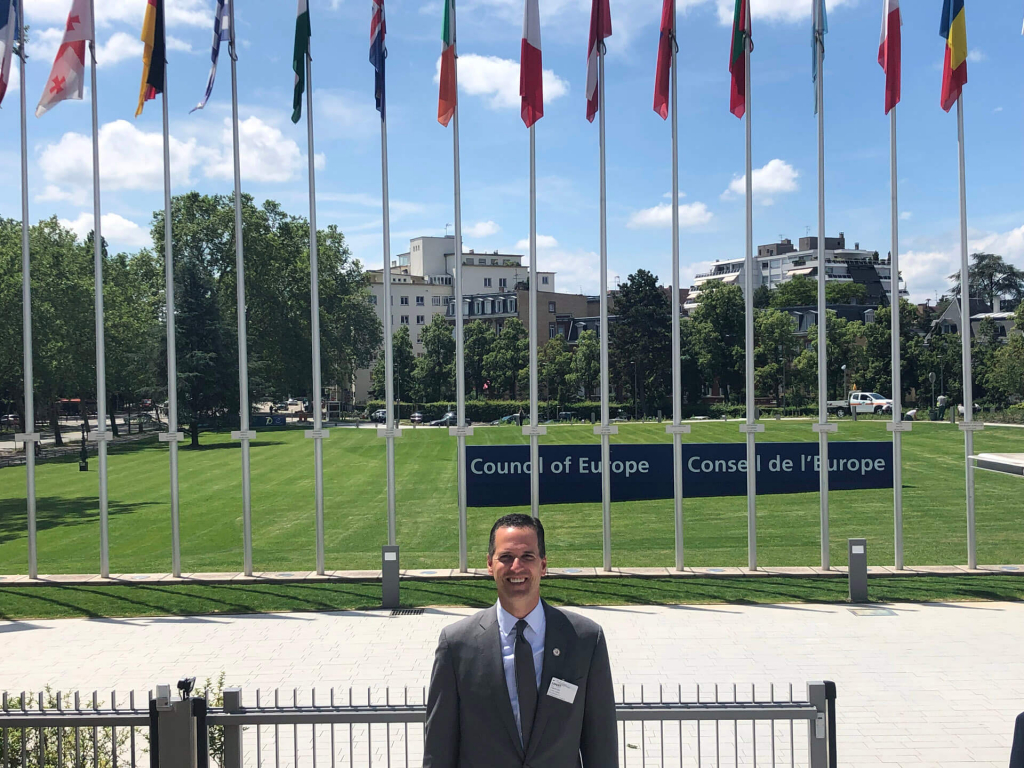
A global commitment to democracy
When I was invited to attend the Global Forum on Academic Freedom, Institutional Autonomy, and the Future of Democracy held this June in Strasbourg, France, I jumped at the chance. I was proud to add Otterbein’s support to a movement of global leaders committing to protecting democracy. I attended the forum along with more than 100 higher education leaders from around the world. Since its founding, Otterbein has stood for the rights of academic freedom and autonomy, as well as the freedom of speech of individuals, and we continue to stand resolute today. Otterbein believes that all voices from different walks of life must be represented, respected and valued, and we are committing to be a national and global leader in preserving democratic societies and values. The Global Forum was co-organized by the Council of Europe; the International Consortium for Higher Education, Civic Responsibility, and Democracy; the Organization of American States; and other partners, notably the International Association of Universities and the Magna Charta Observatory. It gathered higher education leaders and representatives of public authorities and NGOs from Europe and the United States, as well as smaller numbers from Australia, Asia, Africa, the Middle East and Latin America. - John Comerford Are you a journalist covering topics about democracy and how it is being threatened around the world? What role does higher education play in global democracy? And what countries or regions are the most at risk? There are a lot of questions regarding this topic – and that’s where we can help. John Comerford is an expert in higher education, regional and national topics. He is the President of Otterbein University and is available to speak with media regarding this issue and how higher-education needs to be made available to everyone in America regardless of income, family name or background. Simply click on his icon to arrange an interview.


From Asthma and Tick Bites to Dengue Fever, Nurses Tackle Health Impacts of Climate Change
According to statistics compiled by the National Aeronautics and Space Administration (NASA), carbon dioxide levels are at their highest in more than 650,000 years. In addition, 18 of the 19 warmest years ever have occurred since 2001, according to NASA. The World Health Organization reports that between 2030 and 2050 climate change is expected to cause 250,000 additional deaths per year from malnutrition, malaria, diarrhea and heat stress. “Many people don’t realize how much climate change can affect their health,” says Ruth McDermott-Levy, PhD, MPH, MSN, RN, director of the Center for Global and Public Health at Villanova’s M. Louise Fitzpatrick College of Nursing. “We see increases in ground level ozone from the changes in our climate here in the United States and in Europe. And we see the impact of climate change on our patients every day.” Earlier this year, Dr. McDermott-Levy spent several months in Finland collecting nurses’ observations on the impact of climate change. “In Finland extreme cold causes deaths, but increasing heat waves have become a health risk, too. This is especially a risk for the chronically ill and the elderly. And nurses will need to consider heat-related issues when they discharge elderly patients from the hospital to their homes.” In addition to health issues related to climate change, the increasing extreme weather events that bring on flooding and wildfires also disrupt the health care delivery supply chain, making much needed medications, medical supplies, and access to health care providers a greater challenge in delivering care.


Why voters prefer moderate leaders in the face of terrorism
From 1970 to 2016, 11,176 people in Europe died from terrorist attacks. These numbers do not include those that were wounded or missing. Terrorist attacks, especially deadly ones, are likely to affect the way people vote. But what is the exact impact of terrorism on voting patterns? Following terrorist attacks, in international elections people are more likely to vote for moderate or centrist political parties as opposed to right and leftist parties, according to a study published by Augusta University researchers Dr. Lance Hunter and Dr. Martha Ginn. The study, published in “Global Policy” on Jan. 3, 2019, analyzed the effect terrorist attacks had on voting patterns for left, right and moderate political parties in elections for more than 50 democracies worldwide. The findings have several implications for public policy. First, it is clear that terrorism affects the political behavior of voters. Therefore, Hunter and Ginn recommend that governments develop and communicate sensible counterterrorism policies in effort to maintain electoral stability. Second, counterterrorism policies that are viewed as overly aggressive in nature or passive are likely to be met with skepticism by voters. This is one possible reason why more moderate and centrist parties experience an increase in votes following terrorist attacks. The party in power loses electoral support during increased terrorist activity. A possible solution to this, Hunter and Ginn said, includes developing sensible, realistic counterterrorism policies that address security concerns while avoiding reactionary policies. Finally, rightist parties suffered the most electorally and lost support following both international and domestic attacks while leftist parties lost support following domestic attacks. Hunter and Ginn suggest that parties should tailor their counterterrorism proposals and messaging depending on the type of attack.

