
Experts Matter. Find Yours.
Connect for media, speaking, professional opportunities & more.

Aston University MBA programmes excel in global Eduniversal Rankings
The Aston Online MBA has been placed 1st in the UK and 24th in the world in the Part-Time MBA rankings The full-time MBA was ranked 4th in the UK and top 20 position in Europe The Eduniversal rankings provide a comprehensive evaluation of Masters and MBA programmes across the globe. Aston University has seen success in the latest Eduniversal rankings, with two MBA programmes securing positions in the global or European top 25. The Aston Online MBA has been placed 1st in the UK and 24th in the world in the Part-Time MBA rankings. The full-time MBA was ranked 4th in the UK and secured a top 20 position (19th) in Europe. It is the latest global accolade for Aston Business School, which is part of an elite group of global business schools that hold the gold standard of ‘triple-crown’ accreditation from AACSB, AMBA and EQUIS, having risen to 66th in the world in the 2024 QS World Subject rankings for business and management studies. Additionally, the MSc Entrepreneurship & International Business has climbed to 25th in the world and 2nd in the UK, while the MSc in Supply Chain Management has risen to 37th worldwide and 2nd in the UK. The Eduniversal rankings provide a comprehensive evaluation of the top 5,820 Masters and MBA programmes, spanning 56 fields of study and covering 153 countries/regions across nine geographic zones, offering a comprehensive view of excellence in higher education globally. Annually, over 20,000 postgraduate programmes from around the globe undergo evaluation. The rigorous assessment process involves collaboration with representatives from leading academic institutions worldwide, alongside 5,000 international recruiters and 100,000 current or recent graduates from these programmes. Professor Aleks Subic, Vice-Chancellor and Chief Executive of Aston University, said: “These latest rankings underscore Aston University’s ongoing commitment to excellence and are a testament to the dedication and hard work of our outstanding staff, students and stakeholders. “It is just the latest in a series of external accolades recognising our success, following the recent announcement of our success in the 2024 QS World Rankings by Subject, which placed business and management studies in the top 8 in the UK and 66th in the world. “These achievements show our Aston 2030 Strategy in action and our dedication to providing an outstanding education for our students at world-leading standard.” Professor Zoe Radnor, Pro Vice-Chancellor and Executive Dean for the College of Business and Social Sciences at Aston University, said: “I am delighted to see the Aston Online MBA and full-time MBA recognised in these latest rankings. “We take pride in our programmes, which are consistently recognised by the world's most prominent rankings as being at the forefront of business education and accredited by AMBA. “We have a strong track record of MBA employability with our graduates going on to excel across the business sectors in companies across the world, and these rankings recognise the hard work of everyone at the University to make that happen.”


Freedom House 'Nations in Transit 2024' Report | Media Advisory
The annual release of the Freedom House 'Nations in Transit' report serves as a critical barometer for assessing the state of democracy, human rights, and governance across the countries of Central and Eastern Europe, the Balkans, and Eurasia. As governments and societies navigate various political, economic, and social challenges, this report provides invaluable insights into the progress and setbacks in the region's democratic development. The report's findings are pertinent to the public because they shed light on the status of fundamental freedoms, rule of law, and democratic institutions, influencing regional and global policies. Key angles for coverage could include: Democratic Erosion and Backsliding: Analysis of countries experiencing democratic decline and the factors driving it. Civil Society and Activism: Profiles of grassroots movements and civil society organizations advocating for change. Media Freedom and Disinformation: Examination of threats to press freedom and challenges posed by disinformation campaigns. Corruption and Governance: Investigations into corruption scandals and efforts to enhance transparency and accountability. Human Rights and Minorities: Coverage of human rights abuses and discrimination against marginalized communities. Geopolitical Dynamics: Discussions on the geopolitical implications of democratic trends in the region and their impact on international relations. The 'Nations in Transit 2024' report is not just a documentation of regional developments; it's a reflection of the ongoing struggle for democracy and human rights, making it a crucial resource for journalists and policymakers alike. Connect with an Expert about the 'Nations in Transit 2024' For journalists with questions or looking to cover the Freedom House 'Nations in Transit' report, here is a select list of experts. To search our full list of experts visit www.expertfile.com Muqtedar Khan Professor, Political Science and International Relations · University of Delaware Jane Landers Gertrude Conaway Vanderbilt Professor of History · Vanderbilt University Christopher Fettweis Associate Professor · Tulane University Lowell Gustafson, PhD Professor of Political Science | College of Liberal Arts and Sciences · Villanova University Heangjin Park Assistant Professor of Asian and Asian American Studies · Loyola Marymount University Photo Credit: Yannhis H


In Poland, the Debate Over Solidarity's Legacy Continues
On November 13, 2023, Poland’s parliament convened for the first time since a centrist-progressive coalition won a legislative majority, ending the eight-year rule of the right-wing Law and Justice party. The recent political shift has been heralded by some as the most significant since 1989, when the then-Soviet-controlled government allowed the country’s first elections in over four decades. That year, an anti-authoritarian movement called “Solidarity” seized all but one seat in the Senate and every contested seat in the Sejm (or lower chamber). A stunning rebuke for the Soviet regime, the landslide victory effectively signaled the end of Communism in Poland—and served as a harbinger of the Eastern Bloc’s collapse. Gerald Beyer, PhD, is a professor of Christian ethics in Villanova University’s College of Liberal Arts and Sciences, the instructor of the class “Solidarity and Peacebuilding in Central and Eastern Europe” and the author of Recovering Solidarity: Lessons from Poland’s Unfinished Revolution. He recently shared his thoughts concerning the parallels being drawn between 1989 and 2023, the complicated legacy of Poland’s anti-Communist struggle and what can be gleaned from studying and reconsidering the Solidarity movement. Q: As a new Polish government takes shape, how would you describe the current political situation in the country? Dr. Beyer: At the present moment, Poland finds itself at a major crossroads. Like the United States, the country is very divided, politically speaking. On the one hand, you have people who believe that Poland has turned away from the European Union (EU) to a troubling extent and backslid into authoritarianism under the Law and Justice party’s rule. So, you have a significant portion of Polish society who believe that this recent election [in October] was about protecting democracy and ensuring the future of democracy in the country. On the other hand, you have an equally significant portion of the population who think democracy has not been in peril—and that, in this year’s election, what’s at stake was a sense of Polish national values and national sovereignty. Q: Is there any credence to the new legislative majority’s claims that the Law and Justice party “overstepped” while in governance? DB: I think there’s reason to ask that question. The EU has sanctioned Poland during the present ruling party’s tenure for weakening the autonomy of the judicial system, and there has been concern over the ruling party exerting undue influence on state-based Television Poland (TVP). Poland, however, has a very vibrant free press—and has since 1989… I would contend that there’s been some backsliding on measures that would not score well on the democracy metrics, but I would not say that Poland has been existing under an authoritarian regime. Q: Do you consider this year’s election comparable to the election of 1989? DB: It’s certainly one of monumental significance. You may have noted the turnout of 74-plus percent. That’s historic for Poland, that massive turnout. At the same time, the overthrow of the Communist system in ’89 stands out as a unique and discrete moment in Polish history. So, there are ways that a comparison can be made, but there are ways in which I don’t believe it’s particularly apt. Q: What makes tying the events of 1989 and 2023 a complicated issue? DB: Whether or not 2023 is directly comparable to 1989 is a matter of perspective, and there are a number of different perspectives that exist in Poland today. Since the fall of Communism, there has been an ongoing conflict over Solidarity, its history and its legacy, and various political actors and parties have claimed their objectives are in concert with the values and principles of the movement. In this year’s election, the Law and Justice party’s candidates presented themselves as guarantors of freedom, which was at the heart of the Solidarity movement, by stressing their opposition to external forces like the EU. In addition, during their time in leadership, the party’s officials worked to institute a number of social welfare programs that were designed to help people economically, providing something akin to what Catholic social teaching calls a “family living wage.” So, they were actively trying to raise the standard of living in a way that was arguably analogous to Solidarity. On the other side of this equation, the election-winning opposition parties emphasized their status as defenders of democracy—once again, a core tenet of Solidarity. As we discussed, many members of that alliance and their supporters felt that the independent judiciary had been stifled by the Law and Justice-run government; they also voiced concerns about the free press. On both sides, there has existed and continues to exist a sense that they are the ones best suited, maybe even solely suited in the current political landscape, to carry on Solidarity’s legacy and to ensure Poland thrives. Herein lies the source of conflict. Q: Despite the ongoing debate over Solidarity’s legacy, are there any lessons from the movement’s history that might prove helpful today? DB: Sadly, much of Poland’s current political acrimony can be traced to the “war at the top” that emerged within Solidarity in the wake of 1989, when longstanding tensions within the movement manifested in political rivalries. Once united, anti-Communist organizers became adversaries in the years after the Soviet regime’s dissolution, laying the groundwork for the divisive rhetoric of the current day. Looking beyond what’s transpired over the past three decades, however, I think much can be learned from Solidarity in its early years and at its core. When the movement first took shape, its central aim was attaining a society characterized by unity among differences. And, to achieve this end, its leaders and supporters recognized the “necessity of dialogue,” a concept frequently invoked in Father Józef Tischner’s The Spirit of Solidarity. Given the stark divides that currently define Polish politics, I think these origins and these concepts should be revisited—and that it’s important to look at Solidarity not just as a political moniker, but as an objective and a virtue. Personally, I believe that people can change. And if they are reacquainted with the principles that inspired and guided their struggle for freedom and democracy, perhaps Poland’s elected officials can change for the better.


Today’s global business environment has led to rising demand for more advanced qualifications. Aston University’s Geoff Parkes explains how a DBA degree can help leaders meet employer demands and identify cutting-edge solutions to business problems. In recent years, the Doctor of Business Administration (DBA) has emerged as a prestigious qualification that equips aspiring business leaders with the skills and knowledge necessary to address complex challenges in the corporate world. Delivered online, Aston University’s Executive DBA programme is designed to accommodate professionals’ busy schedules and exemplifies the flexibility and relevance that DBA degrees offer in today’s dynamic business environment. Turning theory into practice DBA programmes, like their doctoral counterparts, require candidates to delve deeply into advanced business topics and contribute to their chosen field through original research presented in a thesis. What sets DBA graduates apart is their ability to bridge the gap between theory and practice. They are trained to apply their extensive knowledge directly to real-world business problems, making them invaluable assets to their employers. While DBA students are generally not inventing new theories, they are applying existing models in innovative and creative ways that contribute new knowledge both to academia and practice. Universities and business schools that offer DBA programmes will have a cadre of academic supervisors and faculty who can combine scholarly rigour with practical business experience. This is what students look for in their choice of institution. According to the Global DBA Survey from Compass, the typical DBA candidate boasts an impressive 15 years of professional experience on admission to the programme. It’s the norm for DBA students to complete their research while holding middle or senior management positions, showcasing their commitment to career advancement and expertise development. In fact, a DBA candidate’s thesis is usually directly related to a live work issue that requires this level of rigour. Rising educational expectations In the rapidly evolving business landscape of the 21st century, businesses worldwide are seeking leaders who can seamlessly navigate new challenges without extensive training. While a bachelor’s degree coupled with professional experience was once sufficient, the demand for more advanced qualifications has grown substantially. For many, the Master of Business Administration (MBA) has therefore supplanted the Bachelor of Business Administration (BBA) as the requisite ‘entry-level’ degree, with DBA degrees elevating candidates even further. A recent report from EFMD Global found that DBAs are on a growth trajectory, with 86 per cent of institutions offering the qualification expecting an increase in enrolments in the near future. Career advancement and reputation are key growth factors for those seeking to study the qualification. The main driving motivations are the transformation of careers (cited by 81 per cent of respondents), the ambition to achieve the recognition of ‘Doctor’ (cited by 76 per cent) and the need for research with managerial impact (71 per cent). Business as an international language The proliferation of DBA education globally is a relatively recent phenomenon, with many programmes established in the last decade. This trend is not confined to a specific geographic location – the aforementioned Global DBA Survey from Compass indicates that 42 per cent of programmes are based in Europe, 28 per cent in North America and 22 per cent in Asia. DBAs are demonstrating their ability to impart business knowledge that transcends borders. Moreover, the survey highlights an 80 per cent increase in demand for DBA programmes worldwide, with no region experiencing decreased interest and significant growth in the Middle East and Asia. Aston University’s Executive DBA programme, with its flexible distance learning approach, exemplifies this global trend. Taking an academic approach to business Contrary to popular culture perceptions, business leaders rely on a foundation of knowledge acquired through rigorous academic and professional development. A guide in US News & World Report outlines the various stages of a typical DBA online programme, emphasising that candidates undergo multiple phases of research and evaluation to become workplace-ready executives. The journey includes: Research methods: DBA programmes commence with research methods courses that equip students with essential skills for business research. These practical courses introduce students to valuable sources and questions, preparing them for their thesis projects. Thesis and defence: After completing research methods courses, DBA candidates propose their doctoral theses, refining them with faculty supervisors. Supervisors ensure that thesis topics are original and contribute knowledge to the field. Candidates then conduct research and present their findings in a viva, which determines whether they have met the required standard for a doctorate. Benefits of DBA completion DBA graduates stand to enjoy several benefits, including: 1. Increased salary: DBAs command significantly higher salaries compared to other business degrees. PayScale data reveals that while graduates of a bachelor’s degree in business earn an average of GBP£34,000, MBA graduates earn median salaries of £52,000. DBA degree holders stand to earn even more, in executive positions that might include operations director (£87,989), vice-president (£92,800) and finance director (£102,078). 2. Multiple career paths: Unlike PhD programmes that primarily prepare students for academic careers, DBAs offer participants the flexibility to pursue both academic and business careers. Aston University’s Executive DBA programme, in line with global trends, focuses on preparing students for senior management roles. DBA candidates align their research projects with their career paths, showcasing their advanced knowledge and expertise in specific domains. In conclusion, the rise of DBA programmes is driven by the growing demand for advanced business education, the globalisation of business knowledge and the need for leaders who can integrate academic rigour with practical expertise. DBA graduates are well-equipped to meet employer demands and explore innovative solutions to contemporary business challenges, making them invaluable assets in the ever-evolving world of business. Dr Geoff Parkes is DBA programme director and associate professor in marketing and strategy at Aston Business School, Aston University. Following a career in industry, he graduated with a DBA in 2015 Discover Aston University’s online Executive DBA programme Aston University is a public research university situated in Birmingham, England. In 2020, Aston University was named ‘University of the Year’ by the Guardian and ‘Outstanding Entrepreneurial University’ in the Times Higher Education Awards. Aston was also shortlisted for ‘University of the Year’ in the Times Higher Education Awards 2021

New Policy on BMI Use Will Change How Physicians Approach Diagnoses and Care
The Body Mass Index – or BMI – table was created in the mid-1800s, and for the last several decades has been viewed as the choice tool to diagnose obesity. However, the American Medical Association (AMA) recently issued a policy clarifying the role of BMI after taking a comprehensive look at both its benefits and limitations as a diagnostic tool. In short, the new policy urges physicians to use BMI only in conjunction with other measures of risk and recognizes the historical shortcomings of the oft-used formula. Lisa Diewald, MS, RDN, LDN, is the program manager of the MacDonald Center for Nutrition Education and Research with Villanova’s M. Louise Fitzpatrick College of Nursing. She applauds the AMA for embracing a more holistic approach to weight and health in individuals. “This is a huge step forward and I think it will ultimately lead to better health care and an improved practitioner-patient relationship,” Diewald said. To understand why, one must first understand the history of BMI’s use. The formula that spits out the number we have all come to understand as our BMI considers a person’s height and weight. It was developed in the mid-19th century by a Belgian sociologist to measure the socially ideal person. The modern term and application came about in the 1972 and has been a routine measurement ever since because it is easy, fast, costs nothing and in some cases, said Diewald, does correlate with body fat. But in recent years, large scale studies have exposed some of the limitations of the measure, building to the point where they needed to be weighed against the overt benefits. For starters, BMI does not measure body fat – or adiposity – directly. Adiposity, per Diewald, is more closely associated with health risk than BMI. “For this reason, health risk for some individuals with normal BMI but high body fat has been underestimated, and some with high BMI but normal body fat levels have been overestimated,” she said. Nor does it “differentiate between muscle, bone and body fat, or distribution of fat on the body,” Diewald said. “We know that all these factors can influence health and chronic disease risk.” Other comorbidities or chronic conditions that wouldn’t show up on a BMI chart alongside a number in the “normal” range can also impact health. Conversely, there are health conditions that might be incorrectly assumed just because a BMI is high. “Not every person with a high BMI experiences these chronic conditions, so developing a more holistic approach can lead to better assessment, treatment and outcomes,” Diewald said. Another shortfall she pointed out was its failure to factor in gender, race, body composition, ethnicity or physical activity level. Think back to the origins of the chart, intended to be a social standard created in Europe nearly two hundred years ago. “BMI tables were originally designed in the 1800’s using a population of white men,” Diewald said. “Understandably, at one point in time it was all we had to evaluate weight status, but it may not be accurate to use this standard alone with all groups of people.” These societal, gender and racial/ethnic factors led the AMA to explicitly cite “historical harm, use for racist exclusion and because BMI is based primarily on data collected from previous generations of non-Hispanic white populations” in the new policy on its clinical use. Additionally, the policy addressed the differences in body composition across genders, races and ages that were not being considered. There is also an ignored mental component in its use to diagnose obesity, which can lead to avoidance of doctor visits and, in turn, further physical issues. “Obesity is a multifactorial, complex condition and addressing it with individuals needs to be done with empathy and sensitivity, beginning with how it is measured,” Diewald said. “There are numerous factors influencing weight well beyond simply food intake, physical activity level and BMI, so it is important for practitioners to recognize that and communicate this to patients. “It is extremely difficult for people with higher weight to be told that they have a high BMI and simply need to eat less and move more. When BMI is used as the sole indicator of weight status, this can be psychologically damaging. We know that many who have been told to lose weight simply based on a high BMI may avoid going to the doctors for routine medical visits and skip necessary preventive care.” It will not be easy, she said, to move away from a method used for so long that has been ingrained as a part of a routine medical visit, but Diewald thinks utilization of the tool in conjunction with other assessments is the best way put this new policy to practice. She advocates for measures such as “Using BMI as only one of several indicators of chronic disease risk, asking permission to discuss weight and health risk, [and] using shared decision-making between practitioners and patient to determine course of treatment.” Education is also paramount to proper assessment of weight-related health risks. “Education cannot stop with physicians, however,” she said. “I think this provides an excellent launching pad for enhanced collaboration among health professionals such as dietitians, nurses, nurse practitioners, physician’s assistants and others involved in providing care, nutrition counseling and lifestyle modification support to patients… Doing this can better fine tune recommendations for treatment, leading to improved outcomes.”


The memorandum of understanding (MoU) will strengthen existing partnership and form basis for future collaborations Official signing took place during an official visit by delegation from NEFU and AEMG on 22 May Delegation met senior staff from College of Engineering and Physical Sciences as well as NEFU students studying at Aston University. Aston University in Birmingham, UK and Northeast Forestry University (NEFU) in Harbin City in Heilongjiang Province, China have signed a memorandum of Understanding (MoU) to develop their strategic partnership. The MoU will see the universities renew and strengthen their existing partnership and explore future collaborations in the areas of both teaching and research. The partnership is facilitated by AEMG Education, who have over 20 years of experience in brokering strategic relationships with Chinese universities. The official signing by Professor Aleks Subic, Vice-Chancellor and Chief Executive of Aston University, Professor Li Shunlong, Vice President of Northeast Forestry University and Mr Stephen Connelly, Vice President of AEMG Education, took place on 22 May during a visit to Aston University by a senior delegation from NEFU and AEMG Education. The delegation from NEFU also included Professor Liu Zhiming, Dean of Aulin College, Mr Sun Zhiping, Director of the International Cooperation Office and Professor Li Hongfen, Associate Professor of the College of Civil Engineering. AEMG Education was represented by Mr Stephen Connelly, Vice President of Business Development and Engagement, Dr Jacko Feng, Director of Research and Partnerships and Ms Sarah Armstrong, Director of Business Development, UK & Europe. During the visit, the delegation met with senior staff from the Department of Civil Engineering and the College of Engineering and Physical Sciences, including Executive Dean, Professor Stephen Garrett. They also had the opportunity to meet with the NEFU students studying at Aston University who have just completed their final year examinations. The Aston University/NEFU partnership was established around the development of a joint programme in BSc Construction Project Management which was approved by the Chinese Ministry of Education (MoE) in January 2018, under which students from NEFU are able to transfer into the final year of the programme at Aston University. In 2021/22, the first cohort of 21 students successfully finished their studies,10 of whom achieved first class degrees. Professor Aleks Subic, Vice-Chancellor and Chief Executive of Aston University, commented: “I am delighted to welcome visitors from NEFU and AEMG to Aston University and to sign the Memorandum of Understanding with NEFU. “This represents an important milestone in taking forward our collaboration. We are committed to continuing to strengthen our strategic relationship with NEFU and look forward to welcoming more students in the future.”
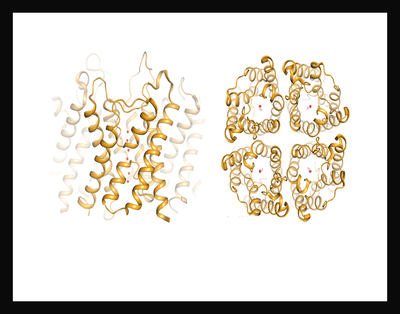
• Leading scientist wins €2.2 million ERC Advanced Grant • The five-year project will explore early dementia interventions through understanding how an aquaporin water channel regulates glymphatic clearance • ERC Advanced Grant funding is amongst the most prestigious and competitive of the EU funding schemes. A world leading scientist in the College of Health and Life Sciences at Aston University has been awarded a €2.2 million ERC Advanced Grant to understand how the movement of a protein known as aquaporin-4 in the brain can help slow cognitive decline. The FORTIFY project, which will run for five years, is led by Professor Roslyn Bill in the School of Biosciences. She will apply her discovery of the movement of aquaporin-4 to understand how the cleaning mechanism in the brain works during sleep. The research will focus on how aquaporin-4 controls the glymphatic system, which is the mechanism that allows us to clear waste products from our brains while we sleep. Her hypothesis is that the movement of aquaporin-4 in the brain changes the effectiveness of this cleansing mechanism - which lessens as people age. A greater understanding of this process could lead to an early intervention treatment that could slow the onset of dementia, such as Alzheimer’s and Parkinson’s Diseases. ERC Advanced Grant funding is amongst the most prestigious and competitive of the EU funding schemes, providing researchers with the opportunity to pursue ambitious, curiosity-driven projects that could lead to major scientific breakthroughs. Professor Bill said: “Every three seconds someone in the world develops dementia and there is no cure. I want to stop that from happening. By understanding the molecular mechanisms of brain waste clearance, we have an opportunity to develop medicines that can slow the onset of dementia, very much in the same way that statins are prescribed to control heart disease”. Roslyn Bill discovered that the water channel protein aquaporin-4 increases the permeability of brain cells to water after a brain or spinal cord injury. Around 60 million people a year suffer such injuries following falls or accidents. For example, after a skiing accident in the French Alps in 2013, Michael Schumacher suffered a severe head injury. He was placed in a medically induced coma and underwent several surgeries to treat his injuries. Until now doctors have only been able to manage the symptoms of brain injury (swelling on the brain) through interventions that may require surgery. Professor Bill and her team are due to start clinical trials in summer 2023, to test a method to stop the swelling from happening in its tracks, building on her discoveries. Roslyn’s new ERC-funded project, FORTIFY, will focus on how aquaporin-4 controls fluid flow in the healthy, uninjured brain. In this round of Advanced Grants, the European Research Council (ERC) is awarding €544 million to 218 outstanding research leaders across Europe, as part of the Horizon Europe programme. The grants will support cutting edge research in a wide range of fields, from medicine and physics to social sciences and humanities. The grant is awarded to established, leading researchers with a proven track-record of significant research achievements over the past decade. The funding will enable the researchers to explore their most innovative and ambitious ideas. Mariya Gabriel, European Commissioner for Innovation, Research, Culture, Education and Youth, said: “ERC grants are a top recognition and a significant commitment from our best researchers. The €544 million funding puts our 218 research leaders, together with their teams of postdoctoral fellows, PhD students and research staff, in pole position to push back the boundaries of our knowledge, break new ground and build foundations for future growth and prosperity in Europe” Maria Leptin, ERC President, added: "These new ERC Advanced Grantees are a testament to the outstanding quality of research carried out across Europe. I am especially pleased to see such a high number of female researchers in this competition and that they are increasingly successful in securing funding. “We look forward to seeing the results of the new projects in the years to come, with many likely to lead to breakthroughs and new advances.”


Public lecture: how can we have a good future with artificial intelligence?
Public lecture: how can we have a good future with artificial intelligence?AI expert and educator Professor Anikó Ekárt to discuss one of today’s most provocative topics Lecture will take place on 28 February at Aston University Talk to explore artificial intelligence’s capabilities, benefits and pitfalls. The potential impact of artificial intelligence (AI) on our daily lives will be explored in a public lecture at Aston University. The University is inviting the public onto its campus on Tuesday 28 February to hear Professor Anikó Ekárt discuss one of today’s most provocative topics. Research into AI began in the1950s and since then it has played an increasing role in daily lives, such as chatbots and digital assistants. As an AI researcher and educator, Professor Ekárt will take a pragmatic view of the technology, arguing that society will benefit from it – but only if it is used responsibly. She said: “Digital assistants based on speech recognition are now broadly accepted and successfully embedded in many business services. “However, the most recent release of a chatbot with amazing writing capabilities has divided the world; some are relieved that their job may now become substantially easier, but others have questioned the impact of this on education. “In the lecture, I’ll suggest three key directions; responsible use of AI, exploring many AI techniques rather than focusing on just one, and educating the public about AI’s capabilities, benefits and pitfalls.” She will illustrate the success and further potential of less well-known AI techniques, such as evolutionary computation, genetic programming and symbolic regression, based on her 25 years of research. Anikó who is a professor of artificial intelligence, joined Aston University in 2006 as a lecturer. She leads the artificial intelligence research theme within the School of Informatics and Digital Engineering. Her research interests are centred around AI methods and their application, focusing on evolutionary algorithms and genetic programming. She has successfully contributed to applications of AI techniques to health, engineering, transport, and art. In 2022 she was the winner of the Evo* Award for Outstanding Contribution to Evolutionary Computation in Europe. The free event will be taking place on 28 February from 6 pm to 8 pm and will be followed by a drinks reception. To sign up for a place visit https://www.eventbrite.co.uk/e/an-inaugural-lecture-by-professor-aniko-ekart-tickets-516518760517

Aston University students take home two prizes from annual European Union simulation event
EuroSim is an annual international intercollegiate simulation of the European Union More than 150 students, from universities in North America and Europe, participate every year The Aston EuroSim Team was awarded best debater in two categories. Aston University’s EuroSim team has returned from this year’s event with two awards. The Aston EuroSim Team was awarded best debater in the European Parliament Committee on Employment and Social Affairs (EMPL) and best in special roles (media/journalist). EuroSim is an annual international intercollegiate simulation of the European Union (EU). The purpose of it is to provide a framework for a simulation of the EU decision-making on major current issues. More than 150 students, from 16 universities in North America and Europe, participate in the simulation. All students are assigned roles, including members of the European Parliament (MEPs), members of the European Commission, heads of government and national ministers. The purpose of this module is to educate students about the inner workings of the European Union in order to enhance the learning experience for students. This year it was hosted by the University of South Wales in Newport, the first time the event has been held in the UK. Dr Patrycja Rozbicka, a senior lecturer in politics and international relations who is the lead for Aston EuroSim and was European associate director for EuroSim experience (2019-2023), said: “Here at Aston University, the EuroSim module is one of the most innovative modules of the Aston Politics and International Relations Department’s undergraduate and MA programmes. Amin Hassan, a final year international relations and English language student at Aston University, who took part in EuroSim, said: “I would like to extend my gratitude to my team from Aston University, and special mentions to my lecturer Dr Patrycja Rozbicka and student director Chris Burden for organising and inviting us to this memorable trip. “Representing Max Orville (my alter ego), MEP and Renew Europe Group, I worked together with my party and committee members with shared interests and values to ensure that no one is left behind by the proposed Social Climate Fund, which has recently been approved in real life. “After three days packed with negotiations and meetings, we are pleased that the Social Climate Fund has been approved and we strongly believe that it will support vulnerable people, households, micro-enterprises and transport users at risk of facing higher costs as the bloc introduces new climate measures.” Chris Burden, European students director at EuroSim and PhD researcher at Aston University, said: “I had the greatest honour attending the EuroSim2023 meeting at the ICC Wales as the European student director and part of Team Aston. “The work that goes into this conference is unbelievable, and the students had a fantastic time debating and simulating questions surrounding social and climate action within Europe. “This Transatlantic conference is the highlight of any year. “Thank you to our fantastic team from Aston University who brought home the two awards for their efforts.” The next EuroSim will be held next year in Brockport, northern New York State, USA. If you want to read more about the Aston EuroSim, click here.

Birmingham MP officially opens £1.5 million healthcare simulation facilities at Aston University
Paulette Hamilton MP officially opens healthcare simulation facilities at Aston Medical School and School of Optometry State-of-the-art facilities including medical simulation room with high fidelity manikins for students to practise real life scenarios opens The first in Europe ocular simulation suite allows students to refine skills in examining the health of the eyes and experience a wide range of eye disease. New £1.5 million healthcare simulation facilities have officially opened at Aston Medical School and in the School of Optometry at Aston University. The state-of-the-art facilities were formally opened by Paulette Hamilton, member of parliament for Birmingham Erdington, on Friday 2 December at a ribbon cutting ceremony that was attended by Aston University Vice-Chancellor Professor Aleks Subic as well as other members of the University executive and staff from the College of Health and Life Sciences. Commenting on the new facilities Paulette Hamilton MP said: “It’s been brilliant to visit and officially open the new healthcare simulation facilities at Aston University. “I know from my time as a nurse how important it is to have access to good training and the latest equipment. These fantastic facilities will give students the best possible learning experience as they prepare to enter their profession, providing healthcare in Birmingham and beyond.” Hosted by Professor Anthony Hilton, Pro-Vice-Chancellor and Executive Dean of the College of Health and Life Sciences, guests were invited to take a tour of the new facilities including a clinical skills simulation room which allows students to practise in emergency settings and an ocular simulation unit facility, the only one in Europe. Professor Hilton said: "We are delighted these new facilities have opened in time for the start of the new term and that students can benefit from practising their clinical skills in a variety of scenarios. “The acute care simulation room will allow for simulated emergency resuscitation scenarios that are very difficult to teach in real life situations, such as heart attacks, acute breathlessness and severe allergic reaction and will be of great value in training students of medicine, pharmacy and optometry.” The healthcare simulation facilities will be used by students studying medicine, pharmacy and optometry, where they will be able to practise in emergency settings using high quality manikins where they will simulate treating patients for acute conditions such as a heart attack or learning how to intubate a patient onto a ventilator. Professor Aleks Subic, Vice-Chancellor, Aston University said: “The launch of the Aston University healthcare simulation facilities marks an important milestone in the development of our digital health precinct within the Birmingham Knowledge Quarter. By establishing world-class medical imaging, advanced visualisation, and digital diagnostics capabilities we are in fact bringing Industry 4.0 to healthcare. “Our students from the Aston Medical School and School of Optometry in particular, will benefit immensely from this development as they will be able to detect a wide range of clinical conditions and diseases and explore different interventions and scenarios, safely within a simulated environment.” The high-fidelity acute care simulation room will also be equipped with recording facilities, a debrief room and control room. The funding has allowed for the purchase of other training equipment such as a hospital grade bed and single task trainer simulation equipment. For example, male and female catheterisation models, pelvic and rectal trainers, venepuncture arms, breast trainers and abdominal trainers. The facilities were part funded by the Office for Students which awarded the University £806,226 to set up the ‘high fidelity’ simulation A&E room with further expenditure by Aston University on the ocular simulation unit. The ocular simulation facility is unique in Europe. It allows students to refine their skills in examining the health of the front and back of the eyes and to experience a wide range of eye disease. One of the simulators allows students to utilise their smartphones to practise at home. They can gain direct feedback and be assessed by the simulators, allowing more flexible, diverse and intensive learning than can be achieve with clinical practice placements. Professor Liz Moores, deputy dean of the College of Health and Life Sciences, said: “The College of Health and Life Sciences is thrilled with this investment. The enhanced facilities will help to support many of our healthcare students, including those now applying for our new nursing degree. It will also support us with the introduction of the new pharmacy and optometry education standards, providing a step change in our ability to simulate a wide range of clinical scenarios.” For more information about studying in the College of Health and Life Sciences please visit our website.