
Experts Matter. Find Yours.
Connect for media, speaking, professional opportunities & more.

Nibir Dhar, Ph.D., director of the Convergence Lab Initiative and professor in the Department of Electrical and Computer Engineering, was recently appointed to the Virginia Microelectronics Center endowed chair. This position gives Dhar the opportunity to shape future scientists and engineers, as well as pursue breakthrough research at the College of Engineering. “It’s more than an academic role,” said Dhar. “It’s about preparing students for complex problems they’ll solve in industry and defense.” Dhar teaches semiconductor and infrared device courses while researching next-generation materials for real-world applications. He also explores AI’s ability to improve human-machine interactions. With his accomplished background and experience at national defense labs, Dhar bridges classroom theory with practical engineering challenges his students will face in their careers. “It feels incredible to be recognized this way. Virginia Commonwealth University truly values faculty who pour themselves into student success and university growth. What really drives me is knowing I’m helping build the next generation of problem-solvers. That’s where the real satisfaction comes from.” said Dhar. This promotion encourages Dhar to make bigger strides for research development that will transform both teaching methods and how technology advances in military and commercial sectors.


Georgia Southern professor receives national faculty mentor award
The Council on Undergraduate Research (CUR) named Georgia Southern University English Professor Olivia Carr Edenfield, Ph.D., the winner of the 2025 Arts and Humanities Faculty Mentor Award. The award recognizes faculty who go above and beyond to nurture undergraduate research, scholarship and creative work. Edenfield’s record of taking student research to new heights set her apart from a nationwide field of candidates. After joining Eagle Nation as a professor in 1986, Edenfield has helped her students become published researchers and presenters at local and national conferences. She said seeing those hardworking students excel has been her real reward. “Receiving this award is deeply personal,” Edenfield wrote in her CUR nomination statement. “My greatest joy in teaching has come from my students’ successes.” During her time as associate dean for Student Affairs in the former College of Liberal Arts and Social Sciences (CLASS), she launched the college’s undergraduate research symposium, now known as CURIO. She also helped establish a Center for Undergraduate Research for CLASS and set up residential interest groups to encourage students to share their love of different subjects with each other. Edenfield has helped her students achieve access to opportunities on a national level. She has served as director of the American Literature Association (ALA) since 2019, where she started a unique program that places Georgia Southern English majors in high-level administrative roles for ALA conferences. Seven of Edenfield’s students have had their work published in The Richard Macksey Journal at Johns Hopkins University. Many of her students have also presented their research at national and international conferences. Georgia Southern student Maegan Bishop’s presentation at the 2023 American Literature Association Annual Conference, based on research from Edenfield’s undergraduate class, was so impressive that she was invited to present her work at a conference on the short story at the University of Mainz, which covered all of her expenses. “My own experiences with Dr. Edenfield are only a small example of the work she has done to mentor undergraduates at Georgia Southern,” said Bishop. “She is constantly doing everything in her power to assist her students with whatever they need, extending every opportunity to those who express interest in becoming more involved in literary scholarship and campus activities.” David Owen, Ph.D., dean of the College of Arts and Humanities, emphasized how much Edenfield cares for her students, noting that her passion to help them succeed is second to none. “Mentoring is not a side note to Edenfield’s career, it is the throughline,” said Owen. “Her students succeed not just because of her guidance, but because she teaches them how to believe in their own voices.” The Faculty Mentor Award is the latest in a distinguished line of recognition for Edenfield. In 2016, she was named both the CURIO Mentor of the Year and the Wells-Warren Professor of the Year at Georgia Southern. She is a three-time recipient of her college’s Award for Distinction in Teaching, winning in 2016, 2020 and 2024. Edenfield was also a member of the inaugural class of the Governor’s Teaching Fellows program in 1995. ___ If you're interested in learning more about Georgia Southern's College of Arts and Humanities and want to book time to talk or interview, let us help - simply contact Georgia Southern's Director of Communications Jennifer Wise at jwise@georgiasouthern.edu to arrange an interview today.


Pets and the Texas floods: Owners faced difficult decisions and loss during and after disaster
One of the more overlooked aspects of any disaster is the loss of pets. Many of them become separated from their owners, are badly injured or perish as the result of a hurricane, flood, earthquake or other major event. This was the case in the recent flooding of the Guadalupe River in central Texas, said Sarah DeYoung, core faculty with the University of Delaware's Disaster Research Center. DeYoung can talk about the following aspects related to the tragedy: • The decisions that people have to make during evacuation, particularly for those with companion animals. • The amount of horses along the Guadalupe River, which could be found at the camps and recreation areas. • Pets that go missing after a flash flood, and the role that key organizations play in response and tracking and managing logistics. • The psychological impact on people whose pets were injured or died, who are mourning and making memorials. DeYoung can also discuss maternal and child health in crisis and disaster settings with a focus on infant feeding in emergencies. To set up an interview with DeYoung, visit her profile page and click on the contact button; or send an email to MediaRelations@udel.edu.


If the first few frames are any indicator of a blockbuster movie, hold the 2035 Best Picture Oscar for the Vera C. Rubin Observatory and its ambitious new 10-year project. On June 23, 2025, scientists at the state-of-the-art facility in the mountains of north-central Chile gave the public its first glimpses into the capabilities of its 8.4-meter Simonyi Survey Telescope, equipped with the world’s largest digital camera—a 3.2 megapixel, 6,600-pound behemoth that can photograph the whole southern sky every few nights. Its task is a decade-long lapse record-called the Legacy Survey of Space and Time (LSST). The first shots on that journey have left both the general public and astronomical community in awe, revealing in rich detail a mind-boggling number of galaxies, stars, asteroids and other celestial bodies. “The amount of sky it covers, even in just one image, is unprecedented,” said David Chuss, PhD, chair of the Department of Physics, who viewed the first images with colleagues at an organized watch party. “It’s such high-precision, beautiful detail,” added Kelly Hambleton Prša, PhD, associate professor of Astrophysics and Planetary Sciences. “It’s just mind-blowing.” What Makes Rubin and LSST So Unique? Simply, this revolutionary instrument, embarking on an equally revolutionary initiative, will observe half the sky to a greater depth and clarity than any instrument ever has before. Consider this: "The Cosmic Treasure Chest" image released by Rubin contains 1,185 individual exposures, taken over seven nights. Each one of those individual exposures covers 10 square degrees of night sky, which is about the same as looking up at 45 full moons positioned around one another. It may seem like a small size, but click the image yourself, and zoom in and out. The amount of sky captured in that range—enough to show roughly 10 million galaxies—is astounding. Per the Observatory, “it is the only astronomical tool in existence that can assemble an image this wide and deep so quickly.” “At the end of 10 years, Rubin will have observed 20 billion galaxies, and each night in that time frame it will generate 20 terabytes of data,” Dr. Hambleton Prša said. “And, because Rubin has so many different filters, we get to see the same objects in so many different ways.” According to Dr. Hambleton Prša and Dr. Chuss, the power and precision of the Rubin LSST, combined with the shear area of the sky that will be observed, will allow for an incredibly in-depth study of myriad objects, processes and events in ways nobody has ever studied them before. “For example, in our galaxy, we expect to observe only two supernovae per century,” Dr. Hambleton Prša said. “But we're observing 20 billion galaxies. For someone studying this phenomenon, the number of supernovae that they’re going to observe will be off the charts. It is an exquisite survey.” It will also provide insight into the universe’s oldest and most puzzling enigmas. “Rubin is able to look back into our universe at times when it was much smaller during its expansion and really address some of these incredible mysteries out there, like dark energy,” Dr. Chuss said. “We know the universe is expanding and that this expansion is accelerating. Rubin will trace the history of that acceleration and, from that, provide insight into the physics of the mysterious dark energy that appears to be driving it.” To enhance the technological capabilities of its instrument, scientists were invited to contribute towards the selection of the observing strategy of the telescope. The Rubin team took into consideration continual input from the astrophysics community, separated into what they call “science collaborations.” To achieve this, the Rubin team generated proposed simulations for collecting observations, which the science collaborations then assessed for their specific science goals. “The Rubin team then iterated with the science collaborations, taking into account feedback, to ultimately obtain the best strategy for the largest number of science cases,” Dr. Hambleton Prša said. Dr. Hambleton Prša is the primary contact for the Pulsating Star Subgroup, which is part of the Transients and Variable Stars Science Collaboration, the science collaboration that focuses on objects in the sky that change with time. She was the lead author among 70 co-authors on the roadmap for this science collaboration, underscoring the significant scale of community participation for each of these areas. Joined Under One Sky Dr. Hambleton Prša, Dr. Chuss and other members of the Astrophysics and Planetary Sciences Department and Department of Physics at Villanova have a vested interest in Rubin and the LSST project. In April, the two departments joined forces to launch The Villanova One Sky Center for Astrophysics, co-directed by the two faculty members. With goals to elevate the University's longstanding record of research eminence in astronomy and astrophysics and create opportunities for more students to access the disciplines, the Center partnered with the Rubin Observatory to help realize the mission. Both Villanova and Rubin share a similar vision on expanding access to this broad field of study. Fortuitously, the launch of The Villanova One Sky Center coincided with the initial data released from Rubin. What will result, Dr. Chuss says, will be a “truly awesome impact on both our Center and institution.” Dr. Hambleton Prša will advance her own research of pulsating stars, and Andrej Prša, PhD, professor of Astrophysics and Planetary Science and the primary contact for the Binary Star Subgroup, will broaden his study of short-period binary stars. Joey Neilsen, PhD, associate professor of Physics, will expand his research in black hole astrophysics. Becka Phillipson, PhD, an assistant professor of Physics, who recently led a proposal for Villanova to join the Rubin LSST Discovery Alliance, aims to increase the scope of her study of chaotic variability of compact objects. Dr. Chuss, who generally works on infrared and microwave polarimetry, which is “outside the wavelength ranges of Rubin” is interested in its complementarity with other observations, such as those of the cosmic microwave background—the oldest light in the universe—and the evolution of the large-scale structure of the universe. Subjects, he says, which are “exactly in the wheelhouse for Rubin.” Other faculty members are interested in topics such as how Rubin’s observations may change the knowledge of both the history and structure of our solar system and the population of Milky Way satellite galaxies. That is not to mention, Dr. Hambleton Prša points out, the daily 20 terabytes of data that will become available for students and postdoctoral researchers under their tutelage, who will be heavily involved in its analysis for their own projects and ideas. “This partnership is going to greatly increase our opportunities and elevate our profile,” Dr. Chuss said. “It will make our program even more attractive for faculty, postdocs and students to come and to share their knowledge and expertise. “Together, we will all have access to an incredible movie of this epoch of our universe, and the knowledge and surprises that come with it along the way.”




Kyle Davis wins NSF CAREER Award for pioneering research on climate-resilient food systems
University of Delaware assistant professor Kyle Davis has received a National Science Foundation (NSF) CAREER Award—one of the most competitive and prestigious honors for early-career faculty—for his work advancing the climate resilience of global food systems. Davis, who holds joint appointments in the College of Earth, Ocean and Environment and the College of Agriculture and Natural Resources, leads cutting-edge research at the intersection of agriculture, sustainability and global environmental change. His focus? Making food production more efficient, climate-smart and socially equitable—especially in regions grappling with limited water resources. With a growing global population and increasing pressure on land and water, Davis’s research is helping to answer one of the most critical questions of our time: How can we feed the world without destroying the planet? His lab’s work recently led to the development of MIRCA-OS, a groundbreaking open-source dataset that offers high-resolution global data on irrigated and rain-fed croplands across 23 crop types. The tool, co-created with UD doctoral student Endalkachew Kebede and published in Nature Scientific Data, allows researchers, farmers and policymakers to assess how crop choices, rainfall and irrigation interact with water systems and food security. Some of the thirstiest crops are grown in the most water-stressed areas Davis said. Shifting crop mixes to crops that require less water but still ensure farmer profits is a promising way to reduce the amount of water needed to irrigate crops and to avoid conditions of water scarcity. Davis’s research spans continents, with active projects in the United States, India, China and Nigeria, where his team is exploring solutions to water scarcity, crop nutrition and agricultural sustainability. His work has appeared in Earth.com, Phys.org and major scientific journals. In 2023, he was recognized with the American Geophysical Union’s Global Environmental Change Early Career Award. In addition to research, Davis is a dedicated mentor, guiding graduate students from around the world. “So much of my research is the result of their passion, abilities, drive and creativity,” Davis said. Davis is available for interviews on topics including sustainable agriculture, water use, climate adaptation, food systems and the power of data science in global development. He can be contacted by clicking the "View Profile" button.

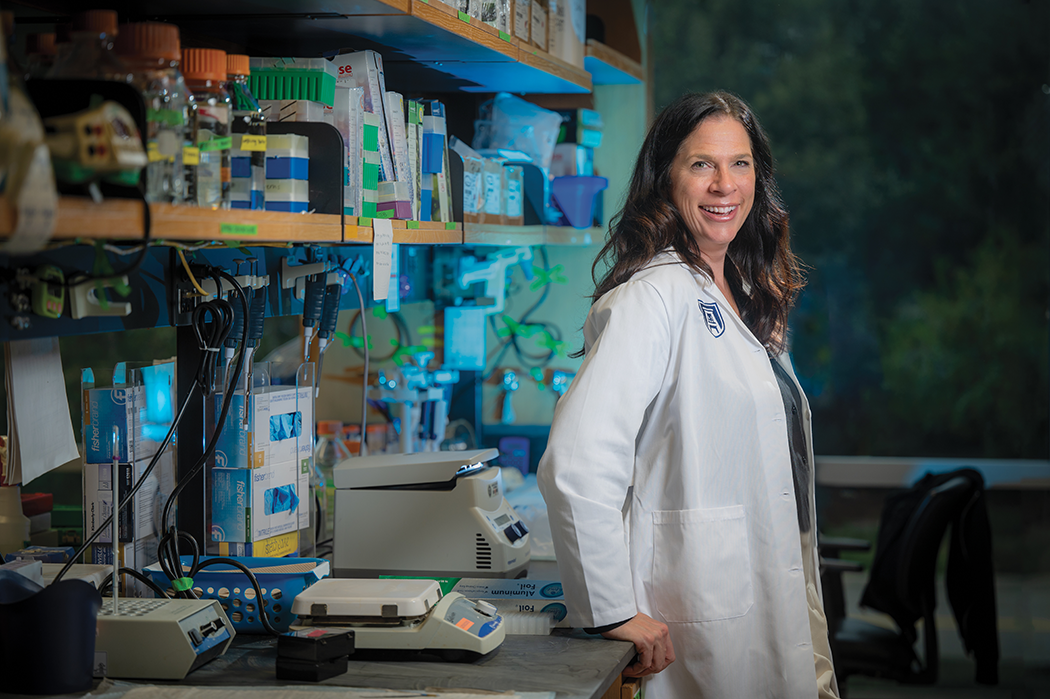
Augusta University named NIH Specialized Center of Research Excellence on Sex Differences
Jennifer C. Sullivan, PhD, dean of The Graduate School at Augusta University, has dedicated her research to better understand why blood pressure increases in hypertension and raising awareness to the dangers of not paying attention to heart health, particularly among women. Throughout her career, Sullivan has been continuously funded by the National Institutes of Health (NIH) and the American Heart Association since becoming a tenure-track faculty member in 2008, and now she has a chance to take her research further after securing a five-year, $7.5 million grant to have Augusta University designated as a Specialized Center of Research Excellence on Sex Differences (SCORE) by the NIH’s Office of Research on Women’s Health. It’s a distinction that places AU among 10 other leaders in research for the field, including Brigham and Women’s Hospital, Cedars-Sinai Medical Center, Emory University, Johns Hopkins University, Massachusetts General Hospital and Harvard Medical School, the Mayo Clinic, the Medical University of South Carolina, the University of Colorado and Yale University. The University of California, Los Angeles has two SCORE programs. “I’m so proud and excited for this opportunity because this has been what I have focused my research program on for my entire career, and to be able to advance it with a program like this, where we can actually build a unique program focused on an area that can make a difference, is just so much fun,” Sullivan said. “Just the fact that Augusta will be included on this list, attached to an organization of the caliber of NIH, will provide opportunities that we’ve never had before, especially for our students and younger researchers.” Sullivan’s SCORE project, “Improving awareness of women with hypertension: ROAR (Rural, Obese, At Risk),” focuses primarily on the fact that, while young women are considered “protected” from hypertension and the associated cardiovascular risk relative to age-matched men, the elimination of hypertension is projected to have a larger impact on cardiovascular disease (CVD) mortality in women. “The group of people with the highest risk of death from hypertension is in the rural South of the U.S., specifically Black women are particularly vulnerable to developing hypertension and CVD,” Sullivan said. According to Sullivan’s research and information available from the American Heart Association (AHA), approximately 19 million deaths were attributed to CVD globally in 2020, an increase of about 20% from 2010. Both Sullivan and the AHA state that cardiovascular disease remains the leading cause of death for both men and women in the United States, and that hypertension is a major modifiable risk factor for CVD. Sullivan said, “It has been suggested that eliminating hypertension would reduce CVD mortality by over 30% in men and 38% in women, but a critical barrier to limiting premature death from CVD is lack of awareness surrounding the risks of CVD. Our overall goal in this new funded project is to transform academic and community understanding of sex as a biological variable in the consideration of hypertension.” The three research projects include Sullivan’s lead project on high fat diets, a project on systemic lupus erythematosus (SLE) disproportionately affects young women led by Erin Taylor, PhD, at the University of Mississippi Medical Center, and another project looking at the role of inflammation and how immune cells are activated in SLE led by Michael Ryan, PhD, at the University of South Carlina’s School of Medicine. But there is more to SCORE than just conducting research. Each SCORE team is also responsible for a career enhancement core and a leadership administrative core. “What really sets these grants apart are the emphasis on the career enhancement and leadership administrative cores. The Career Enhancement Core is designed to be a bit open ended for each SCORE, but in talking to the NIH, what they were most excited about in our project is the community outreach piece we designed. “Our grant includes people across the entire campus, including Augusta University’s Medical College of Georgia, the College of Allied Health Sciences, the College of Education and Human Development and multiple campus partners including some of our sororities on campus and the Center for Writing Excellence,” Sullivan said. “More specifically, the COEHD is able to extend our outreach efforts to our local schools to begin educating children on the importance of screening, and our sororities are obviously connected with other chapters across the southeast which helps us spread our message, as well.” Sullivan notes that, through this portion of the project alone, there will be numerous opportunities to include students from Augusta University’s CAHS, College of Nursing, Department of Kinesiology, the Biomedical Sciences PhD program and the proposed School of Public Health. Marlo Vernon, PhD, associate professor at MCG and researcher for the Georgia Cancer Center, and Amanda Behr, chair of the Medical Illustration Program in CAHS, are also involved in various stages of the project. “The other thing the Career Enhancement Core will do is provide pilot grants to three research projects each year for early-stage investigators. We’ll also be able to fund sabbaticals for graduate students or postdocs to go someplace else and learn cutting edge techniques from other experts, so there is a lot built in that will help us support up-and-coming researchers,” Sullivan said. “We’re now part of this consortium, and they have a once-a-year, in-person meeting at the NIH offices, so we’ll go to that for the first time this year, and what’s neat about it is they’re really promoting young investigators. Each grant can bring up to eight people, the our hope is that we will have the investigators funded by the pilot projects attend next year, giving those folks the opportunity to present and talk to program officers with the NIH and develop a pipeline of investigators committed to studying women’s health and sex as a biological variable.” Sullivan is also looking to designate some of her summer graduate and undergraduate research positions to the project beginning next summer. “The Graduate School already has a summer program to support undergraduates that we will be able to piggyback off of. We have set aside five slots in that program for this that will go to students studying the sex as a biological variable, and the applications for that program, STAR, is already open,” Sullivan said. “We’re also planning a symposium in collaboration with the Physiology Department in April 2024. This is an annual event sponsored by the department, and this year they selected sex differences as the topic, so we are hoping to help increase exposure and attendance.” Looking to know more about the amazing research happening at Augusta? To connect with Jennifer Sullivan, simply click on her icon ow to arrange an interview today.


Masoud Davari, Ph.D., associate professor of Electrical and Computer Engineering in the Allen E. Paulson College of Engineering & Computing, was recognized for his achievements in the field of power electronics control and testing with the IEEE Region 3 Outstanding Engineer Award. He was also granted membership into Eta Kappa Nu (HKN), IEEE’s international honor society. IEEE, the Institute of Electrical and Electronics Engineers, is the world’s largest professional organization for electrical engineers, with its membership numbering over 486,000 in more than 190 countries. Davari has been a member of IEEE since 2008 and a senior member of IEEE’s Region 3 since 2019. The organization’s Region 3 encompasses the southeastern United States and has over 24,000 members. The Outstanding Engineer Award, given annually to one member per region, recognizes those who have advanced knowledge and improved humanity through any of the technical subjects covered by the IEEE societies, councils, and affinity groups. Davari was praised for “outstanding, technical, and professional contributions to synthesizing reinforcement learning optimal controls for power electronic converters, creating robust integration of power electronics considering the impact of cyberattacks on modern grids, and advancing IEEE standards for hardware-in-the-loop testing and education through impactful research and service.” This impactful research and service includes eight years of teaching at Georgia Southern. He currently teaches introductory courses on circuit analysis and power systems fundamentals. He has also served as a chapter lead of the IEEE Working Group (WG) P2004 for testing based on hardware-in-the-loop simulations in the IEEE Standards Association (IEEE SA) and that of the IEEE Power and Energy Society Task Force on innovative teaching methods for modern power and energy systems (TR 120). In addition to being an engaged educator, Davari is also a prolific researcher. He was selected as the finalist for the 2024 Curtis W. McGraw Research Award by the Awards Committee of the American Society for Engineering Education (ASEE); has also been awarded a research fellowship by Gulfstream Aerospace Corporation in 2024; was included in Stanford/Elsevier’s Top 2% Scientist Rankings list; and has received $1.17 million in grants from the National Science Foundation Davari’s work ethic and commitment to bridging the gap between industry and research led Rami Haddad, Ph.D., interim dean of the College of Engineering & Computing, to nominate him. “Dr. Davari’s recognition as the IEEE Region 3 Outstanding Engineer and his induction into IEEE-Eta Kappa Nu (HKN) are truly remarkable honors that reflect his outstanding contributions to electrical and computer engineering,” Haddad said. “Being recognized among more than 24,000 IEEE members across the Southeast is a testament to the impact and excellence of his work. We are proud to have Dr. Davari as a valued member of our college, and we celebrate his achievements as a shining example of the innovation and leadership that define our faculty.” This award marks the first time a Georgia Southern faculty member has received it in its 55-year history. It is a career milestone for Davari, who has published research on advanced technology integration into modern power and energy systems in high-impact-factor IEEE Transactions/Journal venues and has extensively researched the era of grid-edge technologies. “I’m deeply honored by this prestigious award,” Davari said. “Not only does it reaffirm my dedication to my research field, but it also fuels my passion for creating a technologically advanced future. Receiving this IEEE award on behalf of my outstanding team is a privilege. Their relentless commitment and hard work since 2015 have truly made this achievement possible.” Davari’s induction into HKN places him among the best in his field. The membership, which is received through invitation only from HKN’s Board of Governors and is based on the candidate’s record of contributions to the field, demonstrated leadership, and community service. “With a legacy that stretches over a century, IEEE-HKN represents the pinnacle of prestige and tradition in our profession, indicating academic achievements and dedication to research, potential leadership, exemplary character, and a positive attitude. Notably, many of our industry’s most influential leaders initiated their journeys through induction into IEEE-HKN as professional members, so receiving this honor is a privilege.” Davari received his award and was inducted into Eta Kappa Nu (HKN) in March at IEEE Region 3’s SoutheastCon 2025 in Charlotte, North Carolina. If you're interested in learning more and want to book time to talk or interview with Masoud Davari then let us help - simply contact Georgia Southern's Director of Communications Jennifer Wise at jwise@georgiasouthern.edu to arrange an interview today.

Sevki Cesmeci, Ph.D., associate professor of mechanical engineering in the Allen E. Paulson College of Engineering and Computing at Georgia Southern University, has been selected to take part in the 2025-2026 Governor’s Teaching Fellows (GTF) Academic Year Program in Georgia. This program is designed to provide Georgia’s higher education faculty with expanded opportunities for developing teaching skills and innovative pedagogies. “I am grateful to have been nominated by Provost Reiber as Georgia Southern University’s sole nominee,” Cesmeci said. “I have been deeply passionate about both research and teaching during my time at Georgia Southern, and I am grateful for the opportunity to contribute meaningfully to both.” GTF chose only 16 faculty members from across Georgia’s higher education institutions. Cesmeci’s innovative teaching strategies and methods were integral to his nomination. His work with leading textbook publisher McGraw Hill was one project that garnered recognition, as he worked with professors across the country to create an online, application-based activity (ABA) for fluid mechanics problems. “ABA is a next-generation learning method based on a storytelling-teaching strategy,” Cesmeci said. “Students are challenged with questions and guided through detailed feedback at each step of the solution.” In addition to research accolades, Cesmeci has been recognized for his teaching excellence at Georgia Southern with the 2022-2023 Georgia Southern University Award of Excellence in Student Success and the 2023-2024 Allen E. Paulson College of Engineering and Computing Faculty Award for Teaching. Through his participation in GTF, Cesmeci plans to integrate artificial intelligence tools into the mechanical engineering curriculum. “Unlike disciplines such as computer science and electrical engineering, mechanical engineering curricula have been slower to adopt contemporary and innovative tools,” Cesmeci said. “I hope to leverage this experience in the GTF program to enhance curriculum development at Georgia Southern, sharing insights and best practices to advance mechanical engineering education.” Hosted at the University of Georgia, GTF brings together faculty from accredited private and public institutions across the state for a series of interactive seminars focused on teaching practices, faculty development and course design. Throughout the program, fellows will work on a course design or instructional improvement project aimed at enhancing student learning. “I look forward to engaging with fellow educators, refining my teaching strategies and bringing new insights back to Georgia Southern students,” Cesmeci said. If you're interested in learning more and want to book time to talk or interview with Sevki Cesmeci then let us help - simply contact Georgia Southern's Director of Communications Jennifer Wise at jwise@georgiasouthern.edu to arrange an interview today.

Brent Feske, Ph.D., has been named associate vice president for Research in the Office of Research and Economic Development, effective March 1. Feske has served as the interim associate vice president for Research since Sept. 1, 2024. In this short time, he has already significantly impacted the University’s research enterprise. As interim associate vice president for Research, Feske prioritized engaging with the people in his office and the colleges conducting research. “I’ve settled in and moved past the introductory phase,” he said. “I feel I’ve gained a strong understanding of each college’s needs, wants, and aspirations. Together, we’ve laid a solid foundation, and I’m excited to see how our scholarship enterprise can grow and how the Office of Research and Economic Development can help each college reach its full potential.” With nearly twenty years of experience as a dedicated faculty member, Feske brought valuable leadership to the Office of Research and Economic Development. Under his guidance, the office increased internal funding mechanisms to support research, doctoral students and external grant writing. He has also led improvements in how research expenditures are captured and properly coded, providing a clearer picture of the Georgia Southern research landscape. Additionally, he has played a key role in expanding the pre-award team, ensuring better support for faculty and staff throughout the grant submission and award process. “I’m thrilled to have Dr. Feske permanently join the team,” said Vice President for Research and Economic Development David C. Weindorf, Ph.D. “His experience as an administrator and a faculty member really does give him a 360-degree view of the research enterprise and makes him uniquely qualified to lead and help us grow in every aspect. We’ve already accomplished so much, and I can’t wait to see what comes next.” If you want to book time to talk or interview with Brent Feske about his new role, then let us help - simply click on his icon now or contact Georgia Southern's Director of Communications Jennifer Wise at jwise@georgiasouthern.edu to arrange an interview today.


Georgia Southern’s Shainaz Landge receives Regents’ Scholarship of Teaching and Learning Award
For Shainaz Landge, Ph.D., pushing boundaries in the classroom and the laboratory isn’t just a professional pursuit, it’s a passion. As an associate professor of organic chemistry at Georgia Southern University, Landge has spent more than a decade inspiring students to soar beyond traditional learning by blending research, mentorship and hands-on experiences that extend far beyond textbooks. That commitment to innovation has earned Landge the Regents’ Scholarship of Teaching and Learning Award, an honor from the University System of Georgia (USG) that recognizes faculty who contribute to the scholarship of teaching and learning through research, leadership and instructional excellence. “Receiving the Regents’ Scholarship of Teaching and Learning Award is a true honor,” said Landge. “It reinforces my passion for teaching and research, inspiring me to strive for excellence every day. My goal is to cultivate an engaging, positive learning environment where students are actively involved and genuinely excited about the learning process.” Landge’s work is grounded in synthetic organic, medicinal and supramolecular chemistry. Her research focuses on developing novel synthetic methodologies with applications in medicinal chemistry and materials science, creating compounds with potential therapeutic properties and supramolecular systems with unique functionalities. “This award is a reflection of Dr. Landge’s deep passion for education and research, and her ability to inspire students to think critically and engage meaningfully with the world around them,” said Provost and Executive Vice President for Academic Affairs Carl Reiber, Ph.D. “At Georgia Southern, we are dedicated to fostering an environment of discovery and innovation, and her work continues to elevate that mission, both in and out of the classroom. We are fortunate to have her as part of our academic community.” This isn’t the first time Landge’s dedication to student engagement and scientific inquiry has garnered recognition. Previously, she earned a University Award of Excellence for Student Success in 2021 and the College of Science and Mathematics Award of Excellence in Research in 2023. “This award is a testament to Dr. Landge’s exceptional contributions to the Scholarship of Teaching and Learning,” said Michael Huggins, Ph.D., dean of the College of Science and Mathematics. “Her innovative approach has not only deepened our understanding of effective teaching but has also led to measurable improvements in student outcomes across the College of Science and Mathematics.” In addition to her research and teaching, Landge has served as a Service-Learning Faculty Fellow (2023-2024) and is a current Research Advocate, reinforcing her commitment to bridging the gap between academic learning and real-world problem-solving. For more information about the Regents’ Scholarship of Teaching and Learning Award, visit : If you're interested in connecting with Shainaz Landge and learning more about her work then let us help - simply contact Georgia Southern's Director of Communications Jennifer Wise at jwise@georgiasouthern.edu to arrange an interview today.