
Experts Matter. Find Yours.
Connect for media, speaking, professional opportunities & more.

Questions about colon cancer? Our experts are here to help with your coverage
Every year, National Colorectal (colon) Cancer Awareness Month is observed during the month of March in an effort to raise awareness of the importance for colon cancer screenings. The recognition offers health care providers the opportunity to educate the general public about a disease that can be preventable, but can sometimes be seen as difficult for patients to discuss with their doctors. In the spirit of education, one of Augusta University’s experts has provided some insight into the subject of colon cancer. Dr. Asha Nayak-Kapoor is an associate professor of medicine in the Division of Hematology/Oncology in the Department of Medicine at the Medical College of Georgia at Augusta University. Nayak is certified by the American Board of Internal Medicine in Hematology and Oncology Specialties. Q: What are the primary risk factors for colon cancer? “Risk factors for colon cancer include: being overweight or obese, not being physically active, certain types of diets, smoking, alcohol use, being older, a personal history of colorectal polyps or colorectal cancer, a personal history of inflammatory bowel disease, a family history of colorectal cancer or adenomatous polyps, having an inherited syndrome. Common symptoms of colorectal cancer include: bloody stool or rectal bleeding, an ongoing change in bowel habits (diarrhea, constipation, chance in stool consistency), abdominal pain or cramping, gas or persistent abdominal discomfort, you feel like your bowels are not voiding completely, weakness, fatigue, or unexplained weight loss.” Q: How can a person protect themselves from the risks of colon cancer? “Colon cancer is largely preventable if patients undergo screening tests, like a surveillance colonoscopy starting at 45 years or earlier depending on family history. Many lifestyle-related factors have been linked to colorectal cancer. In fact, the links between diet, weight, and exercise and colorectal cancer risk are some of the strongest for any type of cancer. Getting to and staying at a healthy weight may help lower your risk. A diet that's high in red meats (such as beef, pork, lamb, or liver) and processed meats (like hot dogs and some luncheon meats) raises your colorectal cancer risk. Cooking meats at very high temperatures (frying, broiling, or grilling) creates chemicals that might raise your cancer risk. It’s not clear how much this might increase your colorectal cancer risk. Stop smoking. It is best not to drink alcohol. People with a history of colorectal cancer in a first-degree relative (parent, sibling, or child) are at increased risk. The risk is even higher if that relative was diagnosed with cancer when they were younger than 50, or if more than one first-degree relative is affected.” Q: It sometimes seems that colon cancer prevention is aimed more towards men compared to women, but cancer.org lists the risks at 1 in 23 (4.3%) for men and 1 in 25 (4.0%) for women. Is there a reason why perhaps a stigma about colon cancer affecting men more has been created? “According to focus group studies, it can be seen as a taboo topic that is uncomfortable to discuss, and it is not discussed as openly in public as prostate and breast cancer screenings. It can seem embarrassing or humiliating, and can be seen as distasteful dealing with prolonged bowel preparation.” Nayak is a member of several committees, including Onyx and Bayer Speaker Bureau for Nexavar, MCG Cancer Center Molecular Oncology Programme, and MCG Cancer Center Gastrointestinal Tumor Board Committee. If you are a journalist looking to know more about colorectal cancer and would like to speak with an expert for your stories, then let us help. Nayak is available to speak with media about this important subject. Simply click on her icon now to arrange an interview today.


How to network virtually: What newcomers in Canada need to know
Newcomers to Canada already faced an uphill task of adjusting to their new life and starting a career in Canada, but COVID-related restrictions made things even harder. However, after an initial period of adjustment, virtual networking and remote job interviews have become the norm. Now, even with COVID-19 restrictions easing and people getting vaccinated, some aspects of the “new normal” are expected to continue for the foreseeable future. Due to its relative convenience, virtual networking will likely remain a popular means of building professional connections. This article covers key aspects of how to network virtually and the things you need to know about virtual networking for professional success as a newcomer in Canada. Advantages of virtual networking Start building your Canadian network before you land Before the COVID-19 pandemic, networking was mostly done in-person, which meant that newcomers to Canada could only start building their network after arriving in the country. However, with virtual networking, newcomers have the opportunity to start building their network well in advance of their arrival in Canada. You can start attending virtual networking events or meeting people for online coffee chats while preparing for your move. It can take months to cultivate meaningful professional relationships, so the sooner you start, the better prepared you’ll be to enter the Canadian job market when you land. Opportunity to look beyond your city One major disadvantage of in-person networking is that it geographically limits the people you can meet. With virtual networking, you can connect with experts or professionals, regardless of where they live. If you’re still preparing for your arrival, this gives you a chance to speak to people in different cities and figure out where the best job opportunities are for your industry in Canada. You can also learn about different job markets within Canada and plan your career path based on insights from a more geographically diverse set of people. The convenience of networking from home Attending events and networking meetings is time-consuming. By networking virtually, you can save the time it would take you to travel to the event venue or meeting place. This means that you can accommodate more coffee chats in a day and build your network faster. Many newcomers find it much easier to network from the comfort of their homes, compared to the unfamiliar and chaotic environment of a coffee shop. Since you are the person requesting the meeting, it is expected that you’ll be paying the bill for coffee during in-person meetings. These amounts can quickly add up and might impact your budget, especially if you’re meeting several people each week. In most cases, virtual meetings are also more convenient for the professionals you’re meeting, so your acceptance rate for virtual coffee chats may be higher than for in-person meetings. Easier to follow up and stay in touch Once you’ve made a connection and had an introductory meeting, it is important that you stay in touch with your new contact. However, as your network grows larger, it can become challenging to follow up with everyone on a regular basis—especially if you’re doing these meetings in-person. It’s much easier to stay connected and engage virtually over follow up coffee chats, emails, or social media. This will allow you to follow up more often and build stronger, more meaningful connections. How to build your network virtually as a newcomer in Canada Whether you’re looking to network or find a job, it is important that you keep your LinkedIn profile up-to-date. Your Linked In profile will likely be the first thing people see when they connect with you. Unlike a resume, which is customized for each job, your LinkedIn profile should be generic and should highlight all your skills, experiences, and certifications. Be sure to use a professional headshot and grab people’s attention with a compelling headline. Use LinkedIn’s advanced search filters to find new connections based on their organization, job title, and other criteria. Always personalize your LinkedIn connection request messages. You can also increase your visibility and promote your personal brand by being active on LinkedIn. Post, share, and engage with relevant content to get noticed by other professionals. Interact over social media As a newcomer, LinkedIn is not the only social network you can use to build a network. You can also find professionals you’d like to connect with on Twitter and initiate a conversation. Depending on your industry, Instagram and Facebook groups might be useful platforms for networking—but make sure your profile is professional! Clubhouse is another app where you can virtually meet and share ideas with like-minded people, listen to expert speakers, and ask questions. If your initial interactions go well, ask for a follow up coffee chat to take the conversation forward. Online networking platforms and virtual events Due to the ongoing COVID-19 pandemic, most networking events have moved to a virtual setting. Virtual networking platforms bring together people from similar industries and give you an opportunity to start making connections. Events hosted by industry associations are a great place to meet other professionals in your field. You can also find virtual networking events for different industries and interests on websites like Eventbrite and Meetup. Arrive webinars and workshops are also a great place to learn from and connect with experts. Leave a positive impression on others attending the networking session by behaving professionally and asking intelligent questions. Virtual coffee chats Online coffee chats (also called informational interviews) using tools like Zoom, Google Meet, and Webex, are a great way to build your network virtually. Once you’ve connected with someone on LinkedIn or at a virtual networking event, ask if they’d be open to a one-on-one meeting. Virtual coffee chats give you an opportunity to introduce yourself to established professionals in your industry, showcase your skills, and position yourself as an ideal candidate for future job openings. You can also seek recommendations on other people you should add to your network. If you’re looking for information about a specific organization, role, or industry, informational interviews can be particularly helpful. Be sure to do your research beforehand and have a list of questions ready. Reactivate your existing network As a newcomer, you’ll have to start building your network from scratch in Canada. However, there might be others in your network who are already in Canada. Speak with your friends and family to find out who you might already know here. You can also use LinkedIn to find alumni from your school or colleagues from your previous organizations who’ve since moved to Canada. Leverage your existing network to get introductions to other people in your industry or for job referrals. How do you effectively network virtually? Do your research. Learn what you can about the person you’re meeting beforehand and customize your questions accordingly. Going in prepared will make it more likely for you to get the information you’re looking for, and to make a good impression. Do check your technology. Make sure your internet connection, microphone and camera are in perfect working order before your virtual meeting. Take some time to familiarize yourself with the video call platform prior to your meeting. Always keep your camera on during meetings and if there’s noise in your background, put yourself on mute when the other person is talking. Do be professional. Go in with a list of topics you’d like to discuss and don’t ask personal questions. Be punctual and dress the way you would for in-person networking meetings. Create an appropriate work setting and keep your desk and background distraction-free. If you don’t have a dedicated workspace, apply a professional virtual background in your video call tool. Do be authentic and offer value. Express genuine interest in what people have to say and learn from their experience. Find ways to help the people you’re meeting—it’s a great way to demonstrate your skills in practice! Don’t skip the small talk. In Canada, small talk is a cultural practice, so make sure you allocate some time for it while creating your meeting agenda. It’s also a great way of breaking the ice and getting to know people you’re meeting and relate to them outside of their professional life. Don’t mistake your elevator pitch for a sales pitch. Your elevator pitch is a brief 30 second introduction meant to capture the other person’s interest. Highlight your skills, strengths, and achievements, but don’t oversell yourself. Don’t interrupt or multitask. Appreciate the fact that someone has taken the time to talk to you and pay attention to what they have to say. It’s rude to interrupt or check your phone when someone else is speaking. It can be very distracting, and more importantly, it gives people the impression that you aren’t interested in what they have to say. Be sure to put your phone on silent during networking meetings. There might be other distractions around you at home, such as children or pets, so find a quiet place for meetings. Don’t forget to follow up. If you’re meeting several new people every week, it can be hard to keep the conversation going with all of them. However, regular follow up is the best way to maintain professional relationships. Keep track of all your virtual meetings and create a realistic follow up schedule. Virtual networking has made it easier and more convenient for newcomers to expand their professional networks. As a newcomer to Canada, there are many online platforms and events you can leverage to start building your personal brand and growing your network virtually一even before you come to Canada. Original article located here, published by Arrive. About Arrive Arrive is powered by RBC Ventures Inc, a subsidiary of Royal Bank of Canada. In collaboration with RBC, Arrive is dedicated to helping newcomers achieve their life, career, and financial goals in Canada. An important part of establishing your financial life in Canada is finding the right partner to invest in your financial success. RBC is the largest bank in Canada* and here to be your partner in all of your financial needs.


12 tips to help you build your networking skills in Canada
Your professional network will be one of your most valuable assets in the Canadian job market. Whether you’re trying to land your first job or are looking for a mentor, your network can play an important role in helping you achieve professional success in Canada. As a newcomer to Canada, you’ll have to work harder and refine your networking skills to build connections from scratch in your new country. This article will provide you with tips to help you build your networking skills, so you can start nurturing meaningful professional relationships. 1. Understand that communication is two-sided One of the many advantages of networking is that it’s as much about promoting your personal brand as it is about learning from the experience of others. When someone takes time to speak with you, give them a chance to talk. Active, attentive listening is an essential networking skill that ensures you absorb the information being shared with you. You can then ask intelligent, relevant questions and get insights that might be useful for your professional success in Canada. Keep distractions away and focus on the conversation. It is rude to interrupt when someone is talking, so save your questions until they’ve finished speaking. 2. Improve your public speaking skills Many newcomers avoid networking or public speaking as they lack confidence in their English language or interpersonal skills. However, practice is the best way to overcome the fear of speaking in public. Take the time to work on your language skills. There are many English as a Second Language (ESL) resources and community groups available across the country to help newcomers improve their speaking and listening skills. Practice speaking in front of a mirror or with your friends. Don’t feel insecure if you have an accent or have trouble understanding some words. Remember, Canada is a diverse, multicultural country, and most people are accepting of the fact that English may not be your first language. 3. Practice both verbal and non-verbal communication What you say is only half the image you present—non-verbal communication is just as important. Your body language conveys a lot about your personality and how engaged you are in a meeting. Avoid crossing your arms, closing your fists tightly, or hunching your shoulders, as this can make you seem unfriendly. Practice smiling and gesturing with your hands as you talk in front of a mirror. Be aware of your posture and make eye contact with the people you are talking to. While networking in-person, speak confidently. Respect people’s personal space and avoid standing too close to them. 4. Learn the art of small talk Small talk is culturally important in Canada. It serves as an icebreaker before you get to the actual topic of conversation. Since small talk is meant to create a safe, comfortable environment, be sure to choose non-controversial, light topics. Some common small talk topics include the weather, sports, arts, entertainment, hobbies, and current events. Stay away from topics like politics, personal or family matters, income, and religion. As a newcomer, you can build your small talk skills by staying up-to-date on the news, developing an interest in Canadian arts, culture, and, of course, sports. 5. Ask for constructive feedback An easy way to build your networking skills is to get an honest opinion on what you maybe doing wrong or need to improve. Before an important networking meeting, do a practice run with some friends and ask them for feedback on your small talk, elevator pitch, questions, and overall communication skills. You can also ask for constructive feedback towards the end of your networking meetings. Be open and humble when you ask for tips to help you build your networking skills. In most cases, people are willing to offer guidance and insights that you can leverage in future meetings. 6. Give before you get One mistake many newcomers make is to only think about what they can get out of a connection, without considering what they may be able to offer in return. Networking is not one-sided, so be sure to make a list of your unique skills and strengths before you start. Even if you are new to the Canadian job market, review the LinkedIn profile of the person you’re going to meet to understand their role and see where you can contribute. During your meeting, convey your willingness to help and ask if there’s anything you can support them with. By offering to give before you get, you can build meaningful connections and also prove your value to your network. Once they’ve seen your skills in action, they’ll be more likely to offer guidance, connect you to others, or refer you to job opportunities. 7. Attend networking events and workshops One way to build your networking skills is to jump right in and start networking. Look for both virtual and in-person networking events on industry association websites or on platforms like Eventbrite and Meetup, and attend as many as you can. In addition to making connections, this will also give you a chance to observe the way other people network. You’ll be able to pick up best practices related to small talk, ways to introduce yourself, verbal and non-verbal communication, and questions to ask. If you meet someone particularly impressive, don’t hesitate to follow up and ask if they would be willing to share some tips to help you network better. 8. Prepare, prepare, prepare When it comes to networking meetings, preparation can make all the difference. Put your research skills to good use and learn as much as you can about the background, role, and career path of the individual you’re going to meet. Know what you want to get from your networking meetings—further connections, guidance, or referrals. Prepare a list of questions accordingly, and customize your list based on each person’s industry, skills, and position. Finally, spend some time creating an engaging, authentic elevator pitch. Remember that an elevator pitch is not a sales pitch, but a chance to tell your story and highlight your skills in an impactful way. 9. Ask for recommendations and introductions In Canada, every professional you meet will likely have their own network. As a newcomer, it might not be easy to ask the people you meet to connect you with others. This is a networking skill that you’ll need to build as you start to grow and nurture your network. Before you meet someone for a coffee chat, go through their LinkedIn network and see if they know someone you’d like to be introduced to. If you’re looking for specific information or trying to build a particular skill, it is a good idea to ask your connections if they can recommend someone in their industry or organization who might be able to help. If you’ve cultivated a meaningful relationship, you might also be able to get an introduction to someone in their network. When you are introduced to a person by someone they know and trust, they are more likely to take out time to speak with you. 10. Keep track of your networking meetings For most newcomers, the first few months of networking can be overwhelming. Since you’re building your network from scratch in Canada, you might be meeting as many as four or five people each week. This makes it hard to keep track of who you’ve met and what you discussed. As a result, you might forget valuable insights or miss out on following up with some people. Keeping track of your meetings is an important networking skill. Create a list with names of people you meet, meeting dates, their designations and organization, discussion points, and follow-up actions. When you set up follow-up meetings, you’ll be able to refer to your list to review points that you had discussed with them earlier. This list can also help you identify connections who might be useful when you’re applying for a job. You’ll also be able to clearly see gaps in your network, such as industries you don’t have connections in, so you can focus on those in the future. 11. Follow up and follow through Building meaningful professional relationships takes time and in most cases, the first meeting is only an introduction. The value you can leverage from your connections often depends on how much time and effort you invest in maintaining them. You can start by sending a personalized thank you note within 24 hours of your meeting. If you’ve agreed upon any action items during your meetings, don’t forget to deliver on them. After your initial meeting, you can keep the conversation going by regularly sharing relevant developments and insights, engaging on their social media posts, or asking for their opinion on topics related to the ones you discussed. 12. Don’t give up Finally, patience is another skill you’ll need as you start building your network in Canada. It’s easy to become demotivated when your LinkedIn connection requests go unanswered or when the people you connect with online are unwilling to meet you. Even after the initial coffee chats, some of your connections may not be able or willing to offer you the advice, guidance, or contacts you need. It takes time to nurture relationships and identify how and where someone might be able to add value. You might also have to demonstrate your own willingness to help before someone agrees to support you. Even if some meetings don’t go as well as you had hoped, don’t give up. Each new meeting is a learning opportunity, so keep an open mind. Remember that it only takes one connection or referral to land your dream job in Canada. Networking plays a crucial role in the Canadian job market. However, networking may not come naturally to everyone. As a newcomer to Canada, improving your networking skills will help you build meaningful relationships with people who can bring you closer to achieving your career goals. Original article located here, published by Arrive. About Arrive Arrive is powered by RBC Ventures Inc, a subsidiary of Royal Bank of Canada. In collaboration with RBC, Arrive is dedicated to helping newcomers achieve their life, career, and financial goals in Canada. An important part of establishing your financial life in Canada is finding the right partner to invest in your financial success. RBC is the largest bank in Canada* and here to be your partner in all of your financial needs.

ChristianaCare MICU becomes first in United States to renew Beacon Award for Excellence for fifth-consecutive three-year cycle ChristianaCare’s Medical Intensive Care Unit (MICU) has earned an unprecedented honor from the American Association of Critical-Care Nurses. Among the thousands of intensive care units in the United States, ChristianaCare’s MICU is the first unit in history to earn a Beacon Award for Excellence from the association, also known as AACN, five times in a row. The Beacon Award is one of the highest achievements in nursing. The recognition lauds hospital units that employ evidence-based practices to improve patient and family outcomes. The award provides gold, silver and bronze levels of recognition to hospital units that exemplify excellence in professional practice, patient care and outcomes. Of the six Beacon Award-winning patient care units currently in the state of Delaware, five are at ChristianaCare: MICU (gold – five-time winner). Cardiovascular Critical Care Complex (gold – three-time winner). Transitional Medical Unit (silver). Surgical Critical Care Complex (silver). Transitional Surgical Unit (silver). ChristianaCare was one of 34 hospitals in the nation in 2021 with multiple units receiving Beacon Awards. Beacon Award designations are active for three years. “Through their relentless and uncompromising pursuit to deliver care that is nonpareil, the nurses of ChristianaCare’s MICU have become the paragon of what our profession can accomplish,” said Ric Cuming, EdD, MSN, RN, NEA-BC, FAAN, ChristianaCare’s chief nurse executive and president of ChristianaCare HomeHealth. “The success of our ChristianaCare MICU, even in the face of this pandemic, also has inspired our health system’s other intensive care units to achieve unprecedented gains in safety and quality that have been recognized with the AACN’s Beacon Award, the touchstone by which all critical care nursing excellence and quality are measured.” Success in caring for patients amidst COVID-19 ChristianaCare’s values of love and excellence are at the heart of the 24-bed MICU at Christiana Hospital, which holds the most Beacon Awards in Delaware. This year’s award is especially meaningful on the heels of yet another difficult surge of COVID-19. “It is a testament to our nurses and the entire care team that we continued to reach milestones in patient safety and satisfaction even during the COVID-19 pandemic,” said Carol Ritter, MSN, RN, CCRN-K, CNML, who has been nurse manager on the MICU for 10 years and a leader on the unit during all of its Beacon Award wins. “Everyone brings a level of expertise to the unit. We truly serve together.” Beacon awards celebrate the professional dedication that a nursing team demonstrates in going above and beyond to provide respectful, expert care. “Meaningful recognition takes on even greater relevance and importance as we continue to meet the challenges of the COVID-19 pandemic,” said AACN President Beth Wathen, MSN, RN, CCRN-K. “Being recognized as a Beacon unit underscores these teams’ ongoing commitment to providing safe, patient-centered and evidence-based care to patients and families. This achievement is a tremendous honor to those who have worked so hard to achieve excellence in patient care and positive patient outcomes.” ChristianaCare is one of only 152 health care institutions in the nation and the only in Delaware to have gold-level units. In 2008, the MICU was the first unit in the state to receive the Beacon Award. MICU’s culture of continuous improvement The MICU’s commitment to data-driven, evidence-based care proved especially valuable during the pandemic’s early days. Prone positioning, a technique to help patients with acute respiratory distress syndrome (ARDS) to breathe better, had been a longtime practice in ChristianaCare’s ICU. ChristianaCare critical care nurses Maureen Seckel, MSN, APRN, ACNS-BC, CCNS, FCCM, FCNS, and Dannette Mitchell, MSN, APRN, ACNS-BC, CCRN, published an article in AACN Advanced Critical Care that described ChristianaCare’s pioneering adoption of this technique, which ultimately became standard practice nationally in the treatment of patients with COVID-19 and ARDS. “On our unit, we empower the team to provide evidence-based care and have the tools to guide the practice,” Seckel said. “Because of this we were able to incorporate a highly effective, life-saving measure into COVID-19 care early in the pandemic.” Continuous improvement is a hallmark of the unit. The MICU has seven Comprehensive Unit-based Safety Program teams that follow data-collection processes to view trends and compare them to national standards to improve care and outcomes. “The whole unit is involved in collecting data to assess and make changes,” said MICU nurse Olivia Ross, BSN, RN, CCRN. Among the MICU’s accomplishments are excellent outcomes in preventing common hospital-acquired infections, even during the pandemic: Zero instances of catheter-associated urinary tract infections in three years. Zero instances of central line bloodstream infections in one year. The unit’s dedication to being exceptional today and even better tomorrow also focused inward during the pandemic. During a time of constant change, the team recognized the need for support to handle the unprecedented stress and strain of the pandemic. “To give the most vulnerable patients the highest levels of care on a consistent basis, we needed to take care of ourselves and one another too,” Ritter said. Ritter and team leaders committed to open-door policies throughout the pandemic, and they partnered with ChristianaCare’s Center for WorkLife Wellbeing to enable licensed psychologists to round on the unit, offering real-time check-ins with caregivers to provide support. The Beacon Award has been a resounding lift and reward for the MICU team members. “Having this recognition, especially during times of distress in the community and the world, signifies excellent nursing care,” said MICU nurse Paige Merring, MSN, RN, CCRN. “And to me it signifies an amazing team and great outcomes, which is the primary purpose of why we are all here.”



Georgia Southern now one of nation’s Top Ten Military Friendly® Schools
Georgia Southern University has earned a 2022-2023 Top Ten Military Friendly® distinction by Viqtory. Georgia Southern ranked at number nine on the Top Ten list. Being named a Military Friendly School is nothing new for Georgia Southern University, having earned a gold-level distinction for the past 10 years. “We are extremely proud to be recognized as being among the 10 most military friendly universities in the country, especially after learning that more than 1,800 schools participated in the survey,” said Georgia Southern University President Kyle Marrero. “With our connections to Fort Stewart, and the fact that about 10% of our student body is military-connected, we have a responsibility to ensure our people and our processes are attuned to the needs of those who are serving selflessly, who are retired or who are related to a veteran or active-duty service member. My thanks to all our faculty and staff who have worked hard to earn this recognition.” Institutions earning the Military Friendly® School designation were evaluated using both public data sources and responses from a proprietary survey. More than 1,800 schools participated in the 2022-2023 survey with 665 earning special awards for going above the standard. Georgia Southern University has a strong and proud history of supporting veterans, current-serving military personnel and their families, and has accumulated many awards for its dedication to the military community. Information and resources are available on the Military and Veteran Services webpage. “We are honored to receive such a significant recognition as a Top Ten Military Friendly® institution,” said retired Col. George Fredrick, Ed.D., director of Military and Veteran Services. “Georgia Southern University maintains strong ties to the military forces in our region, specifically Fort Stewart, Hunter Army Airfield, the Marines, the Georgia National Guard, the Air Force, and the Coast Guard. We proudly serve our veterans and their families while on their academic journeys. We are indebted to our faculty, staff, students and communities for their continued support of our military-connected student population.” Methodology, criteria and weightings were determined by Viqtory with input from the Military Friendly® Advisory Council of independent leaders in the higher education and military recruitment community. Final ratings were determined by combining the institution’s survey scores with the assessment of the institution’s ability to meet thresholds for student retention, graduation, job placement, loan repayment, persistence (degree advancement or transfer) and loan default rates for all students and, specifically, for student veterans. “Military Friendly® is committed to transparency and providing consistent data-driven standards in the designation process,” said Kayla Lopez, national director of Military Partnerships, Military Friendly®. “Our standards provide a benchmark that promotes positive outcomes and support services that better the educational landscape and provide opportunity for the Military Community. This creates a competitive atmosphere that encourages colleges to evolve and invest in their programs consistently. Schools who achieve awards designation show true commitment in their efforts, going over and above that standard.” The 2022-2023 Military Friendly® Schools list will be published in the May and October issue of G.I. Jobs magazine and can be found at www.militaryfriendly.com. Retired Col. George Fredrick is available to answer your questions - simply reach out to Georgia Southern Director of Communications Jennifer Wise at jwise@georgiasouthern.edu to arrange an interview today.


ChristianaCare and The Wistar Institute advance partnership with new cancer research strategies
ChristianaCare’s Helen F. Graham Cancer Center & Research Institute is advancing its historic partnership with the Ellen and Ronald Caplan Cancer Center of The Wistar Institute in Philadelphia with three new research projects under way. The new research projects consist of a population health study targeting triple negative breast cancer. Other projects focus on a new therapeutic target for epithelial ovarian cancer, the most lethal gynecologic cancer in the developed world, and the development of “mini organs” derived from stem cells. Targeting triple negative breast cancer Delaware has one of the highest incidence rates of triple-negative breast cancer in the United States. This highly aggressive cancer has few treatment options, because the cells test negative for three known treatment targets – estrogen, progesterone and HER2 protein receptors. Working with patient data from the Graham Cancer Center, researchers are investigating potential contributing factors such as diet, alcohol use and genetic variants among women, and the effects of these on cancer metabolism. The team will also examine spatial relationships between cancer “hot spots”—geographic areas with a higher-than-expected prevalence—and modifiable risk factors. Key resources for the study are blood and tissue samples from the Graham Cancer Center’s Tissue Procurement Center and its statewide High-Risk Family Cancer Registry. The research team will be led by Director of Population Health Research at ChristianaCare Scott Siegel, Ph.D., and Lead Research Scientist Jennifer Sims Mourtada, Ph.D., at the Graham Cancer Center’s Cawley Center for Translational Cancer Research (CTCR). They will join Zachary Schug, Ph.D., at Wistar’s Molecular and Cellular Oncogenesis Program. Researching novel therapy for ovarian cancer The latest study supported by the Graham Cancer Center’s Tissue Procurement Program targets KAT6A expression as a novel therapy for ovarian cancer caused by a specific genetic mutation, called PP2R1A. Epithelial ovarian cancer is the most common form of ovarian cancer and the leading cause of gynecologic cancer deaths in the United States. Chemoresistance to currently available platinum-based drugs like cisplatin represents a major treatment challenge, as more than 50 percent of affected women ultimately relapse and die from this disease. Wistar’s Rugang Zhang, Ph.D., leader of the Immunology, Microenvironment and Metastases Program, is focused on developing novel therapeutics for subtypes of ovarian cancer that currently have no effective therapies and on improving the current standard of care. Dr. Zhang’s previous work suggests that KAT6A signaling plays a critical role in ovarian cancer progression. Targeting this signaling pathway could be an effective strategy for treating ovarian cancer. Working with Dr. Zhang on this project are Graham Cancer Center gynecologic oncologists Mark Cadungog, M.D., director of Robotic Surgery, and Sudeshna Chatterjee-Paer, M.D., and Cawley CTCR’s Stephanie Jean, M.D., director of Gynecologic Oncology Research. Also collaborating with the team is Wistar’s Alessandro Gardini, Ph.D., assistant professor in the Gene Expression & Regulation Program. ‘Mini organs’ offer hope for therapeutics Dr. Sims-Mourtada at the Cawley CTCR will lead a new program to culture organ-specific tissue from stem cells that could change the way diseases are studied and treated. These so called “mini organs” or “organoids” are three-dimensional tissue cultures grown in the lab that replicate the complexity and functions of a specific tissue or organ found in the body. Organoids offer scientists a better model for how drugs and other therapeutics might interact with a patient’s particular type of tumor, opening new avenues for precision medicine. “The ability to grow each patient’s tumor in a three-dimensional organoid along with our capability to create patient-derived xenograft or animal models as part of our PDX core, will allow us to fully capture the effects of genetic as well as gene altering behavioral and environmental influences that are lacking in current research models,” said Dr. Sims-Mourtada. “Our collaboration with Wistar to build these programs raises our clinical platform to the next level for studying new cancer biomarkers and treatments.” Advancing a Pioneering Partnership The Graham Cancer Center made history when it signed a first-of-its-kind agreement in 2011 with The Wistar Institute, pairing a National Cancer Institute, NCI-designated basic research institution with a community cancer center that is also an NCI Community Oncology Research Program (NCORP). “Our partnership with Wistar has attracted national recognition as a model of collaboration that leverages cutting-edge research to benefit cancer prevention and therapy statewide,” says Nicholas J. Petrelli, M.D., Bank of America endowed medical director of ChristianaCare’s Helen F. Graham Cancer Center and Research Institute. “With Wistar, our productive collaborations over the last decade continue to drive discovery research toward clinical trials to benefit patients here at the Graham Cancer Center and in communities everywhere.” “The Graham Center has been an ideal partner in our mission,” said Dario C. Altieri, M.D., Wistar president and CEO and director of the Ellen and Ronald Caplan Cancer Center. “Our scientists at Wistar have access to clinically-annotated primary patient specimens of the highest quality. As the majority of patients at the Graham Cancer Center are treatment naïve, this collaboration affords an opportunity to conduct unique, high impact mechanistic and correlative studies that will ultimately advance important scientific discoveries that hopefully will lead to better cancer therapies.”

Aston University partners with HSBC UK to support black and ethnic minority student entrepreneurs
HSBC UK launched new student incubator programme in March 2022 Aston University is one of five universities in the country collaborating with HSBC on the pilot programme The programme will support BAME students to bring their business ideas to life. Aston University is partnering with HSBC UK on a new pilot student incubator programme to support black and ethnic minority students to start new businesses. It is one of five universities in the country working in collaboration with HSBC UK to pilot a competitive enterprise programme that will target aspiring entrepreneurs from under-represented and low-income backgrounds to bring their business ideas to reality. The programme will support students of black and minority ethnic backgrounds from Aston University, University of Bedfordshire, De Montfort University, University of East London and Kingston University to bring their commercial aspirations to life. The programme is now live, with successful candidates from each university embarking in March on a 12-week bespoke course run by Start Up Discovery School. The programme will culminate with a finals day to be held in HSBC UK’s Birmingham head office in June. The successful candidates will receive one to one HSBC UK mentoring from commercial banking relationship directors, alongside guidance from the Start Up Discovery School, access to HSBC UK customer webinars and some modest financial support to enable them to bring their commercial ambitions to fruition. It is hoped that the pilot will provide a model for other banks and financial institutions to emulate in collaboration with universities as a way to nurture talent, encourage innovation, and offer support to aspiring entrepreneurs from underrepresented and low-income backgrounds across the UK. Kemi Badenoch MP, Minister of State for Equalities, said: "We’re pleased to see HSBC act on the Commission’s recommendation by launching their Student Incubator Programme to collaborate with a number of universities across the UK. “The programme is designed to support aspiring entrepreneurs from disadvantaged backgrounds to bring their commercial ideas to life and help entrants to attain the business skills they need to aid their long-term success. “We want programmes like this to encourage more people from ethnic minority backgrounds to flourish and to build the next generation of entrepreneurs.” Peter McIntyre, head of small business banking, HSBC UK said: “We are delighted to support new aspiring entrepreneurs and look forward to seeing their creative ideas at the pitch day at our HSBC UK head office in Birmingham. “We are committed to ensuring that access to finance is fair and open to all entrepreneurs and are delighted to be able to further enable these students to start their businesses and to nurture their entrepreneurial talent.” Paula Whitehouse, associate dean for enterprise in the College of Business and Social Sciences at Aston University, said: “Aston Business School is delighted to join HSBC in the development of this major initiative to support the entrepreneurial aspirations of black and ethnic minority students. “The HSBC Student Incubator Programme will provide all-important national networking and expert support to help our leading student entrepreneurs with their new ventures. “We were delighted to be invited by HSBC to help shape this exciting initiative which will support Aston University’s mission to promote inclusive growth in our region and give our innovative students a unique opportunity.” Gosbert Chagula, co-founder of Start Up Discovery School, said: “The early support that entrepreneurs receive, particularly in the early stages, really does have a disproportionate impact on their long-term success prospects. “This impact is even more pronounced when concerning ethnic minority students who typically may not benefit from deep social and professional networks or early funding from family and friends. “This programme is designed to both nurture and grow participants whilst ensuring they are connected to wide ecosystem of support from both across HSBC and beyond.”


Podcast: Russia expert discusses fears of Putin's 'madness' over Ukraine
Speculation that isolation caused by Covid-19 pandemic could have affected his state of mind Closest advisers said to fear for their lives if they speak out against him Potential scenarios considered include a ‘heart attack-style’ assassination of dictator by senior military and secret services. Two years spent isolating during the coronavirus pandemic have led to a debate that Russian President Vladimir Putin has gone ‘bonkers’, resulting in the invasion of Ukraine. There is now even speculation that only a “heart attack-style” assassination of the dictator by his senior military and secret services could prevent Putin from seeking to expand his borders even further. These themes were discussed by Dr Elisabeth Schimpfössl, a senior lecturer in sociology and policy at Aston University, and author of the award-winning book Rich Russians: From Oligarchs to Bourgeoisie. Dr Schimpfössl, speaking about the ongoing Russian invasion of Ukraine as part of the 'Society matters' podcast series, presented by journalist Steve Dyson, explained there were two reasons why Putin had decided to invade its neighbour. She considered two potential reasons behind the invasion: “The first is he has always had ambitions to incorporate eastern Ukraine and, particularly, keep NATO at bay and not have it anywhere so close to Russia’s own borders. The second thought is whether Putin might have simply lost it, in a clinical sense.” Dr Schimpfössl said Putin had been “extremely isolated” during the pandemic, with very few people allowed to see him in his “bunker”. She added: “It might well be, as bizarre as it sounds and unimaginable as it might be, that he is losing it and courting advice from people who have such fear of him that they would say what he wanted to hear.” While such madness is currently pure speculation, Dr Schimpfössl explained how people close to him would potentially “fear for their lives” if they contradicted him or alerted him to what a “crazy idea” war was. She said Russian Foreign Minister Sergey Lavrov, whose daughter lives in New York, had wanted to retire “years ago” but Putin would not let him. And she mentioned claims that the former head of Russia’s foreign secret service died from an apparent heart attack after he “pretty much messed up” the poisoning of double agent Sergei Skripal in Salisbury in 2018. She said: “It’s pretty obvious that similar fears were deep in the bones of all the closest entourage of Putin. They all know pretty well how the system works.” Dr Schimpfössl described reports on how opposition activists and investigative journalists “suddenly, suspiciously, jump off their balcony to their death. And they threaten people that if they don’t jump then their family will suffer”. She suggested that Russia’s billionaire oligarchs could have taken measures if they had seen what was coming. However, the European Union had now added oligarchs onto the sanctions list for the first time after being deeming them “Putin’s cronies” instead of business leaders. Dr Schimpfössl said: “Until Friday, Putin’s plan was to succeed within maybe a week and sanctions would have become effective in weeks, or months from now. Now things have changed and the EU sanctions have gone a big step further on.” She said it will be a “catastrophe” for Russia’s oligarchs now they are subject to sanctions. The only thing that could “save their skin”, she added, is if they create an image of being “anti-war, anti-Putin”. But would this help stop Putin? “Not if he’s completely gone bonkers, then nothing will stop him,” Dr Schimpfössl again speculated. “It makes him extremely dangerous in terms of his announcement of using nuclear weapons. It would be the maddest possible thing to do, but there is no guarantee anymore.” The only thing that could stop him, she hypothesised, was if Putin suffered the similar fate of a “sudden heart attack” following a “silent coup” by Russia’s top military and secret services, although it is pure conjecture that any such actions are being planned. Opinion polls in Russia suggest that only 40 per cent of the population support the action against Ukraine, compared to 80 per cent over the annexation of Crimea in 2014. Dr Schimpfössl said she hoped negotiations between Russia and Ukraine would lead to an agreement, but added: “We know from history when an aggressor sees itself being on the losing end, or things not go according to plan, they often lash out at the very last moment. Any escalation of the conflict could easily and very quickly get very cruel and barbaric.” Episode 1 in series 3 of the ‘Society matters’ podcast and all previous episodes can be found HERE.

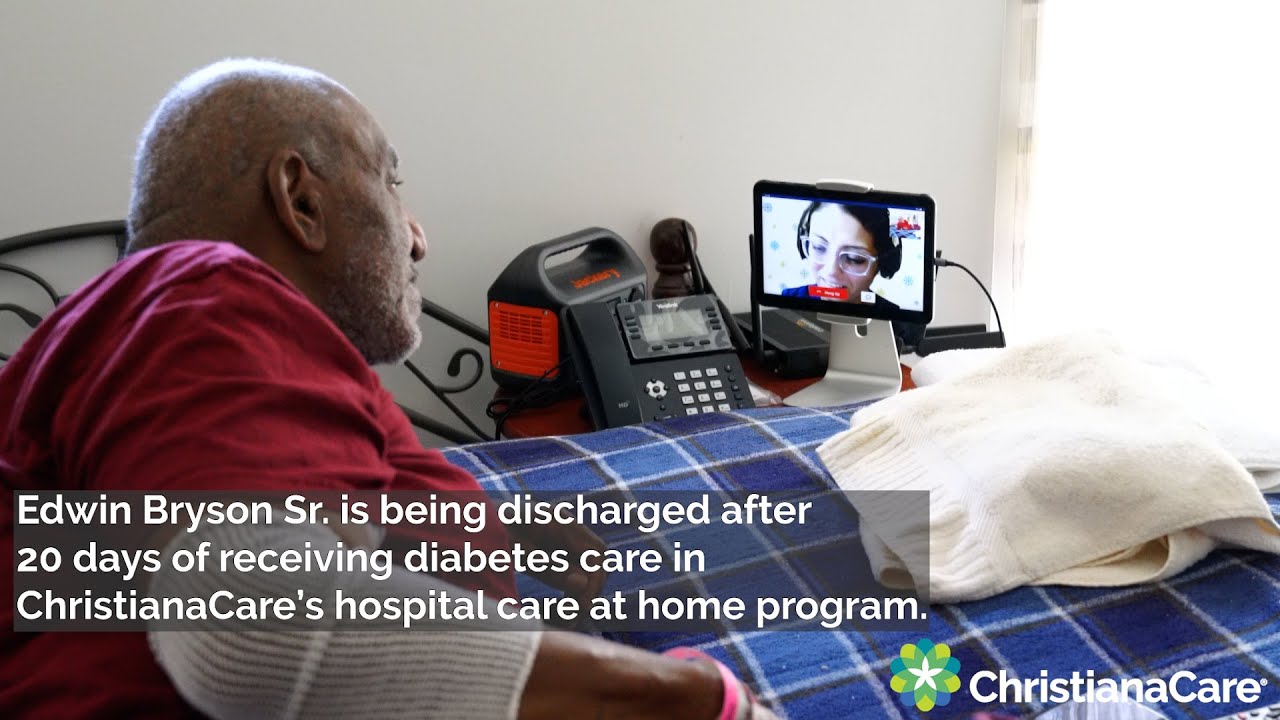
As he arrived at ChristianaCare’s emergency department because of diabetes complications that were causing excruciating pain in his left foot, Edwin Bryson Sr., 71, of Wilmington, Del., had resigned himself to what seemed inevitable—he was going to need hospitalization. But he was surprised when his care team offered him the chance to get the hospital care he needed in the place he likes best — his own apartment. For 20 days, Bryson was a patient in the ChristianaCare hospital care at home program, which offers in-home services to patients who would otherwise require inpatient hospitalization. Daily, members of his care team visited his home to take his vital signs, give him medication and assist him with getting dressed. They also helped with additional tasks to improve his overall health and safety, such as buying an extra lamp and flashlights to ensure the lighting in his home was adequate for his safety, and assisting him with ordering food. “It was a good feeling to be at home,” Bryson said. “My friends would knock on my door and make sure I was OK. My son and my nephews could stop to see me when they felt like it or had the time. They always say, ‘There’s no place like home,’ and it’s true. All I do is hit the button and a nurse comes on to assist me with anything I need and check on my vitals. It was 24-hour service here, just like I was in the hospital.” ChristianaCare has admitted and cared for more than a dozen patients in the hospital care at home program since it launched in December 2021, designed in partnership with the Medically Home Group Inc. The program, which offers the highest level of in-home acute care in Delaware, combines virtual and in-person care provided by a team of physicians, nurse practitioners, registered nurses and other providers. In-person and virtual visits from the health care team, along with mobile imaging and lab services, delivery services for meals and nutrition, and pharmacy medication and management, mean a patient doesn’t need to leave home to get better. Virtual technology and home health equipment brought into the patient’s home ensure round-the-clock monitoring and care that mirrors a traditional hospital setting. “One of the things we’ve learned in a short time about the hospital care at home program is how patient-centered this approach is and how we’re able to customize the care we deliver,” said Sarah Schenck, M.D., medical director of the program. “Most of the things we can do in the hospital we can also do at home. And it turns out patients really prefer that venue. They’re in their own home with their loved ones, their pets, sleeping in their own bed and eating their own food.” Currently, to be considered for hospital care at home, patients must live within 25 miles of Christiana and Wilmington hospitals. Patients who come to the emergency department with common chronic conditions such as congestive heart failure, respiratory ailments, diabetes complications and infections like pneumonia, are eligible for consideration. All hospital care at home patients receive a technology kit that connects them to the command center, powered by the ChristianaCare Center for Virtual Health. With a touch of a button, patients can access an expert team of ChristianaCare physicians and nurses. When patients are well enough to be discharged, the care team collaborates with the patient’s primary care physician to ensure a seamless transition. ChristianaCare joins an elite group of health systems nationwide offering at-home hospital care. Clinical research studies comparing patients in traditional hospitals with patients who received hospital-level care at home have found those who received in-home care experienced fewer readmissions, lower mortality rates, reduced falls and lower costs. “Patient satisfaction is really high with this program,” said Steaphine Taggart, director of operations for the program. “There’s more caregiver interaction with families because they are allowed to come into the home. And overall, there’s more patient-centered care and delivery because it’s in the home,” Registered nurse Mary Pat McCabe has treated patients for 17 years. Working in the hospital care at home command center, she has the opportunity to be even more personable in the virtual setting than a traditional inpatient encounter. “You get to know them and their family members and if they have a pet. You can see into their home and get more of a feel for who they are,” McCabe said. Dr. Schenck said hospital care at home is an exciting example of how new, innovative models of care can improve patient outcomes, reduce costs and transform care. “It’s really foundational for the future of health care delivery. This is our first step, but it’s definitely going to grow,” she said. For Bryson, who was recently discharged, it’s even simpler: “You get better, get back out there and get back into life again.”

10 resume mistakes to avoid when applying for jobs in Canada
As a newcomer to Canada, applying for your first job can be stressful. The recruitment process may be different from what you’ve experienced back home and it can take some time to understand what will make your application stand out in Canada’s competitive job market. As you look for your first job in Canada, your resume will likely be key in determining whether or not you get the role. In Canada, most companies run the resumes they receive through a resume-scanning software to filter ones that best match the requirements laid out in the job description. If you’re shortlisted, your resume and cover letter will be sent to a recruiter or hiring manager, and they’ll decide whether you’re an ideal candidate for the position. Since your resume will determine the first impression you make on the hiring manager, there’s a lot riding on what you include––or not. Should you really submit that extra page? (Maybe.) Is it okay to exaggerate your credentials? (No!) What about using a fun font? (Better not to.) Here are 10 common resume mistakes newcomers tend to make and guidance on how to avoid them. 1. Using the same resume for different job applications Landing your first job in Canada can take a few months and it’s easy to get overwhelmed and exhausted by the process. When you’re applying to hundreds of job positions, the idea of using the same generic resume for multiple positions can be tempting. However, customizing your resume significantly improves your chances of being selected. Every job is unique––and your application should be too. While your applicant profile won’t vary significantly from one application to the next, the way in which you present it should be customized for each company and job opening. A good way to do this is to look for keywords in each job posting and sprinkle them throughout your resume where they make sense. This will help your resume get past both the resume-scanning software and human recruiters tasked with reading dozens, if not hundreds of applications. Be sure to include experience and behavioural traits mentioned in the job posting. (For example, if the ideal candidate is proficient with a certain type of software, you should definitely mention any experience you have with it.) At the same time, remove experiences and skills that aren’t a match, so whoever reads your resume isn’t distracted by non-essential items. 2. Not reading the job description before creating your resume Reading the job description will give you vital information about the role and the potential candidate an organization is looking for, including key skills and experiences. Not only will this information help you determine if you’re a good candidate, it’ll also help you craft the perfect resume. Many Canadian employers use applicant tracking systems (ATS) to screen resumes and shortlist ones that match the job description. This means it’s essential your application takes the job ad into consideration. As mentioned above, you’ll want to look for keywords and descriptions you can include in your cover letter and resume. It’s also a good idea to include some synonyms and similar words to these keywords. The idea is to include just enough keywords for your resume to pass the ATS, while ensuring that it reads well for a human recruiter. Only include keywords where it makes sense to do so and don’t include too many in a row. Your cover letter and resume should always be grammatically correct, easy to read, and flow naturally. 3. Listing job responsibilities instead of achievements Unlike some countries where resumes are supposed to outline your past roles and responsibilities, in Canada resumes focus on achievements. Listing past job responsibilities doesn’t tell future employers how you performed in a role. The goal is to make you stand out from every other applicant with similar job experience, so make sure you emphasize what you brought to a company or team as an individual. The best way to do this is by listing achievements, citing numbers or data that may grab an employer’s attention, or describing challenges you overcame. This isn’t the time to be modest! You want to share what makes you special. 4. Grammatical errors and typos in your resume Proofread, proofread, and proofread again before hitting “send.” Missing grammatical errors and typos is the worst resume mistake you can make and can cost you a job, even if you’re a good candidate for the role. Grammatical errors will make your resume stand out in all the wrong ways, undermining your credibility and bringing into question your attention to detail. If possible, have a friend, family member, or mentor proofread your cover letter and resume as well. This is even more important if English isn’t your first language. You can use spell check as a guide, but don’t rely on it to catch all your errors. 5. Creating a resume that’s too long or too short One of the biggest questions Canadian job seekers have is how long their resume should be. The exact answer depends on the specific job at hand and an applicant’s work experience, but generally resumes should be one to two pages long. A cover letter should be no longer than one page, but not shorter than three to four paragraphs. The more years of work experience you have under your belt, the closer to two pages your resume can be. If you’re fresh out of school or less than a decade into your career, it’s better to stick to one page. As you progress in your career, it’s also normal to cut out early-career work experience and keep educational experience to a single line. A recruiter for a senior-level position doesn’t need to read about your early-20’s internships or time spent in debate club. 6. Not using action verbs You want to use powerful and impactful language in your resume, which means using action verbs. Action verbs are verbs that imply that the subject (you) is doing something. These are a great way to showcase your initiative, rather than passively saying you were “responsible for” something. Good examples of action words to use in a cover letter or resume include “led,” “managed,” “succeeded,” “surpassed,” “created,” and “delivered.” Try to use a mix of action words and avoid repeating the same ones in consecutive points. 7. Including information not typically included in Canadian resumes In Canada, you’re not supposed to include information like your marital status, religion, gender, age, or sexual orientiation in your cover letter or resume. Unless you’re applying for a modelling or acting job, you’re also not supposed to include a photo or headshot. Not only will this extra information take up valuable page space, it could cause a potential employer to avoid your resume for fear of accusations of unintentional or intentional discrimination. It’s actually illegal in Canada for an employer to ask for information like your sexual orientation, age, or ethnicity in a job application process or interview. To avoid putting a recruiter or employer in an awkward situation, it’s best to stay away from these topics. It’s also considered improper to include salary expectations or irrelevant personal hobbies in your application. In Canada, you can skip writing “references available upon request,” as that’s understood and doesn’t need to be stated. 8. Submitting a cluttered or improperly-formatted resume First and foremost, a resume should always be organized and easy to read. An employer should be able to easily pick out your work experience, any volunteer experience, and educational background. Be sure to leave enough white space around text. This typically means 1 or 1.5 line spacing and wider margins. Job applications also aren’t the time to get creative with fonts. Stick to classics like Times New Roman, Arial, or Calibri with a size of at least 10, but not larger than 14. Avoid mixing fonts or using too many different font sizes. Also avoid going overboard with bolding, underlining, or italicizing. If you need more guidance on formatting your resume in the Canadian style, you’ll find the tips and templates you need in our article on Canadian resumes and cover letters. 9. Listing inaccurate contact information It doesn’t matter how great your resume is if a potential employer can’t contact you. If you’ve recently moved or changed your phone number or e-mail address, make sure the information included in your cover letter and resume is up to date. Either way, proofread this information multiple times to avoid typos. It’s also important to make sure your email address is professional (avoid using contact email addresses like cutiepie468@hotmail.com or rockstar732@yahoo.com). Ideally, it should be formatted firstname.lastname or using your initials and not include any nicknames or slang language. 10. Lying on your resume You may be tempted to exaggerate your experience or accomplishments, but this is a big ethical no-no and a dealbreaker for any potential employer. Many Canadian recruiters and employers will verify your credentials and background through other sources, whether that’s by calling references, conducting background checks, or looking you up on LinkedIn or other social media platforms. If you lie, you’re very likely to get caught. If you’re worried about an employment gap, it’s better to plan to explain it than cover it up with a lie. As a newcomer, landing a first job can be challenging. However, it’s important to avoid the urge to embellish or lie to make your resume more impressive. Remember, most employment contracts include a clause that allows an employer to terminate your position if they find you lied on your job application. That’s not the type of stress you need hanging over your head! Having a good resume is crucial for your job search. Your resume is essentially your first interaction with a prospective employer and it should convey why you’re an ideal candidate for the job. By avoiding these common mistakes, you can make a positive impression and stand out among a pool of candidates to land a job in Canada. Original article located here, published by Arrive. About Arrive Arrive is powered by RBC Ventures Inc, a subsidiary of Royal Bank of Canada. In collaboration with RBC, Arrive is dedicated to helping newcomers achieve their life, career, and financial goals in Canada. An important part of establishing your financial life in Canada is finding the right partner to invest in your financial success. RBC is the largest bank in Canada* and here to be your partner in all of your financial needs. RBC supports Arrive, and with a 150-year commitment to newcomer success in Canada, RBC goes the extra mile in support and funding to ensure that the Arrive newcomer platform is FREE to all.