
Experts Matter. Find Yours.
Connect for media, speaking, professional opportunities & more.
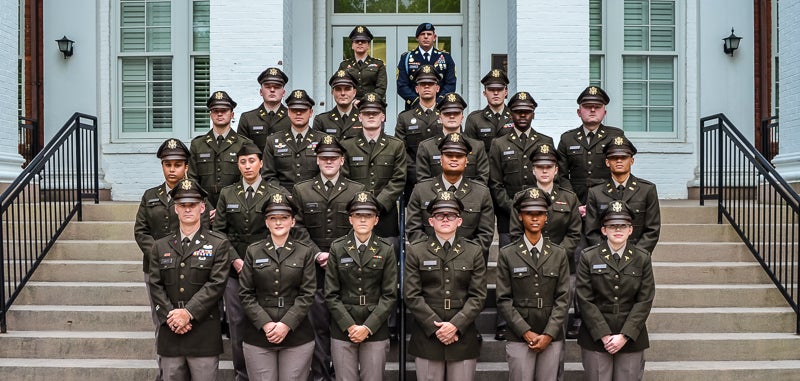
Raised to Serve: How Georgia Southern’s Jaden Young Found His Calling to Lead
“Shoot for the stars.” That guiding mindset defines Jaden Young, a recent graduate of Georgia Southern University who has been commissioned as a second lieutenant in the United States Army. Young earned his master’s degree in professional communication and leadership at December commencement, carrying forward a lifelong connection to military service shaped by family tradition and constant movement. “If you shoot for the stars, even if you miss, you might land on the moon,” Young said, reflecting the ambition that has guided his academic and leadership journey. Raised in a military family, Young learned early how adaptability and exposure to different communities build resilience. Those lessons carried into his time in Army ROTC, where he credits the program with sharpening his discipline, confidence, and problem-solving skills. “The ROTC program instilled in me discipline, confidence and resilience… When things don’t go your way, it’s all about how you adapt and find a better solution,” he said. Young’s Georgia Southern experience also tested his perseverance beyond the classroom and training field, as he balanced graduate studies and ROTC commitments while supporting his mother through cancer treatments. Those challenges deepened his understanding of leadership as service rooted in trust, communication, and loyalty. As he prepares for the Basic Officer Leadership Course at Fort Benning, Young says he feels ready to lead soldiers with purpose—bringing together the lessons of his upbringing, education, and commitment to serve. Looking to know more about Georgia Southern University's Professional Communications and Leadership program? Simply contact Georgia Southern's Director of Communications Jennifer Wise at jwise@georgiasouthern.edu to arrange an interview today.


The Doomscrolling Couple: Spending Time Together on Different Screens
In 2025, a lot of couples end their day the same way: lying in bed, each silently scrolling through an endless stream of bad news. They’re physically together, but emotionally somewhere else. Licensed Marriage & Family Therapist Gaea Woods sees this pattern constantly in her practice — and says doomscrolling has become a quiet third party in many relationships. “Phones are killing interpersonal relationships — not because tech is evil, but because we use it unconsciously at the moments connection matters most,” she says. “Even something as simple as being on your phone at dinner is a way to express, ‘I’m more interested in my phone than I am in you.’” Instead of talking about their day, fears, or plans, partners lie next to each other consuming the same distressing content, letting shared anxiety take the place of actual conversation. Research on doomscrolling backs up what Woods sees in the therapy room. Studies and reviews have found that compulsively consuming negative news online is linked with higher anxiety, depression, stress, sadness, and feelings of overwhelm, and even existential anxiety and pessimism about life. “Doomscrolling feels like you’re staying informed together,” Woods says, “but what’s really happening is that both nervous systems are getting more activated while neither partner is actually talking about what they’re feeling.” Relationship science adds another important piece: phubbing — phone snubbing during interactions. Multiple studies (including a recent meta-analysis published by Frontiers in Psychology) show that partner phubbing is associated with lower relationship and marital satisfaction, less intimacy and emotional closeness, and more conflict and jealousy. Woods describes what that looks like in real life: “You pick up your phone instead of saying, ‘That hurt my feelings.’ Your partner wonders, ‘Is she okay? Is he mad at me?’ and then they grab their phone too. Suddenly you’re two people on your phones instead of two people connecting.” Her core message for couples and for journalists covering modern relationships is that: scrolling together isn’t the same as being together. When screens become a third party at the table or in bed, intimacy quietly leaves the room. Featured Expert Gaea Woods, MA, LMFT – Licensed Marriage & Family Therapist specializing in digital dependency, intimacy and communication. She speaks to how doomscrolling and phone use act as a “third party” in relationships, why scrolling side-by-side increases emotional loneliness, and the practical phone rules that help couples rebuild genuine connection. Expert interviews can be arranged through the Offline.now media team.



Sun-Sentinel: What happens when parents go beyond sharenting?
So many parents routinely share photos and news about their kids on social media that the behavior has a name: sharenting. Usually harmless and well-meaning, it can also take a dangerous turn, exposing children to online predators, allowing companies to collect personal information and creating pathways for children to become victimized by identity theft. The risks are most pervasive when parents overshare to profit from their social media accounts. Whenever parents share, they are the gatekeepers, tasked with protecting their children’s information, but they are also the ones unlatching the gates. When parents profit from opening the gates, it is especially challenging to balance protecting their kids’ privacy against sharing their stories. Federal and state laws typically give wide deference to parents to raise their children as they see fit. But the state can and does intervene when parents abuse their children. Those laws protect children in the physical world. However, few laws shield children when parents risk harming them online. Let’s consider this hypothetical situation based on a composite of real-life events. Mia (fictional name) is a 7-year-old girl growing up in Orlando. Her mother is a stay-at-home parent who has a public Instagram account and considers herself an influencer. Many lingerie brands pay Mia’s mom to model their clothing. When a lingerie company from overseas offers Mia’s mom some money to have Mia also pose in their clothing, Mia’s mom says yes. Over the next few weeks, Mia and her mom model the clothing together in pictures and videos, sometimes wearing the outfits while reading together in bed, having pillow fights or being playful around the house — always in clearly intimate but arguably appropriate settings. Mia’s mom’s social media page explodes with new followers, many of whom appear to be grown men. The images on the page receive hundreds of likes and multiple comments. Mia’s mom deletes the most inappropriate comments but leaves others, hoping to increase engagement. As Mia’s mom’s social media following grows, so does the amount of money she earns. Mia tells her teacher about the social media page. Her teacher reaches out to Mia’s parents, to no avail. Mia’s mom keeps sharing. The teacher sees this as a potential form of abuse and neglect and, according to her obligation as a mandatory reporter of abuse, she calls in a report to the state’s central abuse registry. The teacher isn’t trying to get Mia’s mom in criminal trouble, but she thinks the family could use some education surrounding safe social media use and possibly access to financial support if they need this type of online exposure to pay the bills. The intake counselor declines to accept the hotline call. The counselor explains that the posting of pictures is not grounds for an abuse, abandonment or neglect investigation. The parent is sharenting, the counselor says, and that is within a parent’s right. Of course, child sexual abuse material is illegal, but the photos posted by Mia’s mom fall into a gray area — not illegal material, but likely harmful to Mia. Should there be a law to stop this? I believe there should be. Just as our views regarding child abuse have evolved, so must our views on sharenting. Merely 150 years ago, it was legal for parents to beat their children. It wasn’t until 1874, when a little girl named Mary Ellen was beaten severely by her caregiver, that courts began to step in. Drawing from existing laws prohibiting animal cruelty, the Society for the Prevention of Cruelty to Animals argued that Mary Ellen had the right to be free from abuse. At the time, there were laws protecting animals from harm by their caregivers but no laws protecting children from such harm! Back to the present: Mia’s disclosure to her teacher could have changed her life and led to her family getting online safety help, if only the child welfare laws were suitably tailored to protect her in the online world as they attempt to do offline. Child protection laws should be expanded to include harms that can be caused by online sharing. The law can both protect parental autonomy and honor children’s privacy through a comprehensive and multidisciplinary new approach toward protecting children online — one that allows for thoughtful investigation, education, remediation and prosecution of parents who use social media in ways that are significantly harmful to their children. This conduct, which falls beyond sharenting, is ripe for legal interventions that reset the balance between a parent’s right to share and a child’s right to online privacy and safety. Stacey Steinberg grew up in West Palm Beach and now lives in Gainesville, where she is a professor at the University of Florida Levin College of Law; the supervising attorney for the Gator TeamChild Juvenile Law Clinic; the director of the Center on Children and Families; and the author of “Beyond Sharenting,” forthcoming in the Southern California Law Review. This piece was also published in the South Florida Sun-Sentinel.


Online Dating in 2026: Are Apps Bringing Us Closer or Just Keeping Us Swiping?
In 2025, “We met on an app” is the most ordinary love story in the world. Swiping has replaced setups and chance encounters as the primary way couples connect in many countries. But as online dating becomes normal, a new question is emerging: Are app-born relationships actually as happy and secure as we think? Licensed Marriage & Family Therapist Gaea Woods, an expert in the Offline.now digital wellness directory, sees both sides in her practice. “Online dating is just a tool,” she says. “It can absolutely bring people together who would never have met otherwise. But the way we use it — the constant options, the ghosting, the parallel conversations — can quietly undermine trust even after you’ve deleted the app.” Woods says that she hears tension from from clients: “Singles tell me, ‘I hate the apps, but I don’t know another way to meet people.’ Couples tell me, ‘We met on an app, and I’m grateful — but there’s this low-level anxiety: Would you still be with me if you kept swiping?’ The technology amplifies questions that were always there about choice, commitment and comparison.” She emphasizes that how couples talk about their “app origin story” matters more than where they met. Unspoken assumptions — about whether exes stay in your DMs, if profiles stay active “just in case,” or how much flirting online is acceptable — often fuel insecurity more than the apps themselves. “Online dating is here to stay,” Woods says. “The question isn’t ‘Is it bad?’ It’s, ‘How do we use it in a way that supports real intimacy instead of keeping us one foot in and one foot out?’” Featured Expert Gaea Woods, MA, LMFT – Licensed Marriage & Family Therapist specializing in digital dependency, intimacy and communication in modern relationships. She can speak to app fatigue, the “online dating effect,” how apps change expectations around choice and commitment, and the kinds of conversations couples need to have once the swipe turns into something serious. Expert interviews can be arranged through the Offline.now media team.

From Ancient Rituals to Fireworks: Why New Year’s Eve Still Matters
New Year’s Eve marks humanity’s shared fascination with time, renewal, and fresh beginnings - a moment to close one chapter and open the next. The tradition dates back more than 4,000 years to ancient Mesopotamia, where the Babylonians celebrated Akitu, a multi-day festival tied to the spring harvest and the rebirth of nature. Rather than a single night of revelry, Akitu was a ritual reset: debts were settled, promises were renewed, and cosmic order was symbolically restored. The date we recognize today, January 1 - comes from ancient Rome. In 46 BCE, Julius Caesar reformed the calendar and dedicated the year’s first day to Janus, the two-faced god of doorways and transitions, who looked both backward and forward. This symbolism still defines New Year’s Eve: reflection on the past paired with hope for what’s ahead. Over centuries, as Christianity spread across Europe, the celebration evolved, blending solemn religious observances with local customs of feasting, bells, and bonfires. In modern times, New Year’s Eve has become a global cultural event, shaped by public countdowns, fireworks, music, and collective rituals. From the iconic ball drop in Times Square to family gatherings and quiet toasts at home, the night offers a shared pause, an almost universal agreement to stop, take stock, and imagine change. Traditions vary frm lucky foods, noise-making to ward off evil spirits, or first-footing to invite good fortune, but the intent is the same. At its core, celebrating New Year’s Eve is about agency and optimism. Resolutions, whether kept or not, are expressions of belief that tomorrow can be different. Across cultures and centuries, the night endures because it gives people permission to hope—to acknowledge what was, release what no longer serves, and step forward together into something new. Looking to go deeper on why New Year’s Eve resonates so powerfully around the world? Our experts can speak to the historical, cultural, and psychological reasons humans mark time this way, and why the midnight reset still matters today. Find your expert here: www.expertfile.com


My MBA Journey at 69: Because Apparently, Climbing Everest Base Camp Wasn't Enough
If you watched CBS 60-Minutes host, Cecilia Vega set out on a challenging 10-day trek to Everest Base Camp (EBC) in the Himalayas, for last week's episode, you couldn't help but marvel at the gruelling physical demands and the profound experience of being at the foot of Mount Everest. Her journey, which involved intense training, navigating dangerous suspension bridges, and dealing with extreme altitude, also highlighted the massive industry around Everest and the vital, underappreciated role of the Sherpa community. Her journey is an inspiring look at how we can push our own boundaries. Bravo Cecilia! Vega described hiking Everest Base Camp as "the hardest thing I've ever done physically," battling low oxygen (like breathing through a straw) and fatigue, despite months of training. She experienced sub-freezing temperatures, crossed dizzying suspension bridges, and even witnessed close calls with avalanches, with trusty Sherpas conducting nightly tent checks to ensure her safety. Hiking to Everest Base Camp is hard. I know. Because I did it. At 60 Let me explain. I have a tradition of celebrating milestone birthdays with a bang. When I turned 60, I gave myself six physical challenges — one for each decade lived. The grand finale? Climbing to Everest Base Camp. It was epic, exhausting, and left me with both altitude sickness and lifetime bragging rights. But as I approached 69, I craved something different. Not hiking boots this time — just highlighters. Not mountain peaks — mental peaks. I wanted an intellectual challenge that would prove my brain still had some miles left on it. No oxygen tanks required this time. Just caffeine, reliable Wi-Fi, and an iron will. How I Got Here (And Why I'm Questioning My Sanity) I've always wanted an MBA — partly for the knowledge, but let's be honest, mostly for the prestige. There's something irresistible about joining that club of spreadsheet-loving scholars. For years, I've imagined myself casually tossing around terms like "synergy" and "stakeholder engagement" while sipping something expensive in a sleek business lounge. What I didn't imagine was attempting this after a 46-year hiatus from university. Spoiler alert: It's harder than I thought. Like, significantly harder. Enter the MBA: Twenty-four courses. Two years or so, and approximately one hundred "What was I thinking?" moments. I enrolled at the Sprott School of Business at Carleton University, which offers a generous seniors' discount. I briefly debated whether to ask for the student discount or the seniors' discount — then thought, why not request both? I've earned these wrinkles and this tuition bill. Bonus perks: I qualify for the student medical and dental plans. My classmates use them for wisdom tooth extractions. I'm eyeing the denture clause. Term One: The Tech Tsunami Let's talk about the software situation. Brightspace. Turnitin. eProctor. Excel (the betrayer). Word. APA 7th Edition. And about a dozen other platforms that might as well have been written in Klingon. I expected a gentle introduction — maybe some academic foreplay before diving into heavy coursework. Instead, I was shoved into the deep end with weights tied to my ankles. Each assignment came with a forest's worth of readings, PowerPoint slides, and discussion board posts. I was up at 5 a.m., trying to squeeze in extra hours in the day. (Spoiler: you can't.) Despite decades spent managing teams, I was barely scraping 60% on quizzes — the open-book ones. How is that even possible? Accounting became my personal Everest. People kept telling me, "Excel is your friend." That's a lie. Excel is that friend who borrows your car, crashes it, returns it on empty, and then asks if you've bothered reading the manual. Casualties of War: Family, Friends, and Dottie My family was neglected. My friends assumed I'd entered witness protection. Even my little dog Dottie stopped talking to me. She'd give me this look — a devastating combination of pity and disappointment — every time I said, "Sorry, no walk today. Mommy has to study debits and credits." You haven't experienced true shame until you've been judged by a 10-pound dog wearing a sweater. The Breaking Point (And the Breakthrough) I'll admit it — I had serious moments where quitting felt like the only rational option. The workload was relentless. The jargon was endless. The pressure was overwhelming. I contacted teaching assistants, professors, and even the university librarian, desperately searching for a lifeline. They were all kind and patient. But ultimately, I had to figure it out myself. And somewhere between the caffeine highs and APA citation lows, something clicked. Even Cs get Degrees! By midterm, I began to suspect something radical: perhaps the large amount of work was the real test. Not the material itself, but the sheer volume. Maybe this was the school's way of differentiating dedicated students from curious ones, the serious from the casual observers. Was it possible that the secret to MBA success was learning what not to do? After all, the passing grade is a B- (70%). At this point in my life, I'd be happy with a 71% and a full night's sleep. Hence the title, Even Cs get Degrees! Working Smarter, Not Harder Somewhere between week three and mild hysteria, I made a radical decision: stop trying to do everything. I focused on lectures and study notes instead of drowning in supplementary readings. I prioritized assignments strategically. I stopped pretending perfection was achievable — or necessary. The results were immediate: • My grades improved • My panic attacks decreased • Dottie started making eye contact again I also began scheduling regular Zoom calls with professors and TAs — not just for assistance, but to foster genuine relationships (my lifelong superpower). Once I stopped pretending, I had everything under control; everything truly improved. School life has improved. Home life has also improved. I was finally able to brush my hair again. Slowing Down to Soak It In Next term, I'm taking just one course. Because honestly, what's the rush? I'm not chasing a promotion or striving for a corner office. I'm doing this for myself — for the simple joy of learning and the satisfaction of knowing I still can. I want to enjoy the journey, not rush through it gasping. I want to look forward to lectures rather than fear them. I want my sleep score (and my sanity) restored. The goal isn't speed. It's savouring. What I've Learned So Far Here's what these first two courses have taught me: ✓ I can still learn — even when my brain occasionally reboots mid-sentence ✓ I can focus — especially with enough coffee ✓ I'm still gloriously, endlessly curious ✓ I need sleep (The 5 a.m. club can keep their membership) ✓ I need fun (Revolutionary concept, I know) ✓ I love to learn (Turns out, I always have) ✓ I make mistakes — and they're not terminal ✓ I need help — and I must ask for it ✓ APA 7th Edition is real — and I finally understand what it means (Sort of. Mostly. Sometimes.) ✓ Even Cs or, in my case, a B- get a Degree — consistent, sustainable B- work will win most every race Looking Ahead: The Big 7-0 By the time I graduate, I'll be at least 70 years old. And honestly? I can't think of a better birthday gift for myself. When most people talk about slowing down, I'm actually ramping up. While others are downsizing, I'm uploading assignments at 11:58 p.m. When my friends ask why I do this, I smile and say: "Because I still want to know what I'm capable of." To Be Continued... This is just the beginning of my MBA adventure. I've completed two courses out of twenty-four. Twenty-two more to go — one term at a time, one course at a time, one small victory at a time. I'll update this blog periodically with new stories, fresh insights, and probably more tales of Dottie's disappointment. As We Start the New Year Here's a toast to all of us who refuse to act our age. To everyone starting something new — whether it's an MBA, a marathon, or a pottery class. To everyone who believes it's never too late to learn, to laugh, or to start again. Because learning doesn't stop when you retire. Sometimes, it's only just beginning. Stay tuned for Term Two updates, where I'll tackle another course, hopefully retain my sanity, and continue proving that 69 is just a number (and so is 70, 71, 72...). All the best to you in 2026 and beyond! Sue Don’t Retire… ReWire! Want to become an expert on serving the senior demographic? Just message me to be notified about the next opportunity to become a "Certified Equity Advocate" — mastering solution-based advising that transforms how you work with Canada's fastest-growing client segment. Here's the link to sign up.


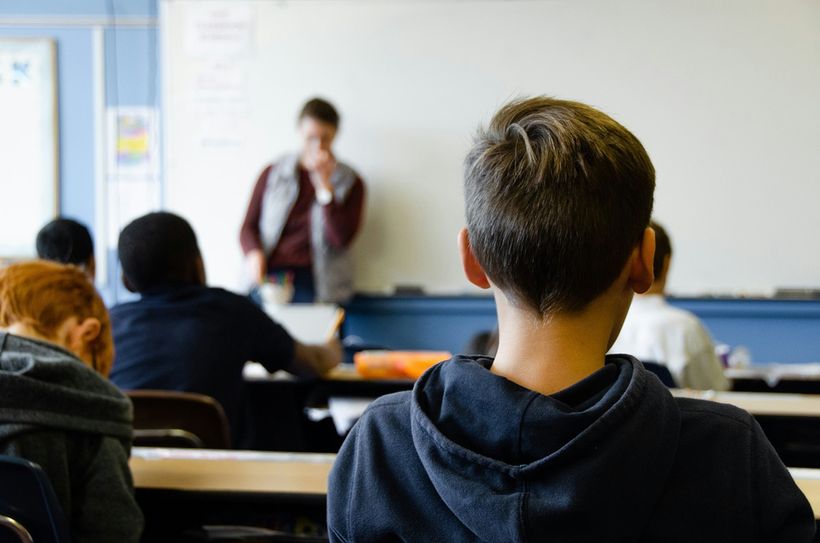
Can You Reboot Your Family’s Screen Rules Before Going Back to School?
As kids head back to school after the holidays, many parents notice the same pattern: bedtimes drifted, screens crept into bedrooms, and mornings feel like a battle. Executive Function Coach Craig Selinger and Personal Development Coach Mark Diamond, both experts in the Offline.now directory, say the answer is yes; but only if families treat the last week of break as a “tech reset,” not just a scramble for school supplies. Selinger points out that today’s devices are structurally different from the TV many parents grew up with: “Phones and tablets are more addicting than the old living-room TV. There’s no natural ending — no episode, no credits, no ‘we’re done now.’ When the ‘TV’ lives in your child’s pocket, transitions to homework or sleep become a lot harder.” That matters because late-night screen habits have real consequences in the classroom. Reviews of adolescent media use consistently link bedtime and late-evening screen time with shorter sleep, poorer sleep quality, and worse next-day functioning; including attention, memory and mood that kids need to learn. On top of that, education and cognition research shows that media multitasking: juggling schoolwork with notifications, chats, and apps is associated with reduced sustained attention and weaker academic performance. Diamond, who ran a tech-free summer camp for 25 years, has seen how quickly kids’ brains and behavior respond when screens are dialed down and real-world activity is dialed up: “At camp, we watched kids go from anxious and distracted to confident and connected in a matter of days — without phones. Outdoor play, hands-on projects, chores, even just walking and talking with friends reset their mood and focus in a way no app can.” “Micro-routines make a macro difference,” says Diamond. “If you reclaim just an hour a day from screens for real-world activity, most kids feel the change in their bodies and brains within a week.” Selinger adds that the reset only sticks when adults go first: “You can’t tell a teen to stop scrolling at 11 p.m. while you’re answering work email in bed. Kids are watching how we transition off our own screens. If parents lead by example, the new school rules stop feeling like punishment and start feeling like the new normal.” For journalists covering back-to-school, kids’ mental health, learning and technology, this story connects the dots between holiday screen creep, sleep, attention, and how a simple, family-led “tech reset week” can set kids up to actually learn once they’re back in class. Featured Experts Craig Selinger, M.S., CCC-SLP – Executive Function Coach and child development specialist (Brooklyn Letters). He focuses on how kids actually learn, and how digital dependency, sleep loss and multitasking erode attention and academic skills. Mark Diamond – Personal Development Coach and former director of a tech-free summer camp. He specializes in outdoor wellness, behavior change, and helping families translate “camp magic” into everyday routines at home. Expert interviews can be arranged through the Offline.now media team.



From Libraries to Heart Health: Marlo Vernon Takes Cardiovascular Care Into Rural Georgia
Marlo Vernon, PhD, associate professor in the Department of Health Management, Economics, and Policy at Augusta University’s School of Public Health, is leading a creative public health initiative designed to improve cardiovascular monitoring in rural Georgia. Through the university’s Rural Obese At-Risk initiative, Vernon and her team are placing blood pressure monitors in local libraries, allowing residents to check them out just like books. The effort addresses a critical access gap in rural communities where preventive health tools are often limited or difficult to obtain. Vernon’s work focuses on the realities facing communities in the South’s so-called Stroke Belt, where overlapping health conditions significantly elevate cardiovascular risk. View her profile “There are significant chronic disease risk factors in this so-called Stroke Belt. We’ve got high obesity rates. We have family history. We have high rates of diabetes and kidney disease and they all kind of feed into each other to really create this cardiovascular health need in our communities. And women, in general, are just at a higher risk for this,” said Marlo Vernon, PhD. Beyond equipment access, Vernon’s research also examines how people understand and manage their health when traditional care options are limited. The library-based model helps normalize blood pressure monitoring while reducing barriers such as travel distance, cost, and limited clinic availability. It also creates opportunities to study how community-based solutions can improve awareness, engagement, and long-term cardiovascular outcomes. For journalists covering rural health, women’s health, chronic disease prevention, or innovative public-health strategies, Vernon offers grounded, real-world insight into how trusted community spaces can play a vital role in addressing persistent health disparities. A full article on this topic is available below. To arrange an interview with Dr. Vernon simply click on her iconnow to set up a time to talk today.



Holiday Phones, Real Kids: “Don’t Give a 10-Year-Old a 24/7 Device Without a Plan”
Smartphones and tablets are among the hottest holiday gifts for tweens and teens. They’re also one of the biggest sources of parental anxiety. “We’re giving 9, 10, 11-year-olds a pocket device with the power to nuke their sleep, social life and self-esteem — and we’re doing it with almost no training,” says Eli Singer, founder and CEO of Offline.now. “The question isn’t ‘Should kids have phones?’ It’s ‘What’s the plan for this incredibly powerful tool?’” Singer, a coach and parent who lives with ADHD himself, takes a non-judgmental, shame-free approach with families. He’s blunt about the risks — social comparison, late-night scrolling, drama at school that now comes home in their pocket — but equally blunt that guilt doesn’t help. “Parents are overwhelmed and scared. They’ve seen the headlines linking social media to anxiety and depression, and they feel like they’re already behind,” he says. “My job isn’t to scare them; it’s to help them write the first draft of a family agreement they can actually live with.” Singer recommends three simple starting points over the holidays: Bedrooms are sacred. Phones charge overnight outside kids’ rooms and ideally outside parents’ rooms, too. Meals are for humans, not phones. A bowl or basket at the table becomes the visual reminder: we’re here together. Model what you ask. If parents scroll through dinner or answer work emails at fireworks, kids get the message long before any rule is written. Offline.now’s Digital Wellness Directory includes professionals who specialize in families, ADHD, and youth mental health; Singer positions Offline.now as the bridge between overwhelmed parents and the right expert help. Why now Late December is “first phone” season. January brings the real-world consequences: blown bedtimes, drama in group chats, school exhaustion. Singer can give reporters a nuanced, practical angle on holiday devices — beyond “phones are bad” vs. “phones are fine” — and concrete questions families can ask before they unwrap the box. Available for interviews Eli Singer - CEO of Offline.now; author of Offline.now: A Practical Guide to Healthy Digital Balance. I speak about practical behavior change, non-judgmental family agreements, and confidence-based starting points - and I can direct people to licensed professionals via the Offline.now Directory when needs go beyond coaching.


Kwanzaa Explained: A Modern Celebration Rooted in Culture, Community, and Purpose
Observed from December 26 to January 1, Kwanzaa is a cultural celebration that centres on African heritage, shared values, and community renewal. While often grouped with year-end holidays, Kwanzaa is distinct in both origin and intent — designed not as a religious observance, but as a time for reflection, education, and collective responsibility. At its core, Kwanzaa asks a simple but powerful question: How do communities honour their past while shaping a stronger future? The Origins of Kwanzaa Kwanzaa was established in 1966 by scholar and activist Maulana Karenga during a period of social change in the United States. It was created to provide African Americans with a way to reconnect with African cultural traditions while reinforcing shared values that support family, community, and social progress. The name “Kwanzaa” is derived from a Swahili phrase meaning “first fruits”, reflecting harvest celebrations common across many African cultures. The Seven Principles: Nguzo Saba Each day of Kwanzaa focuses on one of the Seven Principles, known collectively as the Nguzo Saba. These principles guide the celebration and serve as a framework for reflection and action: Umoja (Unity) – Strengthening family and community bonds Kujichagulia (Self-Determination) – Defining and speaking for oneself Ujima (Collective Work and Responsibility) – Building together and solving problems collectively Ujamaa (Cooperative Economics) – Supporting and sustaining community businesses Nia (Purpose) – Contributing to the restoration and development of community Kuumba (Creativity) – Leaving communities more beautiful and beneficial than before Imani (Faith) – Belief in people, parents, teachers, leaders, and collective struggle Each evening, families light a candle on the kinara, symbolizing progress through these values. Symbols and Traditions Kwanzaa celebrations include meaningful symbols that reinforce its themes: Kinara – The candle holder representing roots and foundation Mishumaa Saba – Seven candles representing the Nguzo Saba Mkeka – A woven mat symbolizing tradition and history Mazao – Crops representing collective labour and productivity Kikombe cha Umoja – The unity cup used for communal reflection Zawadi – Gifts that emphasize creativity, learning, and cultural meaning Celebrations often include storytelling, music, poetry, shared meals, and discussions about cultural identity and social responsibility. Kwanzaa in Practice Today Kwanzaa is observed in the United States and internationally by people of African descent and others interested in African culture and values. It may be celebrated alongside religious holidays such as Christmas or Hanukkah, or on its own. Over time, Kwanzaa has become a platform for conversations about: Cultural identity Community empowerment Education and youth development Economic equity Social responsibility Story Angles for Journalists Why Kwanzaa was created — and why it still resonates today The role of culture in community resilience How Kwanzaa is celebrated across generations Education, identity, and the Nguzo Saba Kwanzaa’s place in modern multicultural societies How families blend Kwanzaa with other year-end traditions Why Kwanzaa Matters Kwanzaa offers a framework for reflection that extends beyond a single week. Its principles emphasize unity, purpose, and shared responsibility — themes that remain relevant in discussions about culture, equity, and community building. In a season often dominated by consumption and spectacle, Kwanzaa provides a values-driven pause — one rooted in heritage, intention, and collective progress. Let's get you connected to an expert! Find more experts here: www.expertfile.com