
Experts Matter. Find Yours.
Connect for media, speaking, professional opportunities & more.

New prostate cancer urine test shows how aggressive disease is and could reduce invasive biopsies
Researchers from the University of East Anglia have developed a new urine test for prostate cancer which also shows how aggressive the disease is. A new study shows how an experimental new test called ‘ExoGrail’ has the potential to revolutionise how patients with suspected prostate cancer are risk-assessed prior to an invasive biopsy. The research team say their new test could reduce the number of unnecessary prostate cancer biopsies by 35 per cent. Prostate cancer is the most common cancer in men in the UK. It usually develops slowly and the majority of cancers will not require treatment in a man’s lifetime. The most commonly used tests for prostate cancer include blood tests, a physical examination known as a digital rectal examination (DRE), an MRI scan or an invasive biopsy. However, doctors struggle to predict which tumours will become aggressive, making it hard to decide on treatment for many men. Lead researcher Dr Dan Brewer, from UEA’s Norwich Medical School, said: “While prostate cancer is responsible for a large proportion of all male cancer deaths, it is more commonly a disease men die with rather than from. “Therefore, there is a desperate need for improvements in diagnosing and predicting outcomes for prostate cancer patients to minimise over-diagnosis and overtreatment whilst appropriately treating men with aggressive disease, especially if this can be done without taking an invasive biopsy. “Invasive biopsies come at considerable economic, psychological and societal cost to patients and healthcare systems alike.” The research team developed the new ExoGrail urine test by combining two biomarker sources - measurements of a protein-marker called EN2 and the levels of gene expression of 10 genes related to prostate cancer risk. It builds on previously developed tests called PUR and ExoMeth. They tested it using urine samples from 207 patients who had been undergone a biopsy for prostate cancer at the Norfolk and Norwich University Hospital (NNUH). When the urine results were compared to biopsy results, the study showed that the test had successfully shown which patients had prostate cancer and which did not. The ExoGrail test also provided risk scores for patients and highlighted those for which an invasive biopsy would have been beneficial. The findings show that using information from multiple, non-invasive biomarker sources has the potential to greatly improve how patients with suspected prostate cancer are risk-assessed prior to an invasive biopsy. Dr Brewer said: “Our new urine test not only shows whether a patient has prostate cancer, but it importantly shows how aggressive the disease is. This allows patients and doctors to select the correct treatment. And it has the potential to reduce the number of unnecessary biopsies by 35 per cent.” The research team was led by Dr Shea Connell, Prof Colin Cooper, Dr Daniel Brewer and Dr Jeremy Clark, all from UEA’s Norwich Medical School, in collaboration with the Norfolk and Norwich University Hospital, the University of Surrey, the University of Bradford, The Earlham Institute, and The Movember GAP1 Urine Biomarker Consortium. The urine biomarker research was funded by the Movember GAP1 Urine Biomarker project, Prostate Cancer UK, The Masonic Charitable Foundation, The Bob Champion Cancer Trust, the King family, The Andy Ripley Memorial Fund, the Hargrave Foundation, Norfolk Freemasons and the Tesco Centenary Grant. Paul Villanti, executive director of programmes at Movember, said: “We are proud to have supported the development of the ExoGrail urine test as part of our Global Action Plan Urine Biomarker project. “Having non-invasive tests which can accurately show how aggressive a man’s prostate cancer is not only reduces the number of men having to undergo painful biopsies, but also ensures that the right course of treatment for the patient is selected more quickly.” ‘Integration of Urinary EN2 Protein & Cell-Free RNA Data in the Development of a Multivariable Risk Model for the Detection of Prostate Cancer Prior to Biopsy’ is published in the journal Cancers on Tuesday, April 27, 2021.


Combating Vaccine Hesitancy Through Messaging
As vaccine hesitancy becomes a threat to Americans' decision to get the COVID vaccine, persuasive messaging is at the forefront of changing people's minds. Allyson Levin, PhD, a visiting assistant professor of communication, believes social media messaging plays a key role—and that post-vaccination selfies can actually help convince people to get the vaccine. "When we don't know what to do, we look to others to guide our behavior," stated Dr. Levin. "It is really important when we see people who share online that they were vaccinated—who are close to us, our friends or family and people we look up to like influencers and celebrities." Further, online communities create a world where it appears that people are getting vaccinated actively. "If we look around and see an environment where people are getting vaccinated, we will want to get vaccinated as well. That will encourage vaccination. At least if we trust those people around us," said Dr. Levin. Dr. Levin also contends that the social media platform TikTok can be extremely useful when information is "scientifically valid, evidence-based and coming from people who understand science like medical professionals." "A unique opportunity we have with TikTok is that users are receiving health information when they aren't looking for it," said Dr. Levin. In addition, she notes the incredible impact company advertisements endorsing COVID vaccinations have had on their wider acceptance. "At the end of the day, it is wonderful that brands are amplifying these messages, like Budweiser donating their airtime during the Super Bowl. There is an element of public relations, too: The brands look good for promoting these messages. But the more people that see these messages, the better." However, Dr. Levin pointed out that, while messaging is extremely important, vaccine availability is crucial. "Access is equally important. Unless people can actually have access to the vaccinations, the message is just one part of it," stated Dr. Levin.

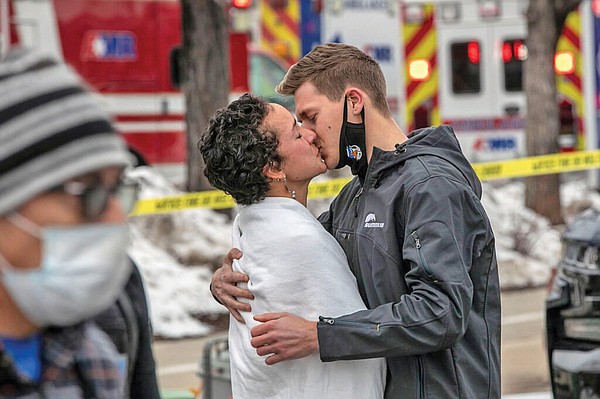
UMW's psychological trauma expert Laura Wilson weighs in on survivors of recent mass shootings
Media have been covering what has been a deadly year in America, with nearly a dozen mass shootings to date. UMW's psychological trauma expert Laura Wilson has been the go-to person to help journalists understand the impact these horrific events have on survivors. Recently, Dr. Wilson was interviewed about the recovery process American Olympic hopeful Maggie Montoya is facing after witnessing first-hand the shooting in Boulder, Colorado, as she prepares to represent America this summer in Tokyo. Laura C. Wilson, associate professor of psychology at the University of Mary Washington in Fredericksburg, Va., has focused on post-trauma functioning from mass trauma. She says most people's exposure and understanding of mass shootings consists of the immediate aftermath. "They see the news coverage of the crime scene and watch the investigators' news briefing," Wilson said. "Within a few days the news trucks leave and people's attention turns to the next major news event. This is when the grief and recovery work starts for the survivors." Wilson said every person will process the events differently. Some will have intense, acute reactions that subside in a few days or weeks. Effects could be chronic for others, and some experience delayed reactions. "Each person is different, and their recovery will look different," she said. Wilson didn't speak specifically about Montoya's running community but said community overall is a powerful strength for survivors in the aftermath of a mass shooting. "It creates a sense of belonging, which can promote psychological recovery," Wilson said. "Having supportive family and friends to validate the feelings and help you process your thoughts is certainly a protective factor." April 18 - The Northwest Arkansas Democrat-Gazette If you are a reporter looking to cover the issues survivors of mass-shooting events will experience, then let us help. Dr. Laura Wilson is a clinical psychologist whose expertise focuses on post-trauma functioning, particularly in survivors of sexual violence or mass trauma (e.g., terrorism, mass shootings, combat). Her research interests extend to predictors of violence and aggression, including psychophysiological and personality factors, as well as indicators of PTSD following mass trauma, long-term functioning among first responders, outcomes among survivors of sexual violence and the influence of media on mental illness stigma. Dr. Wilson is available to speak with media, simply click on her icon to arrange an interview today.



UConn Researcher Develops Successful Zika Virus Vaccine in Preclinical Studies
UConn researcher Paulo Verardi, associate professor of pathobiology and veterinary science in the College of Agriculture, Health and Natural Resources, has demonstrated the success of a vaccine against Zika virus and recently published his findings in Scientific Reports, a Nature Research publication. He has also filed provisional patents with UConn’s Technology Commercialization Services for the novel vaccine platform technology used to generate the vaccine, as well as genetic modifications made to the vaccine that significantly enhance expression of the vaccine antigen. Verardi, a Brazilian native, was in Brazil visiting family in the summer of 2015 when the Zika outbreak first began to make waves and soon reached epidemic status. Back in the United States, Verardi kept tabs on the Zika epidemic and its emerging connection to microcephaly, a serious birth defect that causes babies to be born with small heads and underdeveloped brains. In October of that year, Verardi called then-Ph.D.-student Brittany Jasperse (CAHNR ‘19) into his office and told her he wanted to apply their newly developed vaccine platform and start developing a vaccine for Zika virus. It’s an impressive achievement and there’s a full article attached for those looking to know more. Verardi emphasizes that developing vaccines for viruses, in this case Zika, help the world be better prepared for outbreaks of novel and emerging viruses by having vaccine development frameworks in place. “Emerging viruses are not going to stop popping up any time soon, so we need to be prepared,” Verardi says. “Part of being prepared is to continue the development of these platforms.” If you’re a journalist looking to know more about Zika virus and this emerging news about a vaccine – then let us help. Dr. Paulo Verardi is a virologist who specializes in vaccine research and development. He is an Associate Professor at UConn and a member of the Center of Excellence for Vaccine Research. Dr. Verardi is available to speak with media regarding this emerging development – simply click on his icon now to arrange an interview today.


Ten Years Later: Japan Society Remembers the Great East Japan Earthquake (3.11)
To Mark the 10th Anniversary of the Triple Disaster, Japan Society Will Present Programming Reflecting Upon the Aftermath, Recovery and Spirit of Resiliency After the Great East Japan Earthquake, tsunami and nuclear disaster devastated the Tohoku region of northeastern Japan on March 11, 2011 (3.11), Japan Society's Japan Earthquake Relief Fund (JERF) raised over $14 million from more than 24,600 donors from all 50 U.S. states and 55 countries, the largest amount raised by a nonprofit not specializing in disaster and emergency relief and the 7th largest fundraising campaign by a U.S. nonprofit organization. Through a series of events and videos leading up to the 10-year anniversary of 3.11, Japan Society invites our community to remember those who were lost, and to look toward Tohoku’s continued recovery. We also extend our sincere appreciation to all who donated to the Japan Earthquake Relief Fund (JERF), which was launched by Japan Society the day after the tragic events of 3.11. Since 2011, JERF has funded more than 65 grant projects and 45 organizations supporting Tohoku’s immediate relief and reconstruction efforts as well as the mid- to long-term recovery of these communities. In 2021, Japan Society has earmarked the remaining funds to support additional projects facilitating community-building and economic recovery in disaster-hit areas where challenges have become further exacerbated by the onset of the global pandemic and additional disasters that most recently struck the region on February 13. More information on these organizations and projects is available here. To mark the 10th anniversary of the triple disaster, Japan Society will report back on how JERF grants have contributed to Tohoku’s recovery, and highlight stories of what was witnessed in the aftermath of 3.11, including Tohoku’s resiliency, the bravery and initiative of all who responded to unprecedented challenges, the strength of U.S.-Japan relations, and the spirit of human generosity and goodwill. As we remember and draw lessons from the events of 3.11, we hope to nurture hope for the future of Tohoku and the world. “2021 is a year to reflect on resilience and recovery as we navigate the challenges of the COVID-19 pandemic and remember not just the tragedy of 3.11, but the strength of the Japanese people and the generosity of the world in its aftermath,” said Japan Society President and CEO Joshua W. Walker, Ph.D. “As we mark the 10-year anniversary of these events, we honor those who were lost, and extend our gratitude to the individuals and organizations who offered their support, including the donors to our relief fund.” Events include a contemporary theater performance “Ludic Proxy: Fukushima,” held live on March 6, 7 & 11 and available on demand from March 12 - 16. This video adaptation of Brooklyn-based theater-maker Aya Ogawa’s play Ludic Proxy follows a woman visiting her older sister, who lives on the outskirts of the Fukushima nuclear evacuation zone. The interactive play, which features a unique element of audience participation, explores the theme of human survival in the face of disaster. Taking advantage of our expertise in bringing together American and Japanese experts, a live U.S.-Japan symposium on March 9, 7-9pm EST, “Resilience & Recovery: A U.S.-Japan Dialogue Ten Years after 3.11”, will feature leading voices from Tohoku, Japan and the U.S. to discuss lessons learned from 3.11 on resilience and recovery from catastrophes. The symposium will be co-hosted with JERF recipient, ETIC., a Japanese nonprofit dedicated to nurturing social entrepreneurs and recovery efforts in Tohoku. As its first exhibition upon reopening to the public, Japan Society will also present When Practice Becomes Form: Carpentry Tools from Japan opening on March 11th. The exhibition celebrates the resilient spirit of Japanese architecture and craftsmanship through woodworking tools, architectural patterns, and models. The site-specific exhibition design, conceived by the esteemed architect Sou Fujimoto in collaboration with Brooklyn-based Popular Architecture, introduces major themes from the exhibition and is in dialogue with the gallery’s spaces, highlighting an enduring connection between traditional Japanese wooden construction and modern architecture. Viewing is available every Thursday through Sunday with advance timed-entry ticket reservations online. Further digital features include: Testimonials on the impact of JERF’s support from recipients and participants in fund-supported programs; A special season of Japan Society’s Tea Time series featuring six short interviews with key leaders from the U.S. and Japan including former U.S. Ambassador John V. Roos and retired General Ryoichi Oriki on their responses and lessons learned from the disaster; Dialogues between social entrepreneurs from Tohoku and their counterparts in New Orleans, LA and Wilmington, OH to discuss their work in using data, nurturing social entrepreneurship, and rebuilding communities recovering from natural disasters and economic crisis. These conversations feature alumni from “U.S.-Japan Leaders Exchange: Three-Year Training & Networking Program for Leaders in Tohoku’s Recovery and Reconstruction,” a multi-year program organized by Japan Society and ETIC from 2013-16. For a full list of programs and more information about JERF and the fund recipients, visit the Japan Society webpage. About Japan Society Founded in 1907, Japan Society in New York City presents sophisticated, topical and accessible experiences of Japanese art and culture, and facilitates the exchange of ideas, knowledge and innovation between the U.S. and Japan. More than 200 events annually encompass world-class exhibitions, dynamic classical and cutting-edge contemporary performing arts, film premieres and retrospectives, workshops and demonstrations, tastings, family activities, language classes, and a range of high-profile talks and expert panels that present open, critical dialogue on issues of vital importance to the U.S., Japan and East Asia. Japan Society is located at 333 East 47th Street between First and Second avenues (accessible by the 4/5/6 and 7 subway at Grand Central or the E and M subway at Lexington Avenue). www.japansociety.org


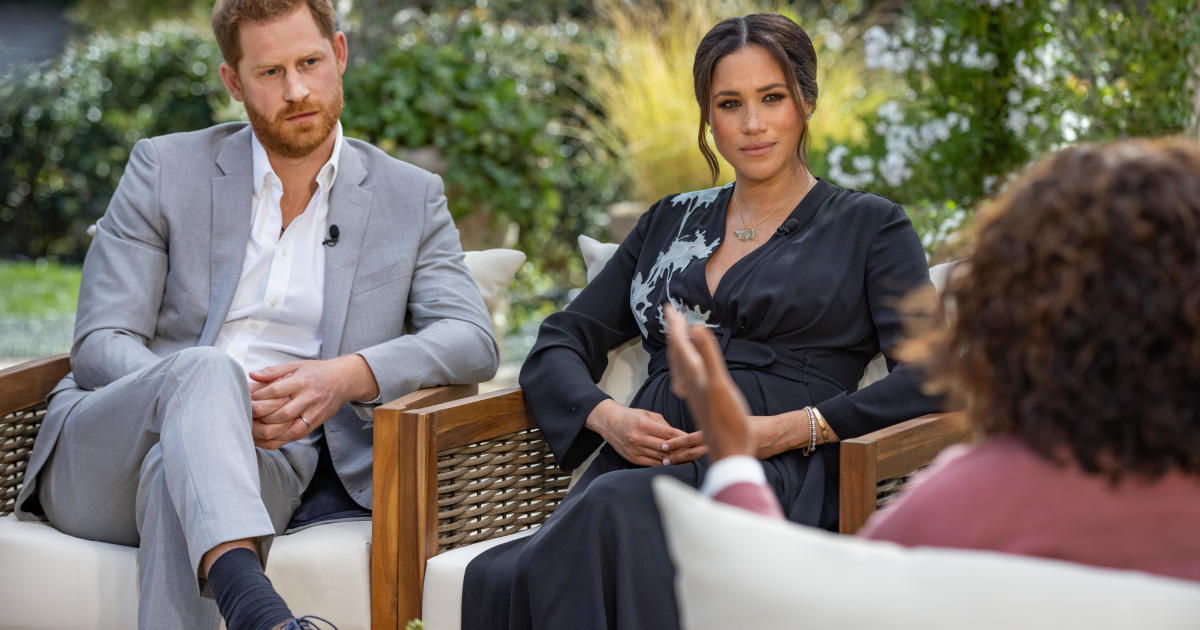
It was hyped, promoted and delivered a ratings bonanza for CBS. Oprah Winfrey’s exclusive, no-holds barred interview with Meghan Markle and Prince Harry, left many aghast by her revelations of mistreatment, constant abuse in the media and even Meghan's experience of racism when it came to the status, security and skin color of her then unborn son. Even the day after, Oprah, praised for her masterful interviewing skills, is still revealing excerpts that shine a brighter light on the situation. The Duchess of Sussex claimed the press team that would defend the royal family "when they know something's not true" failed to come to their defense. Winfrey asked Prince Harry if he hoped his family would ever acknowledge that the differences in treatment were over race. "It would make a huge difference," he said. "Like I said, there's a lot of people that have seen it for what it was… like it's talked about across the world." The people who do not want to see it, Harry claimed, "choose not to see it." March 08 – CBS News The interview has the public discussing racism and misogyny and how these are playing out in the Royal Family dynamics and the British press. And if you are a journalist looking to explore this issue, then let our experts help. Dr. Adria Goldman’s research explores the intersectionality of race, gender, culture and its connection to communication and media. She enjoys examining media’s impact on perceptions, construction of identity, social relationships and belief systems. Dr. Goldman is available to speak with media regarding Oprah Winfrey's interview with Meghan Markle and Prince Harry and what it means when it comes to race, royalty and what impact it may have on the couple and the Royal Family moving forward. If you are looking to arrange an interview, simply click on her icon now to book a time today.


The Power of Poetry in a Pandemic and Time of Social Injustice
Amanda Gorman captured hearts and imaginations across the nation when she performed her poem “The Hill We Climb” at the inauguration of President Joe Biden. While Jennifer Lopez’s stirring rendition of “This Land Is Our Land” and Garth Brooks’ “Amazing Grace” were performed to great acclaim, there was something special about the Inaugural Youth Poet Laureate’s recitation. Villanova University professor of Creative Writing and Luckow Family Chair in English, Lisa Sewell, PhD., talks about the cultural impact of poetry in times of turmoil, like the political and social uncertainty brought on by an attack on the US Capitol combined with a global pandemic. “Poetry is something people turn to in times of crisis -- and the pandemic and the ways it has made all of us face the grave inequities of our society has been an extended, seemingly endless crisis” said Dr. Sewell. “Amanda Gorman’s poem was powerful because she put a name to what so many people were feeling about the insurrection that occurred on January 6.” According to Dr. Sewell, poets like Alice Quinn, the former poetry editor of The New Yorker, have already edited a collection of “pandemic” poetry, demonstrating how artists take inspiration from and create art in reaction to what’s going on in their lives—to connect to others who may be experiencing the same complicated emotions. “In my poetry writing class, I talk to my students about how poets often try to say the impossible and write about experiences and ideas that are difficult to understand and difficult to put into words,” says Sewell. “What makes poetry powerful is the gesture, the effort to find the language that is adequate to the uncertainty and ambiguity of experience—and this seems true especially now.” The task of putting experiences into words that connect with a wide audience is not an easy one, especially with so much content competing for attention in 2021. So what it is about poetry in particular that makes it appropriate for this moment? Dr. Sewell suggests that the metaphorical language of poetry, as opposed to the certainty of prose or dialogue, hits home right now. She adds, “when the future is uncertain and the ‘before’ time seems hazier and hazier, poems are somehow both clear and direct with every word deliberately chosen, and also ambiguous and strange enough to speak to our sense of peril and uncertainty. Poems can both express our fears and also gesture towards the ways language is inadequate.” To speak with Dr. Lisa Sewell, email mediaexperts@villanova.edu

A selection of 30 films celebrating the past 20 years of Japanese cinema streams online throughout the U.S. on Japan Society’s virtual cinema, including films by Hirokazu Kore-eda, Naomi Kawase and Takashi Miike Plus, online U.S. premieres of Sion Sono’s Red Post on Escher Street and Yukiko Mishima’s Shape of Red, a special focus on Kiyoshi Kurosawa and a selection of breakout films by up-and-coming filmmakers Red Post on Escher Street © 2021 “Red Post on Escher Street” Film Partners Japan Society and the Agency for Cultural Affairs, Government of Japan (ACA), in collaboration with the Visual Industry Promotion Organization (VIPO), announce the inaugural ACA Cinema Project online film series 21st Century Japan: Films from 2001-2020, streaming nationwide on Japan Society’s Virtual Cinema from February 5-25, 2021. As Japan’s film industry enters the third decade of the new millennium, this 30-film online series takes a look back at the last 20 years of Japanese cinema to celebrate some of the most remarkable narrative fiction films and filmmakers that define the era. Covering a wide range of production styles and genres—from small budget independent debuts to festival favorites and award-winning major studio releases—this diverse slate of feature and short films offers a guided tour of modern Japanese cinema, including special spotlights dedicated to the work of Kiyoshi Kurosawa and a selection of breakout films by up-and-coming filmmakers. A large majority of the films included are streaming in the U.S. exclusively on Japan Society’s Virtual Cinema. Series highlights include the online U.S. Premiere of Red Post on Escher Street, the latest film by cult favorite director Sion Sono (Love Exposure, 2009)—a comically reflexive, wildly unhinged, return-to-roots feature about a talented young director undergoing the production of a new film. Red Post on Escher Street is co-presented with Grasshopper Film, who will screen the title in tandem with Japan Society as part of the newly launched Projectr Movie Club from February 5-18. In addition, director Yukiko Mishima’s female-driven romantic drama Shape of Red makes its online U.S. premiere—a steamy tearjerker about a tenuous love affair adapted from the novel by Naoki Prize-winning author Rio Shimamoto featuring popular stars Kaho and Satoshi Tsumabuki. Billed as “Special Screenings,” these titles are planned to include pre-recorded video Q&As with the respective film’s director. Other highlights include harder-to-see gems by some of Japan’s most internationally prominent filmmakers, including: Hirokazu Kore-eda’s 2009 Doona Bae-starring fantasy drama Air Doll; Naomi Kawase’s 2014 Cannes competition title and self-proclaimed masterpiece Still the Water; Takashi Miike’s 2005 family-friendly monster adventure film The Great Yokai War; Shinya Tsukamoto’s 2015 adaptation of Shohei Ooka’s famous anti-war novel Fires on the Plain; trailblazing gay director Ryosuke Hashiguchi’s 2001 LGBT-themed comedic drama Hush!; and the award-winning 2006 murder mystery drama Sway by Miwa Nishikawa, whose latest film Under the Open Sky (2020) premiered at the Toronto International Film Festival. “While it’s impossible to really capture the last two decades of Japanese narrative fiction filmmaking in its full breadth, we are excited to share at least the tip of the iceberg for these three weeks in February,” says K. F. Watanabe, Deputy Director of Film at Japan Society. “Online or otherwise, a large majority of these titles remain unavailable to watch with English subtitles in the U.S., so I hope this series provides an opportunity to create new fans of filmmakers such as Naoko Ogigami or Shuichi Okita and expand any preconceptions of what modern Japanese cinema can offer.” Katsura Toda, Senior Specialist for Arts and Culture at the Agency for Cultural Affairs, says, “The ACA Cinema Project was launched with the hope of sharing the diverse appeal of Japanese films to audiences around the world and to create more opportunities for these films to be seen. We are pleased to present U.S. audiences with the works of a great variety of directors—including well-established masters, filmmakers with distinctive voices and rising stars of the 21st century—and hope that many people will be able to encounter Japanese films in a fresh way.” $99 All-Access Passes with a 21-day rental window go on sale January 29 through February 4. $8 individual tickets with a 3-day rental window go on sale February 5. Individual tickets for Red Post on Escher Street and Shape of Red are $12. Japan Society members receive a 20% discount on all tickets via coupon code. All films screen online at japancuts.japansociety.org in Japanese with English subtitles unless otherwise noted. All titles available within the U.S. from February 5-25 unless sold out or otherwise noted. Titles also available beyond the U.S. are noted below. Lineup and other details are subject to change. For complete information visit japansociety.org. View the full film line-up here. Screeners available for most titles. Please send all press inquiries to Michael Lieberman at pr.lieberman@gmail.com. For inquiries regarding Japan Society and its Virtual Cinema, please contact Allison Rodman at arodman@japansociety.org.

A lasting legacy - A gift that will touch the lives of generations
$1.48 million estate gift to Georgia Southern University Foundation funds College of Education student scholarships An extraordinary estate gift from a daughter and her husband to honor her parents will touch the lives of generations of students to come through scholarships for Georgia Southern University students working to become public school educators. The $1.48 million gift from the late Janice Sapp Castles and her late husband Charles, named for her late parents, Margaret Elizabeth and Cullen Bernice Sapp, is the second largest estate gift received to date by the Georgia Southern University Foundation. “It is inspiring when alumni, whose lives were transformed through education, give back so generously so that future students can realize the same opportunities,” said Georgia Southern President Kyle Marrero. “The Castles’ gift honors the Sapps’ legacy and their desire to help others succeed.” An alumna of then-Armstrong Junior College, Janice Castles earned an Associate of Arts degree with the financial assistance of a scholarship. That scholarship, coupled with her parents’ determination to live sacrificially to provide for educational opportunities for their children that they themselves had not experienced, allowed Sapp to begin her post-secondary academic ambitions and inspired her to give to others. Sapp continued her education at the University of Georgia earning a master’s and specialist degree in counseling as well as a doctorate in school psychology. Her longstanding education career included serving as a middle and high school teacher, guidance counselor, school counselor and adjunct professor. She also formed her own psychology practice that provided therapy and psychological assessment and diagnosis in the Atlanta area. “The generous support by the Castles family will assist in removing financial barriers for many students pursuing initial teacher preparation degrees at both the undergraduate and graduate levels at Georgia Southern for many years to come,” said College of Education Interim Dean Amy Heaston, Ed.D.. “Initial teacher preparation degrees provide students with the first step to becoming certified to teach. For many students, the Margaret Elizabeth and Cullen Bernice Sapp Memorial Scholarship will provide a needed opportunity to achieve their aspirations of teaching in their own classrooms.” If you are a journalist looking to know more about the Georgia Southern University Foundation or the College of Education -- simply reach out to Georgia Southern Director of Communications Jennifer Wise at jwise@georgiasouthern.edu to set and time and date.


Renowned educator and author Gloria Ladson-Billings to present Georgia Southern 2021 Fries Lecture
Gloria Ladson-Billings, Ph.D., renowned pedagogical theorist, teacher educator and author, will present the 2021 Norman Fries Distinguished Lecture, hosted by Georgia Southern University’s College of Education. In her lecture, “Culturally Responsive Pedagogy: Educating Past Pandemics,” Ladson-Billings will discuss how pandemics provide opportunities for revisioning and reimagining culturally relevant teaching practices. She suggests that instead of “getting back to normal,” it is time to get on to new and more equitable ways of educating all students and creating a more democratic society. Ladson-Billings is the former Kellner Family Distinguished Professor of Urban Education in the Department of Curriculum and Instruction and faculty affiliate in the Department of Educational Policy Studies at the University of Wisconsin-Madison. She also served as the 2005-06 president of the American Educational Research Association (AERA). Ladson-Billings’ research examines the pedagogical practices of teachers who are successful with Black students. She also investigates critical race theory applications to education. She is the author of critically acclaimed books The Dreamkeepers: Successful Teachers of African American Children and Crossing Over to Canaan: The Journey of New Teachers in Diverse Classrooms, as well as numerous journal articles and book chapters. About Ladson-Billings Former editor of the American Educational Research Journal and a member of several editorial boards, Ladson-Billings’ work has won multiple scholarly awards including the H.I. Romnes Faculty Fellowship, the National Academy of Education/Spencer Postdoctoral Fellowship and the Palmer O. Johnson Outstanding Research Award. She is a 2018 recipient of the AERA Distinguished Research Award and was elected to the American Academy of Arts and Sciences in 2018. About the Norman Fries Distinguished Lectureship series The annual Norman Fries Distinguished Lectureship series began in 2001. It is funded by an endowment in honor of Norman Fries, founder of Claxton Poultry. In his more than 50 years of business, Fries built the company from a one-man operation into one of the largest poultry production plants in the U.S. Past Fries lecturers include David Oreck of Oreck Vacuums, South African apartheid author and lecturer Mark Mathabane, NASA director James W. Kennedy, Pulitzer Prize-winning author and historian Gordon S. Wood, Nobel Prize laureate William D. Phillips, Ph.D., bestselling author Susan Orlean, concussion expert Dr. Russell Gore, and PricewaterhouseCoopers Network chief operating officer Carol Sawdye. The lecture will take place virtually via Zoom on Feb. 8 at 7 p.m. The event is free and open to the public. If you are a journalist looking to know more about the Norman Fries Distinguished Lectureship or would like to interview Gloria Ladson-Billings -- simply reach out to Georgia Southern Director of Communications Jennifer Wise at jwise@georgiasouthern.edu to set and time and date.