
Experts Matter. Find Yours.
Connect for media, speaking, professional opportunities & more.
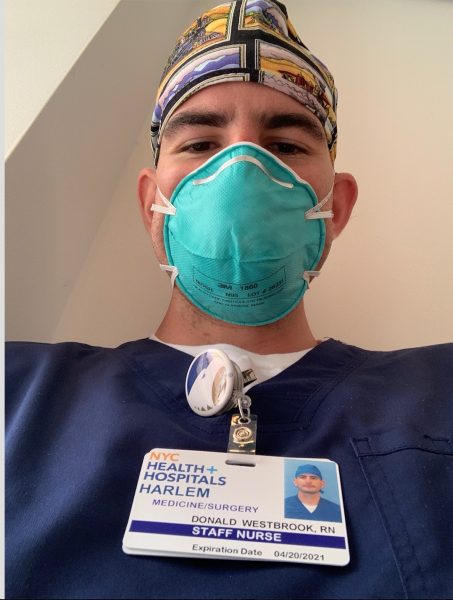
Diary of a COVID-19 crisis nurse in NYC: A Georgia Southern student’s first job
On May 1, Tucker Westbrook could finally sleep in. He’d been on duty as a COVID-19 crisis nurse at Harlem Hospital Center in New York City for 11 consecutive days, with a routine that began before the sun came up and ended long after the city had gone dark. Most mornings, he’d wake at 5:45 am., center himself with prayer and meditation, eat breakfast, and hop on a bus in time to clock in for his shift at the largest public hospital in Central Harlem by 7 a.m. Each day as he entered the halls of the facility’s surgical floor, which was transformed into a COVID-19 holding unit for the larger part of his three-week work rotation, he was unsure of what he’d encounter. Just weeks earlier, Westbrook, a May 2019 Georgia Southern University nursing graduate from Butler, Georgia, accepted a short-term contract to assist with the Coronavirus pandemic in the epicenter of the U.S. outbreak. This was Westbrook’s first professional job, following what was supposed to be a yearlong mission trip in Southeast Asia, but was cut short due to the pandemic, and nothing could fully prepare him for the impact of his initial experience. “The first day, I thought, ‘I’m not prepared for this,’” he admitted. “Those first few days I was on pins and needles and thought, ‘how am I going to mess up?’” The stakes were high. By the time he arrived in New York City, thousands had already been hospitalized, and many had died. Seasoned nurses and doctors were depleted and morale was low across the city, he explained on the phone as he looked out over a desolate Times Square from his hotel window. “They asked me, ‘why did you come here?’” Westbrook recalled. “And I said that I wanted to be, hopefully, a light in this dark place right now. The patients, the doctors, the nurses, the nursing assistants, the janitorial assistants — my goal is to learn everyone’s names and greet them with a smile behind my mask.” A friend encouraged Westbrook to look for a temporary nursing job upon his return from abroad. When he applied for highly competitive positions with a crisis staffing agency, he requested placement in an area hard hit by the pandemic. “Just like Southeast Asia, I wanted to go where there was the biggest need, and I had enough gifts to meet that need,” Westbrook said. This was Westbrook’s first trip to New York, and he stepped into a scene where images of makeshift morgues and ventilator shortages splashed across the media came to life in front of him. “It has been surreal to see,” he said. Assigned to provide cluster care to potential COVID-19-positive patients for minimal exposure, Westbrook also focused on simple acts of kindness to help ease increased anxiety among the patients. “That might be things as small as giving a wet rag to wipe their face,” Westbrook said. “It may be filling their jars with ice cold water in the morning. Whatever might help them feel more comfortable.” Westbrook’s patients were diverse: a teenage gunshot victim who sobbed at the prospect of being infected with the virus; an adult male who discussed intimate thoughts about death with his family over the phone; and a woman who was depressed until Westbrook sat with her so she didn’t feel alone. Experiencing humanity in its most delicate form was life-defining. “I was learning more about nursing care but also continuing to serve (my patients) beyond simply giving them medicine,” Westbrook said. “I was able to advocate for them with the doctor, especially without their families there. I’m learning how to go above and beyond, and what our job responsibilities are. I want to keep growing and learning to continue to give care to my patients.” The hospital staff also offered enormous support and guidance to Westbrook, who almost two weeks into the job felt exponentially more confident in his abilities. “If you had told me about any of this I wouldn’t believe it,” he said. “It has been incredible. I did not think I could do that at all, and here I am on the other side. This was such a lofty and high goal to complete this and do well. I’m thankful to even be here and have this opportunity.” Westbrook credits his father for encouraging him to study nursing, and Georgia Southern faculty for their expert instruction, which he put to use in New York, as well as their sage advice. “I wasn’t sure I was going to get my license,” he said. “My desire to become a doctor or a missionary became more and more compelling, but my professors assured me that it would be worthwhile to pursue my license, and they were right.” Following a quarantine in his family’s home, Westbrook will begin pre-medicine classes at Georgia Southern this summer. If you are a journalist looking to know more about Tucker’s story or the nursing program at Georgia Southern University – let us help with your coverage. Barry Joyner is the dean of Georgia Southern University’s Waters College of Health Professions - simply click on his icon to arrange an interview today.



Step aside Walking Dead – There’s another leading TV show being shot in Georgia now
When location scouts for NBC’s new television series “Council of Dads” combed Savannah for a realistic venue to shoot multiple hospital scenes, they knew they had found something special in the Health Professions Academic Building on Georgia Southern University’s Armstrong Campus. “I set up a visit, came and looked at it and I was floored,” said “Council of Dads” location scout and Armstrong Campus alumnus Anthony Paderewski. “I couldn’t believe it. Basically, you have a backlot for a TV show here. It was absolutely perfect for what we were looking for. So that being said, I went and I talked to the producers and I got some pictures. When I showed the pictures everyone was blown away.” “Council of Dads,” which premiered March 24 and now airs on Thursdays, is based on the book by Savannah native Bruce Feiler, and developed by former “Grey’s Anatomy” showrunners Tony Phelan and Joan Rater, who also serve as executive producers on the series. The story follows Scott Perry, a father of five who, after receiving a cancer diagnosis, asks a group of friends to step in as father figures to his children in the event that he isn’t around to see them grow up. “It’s an emotional family drama,” explained “Council of Dads” co-executive producer and producing director Jonathan Brown. “The idea is to try and be as real as possible. And the show is telling the story of a family and what it means to be a family in this day and age. It’s not just blood. The definition of family is growing, broadening with the types of relationships that are now included in a family. This is the story of one of those families that is made up of blood relationships, friendships, adoption and all those different kinds of things.” The show filmed almost entirely on location in the Savannah area for five months. Several of the scenes take place in a hospital, and the set has to be believable, multifaceted and offer the right aesthetic for television. Primarily, the true-to-life setting allows the University to provide exceptional education and training opportunities to help students succeed while addressing the healthcare needs of the region. The Waters College of Health Professions, housed in the Academic Building and Ashmore Hall, is the largest undergraduate health sciences college in the state of Georgia, and the University’s allied healthcare programs represent almost one-fifth of all undergraduate healthcare degrees earned in Georgia. “The use of the Health Professions Academic Building is validation that we are training our students for real-world health care settings,” said Barry Joyner Ph.D., dean of the Waters College of Health Professions. “The goal for the building was to simulate a hospital setting, and we have accomplished that.” Are you a journalist looking to cover this topic or learn how Georgia and Universities like Georgia Southern are working with film and television industries – the let us help with your stories. Barry Joyner is the dean of the Waters College of Health Professions at Georgia Southern University and is available to talk about this latest project on campus – simply click on his icon to arrange an interview today.
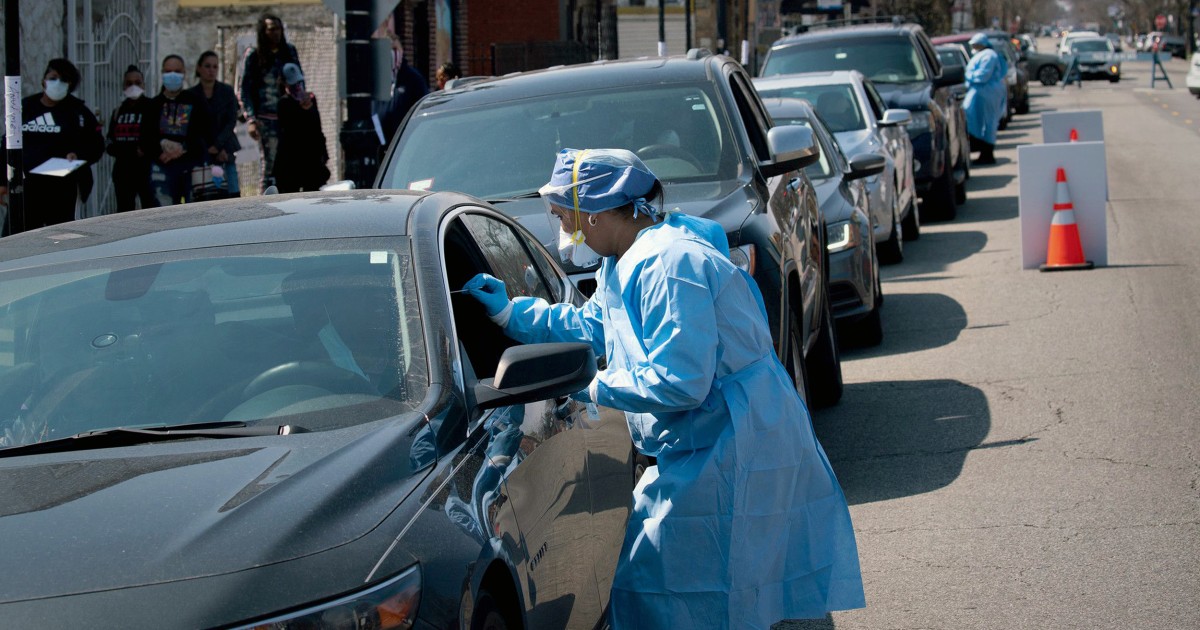
Are African Americans more at risk from COVID-19 than other Americans? Let our experts explain.
It’s a startling piece of evidence, but it appears that a disproportionate number of African Americans are dying due to the COVID-19 outbreak. On Tuesday, President Donald Trump called the impact of the coronavirus on African Americans a "real problem" that was showing up "strongly" in the data. Dr. Anthony Fauci, director of the National Institute of Allergy and Infectious Diseases, added that pre-existing conditions that are more prevalent among African Americans, including asthma and diabetes, are a factor. “We’re very concerned about that,” he said. Low-income people of color are also more likely to have jobs that can't be done remotely, meaning they're more likely to be exposed to the virus while more affluent professionals are able to stay at home. And they're less likely to have access to high-quality private testing or medical care. "I'm concerned this will be yet another case where there's a huge difference between people who are more wealthy and people who are poor, and there's going to be a difference between people of color and how much they suffer," Dr. Marcus Plescia, the chief medical officer for the Association of State and Territorial Health Officials, said. “We have a longstanding legacy of bias and racism in our country and we’re not going to get beyond that quickly.” NBC News – April 07 But as health officials and experts further examine the data – there are a lot of questions to be asked? What can African Americans do to further prevent the risk of infection? Do government officials need to allocate more resources to areas with a higher population of African Americans? Are African Americans being tested or have access to tests in the same manner as the rest of America? When we African Americans informed of this unique vulnerability and was anything put in place to inform to properly inform them? If you are a journalist covering this topic – then let our experts help. Dr. Tiffany G. Townsend is a widely recognized leader in diversity and psychology. She is an expert in the areas of health equity and serves as the chief diversity officer for Augusta University. Dr. Joseph Hobbs is an award-winning physician and a notable leader in the research of racial disparities in health care. He also serves as the chairman of the Department of Family Medicine at the Medical College of Georgia at Augusta University. Dr. Joseph Hobbs is an award-winning physician and a notable leader in the research of racial disparities in health care. He also serves as the chairman of the Department of Family Medicine at the Medical College of Georgia at Augusta University. Townsend and Hobbs are both available to speak with media regarding this topic– simply call 706-522-3023 to arrange an interview or simply click on Dr. Townsend's icon to book a time.


What's Next for the Telecom Industry in Canada?
What's Next for the Telecom Industry in Canada? The global COVID-19 pandemic and the necessary containment measures put in place by governments will substantially impact the Canadian telecommunications services market producing negative growth in 2020 before rebounding in 2021. IDC Canada expects that the telecom services market will contract by almost C$2 billion with the overall revenue expected to fall to C$47.9 billion – a negative -0.8 per cent decline from a year earlier. As recently as December 2019, we had projected positive 3.2 per cent annual growth for the sector in 2020. By comparison, IT spending in Canada is expected to decline by -5.0 per cent in 2020, according to IDC Canada's most recent forecast estimate. Canadian Total Telecom Spending Growth for 2020 Revised Down to -0.8% from 3.2% in the Most Probable IDC Canada Forecast Scenario Compared to Canada's IT market, the C$48-billion-dollar telecom services sector has been historically more resilient or “recession-proof,” said Lawrence Surtees , Research Vice-President of Communications at IDC Canada. Even during the 2008-2009 financial crisis, telecom services retained positive annual growth. A decade later, telecom services have become further insulated to crisis as consumers and enterprises are more dependent on these services, especially internet and wireless. However, with new stringent containment and lockdown measures in place across Canada, resulting in a rapidly deteriorating economic outlook, GDP forecasts have recently been revised down sharply for the second and third quarters of 2020. The recent composite quarterly GDP forecasts of the five major banks, which is one input underlying IDC Canada's telecom and IT forecast scenarios, now show a steeper quarterly decline than all other recent economic downturns, including the financial crisis of 2008-09, the 1990-1992 contraction and the 1981-1982 recession. "The impact of the COVID-19 crisis represents the most significant deceleration in ICT spending growth Canada has experienced in modern time" said Lars Goransson, Managing Director at IDC Canada. IDC Canada developed three forecast scenarios (optimistic, probable, and pessimistic). "The probable scenario assumes the coronavirus is broadly contained by June. The optimistic scenario, which appears very unlikely, assumes the virus is more rapidly contained, and business and investments recover quickly and accelerate in Q3” said Tony Olvet , Group Vice-President Research, at IDC Canada. “Finally, a pessimistic scenario that considers a less controlled, longer-lasting, virus 'rebound' effect through Q3 and Q4." Mandatory self-isolation and social distancing has led to double-digit growth in the number of people working from home and restrictions on business travel has made telecom services of even greater strategic importance to all consumers and enterprises. However, we anticipate the COVID-19 pandemic will have a greater negative impact on the Canadian telecom sector than that of the 2008-2009 financial crisis, due to massive layoffs and challenges for small and medium businesses that will lead to projected business failures. Hence, we anticipate telecom revenue to decline into negative growth for both our probable and pessimistic scenarios. In the most probable scenario, IDC projects Canadian telecom spending to decline to -0.8% in constant currency this year, down from our previous forecast of 3.2% growth published at the end of 2019. The greatest adverse impact on telecom spending forecasts is the projected number of business failures. Small business, of which there are almost one million firms in Canada, are the hardest hit. And several vertical segments are worse off, including airline transportation, energy, manufacturing and hospitality. IDC Canada will summarize these specific impacts in our forthcoming annual five-year forecast report. In the current pessimistic scenario, IDC Canada expects telecom spending to record a ‑2.0 per cent decline to C$47.2 billion in 2020. While it is easy to be distracted by the slightly higher forecast growth rate in 2021, it is worth noting that we estimate revenue from the four primary markets—wireline voice, data, internet and wireless – will contract by almost C$2 billion under our probable scenario for 2020, compared to our previous forecast. Although we predict all telecom market segments will show reduced revenue from the previous forecast, some positive factors will moderate the downturn such as the exploding need for conferencing, remote collaboration and increased broadband access. Our new probable outlook predicts the wireline voice and enterprise data communications segments to be the hardest hit: - Wireline voice, which has been a shrinking market, remains the worst-performing segment under all scenarios because of continued wireless and internet substitution. Consumer and enterprise responses to the COVID-19 pandemic may accelerate cost-saving measures such as cord-cutting for some consumers and due to business failures. However, the formerly lackluster in the interim from burgeoning double-digit growth of toll-free long-distance use for conferencing. - Data wide area networking (WAN) services are essential for larger enterprises and are subscribed to on long-term contracts, so this segment is less likely to be affected by temporary events but it’s also most susceptible to business failures. The different growth rates among the three scenarios differ mainly on the number of businesses that are anticipated to fail to recover due to COVID-19 shutdowns. - Internet will be one of the most insulated markets during this pandemic crisis as broadband access has become a greater necessity with many people working from home, students taking online lessons, and families being entertained at home. Network providers are experiencing an unprecedented increase in bandwidth/data consumption since the first day of mandatory work-from-home restrictions. However, higher usage does not translate directly to revenue growth due to elimination or expansion of data caps currently provided as temporary relief by most major Canadian Service Providers (ISPs). To meet increased network capacity needs, Canadian ISPs are upgrading their networks to increase available network bandwidth. The costs for this expansion will need to be recovered in 2021. In fact, some smaller ISPs have already served notice that they will still raise monthly prices later this Spring due to increased telecom wholesale costs to manage increased network load. - Wireless services, which account for almost one-half of telecom revenue in Canada, remain essential especially to customers whose wireless devices are the only means of communication with coworkers, friends and family. However, stringent travel restrictions between Canada and the rest of the world has put an immediate halt to roaming revenue. The loss of roaming revenue will increase as the lock-down persists. The rollout of initial 5G wireless services at the end of this year, however, may help providers to recover some of their costs associated with the pandemic. We expect the telecom market to get back on track in 2021 provided most businesses return to normal, people return to work, and consumer confidence recovers. However, the duration of the pandemic crisis poses the greatest uncertainty and will impact the magnitude of its economic and social affects. As containment measures have not yet halted the spread of COVID-19 and the number of people infected with the virus continues to expand exponentially, the downside risks in forecast models increase almost daily. "In such a rapidly changing environment, it is still too early to assess the overall impact on the Canadian ICT market fully," said Nigel Wallis, Research VP, IoT & Industries at IDC Canada. Recent announcements that senior federal and provincial government officials anticipate that the quarantine efforts such as school closings and bans on group gatherings will continue until late June means that IDC Canada's optimistic scenario is now unlikely. IDC Canada has extended out the probable scenario by a few weeks – and noted a possible second wave of recurring infections through the third quarter of 2020. GDP and affiliated macro-economic markers have had equivalent reductions. "Nevertheless, there are areas in which spending will grow," said Meng Cong, Manager, Market Insights & Analytics, at IDC Canada. "Specific solutions such as videoconferencing, intelligent supply, chatbots, and e-learning platforms, among others, highlight how technology can help businesses and societies address these new challenges." IDC Canada's team will continue to closely monitor the reaction of the ICT markets to the coronavirus crisis through multiple research initiatives: this includes monthly surveys to poll Canadian digital leaders on their organizations' digital investment plans in light of COVID-19 scenarios; and forecast scenario revisions. If you are interested in knowing more about this topic, please register now to watch IDC Canada’s Complimentary Webcast, COVID-19 Impact on the Canadian Technology Market. To learn more about what to expect in the months ahead and what organizations should do in response to this market turmoil, please visit www.idc.com/ca and IDC’s Global COVID-19 resources microsite at: https://www.idc.com/misc/covid19. Contact Information: If you'd like to learn more about how IDC Canada can help you, please feel free to contact us at askidc@idccanada.com or your IDC representative directly with any questions.


Drinking alcoholic beverages may be more appealing amid unease about the coronavirus, as people deal with shelter-at-home orders, fears about the economy and boredom, says a Baylor University researcher who studies alcohol use and misuse. But with regulations providing less access to alcohol, this may be a good time for individuals struggling with alcohol use to begin recovery and for others to guard against over-relying on alcohol or other substances. When bars and restaurants began closing — other than for such options as pickup, delivery or drive-through — liquor stores saw a surge in business, according to news reports. But Pennsylvania closed its liquor stores — some people defied stay-at-home orders and drove to liquor stores in neighboring states — and New Hampshire recently closed some of its liquor stores, according to reports. Other states who deemed the businesses “essential” also may take another look at the issue. How to grapple with the risks of substance use and misuse during this stressful time is the subject of this Q&A with Sara Dolan, Ph.D., associate professor of psychology and neuroscience at Baylor University, who has done extensive research on substance use and misuse. Q: There are memes — some of them humorous — going around about heavy alcohol use during quarantine. Why might people be drinking more than usual? DOLAN: People have many different motivations for drinking, and I think self-isolation amplifies some of those. First, people drink to feel good. For some, being out of the normal work routine may feel like a time to let loose. People also drink to feel less bad. It would be normal to feel out of sorts now that we are social distancing. It also would be normal to feel some boredom, and certainly we feel anxiety and uneasiness about our current circumstances. Alcohol may be seen by some as a way to cope with those negative feelings. Q: How might the “new normal” be especially hard for alcoholics? Could this be a time to begin recovery? Some may be social distancing from drinking buddies, although that wouldn’t stop drinking alone. DOLAN: A forced lack of access to alcohol through social distancing and bars being closed can be a great jumping-off point for someone to begin recovery, especially when people are physically distancing from the people they drink or use with. But this can be an especially tough time for people because they may not be able to cope with all the new stressors, especially if they don’t have access to their typical means of coping. For example, for someone who usually relies on friends and family for support, social distancing can cause more stress. And loneliness is especially difficult when it is stacked on top of economic, illness and other anxieties we are experiencing. It is important for us to reach out, from a distance, to family and friends and other resources to help us cope positively so we don’t turn to drinking or other drug use to help us cope. I worry about people who are very heavy drinkers who suddenly stop drinking. Alcohol withdrawal, which can happen when a very heavy drinker stops drinking suddenly, can be very dangerous. Symptoms include anxiety, shakiness, sweatiness, headaches, nausea and even hallucinations – seeing and hearing things others don’t see or hear — and seizures. If someone who usually drinks very heavily and suddenly stops drinking experiences these symptoms, immediate medical attention is necessary. Q: What strategies would you suggest as far as dealing with heavy drinking during this time – both for drinkers and for those who love them? DOLAN: We really all need to be compassionate toward one another, regardless of our individual struggles. This is a difficult time for everyone – it is normal during a crisis like this to feel anxious and even depressed. Support is very important, both for those who are struggling and for those who seem like they are doing fine. This support can take a lot of different forms, from offering an ear to listen to offering specific strategies, such as mutual recovery groups (such as Alcoholics Anonymous, offered online) and other coping resources, like apps. Here is a list of just a few of the apps that may help people cope with stress: Breathe2Relax iChill Personal Zen Self-Help for Anxiety Management T2Mood Tracker The Mindfulness App - meditate Q: What about groups like Alcoholics Anonymous during this time, who because of guidelines against large gatherings may miss in-person support? DOLAN: There are quite a few digital resources to support recovery from alcohol and substance abuse. Here are just a few: Alcoholics Anonymous Narcotics Anonymous Smart Recovery Groups Al-Anon Recovery Groups for loved ones of those struggling with problematic alcohol use Q: Is there anything else you would like to add? DOLAN: We know that during times of crisis, rates of anxiety, depression and suicidal behaviors increase, and those feelings and behaviors can be exacerbated by heavier alcohol or drug use. Let’s do all that we can to care for those around us. ABOUT BAYLOR UNIVERSITY Baylor University is a private Christian University and a nationally ranked research institution. The University provides a vibrant campus community for more than 18,000 students by blending interdisciplinary research with an international reputation for educational excellence and a faculty commitment to teaching and scholarship. Chartered in 1845 by the Republic of Texas through efforts of Baptist pioneers, Baylor is the oldest continually operating University in Texas. Located in Waco, Baylor welcomes students from all 50 states and more than 90 countries to study a broad range of degrees among its 12 nationally recognized academic divisions. ABOUT THE COLLEGE OF ARTS & SCIENCES AT BAYLOR UNIVERSITY The College of Arts & Sciences is Baylor University’s oldest and largest academic division, consisting of 25 academic departments and seven academic centers and institutes. The more than 5,000 courses taught in the College span topics from art and theatre to religion, philosophy, sociology and the natural sciences. Faculty conduct research around the world, and research on the undergraduate and graduate level is prevalent throughout all disciplines. Visit www.baylor.edu/artsandsciences.


Baylor Cultural Critic and Author of “Living with the Living Dead” Talks Books and Pop Culture During COVID-19 Time at home is increasing as shelter in place orders and working from home become the norm for many people during the COVID-19 pandemic. During this season of uncertainty, many turn to books, movies and other pieces of pop culture pass the time. Greg Garrett, Ph.D., professor of English at Baylor University and expert cultural critic, supports pop culture and literature as important to meaningfully escaping current fears as well as contextualizing experience and emotions. “A great novel, movie or memoir is a gift when we need distraction, but it can also offer us the dramatic reminder that these are the things that make us truly human: love, community, compassion and faith,” Garrett said. “The world may be shifting beneath our feet, but we’re going to be fine as long as we keep the important things in view.” In a Q&A with Garrett, he gave insight on what can be learned from zombie pandemic pop culture, touched on how literature has fit culturally into pandemic history and offered advice on books to pick up during extra free time at home. Q: You’re the author of “Living with the Living Dead: The Wisdom of the Zombie Apocalypse.” What can we learn from zombie pandemic pop culture? A: Our most pervasive form of pandemic literature in recent years is the story of the Zombie Apocalypse, which has been told in novels, movies, games and comics. It’s been the inciting conflict of “The Walking Dead,” and the underlying threat in “Game of Thrones,” two of the most popular television series in history. One of the attractions of zombie literature is that zombies can serve as a metaphor for lots of things at once: for pandemic, sure, but also for economic unrest, political chaos, terrorism and other things that keep us up at night. But as Max Brooks, author of the seminal zombie novel “World War Z: An Oral History of the Zombie War” (2006), notes: however difficult our lives might be at this moment, at least the dead are not wandering the earth and trying to eat us! We can, Brooks says, close the book, turn off the TV, and at least be secure in that. A book like “World War Z” or a movie like “Sean of the Dead” (2004) or “Zombieland” (2009) can soothe some of our tension since this story of a world coming off the rails is our story, yet clearly not our story. Q: How does literature fit into cultural history events like pandemics? A: One of the most important gifts that great stories can give us is the realization that we’re not alone in our experience, and that, in fact, our experience is not unprecedented. Anyone wanting to understand that this dark time is not in fact the darkest time should read historian Barbara Tuchman’s masterful “A Distant Mirror: The Calamitous 14th Century” (1978), which explores the Black Death of 1348-50, a pandemic so awful it killed a third of the populations of Europe and the Middle East. Daniel Defoe’s “A Journal of the Plague Year” (1722) is a novel recalling the horror of the Black Death in London some 60 years prior to its writing. In that book, Defoe’s narrator says he writes about his choices in such detail because he believes that they might be “of moment to those who come after me.” That is, he hopes his story might be of use to future sufferers like ourselves, and it is. Q: Literature can also provide escape from tough times. What other books should we be reading right now? A: In the zombie spirit, you could read “Pride and Prejudice and Zombies,” a 2009 parody by Seth Grahame-Smith of the Jane Austen novel. But if you’re simply seeking meaningful escape from our current story, you couldn’t do much better than reading (or re-reading) the actual “Pride and Prejudice” (1813), one of my favorite novels. I can’t wait to fall back into the world of the Bennets and worry about something besides viral curves and travel bans. During the weeks we expect to be largely confined to the house, my family and I are making reading lists. Mine includes Ernest Hemingway’s “The Sun Also Rises” (1926) and James Baldwin’s “The Fire Next Time” (1963), both of which I plan to teach in my American lit class at Baylor this fall, and Toni Morrison’s “Beloved” (1987), which will scare me and break my heart in ways that have nothing to do with this pandemic. ABOUT GREG GARRETT, PH.D. Greg Garrett, Ph.D., professor of English at Baylor University, is a popular theologian and cultural critic as well as the author of two dozen novels, memoir and nonfiction books including “Living with the Living Dead: The Wisdom of the Zombie Apocalypse” (Oxford University Press, 2017). ABOUT BAYLOR UNIVERSITY Baylor University is a private Christian University and a nationally ranked research institution. The University provides a vibrant campus community for more than 18,000 students by blending interdisciplinary research with an international reputation for educational excellence and a faculty commitment to teaching and scholarship. Chartered in 1845 by the Republic of Texas through the efforts of Baptist pioneers, Baylor is the oldest continually operating University in Texas. Located in Waco, Baylor welcomes students from all 50 states and more than 90 countries to study a broad range of degrees among its 12 nationally recognized academic divisions. THE COLLEGE OF ARTS & SCIENCES AT BAYLOR UNIVERSITY The College of Arts & Sciences is Baylor University’s oldest and largest academic division, consisting of 25 academic departments and seven academic centers and institutes. The more than 5,000 courses taught in the College span topics from art and theatre to religion, philosophy, sociology and the natural sciences. Faculty conduct research around the world, and research on the undergraduate and graduate level is prevalent throughout all disciplines. Visit www.baylor.edu/artsandsciences.


My Friend Just Lost Her Job. How Do I Respond?
Baylor expert on grief shares ways people can speak with and minister to those who are unemployed due to COVID-19 For the week ending March 21, a record 3.28 million workers applied for unemployment benefits, a result of the sweeping economic consequences of COVID-19, according to a report from the U.S. Department of Labor. In the proverbial “blink of an eye,” many find their neighbors, friends, family – and even themselves – out of jobs that only a few weeks ago seemed safe and secure. The jobless are grieving. What’s our role? How do we help? How do we engage? Helen Harris, Ed.D., associate professor in Baylor University’s Diana R. Garland School of Social Work, is a nationally recognized expert on grief. She says one key to helping others is to imagine changing places with them – putting yourself in their position – and being the person you’d hope they’d be if the tables were turned. “The key to helping is to think about how we feel when we need help and what helps us feel comfortable,” Harris said. “This is a time to ‘do unto others as we would have them do unto us.’” In this Q&A, Harris shares tips that can help us be the neighbors, friends and family we need to be at this time. Q: With the rapid shuttering of businesses including retail stores, movie theaters and restaurants, many of our neighbors have found themselves without jobs. What are some ways we can help them during this time? Harris: This is such a hard time. People who lose their jobs feel even more anxious and vulnerable at a time when everyone is already struggling. Hopefully unemployment and the federal government allocations will make a difference, but those are not immediate. In the meantime, consider what we can do to help directly, through agencies and through our churches. It is important during this time that we reach out to our neighbors who are unemployed, not only with an encouraging word but also with concrete help like meals and supplies or rent and utilities. For families with infants, for example, we provide formula and diapers or the financial help to buy them. We can also contribute to the agencies that provide assistance to families during these hard times. Those of us who are working and earning an income have an opportunity to share with our neighbors. We can also remind them that job loss right now is about this crisis and will not last forever while being careful not to minimize what they are experiencing. This is really hard. Q: When someone is grieving – in this case due to the loss of a job – what should people say? What should they NOT say? Should we even address it at all? Harris: As is true with any loss, it is important to acknowledge it and share how sorry we are that they are going through this hard time. I would avoid minimizing or blaming for the job loss. That just is not helpful. Letting someone know that we care about their painful experience helps with isolation at a time when social distancing is already creating a sense of isolation. We need to stay socially connected even while we keep our physical distance from one another. Acknowledging how hard it is not to have a job to go to matters even as folks apply for other jobs, apply for unemployment and support one another. Q: In terms of actions, should people ask before donating money or groceries or other items? Harris: That’s a hard one. A lot depends on how well we know them and what will make them comfortable. I think when we cook a casserole or pot of beans and cornbread, cooking enough for our friend/neighbor too doesn’t require checking ahead of time. Otherwise, it makes sense to ask how we can help and then do what we can. When we are headed to get groceries or other items, we can check to see if our friend/neighbor needs something and then deliver it with the assurance of the blessing it is for us to be able to help out. There may be ways to do our helping anonymously as well when possible. Q: Is there anything else you’d like to share? Harris: When reaching out to people, it might be appropriate to use a statement like: “I like to believe that when I need help, and we all do sometimes, that someone will be there for me and my family. Right now, I am able to help. Next time, it could be me who needs help. I believe we are best when we are there for each other. So, thanks for letting me help.” It can also be a huge help to let folks know when we are aware of job possibilities and willing to put in a good word for them. Also Read: “Unintended Consequences of COVID-19,” an article by Baylor University’s Helen Harris, Ed.D., associate professor of social work, and Bill Hoy, D.M., clinical professor of medical humanities. ABOUT BAYLOR UNIVERSITY Baylor University is a private Christian University and a nationally ranked research institution. The University provides a vibrant campus community for more than 18,000 students by blending interdisciplinary research with an international reputation for educational excellence and a faculty commitment to teaching and scholarship. Chartered in 1845 by the Republic of Texas through the efforts of Baptist pioneers, Baylor is the oldest continually operating University in Texas. Located in Waco, Baylor welcomes students from all 50 states and more than 90 countries to study a broad range of degrees among its 12 nationally recognized academic divisions. ABOUT THE DIANA R. GARLAND SCHOOL OF SOCIAL WORK AT BAYLOR UNIVERSITY Baylor University’s Diana R. Garland School of Social Work is home to one of the leading graduate social work programs in the nation with a research agenda focused on the integration of faith and practice. Upholding its mission of preparing social workers in a Christian context for worldwide service and leadership, the School offers a baccalaureate degree (B.S.W.); a Master of Social Work (M.S.W.) degree available on the Waco or Houston campuses or online; three joint-degree options, M.S.W./M.B.A., M.S.W./M.Div. and M.S.W./M.T.S., through a partnership with Baylor’s Hankamer School of Business and George W. Truett Theological Seminary; and an online Ph.D. program. Visit www.baylor.edu/social_work to learn more.

Stay-at-Home Parenting During the Pandemic
With the coronavirus-related death toll rising in the state of Pennsylvania, Governor Tom Wolf added two more counties to the growing list of those with a "stay at home" order, and thousands of parents and caregivers find themselves at home with their children indefinitely. Villanova philosophy professor Heather Coletti, PhD, spoke about the way the division of "caring labor" in traditional two-parent, male-female households might become a source of tension. Dr. Coletti points out that "[in] heteronormative households, women do the overwhelming bulk of caring labor for both children and adults—the statistics for this are consistent and slow to change. Today, most of these women have full-time jobs as well. When these heads-of-household are both working from home, very consciously trying to prove their value to their employer while working remotely, I think families are going to face very intensely the frustrations of the sexual division of labor over the next few weeks, i.e., that both heads of household are acting 'like men.'" "Are men prepared to be 'more like women' while working at home with children for a greater length of time?" Dr. Coletti asks. Unfortunately, much of the literature on the sexual division of labor suggests that this is quite unlikely. "Our society, including the women within it, do not seem to expect men to readily adopt the 'caring skills' traditionally and historically associated with women, even though women have proven that they are quite adept at adopting the 'work skills' that permeate career paths in the public sphere. But when children are present during these working hours (in the home) for these heads-of-household for several weeks... who will be interrupted to help with this or that? Break up that argument over that toy? Supervise homework that needs to get done? Who will find themselves negotiating 'five more minutes' to finish a conference call even though lunches need to be made for the 6- and 8-year-olds because it's already past noon?" According to Dr. Coletti, this task will likely still fall to mom. One of the hallmarks of the "masculine care model" (MCM) that American society is built around is the illusion that workers all have wives at home. The family becomes invisible—disappears—when we all go to work. Per Dr. Coletti, "People who 'visibilize' their families at work risk being characterized as distracted, sloppy or uncommitted to their work. This illusion has always been dangerous because we are and have always been connected to others. Denying this is, frankly, absurd." She continues, "Women are most tightly connected to their families through the patterns of the sexual division of labor and must work harder to 'invisibilize' their connections on a normal workday. Now that 'normal workdays' have been temporarily suspended... we are no longer in a position to ignore the overlap of (gendered) work in homes. I predict the coming weeks and months will challenge the illusions of both the MCM and sexual division of labor in unprecedented ways."


Don’t Neglect Spiritual, Mental Health During this Time of Health Crisis, Baylor Expert Says
In a difficult and ever-changing time of crisis surrounding the spread of coronavirus, the basic needs of health and safety come first. But as these basic physiological needs are met, the more advanced care for spiritual and mental health can remain overlooked or ignored altogether. Baylor University’s Holly Oxhandler, Ph.D., LMSW., associate dean for research and faculty development and assistant professor the Diana R. Garland School of Social Work, is an expert on mental health, primarily anxiety and depression, as well as religion and spirituality in clinical practice. In this Q&A, she shares tips and resources to help unhook from the baser instincts of fear and anxiety, even momentarily, to monitor and care for spiritual and mental health needs. Q: During a crisis, why do spiritual and mental health needs tend to be overlooked or ignored? A: In the midst of a crisis, our natural reaction is to go into a fight-or-flight response to the situation. Our most basic needs must be met, such as finding a sense of safety, and our bodies are doing what they were designed to do: to protect us. For example, if we were to encounter a bear on a hiking trail, our sympathetic nervous system would be activated to meet the basic need of keeping us safe. Our spiritual and mental health are not primary needs in that moment of crisis. If we were to run from that bear and reach safety, our emotions would eventually become regulated, our breathing would become normal, and we could return to a generally balanced way of being that allows for attention to our spiritual and mental health. However, we are in a prolonged moment of crisis surrounded by uncertainty, constantly evolving news updates and daily threats to our and loved ones’ safety regarding our health, finances and sense of normalcy. In this state of constant stress, it can be really hard to unhook from the fight-or-flight response and remember to tend to our spiritual and mental health. Q: How can people tend to their spiritual health during this time of crisis? A: In this moment, most of us are being forced to be still and/or surrender the illusion of control in ways we have never faced before. In this stillness, our spiritual practices can help remind us of a divine Love that is with us through each moment, but we must intentionally set time aside to practice them. Plus, many research studies have shown healthy, positive spiritual practices have the potential to support our mental and physical health. One thing that’s very important, especially in the midst of this crisis, is that we do not spiritually bypass what’s happening. It may be tempting to want to jump to hope and ignore the pain, but to the best of our ability, our faith traditions teach us we must sit with and feel the grief rooted in the overwhelming change and loss we and our neighbors are facing. As Fr. Richard Rohr says, “If we do not transform the pain, we will most assuredly transmit it – usually to those closest to us.” We must be with the fear and uncertainty, grieve the loss of life as we knew it a few weeks ago, pray the psalms of lament, and feel the freedom to wrestle with and/or cry out to God in ways we read about others doing so in our sacred texts. The important thing is that each of us engages in something tied to our faith, regardless of what we believe in, and to be consistent in the practice, continually learning to surrender that sense of control we’re all finding ourselves learning to do right now. Spiritual Health Tips Prayer Reading our sacred text Meditation Centering prayer (my personal favorite, which teaches us silence, solitude and stillness) Breath prayers (here are some examples) Engaging in creativity (music, dance, art) as an act of worship Practicing gratitude Seeking beauty in the mundane Yoga Journaling Especially in this time of increased isolation, I would recommend inviting others into these practices for a sense of solidarity and community, including those within our home or via social media, video conferencing or by phone. Q: How can people tend to their mental health needs? A: The first practice I would recommend is to pause and breathe deep for 4-5 seconds, noticing your belly rise instead of your chest, and breathe out for 6-7 seconds. The second would be grounding. When our brain is flooded with information and emotion, it is hard to stay present. In grounding, we take a deep breath and ask ourselves five questions to return to the present moment: What do I smell right now? What do I taste? What do I see in front of me? What can I touch and feel the surface of? What do I hear? A third recommendation would be to get outside as often as you can and, ideally, into some sunlight. I would also recommend the practice of tuning into our bodies. For many of us, it can be difficult to pay attention to what our bodies are trying to tell us, in the same way our thoughts and emotions communicate with us. Especially now, pay attention to the tension in your neck, the overall exhaustion, the pain in your arm muscles, the tightness in your chest, or any other experiences you notice by tuning in. Your body may be trying to tell you to spend less time watching the news (maybe cut back to 1-2 times a day), to take a nap or to move it and exercise. Last, and perhaps most importantly, do not hesitate to reach out for help if you are noticing changes in your appetite, sleep, mood, thoughts or feelings. Stay in communication with loved ones but just as you would seek a medical doctor for a broken arm, seek a therapist when you notice changes in your mental health. Many therapists are quickly adapting to telehealth services in this moment to meet growing demands and social distancing expectations. Some sites for finding a therapist include Psychology Today or HelpPRO, and if you or a loved one are deeply struggling, please reach out to the National Suicide Hotline or call 800-273-TALK (8255). Reaching out for help with your mental health is a sign of courage, not weakness. Q: During this time of crisis, what populations do you feel are most vulnerable to mental or spiritual health decline? A: Honestly, I think every single one of us are vulnerable to mental and spiritual health decline during this moment for varying reasons. As mentioned before, these parts of us are easily brushed aside when we’re most focused on ensuring our basic needs of safety and security are met. Still, there are a few groups I’m especially sensitive to. The first are the helpers on the front line facing far more need than resources, time or energy to meet those needs. These include our health care providers, social workers, therapists, grocery and restaurant employees, teachers, parents, nonprofit organizations, faith leaders, volunteers, community leaders, pharmacists, lab technicians, scientists and more. These helpers are at such high risk of burnout and my hope is that, to the best of their ability, they are caring for themselves holistically in order to care for others well. I’m also sensitive to a few other groups who are vulnerable to mental and spiritual health decline. First, older adults are the most religious cohort and are already at risk for depression and isolation even without a crisis, so I worry for them in light of the necessary social distancing. Second, in light of added pressures, those with various mental illnesses must continue to care for themselves via the medication or therapy they need. Third, I’m sensitive to those who are recovering from a substance or behavioral addiction and are now surrounded by overwhelming stressors that put them at a higher risk of relapse. Thankfully, recovery groups are now moving online and I would encourage those in recovery or remain plugged into a group. Q: Many people are unable to access a doctor or professional therapist to get help. What are some resources for those that may need free or low-cost options? A: There are a number of websites that can help individuals find a professional mental health care provider, such as a licensed clinical social worker, psychologist, counselor or marriage and family therapist. I mentioned Psychology Today, HelpPRO, and the Suicide Prevention Hotline above, but there are others. Better Help and Talk Space are two growing online therapy sites and Low Cost Help elevates providers with affordable rates. I also host a weekly podcast, CXMH: Christianity and Mental Health, which has a ton of episodes on various topics related to this intersection, including a recent one specifically on COVID-19. You can also contact your insurance provider to see who is in network or, if you do have a primary care provider, see if they have any recommendations. Your local faith communities may also have a list of mental health care providers to consider. There are also many organizations committed to providing resources, including the Substance Abuse & Mental Health Services Administration, National Alliance on Mental Illness, and the National Institute on Mental Health. Q: How can neighbors help neighbors and individuals help individuals outside of the professional or therapy setting? A: I really want to emphasize that, especially in this moment, we must practice extending grace, being still and holistically caring for ourselves so that we can care for others well. We can do our part to serve those who are serving others, even if that means practicing social distancing and stillness, while tending to our spiritual and mental health. Discerning what is ours to do in this moment to offer help, healing, hope and love to our neighbors as well as ourselves, and to help protect our helpers from burning out, will be critical in the days and weeks ahead. As Chris and Phileena Heuertz shared in their prayer, A Call to Solidarity During COVID-19: “You’re not alone. We’re in this together. We’ll do everything we can to help.” ABOUT BAYLOR UNIVERSITY Baylor University is a private Christian University and a nationally ranked research institution. The University provides a vibrant campus community for more than 18,000 students by blending interdisciplinary research with an international reputation for educational excellence and a faculty commitment to teaching and scholarship. Chartered in 1845 by the Republic of Texas through the efforts of Baptist pioneers, Baylor is the oldest continually operating University in Texas. Located in Waco, Baylor welcomes students from all 50 states and more than 90 countries to study a broad range of degrees among its 12 nationally recognized academic divisions. ABOUT THE DIANA R. GARLAND SCHOOL OF SOCIAL WORK AT BAYLOR UNIVERSITY Baylor University’s Diana R. Garland School of Social Work is home to one of the leading graduate social work programs in the nation with a research agenda focused on the integration of faith and practice. Upholding its mission of preparing social workers in a Christian context for worldwide service and leadership, the School offers a baccalaureate degree (B.S.W.); a Master of Social Work (M.S.W.) degree available on the Waco or Houston campuses or online; three joint-degree options, M.S.W./M.B.A., M.S.W./M.Div. and M.S.W./M.T.S., through a partnership with Baylor’s Hankamer School of Business and George W. Truett Theological Seminary; and an online Ph.D. program. Visit www.baylor.edu/social_work to learn more.


Baylor Expert on Remote Work Shares 5 Key Tips to Make the Most of Working from Home
The international response to the COVID-19 public health crisis has led millions of workers to make home their new office as communities and organizations promote social distancing to slow the spread of the virus. For many individuals, this spring marks the first time they will have worked from home for a substantial amount of time. Sara Perry, Ph.D., assistant professor of management in Baylor University’s Hankamer School of Business, an internationally-recognized remote work researcher and author of a 2018 study published in the European Journal of Work and Organizational Psychology, offers tips in five key areas for employees to consider as they make the most of working from home. “Research has given us some good empirical evidence of key areas that will help remote work be more successful,” Perry said. Create a physical work space. Perry: If it’s possible, we have to have a separate working space, especially if you can close the door to focus. This would be ideal, but if you can't do that, try setting up different workspaces around your home that are well-defined and that you can “close” at the end of the day to help maintain a balance in terms of your family and your work. Now, if you have kids in the mix as well, then I think we need to set up a workstation for them as well. It can be the kitchen table or the bar. Younger kids can have stations of their own, too – like the stations they would have in preschool. Some people even talk about making a standing desk with books, to be able to move your position throughout the day. Everyone in the family might even like to rotate around throughout the day, sharing the different work spaces. Think about how you can work outside, too, weather permitting. Adhere to a work schedule – and take breaks. Perry: We aren't going to have clear boundaries of time. We're going to have to make them. The best thing to do is to start with a schedule similar to what you would already be doing if you went to work. If you can try to stick close to the same schedule, you're going to find the transition easier. Don't start sleeping in and doing things completely differently — that will make the adjustment a lot harder. Take breaks. Research by my colleagues Emily Hunter and Cindy Wu found that optimal breaks come mid-morning, and it can set you up for the rest of the day. It’s important to get up and move away from the screen periodically. A short break can help preserve your focus and attention resources for the rest of the day. For your further well-being, you will need to turn work off at the end of the day, because no one is going to shut it off for you. Pick a way that you're going to do that, whether it's to put your stuff away, or by planning some sort of transition time that would replace what your commute would have done. Some people will call someone or listen to a podcast. For others, or a walk around the neighborhood provides something to transition and decompress. Think about what you would normally do (or want to do) and see if you can work that in for your own transition from work to family time. Connect with others. Perry: The change in physical environment is going to be a big change even for people who are used to working remotely. At work, you may feel a sense of connection to people even if you don’t even talk to them. You at least have their presence, and we’re going to miss that in the coming weeks. One of the biggest concerns in the remote work literature is isolation, and while individuals who have families at home might not feel isolated from people in general, we might feel isolated from our professional lives and identity. We’ll have to be more proactive about using technology in a way to stay connected while still remaining productive. We don’t want to have virtual meetings for the sake of meetings, but we might want to have some for the sake of connection. For leaders, check in and make sure people have resources and that they are doing okay as we all adapt to a virtual workspace. Try to be proactive about it. Maybe we have a video call simply to check in for 30 minutes at the end of the day or whenever, just try to stay connected. Help children and family adjust. Perry: With my children, I’m thinking about how to create some type of structure, taking lessons from our homeschool friends about how they set up their day. I’ve found that my children and my friends’ children get excited about reconstructing their own schedule from school at home. So, let them have some input about what their day should look like, and try to work your schedule in tandem or in parallel with that. Scheduling loose blocks of time for tasks throughout the day can help with this, too. Blocking off time can help you communicate, “for the next 30 minutes or the next hour, we’re all going to work on this activity at our separate stations, then meet and redirect. We know it's possible because a lot of schools have a model where students are self-directed. You give them direction and then they go do it. However, we also don’t want to over-schedule, or over-do anything. We need to enjoy the time that we have with them, and be grateful for that, and practice gratitude daily as we try to manage all of this.” Manage expectations. Perry: In light of everything that we're facing, it’s important to stay flexible. That’s true for leaders—really try to have flexibility and allow your employees to figure out how remote work best works for them. We can't micromanage from afar. We can check in, make sure everyone has resources, make sure people are doing OK. Some people need a little more of that than others, but we really need to just adapt and be flexible. It’s important that everyone should try to be realistic, be clear with expectations, but also try to be realistic about what's actually going to happen over the next several weeks. All of us are under a lot of stress, more stress than normal. So, we just have to have realistic expectations and recognize that all of us, and our leaders, are experiencing a learning curve. We need to think about the big picture as we roll this out, and really keep employee wellbeing as the number one consideration. Note: This interview is adapted from Dr. Perry’s interview on the Baylor Connections podcast. Visit the Baylor Connections website to listen to the full interview. ABOUT BAYLOR UNIVERSITY Baylor University is a private Christian University and a nationally ranked research institution. The University provides a vibrant campus community for more than 18,000 students by blending interdisciplinary research with an international reputation for educational excellence and a faculty commitment to teaching and scholarship. Chartered in 1845 by the Republic of Texas through the efforts of Baptist pioneers, Baylor is the oldest continually operating University in Texas. Located in Waco, Baylor welcomes students from all 50 states and more than 90 countries to study a broad range of degrees among its 12 nationally recognized academic divisions. ABOUT HANKAMER SCHOOL OF BUSINESS AT BAYLOR UNIVERSITY At Baylor University’s Hankamer School of Business, integrity stands shoulder-to-shoulder with analytic and strategic strengths. The School’s top-ranked programs combine rigorous classroom learning, hands-on experience in the real world, a solid foundation in Christian values and a global outlook. Making up approximately 25 percent of the University’s total enrollment, undergraduate students choose from 16 major areas of study. Graduate students choose from full-time, executive or online MBA or other specialized master’s programs, and Ph.D. programs in Information Systems, Entrepreneurship or Health Services Research. The Business School also has campuses located in Austin and Dallas, Texas. Visit www.baylor.edu/business and follow on Twitter at twitter.com/Baylor_Business.
