
Experts Matter. Find Yours.
Connect for media, speaking, professional opportunities & more.
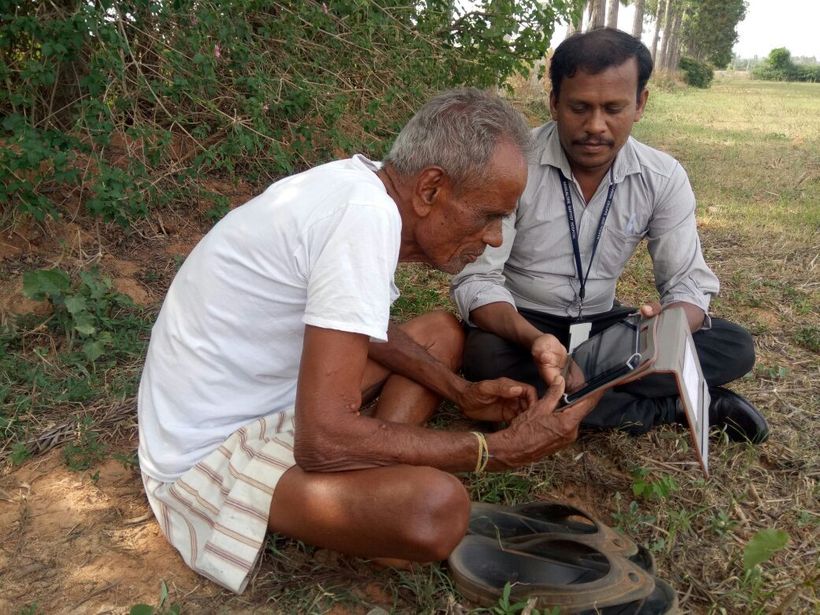
Baylor Researchers Awarded Grant to Develop Diabetes Mobile Health App for Use in India
An interdisciplinary team of Baylor University researchers – from nursing and business information systems to art and video game design – and physicians from Bangalore Baptist Hospital in Bengaluru, India, were awarded a 21st Century Knowledge Initiative Grant from the U.S. India Education Foundation (USIEF) to develop a diabetes mobile health app to boost awareness and educate those in India who are most at risk for diabetes. The team is led by Shelby Garner, Ph.D., R.N., assistant professor in Baylor’s Louise Herrington School of Nursing, who has worked in India over the past six years to develop technological health resources. She cited statistics from the World Health Organization that show life expectancy in India is among the lowest in the South East Asian Region and is largely attributed to growing rates of non-communicable diseases, such as diabetes. Contextualized health education is one key to help raise awareness in the country, she said. “There is a need for culturally appropriate health education materials in India,” Garner said. “Our early research showed that technology, such as smartphones and internet accessibility, are widely available in India among health providers, but most technological educational resources were developed in the West and do not effectively translate to the Indian context.” Physicians from Bangalore Baptist Hospital will provide cultural context and help identify important medical content to be included in the app. “Our diabetes app will feature an interactive 3D animated video with gaming features to help educate patients at risk for diabetes,” Garner said. “Answers to questions addressed in the app include: What is diabetes? What happens if I have diabetes? How do I prevent and treat diabetes? What do I do now?” The app also serves as a data collection tool to help researchers determine if the video is improving participants’ knowledge on diabetes. Community health workers employed by Bangalore Baptist Hospital will use the app as they visit with people in rural villages and urban slums during door-to-door health education visits, Garner said. The research team will compare the app’s effectiveness with standard health educational resources previously used. Garner said the USIEF grant was awarded, in large part, due to the success of an earlier project that led to the development of a hypertension app. “Earlier this year, we tested the hypertension app among 346 people in one of the largest slums in Bengaluru, India, and in several rural villages surrounding Bengaluru,” she said. “The app was significantly effective in improving knowledge among participants. We used these results to justify the need to design more resources and applied for funding from the U.S. India Education Foundation.” From previous experience developing and employing the hypertension app, Garner said she knew this new project would require input from a variety of perspectives. “I’ve realized some of the ‘big picture’ challenges in health education, and it will take a team of experts to make this happen,” she said. Team members are: • Shelby Garner, Ph.D., R.N., assistant professor in Baylor’s Louise Herrington School of Nursing • Dr. Carol Elizabeth George, community health physician, Bangalore Baptist Hospital • Dr. Gift Norman, community health physician, Bangalore Baptist Hospital • Dr. Kingsly Victor, internal medicine physician, Bangalore Baptist Hospital • Hope Koch, Ph.D., associate professor of business information systems, Baylor’s Hankamer School of Business • Phil Young, Ph.D., assistant clinical professor of business information systems, Baylor’s Hankamer School of Business • Julia Hitchcock, M.F.A., associate professor of art, Baylor’s College of Arts & Sciences • Matthew Fendt, Ph.D., lecturer in computer science, Baylor’s School of Engineering and Computer Science The grant also will fund exchange teams of researchers and faculty from India to come to the U.S. and for Baylor team members to go to India to collaborate on the research for the next two years. The first team from India is due in late October. “We are really excited about the work we will do together with our Indian partners over the next two years,” Garner said. ABOUT BAYLOR UNIVERSITY Baylor University is a private Christian University and a nationally ranked research institution. The University provides a vibrant campus community for more than 17,000 students by blending interdisciplinary research with an international reputation for educational excellence and a faculty commitment to teaching and scholarship. Chartered in 1845 by the Republic of Texas through the efforts of Baptist pioneers, Baylor is the oldest continually operating University in Texas. Located in Waco, Baylor welcomes students from all 50 states and more than 80 countries to study a broad range of degrees among its 12 nationally recognized academic divisions. ABOUT LOUISE HERRINGTON SCHOOL OF NURSING The Baylor University Louise Herrington School of Nursing (LHSON) located in Dallas was established in 1909 as a diploma program within Baylor Hospital in Dallas, which is now Baylor University Medical Center, and in 1950 became one of the six degree-granting schools of Baylor University. The first Baccalaureate degrees were granted in 1950 establishing the school among the earliest baccalaureate nursing programs in the United States. In 1999, the School was renamed the Baylor University Louise Herrington School of Nursing after Louise Herrington Ornelas, a 1992 Baylor Alumna Honoris Causa, who made an endowment gift to the school. Accredited by the Commission on Collegiate Nursing, LHSON offers Bachelor of Science in Nursing (B.S.N.) degrees through a traditional program and FastBacc (one-year accelerated program). LHSON also offers an online Master of Science in Nursing (M.S.N.) Leadership and Innovation program, as well as Doctor of Nursing Practice (D.N.P.) programs to include Family Nurse Practitioner (F.N.P.), Nurse-Midwife (C.N.M.) and Neonatal Nurse Practitioner (N.N.P.). LHSON was featured in U.S. News & World Reportfor the 2018Best Graduate Schools ranking the D.N.P.program in the top 50 U.S.nursing schools at No. 46. The Baylor M.S.N.program is ranked at No. 56and the Nurse Midwifery Program ranked No. 10. Baylor’s M.S.N. in Nursing Leadership andInnovation Online Program ranked No. 39 in the 2018U.S. News Best Online Graduate Programs. For more information, www.baylor.edu/nursing.


Out of Office: New Baylor Management Study Examines Relationship Between Stress and Remote Work
Researchers say people with high emotional stability and autonomy are best suited for remote-work opportunities Many U.S. employees believe working from home – or at least away from the office – can bring freedom and stress-free job satisfaction. A new Baylor University study says, “Not so fast.” The study, published recently in the European Journal of Work and Organizational Psychology, examines the impact of remote work on employee well-being and offers several strategies to help managers provide remote-work opportunities that are valuable to the employee and the company. “Any organization, regardless of the extent to which people work remotely, needs to consider well-being of their employees as they implement more flexible working practices,” the researchers wrote. A total of 403 working adults were surveyed for the two studies that made up the research, said lead author Sara Perry, Ph.D., assistant professor of management in Baylor University’s Hankamer School of Business. The research team measured each employee’s autonomy (the level of a worker’s independence), strain (defined in this study as exhaustion, disengagement and dissatisfaction) and emotional stability. Emotional stability, Perry explained, “captures how even keeled someone is or, on the opposite end, how malleable their emotions are. An example would be if something stressful happens at work, a person who is high on emotional stability would take it in stride, remain positive and figure out how to address it. A person low on emotional stability might get frustrated and discouraged, expending energy with those emotions instead of on the issue at hand.” The research found that: • Autonomy is critical to protecting remote employees’ well-being and helping them avoid strain. • Employees reporting high levels of autonomy and emotional stability appear to be the most able to thrive in remote-work positions. • Employees reporting high levels of job autonomy with lower levels of emotional stability appear to be more susceptible to strain. Perry said the study contradicts past research that says autonomy is a universal need that everyone possesses. Per this research, those who are lower in emotional stability may not need or want as much autonomy in their work. “This lower need for autonomy may explain why less emotionally stable employees don’t do as well when working remotely, even when they have autonomy,” researchers wrote. In addition to their findings, the researchers offered several recommendations for managers who design or oversee remote-work arrangements. The research team advised managers to consider their employees’ behavior when deciding who will work remotely. “I would suggest managers look at employee behaviors, rather than for personality traits, per se,” Perry said. “For example, if someone does not handle stress well in the office, they are not likely to handle it well at home either. If someone gets overwhelmed easily, or reacts in big ways to requests or issues in the office, they are likely less well positioned to work remotely and handle that responsibility and stress.” Based on this study, individuals with high emotional stability and high levels of autonomy are better suited for remote work, but such candidates might not always be available. “If less emotionally stable individuals must work remotely, managers should take care to provide more resources, other than autonomy, including support to help foster strong relationships with coworkers and avoid strain,” they wrote. Managers might also consider providing proper training and equipment for remote work, including proper separation of work and family spaces, clear procedural and performance expectations and regular contact (virtual or face-to-face) with coworkers and managers. ABOUT THE STUDY “Stress in Remote Work: Two Studies Testing The Demand-Control-Person Model,” published in the European Journal of Work and Organizational Psychology, is authored by Sara Perry, Ph.D., assistant professor of management, Hankamer School of Business, Baylor University, Emily Hunter, Ph.D., associate professor of management, Hankamer School of Business, Baylor Univeersity, and Cristina Rubino, professor of management, David Nazarian College of Business and Economics, California State University Northridge. ABOUT BAYLOR UNIVERSITY Baylor University is a private Christian University and a nationally ranked research institution. The University provides a vibrant campus community for more than 17,000 students by blending interdisciplinary research with an international reputation for educational excellence and a faculty commitment to teaching and scholarship. Chartered in 1845 by the Republic of Texas through the efforts of Baptist pioneers, Baylor is the oldest continually operating University in Texas. Located in Waco, Baylor welcomes students from all 50 states and more than 80 countries to study a broad range of degrees among its 12 nationally recognized academic divisions. ABOUT HANKAMER SCHOOL OF BUSINESS Baylor University’s Hankamer School of Business provides a rigorous academic experience, consisting of classroom and hands-on learning, guided by Christian commitment and a global perspective. Recognized nationally for several programs, including Entrepreneurship and Accounting, the school offers 24 undergraduate and 13 graduate areas of study. Visit www.baylor.edu/business and follow on Twitter at www.twitter.com/Baylor_Business.


With the legalization of cannabis less than two weeks away, CAA South Central Ontario (CAA SCO) is releasing new research showing that 1.9 million Ontario motorists have driven under the influence of cannabis, and over 735,000 have done so in the last three months. The statistically representative study, commissioned by CAA and conducted by Ipsos in July 2018, surveyed 1000 Ontarians over the age of 19 who own, lease or drive a vehicle and have a valid driver’s license. One of the big issues uncovered is the prevalence of ‘poly-users’, people who consume cannabis and alcohol or other mixed substances during the same time period. CAA’s research shows that 205,800 Ontario drivers admit to drinking alcohol and using cannabis before getting behind the wheel in the last 3 months. Those who have driven a car under the influence of cannabis and alcohol, tended to do so in social settings such as gatherings with family and friends and at bars/clubs/pubs. “Road safety needs to be prioritized as a leading issue as cannabis becomes legal in the coming weeks, but it’s clear that the focus can’t solely be on cannabis-impaired driving,” said Elliott Silverstein, manager, government relations, CAA SCO. “We need to take an integrated view of the dangerous behaviours that impact road safety in Ontario and focus public education and enforcement efforts accordingly.” Source:


Father-daughter expert: Steve Jobs’ daughter’s new book offers lessons on forgiveness
In her biting new memoir Small Fry, Lisa Brennan-Jobs, daughter of Apple co-founder Steve Jobs, paints a portrait of her father that is far from flattering. Brennan-Jobs’ forgiveness of her father’s flaws and reportedly cruel behavior leaves some perplexed – but not Linda Nielsen, a nationally renowned expert on father-daughter relationships. Nielsen says our reactions to Brennan-Jobs’ memoir may reflect more upon our own family relationships than those of the tech visionary and his oldest daughter. “Forgiving her father is a gift a daughter gives, not just to her father, but to herself. In choosing not to allow her bitterness about his failings as a father to consume her, a daughter is choosing not to deprive herself of whatever pleasure she can still derive from their relationship. She does not deny the past. But she does not dwell in it. Forgiving does not mean forgetting,” Nielsen wrote today for The New York Times. “Ms. Brennan-Jobs’ memoir may provide a comforting message for parents who fear that their mistakes and missteps inevitably will lead to irreparable damage — and for daughters who are grappling with their father’s failures as a parent. Adult children can choose to focus on the dearness or the darkness of their childhood relationships with their parents.” Nielsen is a professor of adolescent and educational psychology at Wake Forest University in Winston-Salem, N.C. She has researched and written about father-daughter relationships since 1970. For nearly 30 years, she has taught the only known college class in the U.S. devoted exclusively to the subject. Her latest book, Father-Daughter Relationships: Contemporary Research and Issues, examines what improves or weakens these relationships and their impact on society. Nielsen is available for interviews Wednesday and leading up to the Sept. 4 release of Small Fry. Source:


Helping or Hovering? The Effects of Helicopter Parenting on College Students’ Well-Being
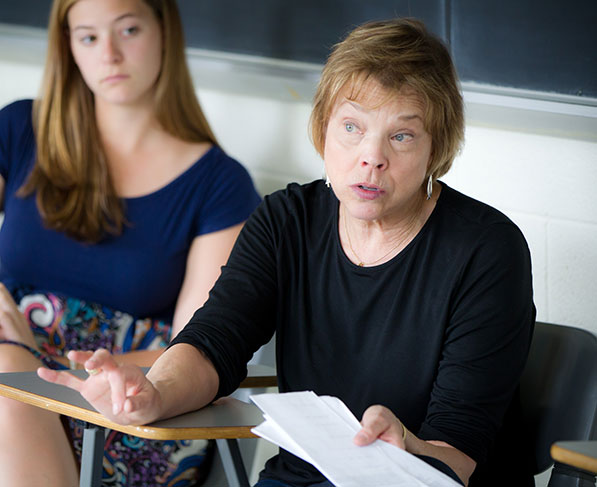
Want to help your child succeed in college? Resist the urge to hover. “Ask how classes are going, let them know that you love and support them, but let them take the lead on how much information to share,” says helicopter parenting expert Holly Schiffrin. “It’s not your job to remind your child to complete assignments, help them with their work or try to resolve their roommate issues for them.” A developmental psychologist, Dr. Schiffrin has conducted extensive research on helicopter parenting and achieving happiness. Her works have appeared in such scholarly publications as the Journal of Child and Family Studies and the Journal of Happiness Studies. She is co-author of Balancing the Big Stuff: Finding Happiness in Work, Family and Life and has co-authored a chapter in Intensive Mothering: The Cultural Contradictions of Modern Motherhood. “The biggest gift parents can give their children is the opportunity to make their own decisions,” says Dr. Shiffrin. “Parents who “help” their children too much stress themselves out and leave their kids ill-prepared to be adults.” Dr. Schiffrin is available to speak with media regarding this topic. Simply click on his icon to arrange an interview. Source:



Understanding the meaning of America’s monuments
As the debate continues with what to do with Confederate monuments that dot America’s landscape, the experts from the University of Mary Washington have been lending perspective, knowledge and opinion to the conversation. Professor of Geography Stephen P. Hanna is part of a team of scholars from universities across the South who are investigating how enslavement is incorporated in the landscape and narratives of Southern plantation museums. A key part of this work is to suggest ways these museums can rework their tours and exhibits to help the public understand that slavery was central to both the lives of everybody who lived at these sites and to the development of American political and economic systems. Says Hanna: “A year after white supremacists rioted in Charlottesville, it is clear that the underlying issues related to racial justice have not gone away. African-Americans face arrest for simply being in places where whites suspect they don’t belong. Police are more likely to escalate their use of force more quickly when dealing with black Americans. In addition, both Blacks and Latinos are fighting efforts to make it harder for them to vote while Latino Immigrants have to fear deportation and family separation.” He continues: “The struggle over Confederate Memorials and the narratives presented as “history” at southern plantation museums must be seen within this context. The good news is that more people understand that statues of Robert E. Lee and costumed tour guides at plantation museums describing a romanticized version of the antebellum South don’t represent our shared past. Instead they are efforts to write a particular history that denies that our nation’s roots include enslavement of African-Americans and that slavery’s legacy includes the injustices non-whites endure today.” Dr. Hanna is available to speak with media regarding this topic. Simply click on his icon to arrange an interview. Source:


We Need to Normalize Mental Health Care in the Black Community
I am a PhD, a book author, a professor at USC. I work with organizations to create healthier and happier workplaces by reducing stress and building emotional resilience. And yet, until very recently, I have been reluctant to share my own story. It is a story of mental illness, recovery and resilience, a story of bipolar disorder. And I have been hesitant to share it because I did not want to experience the stigma associated with mental illness. I used to joke that I didn’t want to be the embodiment of “the nutty professor,” but the joke stopped being funny when the stigma against mental illness -- particularly in the black community -- negatively impacted my professional and personal life. In previous roles, I learned that it wasn’t acceptable for me to have a mental illness in my professional setting, and that it definitely was not okay to talk about it. My competence was questioned, even though I no longer had symptoms and was given a clean bill of health from my psychiatrist, and I was asked to not ‘out’ myself as having bipolar disorder to my students. That is why I’m sharing my story publicly: I hope to inspire my students to fight their way through their own mental health challenges. Even with all my degrees, even with my understanding of the healthcare system, finding affordable and accessible mental health services has often been a challenge for me. Even though I know what it’s like to have supportive family, friends and colleagues, and a fantastic healthcare team, I have struggled. These experiences have inspired my activism and advocacy for a world where using mental health services is no different than getting care for any other illness. Let me start with a little-known statistic: African Americans are 20 percent more likely to experience serious mental health problems than the general population, according to the Office of Minority Health. And yet: only about 25 percent of African Americans seek mental health care as compared to 40 percent of whites, according to the National Alliance on Mental Illness. The reasons for this discrepancy are plentiful: lack of health insurance, distrust of mental health care system, misdiagnosis of symptoms, lack of cultural competence, and stigma. Addressing these challenges for African Americans entails three parts: taking care of our mental health should be acceptable, accessible and affordable. Allow me to explain. Click the news article to read more. Source:


Who is protecting the children?
As a health care provider and patient advocate, I know that one of the worst things you can do is to radically separate children from their parents and from the rest of their family. The immigration ordeal is beyond tragic. Worse yet, now there is a chance that children may never be united due to faulty record keeping and a rush to keep a deadline. Parents may be forced to leave the country without their children. In my opinion, the detained children are being treated like criminals. Who is consenting for these DNA samples on behalf of the children? It seems to me that collecting DNA from minors without due cause or having legal consent from parents on file would be illegal and violating basic constitutional rights. Collecting DNA to compensate for a faulty record keeping system is not a valid reason to violate the rights of others. Violating policies and protocols in an attempt to rush to meet a deadline is beyond reprehensible. It is obvious that this decision was not well thought out. It is tragic that parents were separated from their children. It is unconscionable that the government would be taking advantage of the vulnerabilities of children and their parents – all for the sake of a political agenda. There exists the possibility that many of these children will grow up never seeing their parents or other family members ever again. Source:
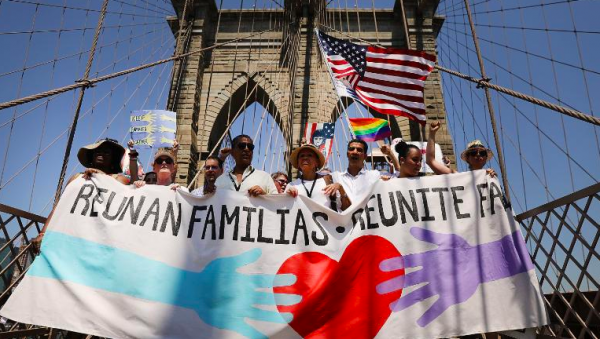
6 Facts We Learned Working with Migrants and Refugees Around the World - Facts 3 and 4 Working with migrants and refugees is our business at Catholic Relief Services. CRS was founded in 1943 to assist refugees during World War II. Seventy-five years later, we are still coming to the aid of people escaping conflict, violence and natural disasters. While CRS doesn’t resettle refugees in the United States (these programs are run by the Catholic Church’s Migration and Refugee Service and Catholic Charities), our rich history has taught us valuable lessons on how to best help families fleeing crisis. 3. Support the Family. The family unit provides the primary support for children during the traumatic refugee experience -- whether it is witnessing violence or crossing a desert on foot. CRS focuses on keeping families together. This means housing a family together and using any services provided – from trauma counseling to income generation – to boost family cohesion. Shannon Senefeld is a global development expert at CRS. She has published and presented extensively on international children’s issues and the importance of strengthened family care for children’s development. See her contact information at the bottom. 4. Kids Need School and Play. CRS is dedicated to keeping up children’s education, to provide stability and normality and give them hope for the future so they can be productive citizens wherever they end up. Kids need to be kids, too. Whether they are in a camp or any sort of migrant or refugee holding center they need a space to play. Caroline Brennan is the Emergency Communications Director for Catholic Relief Services. In her role, she travels to and/or works in areas facing natural or man-made emergencies. See her contact information at the bottom. The experts at Catholic Relief Services are available to help with any media coverage or insight that is required regarding this ongoing news story and issue that is continuing in America. Simply click on any of their icons to arrange a time for an interview. Source:

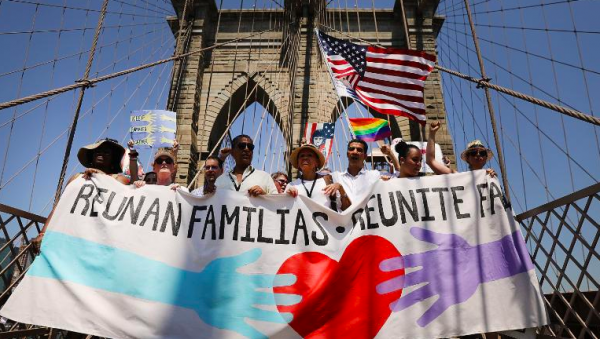
6 Facts We Learned Working with Migrants and Refugees Around the World: Facts 1 and 2 Working with migrants and refugees is our business at Catholic Relief Services. CRS was founded in 1943 to assist refugees during World War II. Seventy-five years later, we are still coming to the aid of people escaping conflict, violence and natural disasters. While CRS doesn’t resettle refugees in the United States (these programs are run by the Catholic Church’s Migration and Refugee Service and Catholic Charities), our rich history has taught us valuable lessons on how to best help families fleeing crisis. 1. People Do Not Want to Leave Their Homes. An astonishing 1 in 110 people have been forced to flee their home (UNHCR). They only do that when they feel they have no other choice. Most people the world over give the same reason for starting their perilous journey across borders -- violence. That’s true for millions fleeing conflict in South Sudan and for tens of thousands fleeing gang violence in Central America. Most often, people flee to other parts within their country first. Only when they see no other option do people leave their country. Rick Jones is the agency's Youth and Migration Advisor in Latin America and the Caribbean. He also specializes in issues affecting Central American migration, including gang violence, poverty, and internal displacement. See his contact information at the bottom. 2. Don’t Separate Families. Based on extensive experience with refugees and migrants, CRS agrees with the criticism of the former U.S. policy of separating children from their parents. Decades of research shows that this is so traumatic for children it can lead to long-term psychological, and even physical damage. Shannon Senefeld is a global development expert at CRS. She has published and presented extensively on international children’s issues and the importance of strengthened family care for children’s development. See her contact information at the bottom. The experts at Catholic Relief Services are available to help with any media coverage or insight that is required regarding this ongoing news story and issue that is continuing in America. Simply click on any of their icons to arrange a time for an interview. Source: