
Experts Matter. Find Yours.
Connect for media, speaking, professional opportunities & more.
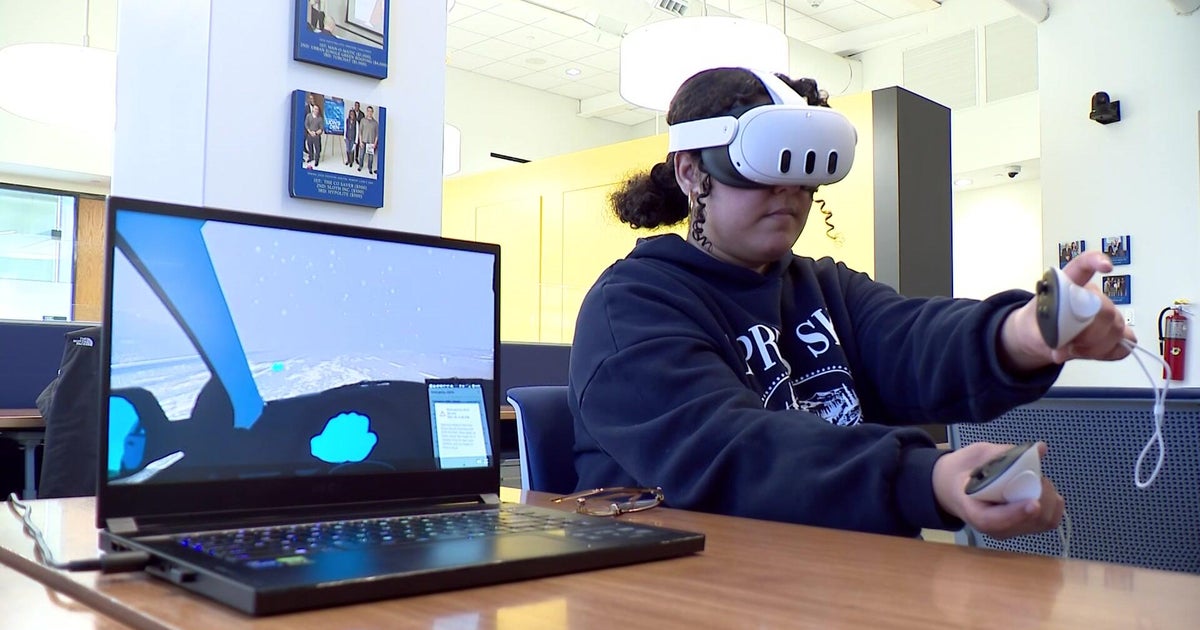
VR Technology Offers Lessons in Navigating a Snow Squall
WCBS-TV, WPIX 11, and WNYW Fox 5 interviewed Dr. Jase Bernhardt, Hofstra associate professor of geology, environment, and sustainability, about his virtual reality program designed to teach the public about the danger of driving in a snow squall. Funded by a $100,000 Road to Zero Community Traffic Safety Grant from the National Safety Council, Dr. Bernhardt’s project emphasizes the importance of heeding emergency weather advisories and what drivers should do if they are on the road when a snow squall occurs. Users wear a headset and hold a device – like a video game controller – in each hand to replicate the movements of a steering wheel. Bernhardt’s collaborators include Assistant Professor of Sustainability Sasha Pesci; software developer Frank Martin ’22, ’23, who earned both a BS and an MS in Computer Science from Hofstra University; and John Banghoff and other meteorologists at the U.S. National Weather Service (NSW) Office, State College, PA.


Severe Weather Events Mean Officials Must Be Ready for the Unexpected
Dr. Jase Bernhardt, associate professor in Hofstra’s Department of Geology, Environment, and Sustainability, was interviewed by Newsday for the article “Long Island storm prep increasingly means expect the unexpected.” Supervisors in Suffolk and Nassau Counties must have response plans for extreme and sudden weather events, which have been occurring with more frequency due to climate change and inadequate drainage systems. Though meteorologists have the ability to issue a flood watch alert between 12 to 24 hours in advance of an approaching storm, the more actionable and localized alerts people want arrive much later. “It’s great to have that notice … but you still can’t always pinpoint that exact locality, which is always frustrating to people,” Dr. Bernhardt said. “To pinpoint at that level, like what county or what town, unfortunately might only come very close to when the flooding actually happens.”

Planned Changes to EPA Policy Likely to Impact Public Health and Safety
Dr. Jase Bernhardt, associate professor in Hofstra’s Department of Geology, Environment, and Sustainability, was interviewed by Newsday about the planned revocation of 2009’s endangerment finding, and how it may impact health and safety on Long Island. The endangerment finding was a scientific declaration that determined carbon dioxide and other greenhouse gases endanger public health. Dr. Bernhardt said the consequences from rescinding the endangerment finding will be damaging but suggests they are likely to be incremental and slower for the public to discern. “It’s going to be more gradual,” he said. “There’s not going to be that singular event where you can say ‘this definitely had an immediate effect right here.’ It’s a long term change.”

Georgia Southern researchers survey flood-stricken area of Bangladesh
Cox’s Bazar is a bustling tourist destination located on the southeastern coast of Bangladesh. It’s home to more than 3 million people living along the longest naturally occurring sea beach in the world, extending into the Bay of Bengal. But during the monsoon season, the area is prone to flooding and frequent landslides due to its geographical location and low altitude. More than 7,000 people living in the region were displaced in 2024 after a particularly severe season that destroyed thousands of shelters, leaving three dead. Georgia Southern University Assistant Professor Munshi Rahman, Ph.D., knows the dangers and devastation monsoon season can bring to this area. As a native of Bangladesh, he has witnessed firsthand how environmental changes, urbanization and deforestation contribute to the devastation. This is why he is actively working to help his home country identify the most disaster-prone areas through the use of geographic information systems and surveys. In January, Rahman and junior geoscience major Emma Robinson traveled to Cox’s Bazar to survey and identify the areas most prone to landslides and flooding with a goal of providing data to local government and nongovernmental organizations that could help address disaster risks. Robinson says she was thrilled to gain experience in field research and engage in work she’s passionate about. “Dr. Rahman’s project really inspired me because I’ve always had a drive to help the environment,” she said. “I thought this would be a great first step into research, especially since geology and geography are so closely related.” The two used geographic information systems, GPS and community input to pinpoint vulnerable spots near residential areas and population centers. Specifically, they found that many homes and refugee camps were built on slopes. Aside from being geographically vulnerable, they observed that many of these dwellings, built from bamboo poles, tarps, and corrugated metal, lacked the infrastructure to withstand flooding. “The key findings reveal a serious environmental degradation on local landscapes exacerbating the frequency and severity of landslides and flooding events in the region,” Rahman said. He added that these insights highlight the urgency for sustainable ecosystem management and the adoption of inclusive disaster management to reduce social and environmental vulnerabilities Rahman and Robinson suggest that their findings, combined with additional socioeconomic research, could provide a more comprehensive understanding of the situation on the ground. This would enhance disaster preparedness while promoting sustainable land use. “Not too many undergrads have opportunities like this,” she said. “I know this will help me get a jump-start on my senior thesis and give me a whole new perspective for future research projects. It’s made me more confident overall as a student and researcher.” Rahman is similarly grateful for the opportunity to give his students experience in the field. “As a professor, I’ve always wanted to give my students as much real-world experience as possible,” he said. “I also give Emma full credit. Prior to this trip, she had never traveled outside the U.S. She showed incredible courage and a real talent for research.”


Teaching the Dangers of Snow Squalls
Dr. Jase E. Bernhardt, associate professor of geology, environment, and sustainability and director of meteorology, was featured on WPSU/Pennsylvania Cable and on The Weather Channel’s Weather Geek podcast about his VR research that demonstrates the danger of driving in a snow squall and the science behind these dangerous bursts of weather.

Jase E. Bernhardt, associate professor of geology, environment, and sustainability and director of meteorology at Hofstra University, talked to WCBS-TV about the string of snow storms forecasted for the New York metropolitan area recently.

Work on Snow Squall VR Simulation Moves Forward
Last year, Dr. Jase Bernhardt, Hofstra associate professor of geology, environment, and sustainability, was awarded a $100,000 Road to Zero Community Traffic Safety Grant from the National Safety Council, to develop a VR simulation of driving in a snow squall. The project aims to share information about the onset of snow squalls, the importance of heeding emergency weather advisories, and how drivers should respond if they are on the road when a snow squall occurs. Dr. Bernhardt has partnered with meteorologists from the National Weather Service office in State College, PA, and was in Pennsylvania recently to participate in a press conference and conduct field research supporting his work. The press conference was promoted on PAcast – the official website of the Pennsylvania state government. Local news stations like NBC affiliate WJAC-TV; ABC affiliate WHTM-TV; WPMT-TV Fox43 News; and PennWatch covered the press conference.

Recent Rain Not Enough to End Dry Spell
Dr. Jase Bernhardt, Hofstra associate professor of geology, environment, and sustainability, was interviewed by Newsday about weather conditions in the local area. Experts say that heavy rain recently was unlikely to end a regionwide, three-month dry spell. Dr. Bernhardt called the drought conditions “super-eye opening” and “certainly unprecedented in recent times.”

LI Communities Take Measures to Stem Flooding Issues
Dr. Jase Bernhardt, Hofstra associate professor of geology, environment, and sustainability, was interviewed by WCBS-TV, about measures being taken in West Islip, Long Island, to mitigate flooding issues. He also talked to MoneyGeek.com about the ways in which climate change impacts homeowners. “Climate change should certainly be taken into account if you are a prospective home buyer,” he said. “It is always worth reading up on the normal climate conditions for the location where you are purchasing a home, to see if anything jumps out at you, such as a heightened risk of hurricanes or tornadoes.”

Jase Bernhardt, associate professor of geology, environment, and sustainability, spoke to Newsday* about the Town of Islip’s spending to improve flood-zones. “For those that are near the coastline and are vulnerable to coastline flooding, it’s only going to get worse. Our landscape is our best defense.”