
Experts Matter. Find Yours.
Connect for media, speaking, professional opportunities & more.

Covering Breast Cancer Awareness Month? Our experts are ready for your questions and coverage
October is Breast Cancer Awareness Month. Did you know that on average, every 2 minutes a woman is diagnosed with breast cancer in the United States. And according to the National Breast Cancer Foundation: In 2021, an estimated 281,550 new cases of invasive breast cancer will be diagnosed in women in the U.S. as well as 49,290 new cases of non-invasive (in situ) breast cancer. 63% of breast cancer cases are diagnosed at a localized stage (there is no sign that the cancer has spread outside of the breast), for which the 5-year survival rate is 99%. This year, an estimated 43,600 women will die from breast cancer in the U.S. Although rare, men get breast cancer too. In 2021, an estimated 2,650 men will be diagnosed with breast cancer this year in the U.S. and approximately 530 will die. 1 in 8 women in the United States will be diagnosed with breast cancer in her lifetime Breast cancer is the most common cancer in American women, except for skin cancers. It is estimated that in 2021, approximately 30% of all new women cancer diagnoses will be breast cancer. There are over 3.8 million breast cancer survivors in the United States. This year's theme is It's Time to Rise and the National Breast Cancer Foundation has a host of materials to watch and read for anyone looking to test themselves, find support or learn how they can help. If you're a journalist looking to know more about this topic or if you are covering Breast Cancer Awareness month - then let our experts help with your stories. Dr. Alicia Vinyard is a Board-Certified General Surgeon and Fellowship Trained Breast Surgical Oncologist at the Georgia Cancer Center and Medical College of Georgia at Augusta University. Dr. Vinyard is also an expert in breast cancer, cancer surgery and cancer survivorship. She is available to speak to media about Breast Cancer Awareness Month – simply click on her icon to now arrange an interview today.


Bye-bye Bonnie and Clyde – Brazil is taking bank robbing to a whole new level
The media coverage reads like a scene out of a Michael Bay movie. Bank robbers using drones, strategically planting bombs across the city and taking hostages and placing them atop getaway cars. It’s surreal … but in Brazil, over the top bank heists are becoming the new normal. And the media are looking for experts to try and explain just what it is going on. That’s why the Daily Beast recently contacted Georgia Southern’s expert on Latin America, José de Arimatéia da Cruz, Ph.D. In the predawn darkness last Monday, a group of about 20 heavily armed commandos seized control of the downtown financial block in Araçatuba, a mid-sized Brazilian city in the eastern state of São Paulo. They then proceeded to rob three banks, while the surveillance drones they had deployed kept watch over head. When the heist was complete they accosted several bystanders, shot a man who had been filming them on his phone, and then bound the hostages they’d taken to the tops of their getaway vehicles so as to dissuade police from interfering with their escape…. Since 2015 these kinds of attacks have become so common that Brazilians even have a name for them: Novo Cangaço, which roughly translates into English as “New Struggle.” The name refers to a “social banditry” movement that flourished in Brazil’s hardscrabble northeast in the late 19th and early 20th centuries. The original Cangaço sought to battle back against widespread poverty and inequality. It involved Robin-Hood like figures who plagued wealthy landowners, donated to the poor, and pushed the government to jumpstart economic reforms. “The New Cangaço’s modus operandi is similar” to that of their predecessors, José de Arimatéia da Cruz , Ph.D., told The Daily Beast. The tactics might be alike, but the strategy between the old and new incarnations are quite different, according to da Cruz, who is originally from Brazil but now teaches international relations at Georgia Southern University. “The difference today is that the traditional cangaceiros [peasant bandits] were fighting against politicians. The Novo Cangaço today are attacking banks and are most basically interested in money for different purposes.” This is a sensational chain of events – and if you are a reporter covering these escalating crimes in Brazil – then let us help with your stories. José de Arimatéia da Cruz is available to speak with media regarding this topic — simply reach out to Georgia Southern Director of Communications Jennifer Wise at jwise@georgiasouthern.edu to arrange an interview today.


As Pfizer gets full FDA approval – Georgia Southern’s experts are in the media and getting coverage
With a fourth wave of COVID sweeping America and beyond – the Pfizer vaccine receiving full FDA approval couldn’t come at a better time according to most health experts. And as news swept across the country, Georgia Southern University’s Isaac Chun-Hai Fung, Ph.D., associate professor of epidemiology, was front and center for media and reporters, helping to explain the importance and significance of this landmark announcement. The green light from the U.S. Food and Drug Administration to move Pfizer’s vaccine from emergency use to full approval Monday is a milestone in the national pandemic response, and one that comes as Georgia and much of the country battles another surge in infections and hospitalizations due to the delta variant. More than 60% of Americans have received at least one dose of the vaccine, and experts have long pointed to data that shows the shots are safe and effective. Still, the official thumbs-up is a significant piece of evidence to bolster that fact, said Isaac Chun-Hai Fung, Ph.D., associate professor of epidemiology at the Jiann-Ping Hsu College of Public Health at Georgia Southern University. “With this new formal approval from the FDA, the public should have the same confidence as they do with existing vaccines that we have used for years against other diseases,” Fung said. August 24, Georgia Recorder As the COVID story progresses and advances, there will be a lot of questions that need answers and stories for journalists to tell. And if you are covering – then let us help. Fung is available to speak with media regarding this topic — simply reach out to Georgia Southern Director of Communications Jennifer Wise at jwise@georgiasouthern.edu to arrange an interview today.
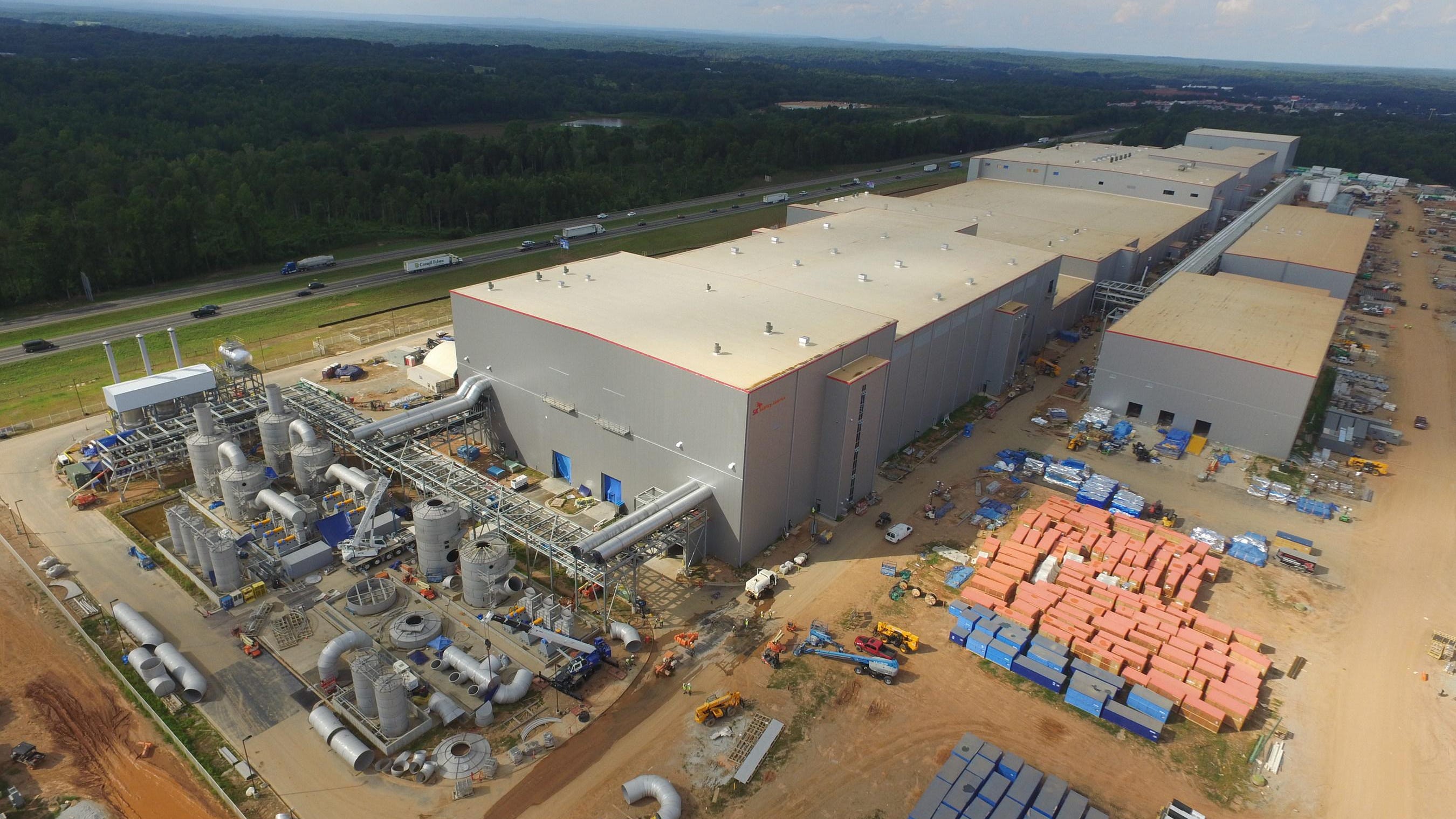
There’s billions of dollars flowing into Georgia – and with that economic development, comes good paying jobs. It’s getting a lot of attention and that means news coverage on local, state and national levels. Recently, media have been looking for expert perspective and opinion on the economic boom – and to help with their questions, Georgia Southern University’s Michael Toma is the go-to expert for reporters looking to break down the investments, the opportunities and the jobs that are coming with them. The SK Battery America plant is, appropriately, located in the city of Commerce, Georgia. The $1.6 billion project – expected to employ 2,000 – was finalized in early January 2019, but without investment from the state and local government, it might not have been built in Georgia. "They were looking at several other states, especially in the southeastern U.S.," said John Scott, director of economic development for Jackson County. "When we were working with them the final two sites were between here and somewhere in Tennessee." … According to Michael Toma, Ph.D., Fuller E. Callaway Professor of Economics at Georgia Southern University, a new project creating 1,000 jobs can have a huge impact, while 500 jobs is a significant project for medium-sized cities. How good the jobs are is a matter of debate, although state and local officials emphasize that they look for jobs that pay well. July 27 – USA Today/Savannah Morning News If you’re a reporter looking to know more about why business is booming in Georgia – then let us help. Michael Toma, Ph.D., is Georgia Southern University's Fuller E. Callaway professor of economics and is available to speak with media about this topic – simply click on his icon to arrange an interview today.
/cloudfront-us-east-1.images.arcpublishing.com/gray/VTFRFP3RLBDQNHSADLYVFHUNMI.jpg)
#Experts in the media - Political science professor discusses 2020 Census data
The 2020 Census is out - and media are coming to Georgia Southern University to help breakdown the numbers and explain the details about how it all impacts Georgia. America is becoming more diverse, according to new data from the 2020 Census. Analysts say the biggest jump came, in the multiracial category. It went from nine million in 2010 to 33.8 million in 2020. That’s a 276 % increase. The Latino and Asian communities also saw big jumps. A political science professor at Georgia Southern says this data has a big impact on local communities. “Another thing is the redistricting process in general. The results of the Census are going to have a big impact on the redistricting process this year in state legislatures. For instance, some states are losing representatives, and some states are gaining representatives,” Kimberly Martin, Ph.D., assistant professor of political science and international studies, said. While Georgia and South Carolina are keeping the same number of representatives, Martin says the Census affects funding, and also gives lawmakers an idea of how demographics in their districts have changed over the past decade. August 13 - WTOC If you are a reporter covering this topic - then let our experts help. Contact Georgia Southern Director of Communications Jennifer Wise at jwise@georgiasouthern.edu for an interview with Professor Martin today.

Stepping back in time — Georgia Southern expert helps uncover day-to-day life of the woolly mammoth
It’s been an exciting time for those studying the now extinct animals that used to roam the continent. And recently, Katy Smith, associate professor of geology and curator of paleontology at Georgia Southern University, was asked to lend her expertise to a team of scientists who are piecing together the life and times of the massive wholly mammoth that once roamed the earth. We might not be able to study a walking, breathing woolly mammoth in real life, but what if we could track its movements and get a sense of where it traveled, from its birth to its death? For the first time ever, scientists have done just that. An international team of researchers published a paper this week in the journal Science that reveals the 28-year movement history of a male woolly mammoth. With exciting detail about where it roamed throughout northern Alaska, its seemingly favorite locations—as it returned time and time again—and where it eventually died, this paper offers unparalleled insight into an animal that lived approximately 17,000 years ago. August 12 - GIZMODO A full article is attached and is a captivating read. If you are a reporter looking to learn more or cover this interesting subject – then let our experts help. Contact Georgia Southern Director of Communications Jennifer Wise at jwise@georgiasouthern.edu for an interview with Katy Smith today.

A photo speaks louder than words. That’s the proverbial premise behind the Savannah H.O.P.E. Photovoice Project, a visual, community-based research project led by Georgia Southern University researchers that helps identify social, cultural and physical barriers that Black mothers in Chatham County face while breastfeeding. The project won a 2021 Health Innovation Award from Healthy Savannah. As part of a Centers for Disease Control and Prevention’s $3.4 million grant, Healthy Opportunities Powering Equity (H.O.P.E.), the localized project allows those who seldom have the chance to voice their concerns share their experiences with the hope of creating social change. Double Eagle Christina Cook (’16,’19) has assisted Savannah H.O.P.E. Photovoice Project lead Nandi Marshall, DrPH, associate professor in the Jiann-Ping Hsu College of Public Health (JPHCOPH) and associate dean of Academic Affairs, for the last three years. First serving as the JPHCOPH graduate assistant while completing a master’s in public health and now as Marshall’s graduate assistant in the public health doctoral program, Cook has taken pride in helping others amplify their voices. In turn, she found her own. “Personally, what this has done for me is solidify my direction,” said Cook. “As someone who likes to navigate a lot of different paths, and someone who is an intuitive and does-this-feel-right type of person, doing the work has really led me down the path of what I want to do because I am very committed to a sense of justice.” The photovoice method, a groundbreaking visual research methodology that empowers marginalized individuals to document their experiences and communicate their concerns, was utilized, as participants captured images that represent local breastfeeding barriers. Some snapped shots in corporate settings and public areas without access to breastfeeding areas, while others hinted at a lack of family support or pushback based on cultural norms, captured with photos in familial surroundings. “A lot of them are physical barriers,” said Cook. “There is just not a space available. It was really surprising. Even in churches, one of the moms said that whenever she would go to church the only place for her to go was the bathroom. Or someone was ushered into the office to nurse there. “The other ones have been sociocultural like this is something that Black people don’t do or what family members would say. Or going into a public park and people just staring at the moms while they breastfed.” Sessions facilitated by Cook and Marshall allowed participants to talk about the photos, their perspectives and ideas for change with one another to help guide resolutions to overcome barriers for improved local breastfeeding equity. Marshall praised Cook’s integral role in the project. “She is by far an essential team member,” said Marshall. “Her involvement in community-based, participatory research allows her to implement her classroom knowledge while building on skills that will allow her to continue the work of achieving health equity when she graduates. Truly understanding how to engage communities and ensure they not only feel supported but cared for, is a skill that can’t be taught in the classroom. It comes from showing up, by being authentic, being present and keeping the needs of the community in the forefront. Christina continues to show up time and time again. She has proven to be invaluable and a tremendous asset in improving the health outcomes of the communities we work with.” If you are a journalist looking to learn more about the Savannah H.O.P.E. Photovoice Project led by Georgia Southern University and would like to connect with Double Eagle Christina Cook or Nandi Marshal - then let us help. Simply contact Georgia Southern Director of Communications Jennifer Wise at jwise@georgiasouthern.edu to arrange an interview today.

Arguments, debates and protests have been taking place across America with regard to monuments and statues memorializing historical figures from the Confederate army. It’s a topic that has captured the attention of Americans from across the country and especially those from the America’s Southern states. Recently, Georgia Southern University’s Christopher Hendricks, Ph.D., was featured in the news giving his expert perspective on the topic and how America might provide the context behind these moments representing American history. “I think that telling the full story always is a good idea,” said Dr. Christopher Hendricks, a history professor at Georgia Southern University. Hendricks studies early American history and historic preservation. He suggested that we should put the monument into context rather than remove it. “It’s really important to put these things into context,” Hendricks said. “Particularly if you are going to leave them here.” He said that he believes signage explaining the origin and evolution of the memorial would help to establish the monument as a more neutral historical artifact. July 11 – ABC News This is an important topic and if you are a journalist looking to know more about this subject – then let us help. Christopher Hendricks, Ph.D., history professor at Georgia Southern University, is an expert in the areas of early American history and historic preservation. Hendricks is available to speak with media about this topic – simply click on his icon now to arrange an interview today.

Is Herschel Walker game-ready for the gridiron of Georgia politics?
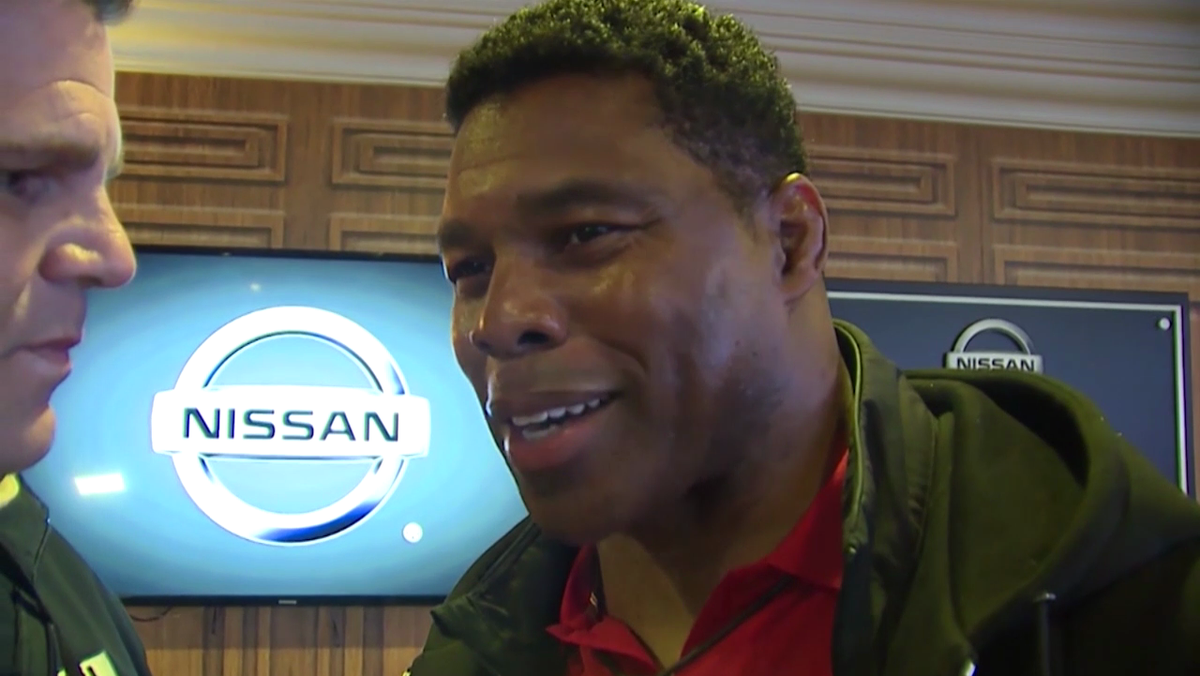
He once dominated the NFL and is still considered the greatest college running back of all time. But Herschel Walker is now suiting up for a different game and as the original GOAT gets ready to enter the political arena, Joshua Kennedy, Ph.D., an associate professor of political science at Georgia Southern University, is being contacted by media for what he thinks the former superstar needs to do to get across the electoral goal line. In a recent interview with WJCL, Kennedy said, "When it comes to a potential candidate like Herschel Walker who has the celebrity factor in the state of Georgia, who helped bring UGA their national title in 1980, who won the Heisman trophy, is still very well-beloved by the people of Georgia, it could make for an interesting race." At this point, Kennedy believes Warnock would be more likely to win the race. "I think Sen. Warnock has an engaged base and if I were prognosticating at this point, I would say he is a little likelier than not to win," he said. However, Kennedy believes the former president's endorsement of Walker would help the Georgia Bulldog secure a significant number of votes. "The fact that he has the endorsement and support of the former president would carry a lot of weight with Republican voters in the state," he said. In order for someone like Walker to win, Kennedy said he would have to appeal to both the Republican base and independents. "I think that Walker needs to energize the base first and foremost, then focus on finding particular issues that speak to the concerns of Georgians including those non-affiliated voters who could be gettable for a Republican," Kennedy said. He would also need to instill a sense of reliance and competence in Georgians. "Voters want politicians who are oriented towards solving problems," Kennedy said. "He’s going to have demonstrate that he is able to do that, that he has that level of competence, which will be difficult considering he has not been in political office before. That will give Raphael Warnock a bit of that incumbent advantage by virtue of being in office, he can point to things he's worked on that Herschel Walker can’t." Kennedy said if Walker were to win, it would make it difficult for Democrats to maintain control of the senate. June 30 – ABC News If you are a reporter looking to cover this subject – then let our experts help. Contact Georgia Southern Director of Communications Jennifer Wise at jwise@georgiasouthern.edu for an interview with Joshua Kennedy.

Records are going up in flames - is there any break to America's current heat wave?
To call it a heat wave may be an understatement. But as June ends and July rolls in, a blanket of hot and humid weather is covering most parts of America with temperatures not seen since the end of the Great Depression. The trend has scientists and meteorologists looking for answers. AccuWeather's team of expert forecasters were describing the then upcoming heat wave as "unprecedented," "life-threatening" and "historic" as early as the middle of last week, and these descriptions have been accurate in the first days of the Northwest scorcher. The weekend marked the beginning of the extended stretch of extreme temperatures. Portland, Oregon, a city that typically experiences temperatures in the middle to upper 70s in late June, soared to a staggering 112 degrees Fahrenheit on Sunday, breaking the all-time record high of 108 set just a day before. Prior to the current heat wave, the highest temperature ever recorded in the city was 107 set once in July of 1965 and twice in August of 1981. Portland is also expected to obliterate its daily record high of 100 on Monday and possibly set an all-time high temperature record for the third straight day. AccuWeather is predicting a high of 113 on Monday, which would make it the hottest day ever recorded in the city. The highest temperature ever recorded in the state of Oregon is 117, which was set in Umatilla on July 27, 1939. June 28 - AccuWeather And as Americans keep an eye on the mercury that continues to rise, there’s a lot of questions to be asked: Is this a weather phenomenon? Has climate change showed its hand? Are these new temperatures the new normal for the summer months? How can cities and communities adapt to these drastic conditions? And is there any turning back these rising numbers? If you’re a journalist looking to learn more about this topic, then our experts are here to help. Dr. Pamela Grothe is an assistant professor in the Department of Earth and Environmental Sciences as the University of Mary Washington, who earned a Ph.D. in the Paleoclimatology Lab at the Earth and Atmospheric Sciences department at Georgia Institute of Technology. She’s also an #expert in climate change and specializes in how cities can cope and adapt to hotter temperatures and stay livable places. Dr. Pamela Grothe is available to speak with media – simply click on her icon to arrange an interview.

