
Experts Matter. Find Yours.
Connect for media, speaking, professional opportunities & more.

Georgia Southern biology professor named 2025-26 Fulbright U.S. Scholar to Vietnam
Stephen Greiman, Ph.D., associate professor of biology in Georgia Southern University’s College of Science and Mathematics, has been awarded a 2025-26 Fulbright U.S. Scholar award to Vietnam where he will lead a teaching and research project focused on parasite diversity in bats. “Dr. Greiman is further proof that Georgia Southern faculty are among the best in their fields,” said Avinandan (Avi) Mukherjee, Ph.D., provost and executive vice president for Academic Affairs. “We are incredibly proud of this achievement and all the hard work that goes into such a celebrated milestone paying off.” Greiman’s Fulbright work will build on more than a decade of collaboration with Vietnamese scientists. During graduate school, he began working with parasitologists in Vietnam and participated in field expeditions in 2013 and 2014. That early partnership has since blossomed into multiple co-authored publications and enduring collegial friendships. Vietnam, Greiman explained, is a natural fit for this project. “Its exceptional biodiversity and the significant burden of parasitic infections across humans, domestic animals and wildlife make it a particularly relevant and meaningful host country for my research,” he said. “Our shared goal is to advance awareness and understanding of parasite diversity among students and the public.” During his grant period, Greiman will teach a parasitology course at Hai Duong Medical Technical University. He will also conduct field and laboratory research in partnership with the Vietnam Academy of Science and Technology’s Institute of Ecology and Biological Resources and the Department of Parasitology. His research will involve sampling and analyzing the parasites and microbiomes of Vietnamese bats—a project designed to engage both undergraduate and graduate students in hands-on scientific inquiry. “International collaborations often yield more impactful research than national projects alone,” Greiman noted. “This award not only strengthens our scientific goals but offers my family a chance to immerse ourselves in a new culture. It’s an experience we’re incredibly grateful for.” Beyond fieldwork, Greiman hopes the Fulbright project will open doors for new exchange programs between Georgia Southern and Vietnamese institutions. He envisions Georgia Southern students spending semesters abroad and returning with global perspectives that enrich their academic and personal growth. “The data and experiences I bring back will directly inform my courses, including parasitology and biology of microorganisms,” Greiman said. “I’ll also use our findings to support undergraduate and graduate research projects, pursue new grant opportunities and publish in high-impact journals.” He credits the Fulbright program with not only enabling his research abroad but also cultivating cultural exchange, particularly by allowing families to travel with awardees. His wife, who has a background in the arts, is excited to explore Vietnam’s artistic traditions, while their two young children will experience a culture far different from their own. “Vietnam is rich in natural and cultural history,” he said. “We’re looking forward to embracing it fully, both in the field and in everyday life.” Greiman’s selection is both a professional milestone and a personal journey—one shaped by long-standing collaborations, a deep commitment to global science, and the mentorship of Georgia Southern Vice President for Research and Economic Development David Weindorf, Ph.D. “Although I was initially hesitant to apply due to the program’s competitiveness, I was inspired by Dr. Weindorf’s own transformative experiences as a Fulbright Scholar and Specialist,” Greiman said. “His guidance and support helped me see the incredible potential of this opportunity—not just for my research, but for my family and our students.” That encouragement reflects a strong professional relationship rooted in mutual respect and a shared commitment to international collaboration. “I am so proud of Dr. Greiman’s selection as a Fulbright Scholar,” said Weindorf. “The benefits of the exchange will truly be lifelong, with new friends, colleagues and connections formed and cultivated. We look forward to celebrating the lives Dr. Greiman touches, both through his teaching and research, as a meritorious ambassador of Georgia Southern University.” For Greiman, the Fulbright award marks just the beginning of a broader vision. “This experience will generate foundational data for future National Science Foundation and National Institutes of Health proposals and deepen our international partnerships,” he said. “Being selected as a Fulbright Scholar is an extraordinary honor and a chance to contribute meaningfully to a global legacy of scholarship, cultural exchange and scientific discovery.” He encourages fellow faculty members considering the program to apply. “Go for it,” he said. “Your chances are zero if you don’t try. The Fulbright is one of the few opportunities that blends extended research, cultural immersion and family inclusion. It’s life-changing—and absolutely worth it.” If you're interested in knowing more about Stephen Greiman's work or more about his Fullbright award - simply contact Georgia Southern's Director of Communications Jennifer Wise at jwise@georgiasouthern.edu to arrange an interview today.


Seniors Pay the Highest Price When Politicians Dismiss Healthcare Evidence
Disclaimer: This is an opinion piece. It reflects the author's perspective and should not be considered medical advice. Please consult with your physician or healthcare provider to discuss your individual health and vaccination needs. If you’re experiencing health issues, don’t rely on blogs (even snappy ones)—rely on a qualified medical professional. Fall is here. Kids are back in class, pumpkin spice is back in mugs, and—like clockwork—news headlines are back stirring fear and doubt. This season, RFK Jr. is making noise about vaccines, throwing science under the school bus, and leaving some older Canadians wondering: Who should I trust—politics or science? Spoiler: if you’re betting on politics to keep you healthy, you might as well ask your neighbour’s cat for medical advice. So, let’s get back to basics: what shots you really need, why the science is solid, why politics muddies the waters, and how you can be your own best health advocate. Oh, and because you know me—I’ll sprinkle in a few “if only” vaccines we all wish existed. Science vs. Politics: Who Wins? Science: Vaccines work. They reduce severe illness, save millions of lives, and prevent outbreaks of diseases we thought we’d left in history books. COVID-19 vaccines alone are credited with saving over 1.4 million lives in Europe since 2020. Vaccines aren’t some modern fad cooked up in a lab—they’ve been saving lives since 1796, when English doctor Edward Jenner made a discovery that led to the first smallpox vaccines, which at the time was one of the deadliest diseases on earth. Fast forward to today, and the results speak for themselves. Data from the CDC shows that vaccines have slashed major diseases in the U.S. and Canada to the point where polio and smallpox haven’t been seen in decades—down from tens of thousands of cases every year in the 20th century. Even measles, which has made a resurgence due to rising vaccine skepticism, is still nowhere near the half-million infections Americans used to see annually. Thanks to vaccines, measles, pertussis, mumps, and rubella are now more likely to show up in a history book—or on a pub trivia night—than in your family doctor’s office. Over a century of data shows that vaccines don’t just work—they’ve rewritten medical history. A landmark CDC study published in JAMA by researchers Sandra W. Roush (MT, MPH) and Trudy V. Murphy, MD, with Centers for Disease Control and Prevention, Atlanta, Georgia did a major study comparing disease rates before and after vaccines became widespread. The results were jaw-dropping: Cases of diphtheria, mumps, pertussis, and tetanus dropped by more than 92%, and deaths by more than 99%. Endemic polio, measles, and rubella have been eliminated in the U.S and Canada. Smallpox is gone from the globe. Even newer vaccines introduced since 1980—like those for hepatitis A, hepatitis B, Hib, and chickenpox—cut cases and deaths by 80% or more. The evidence found by the CDC study was so overwhelming that the authors called vaccines “among the greatest achievements of biomedical science and public health” (Source: JAMA, 2007) The number of cases of most vaccine-preventable diseases is at an all-time low; hospitalizations and deaths have also shown striking decreases. Think about it. When was the last time someone at your dinner table worried about catching smallpox? Enter RFK Jr., stage left. He has wasted no time since his appointment as US Secretary of Health & Human Services to undermine confidence in the public health system. His recent moves—firing the CDC director, cutting mRNA funding (even for cancer vaccines!), and gutting expert panels—are sowing doubt faster than a Toronto raccoon opening a green bin. Even Dr. Martin Makary, Commissioner of Food and Drugs for the U.S. Food and Drug Administration (FDA), recently chimed in with an opinion piece published last week in The Wall Street Journal. His take? Vaccines should mostly be reserved for high-risk groups, healthy people don’t really need them, and maybe we should start running more placebo trials “just to be sure.” That sounds reasonable until you realize it’s the same playbook RFK Jr. uses: shrink access, shift the burden of proof endlessly, and treat vaccines like optional extras. When Politics Drowns Out Science, Seniors Pay the Highest Price When politics drowns out science, we pay the highest price. Because the truth is: our immune systems age just like our knees do—creaky and slower to respond. Vaccines aren’t optional; they’re essential. Demanding new placebo trials for vaccines we already know work is like asking a baker to prove yeast makes bread rise every single year. And framing vaccines as “only for the sick” ignores the basic truth: when coverage falls, outbreaks rise. Period. Vaccines for Canadian Adults & Seniors (Source: Health Canada) Vaccines aren’t just for kids—they’re part of healthy aging, too. Health Canada has issued clear guidelines on which shots adults and seniors should have on their radar, from flu and pneumonia to shingles and RSV. Think of it as a maintenance schedule for your immune system. That said, every person’s health history is unique, so always check with your doctor or healthcare provider before rolling up your sleeve. Flu shot (Seasonal Influenza Vaccine) – Protects against flu strains that mutate yearly (PHAC – Influenza Vaccine). Everyone should receive it annually; seniors may be eligible for a high-dose version. Pneumococcal (Pneu-C-20) – Shields you from pneumonia, bloodstream infections, and meningitis (PHAC – Pneumococcal Vaccine). One dose at 65+. Shingles (Recombinant Zoster Vaccine – RZV) – Stops the chickenpox virus (that never left your body) from staging a painful comeback tour (PHAC – Shingles Vaccine Guidance)—two doses, starting at age 50. Tdap (Tetanus, Diphtheria, Pertussis Vaccine) – Protects against lockjaw, a throat infection, and whooping cough (PHAC – Tdap Vaccine). One-time booster, then Tdap every 10 years. Polio (Inactivated Poliovirus Vaccine – IPV) – Keeps polio from making a comeback (PHAC – Polio Vaccine). Needed if you missed doses or travel to outbreak zones. RSV (Respiratory Syncytial Virus Vaccine) – Prevents serious lung infections in older adults (Health Canada – RSV Vaccine Information). Recommended for ages 75+ or in long-term care. MMR (Measles, Mumps, Rubella Vaccine) – Blocks childhood triple threats (PHAC – MMR Vaccine). One dose if born after 1970 and not immune. Varicella (Chickenpox Vaccine) – For those who have never had chickenpox (PHAC – Varicella Vaccine). Two doses under age 50; For those over 50, the shingles vaccine is recommended. The Vaccines We Wish Existed Because let’s face it: medicine has cured smallpox, but not small talk. RV – Rectitious Vision Correction: For correcting poor attitudes and selective hearing in spouses. FOMOVAX: Stops the green-eyed monster when your friends are on a Caribbean cruise and you’re at Costco. TechTonic: For when Zoom won’t unmute and your iPad keeps asking for your “Apple ID you made in 2009.” EarPeace: Selective hearing—blocks whining, amplifies compliments. WineNot: The Thanksgiving booster that helps you tolerate in-laws, politics talk, and Uncle Bob’s gravy complaints. MemoryMap: Protects against the “where did I put my glasses?” epidemic. Spoiler: they’re on your head. If only. Until then, we’ll have to stick with flu and shingles shots. Screening Schedule: The Other Half of the Health Checklist Keeping your health on track sometimes feels like managing a full-time maintenance schedule. After all, the human body has more moving parts than a Canadian Tire catalogue—so of course things need regular tune-ups. If vaccines are like scheduled oil changes for your immune system, screenings are more like the regular safety inspections—checking the brakes, the lights, and making sure nothing rattles when it shouldn’t. Our bodies have a knack for keeping secrets until it’s too late, which is why Health Canada and national guidelines recommend routine checks for cancer, heart health, bone strength, and more. Here’s the recommended Health Canada guidelines—your doctor may adjust based on your risk.: Cervical (Pap test): Every 3 years, ages 25–69 (CTFPHC – Cervical Cancer Guideline). Breast (Mammogram): Every 2–3 years, ages 50–74 (CTFPHC – Breast Cancer Screening). Colorectal (Colonoscopy or FIT test): Every 2 years (FIT) or 10 years (colonoscopy), ages 50–74 (CTFPHC – Colorectal Cancer Screening). Prostate (PSA test): Discuss with your doctor around age 50 (CTFPHC – Prostate Cancer Guideline). Lung Cancer Screening: For current/former heavy smokers, typically ages 55–74 (Canadian Partnership Against Cancer – Lung Cancer Screening). Bone Density (DXA scan): At 65+ or earlier if at risk (Osteoporosis Canada – BMD Testing). Blood Pressure & Cholesterol: Annual or as needed (Hypertension Canada Guidelines). Diabetes (A1C test): Every 3 years starting at 40 (Diabetes Canada – Clinical Guidelines). Your Fall Holistic Health Checklist Still with me? Here's a checklist that I personally follow as a seasonal tune-up—part vaccines, part screenings, part lifestyle hacks. It’s not about chasing perfection; it’s about making sure you’ve got the energy to keep doing what you love (and maybe even outpace the grandkids). Whether you’re just easing into retirement, solidly in the groove, or rocking your seventies with style, these age-by-age tips will help you stay sharp, strong, and one step ahead of sneaky health surprises. Pre-Retirees (55–64) • Annual flu shot • Covid-19 shot • Start shingles series (50+) • Tdap booster if due • Immunization catch-up (MMR, polio, varicella) • Screenings: Pap, mammogram, colon, bloodwork • Exercise, hydrate, and learn to say no—yes, that’s preventive care too. Post-Retirees (65+) • Annual flu shot (high-dose if offered) • Covid-19 shot • Pneumococcal vaccine • RSV vaccine (75+ or communal living) • Shingles vaccine if not done • Screenings: colon, prostate, bone density, cholesterol, diabetes • Keep bones strong: vitamin D, weight training, and occasionally lifting grandkids count. Active Retirees (70+) • All of the above • Review meds and fall-prevention strategies • Stay social—book clubs, golf leagues, dance classes. Loneliness is a silent epidemic. • Advocate for friends, spouses, and grandkids—because being the family health quarterback matters. Your Best Shot: Be Your Own (and Your Community’s) Advocate Vaccines and screenings are only half the story—the other half is using your voice. Seniors have enormous influence, and when you speak up, policymakers listen. Here are a few ways to make sure your concerns don’t get lost in the shuffle: Start local. Write a short letter or email to your Member of Parliament, MPP, or Mayor. Personal stories are more powerful than statistics—tell them why vaccines, screenings, and health services matter to you and your community. Pick up the phone. Constituency offices actually log every call, so even a five-minute conversation with a staffer goes on record. Think of it as Yelp for public policy. Go public. A letter to the editor in your local paper or a well-placed comment at a town hall gets noticed by decision-makers. Be persistent (but polite). Politics moves slowly, but steady nudges add up. You don’t need to storm Parliament—just keep knocking on the door. You’ve spent a lifetime paying taxes, raising families, and building communities—you’ve earned the right to be heard. And let’s be real: nobody wants to mess with a senior who’s got a phone, an email list, and time to follow up. This fall, don’t let politics steal your peace of mind. Don’t let headlines plant seeds of doubt. Vaccines and screenings aren’t about fear—they’re about freedom: freedom to keep moving, keep laughing, keep living the “Hip, Fit & Financially Free” life you deserve. And until they invent the "WineNot" booster or the "MemoryMap" shot, your best defence is still the good old-fashioned flu, shingles, and pneumonia vaccines—plus the screening tests that catch sneaky stuff early. So roll up your sleeve. Book that screening. Be your own health advocate. And while you’re at it, sign your spouse up for the RV shot—because an attitude adjustment should absolutely be a household vaccine. Stay healthy. Don't Retire - Rewire! Sue Resources Want to dig deeper? Here are links to a few of my other health and wellness posts where I share practical tips, a little humour, and more ways to keep your retirement years strong, savvy, and stress-free. > The Retirement Games: From Sprint to Marathon, The New Retirement Reality > Life Hacks in Retirement: Strategies for Aging Well Also for each vaccine mentioned, here are some links to trusted sources of information. Please consult with your physician or healthcare provider before commencing with any treatment. COVID-19 Public Health Agency of Canada (PHAC) - COVID-19: Spread, prevention and risks - https://www.canada.ca/en/public-health/services/diseases/2019-novel-coronavirus-infection/prevention-risks.html Flu Shot (Seasonal Influenza) Public Health Agency of Canada (PHAC) – Canadian Immunization Guide, Influenza Chapter: https://www.canada.ca/en/public-health/services/publications/healthy-living/canadian-immunization-guide-part-4-active-vaccines/page-10-influenza-vaccine.html Pneumococcal (Pneu-C-20) PHAC – Canadian Immunization Guide, Pneumococcal Chapter: https://www.canada.ca/en/public-health/services/publications/healthy-living/canadian-immunization-guide-part-4-active-vaccines/page-16-pneumococcal-vaccine.html Shingles (Recombinant Zoster Vaccine – RZV) PHAC – Shingles Vaccine Guidance: https://www.canada.ca/en/public-health/services/publications/vaccines-immunization/shingles-vaccine.html Tdap (Tetanus, Diphtheria, Pertussis) PHAC – Tdap Vaccine - https://www.canada.ca/en/public-health/services/publications/healthy-living/canadian-immunization-guide-part-4-active-vaccines/page-21-tetanus-diphtheria-pertussis-vaccine.html Polio (IPV) PHAC – Polio Vaccine Guidance - https://www.canada.ca/en/public-health/services/publications/healthy-living/canadian-immunization-guide-part-4-active-vaccines/polio-vaccine.html RSV (Respiratory Syncytial Virus) - Health Canada – RSV Vaccine Information - https://www.canada.ca/en/health-canada/services/drugs-health-products/vaccines/respiratory-syncytial-virus.html MMR & Varicella - PHAC – Measles, Mumps, Rubella, Varicella Chapters: https://www.canada.ca/en/public-health/services/publications/healthy-living/canadian-immunization-guide-part-4-active-vaccines.html



Viqtory Media recognizes Georgia Southern University as a top military-friendly college
Georgia Southern University continues to be a leading institution in providing military-connected students with exceptional opportunities, earning the 2025-2026 Top Ten Military Friendly® distinction by Viqtory Media. The University achieved gold recognition for its support of military students, veterans and families as they pursue their academic and career goals. “At Georgia Southern, we are deeply committed to honoring the service and sacrifice of our military-connected students by providing them with a student-centered experience rooted in flexibility, support and excellence,” said Alejandra Sosa Pieroni, Ed. D., Executive Vice President for the Division of Enrollment, Marketing and Student Success. “This continued recognition as a Military Friendly School reflects the intentional work of our faculty and staff to ensure that service members, veterans, and their families have the resources they need to succeed in the classroom, in their careers, and in life.” Georgia Southern is used to being named a Military Friendly School, having earned this distinction for 13 consecutive years. Military-connected students at Georgia Southern have access to a variety of services and flexible academic programs both on campus and online. Select graduate programs, including the MBA, are conveniently offered at the Army Education Centers on Fort Stewart and Hunter Army Airfield. In addition, all three campuses and offices located at the Fort Stewart and Hunter Airfield Education Centers feature resource centers to assist military students, veterans and families. “Georgia Southern University is dedicated to providing the best service to our service members, Veterans and their families,” said William Gammon, director of Military and Veteran Services. “We consider it a privilege to serve this special student population. The continued recognition as a Military Friendly School is a testament to our dedication to our military services and their families.” The annual Military Friendly School list is compiled by Viqtory, a service-disabled, veteran-owned company, with input from the Military Friendly Advisory Council, a group of independent experts in higher education and military recruitment. The list is published in the May and October issues of G.I. Jobs magazine and can be found at www.militaryfriendly.com. Visit Georgia Southern’s website to learn more information about the Military and Veterans program: Looking to know more about Georgia Southern University and it's programming and support for military-connected students — simply contact Georgia Southern's Director of Communications Jennifer Wise at jwise@georgiasouthern.edu to arrange an interview today.

Apanaskevichiella: Georgia Southern’s tick detective honored with genus classification
Dmitry Apanaskevich, Ph.D., doesn’t look like a traditional detective. He won’t be found chasing down clues in back alleys or interrogating shady characters in a dimly lit room. But he does have that inquisitive, investigative passion that fuels his unique work — serving as the assistant curator at the U.S. National Tick Collection, housed in Georgia Southern University’s Math/Physics Building on the Statesboro Campus. “I’ve been fascinated by animals my entire life,” he says. “I’ve always wanted to be a biologist.” That fascination gave birth to a decades-long career studying ticks, part of the Arachnida class, leading to a lifetime full of discovery and distinction. He was recently awarded one of the highest honors a biologist can receive: a newly recognized genus of soft ticks named Apanaskevichiella. The genus was discovered through advanced genomic work by world-renowned tick phylogeneticist Stephen Barker, Ph.D., of the University of Queensland. Barker is a long-time collaborator, and the naming of the newly discovered genus is his way of honoring Apanaskevich. “It has turned out to be a very pleasant surprise,” said Apanaskevich. “To have a genus named after me is already more than I ever expected. It means my work has made a lasting mark — and that’s a rare and humbling gift.” But his love for ticks came about accidentally. Apanaskevich received his education in Russia, earning a bachelor’s and a master’s at St. Petersburg State University. He went on to obtain his Ph.D. at the Zoological Institute of Russian Academy of Sciences. It was during this period of his life when his professors ignited what would become a decades-long fascination with the tiny arthropods. “In my early days as an undergrad, my professors had a major influence on me,” he explained. “The professor who offered the most interesting topic would win.” One day, a professor handed him a jar filled with mayflies, tasking him with describing each species. It was a request that would change his life forever. “He completely won me over with that,” said Apanskevich. “Discovering new species became my dream.” He became obsessed, spending hours glued to the microscope, developing a huge passion for tiny parasites. “Parasites like ticks might look like they’re small, but they’re quite large,” he explained. “That being said, you need to use a microscope when examining them, especially if you’re trying to find and identify those more minute details.” Finding and analyzing those small details is as much of an art as it is a science, he said. “You have to be able to see things that others can’t,” explained Apanaskevich. “You can provide objective data like measurements and comparisons all day, but the artistic, subjective part of this research is how the biologist can analyze and find connections between the thousands, even millions of specimens.” Ambition and curiosity have fueled his journey through the scientific world. But now, he has something else that makes him tick. “My kids are proud of it,” he said, a grin spreading across his face. “They’re pretty proud of me. And really, that’s enough for me.” If you're interested in knowing more about the work Dmitry Apanaskevich is doing at Georgia Southern University or looking to speak with him — simply contact Georgia Southern's Director of Communications Jennifer Wise at jwise@georgiasouthern.edu to arrange an interview today.
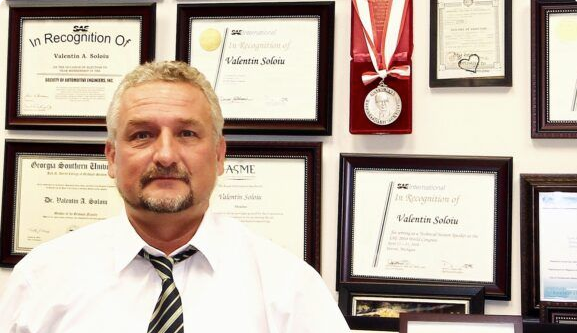
Georgia Southern University’s Allen E. Paulson College of Engineering and Computing and College of Education are teaming up to bring the latest innovative research on renewable energy to STEM educators and their classrooms across Georgia. That’s all thanks to a $600,000 grant from the National Science Foundation to establish the Engaging Educators in Renewable Energy (ENERGY) program. The funds will support a three-year-long initiative that will bring Valentin Soloiu, Ph.D.’s energy research into high school and technical college classrooms. Soloiu and engineering graduate students from Georgia Southern will conduct research related to renewable energy, reducing greenhouse gas emissions, and mitigating climate change, covering topics like renewable and alternative energy (solar and wind), climate change, enhanced energy technologies and the development of sensors and controls for energy applications and smart grids. Soloiu, the Allen E. Paulson Distinguished Chair of Renewable Energy, will be joined by mechanical engineering professor Mosfequr Rahman, Ph.D. and Elise Cain, Ph.D., director of the Educational Leadership Program in the College of Education, in developing the program. “The core requirement is to conduct state-of-the-art, transformative research in science and engineering,” explained Soloiu. “After that is complete, we bring high school and technical college teachers in to translate this research into classroom-ready modules.” Teachers will be selected from a large pool of statewide applicants to work alongside faculty and graduate students from the College of Engineering and Computing. They’ll also receive funds to incorporate that research into their curriculum. Soloiu will oversee the program as the principal investigator, with Cain serving as the education lead, bringing a multidisciplinary approach to the program. “I think interdisciplinary collaborations are vital in academic work,” noted Cain. “Faculty from the Allen E. Paulson College of Engineering and Computing contribute their technical knowledge and skills related to renewable energy, while I bring my College of Education perspectives on educational contexts and pedagogy. Working together allows us to create a robust program with immediate and lasting impacts.” Educators will visit local companies and interact with leaders in renewable energy, such as Gulfstream Aerospace in Savannah, Georgia, and Rolls-Royce Power Systems in Aiken, South Carolina. These experiences are designed to help teachers share career opportunities with students they might not otherwise encounter. “This program reflects the essence of our institutional mission,” said Cain. “It’s about discovery, teaching, and community engagement—all grounded in excellence and innovation.” Soloiu echoed those sentiments. “Many teachers and students in rural areas don’t even know what we do here at Georgia Southern,” explained Soloiu. “By engaging with educators directly, we’re creating awareness, inspiration, and pipelines to higher education and high-tech careers. This is reflective of the University’s dedication to our communities as we move towards R1 status.” Looking to know more about this important research happening at Georgia Southern - Valentin Soloiu is available to speak with media. Simply click on his icon now to arrange an interview today.

Georgia Southern reaches new economic impact record of $1.167 billion
Recent reports from the University System of Georgia (USG) show Georgia Southern University continues its legacy of significant economic impact on its surrounding region. According to the USG’s latest Economic Impact report, the system recorded a $23.1 billion total economic impact from July 1, 2023 until June 30, 2024. In the same period, Georgia Southern continues to reach new heights with a record annual economic impact of $1.167 billion for FY 2024, a 1.9% increase over the previous year. “Georgia Southern’s record economic impact across the region reflects the extraordinary dedication of our faculty and staff on all three campuses to ensuring we continue to meet the needs of our students and our region today and into the future,” said Georgia Southern President Kyle Marrero. “We remain steadfast in our goals of graduating career-ready students, advancing the economic development of the region and elevating our public impact research enterprise.” The report shows there are 3,096 jobs on Georgia Southern’s campuses in Statesboro, Savannah and Hinesville. Because of institution-related spending, an additional 6,627 jobs exist off-campus, totaling 9,723 jobs due to institution-related spending in fiscal year 2024. The report also noted that Georgia Southern students spent $442,818,489 in the region in fiscal year 2024. In addition, the USG’s newest Lifetime Earnings study found that bachelor’s degree graduates from the class of 2024 will earn, on average, more than $1.4 million above what they would without a college degree through their lifetime. The findings confirm how much each level of higher education can add to a USG graduate’s total earnings throughout their lives. Across the entire USG, the analysis showed that the 73,006 degrees conferred by USG institutions can expect combined total lifetime earnings of $230 billion. “A degree from one of USG’s 26 public colleges and universities is a million-dollar deal for graduates and a billion-dollar boost for Georgia,” USG Chancellor Sonny Perdue said. “Students see real returns through higher earnings and better opportunities. Meanwhile, our institutions power Georgia’s economy and help local communities thrive.” Georgia high school graduates who obtain a bachelor’s degree will boost their state work-life earnings by 82%, surpassing the 80% increase estimated for the nation. Georgia Southern University conferred 5,172 degrees in FY 2024. This group of degree recipients can expect their combined work in Georgia to total lifetime earnings of $16.54 billion. The report also broke down total Georgia lifetime earning predictions by degree: The 102 GS graduates with doctoral degrees will earn a total of $429 million. The 1,116 GS graduates with master’s degrees will earn a total of $3.8 billion. The 3,870 GS graduates with bachelor’s degrees will earn a total of $12.5 billion. The 45 GS graduates with associate degrees will earn a total of $97.9 million. The 39 GS graduates with certificates will earn a total of $78.2 million. The Lifetime Earnings report also shows the U.S. work-life earnings for graduates. For example, all Georgia Southern students who graduated in the class of 2024 who graduated with a bachelor’s degree will earn a collective $12.6 billion in their lifetimes. Without the degree, their projected lifetime earnings would only be a collective $7 billion. The Economic Impact as well as the Lifetime Earnings studies were both conducted on behalf of USG by Jeffrey M. Humphreys, Ph.D., director of the Selig Center for Economic Growth in the University of Georgia’s Terry College of Business. If you're interested in knowing more about Georgia Southern University - simply contact Georgia Southern's Director of Communications Jennifer Wise at jwise@georgiasouthern.edu to arrange an interview today.

Georgia Southern researchers survey flood-stricken area of Bangladesh
Cox’s Bazar is a bustling tourist destination located on the southeastern coast of Bangladesh. It’s home to more than 3 million people living along the longest naturally occurring sea beach in the world, extending into the Bay of Bengal. But during the monsoon season, the area is prone to flooding and frequent landslides due to its geographical location and low altitude. More than 7,000 people living in the region were displaced in 2024 after a particularly severe season that destroyed thousands of shelters, leaving three dead. Georgia Southern University Assistant Professor Munshi Rahman, Ph.D., knows the dangers and devastation monsoon season can bring to this area. As a native of Bangladesh, he has witnessed firsthand how environmental changes, urbanization and deforestation contribute to the devastation. This is why he is actively working to help his home country identify the most disaster-prone areas through the use of geographic information systems and surveys. In January, Rahman and junior geoscience major Emma Robinson traveled to Cox’s Bazar to survey and identify the areas most prone to landslides and flooding with a goal of providing data to local government and nongovernmental organizations that could help address disaster risks. Robinson says she was thrilled to gain experience in field research and engage in work she’s passionate about. “Dr. Rahman’s project really inspired me because I’ve always had a drive to help the environment,” she said. “I thought this would be a great first step into research, especially since geology and geography are so closely related.” The two used geographic information systems, GPS and community input to pinpoint vulnerable spots near residential areas and population centers. Specifically, they found that many homes and refugee camps were built on slopes. Aside from being geographically vulnerable, they observed that many of these dwellings, built from bamboo poles, tarps, and corrugated metal, lacked the infrastructure to withstand flooding. “The key findings reveal a serious environmental degradation on local landscapes exacerbating the frequency and severity of landslides and flooding events in the region,” Rahman said. He added that these insights highlight the urgency for sustainable ecosystem management and the adoption of inclusive disaster management to reduce social and environmental vulnerabilities Rahman and Robinson suggest that their findings, combined with additional socioeconomic research, could provide a more comprehensive understanding of the situation on the ground. This would enhance disaster preparedness while promoting sustainable land use. “Not too many undergrads have opportunities like this,” she said. “I know this will help me get a jump-start on my senior thesis and give me a whole new perspective for future research projects. It’s made me more confident overall as a student and researcher.” Rahman is similarly grateful for the opportunity to give his students experience in the field. “As a professor, I’ve always wanted to give my students as much real-world experience as possible,” he said. “I also give Emma full credit. Prior to this trip, she had never traveled outside the U.S. She showed incredible courage and a real talent for research.”

Georgia Southern professor receives national faculty mentor award
The Council on Undergraduate Research (CUR) named Georgia Southern University English Professor Olivia Carr Edenfield, Ph.D., the winner of the 2025 Arts and Humanities Faculty Mentor Award. The award recognizes faculty who go above and beyond to nurture undergraduate research, scholarship and creative work. Edenfield’s record of taking student research to new heights set her apart from a nationwide field of candidates. After joining Eagle Nation as a professor in 1986, Edenfield has helped her students become published researchers and presenters at local and national conferences. She said seeing those hardworking students excel has been her real reward. “Receiving this award is deeply personal,” Edenfield wrote in her CUR nomination statement. “My greatest joy in teaching has come from my students’ successes.” During her time as associate dean for Student Affairs in the former College of Liberal Arts and Social Sciences (CLASS), she launched the college’s undergraduate research symposium, now known as CURIO. She also helped establish a Center for Undergraduate Research for CLASS and set up residential interest groups to encourage students to share their love of different subjects with each other. Edenfield has helped her students achieve access to opportunities on a national level. She has served as director of the American Literature Association (ALA) since 2019, where she started a unique program that places Georgia Southern English majors in high-level administrative roles for ALA conferences. Seven of Edenfield’s students have had their work published in The Richard Macksey Journal at Johns Hopkins University. Many of her students have also presented their research at national and international conferences. Georgia Southern student Maegan Bishop’s presentation at the 2023 American Literature Association Annual Conference, based on research from Edenfield’s undergraduate class, was so impressive that she was invited to present her work at a conference on the short story at the University of Mainz, which covered all of her expenses. “My own experiences with Dr. Edenfield are only a small example of the work she has done to mentor undergraduates at Georgia Southern,” said Bishop. “She is constantly doing everything in her power to assist her students with whatever they need, extending every opportunity to those who express interest in becoming more involved in literary scholarship and campus activities.” David Owen, Ph.D., dean of the College of Arts and Humanities, emphasized how much Edenfield cares for her students, noting that her passion to help them succeed is second to none. “Mentoring is not a side note to Edenfield’s career, it is the throughline,” said Owen. “Her students succeed not just because of her guidance, but because she teaches them how to believe in their own voices.” The Faculty Mentor Award is the latest in a distinguished line of recognition for Edenfield. In 2016, she was named both the CURIO Mentor of the Year and the Wells-Warren Professor of the Year at Georgia Southern. She is a three-time recipient of her college’s Award for Distinction in Teaching, winning in 2016, 2020 and 2024. Edenfield was also a member of the inaugural class of the Governor’s Teaching Fellows program in 1995. ___ If you're interested in learning more about Georgia Southern's College of Arts and Humanities and want to book time to talk or interview, let us help - simply contact Georgia Southern's Director of Communications Jennifer Wise at jwise@georgiasouthern.edu to arrange an interview today.
AU research team awarded $4.4 million American Heart Association grant
A research team at Augusta University, led by Jennifer C. Sullivan, PhD, has secured a $4.4 million grant from the American Heart Association to study the risk factors for cardiovascular and kidney diseases and how they impact women. Sullivan’s research center, “Disruptions in cardiorenal free fatty acid metabolism in Cardiovascular Kidney Metabolic Syndrome,” is part of a larger $15 million project titled “Strategically Focused Research Network on Cardiovascular Kidney Metabolic Syndrome: Heterogeneity in Women.” The overarching AHA project is aimed at learning why women may be more likely to develop cardiovascular and kidney diseases due to certain unique risk factors and life stages. Research teams from Massachusetts General Hospital and The Ohio State University were also chosen. “I think this is a huge step for Augusta University as we continue to distinguish ourselves and the research that we have here focused on the health of women,” said Sullivan, dean of The Graduate School. “This grant is particularly impactful as we look to advance and improve the health of women, not just in Georgia, but for the entire country.” According to the Healthy Georgia Report, produced by AU’s School of Public Health, Georgia has the 23rd highest rate of obesity in the United States. Among the women living in the state, 38.3% of them, as well as 37.5% of people living in rural areas, suffer from obesity. “It’s great that we are able to represent the state of Georgia because our state has such a high prevalence for obesity rates,” said Sullivan, who is the director of AU’s SCORE project “Improving awareness of women with hypertension: ROAR (Rural, Obese, At Risk).” “It’s important for us to understand that different populations have distinct needs. You can’t talk about a one-size-fits-all approach to health. This is really about trying to understand how different groups are impacted.” Each center is comprised of three teams, as well as a training component and an area partner. Together, they will explore obesity’s lifetime impact on CKM syndrome through three projects. CKM syndrome is a clinical term that describes the combined health effects of heart disease, kidney disease, diabetes and obesity, which puts people at high risk for heart attack, stroke and heart failure. According to the American Heart Association’s 2025 Heart Disease and Stroke Statistics, about 1 in 3 U.S. adults has at least three components of CKM syndrome, which include high blood pressure, abnormal cholesterol, high blood glucose (sugar), impaired kidney function and excess body weight. The first project is led by Daria Ilatovskaya, PhD, and Justine Abais-Battad, PhD, and will look at aging and Western diet-induced CKMS mechanisms in obesity. Ilatovskaya is an associate professor and the graduate program director for the Doctor of Philosophy in Physiology program, and Abais-Battad is an assistant professor in the Department of Physiology with the Medical College of Georgia at Augusta University. The second component, led by Jessica Faulkner, PhD, an assistant professor in MCG’s Physiology department, will study obesity-associated mechanisms of CKMS in pregnancy. The third project, led by Stephen Coughlin, PhD, with Marlo Vernon, PhD, is looking at CKMS epidemiology, associations with obesity, CVD/CKD. Coughlin is the program director for the Master of Science in Epidemiology and professor of epidemiology in the School of Public Health’s Department of Biostatistics, Data Science, and Epidemiology, while Vernon is an associate professor with MCG’s Georgia Prevention Institute and SPH’s Department of Community and Behavioral Health Sciences. Additionally, the team will talk to women and health care providers from a variety of backgrounds and experiences to assess current knowledge and interest levels in heart health and use that information to develop programs that may help treat and prevent disease. There is also a training director, Alison Kriegel, PhD, a professor in the Department of Physiology, and a core director, Guido Verbeck, PhD, chair and professor of the Department of Chemistry and Biochemistry in the College of Science and Mathematics. “We have a strong blend of clinical epidemiology and basic science, as well as a training component, which we will fill with post-doctoral fellows,” Sullivan said. “Dr. Ilatovskaya, Dr. Faulkner, Dr. Abais-Battad and Dr. Vernon are all a part of our ROAR grant, and, while this isn’t directly related to that program, it allowed us to demonstrate how we are already well positioned to work together to amplify our ability and increase awareness about the importance of the health of women.” The team has over 50 collaborative papers and has secured more than $13 million in collaborative funding to advance the health of women. They also all have experience training fellows and students to continue to expand their reach. “We already have a lot of the infrastructure in place for this kind of cross-disciplinary project, so we leaned very heavily into our connections and the expertise we have here at Augusta University. It’s set up very similar to our ROAR program, so this is something that was really organic in nature,” Sullivan said. The American Heart Association has invested almost $300 million to establish 18 Strategically Focused Research Networks, each aimed at addressing a key strategic issue identified by the association’s volunteer Board of Directors. Prior networks have been studying a wide variety of important topics including, but not limited to, prevention, hypertension, the health of women, heart failure, obesity, vascular disease, atrial fibrillation, arrhythmias/sudden cardiac death, cardiometabolic health/type 2 diabetes, health technology, cardio-oncology, the biological impact of chronic psychosocial stress and the role of inflammation in cardiovascular health. Each network centers around scientific knowledge and knowledge gaps, prevention, diagnosis and treatment of the key research topic. Three to six research centers make up each network, bringing together investigators with expertise in basic, clinical and population/behavioral health science to find new ways to diagnose, treat and prevent heart disease and stroke. Funding scientific research and discovery through initiatives like these awards is a cornerstone of the century-old American Heart Association’s lifesaving mission. The association has now funded more than $5.9 billion in cardiovascular, cerebrovascular and brain health research since 1949, making it the single largest non-government supporter of heart and brain health research in the United States. New knowledge resulting from this funding continues to save lives and directly impact millions of people in every corner of the U.S. and around the world. Looking to know more about the amazing research happening at Augusta? To connect with Dr. Sullivan, simply click on her icon to arrange an interview today.


FAST nanotechnology unveiled at Rome Global Congress by AU scientist
Stephen Hsu, PhD, a professor at the Dental College of Georgia at Augusta University, unveiled his groundbreaking nanotechnology, known as FAST, during a keynote address at the 8th World Congress on Infectious Diseases in Rome, Italy. FAST, or Facilitated Self-Assembling Technology, offers a revolutionary way to convert compounds that are difficult to dissolve in water into stable nanoparticles. This innovation could transform drug development, viral infection prevention, hospital hygiene and more. “FAST takes a completely different approach from traditional nanotechnology,” Hsu explained. “Unlike methods that rely on polymers, metals, surfactants, fat-based carriers or complex engineering processes, FAST allows compounds to self-assemble into nanoparticles with minimal effort. This makes drugs that were once nearly impossible to formulate in water stable, effective and practical for medical and consumer use.” At the heart of this innovation is EC16, or EGCG-palmitate, a lipid-soluble compound derived from green tea. Known for its antioxidant, anticancer, anti-inflammatory and antimicrobial properties, green tea has long been studied but is challenging to use in clinical settings due to stability issues. FAST overcomes these limitations, transforming EC16 and other hydrophobic compounds into water-friendly nanoparticles. “You can’t even tell the particles are there,” said Hsu. “They look just like water. I made several different formulations in one afternoon in my lab. It’s that fast and simple.” A natural solution to global challenges Hsu’s work is the culmination of decades of research and a deeply personal journey. He credits green tea with helping him survive illness during his youth in a labor camp in China. Now, he’s turning its natural properties into cutting-edge therapies with the hope of helping more people. “I’ve been drinking green tea my entire life,” Hsu said. “Now, we’re turning its benefits into medical-grade treatments.” Supported by over $600,000 in NIH grants, Hsu’s team is developing applications like alcohol-free disinfectants and nasal sprays to prevent respiratory virus infections. One promising product is an EC16-based disinfectant that is natural, non-toxic and highly effective against tough pathogens, like norovirus and C. difficile, a bacterium that can cause severe diarrhea. “That’s a big deal for schools, hospitals and places like cruise ships, where these infections spread easily,” he said. Tackling long COVID and beyond Among FAST’s most promising applications is a nasal spray developed to prevent or treat long COVID and other respiratory illnesses. The spray, currently undergoing preclinical testing, targets viral entry points in the nasal mucosa, where infections often begin. “Our goal is to help immunocompromised patients and those with lingering symptoms like brain fog and loss of smell,” Hsu said. “We’ve already seen strong in vitro results against human coronavirus and norovirus.” In addition to nasal and topical treatments, Hsu’s team has developed oral formulations of EC16 that remain stable through the stomach’s acidic environment, critical for treating gastrointestinal viruses and potentially inflammatory bowel diseases like Crohn’s. “We found that even without direct contact with the virus, the EC16 nanoparticles taken by mouth can reduce infection,” Hsu explained. “That’s a major step forward in treatment of digestive tract viral infections.” A platform for the future of medicine FAST isn’t limited to green tea compounds. Hsu’s method can transform a wide range of hydrophobic compounds like cannabidiol, ivermectin, quercetin, procyanidin and retinoic acid, as well as hundreds of existing drugs, into nanoparticle suspensions that are stable and water-friendly. This has huge implications,” said Hsu. “Up to 90% of new drug candidates have poor water solubility and low bioavailability, which limits their effectiveness. With FAST, we can change that.” His lab is already exploring applications in Alzheimer’s research, cancer therapy, oral health and even anti-biofilm coatings to prevent hospital infections. These products, along with the nasal spray, are expected to hit the market this fall. Hsu is currently finalizing publications and preparing patent filings to protect and expand the reach of FAST. While optimistic, he remains cautious. “The results so far are phenomenal. FAST could be a new chapter in how we fight disease and deliver medicine,” Hsu said. Looking to know more about FAST nanotechnology and the research happening at Augusta University? To connect with Dr. Stephen Hsu - simply contact AU's External Communications Team mediarelations@augusta.edu to arrange an interview today.