
Experts Matter. Find Yours.
Connect for media, speaking, professional opportunities & more.
Augusta University named NIH Specialized Center of Research Excellence on Sex Differences
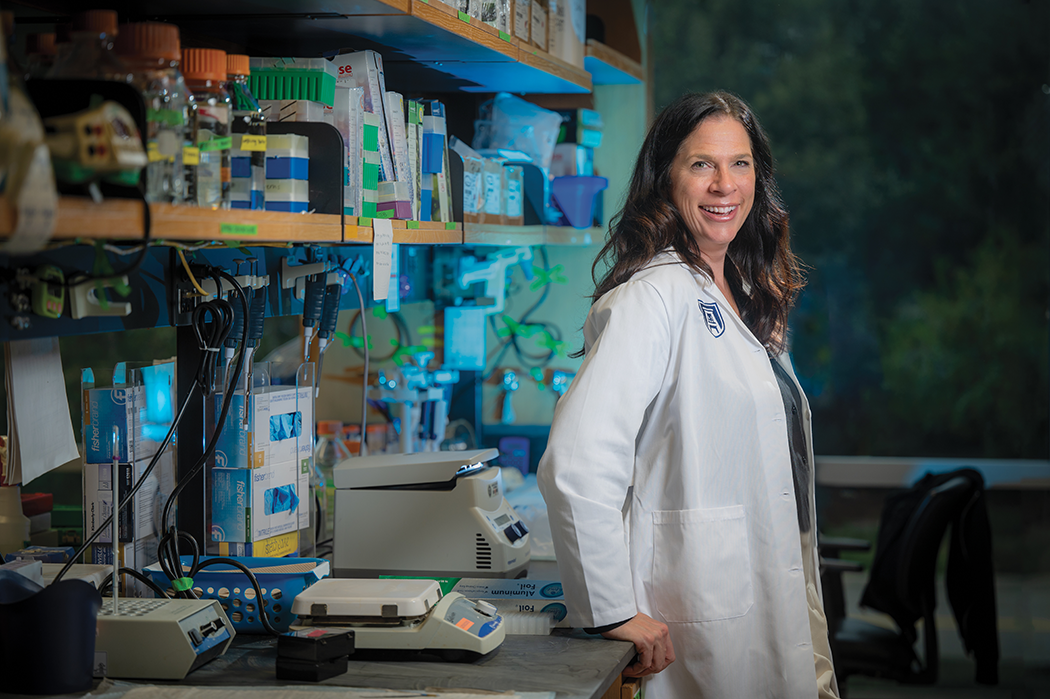
Jennifer C. Sullivan, PhD, dean of The Graduate School at Augusta University, has dedicated her research to better understand why blood pressure increases in hypertension and raising awareness to the dangers of not paying attention to heart health, particularly among women. Throughout her career, Sullivan has been continuously funded by the National Institutes of Health (NIH) and the American Heart Association since becoming a tenure-track faculty member in 2008, and now she has a chance to take her research further after securing a five-year, $7.5 million grant to have Augusta University designated as a Specialized Center of Research Excellence on Sex Differences (SCORE) by the NIH’s Office of Research on Women’s Health. It’s a distinction that places AU among 10 other leaders in research for the field, including Brigham and Women’s Hospital, Cedars-Sinai Medical Center, Emory University, Johns Hopkins University, Massachusetts General Hospital and Harvard Medical School, the Mayo Clinic, the Medical University of South Carolina, the University of Colorado and Yale University. The University of California, Los Angeles has two SCORE programs. “I’m so proud and excited for this opportunity because this has been what I have focused my research program on for my entire career, and to be able to advance it with a program like this, where we can actually build a unique program focused on an area that can make a difference, is just so much fun,” Sullivan said. “Just the fact that Augusta will be included on this list, attached to an organization of the caliber of NIH, will provide opportunities that we’ve never had before, especially for our students and younger researchers.” Sullivan’s SCORE project, “Improving awareness of women with hypertension: ROAR (Rural, Obese, At Risk),” focuses primarily on the fact that, while young women are considered “protected” from hypertension and the associated cardiovascular risk relative to age-matched men, the elimination of hypertension is projected to have a larger impact on cardiovascular disease (CVD) mortality in women. “The group of people with the highest risk of death from hypertension is in the rural South of the U.S., specifically Black women are particularly vulnerable to developing hypertension and CVD,” Sullivan said. According to Sullivan’s research and information available from the American Heart Association (AHA), approximately 19 million deaths were attributed to CVD globally in 2020, an increase of about 20% from 2010. Both Sullivan and the AHA state that cardiovascular disease remains the leading cause of death for both men and women in the United States, and that hypertension is a major modifiable risk factor for CVD. Sullivan said, “It has been suggested that eliminating hypertension would reduce CVD mortality by over 30% in men and 38% in women, but a critical barrier to limiting premature death from CVD is lack of awareness surrounding the risks of CVD. Our overall goal in this new funded project is to transform academic and community understanding of sex as a biological variable in the consideration of hypertension.” The three research projects include Sullivan’s lead project on high fat diets, a project on systemic lupus erythematosus (SLE) disproportionately affects young women led by Erin Taylor, PhD, at the University of Mississippi Medical Center, and another project looking at the role of inflammation and how immune cells are activated in SLE led by Michael Ryan, PhD, at the University of South Carlina’s School of Medicine. But there is more to SCORE than just conducting research. Each SCORE team is also responsible for a career enhancement core and a leadership administrative core. “What really sets these grants apart are the emphasis on the career enhancement and leadership administrative cores. The Career Enhancement Core is designed to be a bit open ended for each SCORE, but in talking to the NIH, what they were most excited about in our project is the community outreach piece we designed. “Our grant includes people across the entire campus, including Augusta University’s Medical College of Georgia, the College of Allied Health Sciences, the College of Education and Human Development and multiple campus partners including some of our sororities on campus and the Center for Writing Excellence,” Sullivan said. “More specifically, the COEHD is able to extend our outreach efforts to our local schools to begin educating children on the importance of screening, and our sororities are obviously connected with other chapters across the southeast which helps us spread our message, as well.” Sullivan notes that, through this portion of the project alone, there will be numerous opportunities to include students from Augusta University’s CAHS, College of Nursing, Department of Kinesiology, the Biomedical Sciences PhD program and the proposed School of Public Health. Marlo Vernon, PhD, associate professor at MCG and researcher for the Georgia Cancer Center, and Amanda Behr, chair of the Medical Illustration Program in CAHS, are also involved in various stages of the project. “The other thing the Career Enhancement Core will do is provide pilot grants to three research projects each year for early-stage investigators. We’ll also be able to fund sabbaticals for graduate students or postdocs to go someplace else and learn cutting edge techniques from other experts, so there is a lot built in that will help us support up-and-coming researchers,” Sullivan said. “We’re now part of this consortium, and they have a once-a-year, in-person meeting at the NIH offices, so we’ll go to that for the first time this year, and what’s neat about it is they’re really promoting young investigators. Each grant can bring up to eight people, the our hope is that we will have the investigators funded by the pilot projects attend next year, giving those folks the opportunity to present and talk to program officers with the NIH and develop a pipeline of investigators committed to studying women’s health and sex as a biological variable.” Sullivan is also looking to designate some of her summer graduate and undergraduate research positions to the project beginning next summer. “The Graduate School already has a summer program to support undergraduates that we will be able to piggyback off of. We have set aside five slots in that program for this that will go to students studying the sex as a biological variable, and the applications for that program, STAR, is already open,” Sullivan said. “We’re also planning a symposium in collaboration with the Physiology Department in April 2024. This is an annual event sponsored by the department, and this year they selected sex differences as the topic, so we are hoping to help increase exposure and attendance.” Looking to know more about the amazing research happening at Augusta? To connect with Jennifer Sullivan, simply click on her icon ow to arrange an interview today.


Georgia Southern University’s Office of Student Wellness and Health Promotion, Jiann-Ping Hsu College of Public Health (JPHCOPH) Center for Addiction Recovery and Health Services have partnered to provide overdose prevention education to the campus community. The University will distribute naloxone, which is used to rapidly and temporarily reverse the effects of an opioid overdose, allowing time for first responders to arrive and initiate further intervention, to the campus community at no cost. Savannah nonprofit No More O.D.s donated a large quantity of naloxone to Georgia Southern for this purpose. “The health and safety of our campus and the many visitors it welcomes are of high priority,” said Shay Little, Ph.D., vice president for Student Affairs. “By increasing access to naloxone we are equipping our community with another life-saving tool.” Georgia Southern Public Health Administrator Sean Bear, DPH, agrees. “Naloxone is a life-saving medication,” he noted. “It is safe, fast-acting and easy to use.” Although many in the Georgia Southern community do not consume alcohol or other recreational substances, opioid overdoses can occur under a number of circumstances. Misuse of prescription opioids provided by a health care provider or the use of illegal opioids can result in negative health consequences, including overdoses. Some common prescription opioids include codeine, morphine, hydrocodone and oxycodone, among others. Counterfeit pills designed to look like prescription opioids often contain a synthetic opioid known as fentanyl, with many of these pills containing enough fentanyl in just one dose to cause an opioid overdose. “The primary aim of distributing naloxone and providing education on overdose prevention, recognition and response is to save lives,” said Robert Bohler, Ph.D., JPHCOPH assistant professor. Just as AED/CPR first aid boxes are placed strategically across campus, naloxone kits and utilization instructions will be placed in high-traffic, high-risk areas. Distribution locations include the Campus Food Pantries (all campuses), Center for Addiction and Recovery (Statesboro Campus), Health Centers (Statesboro and Armstrong campuses), Counseling Centers (Statesboro and Armstrong campuses), and Student Wellness and Health Promotion (Statesboro and Armstrong campuses). “All naloxone packages come with instructions, however, additional educational information, such as a video link on how to administer naloxone, where to find additional information and more will be available at each of these distribution locations,” said Gemma Skuraton, DPH, director of Student Wellness and Health Promotion. Universities play a vital role in promoting harm-reduction strategies. As such, Georgia Southern is committed to ensuring the availability, accessibility and education surrounding naloxone on each of its campuses. Educational initiatives will focus on overdose prevention, recognizing signs and symptoms of overdose, overdose response planning, naloxone administration, legal protections (Georgia’s 911 Medical Amnesty Law and Georgia Southern’s Amnesty Protocol), bystander intervention, and treatment and recovery service availability on campus and in the community. You can sign-up for an open workshop to learn more on the Student Wellness and Health Promotion webpage: Interested in learning more? If you want to connect with any of the experts from this story and want to book time to talk or interview, then let us help - simply contact Georgia Southern's Director of Communications Jennifer Wise at jwise@georgiasouthern.edu to arrange an interview today.


Masoud Davari, Ph.D., associate professor of Electrical and Computer Engineering in the Allen E. Paulson College of Engineering & Computing, was recognized for his achievements in the field of power electronics control and testing with the IEEE Region 3 Outstanding Engineer Award. He was also granted membership into Eta Kappa Nu (HKN), IEEE’s international honor society. IEEE, the Institute of Electrical and Electronics Engineers, is the world’s largest professional organization for electrical engineers, with its membership numbering over 486,000 in more than 190 countries. Davari has been a member of IEEE since 2008 and a senior member of IEEE’s Region 3 since 2019. The organization’s Region 3 encompasses the southeastern United States and has over 24,000 members. The Outstanding Engineer Award, given annually to one member per region, recognizes those who have advanced knowledge and improved humanity through any of the technical subjects covered by the IEEE societies, councils, and affinity groups. Davari was praised for “outstanding, technical, and professional contributions to synthesizing reinforcement learning optimal controls for power electronic converters, creating robust integration of power electronics considering the impact of cyberattacks on modern grids, and advancing IEEE standards for hardware-in-the-loop testing and education through impactful research and service.” This impactful research and service includes eight years of teaching at Georgia Southern. He currently teaches introductory courses on circuit analysis and power systems fundamentals. He has also served as a chapter lead of the IEEE Working Group (WG) P2004 for testing based on hardware-in-the-loop simulations in the IEEE Standards Association (IEEE SA) and that of the IEEE Power and Energy Society Task Force on innovative teaching methods for modern power and energy systems (TR 120). In addition to being an engaged educator, Davari is also a prolific researcher. He was selected as the finalist for the 2024 Curtis W. McGraw Research Award by the Awards Committee of the American Society for Engineering Education (ASEE); has also been awarded a research fellowship by Gulfstream Aerospace Corporation in 2024; was included in Stanford/Elsevier’s Top 2% Scientist Rankings list; and has received $1.17 million in grants from the National Science Foundation Davari’s work ethic and commitment to bridging the gap between industry and research led Rami Haddad, Ph.D., interim dean of the College of Engineering & Computing, to nominate him. “Dr. Davari’s recognition as the IEEE Region 3 Outstanding Engineer and his induction into IEEE-Eta Kappa Nu (HKN) are truly remarkable honors that reflect his outstanding contributions to electrical and computer engineering,” Haddad said. “Being recognized among more than 24,000 IEEE members across the Southeast is a testament to the impact and excellence of his work. We are proud to have Dr. Davari as a valued member of our college, and we celebrate his achievements as a shining example of the innovation and leadership that define our faculty.” This award marks the first time a Georgia Southern faculty member has received it in its 55-year history. It is a career milestone for Davari, who has published research on advanced technology integration into modern power and energy systems in high-impact-factor IEEE Transactions/Journal venues and has extensively researched the era of grid-edge technologies. “I’m deeply honored by this prestigious award,” Davari said. “Not only does it reaffirm my dedication to my research field, but it also fuels my passion for creating a technologically advanced future. Receiving this IEEE award on behalf of my outstanding team is a privilege. Their relentless commitment and hard work since 2015 have truly made this achievement possible.” Davari’s induction into HKN places him among the best in his field. The membership, which is received through invitation only from HKN’s Board of Governors and is based on the candidate’s record of contributions to the field, demonstrated leadership, and community service. “With a legacy that stretches over a century, IEEE-HKN represents the pinnacle of prestige and tradition in our profession, indicating academic achievements and dedication to research, potential leadership, exemplary character, and a positive attitude. Notably, many of our industry’s most influential leaders initiated their journeys through induction into IEEE-HKN as professional members, so receiving this honor is a privilege.” Davari received his award and was inducted into Eta Kappa Nu (HKN) in March at IEEE Region 3’s SoutheastCon 2025 in Charlotte, North Carolina. If you're interested in learning more and want to book time to talk or interview with Masoud Davari then let us help - simply contact Georgia Southern's Director of Communications Jennifer Wise at jwise@georgiasouthern.edu to arrange an interview today.

Sevki Cesmeci, Ph.D., associate professor of mechanical engineering in the Allen E. Paulson College of Engineering and Computing at Georgia Southern University, has been selected to take part in the 2025-2026 Governor’s Teaching Fellows (GTF) Academic Year Program in Georgia. This program is designed to provide Georgia’s higher education faculty with expanded opportunities for developing teaching skills and innovative pedagogies. “I am grateful to have been nominated by Provost Reiber as Georgia Southern University’s sole nominee,” Cesmeci said. “I have been deeply passionate about both research and teaching during my time at Georgia Southern, and I am grateful for the opportunity to contribute meaningfully to both.” GTF chose only 16 faculty members from across Georgia’s higher education institutions. Cesmeci’s innovative teaching strategies and methods were integral to his nomination. His work with leading textbook publisher McGraw Hill was one project that garnered recognition, as he worked with professors across the country to create an online, application-based activity (ABA) for fluid mechanics problems. “ABA is a next-generation learning method based on a storytelling-teaching strategy,” Cesmeci said. “Students are challenged with questions and guided through detailed feedback at each step of the solution.” In addition to research accolades, Cesmeci has been recognized for his teaching excellence at Georgia Southern with the 2022-2023 Georgia Southern University Award of Excellence in Student Success and the 2023-2024 Allen E. Paulson College of Engineering and Computing Faculty Award for Teaching. Through his participation in GTF, Cesmeci plans to integrate artificial intelligence tools into the mechanical engineering curriculum. “Unlike disciplines such as computer science and electrical engineering, mechanical engineering curricula have been slower to adopt contemporary and innovative tools,” Cesmeci said. “I hope to leverage this experience in the GTF program to enhance curriculum development at Georgia Southern, sharing insights and best practices to advance mechanical engineering education.” Hosted at the University of Georgia, GTF brings together faculty from accredited private and public institutions across the state for a series of interactive seminars focused on teaching practices, faculty development and course design. Throughout the program, fellows will work on a course design or instructional improvement project aimed at enhancing student learning. “I look forward to engaging with fellow educators, refining my teaching strategies and bringing new insights back to Georgia Southern students,” Cesmeci said. If you're interested in learning more and want to book time to talk or interview with Sevki Cesmeci then let us help - simply contact Georgia Southern's Director of Communications Jennifer Wise at jwise@georgiasouthern.edu to arrange an interview today.

Brent Feske, Ph.D., has been named associate vice president for Research in the Office of Research and Economic Development, effective March 1. Feske has served as the interim associate vice president for Research since Sept. 1, 2024. In this short time, he has already significantly impacted the University’s research enterprise. As interim associate vice president for Research, Feske prioritized engaging with the people in his office and the colleges conducting research. “I’ve settled in and moved past the introductory phase,” he said. “I feel I’ve gained a strong understanding of each college’s needs, wants, and aspirations. Together, we’ve laid a solid foundation, and I’m excited to see how our scholarship enterprise can grow and how the Office of Research and Economic Development can help each college reach its full potential.” With nearly twenty years of experience as a dedicated faculty member, Feske brought valuable leadership to the Office of Research and Economic Development. Under his guidance, the office increased internal funding mechanisms to support research, doctoral students and external grant writing. He has also led improvements in how research expenditures are captured and properly coded, providing a clearer picture of the Georgia Southern research landscape. Additionally, he has played a key role in expanding the pre-award team, ensuring better support for faculty and staff throughout the grant submission and award process. “I’m thrilled to have Dr. Feske permanently join the team,” said Vice President for Research and Economic Development David C. Weindorf, Ph.D. “His experience as an administrator and a faculty member really does give him a 360-degree view of the research enterprise and makes him uniquely qualified to lead and help us grow in every aspect. We’ve already accomplished so much, and I can’t wait to see what comes next.” If you want to book time to talk or interview with Brent Feske about his new role, then let us help - simply click on his icon now or contact Georgia Southern's Director of Communications Jennifer Wise at jwise@georgiasouthern.edu to arrange an interview today.


When an invitation to sit on the Georgia Governor’s Council of Economic Advisers arrived in an informal email from a colleague, Michael Toma, Ph.D., welcomed the chance to share his ongoing research on the economic health of southeastern Georgia with Gov. Brian Kemp, the Georgia House of Representatives and Senate leadership and their constituents. However, when he joined a small group of colleagues from around the state in a legislative office near the capitol in Atlanta late last year, the opportunity felt far from casual. “It does seem like it’s an honor because I looked around the table and there were only 10 or so of us from the entire state of Georgia,” said Toma, the Fuller E. Callaway professor of economics in Georgia Southern University’s Parker College of Business. “It’s nice to be invited to join this council informing the executive and legislative branches of government about economic conditions in the state of Georgia. I know the southeastern part of the state, so it’s nice to be recognized and be invited to speak about this region to a state-level audience.” The Governor’s Council of Economic Advisers is a select group of mostly higher education economists from various University System of Georgia institutions, in addition to the chief economist from Georgia Power, who meet annually. Toma, who specializes in macroeconomics and regional economics, is well known for his expertise throughout Savannah and the surrounding region. Since 2000, he has written and distributed The Economic Monitor, a quarterly publication housed within Georgia Southern’s Economics Department and Center for Business Analytics and Economic Research. The economic analysis offers a snapshot of the Savannah Metropolitan Statistical Area economy, including Bryan, Chatham and Effingham counties, and informs business owners across the Coastal Empire. He also regularly speaks to chambers of commerce and business groups in the region. In the governor’s council meeting, which was televised to state legislators, the economists took turns speaking about their respective areas of expertise to Gov. Kemp as part of an educational process and annual update for the executive and legislative branches. “The academics from the different institutions discussed economic conditions in their regions of the state,” Toma said. “I highlighted the activity here in Savannah, the growing manufacturing base and the wages associated with the Hyundai plant being injected into the regional economy, and the build-out of the supply chain for the Hyundai plant. “I discussed manufacturing development in the context of broader economic growth within the region that’s layered on top of our normal growth pattern, and that the economic development initiative is starting to pay the dividends it was anticipated to pay.” Following each individual presentation, the governor held an open forum for all in attendance to speak more fluidly with the group. “He had questions for the panel in general about small business activity,” stated Toma. “So I was able to characterize the ecosystem for small businesses in Chatham County. “He said that was a great report.” Toma holds a Ph.D. in economics from George Mason University. He joined Georgia Southern on the Armstrong Campus in Savannah in 1997. If you're interested in learning more about this topic and want to book time to talk or interview with Michael Toma then let us help - simply click on his icon now or contact Georgia Southern's Director of Communications Jennifer Wise at jwise@georgiasouthern.edu to arrange an interview today.


Georgia Southern’s Shainaz Landge receives Regents’ Scholarship of Teaching and Learning Award
For Shainaz Landge, Ph.D., pushing boundaries in the classroom and the laboratory isn’t just a professional pursuit, it’s a passion. As an associate professor of organic chemistry at Georgia Southern University, Landge has spent more than a decade inspiring students to soar beyond traditional learning by blending research, mentorship and hands-on experiences that extend far beyond textbooks. That commitment to innovation has earned Landge the Regents’ Scholarship of Teaching and Learning Award, an honor from the University System of Georgia (USG) that recognizes faculty who contribute to the scholarship of teaching and learning through research, leadership and instructional excellence. “Receiving the Regents’ Scholarship of Teaching and Learning Award is a true honor,” said Landge. “It reinforces my passion for teaching and research, inspiring me to strive for excellence every day. My goal is to cultivate an engaging, positive learning environment where students are actively involved and genuinely excited about the learning process.” Landge’s work is grounded in synthetic organic, medicinal and supramolecular chemistry. Her research focuses on developing novel synthetic methodologies with applications in medicinal chemistry and materials science, creating compounds with potential therapeutic properties and supramolecular systems with unique functionalities. “This award is a reflection of Dr. Landge’s deep passion for education and research, and her ability to inspire students to think critically and engage meaningfully with the world around them,” said Provost and Executive Vice President for Academic Affairs Carl Reiber, Ph.D. “At Georgia Southern, we are dedicated to fostering an environment of discovery and innovation, and her work continues to elevate that mission, both in and out of the classroom. We are fortunate to have her as part of our academic community.” This isn’t the first time Landge’s dedication to student engagement and scientific inquiry has garnered recognition. Previously, she earned a University Award of Excellence for Student Success in 2021 and the College of Science and Mathematics Award of Excellence in Research in 2023. “This award is a testament to Dr. Landge’s exceptional contributions to the Scholarship of Teaching and Learning,” said Michael Huggins, Ph.D., dean of the College of Science and Mathematics. “Her innovative approach has not only deepened our understanding of effective teaching but has also led to measurable improvements in student outcomes across the College of Science and Mathematics.” In addition to her research and teaching, Landge has served as a Service-Learning Faculty Fellow (2023-2024) and is a current Research Advocate, reinforcing her commitment to bridging the gap between academic learning and real-world problem-solving. For more information about the Regents’ Scholarship of Teaching and Learning Award, visit : If you're interested in connecting with Shainaz Landge and learning more about her work then let us help - simply contact Georgia Southern's Director of Communications Jennifer Wise at jwise@georgiasouthern.edu to arrange an interview today.

University-wide mental health services strengthened by Georgia Southern’s JED Campus initiative
As a result of Georgia Southern’s commitment to increasing student awareness and access to mental health resources, the University has recently been named a full JED Campus (JED) Member university. Georgia Southern recently completed a four-year partnership with JED, a national collegiate mental health program that guides colleges through a collaborative process of building comprehensive systems, programs and policy development with customized support to build upon existing student mental health, substance use and suicide prevention efforts. Along with the JED efforts, Georgia Southern has significantly increased student awareness and access to mental health resources. A recent report shows that 83% of Georgia Southern University students agree that the administration is listening to the concerns of students around health and wellness. This is a 15% increase since 2020. In 2020, the University System of Georgia launched several system-wide initiatives and resources to increase the mental health awareness and resources for all of its institutions. One of these initiatives was to fund the enrollment of all institutions in the JED Campus program. This included the creation of a JED campus team, an initial campus mental health climate study conducted by the Healthy Minds Institute on behalf of JED, the completion of a Georgia Southern self-study, a campus site visit by JED and the development and completion of a four-year strategic plan. “Engaging in the four-year JED Campus process has enabled Georgia Southern to strengthen and expand its university-wide commitment to the mental health of our students, faculty and staff,” said Jodi K. Caldwell, Ph.D., Counseling Center executive director & JED Campus team lead. “The JED team remains committed to growing Georgia Southern’s efforts in providing awareness, education, resources and support for the well-being of our community. We are grateful to the University System of Georgia, whose support funded this opportunity for all USG institutions and to the support of our Georgia Southern administration.” Recently, the University has increased awareness and resources through programs like the H.E.R.O. Folder. Students aware of mental health outreach efforts grew from 40% to 60%, and those knowing where to seek professional help increased from 78% to 84%, according to the JED feedback report. Additional findings can be found in the full report at the bottom of this article. Georgia Southern will now be considered an alumni of the program, and will continue several of the programs and initiatives launched with JED. If you're interested in learning more about Georgia Southern's partnership with JED and want to book time to talk or interview with Jodi Caldwell then let us help - simply click on her icon now contact Georgia Southern's Director of Communications Jennifer Wise at jwise@georgiasouthern.edu to arrange an interview today.


Experts in the Media: With Kemp bowing out of mid-terms is Georgia staying blue?
Control of the Senate is key for most administrations, and with a razor-thin edge favoring the Republicans, any pickup to keep control of the Senate after the mid-term elections is a priority. However, with a heavy favorite in Gov. Brian Kemp stepping away from the chance to run for the GOP, many are speculating the once traditionally Republican stronghold could stay blue under the Democrats with the re-election of Sen. Jon Ossoff. It's a topic that has political watchers and media trying to cover and figure out as parties get ready to get back on the campaign trail for next year. It's also why journalists and news outlets like Newsweek are connecting with experts like William Hatcher, PhD, for expert opinion and perspective. An award-winning scholar, Hatcher is the chair of the Department of Social Sciences and a professor of political science. His research focuses on the connection between public administration and the development of local communities. Kemp's decision not to challenge Ossoff in the state's 2026 Senate race could be a boon to Democrats' chances of holding the seat in the battleground state, according to recent polls... Kemp's announcement follows months of speculation about whether he would challenge Ossoff, a Democrat first elected in 2020. Polls suggest Kemp would have been the strongest candidate against Ossoff and that other potential Republicans trail the incumbent senator in a hypothetical matchup. "Given that Kemp was perhaps the strongest candidate to face Ossoff, his decision to not run will make it difficult to find another candidate that would be as competitive. However, the election is over a year away, and in politics, a lot can happen in that amount of time," William Hatcher, chair and professor of social sciences at Augusta University, told Newsweek on Tuesday. A poll from the Atlanta Journal-Constitution found that Kemp led Ossoff by 3.3 points (49% to 45.7%), Ossoff led three other prospective challengers. That poll surveyed 1,426 respondents from April 24 to April 27, 2025, and had a margin of error of plus or minus 2.9 percentage points. Hatcher said the state Republicans face a "limited" bench to challenge Ossoff, but whoever prevails will eventually have to defend Trump's "unpopular economic policies that will most likely adversely affect states like Georgia, particularly his recent commentary on leveling tariffs on the film industry – a industry that has a significant presence in Georgia." May 06 - Newsweek The race is obviously already on for the mid-term elections in November of 2026, and if you're a journalist looking to cover Georgia politics, let us help. William Hatcher, PhD, is available to speak with media - simply click on his icon now to arrange an interview today.

Expert Q& A: ‘The Pope is also a monarch’
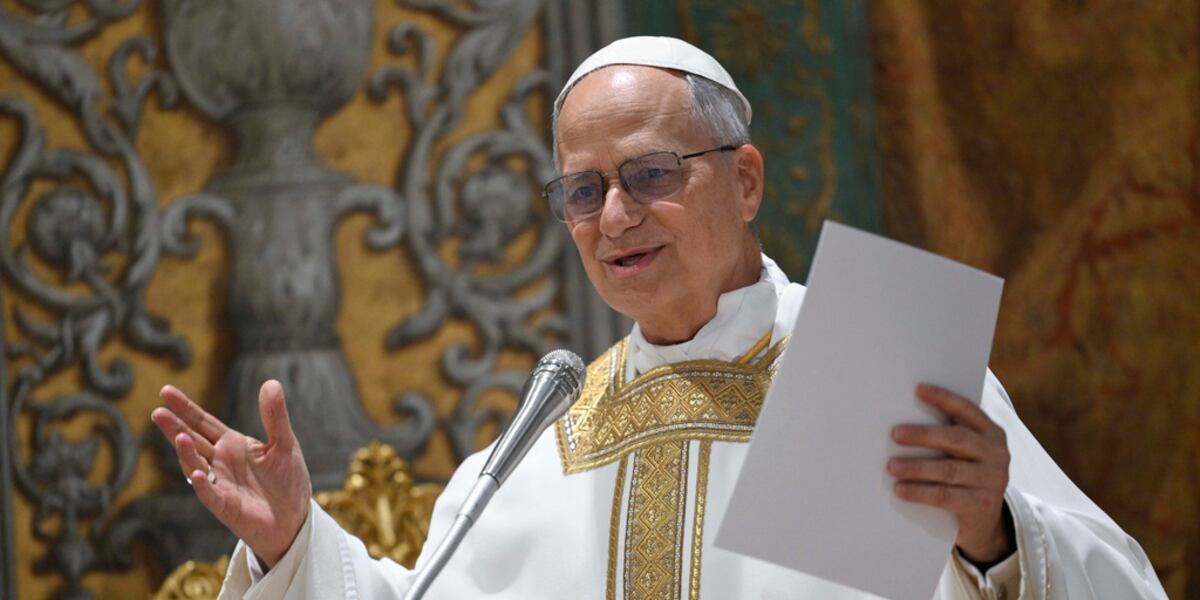
Kathleen Comerford, Ph.D., professor of history at Georgia Southern University, specializes in Catholic history in the 16th and 17th centuries. She is also an associate editor for the Journal of Jesuit Studies, which focuses on the work of the Society of Jesus (Jesuits), a religious order within the Catholic Church. Pope Francis was the church’s first Jesuit pope. With the global significance and rarity of the conclave, Comerford answered frequently asked questions about how the conclave works, how the conclave process has evolved over time, and what the passing of a pope means for the Catholic Church and the world. Question: What does the passing of a pope mean for the world? Comerford: Multiple things! First of all, there are 1.4 billion Catholics in the world scattered in many different countries. The pope is a unifying figure for all of the Catholics. He represents something immediate in the sense that he’s the head of the church and is a recognizable figure. The pope is also a monarch. I was just talking with my classes about this. He is the head of the government of the Vatican City State, which is the smallest independent state in the world. It has a very long history itself. Pretty much everybody who lives in Vatican City works for the Vatican. The pope is one of the few elected monarchs in history. He is responsible for financial and political decisions, and he has ambassadors around the world as a result of his role in global policy. Question: How is a new pope selected? Comerford: The College of Cardinals will meet for an election called a conclave, and they actually stay in a dormitory-like place in Vatican City for it. They are sequestered from the public, and they take some time to meet, pray and vote. The cardinals aren’t supposed to be sitting around talking about who would be a really good pope, but we don’t know whether they do because they’re sequestered and nobody is supposed to talk about it. They will likely take a vote on the first day, but that’s not required. Every subsequent day, they can take a maximum of four votes; two in the morning and two in the afternoon until a candidate gets a two-thirds majority. Question: What does the voting look like? Comerford: There are ballots, and the cardinals write their preferred candidate on the ballot, and then they put their vote in a chalice. To count the votes, there’s a group of three people who are in charge of counting and then announcing the results to the fellow cardinals. There are 252 cardinals, but only 135 of them are eligible to vote because anyone over the age of 80 is ineligible. The procedure where only cardinals can elect the pope dates from 1059. The secret ballot and the two-thirds majority requirement is from 1621. The sequestration for the process dates from 1271 because they argued about who the new pope would be for two years and nine months; a total of 33 months. And so, they decided that the only way to make sure that this didn’t happen again would be to create this scenario with the cardinals locked in a room with a key. Question: When one of the candidates receives a two-thirds majority and becomes the next pope, how will it be announced? Comerford: Well, this is kind of fun, because they have four votes every day until one of the candidates receives a two-thirds majority. After they take the votes, the papers used to vote are burned. How the news is shared to the crowds outside is based on the color of smoke. If the smoke is black, that means no one received the majority and there’s no new pope yet. If there’s white smoke, it means there’s a new pope. This practice really only dates to the early 19th century. At first, it was just if there was smoke, there was no pope; if there was no smoke, then there was a pope. In 1914, they changed this aspect of the election so that black smoke means “no pope” and white smoke means “new pope.” Question: It’s expected that the next pope will be one of the cardinals in the room when they vote, yes? Comerford: Yes, but it doesn’t have to be. There have been a lot of popes, but in the last 200-300 years, there hasn’t been somebody who wasn’t in the conclave that was elected. Theoretically, they could nominate somebody who’s not a cardinal and the whole room could say, “yes, that’s the person we want as pope.” However, they don’t vote by acclamation anymore. They stopped doing that in the 19th century. Question: Pope Francis appointed 108 of the cardinals, so that’s a total of 80% of those eligible to vote for the next pope. How likely is it that we see a pope similar to the late Francis, considering he provided the electorate for his successor? Comerford: First of all, he deliberately went out and created cardinals in places where there had never been cardinals before. And he didn’t do that by saying, “I’m going to find somebody who’s like-minded to me.” He just said, “There are a lot of Catholics in Myanmar and they’ve never had a cardinal. So I’m going to make sure that there’s a cardinal now.” Most of these new cardinals are in places like Rwanda, Cape Verde, Tonga, Myanmar, Mongolia and so on. So these are non-European cardinals. Now, less than 40% of the voting cardinals are European. So to speculate on how similar they are to Francis, you have to break down what Francis was. There has been his entire pontificate about how he’s the first American pope, but his parents were born in Italy. He didn’t grow up speaking Italian, but it was a dialect of Italian as well as Spanish, because he grew up in Argentina. He was the most European you can get and still be an American. Another part of the question is, will the new pope be somebody who is of a similar mind to Francis in terms of his governance, which was very devolved. He introduced this idea of “synodality,” which is about fairly consistent communication with groups of people. Pope Francis was not particularly monarchical or hierarchical. There is also the aspect of his thinking that leans more to the left than the right on a number of social issues like immigration, women’s rights, the rights of minorities and immigration. He opened a lot of conversations, which the very right leaning portions of the church have been very uncomfortable with. If you're interested in learning more about this topic and want to book time to talk or interview with Kathleen Comerford then let us help - simply contact Georgia Southern's Director of Communications Jennifer Wise at jwise@georgiasouthern.edu to arrange an interview today.