
Experts Matter. Find Yours.
Connect for media, speaking, professional opportunities & more.
How corporate competition can spur collaborative solutions to the world's problems
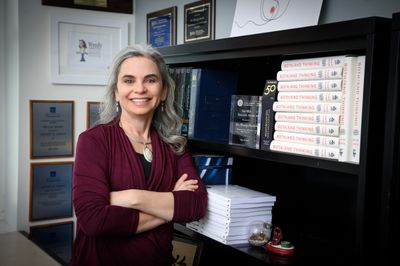
Why can’t large competitive companies come together to work on or solve environmental challenges, AI regulation, polarization or other huge problems the world is facing? They can, says the University of Delaware’s Wendy Smith. While it's difficult, the key is to have these companies collaborate under the guise of competition. Smith, a professor of management and an expert on these types of paradoxes, co-authored a recent three-year study of one of the most profound collaborations. Her team looked at the unlikely alliance of 13 competitive oil and gas companies that eventually formed Canada’s Oil Sands Innovation Alliance (COSIA), which works with experts worldwide to find innovative solutions for environmental and technical challenges in the region. Smith and her co-authors found that those companies were willing to collaborate, but only when collaboration was cast in the language, practices and goals of competition. Given the scope of our global problems, companies must continually work together to offer solutions. Creating that collaboration becomes critical, Smith said. This research offers important insight about how these collaborations are possible. Among the study's key findings: Competition can drive cooperation — if leaders harness it. It would make sense to assume that competition undermines collaboration. But the study finds that those who championed alliances used competitive dynamics to strengthen cooperation among rival firms. Rather than suppressing rivalry, leaders leveraged competition as a mechanism to enable joint action toward shared environmental goals. This reframes how organizations can manage tensions between competition and cooperation in partnerships. For example, COSIA leaders created competition between partners to see who would contribute the most valuable environmental innovations. Partners could only gain as much benefit from other company’s innovations commensurate with what they shared. A “Paradox Mindset” is key to complex collaborative success. The research identifies the importance of what the authors call a paradox mindset, which sees competition and cooperation not as opposites to be balanced but as interrelated forces that can be used in tandem. Leaders in the study who adopted this mindset were more thoughtful and creative about how to engage both competitive and collaborative practices in the same alliance. Traditional balance isn’t the goal — process over stability. Instead of pursuing a simplistic “balance” between competing and cooperating, the study shows that effective alliances evolve through process, where competition remains visible and even useful throughout the lifecycle of the alliance. To connect with Smith directly and arrange an interview, visit her profile and click on the "contact" button. Interested journalists can also send an email to MediaRelations@udel.edu.


Venezuela: Why Regime Change Is Harder Than Removing A Leader
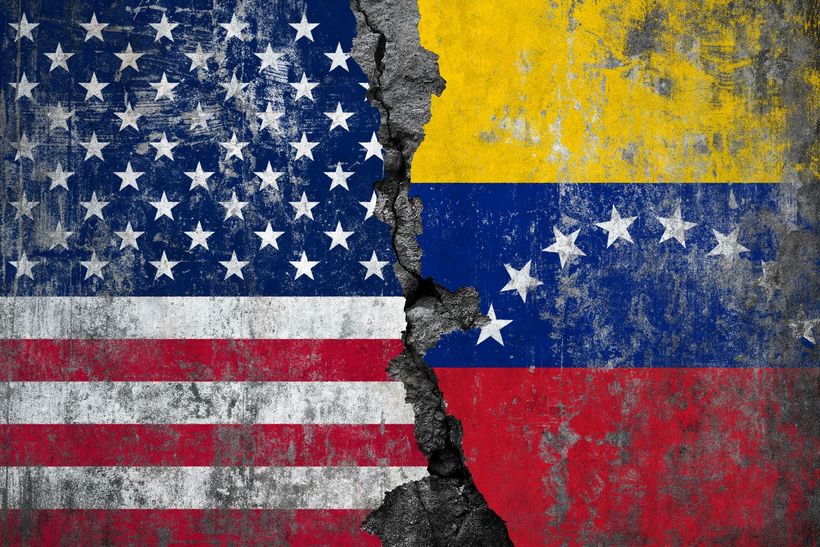
With global attention on Venezuela following the U.S. removal of Nicolás Maduro, one of the central questions is whether taking out a leader actually changes the political system that put him in power. Two University of Rochester political scientists — Hein Goemans and Gretchen Helmke — study different sides of this issue, and can shed light on why authoritarian regimes often survive even when leaders fall and what the U.S. intervention means for Venezuela and the world order. Goemans specializes in how wars begin and end, regime survival, and why so-called “decapitation strategies” — removing a leader without dismantling the broader power structure — so often fail to produce stable outcomes. His research draws on cases ranging from Iraq and Afghanistan to authoritarian regimes in Latin America. In a recent interview with WXXI Public Media, Goemans warned that removing Maduro does not resolve the underlying system of military and economic control that sustained his rule. Without changes to those institutions, he said, power is likely to remain concentrated among the same elite networks. “The problem isn’t just the leader,” Goemans explained. “It’s the structure that rewards loyalty and punishes defection. If that remains intact, the politics don’t fundamentally change.” Helmke, a leading scholar of democracy and authoritarianism in Latin America, emphasizes that legitimacy, not just force, determines whether democratic transitions take hold. Her research helps explain why democratic breakthroughs so often stall after moments of dramatic change, and why outside interventions can unintentionally weaken domestic opposition movements by shifting power toward regime insiders. “When the institutions and elites remain in place, uncertainty — not democratic transition — often becomes the dominant political reality,” she said. For journalists covering the fast-moving situation, Goemans and Helmke are available to discuss why removing leaders rarely brings the political transformation policymakers expect and what history suggests comes next. They can address: • Why regime-change operations so often backfire, even when dictators are deeply unpopular • What sidelining democratic opposition means for legitimacy • Whether U.S. claims that Maduro is illegitimate hold up under international and U.S. law • How prosecuting a foreign leader in U.S. courts could reshape norms of sovereignty • The risks the U.S. intervention poses to the rules-based international order and NATO • How interventions affect international norms, including sovereignty and the rule of law, and why short-term tactical successes can create long-term strategic risks. • Why treating global politics as a series of “one-off” power plays misunderstands how states actually enforce norms over time • How competing factions inside the U.S. administration may be driving incoherent foreign policy Geomans also brings rare insight into the internal dynamics of U.S. policymaking, having taught and observed Stephen Miller, one of President Donald Trump’s closest aides who is helping shape the administration’s worldview. (Goemans taught Miller at Duke University in 2003.) Click on the profiles for Goemans and Helmke to connect with them.




Why Greenland Matters: The History and Strategic Importance of the World’s Largest Island
Often viewed as remote and sparsely populated, Greenland has long played an outsized role in global strategy. Settled by Inuit peoples for thousands of years, Greenland later became part of the Danish realm in the 18th century and today exists as an autonomous territory within the Kingdom of Denmark. Its location—bridging North America and Europe—has consistently drawn the attention of major powers, especially during moments of geopolitical tension. That attention intensified during the Cold War, when Greenland became a critical asset in Arctic defense. The United States established military installations on the island, most notably what is now known as Pituffik Space Base, to support missile warning systems and transatlantic defense. Greenland’s position along the shortest air and missile routes between North America and Russia made it indispensable to early-warning networks—and that strategic logic has not faded with time. Today, Greenland’s importance is growing rather than shrinking. Climate change is reshaping the Arctic, opening new shipping routes and increasing access to natural resources such as rare earth minerals, hydrocarbons, and freshwater reserves locked in ice. These developments have renewed global interest in Greenland from NATO allies and rival powers alike, as control over Arctic infrastructure, data, and mobility becomes central to economic and security planning. At the same time, Greenland’s own political future—balancing autonomy, Indigenous priorities, and external pressure—adds another layer of complexity. Greenland’s story is ultimately one of geography shaping history. What once made the island strategically valuable for defense now places it at the center of debates about climate, security, energy, and sovereignty in the 21st century. As Arctic competition accelerates, Greenland is no longer a peripheral actor—it is a focal point where global interests converge. Journalists covering geopolitics, Arctic security, climate change, Indigenous governance, or global resource competition are encouraged to connect with experts who study Greenland’s past and its evolving strategic role. Expert insight can help explain why this vast island continues to matter—and why it is likely to play an even larger role in the years ahead. Our experts can help! Connect with more experts here: www.expertfile.com


Georgia Southern professor re-elected to board of world’s largest scientific society
Professor of chemistry and chair of the Department of Biochemistry, Chemistry and Physics Will Lynch, Ph.D., has been re-elected to the American Chemical Society’s (ACS) board of directors. This marks his second three-year term on the board. With ACS serving as the largest science organization in the world, Lynch says the society’s work impacts lives every day. “We support the scientific enterprise by advocating for everything from research funding to laboratory safety,” said Lynch. “That work strengthens scientific integrity that ACS champions and ultimately shows up in the things that people rely on daily. Bottled water, medicines, cellphones and computer screens all come from chemistry. Many people do not realize how deeply science shapes their world.” With a budget of nearly $900 million and a global community of over 200,000, planning is essential to the success of ACS. Lynch is proud to have chaired the committee that created the society’s next five-year strategic plan. He hopes that his work will continue to put the society’s vast resources to use helping advocate for scientists around the world. “My focus now is implementing ACS’ strategic plan, which envisions a world built on science and setting up the indicators to measure our success,” said Lynch. “We want to make sure we support chemists whether they are in academia, industry, government labs or retired.” Serving in a leadership role for a world-renowned scientific organization is part of Lynch’s calling to help others. He began his service with ACS over 40 years ago when he volunteered at a regional meeting while pursuing his bachelor’s degree. He started making connections immediately and grew his professional network from the local to the national level. Forming friendships in the scientific community and witnessing the ways their work changed lives inspired Lynch to continue to grow his own knowledge so he could do more for others. “Getting to do research as an undergraduate pulled me in, and I knew that chemistry was where I could make a difference. I realized I had a path to help society through science and I never looked back.” Looking to know more about Georgia Southern University or connect with Will Lynch? Simply contact Georgia Southern's Director of Communications Jennifer Wise at jwise@georgiasouthern.edu to arrange an interview today.


Covering Venezuela? We Can Help.
The situation in Venezuela is fluid, and new details about the operation, its planning and execution, the future of the country and how the world is reacting is all happening in real time. Journalists covering Latin America, global politics, migration, energy, or human rights are encouraged to connect with experts who can provide context on Venezuela’s evolving political landscape, economic indicators, humanitarian conditions, and regional implications. Expert insight is critical for moving beyond headlines and understanding what the next phase of Venezuela’s crisis could mean—for its people and for the region. Looking for an expert to help? Connect with our experts: www.expertfile.com
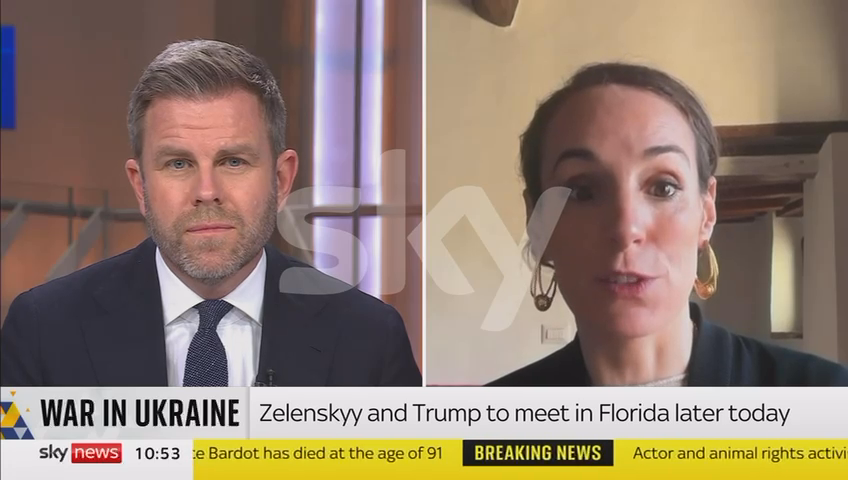
In a recent interview, Livia Paggi of J.S. Held discussed the implications of reported discussions between President Donald Trump and President Volodymyr Zelensky about a potential peace plan aimed at ending the war in Ukraine. The conversation focused on what these talks signal politically, what pressure points may be shaping each leader’s approach, and why the timing and framing of any “peace plan” matters as much as the details themselves. Paggi emphasized that peace-plan conversations at this level often have multiple audiences at once: domestic political constituencies, international allies, and adversaries assessing resolve and leverage. She explored how diplomatic positioning can influence the credibility of negotiations and how public messaging, even before formal agreements exist, can shift perceptions on the battlefield, at the negotiating table, and across NATO-aligned capitals. The interview also examined the risks embedded in any peace-plan narrative. Paggi highlighted that negotiation efforts can introduce uncertainty for markets, governments, and populations when expectations outpace realities. She discussed how the mechanics of ending a war extend beyond a headline announcement, including enforcement, guarantees, verification, and the long-term stability of whatever framework is proposed. When we look at what Trump is likely to do, he's going to try to go back and forth, favor different political actors and see what he can do to unlock the situation. A copy of the full interview is below: For journalists following the Ukraine war, shifting diplomatic strategies, or the real-world consequences of peace negotiations, Livia Paggi offers a clear, practical lens on what these discussions could mean next. Her perspective helps reporters move beyond political theatre and toward the key questions: what’s being signaled, who gains leverage, what conditions would make an agreement durable, and what risks emerge if the process breaks down. Looking to connect with Livia Paggi? Livia is a sought-after speaker and regularly provides commentary on global political trends for the media, including for the BBC, Bloomberg TV, CNN, and the Financial Times. Livia is the recipient of numerous awards for her work. Most recently, she was named by Management Today as one of Britain’s top women in business under 35 and Bloomberg TV named her as one of the top female foreign policy commentators. Click on her profile icon to arrange an interview or get deeper insights into geopolitical risk, government relations, and business impacts.



From Ancient Rituals to Fireworks: Why New Year’s Eve Still Matters
New Year’s Eve marks humanity’s shared fascination with time, renewal, and fresh beginnings - a moment to close one chapter and open the next. The tradition dates back more than 4,000 years to ancient Mesopotamia, where the Babylonians celebrated Akitu, a multi-day festival tied to the spring harvest and the rebirth of nature. Rather than a single night of revelry, Akitu was a ritual reset: debts were settled, promises were renewed, and cosmic order was symbolically restored. The date we recognize today, January 1 - comes from ancient Rome. In 46 BCE, Julius Caesar reformed the calendar and dedicated the year’s first day to Janus, the two-faced god of doorways and transitions, who looked both backward and forward. This symbolism still defines New Year’s Eve: reflection on the past paired with hope for what’s ahead. Over centuries, as Christianity spread across Europe, the celebration evolved, blending solemn religious observances with local customs of feasting, bells, and bonfires. In modern times, New Year’s Eve has become a global cultural event, shaped by public countdowns, fireworks, music, and collective rituals. From the iconic ball drop in Times Square to family gatherings and quiet toasts at home, the night offers a shared pause, an almost universal agreement to stop, take stock, and imagine change. Traditions vary frm lucky foods, noise-making to ward off evil spirits, or first-footing to invite good fortune, but the intent is the same. At its core, celebrating New Year’s Eve is about agency and optimism. Resolutions, whether kept or not, are expressions of belief that tomorrow can be different. Across cultures and centuries, the night endures because it gives people permission to hope—to acknowledge what was, release what no longer serves, and step forward together into something new. Looking to go deeper on why New Year’s Eve resonates so powerfully around the world? Our experts can speak to the historical, cultural, and psychological reasons humans mark time this way, and why the midnight reset still matters today. Find your expert here: www.expertfile.com
UF professor to expand proven disease-prediction dashboard to monitor Gulf threats
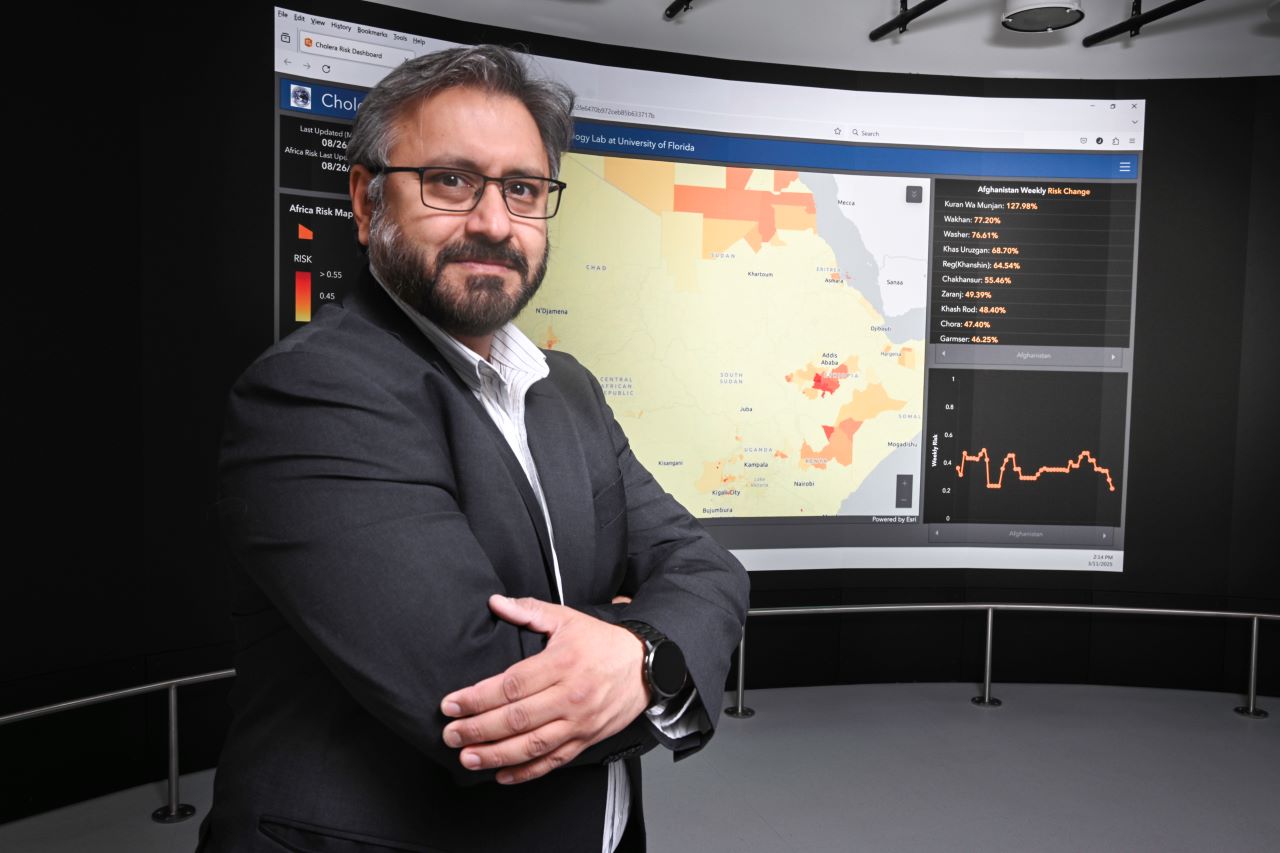
After deploying life-saving cholera-prediction systems in Africa and Asia, a University of Florida researcher is turning his attention to the pathogen-plagued waters off Florida’s Gulf Coast. In the fight to end cholera deaths by 2030 – a goal set by the World Health Organization – UF researcher and professor Antar Jutla, Ph.D., has deployed his Cholera Risk Dashboard in about 20 countries, most recently in Kenya. Using NASA and NOAA satellite images and artificial intelligence algorithms, the dashboard is an interactive web interface that pinpoints areas ripe for thriving cholera bacteria. It can predict cholera risk four weeks out, allowing early and proactive humanitarian efforts, medical preparation and health warnings. Cholera is a bacterial disease spread through contaminated food and water; it causes severe intestinal issues and can be fatal if untreated. The US Centers for Disease Control reports between 21,000 and 143,000 cholera deaths each year globally. Make no mistake, the Cholera Risk Dashboard saves lives, existing users contend. His team now wants to set up a similar pathogen-monitoring and disease-prediction system for pathogenic bacteria in the warm, pathogen-fertile waters of the Gulf of America. “Its timeliness, its predictiveness and its ease of access to the right data is a game changer in responding to outbreaks and preventing potentially catastrophic occurrences.” - Linet Kwamboka Nyang’au, a senior program manager for Global Partnership for Sustainable Development Data Closer to home Jutla is seeking funding to develop a pathogen-prediction model to identify dangerous bacteria in the Gulf to warn people – particularly rescue workers – to use protective gear or avoid contaminated areas. He envisions post-hurricane systems for the Gulf that will help the U.S. Navy/Coast Guard and other rescue workers make informed health decisions before entering the water. And he wants UF to be at the forefront of this technology. “If we have enough resources, I think within a year we should have a prototype ready for the Gulf,” said Jutla, an associate professor with UF’s Engineering School Sustainable Infrastructure and Environment. “We want to build that expertise here at UF for the entire Gulf of America.” Jutla and his co-investigators have applied for a five-year, $4 million NOAA RESTORE grant to study pathogens known as vibrios off Florida’s West Coast and develop the Vibrio Warning System. These vibrios in the Gulf can cause diarrhea, stomach cramps, nausea, vomiting, fever and chills. One alarming example is Vibrio vulnificus, commonly known as flesh-eating bacteria, a bacterium that often leads to amputations or death. The Centers for Disease Control and Prevention (CDC) has reported increases in vibrio infections in the Gulf region, particularly from 2000 to 2018. The warm and ecologically sensitive Gulf waters provide a thriving habitat for harmful pathogens. “The grant builds directly on the success of our cholera-prediction system," Jutla noted. "By integrating AI technologies into public health decision-making, we would not only lead the nation but also become self-reliant in understanding the movement of environmentally sensitive pathogens, positioning ourselves as global leaders.” Learning from preparing early Jutla’s dashboards are critical tools for global health and humanitarian officials, said Linet Kwamboka Nyang’au, a senior program manager for Global Partnership for Sustainable Development Data. “Its timeliness, its predictiveness and its ease of access to the right data is a game changer in responding to outbreaks and preventing potentially catastrophic occurrences,” Kwamboka Nyang’au said. Over the last few years, Jutla and several health/government leaders have been working to deploy the cholera-predictive dashboard. “Our partnership with UF, the government of Kenya and others on the cholera dashboard is a life-saving mission for high-risk, extremely vulnerable populations in Africa. By predicting potential cholera outbreaks and coordinating multi-stakeholder interventions, we are enabling swift action and empowering local governments and communities to prevent crises before they unfold,” said Davis Adieno, senior director of programs for the Global Partnership for Sustainable Development Data. The early warnings for waterborne pathogens also allows the United Nations time to issue early assistance to residents in the outbreak’s path, said Juan Chaves-Gonzalez, a program advisor with the United Nations’ Office for the Coordination of Humanitarian Affairs. “There are several things we do with the money ahead of time. We provide hygiene kits. We repair and protect water sources. We start chlorination, we set up hand-washing stations, train and deploy rapid-response teams. At the community level, we try to inject funding to procure rapid-diagnostic tests,” he said. “We identify those very, very specific barriers and put money in organizations’ hands in advance to remove those barriers.” Eyes on the Gulf In the United States, hurricanes stir up vibrios in the Gulf, posing a high risk of infection for humans in the water. There has been a nearly 200% increase in these cases over the last 20 years in the U.S., according to the CDC. “After Hurricane Ian, we saw a very heavy presence of these vibrios in Sarasota Bay and the Charlotte Bay region. Not only that, but they were showing signs of antibiotic-resistance. Last year, we had one of the largest number of cases of vibriosis in the history of Florida,” Jutla said. Samples from 2024 hurricanes Helene and Milton are being analyzed with AI and complex bioinformatics algorithms. “If there is a risky operation by rescue personnel, not using personal protective equipment, then we would want them to know there is a significant concentration of these bacteria in the water,” Jutla said. “As an example, Navy divers operating in contaminated waters are at risk of infections from vibrios and other enteric pathogens, which can cause severe gastrointestinal and wound infections.” Safety and economics “Exposure to vibrios and other enteric pathogens,” Jutla added, “can disrupt economic activities, particularly in coastal regions that are dependent on tourism and fishing. And vibrios may be considered potential bioterrorism agents due to their ability to cause widespread illness and panic.” In developing the Vibrio Warning System, Jutla noted, he and his team want to significantly enhance public health safety and preparedness along the Gulf Coast. By leveraging advanced AI technologies, satellite datasets and predictive modeling, they plan to mitigate the risks posed by environmentally sensitive pathogenic bacteria, ensuring timely interventions and safeguarding human health and economic activities. “Hospital systems and healthcare providers in the Gulf region will have a tool for anticipatory decision making on where and when to anticipate illness from these environmentally sensitive vibrios, and issue a potential warning to the general public,” he said. “With the potential to become a leader in environmental pathogen prediction, UF stands at the forefront of this critical research, poised to make a lasting impact on local, regional, national and global health and safety.”


AI as IP™: A Framework for Boards, Executives, and Investors
Under current corporate accounting practices, artificial intelligence (AI) companies’ most valuable resources – large language models, training datasets, and algorithms – remain “off the books” or uncapitalized. As the importance of AI continues to grow in the global knowledge-based economy, financial statements are becoming less representative of a company’s true worth, creating a recognition gap. In this article, James E. Malackowski, Eric Carnick, and David Ngo present several conceptual frameworks to bridge this gap. They explain how the triangulation of three valuation approaches can reveal both the tangible investment base and the intangible, strategic upside of AI assets. In turn, these approaches provide board-level visibility into where AI capital resides and how it contributes to enterprise value. James E. Malackowski is the Chief Intellectual Property Officer (CIPO) of J.S. Held and Co-founder of Ocean Tomo, a part of J.S. Held. Mr. Malackowski has served as an expert on over one hundred occasions on intellectual property economics, including valuation, royalty, lost profits, price erosion, licensing terms, venture financing, copyright fair use, and injunction equities. He has substantial experience as a Board Director for leading technology corporations, research organizations, and companies with critical brand management issues. This article is the second installment in our three-part series, Artificial Intelligence as Intellectual Property or “AI as IP™”, which explores how artificial intelligence assets should be treated as a form of intellectual property and enterprise capital. The first article, “A Strategic Framework for the Legal Profession”, explored the legal foundations for recognizing and protecting AI assets. The upcoming third article, “Guide for SMEs to Classify, Protect, and Monetize AI Assets”, will provide practical steps for small and mid-sized enterprises to turn AI into measurable economic value. To explore the topic further, simply connect with James through his icon below.


AU scientists advance understanding of Nobel-winning immunology research
The 2025 Nobel Prize in Physiology or Medicine recognized the discovery of regulatory T cells, which are immune cells that maintain tolerance and prevent autoimmunity. At Augusta University, scientists have built upon that foundational work, uncovering how these cells function, fail and evolve across diseases like cancer and atherosclerosis. Regulatory T cells, or Tregs, are essential for controlling immune responses and preventing the body from attacking its own tissues. Early discoveries by Shimon Sakaguchi, MD, PhD, who identified the CD25 marker and later the transcription factor FoxP3, revealed how Tregs suppress immune activation. Sakaguchi, a distinguished professor at Osaka University in Japan, shared the Nobel Prize with Mary E. Brunkow, PhD, Princeton University, and Fred Ramsdell, PhD, University of California, Los Angeles. Sakaguchi once shared lab space with Nicholas Gascoigne, PhD, now a professor at AU’s Immunology Center of Georgia, where he studies T-cell signaling and differentiation — a connection that ties the global history of Treg research to the university’s ongoing expertise. Gascoigne’s research continues to illuminate how Tregs differentiate and signal, critical steps in ensuring immune tolerance to self. “Drs. Sakaguchi, Brunkow and Ramsdell have made enormous contributions to our understanding of how immunological tolerance works, so this prize is very well deserved,” Gascoigne said. “I was happy I could help Drs. Shimon and Noriko Sakaguchi when they needed lab space back in the early ‘90s. They were wonderful to work with.” At Augusta University, David Munn, MD, co-director of the Pediatric Immunotherapy Program of the Medical College of Georgia at Augusta University, made seminal discoveries showing that Tregs are not always stable. Munn’s team demonstrated that these cells could lose their suppressive identity and become “exTregs,” adopting pro-inflammatory characteristics under certain conditions. Munn also uncovered an entirely distinct tolerance mechanism through indoleamine 2,3-dioxygenase, a pathway independent of FoxP3 that regulates immune balance through tryptophan metabolism. “In particular, the work of Shimon Sakaguchi and Fred Ramsdell was profoundly influential on our early work, as we were just starting out to explore how the immune system is regulated in pediatric cancers,” Munn said. “The work of these Nobel laureates helped transform the scientific understanding of how the immune system responds — or fails to respond — in the setting of tumors.” Catherine “Lynn” Hedrick, PhD, co-director of the Immunology Center of Georgia, further expanded this understanding by showing that Tregs can convert into follicular helper T cells, offering new insight into how immune regulation can shift toward antibody production in chronic inflammatory diseases such as atherosclerosis. “Understanding how regulatory T cells can shift identities helps explain why the immune system sometimes loses balance in chronic disease,” Hedrick said. “By tracing how Tregs convert into other helper cells, we’re uncovering new therapeutic targets to restore immune harmony in conditions like atherosclerosis.” Building on these advances, Klaus Ley, MD, co-director of IMMCG, and his team have investigated how exTregs contribute to cardiovascular inflammation, identifying them in human tissues and clarifying their role in atherosclerosis. His lab also recently discovered human exTregs, providing the first direct evidence of these cells in people. Two postdoctoral fellows in Ley’s lab, Qingkang Lyu, PhD, and Smriti Parashar, PhD, continue this work, exploring how regulatory and ex-regulatory T cells influence chronic disease progression. Additionally, Dimitrios Moskofidis, MD, PhD, a professor based in the Georgia Cancer Center, contributed key early insights into immune tolerance and memory, defining how effector T cells persist or are deleted following infection. “Together, these discoveries place Augusta University and the Immunology Center of Georgia at the forefront of modern immunology, connecting molecular mechanisms of tolerance to real-world diseases and therapies,” Ley said. To connect with any of the experts or researchers in this article - simply contact AU's External Communications Team mediarelations@augusta.edu to arrange an interview today.
