
Experts Matter. Find Yours.
Connect for media, speaking, professional opportunities & more.

Gretsch Collection Curator Matthew Hill, Ph.D., is accustomed to handling, researching and presenting iconic guitars and drums from the Fred and Dinah Gretsch Collection of Musical Instruments, offering insight into musical artifacts that have shaped contemporary culture. However, discovering a lost story of American Revolutionary history is a new development in his career at Georgia Southern University. Hill had taken on a complex project, collecting and presenting information on the history of the American drumset through the analysis of French and American drums, when his friend and fellow curator, Christina Linsenmeyer, Ph.D., at Yale University’s Morris Steinert Collection of Musical Instruments brought to his attention an American Revolutionary War drum in Yale’s collection. Together, they discussed what might be learned through closer study of the instrument to better understand its place in American history. “I removed the tensioning ropes and we saw that the inscription read ‘Benjamin Clark. Royalton, Mass. 1781’ and that immediately started ringing bells with me,” Hill said. “1781 was a super important year in the American Revolution as it was essentially the time the hostilities began to wind down before it officially ended in 1783.” The drum originally came from the Belle Skinner collection of musical instruments in Massachusetts. Skinner, a wealthy heiress and philanthropist, acquired her extensive collection of instruments in the 1920s and 1930s and displayed them in a specially constructed arcaded gallery at her mansion, Wistariahurst. Yale would later obtain her collection in 1960, more than two decades after her death. Until now, the true rarity and unusual nature of the drum had not yet been fully realized. “There are very few authenticated American Revolutionary War drums,” Hill said. “Aaron Philips, our special collections curator, photographed the instrument, and Dr. Brent Tharp aided in the historical research of Benjamin Clark. And we found evidence of the person behind the name inscribed on the drum.” Hill says Clark is the most noteworthy musician of the American Revolution. He can be placed at the major battles of Trenton and Saratoga and also likely participated in the Battle of Bunker Hill. However, Clark’s involvement in historic American combat isn’t the only fascinating aspect of the man’s life. He’s also important because he was one of two musicians who wrote down what the drumbeat cadences of the Revolutionary War sounded like. “Clark’s drum book of 1797 is probably the most important,” Hill explained. “By way of writing his manuscript, Clark is one of the main sources for our understanding of Revolutionary War drumming. He is a significant figure, just on his own.” American drum sets during this period focused heavily on practicality, according to Hill. However, Clark’s drum was highly decorated, which was very unusual and included a notable, highly recognizable American adage. “‘E Pluribus Unum’ is written on the drum. It was an official American motto very early on,” Hill said. “But in 1781, it wasn’t that common and would not become more common until later. So this is a noteworthy prominent early use of ‘E Pluribus Unum.’” Hill, alongside other curators at higher education institutions, is working to share this unique discovery with public audiences. In order to best preserve and honor the legacy of the instrument and the drummer who carried it throughout America’s battle for independence, Hill reached out to the Massachusetts Historical Society so that Georgia Southern and Yale Universities can collaborate on a joint publication reproducing Clark’s manuscript, the drum itself and the music that would have carried soldiers across the battlefield. The first and only edition of Clark’s manuscript was privately produced in the 1970s. More recently, Hill and Tharp also presented an essay on this drum at the American Musical Instrument Society’s conference in Vermillion, South Dakota, “A Different Drummer (and His Drum): Benjamin Clark’s Revolutionary War Drum of 1781 and His Drum Book of 1797.” For Hill and fellow historians, this new discovery is not only interesting but also remarkable. “It was like Howard Carter finding the tomb of King Tut, for me. I understood his excitement when I realized what an incredible artifact I had come across that had been so well-preserved from the American Revolution,” Hill said. “But what’s most exciting to me is what will come from all of this work and what we will contribute to the greater body of knowledge surrounding the development, implementation and history of the American drum.” As the United States of America celebrates its 250th anniversary, scholars like Hill continue to unearth hidden artifacts that illuminate the origins of an enduring nation. Want to talk to Dr. Hill about this discovery? Contact Georgia Southern's Chief Communications Officer Jennifer Wise at jwise@georgiasouthern.edu to arrange an interview.


Can Music Legends Rewrite Their Legacy?
The Stones didn’t need another hit. With six decades of chart-topping albums, sold-out tours, and songs woven into popular culture, their place in rock history has long been secure. Yet the band’s scheduled release of another studio album, “Foreign Tongues,” on July 10, raises questions about how late-stage work can impact the legacy of the Stones and other enduring musical acts. For John Covach, director of the Institute of Popular Music at the Univeristy of Rochester and a leading scholar of rock music, that’s where the real story is. “Every late-career album asks us two questions,” Covach says. “What does it say about where the artist is now? And does it change how we hear everything that came before?” It’s a question that could be applied to artists from Bob Dylan and Paul McCartney to Bruce Springsteen and Neil Young. Sometimes late work reflects an unexpected creative renaissance. Sometimes it simply reinforces an artist’s legacy. Sometimes it challenges audiences to rethink musicians they thought they already understood. Sometimes it becomes a footnote to their career. “An artist's latest act can in many ways be as revealing as their first,” Covach says. Covach, who co-edited The Cambridge Companion to the Rolling Stones (Cambridge University Press 2019) and whose online course on the music of the Rolling Stones has enrolled thousands of students worldwide, says reporters covering the Stones’ new album have an opportunity to explore broader issues that resonate across popular culture: • Can new work meaningfully change an artist’s historical legacy? • Why do some musicians continue creating well into their seventies and eighties while others stop? • Can a new release introduce younger listeners to artists whose biggest hits predate them by decades? • How do critics — and fans — judge new music from legendary performers differently than music by younger artists? • What determines whether late-career work becomes an essential part of an artist's catalog — or a historical footnote? Covach has spent decades studying the evolution of popular music, and his books and scholarship have helped shape how the genre is taught. He is also a frequent media commentator on the cultural significance of major artists and musical milestones. Click on his profile to connect with him.


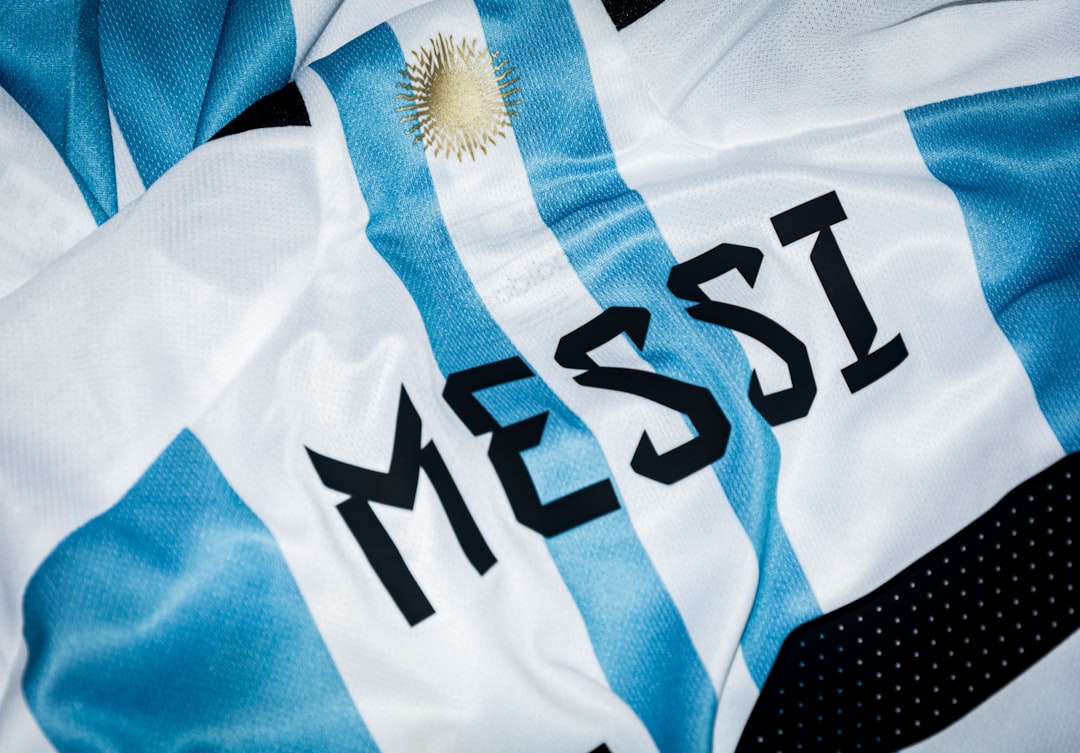
Built to Last: What It Takes to Compete Across Generations of World Cups
The 2026 FIFA World Cup is giving fans an unusual view of football history: several of the game’s biggest names are still competing long after most elite careers have ended. Cristiano Ronaldo and Lionel Messi are appearing in their sixth World Cups. Ronaldo has scored twice in this tournament and 10 times overall, while Messi has added six goals in 2026 to reach 19 for his World Cup career. Luka Modrić is playing in his fifth tournament. Neymar and Kevin De Bruyne are each appearing in their fourth. Those numbers say something important about talent. They say even more about durability. Reaching one World Cup is difficult. Returning four, five or six times means surviving nearly two decades of club schedules, injuries, travel, tactical changes and competition from younger players. It also means finding new ways to contribute when the body no longer responds exactly as it once did. That opens up several timely questions for journalists covering this final stage of their careers. Below, experts in sports science, biomechanics, psychology and sports business offer perspective on what it takes to compete across multiple World Cups—and what allows some players to remain influential long after their physical peak. What does it take physically to last this long? The World Cup lasts only a few weeks, but the careers behind it are built over thousands of training sessions and matches. For older players, the challenge is not simply staying fit. It is managing fatigue, recovering faster and avoiding the injury that could end the run. Hofstra exercise physiologist Katie Sell can speak to the less visible work behind these careers: sleep, hydration, nutrition, endurance and the tighter recovery window athletes face as they age. At the University of Delaware, Tom Kaminski brings expertise in soccer injuries, concussions and player safety. He can help explain how accumulated wear, repeated head impacts and return-to-play decisions influence whether a player can continue at the highest level. Texas Christian University’s Peter Weyand, an expert in sprint mechanics and running performance, can discuss what happens to speed and acceleration over time—and which physical qualities can still be protected through training. How do great players change their game? Longevity rarely comes from playing the same way forever. Ronaldo moved from the wing into a more central scoring role. Messi became more selective with his movement. Modrić continued to control matches through timing, positioning and awareness rather than physical dominance. These are not signs that aging players have stopped influencing games. They are signs that influence has changed. Carnegie Mellon biomechanics researcher Eni Halilaj can speak to how athletes adjust their movement patterns, conserve energy and reduce physical strain as they get older, while her colleague Eric Yttri, who studies motor control and decision-making, can explain how anticipation and experience allow veteran players to act earlier and more efficiently. Texas Christian University’s Peter Weyand can also add context on why older players often change positions, reduce repeated sprinting or become more selective about when they make high-intensity runs. Why keep coming back? By the time a player reaches a fourth or fifth World Cup, money and recognition are unlikely to be the main reasons for continuing. The harder question is what keeps an athlete committed after years of success, injuries and public scrutiny—especially when their role may be smaller than it once was. TCU sport psychology expert Robyn Trocchio can speak to motivation, focus and how accomplished athletes continue setting meaningful goals late in their careers. Hofstra’s Genevieve Weber can address performance anxiety, media pressure and the emotional weight of entering what may be a final international tournament. Georgia Southern sport psychologist Brandonn Harris can discuss resilience, confidence and the mental discipline required to recover from injury, disappointment and changing expectations. How should an aging superstar be judged? Goals are easy to count. Leadership, timing and influence are not. A veteran player may no longer dominate every match, but may still shape how teammates prepare, how opponents defend and how supporters respond. For coaches, that creates a difficult balance between reputation, current performance and what an experienced player brings in moments of pressure. At Emory University’s Goizueta Business School, Michael Lewis can discuss the value of global stars beyond the score sheet, including fan interest, brand strength and the attention they bring to a national team. Carnegie Mellon University’s Eric Yttri can speak to the on-field contributions that statistics often miss, including positioning, anticipation and decision-making. Texas Christian University’s Robyn Trocchio can address the leadership side of the story, including the difficult transition from automatic starter to mentor, substitute or situational player. A generation nearing the end The 2026 World Cup may be remembered not only for the players who emerged, but for the ones who were leaving. Ronaldo, Messi, Modrić, Neymar and De Bruyne have played through different tactical eras and alongside multiple generations of teammates. Their longevity was not built on talent alone. It required adaptation, recovery, discipline and a willingness to accept that staying great sometimes means becoming a different kind of player. For reporters, their careers offer a timely way to examine how elite athletes age—and why some remain relevant long after the normal limits of the game suggest they should.

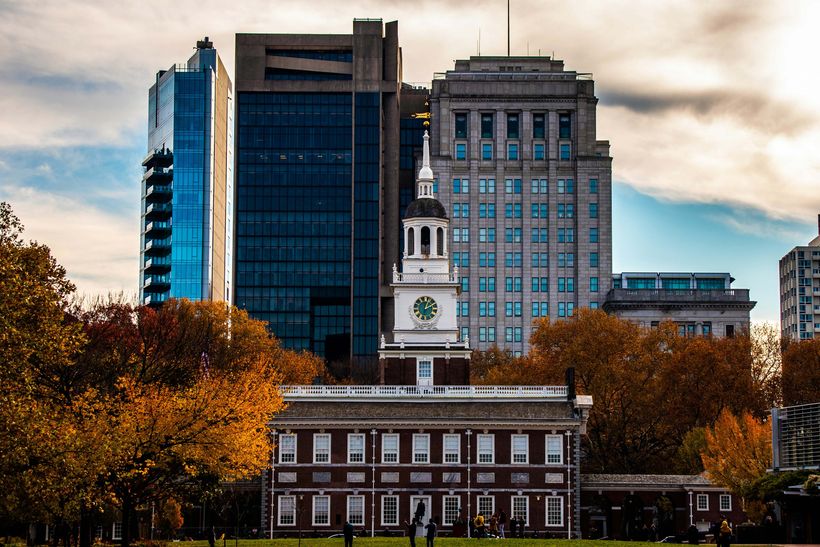
Ahead of America250, Villanova Historian Reveals How Independence Hall Almost Didn't Survive
Philadelphia’s Independence Hall has long occupied an outsized place in the American imagination. The space where the Continental Army was established, the Declaration of Independence adopted and the United States Constitution ratified, the site was once described by President Abraham Lincoln as the source “where were collected together the wisdom, the patriotism, the devotion to principle, from which sprang the institutions under which we live.” In July, these hallowed grounds will yet again take center stage, as the country observes its semiquincentennial, or America250, celebration. In due course, House lawmakers will gather at the landmark for a special commemorative event, mayors from across the U.S. will march to the gates in a show of civic pride and solidarity, and thousands of visitors will flock to the site daily in appreciation for its significance to the cause of “Life, Liberty and the pursuit of Happiness.” However, while Independence Hall’s role in the national saga will go widely remarked and recognized, the building itself has a story that remains largely unknown. According to Whitney Martinko, PhD, associate professor of History and director of the Albert Lepage Center for History in the Public Interest at Villanova University, the “cradle of American democracy” almost never survived the country’s infancy. “Early on, the challenge was about two things,” says Dr. Martinko, who specializes in public history, historic preservation and the early U.S. “One was about ownership of what was called the ‘Old State House,’ because it was the former statehouse in the colony of Pennsylvania. And the second was about the development of the city around it.” As Dr. Martinko explains, in the early 19th century, Independence Hall—then the Old State House—was under the control of the Commonwealth of Pennsylvania, which had shifted its governmental seat from Philadelphia to Harrisburg by 1812. To fund the construction of a new capitol building in the wake of the move, Pennsylvania legislators seriously contemplated selling the site to private enterprise, with the surrounding area undergoing a development boom. “Today’s Independence Mall was built up entirely,” says Dr. Martinko. “In the 18th century, it was full of buildings, shops and houses, and by the 19th century, it had become a huge furniture district and a heart of commerce in many ways.” As plans were drawn up to deliver the hall to the highest bidder, local resistance quickly emerged. Opposed to the landmark’s loss, citizens of Philadelphia and municipal leaders rushed to the defense of the building and its lawn, arguing that their preservation entailed a necessary public good. “Everyone looked to this site as the heart of the new nation. It’s a historic site. It’s an important building. People thought of it as one of the great pieces of Georgian architecture at the time,” says Dr. Martinko. “It was also seen as a civic space, as people gathered there on Election Day. And its lawn was highly valued, with green, open space considered important even then, for air circulation. So, it was really seen as a political space, a civic space and a green space that was important for the well-being of Philadelphians and the health of Philadelphia.” Deliberations over the fate of Independence Hall would continue for a period of five years, up until 1818. After a spirited public campaign, a settlement was finally reached when the City of Philadelphia purchased the plot from the Commonwealth of Pennsylvania for $70,000 (roughly $1.85 million in today’s currency). In essence, the deal would forevermore secure Independence Hall’s place within the pantheon of great American shrines, parks and monuments. However, in a terrific irony, it would also eventually lead to the loss of a different piece of history: Between 1950 and 1967, the 19th-century development projects that once threatened Independence Hall became a casualty of the city’s efforts to make the “birthplace of America” an urban focal point, with the creation of Independence Mall. “Those buildings were all torn down in the mid-20th century, when Ed Bacon and the City Planning Commission decided to make Independence Hall a major attraction,” says Dr. Martinko. “There were debates surrounding this issue as well. The Jayne Building was one of the 19th-century buildings that was demolished and that is most well-known. So, there’s this sense of preserving 18th-century history through the demolition of 19th-century architecture.” As the nation approaches its 250th anniversary, the near loss of Independence Hall and the removal of its 19th-century neighbors stand as striking examples of the ways in which what we value, and how much we value it, evolves over time. What’s more, the historic threats to Philadelphia’s most famous site serve as a poignant reminder of the delicate nature of public memory and preservation—and the fact that the places we treasure today may not always be with us tomorrow. “Even though it seems absurd to us now, we’re still seeing debates over the line between redevelopment and connection with the past,” concludes Dr. Martinko. “It’s not that no one saw the value of Independence Hall, or that they didn’t see it as historic. It was just this debate that a lot of very reasonable people continue to have today: Is this what really needs to be preserved? And how should it be preserved?”



America at 250: CMU Experts Explore the Ideas, People and Events That Shaped a Nation
Throughout 2026, the United States will commemorate the 250th anniversary of its founding, a milestone that is prompting reflection on the nation's history, its defining moments, and the people and ideas that continue to shape its future. From the founding principles of democracy and constitutional rights to social movements, innovation, and overlooked stories from America's past, Carnegie Mellon University scholars and experts offer timely insight into the issues and events driving the national conversation. Whether reporting on anniversary celebrations, historical milestones, or the enduring impact of America's past on today's challenges, CMU experts are available to provide informed analysis and historical context. What CMU Experts Can Help You Cover From founding documents to untold histories, CMU experts can speak to the full range of topics for America at 250. The Document in the Archive One of only five known copies of the 1792 Bill of Rights is held at Carnegie Mellon University. As America marks its 250th anniversary, this rare artifact is on public display -- and the story behind it connects directly to debates about rights, citizenship, and constitutional interpretation that are as live today as they were in the founding era. The Constitution on Trial For 250 years, the Supreme Court has been the ultimate interpreter of America's founding documents. But how justices write those decisions -- the rhetoric, the emotion, the moral grandstanding -- shapes how law is understood and applied for generations. What does the language of fundamental rights decisions tell us about American democracy? The History That Was Left Out Official celebrations tend to center on the founders. But historians have spent decades recovering the stories of enslaved people, women, immigrants, and communities whose contributions shaped the nation and whose experiences complicate the triumphant narrative. Dr. Edda Fields-Black's 2025 Pulitzer Prize-winning book on Harriet Tubman and the Combahee River Raid is a reminder of just how much of that history is still being uncovered. What does a fuller American history look like at 250? Suffrage, Memory, and the Myth We Tell The story of how American women won the right to vote is one of the most retold in the country's history -- and one of the most mythologized. As the nation reflects on 250 years of democracy, what does the suffrage movement really tell us about how America progresses, and how it remembers its own progress? Covering America at 250? Carnegie Mellon University's historians, legal scholars, archivists, and subject matter experts are available for interviews, background briefings, and commentary on the people, events, and ideas that have shaped the United States over the past 250 years - and what that history means today.

UConn Expert Weighs In on FIFA's Hottest New Timeout
For the first time in FIFA World Cup history, every match at the 2026 tournament includes mandatory three-minute hydration breaks midway through each half. Introduced as a player welfare measure amid concerns about extreme summer temperatures across North America, the breaks have quickly become a much discussed development in the tournament. Coaches, players, broadcasters, sports scientists, and fans are all weighing in on the impact the stoppages have on player safety, game flow, strategy, and even commercial opportunities. The conversation has intensified as several matches have been played in challenging heat conditions and prominent coaches have publicly questioned whether the mandatory breaks alter the rhythm of the sport. At the same time, medical experts continue to emphasize the risks posed by heat stress and dehydration during elite athletic competition, particularly in tournaments spanning multiple climates and venues. Experts like UConn's Douglas Casa have been front and center when the media call for insight and perspective. The three-minute mandatory hydration breaks are meant to protect players, and referees, from extreme heat illness and help them maintain their physical performance. In that time, players can cool off and replenish lost water and salt from sweating, but how effective it is depends on how aggressive the cooling methods are. That could mean putting wet, cold towels on the exposed parts of a player's body, such as the neck, head, back and arms. If done well, that could reduce their body temperature by about 0.22 F (0.12 C) per minute, said Douglas Casa, CEO of the University of Connecticut's Korey Stringer Institute who also co-signed the letter to FIFA. "Some people can tolerate a little more fluids comfortably and then do intense exercise. Some people can't because it sloshes around in their stomach and they don't feel super comfortable, so they might not drink as much in such a short period of time," he added. The time, he said, dictates the volume of impact, whether from fluid or cooling, and "that's why we're suggesting doing something like five or six minutes, because it just makes such a big impact when you're dealing with a change of that magnitude." June 18 - NPR Douglas Casa is a professor of kinesiology and chief executive officer of UConn’s Korey Stringer Institute. He is a leading authority on research, advocacy, and education about exertional heat stroke View his profile While the standardized breaks represent a major step forward for player welfare, some leading heat illness experts argue the new policy does not go far enough. Dr. Douglas Casa, a professor of kinesiology at the University of Connecticut and chief executive officer of the Korey Stringer Institute, expressed skepticism regarding the efficacy of such brief intervals. Dr. Casa warned that prolonged, high-intensity physical exertion causes a rapid spike in core body temperature, which dramatically degrades athletic performance and increases the risk of exertional heat illness. He noted that a mere three minutes from whistle to whistle provides insufficient time for optimal physiological cooling and active rehydration, recommending instead that tournament officials expand the mandatory breaks to five or six minutes. Faced with these demanding environmental conditions, several competing national teams are taking proactive measures to gain a competitive edge. Multiple countries have expanded their technical staffs to include specialized sports scientists tasked exclusively with designing aggressive heat-acclimatization and thermal-management strategies. According to Dr. Casa, these data-driven preparation strategies will likely play a monumental role in determining player durability and ultimately crowning the world champion. June 09 - NBC News Covering? We can help. Douglas Casa, who leads UConn's renowned Korey Stringer Institute, is available to discuss: The science behind hydration and cooling breaks in elite sport Heat illness risks facing World Cup athletes Whether mandatory breaks are sufficient to protect players How extreme weather is changing sports medicine and event management The balance between player safety, competition, and fan expectations Check out the video below featuring Doug Casa explaining what happens when the human body gets too hot. Media interested in speaking with Doug Casa can contact the UConn media relations team to arrange an interview.


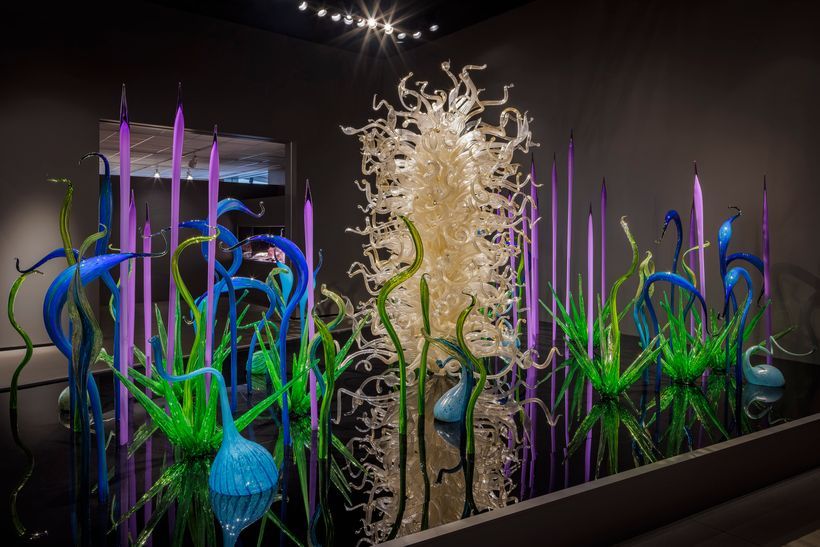
Chihuly’s Glass Abloom at Meijer Gardens
Frederik Meijer Gardens is hosting Chihuly at Meijer Gardens through Nov. 1, 2026 - the only temporary Chihuly exhibit in the country and one of only two in the world this year. Most creative passions have their roots in childhood—and such is the case with Dale Chihuly’s great love of flowers. The artist fondly recalls his mother’s large and exuberant garden in Tacoma, Washington, known as one of the most beautiful in the neighborhood. Memories of his mother’s garden have influenced much of Chihuly’s work, with the bursting colors and blooming forms matching the fecundity of flora. Another inspiration for Chihuly’s flowering glass forms is the famed Blaschka Collection of glass flowers at Harvard University’s Museum of Natural History, which he encountered while studying sculpture on the East Coast. His avowed love of Vincent van Gogh’s vibrant flower paintings provides another source for Chihuly’s expressive floral artworks. Michigan’s largest‑ever Chihuly exhibition marks long-awaited return to Meijer Garden MLive/Grand Rapids Press April 30, 2026 “The exhibition offers an unprecedented opportunity to lose yourself in Chihuly’s career and in individual pieces,” said Suzanne Ramljak. “It’s hard to describe how experiential it is.” Chihuly’s many exhibitions in conservatories and botanical gardens—including repeatedly at Frederik Meijer Gardens & Sculpture Park—further testifies to the ways his art speaks directly to nature. Meijer Gardens’ 2026 presentation of CHIHULY at Meijer Gardens features a number of the artist’s floral-based series, including his Venetians, Ikebana and Fiori. Below are images of a few of the blooming glass pieces visitors encounter inside the Chihuly: Radiant Forms indoor gallery exhibition, while his outdoor installations revel in the company of flowers. VENETIANS Chihuly’s opulent Venetians series, begun in the late 1980s, is both a celebration of the Italian city that fueled his glass art and of nature’s endless bounty. Several of these baroque vessels are adorned with vegetative forms and stylized flowers in colors that rival that of a garden palette. IKEBANA In 1989, Chihuly began his Ikebana series inspired by Japan’s traditional art of flower arranging. Chihuly’s bold variations on this tradition features sculptural vases of every imaginative shape, containing expressive flowers not to be found in any handbook of botanical species. Chihuly continued his exploration of Japanese flower arranging in a number of innovative glass-on-glass paintings, which are also on view in the Radiant Forms exhibition. FIORI AND MILLE FIORI Chihuly’s profusion of floral forms continues in his Fiori (Italian for “flowers”) and Mille Fiori (“a thousand flowers”) series. Whether shown as singular stalks or amassed on a platform as a riotous glass garden, the artist’s Fiori both celebrate the vitality of nature and the endless creative possibilities of glass. Massive, fantastic Chihuly exhibition opens in Grand Rapids Detroit Metro Times May 1, 2026 “It’s a different piece every day, when the sun hits it and flashes out from its tips, or when it’s darker and deeper in color,” Suzanne Ramljak says. “And that, I must say, is really the pleasure and the power of an outdoor sculpture park that we have. It is an outdoor museum, and it’s alive … when you put art outdoors, nature adds a whole other dimension of life and color.” When Chihuly’s ongoing series of Fiori are set outdoors—in the landscape as with Mottled Trumpet Flowers or gathered within a floating Fiori Boat—his opulent floral forms gain dynamism through the interplay with living organisms. CHIHULY at Meijer Gardens Presented by Macatawa Bank runs through Nov. 1. General admission tickets include access to all outdoor Chihuly installations across the campus. The indoor CHIHULY: Radiant Forms requires a separate timed-entry ticket ($9 adults, $5 children ages 3–13 and members receive a 10% discount). For exhibition tickets and a schedule of related events and programs, visit MeijerGardens.org/Chihuly. Suzanne Ramljak is Director of Curatorial Affairs at Frederik Meijer Gardens & Sculpture Park, where she has worked since 2022. Ramljak previously was curator at the American Federation of Arts, New York, overseeing the development of traveling museum exhibitions and scholarly publications. View her profile. If you are looking to cover CHIHULY at Meijer Gardens, connect with Suzanne below.


World Cup 2026: Hofstra experts on the science, health, and business behind the tournament.
The 2026 FIFA World Cup comes to the New York metro area, and Hofstra University is ready. From the training room to the boardroom, Hofstra faculty bring research-backed expertise to the stories journalists are chasing this tournament season. Featured Topic The Cultural Game Why soccer means what it means and what this World Cup moment represents The World Cup has always been about more than the game. Brenda Elsey, Professor of History, studies soccer as a cultural and political force across the Americas -- from grassroots identity to gender and power. She can speak to what this tournament represents as a historical moment, on and off the field. Expert Brenda Elsey - History Featured Topic Health and Performance on the World Stage Expert insight on what it takes to compete and recover at a World Cup. Competing at this level means managing the body and the mind across weeks of high-stakes matches with almost no recovery time. Hofstra's health and kinesiology faculty are your sources for the stories behind the performance. Experts Jayne Ellinger - Athletic Training Katie Sell - Exercise Physiology Anna Len - Physical Therapy Genevieve Weber - Mental Health Featured Topic Beyond the Pitch What the World Cup does to cities, economies, and public health systems From local business impact and tourism economics to disease surveillance and emergency preparedness - Hofstra faculty are ready to talk. Experts Andy M. Forman - Marketing & Tourism Lauren Hindman - Management Martine Hackett - Population Health Meshack Achore - Population Health





Brexit at 10: A Decade After the Vote That Changed Britain
On June 23, 2016, voters in the United Kingdom made a historic decision that would reshape the country's relationship with Europe and reverberate around the world. Ten years later, Brexit remains one of the most significant political and economic events of the modern era, with its effects still being felt across trade, immigration, governance, and international relations. While the United Kingdom formally left the European Union in 2020, debate continues over Brexit's long-term impact. Supporters point to greater national sovereignty and independent trade policy, while critics highlight economic challenges, labour shortages, and new barriers to commerce. The referendum's legacy has also influenced political movements beyond Britain, sparking broader conversations about globalization, national identity, and the future of multinational institutions. As policymakers, businesses, and citizens assess a decade of change, experts are examining what Brexit has achieved, where it has fallen short, and what it reveals about the evolving relationship between democracy, economics, and national sovereignty. Covering - we can help! We have experts available to discuss the origins of Brexit, its lasting consequences, and what the next decade may hold for the United Kingdom and Europe. Topic and Questions to Consider: The political history and causes of Brexit U.K.–European Union relations Trade, investment, and economic impacts Immigration and labour market policy Nationalism, populism, and democratic movements The future of Scotland, Northern Ireland, and the United Kingdom Britain's role in global affairs after Brexit Lessons from Brexit for policymakers around the world Key Questions What factors drove the Brexit vote in 2016? How has Brexit changed Britain's economy and trade relationships? What impact has Brexit had on immigration and labour markets? Has Brexit strengthened or weakened the United Kingdom's global influence? How have Scotland and Northern Ireland been affected? What lessons can other countries learn from Brexit? Could the U.K. and European Union move toward closer cooperation in the future? What does Brexit reveal about voter attitudes toward globalization and national sovereignty? Our leading experts can provide analysis on the political, economic, and social legacy of Brexit, the evolving relationship between the United Kingdom and the European Union, and the broader implications for democracies navigating questions of identity, sovereignty, and international cooperation. Connect with an expert today:

World Cup 2026: Story Angles Beyond the Pitch
The 2026 FIFA World Cup will be one of the biggest sports stories of the year, with matches underway across Mexico, Canada and the United States. But the story will reach well beyond the field. As the tournament moves from city to city, it will bring host communities, public agencies, local businesses and civic leaders into the spotlight. That creates a wide range of story angles for journalists, from public health and safety, tourism and economic impact to sports technology, fan culture, athlete performance, national identity and the politics of international sport. Institutions using ExpertFile are helping media cover these broader World Cup stories through dedicated Topic Authority Hubs, Spotlight posts and expert profiles featuring trusted sources across health, business, technology, public policy, culture and sport. Featured World Cup Expert Hubs With the World Cup coming to the New York metro area, Hofstra University’s hub brings together experts on athlete health, recovery, injury prevention, mental performance, public health, tourism, local business impact and the cultural history of soccer. Explore Hofstra’s World Cup 2026 Hub. Source: Hofstra University The University of Delaware’s hub focuses on player safety, concussion research, sports analytics, tourism, youth development, fan behavior, shared experiences and the science behind elite competition. Explore the University of Delaware’s World Cup 2026 Hub. Source: University of Delaware Carnegie Mellon University’s hub looks at the tournament through the lenses of geopolitics, diplomacy, sports marketing, fan engagement, AI, robotics, biomechanics, human performance and emerging sports technologies. Explore Carnegie Mellon’s World Cup 2026 hub. Source: Carnegie Mellon University Emory University’s Goizueta Business School hub explores World Cup 2026 through the business of the tournament, including host city economics, ticket pricing, fan engagement, sports marketing, global sponsorship, brand strategy and the rise of the player brand. Explore Goizueta Business School’s World Cup 2026 hub. Story Angles As coverage plans take shape, these are some of the World Cup 2026 story angles journalists may want to explore. The Topic Authority Hubs featured above offer a helpful starting point, with Spotlight posts and expert profiles connected to many of these issues. Journalists can also search directly on expertfile.com to find additional academic experts who can bring depth, context and clarity to their coverage. The politics behind the tournament The World Cup is never just about sport. It can become a global stage for diplomacy, national pride, protest, soft power and political tension, with countries not only competing on the field but also presenting themselves to the world. For journalists, that creates timely story opportunities around national identity, international relations and the political flashpoints that often surface around major global sporting events. The next generation of fans A World Cup can shape how young people connect with sport, family, community and national identity. For many children and teenagers, this may be the first tournament they experience in a big way — at school, at home, in their community or through local soccer programs. The mental pressure of representing a country Few sporting events carry the emotional weight of the World Cup. Players are not just competing for clubs or contracts. They are carrying national expectations in front of a global audience, often under intense media and social media scrutiny. The science of movement under pressure World Cup matches are full of moments that happen almost too quickly to see: a sudden change of direction, a hard landing, a collision, a late tackle, a split-second decision to accelerate or pull back. Experts can help explain the biomechanics behind elite soccer movement, how the body absorbs stress during competition, and why injuries such as ACL tears and concussions remain such important issues at the highest level of the game. How technology is changing the game AI, sports analytics, wearables, robotics, motion tracking and virtual experiences are changing how soccer is played, trained, analyzed and watched. Some of this technology is visible to fans. Much of it is happening behind the scenes. The hidden science behind the tournament Some of the most important parts of the World Cup are easy to overlook. Playing surfaces, stadium preparation, natural grass requirements, turfgrass systems and venue logistics all play a role in the quality of the tournament. What host cities gain — and what they have to manage The World Cup can bring major attention to host cities, along with increased demand on hotels, restaurants, transportation systems, small businesses and public services. The story is not only how many people visit, but who benefits and what remains after the tournament moves on. Sports analytics in action Data is now part of how elite soccer is understood, taught and analyzed. From performance trends to real-time decision-making, analytics can help explain what is happening inside the game and how teams, coaches and analysts evaluate play at the highest level. Soccer as culture and identity For many fans, soccer is tied to family, community, immigration, history and belonging. The World Cup offers a chance to tell stories about fan culture, grassroots soccer, Latin American soccer history, gender and power in the sport, and why watching together can feel so meaningful. Public health and mass gatherings Millions of fans travelling across borders and gathering in stadiums, fan zones and public spaces create important public health questions. Cities need to think about disease surveillance, emergency preparedness, health system readiness and health equity — all while hosting one of the most visible events in the world. About ExpertFile ExpertFile helps organizations become the most trusted and visible source of expertise in an AI-driven world. The platform combines expert profiles, content publishing, inquiry management, analytics and media distribution into a single Visible Authority infrastructure - enabling universities, healthcare organizations, corporations and associations to improve how their expertise is discovered, cited and engaged across search engines, AI assistants and media channels. Built-in workflow orchestration, governance controls and compliance oversight help organizations reduce risk and achieve greater impact with existing resources. Trusted by leading institutions including Carnegie Mellon University, the Massachusetts Institute of Technology (MIT) and ChristianaCare, ExpertFile helps organizations unlock the full value of their expertise at scale. The ExpertFile Mobile App connects journalists, conference organizers, policymakers, researchers and industry partners with authoritative expertise across more than 50,000 topics.
