
Experts Matter. Find Yours.
Connect for media, speaking, professional opportunities & more.

The History of the Electoral College
As one of the most debated and misunderstood components of American democracy, the Electoral College plays a crucial role in determining the outcome of U.S. presidential elections. Understanding the history and purpose of the Electoral College is essential for grasping how American elections work and why this system continues to generate controversy. This topic is newsworthy not only because of its impact on election results but also due to ongoing discussions about its relevance in a modern democracy, potential reforms, and its influence on campaign strategies. The Electoral College intersects with broader societal issues such as representation, voter equity, and the balance of power between states, which include: The origins of the Electoral College and the Founding Fathers’ intentions How the Electoral College has influenced the outcomes of past presidential elections The ongoing debate over whether the Electoral College should be reformed or abolished The impact of the Electoral College on voter turnout and representation The role of swing states and how they shape campaign strategies Legal challenges and Supreme Court decisions related to the Electoral College Covering the election? Let us help! Connect with a political expert about the History of the Electoral College: To search our full list of experts visit www.expertfile.com Photo Credit: Clay Banks


Amid Detainees' Release, Putin Flaunts Power and Flouts Western Influence
On August 1, the United States, Russia, Germany and three other European nations engaged in an historic 24-person East-West prisoner exchange. The largest such swap since the end of the Cold War, the multi-country deal secured the release of three prominent American detainees: Wall Street Journal correspondent Evan Gershkovich, corporate security executive Paul Whelan and Radio Free Europe/Radio Liberty editor Alsu Kurmasheva. It also freed a dozen Russian opposition leaders, incarcerated in their native country for challenging Vladimir Putin and his authoritarian regime. Lynne Hartnett, PhD, is the chair of Villanova University’s Department of History and an expert on modern Russia, protest movements and dissidents in exile. Recently, she shared some insights on the Kremlin's decision to release the American and Russian prisoners—as well as the egotism, oppressive tendencies and political posturing that drove their detention. Q: The arrests and sentencings of Gershkovich, Whelan and Kurmasheva have been described as "outrageous," "a mockery of justice" and reflective of "a total disregard for basic freedoms." What prompted Putin and the Russian government to detain these individuals? Dr. Hartnett: For Putin, seizing Gershkovich, Whelan and Kurmasheva was a power play. They were pawns for him to use when he deemed it convenient. If they could be used in a prisoner swap, they would be. But if that time never arrived, their incarceration, suffering and even potential deaths were inconsequential to him. Their arrests were also a signal that, in Russia, Putin's authority is uncontested. These were American citizens, and around the world, a U.S. passport opens doors: It holds power; it provides access; and it affords its holder protection. But the arrests of Gershkovich, Whelan and Kurmasheva were Putin’s attempt to demonstrate the limits of American influence. They were meant as a signal that, in Russia, a U.S. passport becomes meaningless if it serves Putin to make it so. Q: In recent years, the Russian government has seemingly worked to rehabilitate the reputations of figures like Josef Stalin, who infamously used the Soviet Gulag to stifle opposition and criticism. Is Putin's use of detentions as a political cudgel similar? DH: The show trials of the Stalinist era are frequently referenced. However, it should be stressed that those were largely intended for domestic consumption. They were used to justify the Communist elites' repression of fellow citizens by broadcasting "evidence" that enemies lurked within. The trials of Americans like Gershkovich and Brittney Griner [a professional basketball player detained on smuggling charges] were designed to show the world, not just Russians, that Putin's regime would not be cowed—even if the person being tried had fame and a powerful enterprise, like the Wall Street Journal or the WNBA, supporting them. Q: The New York Times recently ran a piece on the Russian dissidents released, claiming "hopes are high [they] will breathe new life into a fragmented opposition force." What do you anticipate these political players' activism will look like in the coming years, especially in exile? DH: As in the Imperial and Soviet periods, Russian censorship prevents any news or opinions that are not the government's from coming to light. As Putin has dismantled political opposition in Russia and tightened his grip on any vestiges of civil society in the country, there is little hope that a powerful opposition movement can gain momentum without outside support. This is where the Russian dissidents living abroad come in. They will ensure that a vision for another type of Russia is articulated. At the end of the 19th and the beginning of the 20th centuries, political exiles smuggled illegal newspapers and journals into the Russian empire to instill hope in their compatriots, to give them some indication that a nation beyond the autocracy was achievable. This, in my opinion, is the role that Russian dissidents living in exile must have today. They must provide the vision. They must provide the hope. While they cannot change the system on their own—they need a movement en masse—the dissidents abroad are needed to demonstrate that a nation without Putin and his repressive regime is possible. This is certainly not an easy venture, and it will require extraordinary sacrifices to be made a reality. However, it may be the Russian people's only hope.


#ExpertSpotlight: The History of DNC Conventions in America
As one of the most significant political events in American history, the Democratic National Convention (DNC) has shaped the political landscape and influenced presidential elections for over a century. Understanding the history of DNC conventions offers a window into the evolution of American politics, party ideologies, and electoral strategies. This topic is newsworthy not only because of its historical significance but also due to its ongoing impact on contemporary political discourse, party unity, and voter mobilization. Furthermore, the DNC conventions reflect broader societal changes, such as shifts in public opinion, the role of media in politics, and the influence of grassroots movements, which include: The evolution of the DNC’s role in shaping party platforms and political agendas Key historical moments from past DNC conventions that defined U.S. politics The impact of DNC conventions on voter engagement and turnout The role of media coverage in shaping public perceptions of the DNC How grassroots movements and protests have influenced DNC outcomes The significance of keynote speeches and how they have launched political careers By covering these angles, journalists can provide their audiences with a comprehensive look at the history of these important conventions and topics readers, listeners and viewers want to know more about. Connect with a political expert about the History of DNC Conventions: To search our full list of experts visit www.expertfile.com Photo Credit: Kelly Sikkema

Why Japan Issued a "Megaquake" Advisory Following Last Week's Tremor
The magnitude 7.1 earthquake that struck Japan's southern islands on August 8 left some residents of the country in panic. Not from the tremor itself, which caused only a handful of minor injuries and quick-expiring tsunami alerts, but rather the unprecedented advisory from the Japanese Meteorological Agency warning of an elevated risk of a "megaquake" in the region over the coming weeks. A "megaquake," short for a megathrust earthquake, is a type of temblor that occurs at a subduction zone, where one tectonic plate slips under another. A release of the tension that forms the thrust fault where the two plates meet can trigger some of the strongest earthquakes on the planet, measuring 9.0 or higher on the Richter scale, and produce large tsunamis. It may sound a bit alarmist, but Isabel Hong, PhD, assistant professor in Villanova University's Department of Geography and the Environment, assures that "even though it is not possible to predict earthquakes, the advisory comes from a place of prior knowledge." "We can't say for certain [when these earthquakes will happen]," she reiterated. "But probability suggests it could be more likely, in part because this smaller earthquake event occurred." The acute event—last week's earthquake—is indeed the root of the alert, which was issued in the following hours. The quake's epicenter was located close to the end of the Nankai Trough, a subduction zone off the coast of Japan where the Philippine Sea Plate slips under the Eurasian Plate. The Nankai Trough has historically produced strong earthquakes, most recently an 8.0 tremor in 1946. "Oftentimes, a large earthquake event can then trigger subsequent earthquakes," Dr. Hong said. "It can transfer stress to other faults that can make it more conducive for other earthquakes to then rupture, and that's the general belief of what's happening with the Nankai Trough right now." To compound the acute disturbance last week, Japanese government officials had already previously warned of a 70-80 percent likelihood of a Nankai Trough earthquake measuring 8-9 on the scale within the next 30 years. That warning was the product of extensive research into the region's seismic history. "All of the data that goes into [an advisory like that] is pulled from the work of dedicated scientists looking at past earthquake and tsunami deposits," said Dr. Hong, who herself studies prehistoric geohazards by analyzing their geologic trails along coasts. "This allows us to refine our understanding of the frequency of such events in a region. In this case, scientists can say, 'These happen about every 100 years, and it's already been over 70. Therefore, there's a higher probability another will occur in the next 30.'" If it does, officials fear that a strong earthquake could trigger a massive tsunami that would reach the coast of Japan within minutes due to its proximity, threatening the lives of hundreds of thousands of individuals. "Tsunamis occur along active subduction zones like the Nankai Trough," Dr. Hong said. "They do have to be generated by a strong earthquake, yes, but more important in their impact to coastal communities is the shape of the coastline offshore. If they go from deep to shallow water very fast, the tsunami builds tall." So, whether it appears alarmist or not, having the ability to study these seismic events in a way that can warn individuals of heightened risks should not be taken for granted, says Dr. Hong. Early warning signs and advisories for potential geohazards can save lives. "One of the reasons we dig into the geologic past is to help inform people what could happen in the future."

#ExpertSpotlight: What is a Blue Moon?
The phenomenon of a Blue Moon, though rare, captures the imagination and curiosity of the public, making it a prime topic for media coverage. A Blue Moon typically refers to the occurrence of an additional full moon within a specific time frame, usually two full moons in a single calendar month or an extra full moon in a season. This celestial event is not just an astronomical curiosity but also a cultural and symbolic event that resonates deeply with people around the world. The significance of a Blue Moon extends beyond its scientific rarity, touching on themes of folklore, human understanding of time, and the natural world's rhythms. Journalists can explore several angles to connect this event with broader societal interests, including: Astronomical Significance: Explaining the science behind what causes a Blue Moon, how often they occur, and the different types of Blue Moons. Cultural and Historical Context: Delving into the myths, legends, and folklore associated with the Blue Moon across various cultures and how these stories have shaped human perception of time and nature. Impact on Astrology and Horoscopes: Investigating the Blue Moon's influence in astrology, including predictions and interpretations tied to this rare event. Environmental and Ecological Implications: Exploring how lunar cycles, including Blue Moons, affect wildlife, tides, and natural phenomena, contributing to broader discussions on the environment. Art and Literature: Highlighting references to Blue Moons in art, literature, and music, and how this natural phenomenon has inspired creativity throughout history. Public Engagement and Education: Covering events, public viewings, and educational opportunities that allow people to learn more about the moon and other astronomical phenomena. By covering these angles, journalists can provide their audiences with a comprehensive look at the Blue Moon, connecting this celestial event to a wide range of cultural, scientific, and environmental topics that resonate with the public's interests. Connect with an expert about Blue Moons: To search our full list of experts visit www.expertfile.com Photo Credit: Kym MacKinnon
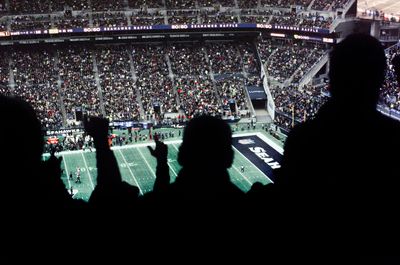
Expert Insight: NFL Fandom: The Last Cultural Unifier?
In 2024, few cultural touchstones unify America. One of the remaining cultural unifiers is the NFL. It is almost guaranteed that the Super Bowl will be the most watched television program each year. Add Taylor Swift (another rare cultural unifier) attending to watch her boyfriend and an appealing halftime musical guest, and you can have over 120 million people watching the same program at the same time. Nothing else comes close. There is little doubt that the NFL is the undisputed champion of American sports. But how do the various NFL fandoms compare? Which team has the top fandom, and which struggles (struggle is relative here, as the lowest-ranked NFL fandom is still impressive)? This is an interesting question in a couple of ways. First, it reveals something important about the level of connection in different cities. Cities with stronger fan bases tend to have more of a shared identity. Boston residents share more love across their teams (Celtics, Red Sox, Bruins, Patriots) than folks from Tampa Bay. “Sports” cities are fundamentally different. It's also an interesting marketing analysis. Fandoms are people who share passion and love for what are essentially brands. Examining fandom can reveal something critical about how brands that inspire fandom are built. Comparing fan bases can also inflame passions. Sports fans are (often) the ultimate fans as they closely identify with their teams and feel each victory as a personal triumph and each loss as a defeat. Because fans’ identities are tied to their teams, ranking fan bases can feel like an attack. Saying Browns fans aren’t as good of fans as Ravens fans feels like an attack on Cleveland. The deeper perspective motivating this analysis is that fandom is about cultural passion, so what people are fans of largely dictates the tone and content of our societies. A society that loves baseball, country music, and trucks feels very different from one that favors soccer, opera, and Vespas. The fandom rankings are a snapshot in time of how fandom works in the NFL. And remember, the NFL is not just the top sports league in America but also the closest thing we have in 2024 to a shared societal passion. Analyzing Fandoms I have been ranking NFL and other fan bases for more than a decade. These fandom analyses are an example of brand equity analytics, and they use two types of data. The goal is to understand the relationship between market characteristics and fandom outcomes at the league level. We can then evaluate each team based on how it performs relative to league norms. The fandom or market outcome measures include things like data on prices, attendance, and social media following. These are measures of fan engagement. Prices provide a signal of how much market power a team has created. Attendance shows the enthusiasm of fans in the market to pay for tickets and take the time to travel and attend. Social media following reveals how many fans the team has in and out of their home market. Each metric has advantages and limitations. Social media following provides an indication of national fandom, but it also captures casual fans who would never pay for a ticket. The second aspect of the analysis focuses on market potential. NFL markets vary from New York, with a population of 20 million, to Green Bay, with a few hundred thousand. Income levels in San Francisco are far higher than in Jacksonville or Cleveland. I use a range of demographics, but income and population are the major factors. Again, the metrics are good but not perfect. For example, using MSA populations isn’t perfect because teams have different footprints. The Packers are more of a Wisconsin team than a Green Bay team. The teams in New York and LA share a market. Should they each get half of the metro area population? One factor that I do not control for is competition. In the southeast, NFL teams may compete with SEC teams. I have debated this issue (with myself) and have decided to neglect it. This year's analysis includes a significant change from last year. The significant change is that I am not controlling for team performance. Controlling for team performance is helpful because it isolates core or unchanging fandom. This approach has appeal, as we can argue that teams with more passionate fandoms will be more resilient against losing seasons. The downside of controlling for performance is that we get less of a measurement of the fandom's overall value. If a team like Kansas City is on an extended winning streak, then the Chiefs brand is very valuable at the moment. Controlling for winning makes the analysis more about the core, near-permanent passion of a fandom, while not controlling makes the results more relevant to current brand power. The analysis involves three steps. The first step creates measures of each team’s relative fandom outcomes and market potential. The second step develops a statistical model of the relationship between market potential and fandom outcomes. The third step compares each team's fandom outcomes with the statistical model's predictions. The third step is a comparison of actual results versus predicted – the key point is that the prediction is based on leaguewide data. As these analyses are always imperfect, the best way to consider the fandom rankings is as tiers. I like the idea of quadrants. Some brief comments on the members of each quadrant (Elite, Solid, Role Players, Benchwarmers). I will be discussing each fandom on social media. TikTok: @fanalyticspodcast Instagram: @fanalyticsmikelewis YouTube: @fanalyticsmike A bonus figure follow the Quad overviews. The Results Quadrant 1: The Elite The Dallas Cowboys lead the top group of teams, followed by the Packers, Eagles, Chiefs, 49ers, Raiders, Patriots, and Steelers. Sounds a lot like what the man on the street would list as the top NFL brands. The Cowboys and Packers leading the way is no surprise. The Cowboys are second in social following and the leaders in attendance. The Packers are an astonishing fandom story as the team is located in the definitive small market. The Eagles leading the Steelers is going to be troubling in Western Pennsylvania, but the Eagles have more pricing power and more social following. The 49ers are a solid NFL fandom with few weaknesses. The Patriots are in a new era, and it will be fascinating to see if they maintain their top-tier position as Brady and Belichick become memories. The Chiefs' presence in the top group is a change from past years and is due to the shift away from controlling for performance. The Chiefs have a great fandom, but the team’s success currently pumps them up. The Chiefs are in a brand-building phase as the team continues building its dynasty. The question for the Chiefs is where they end up long-term. I don't fully understand the Raiders' ranking. The Raiders are midrange in attendance and social following but do well because are reported to have the highest prices in the league. I suspect this is more an idiosyncrasy of the Las Vegas market than a reflection of significant passionate fandom. Quadrant 2: Solid Performers The Quadrant 2 teams are the Broncos, Giants, Panthers, Seahawks, Saints, Ravens, Texans, and Browns. These are the solid performers of NFL fandoms (brands). These are teams with above expected fandom outcomes for their relative market potentials. The Quadrant 2 clubs are all passionate fanbases (maybe one exception) despite very different histories. For example, the AFC North rival Ravens and Browns differ in both relative history and frequency of winning. Cleveland fandom involves significant character, while the Ravens are a “blue-collar” brand that has been a consistent winner. There are a lot of great stories in Quad 2. The Saints were once the Aints but are now a core part of New Orleans. The Broncos and Giants are great fandoms who are probably angry to be left out of Quad 1. The Panthers' position is unexpected and may be due to some inflated social media numbers. This is the challenge when an analysis is based only on data. When data gets a little weird, like an inflated social media follower count dating back to Cam Newton's days, the results can also get a little weird. This is a teachable moment—do not analyze and interpret data without knowing the context (the data-generating processes). Quadrant 3: Role Players Quadrant 3 fandoms are teams whose fandom outcomes are slightly below average league performance (for similar markets). The Quadrant 3 teams include (in order) the Bills, Falcons, Buccaneers, Jets, Vikings, Bears, Dolphins, and Bengals. There are some interesting teams in Quad 3. The Bills have a great and notorious fandom. Jumping through flaming tables in subzero weather should get you into the top half of the rankings? The big-market Jets and the small-market Bengals have two of the most fascinating QBs in the league. Both clubs could be poised to get to Quad 2 with a Super Bowl or two. Da’Bears may be one of the most disappointing results. A team with an SNL skit devoted to their fandom in a market like Chicago shouldn’t be in Quad 3. Other quick comments: The Falcons need to win a title. Florida is tough for professional teams. The Vikings should play outside. Quadrant 4: Hopium These are the NFL's weakest fandoms, with the key phrase being “the NFL’s.” The Quad 4 teams, in order, are the Lions, Rams, Jaguars, Colts, Titans, Commanders, Chargers, and Cardinals. It’s a lot of teams who have not won regularly and have many moves and name changes. The Lions are poised for a move upward and maybe a sleeping giant of a fandom. They have the most watchable coach in the league and the most surprising celebrity fan. An interesting side story in Quad 4 is the battle for Los Angeles between the Rams (formerly of Saint Louis) and the Chargers (previously San Diego). They play in the same market, but the Rams have won more. But will Herbert lead the Chargers past the Rams? Quad 4 illustrates an important lesson: consistency. The Rams moved from St. Louis and then back to LA. The Chargers went from San Diego to LA. The Colts left Baltimore in the middle of the night. The Titans were the Oilers and moved from Houston to Nashville. The Cardinals were the other NFL team Saint Louis lost. The Commanders should have stopped with their previous name. The Fandom Outcomes / Market Potential Matrix The following figure is a bit of bonus material that may provide some insight into the inner workings of the analysis. The figure below shows the performance of each team on the Fandom Outcome and the Market Potential Indexes. The upper left region features teams with less lucrative markets but above-average fandoms, like the Packers, Steelers, and Chiefs. The lower right region is the teams with below-average fandom outcomes despite high potential markets, like the Commanders, Chargers, and Rams. This pictorial representation is also interesting as it shows teams with similar positions. These similarities can be somewhat surprising. For example, the Lions and Dolphins have very similar profiles despite the differences between Detroit and Miami. Mike Lewis is an expert in the areas of analytics and marketing. This approach makes Professor Lewis a unique expert on fandom as his work addresses the complete process from success on the field to success at the box office and the campaign trail. Michael is available to speak with media - simply click on his icon now to arrange an interview today. Interested in following Future Fandom! Subscribe for free to receive new posts.



Cuba's history is a rich tapestry of revolutionary fervor, cultural vibrancy, and political intrigue that has captivated the world for decades. This topic is particularly newsworthy due to its significant impact on global geopolitics, its unique social and economic experiments, and its vibrant cultural contributions. Understanding Cuba's past is essential for comprehending current issues in Latin America and the ongoing influence of socialist ideologies. Key story angles for journalists could include: The Cuban Revolution: Exploring the causes, key figures like Fidel Castro and Che Guevara, and the revolution's lasting impact on Cuban society and politics. US-Cuba Relations: Analyzing the historical and contemporary dynamics between Cuba and the United States, including the embargo, the Bay of Pigs invasion, and recent diplomatic efforts. Economic Policies and Reforms: Investigating Cuba's socialist economic model, the challenges it faces, and recent reforms aimed at modernizing the economy. Healthcare and Education: Highlighting Cuba's achievements and challenges in healthcare and education, often touted as successes of the revolutionary regime. Human Rights and Political Freedom: Examining issues of political repression, human rights abuses, and the struggle for freedom and democracy in Cuba. Cultural Influence: Featuring Cuba's rich cultural heritage, including its contributions to music, dance, and literature, and how culture serves as a form of resistance and identity. By delving into these aspects, journalists can provide a comprehensive and nuanced understanding of Cuba's history, offering readers diverse perspectives and in-depth coverage of a nation that continues to influence global conversations on politics, culture, and human rights. Connect with an expert about the History of the Cuba: To search our full list of experts visit www.expertfile.com Photo credit: Jason Gamble

Covering the latest in Venezuela?
The history of Venezuelan politics is a compelling narrative that reflects the dynamic interplay of power, ideology, and social change in Latin America. This topic is particularly newsworthy due to its relevance in understanding current global geopolitical shifts, the rise and fall of political regimes, and the enduring struggle for democracy and human rights. Venezuela's political history offers insights into the impacts of oil wealth, populism, and international interventions, making it a rich subject for journalistic exploration. Key story angles for journalists could include: The Rise of Populism: Exploring the emergence and impact of populist leaders in Venezuelan history, particularly focusing on Hugo Chávez's Bolivarian Revolution. Economic Boom and Bust: Analyzing the role of oil wealth in shaping Venezuela's political landscape, from periods of prosperity to economic crises. Human Rights and Social Movements: Investigating the human rights situation in Venezuela, including the struggles of political dissidents, social activists, and the general population. International Relations and Influence: Examining Venezuela's foreign policy, its alliances, and the impact of international sanctions and interventions on its political stability. Democratic Erosion and Authoritarianism: Tracing the decline of democratic institutions and the rise of authoritarian practices in Venezuela, highlighting key turning points and figures. Future Prospects and Reform: Featuring expert analysis on the potential paths forward for Venezuela, including political reforms, economic recovery plans, and the role of the international community. By delving into these aspects, journalists can provide a comprehensive and nuanced understanding of Venezuelan politics, offering readers diverse perspectives and in-depth coverage of a nation at the crossroads of significant historical and contemporary challenges. Connect with an expert if you need to know more about the History of Venezuelan Politics: To search our full list of experts visit www.expertfile.com Photo credit: Micho

Sport and Study: Villanova University Faculty Offer Academic Lens to Paris Olympics Storylines
All eyes are on Paris: more than 10,000 athletes from 206 nations are set to compete in the Games of the XXXIII Olympiad, the third Olympics in the City of Love and the first since 1924. Below, Villanova University faculty members provide their academic expertise on the unique storylines and narratives already taking place as Paris 2024 gets underway. Portraying a National Image in the Opening Ceremony Étienne Achille, PhD Director of French and Francophone Studies After months of speculation, the daily Le Parisien has officially confirmed that renowned French-Malian singer Aya Nakamura will lend her vocals to an opening ceremony featuring an iconic backdrop steeped in history. “Nakamura is the most-streamed Francophone singer in the world, embodying France’s culture on a global stage, and she’ll be paying homage to one of the most cherished representatives of the chanson française,” said Dr. Achille, referring to reports she will sing one of beloved French crooner Charles Aznavour’s greatest hits. According to Dr. Achille, the pop star’s presence is significant and symbolic. “A performer, or even a flagbearer, can easily become the face of a global event like the Olympics,” he said. The details of the setting for the ceremony – in the heart of Paris, along the Seine – are just as intentionally symbolic. “Not only will this be the first opening ceremony to take place entirely outside of a stadium; its location along the river and the fact the delegations will be on boats are key. “It represents movement and connection to the world,” Dr. Achille said. “And Nakamura’s performance projects the image of a modern, multi-ethnic nation building on tradition while proudly marching into the future.” Swimming in the Seine: Safe or Not? Metin Duran, PhD Professor of Civil and Environmental Engineering It is, perhaps, the most-asked question of the last few weeks. Is the Seine River, set to host multiple swimming events, safe? The river has been illegal to swim in for a century due to the presence of harmful bacteria such as E. Coli, and recent testing has reaffirmed this concern. The Seine, which had undergone an expensive cleaning to mitigate this issue, received the endorsement of Paris Mayor Ann Hidalgo, who personally took a dip in the water herself to attest to its safety. The stunt did little to convince experts such as Dr. Duran, who studies wastewater, to abandon concern about the potential health risks of athletes being exposed to pathogens in the water. “When we have fecal pollution, there is a high likelihood of pathogens being present,” Dr. Duran said. “Those could be viral, like a norovirus, or protozoan. “If you’re swimming in that water, you run the risk of ingesting it. Once you ingest that polluted water, you’re likely to contract some of those disease-causing pathogens. Ingesting this water doesn’t mean you’re necessarily going to get sick, but based on the number of people in a big city like Paris, there is a very high likelihood of some of these pathogens existing now in the river.” Accommodations for Breastfeeding Athletes Sunny Hallowell, PhD, APRN, PPCNP-BC Associate Professor of Nursing The IOC and Paris 2024 Organizing Committee is providing support to all breastfeeding athletes competing in the Games. A few national governing bodies, like the French Olympic Committee, are going a step further and offering hotel rooms near the Village for their country’s breastfeeding athletes to share with their children and spouses. “A few decades ago, the idea of a female athlete who also wanted to breastfeed their child was so taboo it may have prevented an athlete from competing,” said Dr. Hallowell. “Now, many female athletes who choose to breastfeed their newborns or toddlers conceptualize breastfeeding as another normal function of their remarkably athletic bodies.” Accommodation for breastfeeding athletes and increased awareness are needed more than ever. Dr. Hallowell notes that in addition to changing views on breastfeeding, the needs for such accommodations are increasing as the age of peak athletic performance also increases. “Advances in sports nutrition, wellness and lifestyle have extended the longevity and performance of many athletes into adulthood,” she said. And while some athletes with rigorous training regimens might feel “frustrated incorporating breastfeeding into the routine,” Dr. Hallowell says that for others, “breastfeeding provides both physical and socio-emotional benefits for the mother and the infant that allow the athlete to focus on the job of competition.” Protecting Against the Parisian Heat Ruth McDermott-Levy, PhD, MPH, RN, FAAN Professor of Nursing The potential for extreme heat in Paris has been a topic of concern for athletes and organizers, prompting certain outdoor events to be proactively scheduled at times to avoid the day’s worst heat. Current forecasts predict temperatures in the 90s for several days early on in the Games, which could be exacerbated by Paris’ reputation as an urban heat island, unable to cool due to lack of green space and building density. Dr. McDermott-Levy says the athletes are inherently vulnerable, because “the added stress of physical exertion during their events puts them at greater risk of heat-related illness.” But she also notes that many of the athletes have likely undergone pre-competition training in extreme heat conditions to acclimate and will have trainers and health professionals monitoring them frequently. “The group of concern are the workers at the stadiums, outdoor workers and spectators who are there to enjoy or work at the events and may have had little to no acclimation,” Dr. McDermott-Levy said. “They need to follow local instructions and take frequent breaks from the heat, seek shade and maintain hydration by avoiding alcohol and sugary drinks and drinking water.” How Nature Can Inspire Future Use of Olympic Infrastructure Alyssa Stark, PhD Assistant Professor of Biology Gone, hopefully, are the days of abandoned Olympic Villages and venues, overrun with weeds and rendered useless soon after the Games conclude. The IOC’s commitment to sustainability has been transparently relayed ahead of the 2024 Games, featuring a robust range of initiatives and programs. Dr. Stark is particularly interested in one aspect of ensuring a sustainable Olympics. “How will the structures, materials and systems they developed for the Olympics be re-used, re-shaped or re-worked afterward?” she posed. “This could include re-using buildings to larger scale or re-working transportation systems set in place for the Games that could then integrate into day-to-day life post Olympics.” At the root of her interest is the concept of biomimicry. “A lot of the way we think about designing, if we’re using this biomimicry lens, is how do we learn from nature to solve problems that we have in a sustainable way, keeping in mind the environment we are in?” Dr. Stark said. In this case, consider how something like a dwelling of a living creature might be repurposed to fit the needs of another creature, or serve another natural purpose, without harming the ecosystem. Could that inspire a way to re-use the Olympic infrastructure? “There are a ton of examples of [biomimicry] being used and working in products,” Dr. Stark said. “But I would say the next step is looking at the social levels of these big ecosystems – building architecture, city planning, flow of information and, in this instance, repurposing what was created for the Olympics.” Paris Could Be a Transportation Model for Major City Events in the United States Arash Tavakoli, PhD Professor of Civil and Environmental Engineering Paris has invested 250 million Euro the last several years to transform the city to a 100% cycling city, making it one of the most bike-friendly municipalities in the world. Currently, more trips are being made by bicycles in Paris than by cars (11% vs. 4%), a trend that has permeated to the surrounding suburbs as well. With an influx of travelers in Paris for the Games, Dr. Tavakoli, an expert in human transportation, said, “The Olympics will be a test for how well these kinds of systems respond to high fluctuations in the population as compared to vehicle-centric systems.” While Paris is thousands of miles away from the United States, how bicycle, pedestrian and vehicle systems work during the Games could provide helpful insight ahead of major events in American cities. “With the World Cup coming to the U.S. in a few years, it will be interesting to compare [Paris] with how our own system responds to people’s needs,” Dr. Tavakoli said. “Not just based on traffic data and congestion, but also considering factors like how comfortable the transportation system is, how much it affects our well-being and how much it attracts a nonresident to enjoy the U.S. when their only option, for the most part, is a vehicle.”


ExpertSpotlight: History of the Ancient Olympics
The Ancient Olympics, originating in Olympia, Greece, over 2,700 years ago, hold profound significance not only as a cornerstone of ancient Greek culture but also as a foundation for the modern Olympic Games. This topic matters to the public because it provides insights into the origins of organized sports, the cultural values of ancient civilizations, and the historical continuity that connects past traditions to contemporary global events. Understanding the history of the Ancient Olympics offers a unique perspective on the evolution of sportsmanship, competition, and international unity. Key story angles for journalists could include: Origins and Cultural Significance: Exploring the roots of the Ancient Olympics, their role in Greek society, and the religious and cultural rituals that accompanied the games. Athletic Events and Competitors: Delving into the various sports and athletic competitions that were part of the Ancient Olympics, and highlighting notable athletes and their achievements. Political and Social Impact: Investigating how the Ancient Olympics influenced political dynamics and social structures within ancient Greece, including the games' role in fostering unity and diplomacy among city-states. Religious and Mythological Connections: Examining the religious significance of the games, including their dedication to Zeus and the mythological stories associated with Olympia and the origins of the games. Legacy and Evolution: Analyzing how the traditions and values of the Ancient Olympics have shaped the modern Olympic movement, including the continuity and changes over millennia. Archaeological Discoveries: Reporting on recent archaeological findings and research that shed new light on the Ancient Olympics, including discoveries of artifacts, structures, and inscriptions. By focusing on the history of the Ancient Olympics, journalists can provide the public with a richer understanding of how these early games laid the groundwork for modern sporting events, offering diverse and compelling angles for coverage. Connect with an expert about the History of the Ancient Olympics: To search our full list of experts visit www.expertfile.com Photo credit: Chris Karidis