Experts Matter. Find Yours.
Connect for media, speaking, professional opportunities & more.

The truth behind federal disclosure of alien life
With the recent presidential comments on potential alien life, UFO enthusiasts have new hope that finally we’re going to get federal “disclosure” of UFOs, aliens and the great government conspiracy surrounding both. But, as a scientist who studies the search for life in the Universe, the question I have is much simpler: What would disclosure really need to disclose? What is required for actual, factual proof that aliens exist and they’ve been visiting Earth? We’ve already had three years of Congressional hearings on UFOs that have produced zero proof of anything. What we need now is simple: hard physical evidence. That is what disclosure needs to deliver. Not stories about alien spaceships being held by the government, but the actual spaceships themselves. Not stories about alien bodies but the actual icky, gooey bodies with their icky gooey tentacles. If disclosure provides physical evidence that independent laboratories and independent scientists all over the world can verify, then it will live up to its hype. That would make “Disclosure Day” truly history-making.


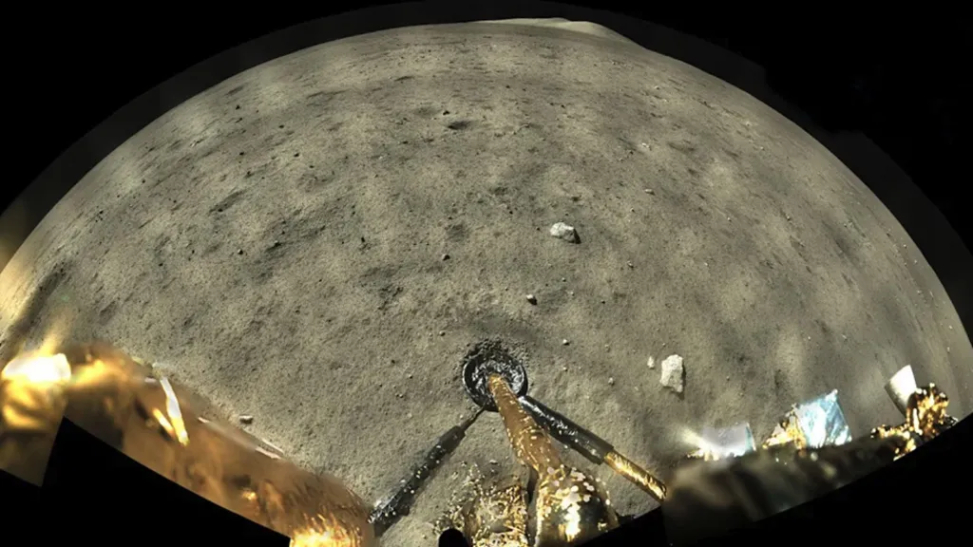
Young magmas on the moon came from much shallower depths than previously thought, new study finds
New research on the rocks collected by China's Chang'e 5 mission is rewriting our understanding of how the moon cooled. Stephen Elardo, Ph.D., an assistant professor of Geological Sciences with the University of Florida, has found that lava on the near side of the moon likely came from a much shallower depth than previously thought, contradicting previous theories on how the moon produced lavas through time. These samples of basalt, an igneous rock made up of rapidly cooled lava, were collected from the near side of the moon by the Chang’e 5 mission and are the youngest samples collected on any lunar mission, making them an invaluable resource for those studying the geological history of the moon. In order to get an estimate of how deep within the moon the Chang’e 5 lava came from, the team conducted high-pressure and high-temperature experiments on a synthetic lava with an identical composition. Previous work from Chinese scientists has determined that the lava erupted about 2 billion years ago and remote sensing from orbit has showed it erupted in an area with very high abundances of potassium, thorium and uranium on the surface, all of which are radioactive and produce heat. Scientists believe that, in large amounts, these elements generate enough heat to keep the moon hot near the surface, slowing the cooling process over time. “Using our experimental results and thermal evolution calculations, we put together a simple model showing that an enrichment in radioactive elements would have kept the Moon's upper mantle hundreds of degrees hotter than it would have been otherwise, even at 2 billion years ago,” explained Elardo. These findings contradict the previous theory that the temperature of the moon’s outer portions was too low to support melting of the shallow interior by that time and may challenge the hypothesis about how the moon cooled. Prior to this study, the generally-accepted theory was that the moon cooled from the top down. It was presumed that the mantle closer to the surface cooled first as the surface of the moon gradually lost heat to space, and that younger lavas like the one collected by Chang’e 5 must have come from the deep mantle where the moon would still be hot. This theory was backed by data from seismometers placed during the Apollo moon landings, but these findings suggest that there were still pockets of shallow mantle hot enough to partially melt even late into the moon’s cooling process. “Lunar magmatism, which is the record of volcanic activity on the moon, gives us a direct window into the composition of the Moon's mantle, which is where magmas ultimately come from,” said Elardo. “We don't have any direct samples of the Moon's mantle like we do for Earth, so our window into the composition of the mantle comes indirectly from its lavas.” Establishing a detailed timeline of the moon’s evolution represents a critical step towards understanding how other celestial bodies form and grow. Processes like cooling and geological layer formation are key steps in the “life cycles” of other moons and small planets. As our closest neighbor in the solar system, the moon offers us our best chance of learning about these processes. “My hope is that this study will lead to more work in lunar geodynamics, which is a field that uses complex computer simulations to model how planetary interiors move, flow, and cool through time,” said Elardo. “This is an area, at least for the moon, where there's a lot of uncertainty, and my hope is that this study helps to give that community another important data point for future models.”



ExpertSpotlight: The Surprising (and Slightly Dark) History of Valentine’s Day
Valentine’s Day may now be synonymous with chocolates, flowers, and heart-shaped everything, but its origins are far more complex, blending ancient Roman traditions, Christian martyrdom, and medieval storytelling. What began as a mid-winter festival tied to fertility and renewal eventually evolved into a celebration of romantic love - one shaped as much by poets and pop culture as by saints and religious history. Ancient Roots: Before Romance, There Was Ritual Long before Valentine’s cards, ancient Romans celebrated Lupercalia, a mid-February festival focused on fertility, purification, and the coming of spring. The event included symbolic rituals meant to ward off evil spirits and promote health and fertility, far removed from today’s candlelit dinners. As Christianity spread through the Roman Empire, many pagan festivals were re-interpreted or replaced with Christian observances, laying the groundwork for what would become Valentine’s Day. Who Was Valentine, Anyway? There isn’t just one Valentine. Historical records point to multiple early Christian martyrs named Valentine, the most famous being Saint Valentine, executed in the 3rd century CE. One popular legend claims he secretly performed marriages for young couples despite a Roman ban, acts that ultimately led to his execution. While historians debate the accuracy of these stories, they helped cement Valentine’s association with love, sacrifice, and devotion. Love Enters the Story: Medieval Poets Change Everything Valentine’s Day as a romantic holiday didn’t truly take shape until the Middle Ages. English poet Geoffrey Chaucer is often credited with linking February 14 to romantic love in his poetry, helping popularize the idea that it was the day birds chose their mates. From there, the connection between Valentine’s Day and courtly love spread across Europe, especially among the nobility, eventually giving rise to handwritten love notes and tokens of affection. From Handwritten Notes to Hallmark By the 18th and 19th centuries, Valentine’s Day had become a popular occasion for exchanging cards, flowers, and gifts. The Industrial Revolution made printed cards widely available, transforming a once-elite tradition into a mass-market celebration. Today, Valentine’s Day is a global cultural phenomenon, equal parts romance, commerce, and tradition, evolving to include friendships, self-love, and inclusive expressions of connection. It isn’t just about romance, it reflects how traditions evolve over time, absorbing layers of culture, religion, and storytelling. Understanding its history helps explain how societies redefine love, relationships, and celebration across generations. Our experts can help! Connect with more experts here: www.expertfile.com


On February 8, 2026, 120 million-plus viewers worldwide are expected to tune into Super Bowl LX. However, the battle on the gridiron will be a secondary attraction for many, especially those from Puerto Rico and of Puerto Rican descent (colloquially known as "Boricuas"). Their attention will be focused on this year's halftime show, headlined by Bayamón-born rapper and producer Bad Bunny. Renowned for songs like "Yo Perreo Sola," "La Canción" and "Me Porto Bonito," the pop sensation is expected to bring a distinctive Latin American flair to his set, representing Puerto Rican culture and creativity to an audience unlike any other. Héctor Varela Rios, PhD, the Raquel and Alfonso Martínez-Fonts Endowed Assistant Professor in Latin American Studies at Villanova University, specializes in popular culture and writes extensively on the Boricua community, to which he himself belongs. From his perspective, Bad Bunny's upcoming performance in the Super Bowl halftime show marks "a high point for Puerto Rican pride," both within the U.S. territory and across the globe. "He is not the first Super Bowl performer to claim Puerto Rican ancestry—Jennifer Lopez performed alongside Colombia-born Shakira in 2020—but he is the first island-born Puerto Rican to perform," says Dr. Varela Rios. "At this moment, he is our brightest superstar and absolutely adored throughout Latin America and the world." To the professor's point, Bad Bunny is among the most successful musical acts touring today, having notched more than 7 million records sold, four diamond plaques and 11 platinums all before the age of 32. His popularity has not come at the expense of his art, either, with the rapper having won six Grammy Awards over the course of his career—including three for his latest album, "Debí Tirar Más Fotos." According to Dr. Varela Rios, Bad Bunny's widespread appeal and critical acclaim can be traced to his authenticity, courage and swagger. Singing in Spanish, making deep-cut cultural references and broaching sensitive, seemingly taboo topics, the Latin American pop star has effectively built a following by unabashedly embracing his own identity. (Perhaps tellingly, he titled his second album "Yo Hago Lo Que Me Da La," or "I Do Whatever I Want.") "Bad Bunny is proud of his Caribbean roots and keenly aware of the history of Puerto Rico, which influences his work," says Dr. Varela Rios. "In addition, he is very unapologetic about the content of his lyrics and performing style. It goes beyond mere shock with him; he relishes challenging assumptions of what being an artist should be, or needs to be in order to 'sell records.'" While this daring approach has netted Bad Bunny a number of accolades and a devoted legion of fans, it has not been without its share of detractors. Still, on the biggest stages and under the brightest lights, the celebrated artist has shown no inclination to alter or tone down his act. Dr. Varela Rios predicts the pop star's Super Bowl appearance will be no different. "Bad Bunny is a businessman, and one of the best I've ever seen," he adds. "This is an artist who knows what to do and how to do it, and when the Super Bowl halftime show's lights go down, his performance will certainly be remembered."



The AI Journal: UF and other research universities will fuel AI. Here’s why
In the global AI race between small and major competitors, established companies versus new players, and ubiquitous versus niche uses, the next giant leap isn’t about faster chips or improved algorithms. Where AI agents have already vacuumed up so much of the information on the internet, the next great uncertainty is where they’ll find the next trove of big data. The answer is not in Silicon Valley. It’s all across the nation at our major research universities, which are key to maintaining global competitiveness against China. To teach an AI system to “think” requires it to draw on massive amounts of data to build models. At a recent conference, Ilya Sutskever, the former chief scientist at OpenAI — the creator of ChatGPT — called data the “fossil fuel of AI.” Just as we will use up fossil fuels because they are not renewable, he said we are running out of new data to mine to keep fueling the gains in AI. However, so much of this thinking assumes AI was created by private Silicon Valley start-ups and the like. AI’s history is actually deeply rooted in U.S. universities dating back to the 1940s, when early research laid the groundwork for the algorithms and tools used today. While the computing power to use those tools was created only recently, the foundation was laid after World War II, not in the private sector but at our universities. Contrary to a “fossil fuel problem,” I believe AI has its own renewable fuel source: the data and expertise generated from our comprehensive public academic institutions. In fact, at the major AI conferences driving the field, most papers come from academic institutions. Our AI systems learn about our world only from the data we offer them. Current AI models like ChatGPT are scraping information from some academic journal articles in open-access repositories, but there are enormous troves of untapped academic data that could be used to make all these models more meaningful. A way past data scarcity is to develop new AI methods that leverage all of our knowledge in all of its forms. Our research institutions have the varied expertise in all aspects of our society to do this. Here’s just one example: We are creating the next generation of “digital twin” technology. Digital twins are virtual recreations of places or systems in our world. Using AI, we can develop digital twins that gather all of our data and knowledge about a system — whether a city, a community or even a person — in one place and allow users to ask “what if” questions. The University of Florida, for example, is building a digital twin for the city of Jacksonville, which contains the profile of each building, elevation data throughout the city and even septic tank locations. The twin also embeds detailed state-of-the-art waterflow models. In that virtual world, we can test all sorts of ideas for improving Jacksonville’s hurricane evacuation planning and water quality before implementing them in the actual city. As we continue to layer more data into the twin — real-time traffic information, scans of road conditions and more — our ability to deploy city resources will be more informed and driven by real-time actionable data and modeling. Using an AI system backed by this digital twin, city leaders could ask, “How would a new road in downtown Jacksonville impact evacuation times? How would the added road modify water runoff?” and so on. The possibilities for this emerging area of AI are endless. We could create digital twins of humans to layer human biology knowledge with personalized medical histories and imaging scans to understand how individuals may respond to particular treatments. Universities are also acquiring increasingly powerful supercomputers that are supercharging their innovations, such as the University of Florida’s HiPerGator, recently acquired from NVIDIA, which is being used for problems across all disciplines. Oregon State University and the University of Missouri, for example, are using their own access to supercomputers to advance marine science discoveries and improve elder care. In short, to see the next big leap in AI, don’t immediately look to Silicon Valley. Start scanning the horizon for those research universities that have the computing horsepower and the unique ability to continually renew the data and knowledge that will supercharge the next big thing in AI. Read more...

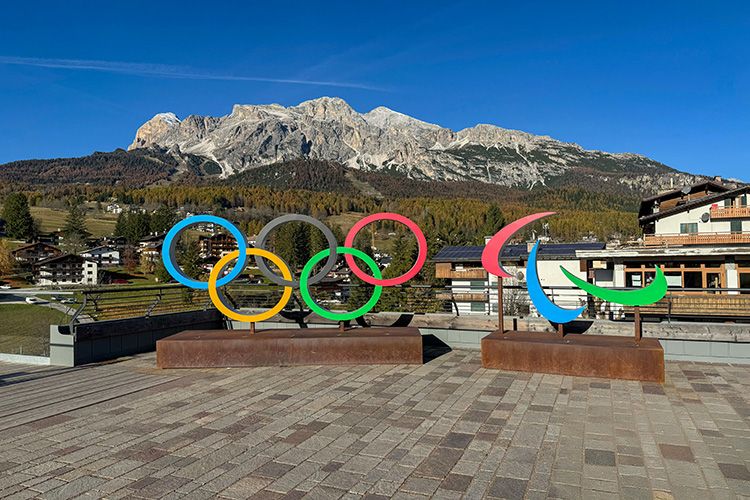
Long proclaimed Italy’s “moral capital,” Milan is renowned worldwide for its significant contributions to fashion, design and the arts. Soon, another point of pride will be added to the city’s storied history, when the regional hub—and partnering town Cortina d’Ampezzo—plays host to the 2026 Winter Olympics in February. Luca Cottini, PhD, is a professor of Italian Studies and an expert on the evolution of Italian culture, particularly through the 19th and 20th centuries. Recently, he shared some thoughts concerning Milan and Cortina’s successful joint bid for the Olympics, the themes and iconography expected to define this year’s opening ceremony and the symbolic significance of Italy’s selection as a host nation. Question: What was the role of past major events in Milan and Cortina—like the 2015 World’s Fair and the 1956 Winter Olympics—in helping to elevate their appeal for these games? Luca Cottini: I’ll start by saying that although people notice world’s fairs less than the Olympics, they are more impactful to a city and country because they generate more revenue, business, political relationships and positive reputation. They are events in which all the world comes together and each country exposes its excellence, while the host nation brings a visibility that it would not carry otherwise. In 2015, Milan hosted the world’s fair, which generated a completely new fairgrounds area and a visibility of politics, industry, technology and modernity in a way that brings the city to a global stage. I would say that is when the ascent of Milan really started, especially as a desirable destination. With Cortina, after the 2015 World’s Fair—and especially after the COVID-19 pandemic—the Dolomites became really a popular region for travelers to visit. Cortina is also symbolic to Olympic history, because it's the site of the first Olympics that took place in Italy, in 1956 during the reconstruction era. That was the Dolce Vita period, in the middle of the 1950s economic boom, and those games were followed by Rome’s Summer Olympics in 1960. They both represented a way in which Italy, coming out of the war destroyed, was reaffirming its rebirth. Over the years, fewer cities have wanted to host the Olympics because they tend to carry a lot of economic burden, financial debt and little return on investment. In this sense, Milan and Cortina, helped by increased popularity after the world’s fair, sold themselves as a sustainable Olympics. Ninety percent of the buildings were refurbished from older buildings, and they will serve purposes after the Olympics. It’s difficult to tell whether it’s economically sound or not, but it is a way to promote two cities that are in big moments of growth. Q: These Olympic Games will be celebrating Milan’s contributions to fashion. What is the city’s significance to the fashion world? LC: Milan is certainly the capital of fashion in Italy, and is one of the capitals of fashion in the world, along with Paris, New York and London. The fashion heritage that the city carries now in iconic brands like Armani, Versace, Moschino and Dolce & Gabbana is the outcome of a process that took shape in the late 1970s. Until then, fashion in Italy was mainly related to Rome, through cinema, and Florence, as that city represented a new Renaissance in the postwar years. But in the 1970s, much of this fashion world moved from those cities to Milan, because there was a conglomeration of labor, skills, capital and creativity that generated a complex productive and cultural system, or the so-called “Sistema Moda.” This is a particular approach to the industry in Italy that coordinates management and creativity around the figures of a big creative director and a big manager who work together in creating not just nice styles, but also sustainable outlets and markets in and outside Italy. In turn, with its reputation, Milan gives the Olympics that seal of grandeur and coolness. The connection with fashion and promotion of uniqueness is part of the national rhetoric that surrounds what we call “Made in Italy,” this idea of luxury, styling, beauty, order and measure that is endowed in the Italian DNA. Q: Andrea Bocelli—who also appeared in Torino’s 2006 closing ceremony—is supposed to sing once again in this year’s opening ceremony. Aside from his popularity, what is the symbolic significance of his selection as a performer? LC: Bocelli is an interesting case. He is a prototypical Italian success story, which is born in the peninsula but is then ratified outside of Italy. As Bocelli became a global sensation in the U.S., he then came back to his roots in Italy, where his voice has become a symbol of national unity, as epitomized in his solo concerto of Milan, during the pandemic, when he sang in front of the empty Piazza del Duomo, facing the city’s cathedral. In his Catholic faith and secular operatic repertoire, he symbolizes Italian culture as a similar piazza or open space where different voices can converge in a temperate balance. When you put together Bocelli, Mariah Carey and whoever else will be part of the ceremony, that same Italian identity will give rise to a new synthesis, as the encounter of tradition and novelty, grounded-ness and openness. Q: The Olympic flames are supposed to be lit in two cauldrons—one in Milan and one in Cortina—each with a design inspired by Leonardo da Vinci. What was da Vinci’s importance to Milan, specifically? LC: Da Vinci is part of the fabric of Milan. He spent 20 years in the city, painting “The Last Supper” and working at Castello Sforzesco, as well as many other places. His footprint is all over Milan, in its design, walls, canal system and more. He is an archetype of the Italian mind in as much as it represents the combination of engineering and beauty. The word Ingenium in Latin, meaning “genius,” overflows in English into the word “engineering” and also “ingenuity,” which reflects the creative mind. Da Vinci represents the synthesis of Italian Ingenium as a combination of aesthetics and problem solving, which you still see in the city today.


One year ago, after a campaign that toppled Bashar al-Assad's repressive dictatorship, Ahmed al-Sharaa assumed the Syrian presidency. Since then, the former rebel commander has worked to establish his credentials as a statesman, winning the support of regional powers like Türkiye, Saudi Arabia and Qatar—as well as recognition from the White House. Yet al-Sharaa and his transitional government have not been immune from criticism, particularly over their handling of domestic affairs. Samer Abboud, PhD, director of the Center for Arab and Islamic Studies at Villanova University, is an expert on modern Syria and the wider Middle East. A year into al-Sharaa's presidency, he believes the provisional government has made incredible strides in some areas, like international diplomacy, while struggling to find its footing in others. "There's no doubt that Syria's external image is becoming more positive. We see this kind of charm offensive, with President al-Sharaa taking to the world stage," says Dr. Abboud. "Also, most of the regional actors are very fond of al-Sharaa and were very happy for the Assad regime to have fallen. So, there's this external presentation of a transition government that is legitimate and has support, and I think that's largely true. "The problem in Syria right now, of course, is what's happening internally. To begin, across the country, you have completely collapsed infrastructure—limited electricity, restricted access to running water and unreliable internet." Much has been made of economic sanctions' role in contributing to these internal issues, with Western governments having historically limited the amount of aid and investment that could enter Syria. However, while Dr. Abboud sees these measures' elimination as crucial to the nation's progress, he also contends that ending restrictions alone is not enough to ensure the country's long-term stability and prosperity. Of particular concern, according to the professor, is the al-Sharaa administration's persistent claim "that 'free markets' could and would be a cure-all." As he explains, "The problem is that there's literally no evidence to demonstrate that private enterprise is interested in social betterment in reconstruction cases. You can't rebuild a state and a society on the profit logic. When you look at Lebanon, after all the wars Lebanon endured, what did free markets—without a strong public sector—do for that country? Roughly 80 percent of Lebanese people live in poverty." Beyond the troubles surrounding economic growth and infrastructural development, there also exist a series of fractures along ethnic and ideological lines. Wide swaths of Syria are currently controlled by militias with agendas at odds with that of the provisional government, and despite making inroads with one significant bloc of dissent (the Kurdish-led Syrian Democratic Forces), tensions are exceedingly high. Furthermore, a number of groups remain suspicious of the president and his intentions due to his past affiliation with Hayat Tahrir al-Sham, a Sunni Islamist group that traces its roots to al-Qaeda. Navigating this delicate situation with poise and precision is something that al-Sharaa needs to master, contends Dr. Abboud. And, over the course of the past several months, it seems Syria's new leader has started to refine the skill. "To illustrate, last year, at least 25 people were killed in a bombing at the Mar Elias Church in Damascus, and President al-Sharaa did not go to the site. In addressing the incident, he also didn't use the language of martyrdom, which is what you would typically do for any person—Christian or Muslim—who died in this context," says Dr. Abboud. "In June, however, they arrested the culprits, and he went and met the patriarch and went inside the church, and they publicized it. "The first time, he was too worried about these internal influences—of being perceived by his base as having moderated his views. Right now, he very much finds himself caught in a balancing act, working to temper the forces that are compelling him to possibly do something that could worsen an unstable situation. But I do think that the two contrasts [represented in the Mar Elias Church episode] suggest that the president is learning and gradually figuring out how to do politics a bit differently." In this vein, Dr. Abboud feels the next phase in al-Sharaa's evolution should center on reckoning with the history of the country's late civil war and encouraging a dialogue between those who supported the Assad regime and those who sought to overthrow it. In the professor's estimation, this step is essential to achieving a lasting peace in Syria. "Currently, there are some memory projects and knowledge projects that are happening, but those are not led or facilitated by the state. And that's troublesome, given what we've seen in other conflict contexts," he says. "In Lebanon, for instance, the state has amnesia. The civil war is not in the textbooks, officials don't talk about it, and it's not commemorated nationally. But then, in many ways, the narrative of how it happened—who are the victims, who are the perpetrators—can totally shape people's lives." Still, while much economic, social and humanitarian work remains to be done, Syria today finds itself in a position unlike any it's occupied in decades' time: one marked by possibility. "In general, I envision an extended period of grace for the government and an extended period of hope," concludes Dr. Abboud. "Syria did not have a future under the Assad regime. Or it had a future, but one characterized by generations of isolation. Today, people, both inside and outside Syria, have an entirely different outlook."

CPP, OAS, and the Retirement Timing Tango — The Most Important Dance of Your Life
You’ve been contributing to it your whole life—now let’s get it right. Every retiree dreams of mastering one crucial dance: the Retirement Timing Tango. And here’s the truth—next to good health, guaranteed, predictable income (GPI) sits at the top of every retiree’s wish list, mind list, and need list. Enough income opens the door to independence, autonomy, dignity, and the most sought-after prize of all: aging in place. Not enough income? That will rob you of sleep and enjoyment, creating a non-stop loop of 3 a.m. worry sessions that no melatonin can fix. A badge of a successful retirement starts with enough income to meet all your obligations. This matters far more than leaving an inheritance or making sure your ungrateful nephew gets the cottage. But here’s the thing about this particular tango: you need proper footwear. Orthopedic dance shoes, folks. Not slippers. Not boots. And definitely not Crocs (no shade here). Think support, stability, and a sole that won’t let you down over a long retirement. Here’s the sobering reality: 61% of Canadians fear running out of money in retirement. Women experience this anxiety even more—66% compared to 56% of men (CPP Investments, 2024). Meanwhile, 57% of working Canadians feel unprepared for retirement, and 13% don’t believe they’ll ever retire at all (HOOPP, 2024). Many overlook this, but two powerful government programs—the Canada Pension Plan (CPP) and Old Age Security (OAS)—can form the foundation of retirement income. The CPP fund holds over $675 billion in assets and is expected to remain sustainable for at least 75 years. Nearly three in four Canadians depend on it. The key is timing. Get it wrong, and you could leave serious money on the dance floor. Get it right, and your decisions could result in over $100,000 more in lifetime income. That’s not small change—that’s peace of mind. Think of CPP and OAS as your retirement dance partners—two leads working together to keep you steady and confident. But timing is crucial. When you decide to claim these benefits can mean the difference between a smooth glide across the dance floor and a financial stumble. How Much Money Do OAS and CPP Pay Out? Canadian Pension Plan (CPP): The maximum CPP retirement pension at 65 is $1,433 per month, though most Canadians receive between $830 and $899 based on their contribution history. Old Age Security (OAS): Payments for OAS are up to $740 monthly for ages 65–74 and $999 monthly for those 75 and older—these benefits can support your retirement if used strategically. You cannot start OAS before age 65. How to Calculate Your OAS Monthly Benefit The maximum monthly OAS payment for someone aged 65 to 74 is around $740–$742 per month in 2026, assuming you qualify for the full amount and do not have a clawback due to high income. If you defer OAS till Age 70, the monthly payments increase. Here's the formula. For each month you defer past age 65, your monthly OAS pension increases by 0.6%. That’s 7.2% per year. Over 5 years (age 65 → 70), this adds up to a maximum increase of 36%. Note: There’s no additional benefit to waiting past age 70; the 36% maximum applies at age 70. The Monthly OAS amount you receive depends on a Number of Factors: The age you start receiving benefits (see above) Your residency history in Canada (minimum of 10 years after age 18 to qualify; to reach the full payment amount generally requires 40 years). Income can reduce or eliminate your OAS benefit, even if you defer, due to an income-related “clawback”. Please note these amounts are subject to change. For updates, check the Government of Canada website here. Let’s be crystal clear: CPP and OAS are not handouts CPP is your deferred earnings—your money, matched by your employer. OAS is your citizens’ dividend, earned through residency in Canada. As Grant Roberts, CFP, a financial planner with the accounting firm Welch LLP, says, “OAS is a security blanket. Society is better when people aren’t impoverished at the end of life.” Lose the stigma. You earned this. This is where the choreography becomes tricky. You must make lifetime decisions without knowing how long you'll live (fun, right?). According to Statistics Canada, a 65-year-old Canadian can expect to live another 20 years on average, and if you’re already 65 in good health, your personal runway might be even longer. Taking CPP at 60 lowers benefits by 36%. Waiting until 70 increases benefits by 42%. Using average benefits, deferring can result in more than $100,000 extra in lifetime income. If you live long enough. Fred Vettese, a former chief actuary of Morneau Shepell (now Telus Health) and a national thought leader on retirement issues who has published the bestseller, Retirement Income for Life (ECW Press) has some important insights to share on how age impacts these OAS and CPP payouts. Vettese explains, “Approximately 75% of people win by deferring CPP to age 70 because they live past the break-even point.” His research indicates that about 75% of retirees benefit from delaying CPP until 70, while around 25% do not. Most people underestimate their longevity, but the odds are actually in favour of living long enough for the deferral to pay off. This is where inaction becomes dangerous. As Grant Roberts warns, “Inaction isn’t neutral—it’s a decision by default. While CPP does not start automatically at 65, OAS generally does for most people. The government won’t call to ask if you want to delay OAS for a higher payment—or remind you to apply for CPP at all. You have to ask, and you have to act.” And this isn’t theoretical. Roberts has seen seniors in their 70s who had never started CPP, simply because no one told them they had to apply. We’ve spent our entire adult lives being trained to save, so it’s unreasonable to think we can just flick a switch and suddenly become confident spenders the day we retire. As Grant Roberts puts it, “We teach saving for 50 years—no one teaches spending.” So here’s the real question: what’s your money brand? Saver? Spender? A hybrid in sensible shoes? Retirement requires a rebrand. Lifelong savers often need permission to spend—on experiences, joy, and yes, even dance lessons. Lifelong spenders may need to learn how to waltz with a budget (spoiler alert: let the budget lead). Either way, retirement isn’t about changing who you are—it’s about adjusting your rhythm so your money finally works for the life you’re living now. What About OAS Clawbacks? If your income exceeds about $90,000, the OAS clawback is 15 cents for every dollar. OAS clawbacks often discourage people unnecessarily. As I always say, "don’t let a dime stand in the way of a dollar." Strategic RRSP withdrawals between ages 65 and 70 can greatly reduce future clawbacks and enhance long-term results. This is choreography, not chaos. CPP and OAS planning should begin in your 50s, not at 64½. Ask yourself whether you intend to work past 65, whether you’re healthy enough to delay, and what income sources will fill the gap. Waiting for someone else to lead this dance is a sure way to step on your own toes. Proactively Managing Your OAS and CPP Benefits While most Canadians are automatically enrolled for Old Age Security (OAS) and will receive an enrollment letter around their 64th birthday, you may need to take action if you want to delay your start date to receive higher monthly payments. If you wish to delay, change your start date, or correct any information in your enrollment letter, you'll need to contact Service Canada directly. You can manage these choices in one of three ways: Go Online: Visit "My Service Canada Account" By Telephone: Call 1-800-277-9914 In-Person: Visiting a Service Canada Centre near you Don't assume automatic enrolment means the timing is right for you—review your options carefully, as the decision to delay could significantly increase your retirement income. The Last Dance (Remember the Poorly Lit High-School Gym?) Because the Retirement Timing Tango isn’t a sprint—it’s a 30-year dance marathon, and you are both the dancer and the charity you’re raising money for. CPP and OAS, timed well, aren’t about financial flash; they’re about stamina, balance, and staying upright long after the music changes. Get the timing right and your later years won’t feel like a frantic scramble under flickering gym lights—they’ll feel like a slow, confident final song where you know the steps, trust your footing, and aren’t worried about collapsing halfway through. That’s the point. Not just surviving retirement, but staying on the floor until the very last dance—with dignity, confidence, and enough income to enjoy the moment instead of counting the minutes until it’s over. Sue Don’t Retire… ReWire! Know someone who’s about to leave serious money on the dance floor? Forward this blog before the music stops. Consider it a public service announcement disguised as friendship. And if you want regular doses of retirement clarity, confidence, and choreography (no leotards required), subscribe here.



Giant croclike carnivore fossils found in the Caribbean
Imagine a crocodile built like a greyhound — that’s a sebecid. Standing tall, with some species reaching 20 feet in length, they dominated South American landscapes after the extinction of dinosaurs until about 11 million years ago. Or at least, that’s what paleontologists thought, until they began finding strange, fossilized teeth in the Caribbean. “The first question that we had when these teeth were found in the Dominican Republic and on other islands in the Caribbean was: What are they?” said Jonathan Bloch, curator of vertebrate paleontology at the Florida Museum of Natural History. This initial confusion was warranted. Three decades ago, researchers uncovered two roughly 18 million-year-old teeth in Cuba. With a tapered shape and small, sharp serrations specialized for tearing into meat, they unmistakenly belonged to a predator at the top of the food chain. But for the longest time, scientists didn’t think such large, land-based predators ever existed in the Caribbean. The mystery deepened when another tooth turned up in Puerto Rico, this one 29 million years old. The teeth alone weren’t enough to identify a specific animal, and the matter went unresolved. That changed in early 2023, when a research team unearthed another fossilized tooth in the Dominican Republic — but this time, it was accompanied by two vertebrae. It wasn’t much to go on, but it was enough. The fossils belonged to a sebecid, and the Caribbean, far from never having large, terrestrial predators, was a refuge for the last sebecid populations at least 5 million years after they went extinct everywhere else. A research team described the implications of their finding in a new study published in the Proceedings of the Royal Society B. The study’s lead author, Lazaro Viñola Lopez, conducted the research as a graduate student at the University of Florida. He knew his team members had come upon something exceptional when they unearthed the fossils. “That emotion of finding the fossil and realizing what it is, it’s indescribable,” he said. Read more ...


ENLIGHTENing the Holidays: How Meijer Gardens Turned Art and Nature Into a Year-Round Attraction
With the completion of its second season, ENLIGHTEN at Meijer Gardens has moved beyond the idea of a seasonal attraction to become a defining example of how cultural institutions can transform the off-season into a destination experience. The program’s exceptional year-over-year growth, combined with national recognition in only its second year, signals a turning point in how Meijer Gardens engages audiences year-round. At the center of that evolution is Carol Kendra, whose leadership perspective connects ENLIGHTEN’s creative ambition, production scale, and audience growth to a broader strategy of experiential cultural programming. As Chief Operating Officer at Frederik Meijer Gardens & Sculpture Park, Carol Kendra provides strategic oversight for daily operations, guest experience, programming and long-term planning across the organization’s 158-acre campus. It washer leadership and strategic vision helped shape ENLIGHTEN from concept to a growing cultural phenomenon. View her profile Meijer Gardens has long been active outside traditional peak seasons, regularly hosting programs such as Fall at Meijer Gardens, Spring at Meijer Gardens, and its longstanding holiday tradition University of Michigan Health-West: Christmas & Holiday Traditions. These initiatives established a foundation for shoulder-season engagement and demonstrated that audiences were willing to experience the Gardens beyond summer months. ENLIGHTEN marked a deliberate step forward, not simply another seasonal offering, but a fully immersive evening experience that invited visitors to experience Meijer Gardens in a new way during the winter months, using light, sound, and landscape to create a sense of wonder and discovery. The annual event has also garnered attention from media across the country: Taking the Experience to the Next Level What distinguishes ENLIGHTEN is its production and experiential ambition. The program was produced in collaboration with Lightswitch and Upstaging, firms recognized internationally for creating world-class immersive environments and technically sophisticated experiences. Their portfolios include large-scale botanical light installations, major theme park productions, and live and recorded projects for globally recognized, award-winning artists. That expertise elevated ENLIGHTEN into a carefully choreographed, multi-sensory journey that integrates light, sound, landscape, and movement in a way that complements — rather than overwhelms — Meijer Gardens’ art and horticulture. This approach reflects a deliberate investment in experience design, audience flow, and emotional impact. The result is an experience that: Extends engagement well beyond traditional daylight hours Encourages repeat visits across a single season Attracts audiences who may be new to Meijer Gardens ENLIGHTEN reflects how cultural institutions are responding to changing audience expectations. Visitors are increasingly seeking experiences that are immersive, emotionally resonant, and worth traveling for — even during traditionally slower seasons. By building on its history of seasonal programming and elevating it through design, technology, and collaboration, Meijer Gardens demonstrates how institutions can grow without losing authenticity. Expert Insight: As a senior leader involved in shaping Meijer Gardens’ visitor experiences and institutional strategy, Carol Kendra brings expert insight into: How ENLIGHTEN was conceived as both an artistic and operational response to seasonality Why immersive seasonal experiences resonate with broad, multigenerational audiences How art and horticulture can be activated together What measurable growth means for long-term institutional planning and cultural relevance Her perspective helps journalists and industry professionals understand ENLIGHTEN not simply as a holiday event, but as a case study in cultural innovation and audience development.