
Experts Matter. Find Yours.
Connect for media, speaking, professional opportunities & more.
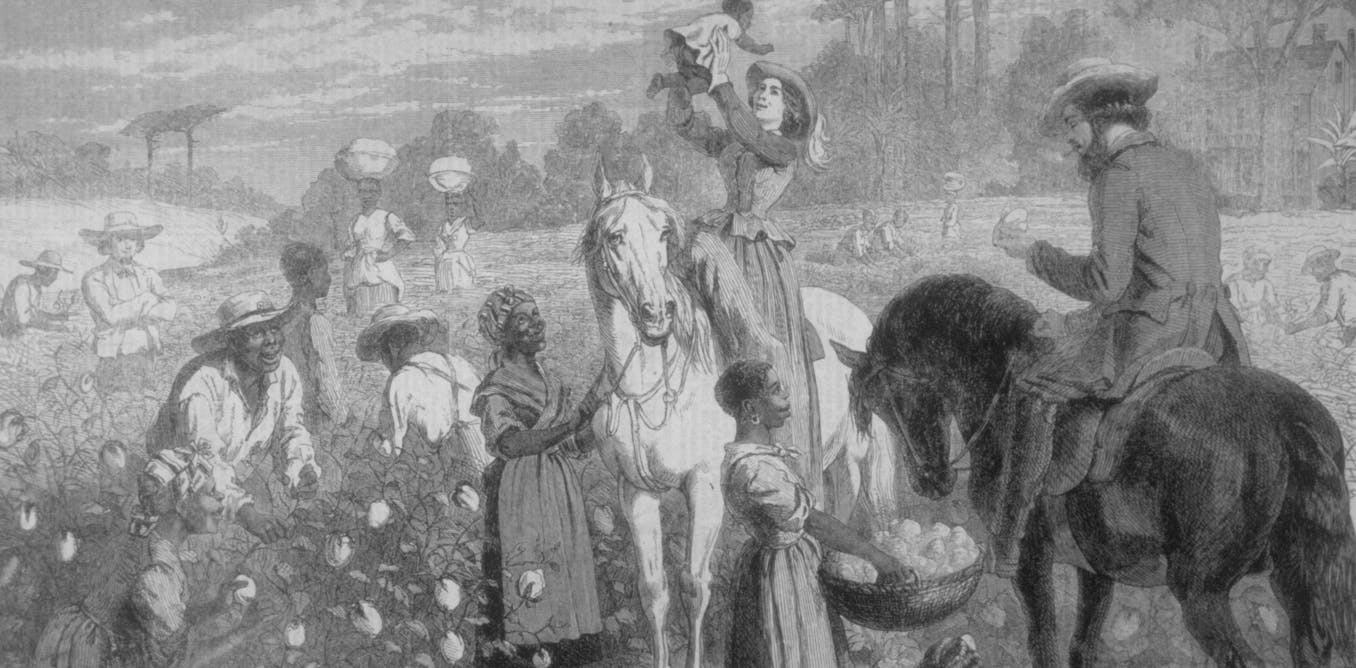
With the topic of reparations under discussion and debate, Thomas Craemer -- an expert from the University of Connecticut -- had this to offer in a new essay for The Conversation: The cost of slavery and its legacy of systemic racism to generations of Black Americans has been clear over the past year – seen in both the racial disparities of the pandemic and widespread protests over police brutality. Yet whenever calls for reparations are made – as they are again now – opponents counter that it would be unfair to saddle a debt on those not personally responsible. In the words of then-Senate Majority Leader Mitch McConnell, speaking on Juneteenth – the day Black Americans celebrate as marking emancipation – in 2019, “I don’t think reparations for something that happened 150 years ago for whom none of us currently living are responsible is a good idea.” As a professor of public policy who has studied reparations, I acknowledge that the figures involved are large – I conservatively estimate the losses from unpaid wages and lost inheritances to Black descendants of the enslaved at around US$20 trillion in 2021 dollars. But what often gets forgotten by those who oppose reparations is that payouts for slavery have been made before – numerous times, in fact. And few at the time complained that it was unfair to saddle generations of people with a debt for which they were not personally responsible. There is an important caveat in these cases of reparations though: The payments went to former slave owners and their descendants, not the enslaved or their legal heirs. Dr. Craemer discusses such aspects as the “Haitian Independence Debt,” British ‘reparations,’ and paying for freedom. Dr. Craemer is an expert on slavery reparations, racial bias, and the psychology of racism, and he is available to speak with media – simply click on his icon now to arrange an interview today.


Villanova Expert Reflects on Historic Number of Golden Globe-Nominated Female Directors
For the first time in the Golden Globes Awards’ history, three women were nominated for best director. "We went from barely getting one in a category to a majority," said Teresa Boyer, EdD, founding director of Villanova University's Anne Welsh McNulty Institute for Women's Leadership. But why are we seeing this change in narrative in 2021? "One wonders if this is in response to the pushback from so many past years, a growth in dogged pursuit of success of the women in the field or a change in both how we may have viewed movies and television in the past year," said Dr. Boyer. "While likely all of the above, one would think that the way we viewed our screen-based entertainment, with the majority being streaming activities, might have allowed audiences to explore films they would not have been as likely to pursue in the traditional 'group-goes-to-a-theater' method." Not only is there more to watch using streaming services, but online platforms could also allow for more diversity in options. "When we have the opportunity to choose anything we like, without being beholden to others in our social groups, we may find that the directors’ lenses are a better match to those of their audience." Increased options could also help more people see themselves represented on screen. "There is a reason why we say, 'representation matters.' For young women and people of color with an interest in the field, being able to see people who look like them lauded in the most highly prized mainstream award ceremonies sends the message that they too are welcome... and their leadership potential is not limited. It may also open the eyes of their peers and others in the field who previously discounted the value of their work and potential based solely on their perceptions of who should be making films."


Japan Society Presents When Practice Becomes Form: Carpentry Tools from Japan
Installation view at the Takenaka Carpentry Tools Museum, Kobe, Japan. On the occasion of the 50th anniversary of Japan Society’s landmark building, the institution is pleased to present the new exhibition, When Practice Becomes Form: Carpentry Tools from Japan. The exhibition celebrates the spirit of architecture and craftsmanship through Japanese woodworking tools as well as architectural patterns and various models. The site-specific installation, conceived by the esteemed contemporary architect Sou Fujimoto in collaboration with Brooklyn-based Popular Architecture, reinterprets major themes from the exhibition and is in dialogue with the gallery’s spaces, highlighting an enduring connection between traditional Japanese wooden construction and modern architecture. Featuring hand tools and joinery techniques that have been used for hundreds of years to build Japan’s wooden architectural masterpieces (from temples and shrines to teahouses and bridges), the exhibition unpacks how the intangible qualities of craftsmanship, such as consummate experience, knowledge, and the honed skills of master carpenters, have been transformed into significant forms of architecture. A diverse array of tools—planes, chisels, saws—have played an important role in the development of architecture in Japan’s history, and this philosophy extends to Japan’s cultural heritage today. Integral to the process of making by master carpenters (tōryo) is their extensive knowledge of the local environment and of wood as a material. Using natural resources and learning from their predecessors’ practices, they construct buildings using a refined methodology. Their philosophy of sustainability—for example, joinery can be restored or repaired as needed by future craftspeople—has been handed down over generations. Themes emerging from the exhibition have been interpreted by the internationally acclaimed architect Sou Fujimoto. His firm, Sou Fujimoto Architects, is based in Paris and Tokyo, and has been selected as site design producer for the 2025 World Exposition in Osaka, Japan. Fujimoto has designed the Serpentine Gallery pavilion in London (2013) among other internationally recognized projects. For this exhibition, Fujimoto has worked with Popular Architecture to explore the coexistence of nature and architecture. “Japan Society has been a home of cultural exchange, and a meeting place of past and present. In this exhibition, traditional Japanese craftsmanship is revealed in a new light by the design of contemporary architect Sou Fujimoto, and it becomes a precious educational opportunity to learn from this history,” says Yukie Kamiya, Japan Society Gallery Director. The building of Japan Society’s headquarters, designed by the architect Junzo Yoshimura (1908–1997), a major figure in 20th century Japanese architecture, opened to the public in 1971, becoming New York City’s first permanent structure designed by a Japanese citizen. It will commemorate its 50th anniversary in 2021. The building resides on land donated by John D. Rockefeller 3rd (1906–1978), former President and Chairman of Japan Society, who sought to revitalize the organization’s activities after World War II. Rockefeller 3rd and Yoshimura first met in Japan in 1951, and their friendship for over two decades resulted in Japan Society’s current building in Manhattan. Since its opening, the building has continued to serve as the central platform for the interexchange of ideas, knowledge, and innovation between the U.S. and Japan within a global context. In 2011, the building was designated landmark status by the New York City Landmarks Preservation Commission. When Practice Becomes Form: Carpentry Tools from Japan explores the connections between techniques, tools, and forms from traditional practices in Japanese carpentry and contemporary design perspectives. Paying homage to Japan Society’s building, where the arts and cultures of Japan and the United States intersect, this exhibition delves into the artistry and craftsmanship of architectural practice. Complementing the exhibition is a series of related public programs, including lectures, a hands-on workshop, and gallery tours. A digital publication illustrated and designed by Nathan Antolik further expands upon the exhibition. This exhibition is organized by Japan Society in collaboration with Takenaka Carpentry Tools Museum, Japan. The exhibition design is by Sou Fujimoto, in collaboration with Popular Architecture as local architect. About Sou Fujimoto Born in Hokkaido in 1971, Sou Fujimoto graduated from the Department of Architecture, Faculty of Engineering at Tokyo University and established Sou Fujimoto Architects in 2000. He has won several international competitions, including his recent 1st prize for the 2014 International Competition for the Second Folly of Montpellier, France ("L'Arbre Blanc"). In 2019, he was selected as the master architect for the Tsuda University Kodaira Campus Master Plan development. Among his notable projects are the annual summer pavilion for the Serpentine Gallery in London (2013)—the youngest architect to receive the commission; House NA in Tokyo (2012); Musashino Art University Museum & Library (2010); and House N (2008). In 2012, he was part of the Japanese team that won a Golden Lion award for Best National Participation at the Venice Architecture Biennale for their design of alternative housing concepts for homes destroyed by the 2011 tsunami. Most recently, he was selected as site producer for the 2025 World Exposition in Osaka, Japan. About Popular Architecture Brooklyn-based Popular Architecture combines simplicity with innovation across multiple scales ranging from master plans to buildings, interiors, and products. The firm is directed by Casey Mack, RA, LEED AP. After completing his M.Arch at Columbia, Mack worked with the Office for Metropolitan Architecture in Hong Kong and New York. He has taught urban design at the New York Institute of Technology and Passivhaus housing at Parsons School of Constructed Environments. Currently, with the support of the Graham Foundation for Advanced Studies in the Fine Arts, he is writing the book Digesting Metabolism: Artificial Land in Japan 1954-2202 (Hatje Cantz Verlag, 2021).


How the Biden Administration Can Help Save the Planet
With the inauguration of Joseph R. Biden as the 46th president of the United States came a slew of executive orders—and perhaps most notably America's reentry into the Paris Climate Accord. After the Obama administration joined the largest global cooperative agreement to limit the emission of dangerously climate-altering greenhouse gasses in 2015, the U.S. withdrew in 2017 under former president Donald Trump. Villanova University biology professor Samantha Chapman, PhD, studies how "blue carbon" solutions, like the restoration of wetlands, can contribute to slowing the harmful impact of climate change on the planet. Recently, Dr. Chapman broke down the top three things the Biden administration must do to save the planet, since we are, as she puts it, "close to some scary tipping points." #1: Pressure Brazil’s President Bolsonaro to stop the devastation of the Amazon. "The Amazon Rainforest regulates our global climate. It is imperative that through diplomacy and aid, we incentivize developing countries to preserve their intact lands and biodiversity. We can't do this without helping local communities incentivize the people living in these places to save these lands. Road building in forests is a huge cause of our planet's downward slope." #2: Invest in restoration of natural ecosystems. "We must invest resources into coastal wetlands and forests, here and abroad. USAID could be partially retooled in partnership with the United Stated Geological Survey (USGS), which already does this. These natural ecosystems will serve as natural climate solutions and be harbors for threatened species and nice places for humans to recreate. We must restore the opportunity for nature to re-invoke the necessary feedbacks that make the ecosystems work. Sometimes this involves complicated engineering, sometimes it is simpler and means giving nature space to restore. We're trying both." #3: Find ways to make people feel connected to land and nature—and value it. "This is a vague one and not one that I'm sure any administration can do. The pandemic has given me hope on this—I see so many more people out hiking, fishing, walking, and hanging out in parks. When time comes for voting on taxes, people have to remember that these state parks and preserves and even neighborhood parks cost money to staff and preserve. The U.S. has incredible land and nature and yet, in my experience, Americans value and understand it less than other countries. Some of that has to do with our frontier history. We can learn from Native Americans. Appointing Representative Deb Haaland as the secretary of the interior is one good step the Biden administration has taken in this direction." Dr. Chapman emphasizes that despite the uphill battle ahead, she remains hopeful. "Left to heal and helped to heal, the ecosystem processes that sustain our lives and those of the other amazing organisms on our planet can be restored," she notes. "Good things are happening. They just need to happen at a much larger scale."


This week, the Lincoln Memorial Reflecting Pool was lit with 400 lights to honor and acknowledge the 400,000 lives lost in America to COVID-19. But the reflecting pool ceremony -- hosted by then-incoming, now newly inaugurated President Joseph Biden -- is the most prominent effort so far to remember those who have died. UConn history professor Micki McElya was interviewed on NPR's All Things Considered to explain the historic significance of this event. "This is an iconic vista of heroes and honor and of memorialization," says history professor Micki McElya, who wrote the book The Politics of Mourning: Death and Honor in Arlington National Cemetery. "It's impossible to consider that terrain without also thinking of the March on Washington for Jobs and Freedom in 1963." The memorial, building upon prior localized efforts, represents the "realization of the work of a lot of people and the realization of the need to come together and honor those who've been lost, but also to reckon with those losses and what this means for this country," McElya says. January 19 – NPR If you are a journalist covering the historic aspects of this occasion or other events taking place – then let our experts help with your stories. Professor McElya is an expert in the histories of women, gender, sexuality, and race in the U.S., with a focus on politics and memory. She’s available to speak with media regarding these topics – simply click on her icon now to arrange an interview today.


Trump’s reaction to defeat further confirms urgency for school focus on social-emotional skills
Sandra Chafouleas, psychologist and behavioral health expert from the University of Connecticut, weighs in: Imagine what would happen if a preschooler didn’t “use their words” when they got upset about sharing, instead stomping around yelling while adults simply observed in silence. Think about what the school climate would feel like if a student punched another during recess while others watched without seeking help. Now consider the actions – and inactions – by Donald Trump on January 6 as the electoral vote counts occurred at the U.S. Capitol. Those behaviors show a desperate need for social emotional learning. According to the Collaborative for Academic, Social, and Emotional Learning (CASEL), social emotional learning involves five core competencies: self-awareness, self-management, social awareness, relationship skills, and responsible decision-making. Trump did not demonstrate these competencies when the election didn’t go the way he wanted. Connecting these school scenarios and Trump’s behaviors is not intended to contribute to the ever-mounting list of recommended consequences that could result from his fueling the insurrection that our nation has just experienced. It does bear noting, however, that if Trump were a Black teenager, he most certainly would have received exclusionary disciplinary action such as suspension and perhaps even expulsion from school. The purpose in connecting the two scenarios is to draw energies toward actions that propel us forward in bridging a divided nation. The responsibility for forward movement falls to future generations, which means it is critical that we pay attention to what happens in schools right now. We need to demand that policies and practice — and necessary resources — are put in place to strengthen school capacity to support students on their path to holding responsibility for democracy. Many excellent resources have quickly appeared to assist educators in teaching about the insurrection. Discussion guides are available to facilitate defining key terms, contrasting events through a social justice lens, and comparing justifications for action using fact checking. Other resources have been released that help adults talk about violence and support emotional safety of kids. What seems to be less prominent, however, is a direct connection to the social, emotional, and behavioral skills that we have just witnessed are missing. Education systems have begun the work of acknowledging their historic roles in contributing to exclusion, inequity, and intolerance of differences. Educators are working hard to turn the tide toward promising alternative approaches. Prominent among those approaches is a focus on social emotional skills. In either classroom scenario above, educators would be jumping into discussion about what supports are needed to address student needs. Social and emotional well-being fulfills us throughout every stage of life – integrating those skills should be in all that we do as adults to model, teach, and give feedback to our children. Of course schools must teach academic content areas and have high expectations, but there is tremendous potential to increase capacity to embed exploration, active practice, and positive feedback about social and emotional skills within each corner of the day. As one example, history professor Kellie Carter Jackson writes about challenges in teaching violence in political history. The author describes the need to question how political violence should be labeled, which could reveal an expression of unmet need by marginalized people. Learning through this analysis offers social and emotional parallels, such as examining biases, recognizing emotions, and examining integrity. As another, Facing History and Ourselves offers a classroom resource specific to the insurrection. Activities reference principles of social and emotional learning, such as steps for educators to practice self-awareness and relationship skills by examining their own emotions and perspectives. Student self-management and social awareness builds through reflection activity that builds civic agency. All of these examples offer incredible opportunity in social and emotional learning that could be advanced with more explicit connection. Entrenching social and emotional learning within the school day beyond this immediate teachable moment also is needed to enable sustained effort. CASEL identifies adults as key to social emotional strategies that will maintain safe, supportive, and equitable learning environments for this moment in history. To do so requires a strong collection of social, emotional, and behavioral education policies and practices. Responsibility for urgently resourcing this collection rests within each of us, right now, to ensure future generations who can and do take part in a resilient democratic nation. Dr. Chafouleas is licensed psychologist and Distinguished Professor, with expertise in school psychology and school mental health at the University of Connecticut’s Neag School of Education. If you’re a reporter looking to speak with Dr. Chafouleas about this topic – let us help. Simply click on her icon to arrange an interview today.


Savannah is drenched in history, but many of the city’s stories often go untold. Four Georgia Southern University history students aim to shed light on these untold stories as a part of their project, Savannah History Remix. The project, developed by graduate students Lauren Della Piazza Hartke, R. Dalton Bryant, Noah Prince, and Dalton Blackmon, is a series of walking tours featuring lesser-known stories of Savannah’s history. “The walking tours seemed like the safest bet and a good opportunity to learn some digital skills,” said Assistant Professor of history Alena Pirok, Ph.D., who is overseeing the project. “The tours intend to bring new and useful historical information to the city, its residents and the historical tourism industry.” When the project began, the students identified subjects not found on commercial tours of Savannah, including modern immigration, laborers, common people of Savannah and the LGBTQ community. Hartke created the tour, “A Seat at the Table: A Social History of Savannah’s Foodways,” which revolves around the culinary history of the city. “My goal for this project was to show how Savannah’s food scene today is the product of many years of input and contribution from many different subgroups of peoples,” she said. “I want people to understand how our notion of southern food is the product of English, West African and Native American foodways, combined with regional practices unique to Savannah’s economy and ecology.” Pirok said the Savannah History Remix tours have more freedom than commercial tours. “A non-profit tour like ours does not have to worry about losing customers and money,” she said. “This gives us the freedom to take more risks and to offer new, but academically sound, historical narratives that people do not find familiar or ones that might challenge their vision of the world.” Despite COVID-19, students at Georgia Southern University are combining innovation, technology and creativity to see the projects they want to fulfill come to fruition. If you’re a journalist looking to know more about the Savannah History Remix or similar projects, simply reach out to Georgia Southern Director of Communications Jennifer Wise at jwise@georgiasouthern.edu to arrange an interview today.


Kamala Harris Is First Woman, and Woman of Color, Elected Vice President
History was made on Saturday, November 7, when Kamala Harris was elected vice president of the United States, 100 years after women first won the right to vote. "Although our new president will look like almost all the others we have had in our history, the fact that we will have a woman of color in the second highest position in our executive branch for the first time ever has an importance that cannot be understated," says Teresa Boyer, EdD, director of the Anne Welsh McNulty Institute for Women's Leadership at Villanova University. "When it comes to our highest office, Americans have been famously resistant and behind other countries in selecting a woman for the role. Perhaps having a woman in the vice presidency could shift that barrier that we haven't seemed to get past." Dr. Boyer adds, "We will also have a record number of women in this congressional delegation. Although Democrats have historically sent the most women to Congress, this year, the Republicans are the ones who set a record, with at least 32 women in the House and Senate—two more than their previous record of 20 in 2006. Democrats still have the greater representation of women, though, with at least 102." "Themes of gender and race have been threaded throughout this election, as they underlie many of the crises we are currently facing as a nation. The tight races mixed with progress on women's representation indicate a national culture on the cusp of change—one exploring openness to diverse identities in the role of public leader. Not so much a wave as a slow inching forward—but forward nonetheless." "Many have said Biden will be a transitional president—due to his age, and his role as a party elder—but perhaps he would be better noted as a potentially transformational president, or a conduit to the diverse America reflected in our leadership."
Will it be a long wait for the results on Tuesday?
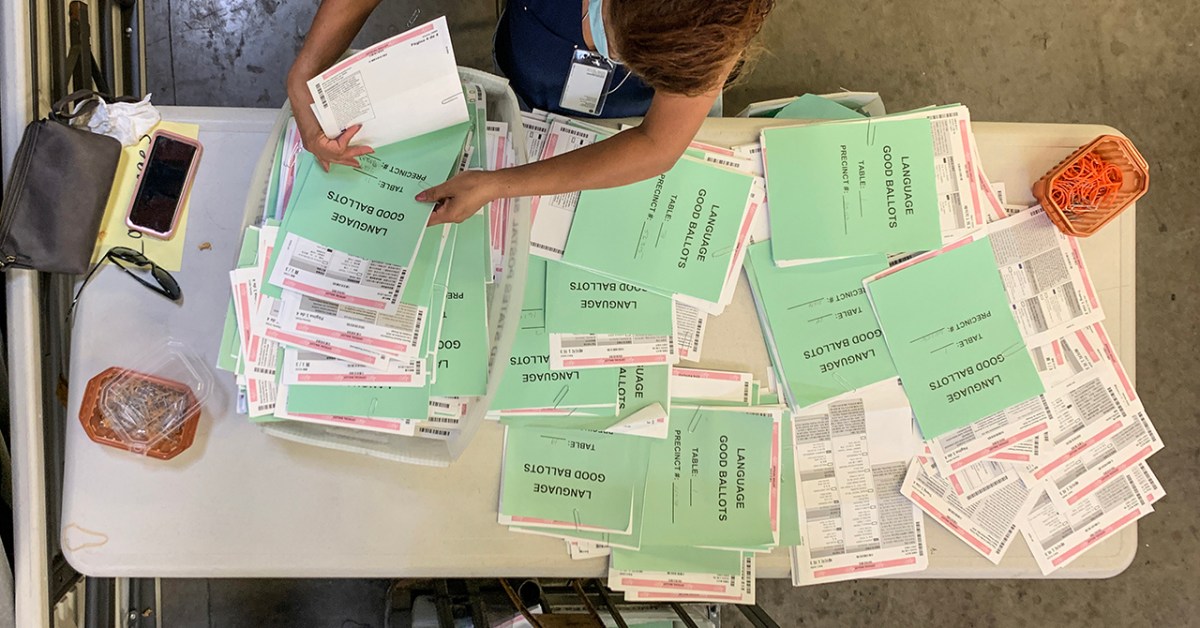
The election is finally here. And in a year like few others in modern history, the 2020 election may go down like no other as well. Americans are engaged, there is no doubting that. In fact, CNN reported that with one week before the election 75.8 million ballots had been cast representing about 56% of the more than 136.5 million total ballots cast for president in 2016. And there was still time left for more votes to pour in. On Election Day, a massive turnout is expected. But with social distancing in play and other COVID-19 precautions enacted, the day that is already wrought with long lines and delays in the best of years could see for an even longer night for election officials in most states. Americans are making themselves heard – but the results they want to see might not be on election night. A recent article by Pew Research explains why: "Mail ballots pose a challenge to election workers, because they must be manually removed from their envelopes and verified as valid before they can be fed into the tabulating machines. Although election workers in at least 33 states can start processing ballots (but not, in most cases, counting them) a week or more before Election Day, these counts may not be finished by election night depending on how many come in. In a half-dozen states, including the battlegrounds of Pennsylvania and Wisconsin, processing can’t start until Election Day itself. Also, in 22 states (plus D.C.), mail ballots postmarked by Election Day (or in a few cases the day before) can still be counted even if they arrive days later – further lengthening the counting process. Bottom line: Any vote totals reported on election night will be even more unofficial than they typically are." There is going to be a lot to cover leading up to and after Nov. 03 about the final results of what is poised to be a very close and hard-fought election. And if you’re covering, that’s where our experts can help. Dr. Gregg R. Murray, professor of political science at Augusta University, is available to talk about the current race to lead the DNC. Murray’s research focuses on political behavior and psychology with specific interests in voter mobilization and turnout. He is also executive director of the Association for Politics and the Life Sciences.


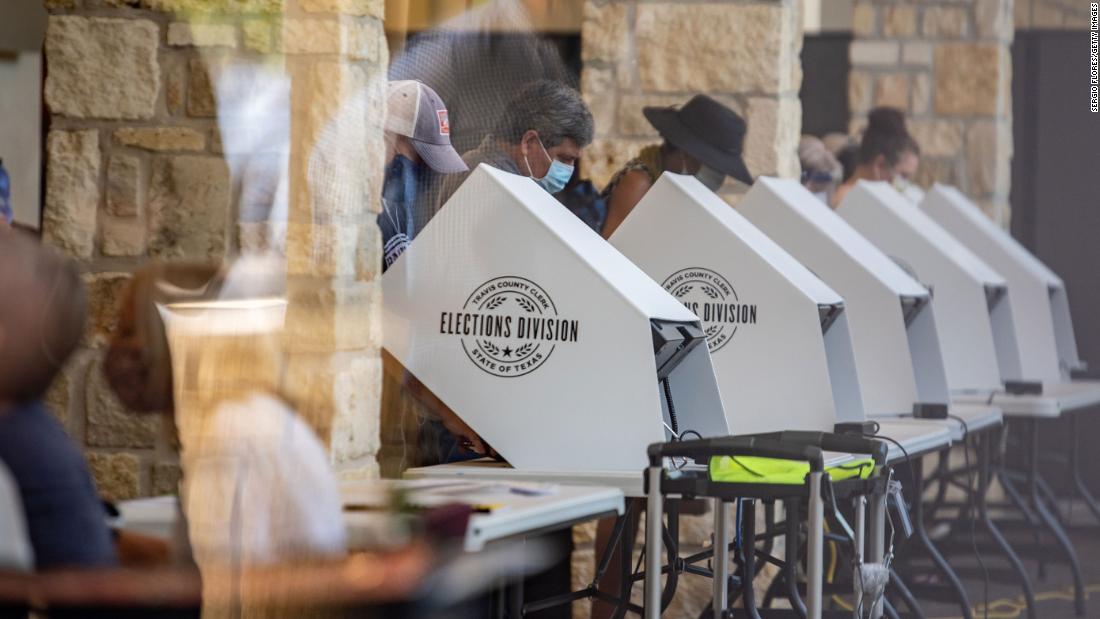
It’s finally here. The campaigns are on their final push and as of Tuesday night – the results will start rolling in. This has been one of the most unique elections in modern history. A divisive and bitter campaign fought during a global health crisis. Texas, which has 38 electoral college votes, second only to California in number – may be in play. Though Texas has not swung blue since 1976, Tuesday night a lot of eyes will be watching Texas to see what role it takes in deciding the outcome of the election. If you are a reporter covering the election in Texas, the key issues in the state and what motivates it to vote for either candidate – then let our experts help. Jim Riddlesperger is professor of Political Science at TCU and focuses on American politics, with emphasis in the presidency, Congress, and Texas politics. Professor Adam Schiffer writes and speaks on media bias, presidential nomination contests, political news, elections, and public opinion. Both are available to speak with media – simply click on either expert’s icon to book an interview today.

