
Experts Matter. Find Yours.
Connect for media, speaking, professional opportunities & more.

#ExpertSpotlight: What is a Blue Moon?
The phenomenon of a Blue Moon, though rare, captures the imagination and curiosity of the public, making it a prime topic for media coverage. A Blue Moon typically refers to the occurrence of an additional full moon within a specific time frame, usually two full moons in a single calendar month or an extra full moon in a season. This celestial event is not just an astronomical curiosity but also a cultural and symbolic event that resonates deeply with people around the world. The significance of a Blue Moon extends beyond its scientific rarity, touching on themes of folklore, human understanding of time, and the natural world's rhythms. Journalists can explore several angles to connect this event with broader societal interests, including: Astronomical Significance: Explaining the science behind what causes a Blue Moon, how often they occur, and the different types of Blue Moons. Cultural and Historical Context: Delving into the myths, legends, and folklore associated with the Blue Moon across various cultures and how these stories have shaped human perception of time and nature. Impact on Astrology and Horoscopes: Investigating the Blue Moon's influence in astrology, including predictions and interpretations tied to this rare event. Environmental and Ecological Implications: Exploring how lunar cycles, including Blue Moons, affect wildlife, tides, and natural phenomena, contributing to broader discussions on the environment. Art and Literature: Highlighting references to Blue Moons in art, literature, and music, and how this natural phenomenon has inspired creativity throughout history. Public Engagement and Education: Covering events, public viewings, and educational opportunities that allow people to learn more about the moon and other astronomical phenomena. By covering these angles, journalists can provide their audiences with a comprehensive look at the Blue Moon, connecting this celestial event to a wide range of cultural, scientific, and environmental topics that resonate with the public's interests. Connect with an expert about Blue Moons: To search our full list of experts visit www.expertfile.com Photo Credit: Kym MacKinnon

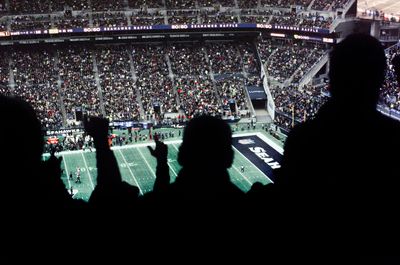
Expert Insight: NFL Fandom: The Last Cultural Unifier?
In 2024, few cultural touchstones unify America. One of the remaining cultural unifiers is the NFL. It is almost guaranteed that the Super Bowl will be the most watched television program each year. Add Taylor Swift (another rare cultural unifier) attending to watch her boyfriend and an appealing halftime musical guest, and you can have over 120 million people watching the same program at the same time. Nothing else comes close. There is little doubt that the NFL is the undisputed champion of American sports. But how do the various NFL fandoms compare? Which team has the top fandom, and which struggles (struggle is relative here, as the lowest-ranked NFL fandom is still impressive)? This is an interesting question in a couple of ways. First, it reveals something important about the level of connection in different cities. Cities with stronger fan bases tend to have more of a shared identity. Boston residents share more love across their teams (Celtics, Red Sox, Bruins, Patriots) than folks from Tampa Bay. “Sports” cities are fundamentally different. It's also an interesting marketing analysis. Fandoms are people who share passion and love for what are essentially brands. Examining fandom can reveal something critical about how brands that inspire fandom are built. Comparing fan bases can also inflame passions. Sports fans are (often) the ultimate fans as they closely identify with their teams and feel each victory as a personal triumph and each loss as a defeat. Because fans’ identities are tied to their teams, ranking fan bases can feel like an attack. Saying Browns fans aren’t as good of fans as Ravens fans feels like an attack on Cleveland. The deeper perspective motivating this analysis is that fandom is about cultural passion, so what people are fans of largely dictates the tone and content of our societies. A society that loves baseball, country music, and trucks feels very different from one that favors soccer, opera, and Vespas. The fandom rankings are a snapshot in time of how fandom works in the NFL. And remember, the NFL is not just the top sports league in America but also the closest thing we have in 2024 to a shared societal passion. Analyzing Fandoms I have been ranking NFL and other fan bases for more than a decade. These fandom analyses are an example of brand equity analytics, and they use two types of data. The goal is to understand the relationship between market characteristics and fandom outcomes at the league level. We can then evaluate each team based on how it performs relative to league norms. The fandom or market outcome measures include things like data on prices, attendance, and social media following. These are measures of fan engagement. Prices provide a signal of how much market power a team has created. Attendance shows the enthusiasm of fans in the market to pay for tickets and take the time to travel and attend. Social media following reveals how many fans the team has in and out of their home market. Each metric has advantages and limitations. Social media following provides an indication of national fandom, but it also captures casual fans who would never pay for a ticket. The second aspect of the analysis focuses on market potential. NFL markets vary from New York, with a population of 20 million, to Green Bay, with a few hundred thousand. Income levels in San Francisco are far higher than in Jacksonville or Cleveland. I use a range of demographics, but income and population are the major factors. Again, the metrics are good but not perfect. For example, using MSA populations isn’t perfect because teams have different footprints. The Packers are more of a Wisconsin team than a Green Bay team. The teams in New York and LA share a market. Should they each get half of the metro area population? One factor that I do not control for is competition. In the southeast, NFL teams may compete with SEC teams. I have debated this issue (with myself) and have decided to neglect it. This year's analysis includes a significant change from last year. The significant change is that I am not controlling for team performance. Controlling for team performance is helpful because it isolates core or unchanging fandom. This approach has appeal, as we can argue that teams with more passionate fandoms will be more resilient against losing seasons. The downside of controlling for performance is that we get less of a measurement of the fandom's overall value. If a team like Kansas City is on an extended winning streak, then the Chiefs brand is very valuable at the moment. Controlling for winning makes the analysis more about the core, near-permanent passion of a fandom, while not controlling makes the results more relevant to current brand power. The analysis involves three steps. The first step creates measures of each team’s relative fandom outcomes and market potential. The second step develops a statistical model of the relationship between market potential and fandom outcomes. The third step compares each team's fandom outcomes with the statistical model's predictions. The third step is a comparison of actual results versus predicted – the key point is that the prediction is based on leaguewide data. As these analyses are always imperfect, the best way to consider the fandom rankings is as tiers. I like the idea of quadrants. Some brief comments on the members of each quadrant (Elite, Solid, Role Players, Benchwarmers). I will be discussing each fandom on social media. TikTok: @fanalyticspodcast Instagram: @fanalyticsmikelewis YouTube: @fanalyticsmike A bonus figure follow the Quad overviews. The Results Quadrant 1: The Elite The Dallas Cowboys lead the top group of teams, followed by the Packers, Eagles, Chiefs, 49ers, Raiders, Patriots, and Steelers. Sounds a lot like what the man on the street would list as the top NFL brands. The Cowboys and Packers leading the way is no surprise. The Cowboys are second in social following and the leaders in attendance. The Packers are an astonishing fandom story as the team is located in the definitive small market. The Eagles leading the Steelers is going to be troubling in Western Pennsylvania, but the Eagles have more pricing power and more social following. The 49ers are a solid NFL fandom with few weaknesses. The Patriots are in a new era, and it will be fascinating to see if they maintain their top-tier position as Brady and Belichick become memories. The Chiefs' presence in the top group is a change from past years and is due to the shift away from controlling for performance. The Chiefs have a great fandom, but the team’s success currently pumps them up. The Chiefs are in a brand-building phase as the team continues building its dynasty. The question for the Chiefs is where they end up long-term. I don't fully understand the Raiders' ranking. The Raiders are midrange in attendance and social following but do well because are reported to have the highest prices in the league. I suspect this is more an idiosyncrasy of the Las Vegas market than a reflection of significant passionate fandom. Quadrant 2: Solid Performers The Quadrant 2 teams are the Broncos, Giants, Panthers, Seahawks, Saints, Ravens, Texans, and Browns. These are the solid performers of NFL fandoms (brands). These are teams with above expected fandom outcomes for their relative market potentials. The Quadrant 2 clubs are all passionate fanbases (maybe one exception) despite very different histories. For example, the AFC North rival Ravens and Browns differ in both relative history and frequency of winning. Cleveland fandom involves significant character, while the Ravens are a “blue-collar” brand that has been a consistent winner. There are a lot of great stories in Quad 2. The Saints were once the Aints but are now a core part of New Orleans. The Broncos and Giants are great fandoms who are probably angry to be left out of Quad 1. The Panthers' position is unexpected and may be due to some inflated social media numbers. This is the challenge when an analysis is based only on data. When data gets a little weird, like an inflated social media follower count dating back to Cam Newton's days, the results can also get a little weird. This is a teachable moment—do not analyze and interpret data without knowing the context (the data-generating processes). Quadrant 3: Role Players Quadrant 3 fandoms are teams whose fandom outcomes are slightly below average league performance (for similar markets). The Quadrant 3 teams include (in order) the Bills, Falcons, Buccaneers, Jets, Vikings, Bears, Dolphins, and Bengals. There are some interesting teams in Quad 3. The Bills have a great and notorious fandom. Jumping through flaming tables in subzero weather should get you into the top half of the rankings? The big-market Jets and the small-market Bengals have two of the most fascinating QBs in the league. Both clubs could be poised to get to Quad 2 with a Super Bowl or two. Da’Bears may be one of the most disappointing results. A team with an SNL skit devoted to their fandom in a market like Chicago shouldn’t be in Quad 3. Other quick comments: The Falcons need to win a title. Florida is tough for professional teams. The Vikings should play outside. Quadrant 4: Hopium These are the NFL's weakest fandoms, with the key phrase being “the NFL’s.” The Quad 4 teams, in order, are the Lions, Rams, Jaguars, Colts, Titans, Commanders, Chargers, and Cardinals. It’s a lot of teams who have not won regularly and have many moves and name changes. The Lions are poised for a move upward and maybe a sleeping giant of a fandom. They have the most watchable coach in the league and the most surprising celebrity fan. An interesting side story in Quad 4 is the battle for Los Angeles between the Rams (formerly of Saint Louis) and the Chargers (previously San Diego). They play in the same market, but the Rams have won more. But will Herbert lead the Chargers past the Rams? Quad 4 illustrates an important lesson: consistency. The Rams moved from St. Louis and then back to LA. The Chargers went from San Diego to LA. The Colts left Baltimore in the middle of the night. The Titans were the Oilers and moved from Houston to Nashville. The Cardinals were the other NFL team Saint Louis lost. The Commanders should have stopped with their previous name. The Fandom Outcomes / Market Potential Matrix The following figure is a bit of bonus material that may provide some insight into the inner workings of the analysis. The figure below shows the performance of each team on the Fandom Outcome and the Market Potential Indexes. The upper left region features teams with less lucrative markets but above-average fandoms, like the Packers, Steelers, and Chiefs. The lower right region is the teams with below-average fandom outcomes despite high potential markets, like the Commanders, Chargers, and Rams. This pictorial representation is also interesting as it shows teams with similar positions. These similarities can be somewhat surprising. For example, the Lions and Dolphins have very similar profiles despite the differences between Detroit and Miami. Mike Lewis is an expert in the areas of analytics and marketing. This approach makes Professor Lewis a unique expert on fandom as his work addresses the complete process from success on the field to success at the box office and the campaign trail. Michael is available to speak with media - simply click on his icon now to arrange an interview today. Interested in following Future Fandom! Subscribe for free to receive new posts.



Cuba's history is a rich tapestry of revolutionary fervor, cultural vibrancy, and political intrigue that has captivated the world for decades. This topic is particularly newsworthy due to its significant impact on global geopolitics, its unique social and economic experiments, and its vibrant cultural contributions. Understanding Cuba's past is essential for comprehending current issues in Latin America and the ongoing influence of socialist ideologies. Key story angles for journalists could include: The Cuban Revolution: Exploring the causes, key figures like Fidel Castro and Che Guevara, and the revolution's lasting impact on Cuban society and politics. US-Cuba Relations: Analyzing the historical and contemporary dynamics between Cuba and the United States, including the embargo, the Bay of Pigs invasion, and recent diplomatic efforts. Economic Policies and Reforms: Investigating Cuba's socialist economic model, the challenges it faces, and recent reforms aimed at modernizing the economy. Healthcare and Education: Highlighting Cuba's achievements and challenges in healthcare and education, often touted as successes of the revolutionary regime. Human Rights and Political Freedom: Examining issues of political repression, human rights abuses, and the struggle for freedom and democracy in Cuba. Cultural Influence: Featuring Cuba's rich cultural heritage, including its contributions to music, dance, and literature, and how culture serves as a form of resistance and identity. By delving into these aspects, journalists can provide a comprehensive and nuanced understanding of Cuba's history, offering readers diverse perspectives and in-depth coverage of a nation that continues to influence global conversations on politics, culture, and human rights. Connect with an expert about the History of the Cuba: To search our full list of experts visit www.expertfile.com Photo credit: Jason Gamble

Covering the latest in Venezuela?
The history of Venezuelan politics is a compelling narrative that reflects the dynamic interplay of power, ideology, and social change in Latin America. This topic is particularly newsworthy due to its relevance in understanding current global geopolitical shifts, the rise and fall of political regimes, and the enduring struggle for democracy and human rights. Venezuela's political history offers insights into the impacts of oil wealth, populism, and international interventions, making it a rich subject for journalistic exploration. Key story angles for journalists could include: The Rise of Populism: Exploring the emergence and impact of populist leaders in Venezuelan history, particularly focusing on Hugo Chávez's Bolivarian Revolution. Economic Boom and Bust: Analyzing the role of oil wealth in shaping Venezuela's political landscape, from periods of prosperity to economic crises. Human Rights and Social Movements: Investigating the human rights situation in Venezuela, including the struggles of political dissidents, social activists, and the general population. International Relations and Influence: Examining Venezuela's foreign policy, its alliances, and the impact of international sanctions and interventions on its political stability. Democratic Erosion and Authoritarianism: Tracing the decline of democratic institutions and the rise of authoritarian practices in Venezuela, highlighting key turning points and figures. Future Prospects and Reform: Featuring expert analysis on the potential paths forward for Venezuela, including political reforms, economic recovery plans, and the role of the international community. By delving into these aspects, journalists can provide a comprehensive and nuanced understanding of Venezuelan politics, offering readers diverse perspectives and in-depth coverage of a nation at the crossroads of significant historical and contemporary challenges. Connect with an expert if you need to know more about the History of Venezuelan Politics: To search our full list of experts visit www.expertfile.com Photo credit: Micho

Sport and Study: Villanova University Faculty Offer Academic Lens to Paris Olympics Storylines
All eyes are on Paris: more than 10,000 athletes from 206 nations are set to compete in the Games of the XXXIII Olympiad, the third Olympics in the City of Love and the first since 1924. Below, Villanova University faculty members provide their academic expertise on the unique storylines and narratives already taking place as Paris 2024 gets underway. Portraying a National Image in the Opening Ceremony Étienne Achille, PhD Director of French and Francophone Studies After months of speculation, the daily Le Parisien has officially confirmed that renowned French-Malian singer Aya Nakamura will lend her vocals to an opening ceremony featuring an iconic backdrop steeped in history. “Nakamura is the most-streamed Francophone singer in the world, embodying France’s culture on a global stage, and she’ll be paying homage to one of the most cherished representatives of the chanson française,” said Dr. Achille, referring to reports she will sing one of beloved French crooner Charles Aznavour’s greatest hits. According to Dr. Achille, the pop star’s presence is significant and symbolic. “A performer, or even a flagbearer, can easily become the face of a global event like the Olympics,” he said. The details of the setting for the ceremony – in the heart of Paris, along the Seine – are just as intentionally symbolic. “Not only will this be the first opening ceremony to take place entirely outside of a stadium; its location along the river and the fact the delegations will be on boats are key. “It represents movement and connection to the world,” Dr. Achille said. “And Nakamura’s performance projects the image of a modern, multi-ethnic nation building on tradition while proudly marching into the future.” Swimming in the Seine: Safe or Not? Metin Duran, PhD Professor of Civil and Environmental Engineering It is, perhaps, the most-asked question of the last few weeks. Is the Seine River, set to host multiple swimming events, safe? The river has been illegal to swim in for a century due to the presence of harmful bacteria such as E. Coli, and recent testing has reaffirmed this concern. The Seine, which had undergone an expensive cleaning to mitigate this issue, received the endorsement of Paris Mayor Ann Hidalgo, who personally took a dip in the water herself to attest to its safety. The stunt did little to convince experts such as Dr. Duran, who studies wastewater, to abandon concern about the potential health risks of athletes being exposed to pathogens in the water. “When we have fecal pollution, there is a high likelihood of pathogens being present,” Dr. Duran said. “Those could be viral, like a norovirus, or protozoan. “If you’re swimming in that water, you run the risk of ingesting it. Once you ingest that polluted water, you’re likely to contract some of those disease-causing pathogens. Ingesting this water doesn’t mean you’re necessarily going to get sick, but based on the number of people in a big city like Paris, there is a very high likelihood of some of these pathogens existing now in the river.” Accommodations for Breastfeeding Athletes Sunny Hallowell, PhD, APRN, PPCNP-BC Associate Professor of Nursing The IOC and Paris 2024 Organizing Committee is providing support to all breastfeeding athletes competing in the Games. A few national governing bodies, like the French Olympic Committee, are going a step further and offering hotel rooms near the Village for their country’s breastfeeding athletes to share with their children and spouses. “A few decades ago, the idea of a female athlete who also wanted to breastfeed their child was so taboo it may have prevented an athlete from competing,” said Dr. Hallowell. “Now, many female athletes who choose to breastfeed their newborns or toddlers conceptualize breastfeeding as another normal function of their remarkably athletic bodies.” Accommodation for breastfeeding athletes and increased awareness are needed more than ever. Dr. Hallowell notes that in addition to changing views on breastfeeding, the needs for such accommodations are increasing as the age of peak athletic performance also increases. “Advances in sports nutrition, wellness and lifestyle have extended the longevity and performance of many athletes into adulthood,” she said. And while some athletes with rigorous training regimens might feel “frustrated incorporating breastfeeding into the routine,” Dr. Hallowell says that for others, “breastfeeding provides both physical and socio-emotional benefits for the mother and the infant that allow the athlete to focus on the job of competition.” Protecting Against the Parisian Heat Ruth McDermott-Levy, PhD, MPH, RN, FAAN Professor of Nursing The potential for extreme heat in Paris has been a topic of concern for athletes and organizers, prompting certain outdoor events to be proactively scheduled at times to avoid the day’s worst heat. Current forecasts predict temperatures in the 90s for several days early on in the Games, which could be exacerbated by Paris’ reputation as an urban heat island, unable to cool due to lack of green space and building density. Dr. McDermott-Levy says the athletes are inherently vulnerable, because “the added stress of physical exertion during their events puts them at greater risk of heat-related illness.” But she also notes that many of the athletes have likely undergone pre-competition training in extreme heat conditions to acclimate and will have trainers and health professionals monitoring them frequently. “The group of concern are the workers at the stadiums, outdoor workers and spectators who are there to enjoy or work at the events and may have had little to no acclimation,” Dr. McDermott-Levy said. “They need to follow local instructions and take frequent breaks from the heat, seek shade and maintain hydration by avoiding alcohol and sugary drinks and drinking water.” How Nature Can Inspire Future Use of Olympic Infrastructure Alyssa Stark, PhD Assistant Professor of Biology Gone, hopefully, are the days of abandoned Olympic Villages and venues, overrun with weeds and rendered useless soon after the Games conclude. The IOC’s commitment to sustainability has been transparently relayed ahead of the 2024 Games, featuring a robust range of initiatives and programs. Dr. Stark is particularly interested in one aspect of ensuring a sustainable Olympics. “How will the structures, materials and systems they developed for the Olympics be re-used, re-shaped or re-worked afterward?” she posed. “This could include re-using buildings to larger scale or re-working transportation systems set in place for the Games that could then integrate into day-to-day life post Olympics.” At the root of her interest is the concept of biomimicry. “A lot of the way we think about designing, if we’re using this biomimicry lens, is how do we learn from nature to solve problems that we have in a sustainable way, keeping in mind the environment we are in?” Dr. Stark said. In this case, consider how something like a dwelling of a living creature might be repurposed to fit the needs of another creature, or serve another natural purpose, without harming the ecosystem. Could that inspire a way to re-use the Olympic infrastructure? “There are a ton of examples of [biomimicry] being used and working in products,” Dr. Stark said. “But I would say the next step is looking at the social levels of these big ecosystems – building architecture, city planning, flow of information and, in this instance, repurposing what was created for the Olympics.” Paris Could Be a Transportation Model for Major City Events in the United States Arash Tavakoli, PhD Professor of Civil and Environmental Engineering Paris has invested 250 million Euro the last several years to transform the city to a 100% cycling city, making it one of the most bike-friendly municipalities in the world. Currently, more trips are being made by bicycles in Paris than by cars (11% vs. 4%), a trend that has permeated to the surrounding suburbs as well. With an influx of travelers in Paris for the Games, Dr. Tavakoli, an expert in human transportation, said, “The Olympics will be a test for how well these kinds of systems respond to high fluctuations in the population as compared to vehicle-centric systems.” While Paris is thousands of miles away from the United States, how bicycle, pedestrian and vehicle systems work during the Games could provide helpful insight ahead of major events in American cities. “With the World Cup coming to the U.S. in a few years, it will be interesting to compare [Paris] with how our own system responds to people’s needs,” Dr. Tavakoli said. “Not just based on traffic data and congestion, but also considering factors like how comfortable the transportation system is, how much it affects our well-being and how much it attracts a nonresident to enjoy the U.S. when their only option, for the most part, is a vehicle.”


ExpertSpotlight: History of the Ancient Olympics
The Ancient Olympics, originating in Olympia, Greece, over 2,700 years ago, hold profound significance not only as a cornerstone of ancient Greek culture but also as a foundation for the modern Olympic Games. This topic matters to the public because it provides insights into the origins of organized sports, the cultural values of ancient civilizations, and the historical continuity that connects past traditions to contemporary global events. Understanding the history of the Ancient Olympics offers a unique perspective on the evolution of sportsmanship, competition, and international unity. Key story angles for journalists could include: Origins and Cultural Significance: Exploring the roots of the Ancient Olympics, their role in Greek society, and the religious and cultural rituals that accompanied the games. Athletic Events and Competitors: Delving into the various sports and athletic competitions that were part of the Ancient Olympics, and highlighting notable athletes and their achievements. Political and Social Impact: Investigating how the Ancient Olympics influenced political dynamics and social structures within ancient Greece, including the games' role in fostering unity and diplomacy among city-states. Religious and Mythological Connections: Examining the religious significance of the games, including their dedication to Zeus and the mythological stories associated with Olympia and the origins of the games. Legacy and Evolution: Analyzing how the traditions and values of the Ancient Olympics have shaped the modern Olympic movement, including the continuity and changes over millennia. Archaeological Discoveries: Reporting on recent archaeological findings and research that shed new light on the Ancient Olympics, including discoveries of artifacts, structures, and inscriptions. By focusing on the history of the Ancient Olympics, journalists can provide the public with a richer understanding of how these early games laid the groundwork for modern sporting events, offering diverse and compelling angles for coverage. Connect with an expert about the History of the Ancient Olympics: To search our full list of experts visit www.expertfile.com Photo credit: Chris Karidis

In the ever-evolving landscape of American politics, the concept of an open convention stands as a pivotal event that can reshape the trajectory of a presidential election. This topic is particularly newsworthy because it signifies a departure from the traditional, predetermined nominating processes, opening up a dynamic and potentially unpredictable political battleground. Understanding an open convention is crucial for the public as it underscores the democratic principles of debate, decision-making, and party unity, or lack thereof. The implications of an open convention extend to voter engagement, party strategies, and the broader political discourse. Key story angles for journalists could include: Historical Context and Precedents: Exploring past instances of open conventions in American history, their outcomes, and how they have influenced subsequent elections. Mechanics and Process: Detailing how an open convention operates, the rules and procedures involved, and the roles of delegates and party officials. Political Strategy and Maneuvering: Analyzing the strategies employed by candidates and their campaigns during an open convention, including coalition-building, negotiations, and power plays. Impact on Voter Perception: Investigating how an open convention affects public opinion, voter trust, and engagement with the political process. Potential Outcomes and Scenarios: Examining the possible scenarios that can emerge from an open convention, including contested nominations, brokered deals, and unexpected candidacies. Expert Insights and Analysis: Featuring commentary and analysis from political scientists, historians, and party insiders on the significance and implications of an open convention. By focusing on the intricacies and potential ramifications of an open convention, journalists can provide the public with a comprehensive understanding of this critical aspect of the American political system, offering diverse and compelling angles for coverage. Connect with an expert if you need to know more about Open Conventions: To search our full list of experts visit www.expertfile.com Photo credit: PBS Learning Media

ExpertSpotlight: The History of the Modern Olympics
The modern Olympics, a revival of the ancient Greek tradition, have become a global phenomenon that transcends sports, uniting countries in a celebration of athleticism, competition, and international camaraderie. This topic is newsworthy not only for its rich historical context but also for its profound impact on global culture, politics, and society. The Olympics provide a unique lens through which to examine issues of national identity, geopolitical dynamics, and the pursuit of excellence. Key story angles for journalists could include: Origins and Evolution: Exploring the revival of the Olympics in 1896 by Pierre de Coubertin, and how the games have evolved over time, including significant milestones and historical events. Economic Impact: Analyzing the financial implications of hosting the Olympics, including the costs, benefits, and long-term economic impact on host cities and countries. Political Influence: Investigating the intersection of the Olympics and politics, including instances where the games have been used as a platform for political statements, boycotts, and international diplomacy. Cultural Significance: Examining how the Olympics promote cultural exchange and understanding, highlighting the role of the games in showcasing the traditions and achievements of participating nations. Technological Advancements: Assessing the impact of technological innovations on the Olympics, from advancements in sports science and athlete training to improvements in broadcasting and viewer engagement. Social Issues: Exploring the social dimensions of the Olympics, such as gender equality, inclusivity, and the representation of minority groups, as well as the efforts to address doping and maintain the integrity of competition. By focusing on the history of the modern Olympics, journalists can provide the public with a deeper understanding of how this international event has shaped and been shaped by broader historical and contemporary trends, offering rich and diverse angles for coverage. Connect with an expert about the History of the Modern Olympics: To search our full list of experts visit www.expertfile.com Photo credit: Luca Dugaro

How Do Political Conventions Work?
Political conventions in America are a fundamental aspect of the democratic process, serving as pivotal events where major political parties select their presidential candidates, solidify party platforms, and galvanize their bases ahead of the general election. These conventions are not only newsworthy because of their immediate political significance but also due to their historical, cultural, and strategic importance. They provide a stage for showcasing party unity, leadership vision, and policy priorities, making them crucial for understanding the direction of American politics. Key story angles for journalists could include: Convention History and Evolution: Exploring the origins and historical changes in political conventions, including how their roles and significance have evolved over time. Nomination Process: Examining the mechanics of how delegates are selected, how they vote, and the strategies candidates use to secure their party's nomination. Party Platforms: Analyzing the process of developing and ratifying party platforms, highlighting key policy positions and their implications for voters. Role of Delegates and Superdelegates: Investigating the influence of delegates and superdelegates in the nomination process and their impact on the democratic process within parties. Media and Public Perception: Assessing how conventions are covered by the media, the role of speeches and presentations, and their effect on public opinion and voter behavior. Security and Logistics: Providing insights into the extensive planning and security measures required to host these large-scale events, especially in light of recent public health and safety concerns. By focusing on how political conventions work in America, journalists can provide the public with a comprehensive understanding of these complex and significant events, shedding light on their impact on the democratic process and the broader political landscape. Connect with an expert about the role, purpose and history of political conventions in America: To search our full list of experts visit www.expertfile.com Photo credit: Isai Ramos

It Has to Matter Who Wins: Futurecasting the MLB All-Star Game
Globe Life Field in Arlington, home of the 2023 World Series champion Texas Rangers, will play host to the 94th edition of the Major League Baseball All-Star Game on July 16, marking the second time in franchise history the Rangers will host the Midsummer Classic. MLB’s All-Star game – which matches up the best players from the American League and National League as selected by fans, managers and players – is considered one of best all-star contests among professional sports, said Kirk Wakefield, Ph.D., executive director of the Curb Center for Sales Strategy in Sports and Entertainment (S3E) program at Baylor University’s Hankamer School of Business. However, the game faces continued headwinds, Wakefield said, ranging from lagging viewership to fan voting to a game that is more an exhibition than a meaningful game. Wakefield Weighs In: Five Thoughts on MLB's All-Star Game Is the MLB All-Star game the best All-Star contest of all major leagues? Wakefield: Yes, it’s the only one where players seem to try their best. The NBA and NFL – who have practically given up – have declining viewership since 2011. Unfortunately, MLB All-Star game is on the same downhill skid. (According to Statista, viewership has declined from 22 million in 1993 to seven million in 2023.) The reason why is it doesn’t really matter who wins. If the players don’t care who wins, neither will fans. Further, fans aren’t particularly a fan of only one league so that it really matters if one league has bragging rights. That was less the case years ago before interleague play. How could viewership improve in any of the All-Star games? Wakefield: It has to matter who wins. MLB tried this with home field advantage for the World Series. They gave that up. The current approach in baseball is truly an exhibition because every player gets to play, so it’s like three players at every position playing three innings. That’s not how a manager would play it if trying to win. And it’s not like it used to be when the starters (who were more likely to be the best at their positions) played longer. One suggestion I’ve heard is to make the payoff big enough for the winners so that the players gave it their best. Get a sponsor to put up the money so the winners each make seven figures and could be the players and managers will play more like a team trying to win. Does Monday’s prelude, the hugely popular Homerun Derby, enhance Tuesday’s game? Wakefield: The Homerun Derby is popular because fans do follow individual players. It matters more who wins. That said, the HR derby’s viewership has still lagged. Bottom line: Fans are loyal to teams more than to leagues or individual players. Fan voting… Need we say more? Wakefield: Major market teams with huge fan bases will dominate, but what about the Kansas City Royals, who at one point in the season were on pace for the biggest year-over-year improvement in wins and losses? Given the way fan voting has become essentially a promotion game to get more fans to vote more often, it’s hardly representative of anything other than largest markets with the best promoters. The good news is that the MLB All-Star game will be quite the occasion in Arlington, Texas, with a bevy of game-related activities and events July 13-16. Wakefield: Arlington is an optimal location central to the U.S. with plenty of space to blow out the occasion. It’s like the Texas State Fair came to baseball, where all the rides and attractions are baseball-happy. ABOUT KIRK WAKEFIELD, PH.D. Kirk Wakefield, Ph.D., is The Edwin W. Streetman Professor of Retail Marketing at Baylor University, where he is the Executive Director of the Curb Center for Sales Strategy in Sports and Entertainment (S3E) program in the Hankamer School of Business at Baylor University. The author of Team Sports Marketing and founder of Wakefield Research Partners, Wakefield has conducted fan research on partnerships, pricing, promotions, sportscape, service, and anything else that explains why fans do what they do in nearly every venue in sports, including the NBA, NFL, MLB, MLS, NHL and NASCAR. His scholarly works appear in a breadth of journals: Journal of Marketing, Journal of Consumer Research, Journal of the Academy of Marketing Science, Journal of Service Research, Journal of Retailing, Journal of Advertising, Journal of Advertising Research and Journal of Sport Management, among others. Wakefield is a regular contributor to Sports Money on Forbes.com. ABOUT THE CURB CENTER FOR SALES STRATEGY IN SPORTS AND ENTERTAINMENT (S3E) The Center for Sales Strategy in Sports and Entertainment (S3E) at Baylor University is the only program in the U.S. focused on generating revenue for sports. S3E graduates have career opportunities in sales, digital marketing or business analytics for major league teams, university athletics, corporations and agencies. Baylor is the only university combining learning with practice in partnership with the Athletics Department to prepare graduates for careers in the business of sports. The S3E program is unique in vision, values, mission and culture to transform the business of sports and entertainment. Consistent with the Christian mission and purpose of Baylor University, we prepare passionate servant leaders to positively influence lives in places people go to play or watch others play.
