
Experts Matter. Find Yours.
Connect for media, speaking, professional opportunities & more.

The Role of Artificial Intelligence in Customer Experience
Gaurav Jain, assistant professor of marketing at the Rensselaer Lally School of Management, examines how individuals make judgments, estimates, and decisions in the absence of complete information. Previously, Jain served as the chief marketing advisor at multiple firms. Below are his thoughts on the impact of artificial intelligence (AI) on customer experience. Voice of the Customer In today's hyper-connected world, the voice of the customer (VoC) is louder and clearer than ever. But how do we sift through this cacophony to understand what our customers are really saying? Enter AI. It's revolutionizing the way customer experience teams handle VoC programs, and as a marketing leader, I find this incredibly exciting. Take direct customer feedback, for example. We're no longer just collecting survey responses and storing them in a database for quarterly review. AI algorithms, particularly those using natural language processing, are helping us instantly categorize and prioritize this feedback. Imagine an e-commerce platform that can immediately flag a customer's mention of "late delivery" in a post-purchase survey. That's not just efficient; it's customer-centric. But what about the things customers are saying when they're not directly talking to us? That's where AI-driven sentiment analysis comes in. These tools can scan social media, forums, and review sites to gauge the sentiment behind a customer's words. I've seen hotel chains use this technology to monitor travel forums and review sites. If a guest mentions "noisy rooms," even without lodging a direct complaint, the brand can proactively look into soundproofing solutions. Then there's inferred feedback, the kind you get by reading between the lines. AI can analyze customer behavior, like frequent page visits without conversion or cart abandonment, to suggest what might be going wrong. For instance, an online fashion retailer could use AI to figure out why a particular dress gets a lot of views but few purchases. Maybe it's the sizing, maybe it's the price, but the point is, you get to know without having to ask. And it doesn't stop at gathering feedback. AI is helping us turn this raw data into actionable insights. We can predict future behavior, like churn rates, based on past feedback. This allows us to be proactive rather than reactive, which is a game-changer in customer experience management. Finally, let's talk about what happens after we've gathered all this feedback. AI is ensuring that every customer who takes the time to share their thoughts receives an immediate and appropriate response. Chatbots can handle common queries or concerns, making the customer feel heard and valued right away. So, from the perspective of a marketing leader, it's not just about the efficiency that AI brings to VoC programs. It's about the opportunity to deepen our connection with customers. By truly understanding their words, their sentiments, and even their behaviors, we can craft experiences that resonate on a human level. And in a world that's increasingly digital, that human touch is what sets a brand apart. Customer Service It's truly intriguing to observe how AI is weaving its way into the customers’ experience. Online, chatbots are making waves. Chatbots are not just digital tools; they're our first point of contact, bridging the gap between brands and consumers. However, there was always the question of accuracy versus efficiency while managing these chatbots – AI has answered that question. AI chatbots provide real-time yet accurate assistance, making the digital shopping journey feel more interactive. Companies can reduce customer dropout while avoiding the expense of managing a large human customer service team. AI is revolutionizing phone-based customer service as well. Voice recognition allows natural language processing for easier navigation, while predictive analysis anticipates caller needs based on their history. Enhanced personalization means customers no longer repetitively provide account details, and emotion detection aids in gauging caller mood. The result? Reduced wait times, more efficient interactions, and a significantly improved telephonic customer experience. In essence, AI is bridging the gap between technology and human touch in the retail world, making our interactions with brands more meaningful and personalized. Again, companies can do this in a cost-effective manner. Jain is available to speak with media - - simply click on his icon now to arrange an interview today.


It's only been since January, but the cannabis industry in Connecticut is already a hit among consumers. There was initial worry that the quick expansion of stores and dispensaries could potentially blunt the long-term success of the retail aspect of the product in the state, but according to UConn's Fred Carstensen concerns about the oversupply seen in neighboring states is not a worry. “It’ll take three to four years to see how the market develops,” said Carstensen, a professor at University of Connecticut and the director of the Connecticut Center for Economic Analysis. In an article that goes into great detail, Carsten told the Stamford Advocate about the many factors and influences that can impact what has been a volatile market in some states since legalization became the trend. And as the state government checks the expansion of Connecticut’s adult-use cannabis market, Carstensen said local governments do the same. He said it wouldn’t matter if Connecticut’s retail cannabis scene was over-licensed, under-licensed, or just right. “Every municipality has the right to say yea or nay (to retailers),” Carstensen said. But he said an estimated 69 cannabis retailers in the Nutmeg State’s pipeline will make the bigger picture clearer. “(Then) it's pretty much available to everybody on a relatively short-travel basis,” Carstensen said. “Then we'll actually know what the market is.” Regulation and observation will be key to measure the success or failure of the market. Carstensen said that as the Nutmeg State’s market matures, retailers will “pull that business back into Connecticut when we become more competitively priced.” Peake agreed that “as (more Connecticut retailers) open up, we can probably expect the vast majority of those folks to be buying cannabis in Connecticut.” And Carstensen said that as much as interstate cannabis purchases skew understanding Connecticut’s market, it also serves as a check on oversaturating the Nutmeg State’s cannabis economy... And, Carstensen said, if there were too many cannabis dispensaries, "the market will tell us." "They’ll close,” the economics professor said. If you're a journalist looking to know more about this emerging industry in Connecticut and beyond, let us help. Fred Carstensen is a University of Connecticut professor and director of the Connecticut Center for Economic Analysis. He is a renowned an expert in the areas of public policy, economic history, and economics. Simply click on his icon now to arrange a time to talk today.


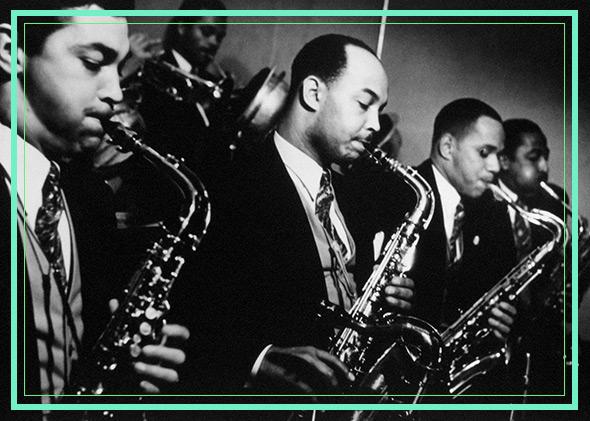
Too Cool for School? Our #experts can help with a history lesson in hipness
Who decides what’s “cool?” What have been the criteria over the years for rising to the ranks of “hot,” “phat” or “lit?” Colin Rafferty teaches a course that delves into the elusive but ever-so-attractive notion of being deemed “cool.” The syllabus examines this coveted quality and the entities described by it in historical and contemporary contexts, from its roots in the post-WWI jazz-age to rappers and TikTok. “The Idea of Cool” uses books, music and movies to explore what and who rises to the top of popular opinion and why. “I am decidedly not cool,” said Rafferty, who describes himself as a middle-aged man who owns a book of crossword puzzles. “But I find cool to be a fascinating thing.” Colin is available to speak with media about “The Idea of Cool” and his very cool work . Simply click on his icon to arrange an interview.



Concerns Persist Over the State of Ecuadorian Democracy
On August 9, 2023, Ecuadorian presidential candidate Fernando Villavicencio was ambushed and killed following a campaign rally in Quito. The Alausí-born journalist-turned-assemblyman had long been a proponent of social and governmental reform, framing his election bid as a crusade against the drug traffickers, corrupt corporate interests and “political mafia” besetting his country. His assassination has, in turn, sparked concerns and discussion over the current state of democracy in Ecuador. Lowell Gustafson, PhD, is an expert on Latin American affairs and a professor of political science in Villanova University’s College of Liberal Arts and Sciences. From his perspective, Villavicencio’s murder stands as the latest chapter in a saga of malfeasance, intimidation and violence in the region. “This is not new in Latin American political history,” said Dr. Gustafson. “The role of private armies funded by economic sectors beyond state control has been an issue often for the national period. It has taken a stark turn with the riches pouring in from illegal drugs.” In Ecuador, “narco-capitalism” has emerged as a particularly corrosive force. According to Dr. Gustafson, Albanian, Mexican and South American criminal outfits established themselves within the nation by the early 2010s, drawn by the country’s vast network of ports and its proximity to coca-rich Colombia and Peru. “That became a problem for stability in 2016, when the government of Colombia signed a peace agreement with the Revolutionary Armed Forces of Colombia [or FARC],” he stated. “FARC had long controlled cocaine trafficking routes from southern Colombia to Ecuador’s ports on the Pacific Ocean. With their dominance gone, other cartels began to compete for control.” Since the opening of this power vacuum, the situation in Ecuador has grown increasingly volatile, with the governmental response ham-fisted at best and faciliatory at worst. Under the presidential administrations of Rafael Correa, Lenín Moreno and Guillermo Lasso, the cartels succeeded in infiltrating the country’s privatized ports and airports, seizing control of the nation’s prison system and contributing to an ever-growing wave of crime. “Violence against public officials and by vigilante groups have steadily increased since 2018,” Dr. Gustafson said. “With the familiar choice between bribes and cooperation or violence, it is no wonder that cartel influence throughout the Ecuadorian state and military is widely discussed.” While Dr. Gustafson acknowledges the Ecuadorian government’s culpability for this disastrous situation and its escalation, he also cites another factor: the United States’ “war on drugs.” According to the professor, the longstanding U.S. policy has only served to prop up criminal enterprises south of the border, fueling a market for illicit substances. “After a half-century of the war and over a trillion dollars spent on it, coca cultivation in Colombia in 2020 was at an all-time high,” he shared. “The war on drugs has led to the continued power of illegal drug cartels in many countries, now including Ecuador.” In Dr. Gustafson’s estimation, the recent murder of Villavicencio only brings greater attention to this unfortunate state of affairs—a state of affairs common throughout Latin America. “With his consistent and outspoken critique of the cartels’ influence in Ecuador, Villavicencio courageously knew he faced the threat of violence,” he concluded. “The assassination of a presidential candidate brings all of this to a higher level within Ecuador, but the likely reason for [his murder] plagues Mexico, El Salvador and other Latin American nations.”


Georgia Southern sets fundraising record for third year in a row
Total cash, pledges and in-kind gifts to Georgia Southern University amounted to $23,831,604 during Fiscal Year 2023, which ended on June 30, 2023. That surpasses the total from the previous year, which was also a record at $22.3 million. For the third straight year, Georgia Southern supporters have propelled the University to a record-breaking year of private fundraising. Total cash, pledges and in-kind gifts to Georgia Southern University amounted to $23,831,604 during Fiscal Year 2023, which ended on June 30, 2023. That surpasses the total from the previous year, which was also a record at $22.3 million. The record total was buoyed by another record-breaking fundraising year for the Georgia Southern Athletic Foundation, Inc., which raised a record $11.06 million in new pledges and outright gifts. “As we soar into a very bright future for this University, record-breaking fundraising is a sign that Georgia Southern is not only strong now, but poised for even greater heights,” said Georgia Southern President Kyle Marrero. “We are endlessly thankful for the supporters, friends, alumni and donors who endorse our path forward and are stepping up to ensure our success.” Donors helped with various projects and programs this past year, including: $1 million from Betty Foy Sanders for the Betty Foy Sanders School of Art with scholarships, travel and programmatic needs $750,000 deferred gift for the Department of Biology to be used for student scholarships 23 newly created endowments Anthony P. Tippins Family Training Facility for athletics “Through unwavering dedication and the overwhelming generosity of our community, we have demonstrated the boundless potential of Eagle Nation in support of our students’ dreams and the University’s future,” said Georgia Southern Foundation Chair Mike Sanders. Last year’s Athletic Foundation Chair Leonard Bevill added, “The impact of this achievement will ripple through generations, leaving an indelible mark on the trajectory of higher education and Georgia Southern. I am humbled and inspired by the collective spirit that has made this three-year milestone possible.” The Erk Russell Fund, the Athletic Foundation’s annual fund, continues to grow and saw donations of $3.2 million this fiscal year. Additionally, the Athletic Foundation received 58 major gift commitments this year, which are gift commitments of $25,000 or greater to support Eagle Athletics. Over the past three fiscal years, the Athletic Foundation has raised more than $27 million in support of Georgia Southern Athletics. This total is the largest three-year fundraising window in department history. “It’s clear that Georgia Southern University’s power to transform lives and communities is making a positive impression with our private supporters,” said Trip Addison, Vice President of Advancement, noting that more than 3,600 alumni were among the supporters this past year. “I am grateful for the welcome reception we are receiving when we ask people to join in our effort to help support our students and the work they and our faculty are doing.” Interested in knowing more about fundraising or to speak with Georgia Southern Foundation Chair Mike Sanders? To arrange an interview simply connect with Georgia Southern's Director of Communications Jennifer Wise at jwise@georgiasouthern.edu to arrange an interview today.


Record Water Temperatures Testing Resilient Coral Reefs
Coral reefs are some of the most diverse and beautiful ecosystems on the planet. Roughly 25% of the ocean’s fish and over half a billion people depend on these underwater habitats, according to the National Oceanic and Atmospheric Administration (NOAA). But, like most other ecosystems, coral reefs are being threatened by the impacts of global climate change. This summer, record water temperatures stemming from a strong El Niño weather pattern are causing coral bleaching and death events in reefs throughout the world. Lisa Rodrigues, PhD, professor of environmental science, is an expert in coral reef ecosystems and ocean environments. She has been following the reports of coral bleaching when they began surfacing in July. “Coral bleaching often coincides with El Niño years,” she said. “Since water takes much longer to heat than air, July is very early in the year for water temperature to be so high and that is one of the main causes for concern.” Coral bleaching is a stress reaction emanating from high water temperatures, among other causes. When stressed, corals expel the microscopic algae inside of their tissues. The absence of these algae reveals corals’ white skeletons. “In a healthy coral system there is a symbiotic relationship between the coral host (an animal) and the endosymbiotic algae (a plant),” Dr. Rodrigues said. “Corals prefer to live in a fairly narrow range of temperature, which is typically when the symbiotic relationship can be successful. During bleaching, the symbiotic relationship is broken down and the two partners no longer live together.” If corals’ energy stores are low, or if the relationship is compromised for an extended period, corals can die. “This can have long-lasting and negative impacts on ecosystems, as a healthy structure provides a habitat for fish and other organisms,” she said. “For humans that live near the coast, loss of reefs means lost coastal protection, lost economic revenue from fishing and tourism and a lost piece of their natural history.” Reports of coral bleaching and death have stretched across the Americas, and the NOAA is issuing bleaching warnings in southeast Asia. Water temperatures off the coast of Florida this summer have been measured at over 100 degrees in some areas, and temperatures could continue to rise into September. Despite dismal conditions, especially in the Gulf and Caribbean waters, there is still hope for these reefs. “Death doesn’t always happen following bleaching and we also know that recovery from bleaching can occur,” Dr. Rodrigues said. “We have learned a lot from past bleaching events. Over the longer term, following a bleaching event, corals and coral reefs can recover, but the process is slow and dependent on the stressor(s) that caused the event in the first place.” Dr. Rodrigues notes there is a species of coral in Hawai’i that is able to sustain itself during bleaching events and can even reproduce, proving these underwater marvels won’t go down without a fight. “It’s unknown how many species are able to do this, but there is evidence that corals have a wide array of susceptibility and resilience to bleaching associated with high temperatures.”


Fort Stewart, Georgia Southern University, sign agreement to offer graduate courses on base
Representatives from Georgia Southern University and Fort Stewart signed an official memorandum of understanding Monday morning that clears the way for Georgia Southern to offer a slate of in-demand graduate courses this fall on base. Col. Manuel F. Ramirez, garrison commander at Fort Stewart and Hunter Army Airfield, and Kyle Marrero, president of Georgia Southern University, signed the agreement in front of officials from both organizations and the University’s live bald eagle mascot, Freedom, at Fort Stewart’s SFC Paul R. Smith Army Education Center. With the agreement, Georgia Southern will offer the following degree programs at the Fort Stewart education center: Master of Business Administration Master of Health Administration Master of Science in Information Technology Master of Arts in Professional Communication and Leadership Professional Communication and Leadership – Graduate Certificate Cybercrime – Graduate Certificate “This is truly a collaboration that will provide incredible opportunities and possibilities for our soldiers and our family members here on the installation,” Ramirez said. “Here at Fort Stewart, we’ve always believed in investing in our most precious asset, which is our people. And today, this partnership is a shining testament to that belief. By adding Georgia Southern to our stable of schools here at the Education Center, we’re opening doors to advanced education, professional development, and then a brighter future for all of our soldiers and their family members and all those people who call Fort Stewart home.” This partnership allows soldiers and their families to advance their career prospects by equipping them with the knowledge and skills and preparing them for increased responsibility in the Army and afterward, he said. Marrero said the courses that will be offered are being configured to allow Soldiers and their families to pursue higher education without disrupting their duties or relocating, allowing them to strike a healthier work-life balance while investing in their personal growth. Marrero thanked the teams behind the agreement and noted that the courses will be flexible and compressed to meet the unique needs of military-connected students. Marrero said this partnership between Fort Stewart and Georgia Southern University creates valuable educational opportunities for soldiers and their families by offering accessible and high-quality master’s degree programs on-site. It’s also the latest example of the University’s commitment to the military, which has led to Georgia Southern being named a “Military-Friendly” school for six years in a row and a “Gold School” for 2023-2024 by Viqtory Media, publisher of G.I. Jobs, STEM Jobs and Military Spouse magazines. “We have had a rich history of partnerships here,” Marrero said. “For us, this is a beginning and a continuation of the belief in the transformational power of education. We are proud and excited to be your partner. Thank you so much for this opportunity.” To learn more about the courses being offered at Fort Stewart and Hunter Army Airfield, visit think link below: If you are interested in knowing more about this partnership or would like to speak with Kyle Marrero, president of Georgia Southern University, simply contact Georgia Southern's Director of Communications Jennifer Wise at jwise@georgiasouthern.edu to arrange an interview today.

The box office smash "Oppenheimer" captured imagination of a new generation of Americans who never knew a world without nuclear weapons. University of Delaware professor Art Trembanis can provide a unique perspective on this topic as well as the history of nuclear weapon testing. Four years ago, he was part of a team that visited the Bikini Atoll in the Pacific Ocean's Marshall Islands, where the United States conducted a series of nuclear weapons tests in the 1940s and 1950s that sank warships, tanks and other vehicles as part of a simulated nuclear battlefield. He realized that if he had been in that spot during any one of those tests, he would have been engulfed in a humongous atomic mushroom cloud. Trembanis' team was tasked with conducting an underwater mapping effort to locate and characterize the 12-ship ghost fleet that sits 180 feet deep at the bottom of Bikini Lagoon. He is available for interviews and can be contacted by clicking on his profile photo or via his ExpertFile profile.


CorpusCast with Dr Robbie Love: Dr Clyde Ancarno & Professor Insa Nolte on Anthropology
Hello, hello, hello, everyone! Welcome back to Corpuscast, the podcast that brings you the fascinating world of Corpus Linguistics. Can you believe it? We're already on episode 19! Since our launch in January 2022, we've been exploring the incredible impact of Corpus Linguistics on society. And trust me, today's episode is going to blow your mind! As always, I'm your host Robbie Love, a linguist from Aston University. Today, we dive deep into the realm of anthropology, the study of human societies and cultures. Get ready for an engaging discussion on the origins of humanity, the evolution of civilizations, and the incredible diversity that exists across our world. Our special guests for today's episode are none other than Professor Insa Nolte, a leading anthropologist from the University of Birmingham, and Dr. Clyde Ancarno, a brilliant corpus linguist and senior lecturer in Applied Linguistics and Education at King's College London. Together, Insa and Clyde collaborated on a groundbreaking research project in Southwest Nigeria, exploring how members of different religious groups coexist peacefully. Their findings shed light on the intricate social structures that maintain harmony within diverse communities. Join us as we delve into the thought-provoking questions that shape our understanding of humanity. Who are we and where do we come from? How have civilizations transformed throughout history? What factors contribute to the functioning of our societies? This captivating conversation will unveil the incredible insights brought forth by Corpus Linguistics and its intersection with anthropology. Discover how language and culture intertwine to shape our identities and communities. Don't miss out on this enriching episode! Tune in to Corpuscast below, and let's embark on this captivating journey together. Subscribe to Corpuscast on YouTube, Apple Podcasts, Spotify or wherever you get your podcasts, for more thought-provoking episodes exploring the boundless possibilities of Corpus Linguistics in education, health, technology, and beyond. Stay curious, stay inspired! ? #Corpuscast #Anthropology #CorpusLinguistics #Humanity #Culture #Diversity #Podcast #LanguageResearch



New Policy on BMI Use Will Change How Physicians Approach Diagnoses and Care
The Body Mass Index – or BMI – table was created in the mid-1800s, and for the last several decades has been viewed as the choice tool to diagnose obesity. However, the American Medical Association (AMA) recently issued a policy clarifying the role of BMI after taking a comprehensive look at both its benefits and limitations as a diagnostic tool. In short, the new policy urges physicians to use BMI only in conjunction with other measures of risk and recognizes the historical shortcomings of the oft-used formula. Lisa Diewald, MS, RDN, LDN, is the program manager of the MacDonald Center for Nutrition Education and Research with Villanova’s M. Louise Fitzpatrick College of Nursing. She applauds the AMA for embracing a more holistic approach to weight and health in individuals. “This is a huge step forward and I think it will ultimately lead to better health care and an improved practitioner-patient relationship,” Diewald said. To understand why, one must first understand the history of BMI’s use. The formula that spits out the number we have all come to understand as our BMI considers a person’s height and weight. It was developed in the mid-19th century by a Belgian sociologist to measure the socially ideal person. The modern term and application came about in the 1972 and has been a routine measurement ever since because it is easy, fast, costs nothing and in some cases, said Diewald, does correlate with body fat. But in recent years, large scale studies have exposed some of the limitations of the measure, building to the point where they needed to be weighed against the overt benefits. For starters, BMI does not measure body fat – or adiposity – directly. Adiposity, per Diewald, is more closely associated with health risk than BMI. “For this reason, health risk for some individuals with normal BMI but high body fat has been underestimated, and some with high BMI but normal body fat levels have been overestimated,” she said. Nor does it “differentiate between muscle, bone and body fat, or distribution of fat on the body,” Diewald said. “We know that all these factors can influence health and chronic disease risk.” Other comorbidities or chronic conditions that wouldn’t show up on a BMI chart alongside a number in the “normal” range can also impact health. Conversely, there are health conditions that might be incorrectly assumed just because a BMI is high. “Not every person with a high BMI experiences these chronic conditions, so developing a more holistic approach can lead to better assessment, treatment and outcomes,” Diewald said. Another shortfall she pointed out was its failure to factor in gender, race, body composition, ethnicity or physical activity level. Think back to the origins of the chart, intended to be a social standard created in Europe nearly two hundred years ago. “BMI tables were originally designed in the 1800’s using a population of white men,” Diewald said. “Understandably, at one point in time it was all we had to evaluate weight status, but it may not be accurate to use this standard alone with all groups of people.” These societal, gender and racial/ethnic factors led the AMA to explicitly cite “historical harm, use for racist exclusion and because BMI is based primarily on data collected from previous generations of non-Hispanic white populations” in the new policy on its clinical use. Additionally, the policy addressed the differences in body composition across genders, races and ages that were not being considered. There is also an ignored mental component in its use to diagnose obesity, which can lead to avoidance of doctor visits and, in turn, further physical issues. “Obesity is a multifactorial, complex condition and addressing it with individuals needs to be done with empathy and sensitivity, beginning with how it is measured,” Diewald said. “There are numerous factors influencing weight well beyond simply food intake, physical activity level and BMI, so it is important for practitioners to recognize that and communicate this to patients. “It is extremely difficult for people with higher weight to be told that they have a high BMI and simply need to eat less and move more. When BMI is used as the sole indicator of weight status, this can be psychologically damaging. We know that many who have been told to lose weight simply based on a high BMI may avoid going to the doctors for routine medical visits and skip necessary preventive care.” It will not be easy, she said, to move away from a method used for so long that has been ingrained as a part of a routine medical visit, but Diewald thinks utilization of the tool in conjunction with other assessments is the best way put this new policy to practice. She advocates for measures such as “Using BMI as only one of several indicators of chronic disease risk, asking permission to discuss weight and health risk, [and] using shared decision-making between practitioners and patient to determine course of treatment.” Education is also paramount to proper assessment of weight-related health risks. “Education cannot stop with physicians, however,” she said. “I think this provides an excellent launching pad for enhanced collaboration among health professionals such as dietitians, nurses, nurse practitioners, physician’s assistants and others involved in providing care, nutrition counseling and lifestyle modification support to patients… Doing this can better fine tune recommendations for treatment, leading to improved outcomes.”
