
Experts Matter. Find Yours.
Connect for media, speaking, professional opportunities & more.

Aston University to host livestream event with Holocaust survivor ahead of Holocaust Memorial Day
Aston University’s Department of Politics, History and International Relations will host the livestream on 20 January It is a collaboration with the Holocaust Educational Trust Holocaust survivor, Dorit Oliver-Wolff, will share her experiences as part of the panel discussion. Aston University will host a livestreamed event with a holocaust survivor ahead of Holocaust Memorial Day. The event will see 86 year old holocaust survivor Dorit Oliver-Wolff talk about her traumatic experiences as a child under the Nazi regime. The University’s history experts and students have organised the panel discussion which will take place on 20 January, one week before Holocaust Memorial Day (27 January). Holocaust Memorial Day is an annual reminder of one of the biggest crimes against humanity in the twentieth century. Between 1941 and 1945, Nazi Germany and its collaborators systematically murdered some six million Jews across German-occupied Europe, around two-thirds of Europe's Jewish population. Dorit Oliver-Wolff was given a British Empire Medal for services to Holocaust education and awareness in 2020. She has been giving talks to schools, community groups and businesses about her experiences for more than a decade. Ms Oliver-Wolff was born in Novi Sad in Serbia - formerly Yugoslavia. In 1941, she and her mother fled and travelled from place to place within Hungary, creating new identities before hiding in a cellar, from where her mother would sneak out at night to look for food in bombed-out shops. Her talk will be followed by questions from British and German students, as well as the general public, who can submit questions by 17 January. Dr Brian Sudlow, lecturer in history at Aston University, said: “We like to think of the perpetrators of the Holocaust as completely different from ourselves. Yet this is not true. “Today, in commemorating these events, we are not only listening to history. We are trying to ensure humanity never sinks so low again.” You can sign up to the free event and submit a question for consideration HERE. Subscribe to the Aston Originals YouTube Channel and follow on Twitter.


Georgia leaders to speak as part of Georgia Southern’s 2022 MLK Jr. commemorative events
Rev. Francys Johnson, J.D., (‘01) and Amir-Jamal Touré, J.D., will serve as speakers during Georgia Southern’s 2022 Martin Luther King (MLK) Jr. Celebration Dinners on Jan. 25 in Statesboro and Jan. 26 on the Armstrong Campus in Savannah, respectively. Johnson is a civil rights attorney, public theologian, educator and advocate who succeeded Stacey Abrams and Raphael Warnock as chair of the New Georgia Project. Johnson will speak at the MLK Celebration Dinner on Jan. 25 at 6 p.m. in the Nessmith-Lane Center Ballroom on the Statesboro Campus. Touré is the resident scholar for Geechee Kunda Cultural Center and Museum in Riceboro, Georgia, and a Djeli (chronicler of Gullah Geechee history). He has performed internationally in sharing history and culture and is known for his work in socioeconomic, politics and social justice areas. Touré will speak on Jan. 26 at 6 p.m. in the Student Union Ballroom on the Armstrong Campus in Savannah. During the celebration dinners, the Office of Multicultural Affairs (OMA) will hand out inaugural Drum Major of Justice Awards, which will be given to student leaders and student organizations that OMA leadership determine best exemplify MLK’s commitment to social justice. In addition to the evening events, student, faculty and staff volunteers will join OMA and Office of Leadership and Community Engagement for a weekend of community service from Jan. 15 through Jan. 17 as part of the Eagles in Action: MLK’s Legacy of Service initiative.

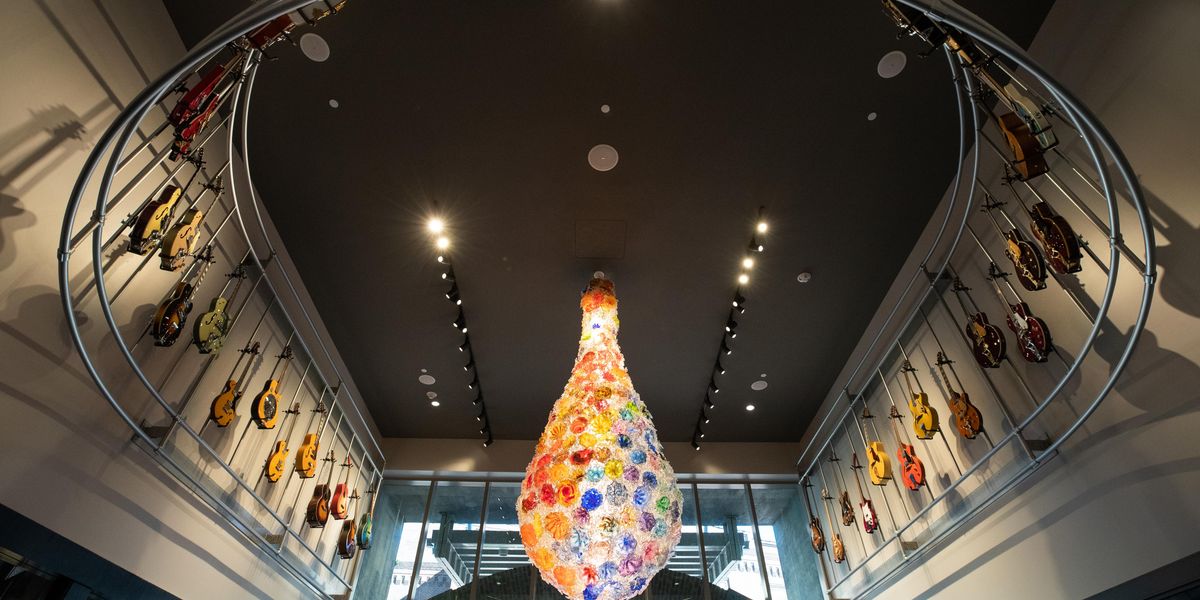
Striking a chord! New Savannah museum tells the storied history of Gretsch instruments
Drums, guitars, history, business and education have come together in a spectacular new interactive museum and exhibit in downtown Savannah that will pique the interest of any music lover. That Great Gretsch Sound! museum is a new destination where Georgia Southern University helps tell the story of a family-owned company that is still regarded as one of the music industry’s most influential and innovative instrument manufacturers. The permanent display of music memorabilia, highlighting more than 135 years of Gretsch instruments, is featured in District Live’s new lobby and performance space on the banks of the Savannah River. The museum is the latest addition to the Plant Riverside District. The museum’s opening was recently featured in Premium Guitar : The exhibit space highlights some of the most popular and unique pieces of Gretsch's historic catalog. The museum lobby features some of the most iconic instruments the company has produced, including the White Falcon™, the Chet Atkins® Country Gentleman®, a Brian Setzer Signature G6120, and a vintage 1963 Jet™ Firebird popularized by AC/DC's Malcolm Young. In the District Live performance hall, visitors will be treated to a visual timeline that will allow them to explore the evolution of Gretsch instruments dating back to the 1920s. Approximately 100 guitars are on display in the exhibit, 48 of which were recently on display in Nashville's Country Music Hall of Fame. The museum was developed through a special partnership between the Fred and Dinah Gretsch School of Music at Georgia Southern University and The Kessler Collection. In addition to the instruments that line the performance hall and upper section of the lobby, the museum features three sound dome displays with original videos that highlight Gretsch history, instrument production, the worldwide community of past and present Gretsch artists from Chet Atkins and George Harrison to Phil Collins, and the family's storied commitment to music education. Several other display cases take guests on a visual journey from Gretsch's beginnings as a local manufacturer of calf-skin drums, banjos, and accordions to one of the most popular and sought-after producers of guitars and drums during the height of the Rock & Roll era. Downtown Savannah is now helping tell that Gretsch story. The Gretsch museum includes Gretsch instruments and storyboards with QR code links to detailed narratives. "We hope this new museum will preserve the long history and legacy of the Gretsch Family and the Gretsch Brand," Dinah Gretsch said. "It is wonderful to share our history with the city of Savannah, the loyal Gretsch fans and all the tourists that will visit the museum." The museum's artifacts were curated and installed by Aaron Phillips, Georgia Southern's project curator for the Fred and Dinah Gretsch Artifacts Collection. Through his research to prepare the museum, he is confident that the Gretsch Museum will provide a unique musical experience. "My goal was to create a space that is expressive, inspirational, and true to the roots of the Gretsch family and community," Phillips said. "I am in awe of how this turned out!" To learn more – the full media release from Georgia Southern is attached below: If you’re a journalist looking to cover That Great Gretsch Sound! – then let us help. Aaron Phillips, Georgia Southern's project curator for the Fred and Dinah Gretsch Artifacts Collection is available, simply reach out to Georgia Southern Director of Communications Jennifer Wise at jwise@georgiasouthern.edu to arrange an interview today.
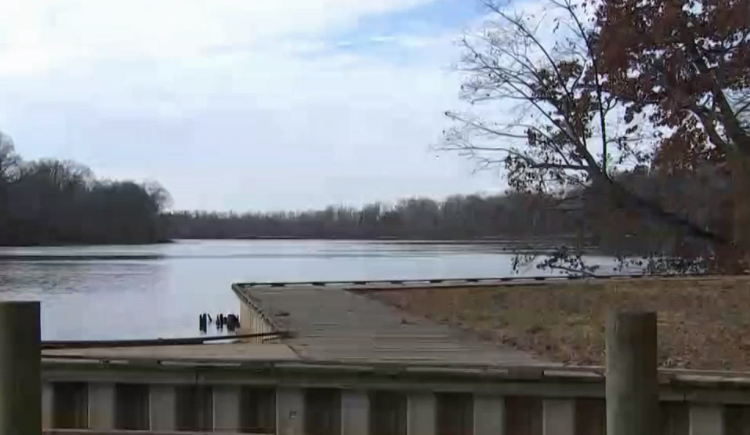
Experts in the Media – Learn how UMW is doing its part to preserve Indigenous history
The members of Virginia’s Rappahannock and Patawomeck tribes can trace their roots back to the times before the first European contact. For hundreds of years, their people fished the rivers and inhabited the area near the Potomac and Rappahannock rivers. It was a rich history and today the efforts to preserve the stories and records of those times are being bolstered by UMW students and faculty. The work was recently featured in a piece by NBC-4 in Washington, D.C. Professor Lauren McMillan and her students are helping with that mission. King George County economic development officials approached her with an idea to create a Native American heritage trail, hopeful that it would drive ecotourism and draw visitors to public access points. “The first step that we did was say we need to consult with the tribes whose stories we’d be telling," McMillan said. Then the class did a deep dive. "We then started diving into the archives, the historical records, oral histories and the archaeological record as well,” McMillan said. They’ve created signs that will go up in seven different locations in King George. Each one tells a different story about the local tribes, spotlighting the past and present. “When you learn Virginia history, you learn about a lot of stuff that happened in Jamestown and that’s kind of the last place you learn about Indians in Virginia history, but we've been here all along,” Brad Hatch, a member of the Patawomeck Tribe, said. “We’ve been preserving our own culture and heritage and it's here for everybody to see." The students worked hard to put that heritage and culture on full display. They also envision their project inspiring others to do some research of their own about Virginia’s first residents. December 07 - NBC News Indigenous history is a fascinating topic – and one being covered more and more by media. And if you’re a reporter looking to know about the work UMW is doing with of the Rappahannock and Patawomeck tribes or other topics – then let us help. Lauren McMillan is the University of Mary Washington's resident historical archaeologist and an expert on middle-Atlantic American history. Dr. McMillan is available to speak with media – simply click on her icon now to arrange an interview today.


UConn expert weighs in on controversial statue debate at the Connecticut Capitol
What should be the fate of the large statue commemorating John Mason that adorns the Connecticut State Capitol Building? He’s a historic figure and founder of the Connecticut Colony. He also left a legacy of violence and murder, with more than 400 Indigenous people, including 175 women and children, killed under his command. And whether to let his statue stand or remove it has engaged a debate from leading experts, historians, relatives of Mason, and the Indigenous community across the state. UConn’s Manisha Sinha was asked to lend her expertise to the situation: Manisha Sinha, a University of Connecticut professor of 19th century U.S. history, said she is a veteran of debates about the fate of statues memorializing Confederate leaders as well as founding fathers who owned slaves. “I have advocated for the taking down of statues that commemorate Confederate leaders and generals, who I see as traitors to the American republic, fighting for the worst cause in American history, as General Grant put it, in the cause of human bondage,” Sinha said. “On the other hand, I have opposed the taking down of statues of some of our founding fathers, revolutionary figures who did not defend slavery as a positive good.” Sinha said history can be complex, and great men of history can be flawed. “The Mason massacre is not a complex story,” she said. “It was a sheer massacre of non-combatants and of women, children and elders. We cannot excuse this by pointing to internecine warfare among Native Americans.” Mason’s statue is not necessary to teach history, she said. “I think it is high time that you think of removing John Mason’s statue,” Sinha said. “It cannot be contextualized. We do not remember history by statues, especially not in the monumental 19th century forms. We actually end up commemorating people, making them heroic.” November 18 – The CT Mirror This is a sensitive and very important topic as America reconciles with its past and moves forward as a country. And, if you are a journalist covering this topic, then let our experts help with your in-depth coverage and questions. Manisha Sinha is the Draper Chair in American History at the University of Connecticut and the author of "The Slave's Cause: A History of Abolition." She is an expert in the era of America during the 19th Century and available to speak with media regarding this topic – simply click on her icon now to arrange an interview today.


'Tangled Up' reveals science and history of Alzheimer's
A new book from leading University of East Anglia dementia expert Prof Michael Hornberger investigates the science and history of Alzheimer's disease. 'Tangled Up - The science and history of Alzheimer's disease' is available as a paperback or e-book. Prof Hornberger researches groups that are at higher risk of developing dementia (because of genetics, lifestyle or their other health condition) and works to help reduce this risk or delay the symptoms of dementia. He also explores the nature of support for those who have been diagnosed with dementia and helping the patients and their families and carers prepare for the future. His background is as a neuroscientist and his work involves using innovative techniques (such as online games and driver behaviour) to identify the spatial or navigation issues that can occur long before before diagnosis of dementia and before the traditional impacts on memory arise. He developed the mobile game Sea Hero Quest that can detect people at risk of Alzheimer's. His work enables early prediction of the likelihood of dementia (sometimes a decade ahead) and the opportunity to manage the onset and reduce risk by as much as 30 per cent. Prof Michael Hornberger, from UEA’s Norwich Medical School, said: “Alzheimer's disease is the most common cause of dementia in the UK. It affects around one in 14 people over the age of 65 and one in every six people over the age or 80 – and it can affect memory, thinking skills and other mental abilities. “I wanted to write a book to help people better understand the science and history of Alzheimer’s disease. “It covers everything from the causes of Alzheimer’s, through to why people with Alzheimer’s ‘live in the past’ and practical advice for how people can reduce the risk of developing it. “At the end of the book, you will have become an Alzheimer’s disease science expert and can use your newfound knowledge to untangle this devastating disease,” he added.


Tomorrow's Election Day, and it’s all eyes on Virginia!
In what is shaping up to be one of the most contested gubernatorial races in recent history, it’s all coming down to Election Day. Media from across the country are all watching and trying to get all the expert insight they can on why this election is so important and what winning or losing could mean for not just the state – but the mid-term elections coming up next November. UMW’s Stephen Farnsworth is the ‘go-to’ for major media outlets across America and for international media following U.S. and Virginia politics. Recently, CBS News called on him to lend his expertise on just where this race sits. "The race for governor in Virginia is in its final stretch with just two weeks to go before Election Day. Former Governor Terry McAuliffe, the Democratic candidate, and Republican nominee Glenn Youngkin have clashed on several issues related to schools from charter schools to vaccine mandates for teachers and students. Stephen Farnsworth, director of the Center for Leadership and Media Studies at the University of Mary Washington, joins CBSN AM to discuss." October 19 - CBS News Dr. Stephen Farnsworth is a sought-after political commentator on presidential politics. He has been widely featured in national media, including The Washington Post, Reuters, The Chicago Tribune and MSNBC. If you are a reporter covering Virginia's gubernatorial race, simple click on his icon to arrange an interview today.


Presidential plantations – are they leaving out slavery when telling the story of America’s history?
The presidential plantations once belonging to George Washington, Thomas Jefferson, James Madison and James Monroe are picturesque destinations for tourists who want to learn more about these Founding Fathers from Virginia. But these museums often fail to adequately tell the stories of the enslaved people who lived and toiled there. UMW Professor of Geography Stephen Hanna's research on the topic was recently highlighted in Northern Virginia Magazine. Do plantation museums do justice to the memory of the enslaved? Local professor Stephen Hanna wanted to find out, so in 2014 he joined a team of researchers associated with TourismRESET, a world-wide network of scholars who study and challenge social inequity in tourism. Hanna, who teaches geography at the University of Mary Washington in Fredericksburg, received a grant from the National Science Foundation, enabling him to lead undergraduate students through multi-year research on how narratives and exhibits about enslaved populations and slavery were presented or absent at 15 different plantation sites. The goal was to present their findings to museum managers and thus facilitate more historically accurate and meaningful tours. His team is in the final stages of publishing a book summarizing their data and findings, to be released in March 2022. The full article is attached below and is well worth the complete read. If you are a journalist covering this critical topic about American history, then let us help with your questions and stories. Dr. Hanna is available to speak with media regarding this topic. Simply click on his icon to arrange an interview.

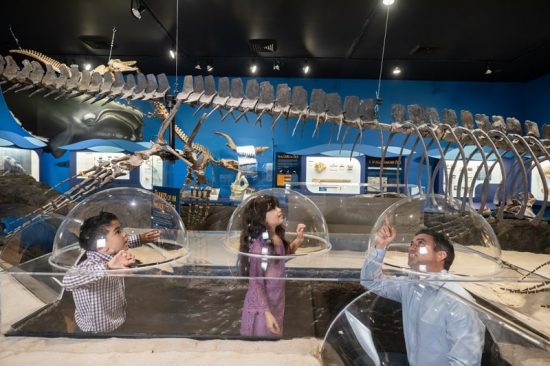
Georgia Southern University Museum reopens just in time to celebrate Earth Sciences Week
After nearly three years and following extensive architectural renovations, the Georgia Southern Museum, one of the longest-standing educational centers on the University's Statesboro Campus, has reopened. "It has been a long project, but well worth the journey," said Georgia Southern Museum Director Brent Tharp, Ph.D. "The upgraded facility and newly designed galleries represent a new era for the museum. Visitors will still find old friends, like the mosasaur, but exhibited in new more exciting ways, and will make new discoveries with never before exhibited artifacts in expanded permanent exhibits preserving the area's culture. We are really excited to be back open to the public." The Georgia Southern Museum serves as the premier institution interpreting the natural and cultural history of Georgia's coastal plain. The museum displays permanent exhibits and changing exhibits curated by the University's faculty and students, and provides a place where researchers can explore its collections and students of all ages can learn. As part of its reopening celebration, the Museum will recognize Earth Sciences Week with events featuring social media videos and interactive displays by Georgia Southern students, faculty and alumni. Highlighted events for Earth Sciences Week include: Oct. 12 - Earth Observation Day Oct. 13 - National Fossil Day Oct, 14 - Geoscience for Everyone Day Oct. 15 - Geologic Map Day Oct. 16 - International Archaeology Day Admission to the museum is $4 per person; however, for a limited time the museum also will accept donations for admission. Children 3 years of age and younger, museum members, and Georgia Southern students receive free admission. If you’re a journalist looking to cover Earth Sciences Week or talk to any of the many experts at the museum – then let us help. The researchers behind this study are available, simply reach out to Georgia Southern Director of Communications Jennifer Wise at jwise@georgiasouthern.edu to arrange an interview today.

Japan House: Fifty Years Ago Today
Joshua W. Walker, Ph.D., President and CEO, Japan Society This September we're celebrating the 50th anniversary of Japan House, Japan Society's landmarked headquarters building. Let's jump in our time machine and go back to 1971, when Japan Society was only 64 years old. At that time, U.S.-Japan relations were deeply embroiled in trade frictions while the ending of the U.S. embargo of China had just begun to impact East Asia. 1971 snapshots In the United States: Richard M. Nixon is President; Apollo 14 lands on the moon; massive protests are held throughout America against the Vietnam War; Walt Disney World opens in Orlando, Florida; Joe Frazier defeats Muhammad Ali in 15 rounds at Madison Square Garden; the first Starbucks opens in Pike Place Market, Seattle. In Japan: Eisaku Sato is Prime Minister; the U.S. and Japan sign an accord to return Okinawa to Japan; NHK TV implements colorization of all programs; Kamen Rider TV series begins broadcasting; the 48th reigning Sumo champion Yokozuna Taihō announces his retirement; McDonald's opens its first store in Ginza, Tokyo; Nissin creates the first "cup noodle." Japan House Meanwhile in New York City, Japan Society had occupied eight different locations since its founding in 1907, and by the mid-1960s, a dedicated building had become necessary to house the Society's rapidly expanding initiatives. Japan Society President John D. Rockefeller 3rd made a very generous pledge by donating the land for the building site and Japanese modernist architect Junzo Yoshimura was confirmed to design the building. On September 16, 1969, John D. Rockefeller 3rd and Japanese Foreign Minister Kiichi Aichi broke ground at a formal ceremony. Construction proceeded on schedule and staff moved in during the spring of 1971, with Executive Director Douglas Overton noting, "Each day we have found some new and delightful feature which has come off the drawing board as an unexpectedly brilliant success. Japan House will be a national important building worthy of its high purposes." Opening Week—five star-studded days of celebratory events—began on September 13, 1971 with Their Imperial Highnesses Prince and Princess Hitachi at the ceremonies. The Prince brought Japan's best wishes to the Society "for a new chapter, both rich in content and wide in scope." The Gallery opened its first exhibition, Rimpa: Masterworks of the Japanese Decorative School and the Tokyo String Quartet performed in the new auditorium. Junzo Yoshimura wrote about Japan House, "People the world over used to build their houses with local and traditional materials. Today, however, contemporary buildings all over the world use the same basic materials—concrete, steel and glass—yet different characters and nationalities can still be perceived among them. In designing Japan House I have tried to express in contemporary architecture the spirit of Japan." With the formal opening of the Society's headquarters a new era had begun. Their Imperial Highnesses Prince and Princess Hitachi and Japan Society chairman John D. Rockefeller 3rd view the first Japan Society Gallery exhibition Rimpa: Masterworks of the Japanese Decorative School. Photo © Thomas Haar. The next 50 years Fifty years later, we are at another inflection point. The novel coronavirus pandemic has taught us just how interconnected we are as a global community while placing new importance on our homes and transforming the nature of work. This unprecedented global crisis has also illuminated the strengths and weaknesses of our organization, providing new opportunities for envisioning the future. Just as the opening of Japan House shaped the Society's last 50 years, today we are reimagining how we use our space, from the physical to the digital, forging broader connections or kizuna for U.S.-Japan and for the world. We embrace our mission for the years to come, reaching out far beyond our building, to our city, country, and world as we seek to connect American and Japanese people, cultures, and societies through a global lens. Like a hike up Mt. Fuji, Japan Society’s nearly 115-year-long journey itself defines us far more than our current destination. Beginning in 1907, the first iteration of Japan Society focused on business relations between the U.S. and Japan. For its 1952 post-Occupation reconstitution under the leadership of John D. Rockefeller 3rd, the Society dedicated itself to arts, culture, and education, with an emphasis on supporting Japanese students in New York as well as spreading the word about Japan through significant cultural milestones such as partnerships with The Metropolitan Museum of Art and Lincoln Center, with traveling exhibitions and outreach on both sides of the Pacific. With the opening of Japan House in 1971, politics was reintroduced into the mix, the business and policy communities energized, and Japanese popular culture landed large—nearly 50,000 people came to the Grand Sumo Tournament at Madison Square Garden co-sponsored by Japan Society and the Asia Society in 1985! Today at Japan House we present Japan and U.S.-Japan as a way to engage with history and tradition, on the one hand, and innovation and the future on the other. As in 1971, the time to act is now and our opportunities are as great as the challenges of 2021. It's up to us to work together on new, critical connections to take us through the next 50 years. I'll be there with you. Joshua Walker (@drjwalk) is president and CEO of Japan Society. Follow Japan Society on Twitter, Instagram, Facebook, and LinkedIn. The views expressed in this article are the writer's own.

