
Experts Matter. Find Yours.
Connect for media, speaking, professional opportunities & more.

Reviving the Christmas Spirit: Forgotten Christmas Traditions to Reclaim the Christmas Season
Christmas is just around the corner and many families have already decorated their homes and started celebrating their Christmas traditions – but many stores have had their Christmas products out for months. This early bombardment of holiday advertisements and adornments often takes away from the excitement. So how do you recapture the true spirit of Christmas? Baylor University Honors College professor Michael Foley, Ph.D., who teaches in the Great Texts Program, has researched the history of common Christmas traditions and uncovered forgotten customs. “Christmas is indeed the most wonderful time of year, and that wonder is increased when we understand why we do the things we do,” Foley said. “Our delight in the season becomes greater when we appreciate the history and symbolism of the Christmas tree or why we kiss under the mistletoe.” Foley shares three practices to recapture the essence of Christmas and bring more joy to the season for your family. Enjoy the 12 Days of Christmas Historically, the season of Advent during the weeks leading up to Christmas was a period of joyful restraint and preparation. During the Twelve Days of Christmas, from Christmas Day on Dec. 25 to the Feast of the Epiphany on Jan. 6, people would celebrate a release with a continuous period of leisure and merriment. “Today, the Christmas season seems to start earlier and earlier each year. In the 20th century, the commercial season began the day after Thanksgiving, but now stores inundate the market with Christmas decorations much earlier,” Foley said. “The problem with this arrangement is that by the time Christmas finally comes, you’re tired of it. The older model has an organic build-up to the big day and then a great, 12-day release.” Returning to a slower-paced season full of cheerful spirits in the 12 days following Christmas is a way to recenter, refocus and reignite your Christmas spirit, Foley said. Capture the Joy of Incarnation It’s easy to get caught up in the festivities and pressure of the holiday, but it is also important to return to the reason behind Christmas, Foley said, and take time to understand the meaning behind what seem like meaningless customs. “The best traditions capture the fact that God became man in order to redeem us from our sins out of sheer love for us,” he said. Practices like caroling and gathering with family for food and drink are all acts of gratitude and joy that can remind us of God’s love. What may seem like typical holiday decorations, the holly wreath and the Christmas tree, are actually symbols of Christ bringing new life, Foley said. Embrace the Bizarre Today, Christmas is surrounded by a light, cheery feeling. But history tells us that there has always been a certain “dark side” of Christmas. “There is a reason why Ebenezer Scrooge was visited by three ghosts on Christmas Eve,” Foley said. “All of winter was the season of fiends, and they were not happy that the winter solstice around Christmas Day marked the beginning of the end of the long dark nights and that Jesus Christ was born and triumphed over evil.” Other traditions involve swapping places with someone such as a parent and child, abbots and novices, or men and women. “At one time, this custom of inverted social roles played an important role in gaining clarity and releasing tension in a hierarchical society,” Foley said. While this might seem useless, impractical, or even pointless today, it can still offer value to the Christmas joy. “These inversion customs are a giddy imitation of the ultimate inversion in all of history,” Foley said. “That Almighty God chose to become a little baby in a measly manger.” Although some forgotten customs might seem odd to us today, there can be a certain kind of wisdom behind them – a wisdom that leads us back to the true spirit of Christmas, Foley said. After all, even Ebenezer Scrooge was able to find joy in Christmas again. Michael Foley is a Professor of Patristics in the Honors College at Baylor University and the author of 17 books, including Why We Kiss under the Mistletoe: Christmas Traditions Explained. Looking to know more or arrange an interview? Simply contact: Shelby Cefaratti-Bertin today.


Christmas Magic on Screen: A Curated List of Must-Watch Holiday Classics
Christmas movies and TV specials hold a special place in the hearts of many, offering a blend of nostalgia, joy and fun that captures the magic of the holiday season, creating a sense of togetherness, drawing families and friends around the glow of the television. James Kendrick, Ph.D., a film historian and professor of film and digital media at Baylor University, has curated a list of his Top 5 Christmas movies and specials, sharing the history of how they became holiday classics sure to fill you with holiday cheer. View his profile 1. It’s a Wonderful Life Frank Capra’s classic is the perennial Christmas movie, which is only fitting given that it began with writer Philip Van Doren Stern penning a short story called “The Greatest Gift” and printing it on 200 holiday cards that he sent to friends and family. Although initially a box office dud, it later fell into the public domain and was used by PBS stations during the 1970s as December counterprogramming, turning it into the holiday classic it always deserved to be. Along with stockings hung by the fireplace, decorated trees and blinking lights on the house, the viewing of “It’s a Wonderful Life” has become indelibly interwoven into contemporary Christmas tradition. Capra weaves a rich tapestry of American life filling the screen, including memorable details and wonderful performances from James Stewart in his first role after returning from duty in World War II, and Donna Reed, then a largely unknown contract player. It is a truly classic, timeless film, one of the few that quite simply never grows old. 2. Die Hard It is a long-settled matter that Die Hard is not just a Christmas movie, but one of the very best. Christmas movies, after all, know no genre, so there is no reason why a violent action film can’t fit the bill for the holidays. The decision to set John McTiernan’s wry action extravaganza against a Christmas-season backdrop only adds to the film’s myriad pleasures, as it makes Bruce Willis’s one-man mission to eradicate a crack team of terrorist-robbers all the more imperative after they take a Los Angeles high-rise hostage along with a party of business executives that include his estranged wife. “The fact that the soundtrack includes as many jingle bells as gunshots (well, maybe not quite as many, but still more than a few) only adds to the seasonal feels,” Kendrick said. 3. A Christmas Story Somewhere inside we are all young, round-faced Ralphie, pining away for our own “official Red Ryder carbine action, 200-shot Range model air rifle with a compass in the stock and this thing which tells time.” The film’s stroke of brilliance in how it ladles halcyon American nostalgia – so many images from the film could have been painted by Norman Rockwell – with a biting sense of cold, but often hilarious, reality. Humorist Jean Shepherd, parts of whose 1966 semi-autobiographical short story collection, In God We Trust: All Others Pay Cash, provided the film’s source material, narrates the film with a mix of humor and irony, making each scene work as both an evocation of a specific time and place in American history and a blank slate onto which we can project our own Christmas memories and dreams. The fact that the genuine, child wonderment of waking up on Christmas morning co-exists so easily with sneering bullies, creatively cursing fathers, draconian teachers, tongues frozen to light poles, inappropriate major awards and the always braying Bumpass hounds is testament to the film’s breadth and depth. 4. A Charlie Brown Christmas The first and best of the Peanuts TV specials (sorry, Great Pumpkin), A Charlie Brown Christmas premiered in 1965 and has been in our hearts ever since. While technically not a feature film, it captures in its brisk 22 minutes both the truth of the Christmas spirit and the attendant interpersonal difficulties of the holiday season. The fact that it does so with such good humor and poignancy means that no Christmas viewing list is complete without it. Charlie Brown’s oft-frustrated attempts to fit in and find meaning in the season amid all the crass commercialism is one of pop culture’s greatest evocations of existential struggle, but all the low points are balanced perfectly with Linus’s simple, illuminating recitation of the annunciation to the shepherds from the Gospel of Luke, which remains remarkably powerful in its unadorned directness. From the mouth of babes, indeed. 5. National Lampoon’s Christmas Vacation This is the movie for everyone who has ever tried their absolute hardest to live up to the hype of the Christmas season, only to end in abject failure. Maybe we haven’t all crashed and burned as badly as poor Clark Griswold does here, but we can all relate to how the idea of a “good ol’ fashioned family Christmas” doesn’t always comport with the realities of family, especially when your family includes the inveterate Cousin Eddie, who thinks nothing of emptying his rusting hulk of an RV’s chemical toilet into a storm drain first thing in the morning while wearing a shorty robe and smoking a cigar. John Hughes’s screenplay is a veritable compendium of modern America’s expectations for the season and how they can all go terribly, horribly wrong, which is enough to make anyone feel better about their own Christmas turkey coming out too dry or inability to find which lightbulb is causing the whole strand to go dark.


Violence alters human genomes for generations, researchers discover
In February of 1982, the Syrian government besieged the city of Hama, killing tens of thousands of its own citizens in sectarian violence. Four decades later, rebels used the memory of the massacre to help inspire the toppling of the Assad family that had overseen the operation. But there is another lasting effect of the attack, hidden deep in the genes of Syrian families. The grandchildren of women who were pregnant during the siege — grandchildren who never experienced such violence themselves — nonetheless bear marks of it in their genomes. Passed down through their mothers, this genetic imprint offers the first human evidence of a phenomenon previously documented only in animal models. The genetic transmission of stress across multiple generations. “The idea that trauma and violence can have repercussions into future generations should help people be more empathetic, help policymakers pay more attention to the problem of violence,” said Connie Mulligan, Ph.D., a professor of Anthropology and the Genetics Institute at the University of Florida and co-senior author of the new study. “It could even help explain some of the seemingly unbreakable intergenerational cycles of abuse and poverty and trauma that we see around the world, including in the U.S.” While our genes are not changed by life experiences, they can be tuned through a system known as epigenetics. In response to stress or other events, our cells can add small chemical flags to genes that may quiet them down or alter their behavior. These changes may help us adapt to stressful environments, although the effects aren’t well understood. It is these tell-tale chemical flags that Mulligan and her team were looking for in the genes of Syrian families. While lab experiments have shown that animals can pass along epigenetic signatures of stress to future generations, proving the same in people has been nearly impossible. “Resilience and perseverance is quite possibly a uniquely human trait.” —Connie Mulligan Mulligan worked with Rana Dajani, Ph.D., a molecular biologist at Hashemite University in Jordan and co-senior author, as well as anthropologist Catherine Panter-Brick, Ph.D., of Yale University, to conduct the unique study. Dajani envisioned the research project; because of her intimate knowledge of the Syrian population and its tragic history, she designed the study to cover three generations of Syrian refugees to Jordan. Some families had lived through the Hama attack before fleeing to Jordan. Other families avoided Hama, but lived through the recent civil war against the Assad regime. The team collected samples from grandmothers and mothers who were pregnant during the two conflicts, as well as from their children. This study design meant there were grandmothers, mothers and children who had each experienced violence at different stages of development. A third group of families had immigrated to Jordan before 1980, avoiding the decades of violence in Syria. These early immigrants served as a crucial control to compare to the families who had experienced the stress of civil war. Study coauthor Dima Hamadmad, a Syrian researcher and the daughter of refugees, led the search for families that met the study criteria and collected cheek swabs from 138 people across 48 families. "The participants took part in the research out of love for their children and concern for future generations,” she said. “But more than that, they wanted their stories of trauma to be heard and acknowledged.” Back in Florida, Mulligan’s lab scanned the DNA for epigenetic modifications and looked for any relationship with the families’ experience of violence. In the grandchildren of Hama survivors, the researchers discovered 14 areas in the genome that had been modified in response to the violence their grandmothers experienced. These 14 modifications demonstrate that stress-induced epigenetic changes may indeed appear in future generations in humans, just as they can in animals. The study also uncovered 21 epigenetic sites in the genomes of people who had directly experienced violence in Syria. In a third finding, the researchers reported that people exposed to violence while in their mothers’ wombs showed evidence of accelerated epigenetic aging, a type of biological aging that may be associated with susceptibility to age-related diseases. Most of these epigenetic changes showed the same pattern after exposure to violence, suggesting a kind of common epigenetic response to stress – one that can not only affect people directly exposed to stress, but also future generations. “We think our work is relevant to many forms of violence, not just refugees. Domestic violence, sexual violence, gun violence: all the different kinds of violence we have in the U.S,” said Mulligan. “We should study the effects of violence. We should take it more seriously.” It’s not clear what, if any, effect these epigenetic changes have in the lives of people carrying them inside their genomes. But some studies have found a link between stress-induced epigenetic changes and diseases like diabetes. One famous study of Dutch survivors of famine during World War II suggested that their offspring carried epigenetic changes that increased their odds of being overweight later in life. While many of these modifications likely have no effect, It’s possible that some have functional effects that can affect our health, Mulligan said. The researchers published their findings, which were supported by the National Science Foundation, Feb. 27 in the journal Scientific Reports. While carefully searching for evidence of the lasting effects of war and trauma stamped into our genomes, Mulligan and her collaborators were also struck by the perseverance of the families they worked with. Their story was much bigger than merely surviving war, Mulligan said. “In the midst of all this violence we can still celebrate their extraordinary resilience. They have persevered,” Mulligan said. “That resilience and perseverance is quite possibly a uniquely human trait.”


Ape Ancestors and Neanderthals Likely Kissed, New Analysis Finds
Kissing occurs in a variety of animals but presents an evolutionary puzzle: it appears to carry high risks, such as disease transmission, while offering no obvious reproductive or survival advantage. Despite kissing carrying cultural and emotional significance in many human societies, up to now researchers have paid little attention to its evolutionary history. In the new study, “A comparative approach to the evolution of kissing,” published this week in the journal Evolution and Human Behavior, the researchers carried out the first attempt to reconstruct the evolutionary history of kissing using a cross-species approach based on the primate family tree. The results indicate that kissing is an ancient trait in the large apes, evolving in the ancestor to that group 21.5 – 16.9 million years ago. Kissing was retained over the course of evolution and is still present in most of the large apes. The team also found that our extinct human relatives, Neanderthals, were likely to have engaged in kissing too. This finding, together with previous studies showing that humans and Neanderthals shared oral microbes (via saliva transfer) and genetic material (via interbreeding), strongly suggests that humans and Neanderthals kissed one another. “While kissing may seem like an ordinary or universal behavior, it is only documented in 46% of human cultures,” said Catherine Talbot, co-author and assistant professor in the College of Psychology at Florida Tech. “The social norms and context vary widely across societies, raising the question of whether kissing is an evolved behavior or cultural invention. This is the first step in addressing that question.” Matilda Brindle, lead author and evolutionary biologist at Oxford’s Department of Biology, said: “This is the first time anyone has taken a broad evolutionary lens to examine kissing. Our findings add to a growing body of work highlighting the remarkable diversity of sexual behaviors exhibited by our primate cousins.” To run the analyses, the team first defined what constitutes a kiss. This was challenging because many mouth-to-mouth behaviours look like kissing. Since the researchers were exploring kissing across different species, the definition also needed to be applicable to a wide range of animals. They therefore defined kissing as non-aggressive, mouth-to-mouth contact that did not involve food transfer. Having established this definition, the researchers collected data from the literature on which modern primate species have been observed kissing, focusing on the group of monkeys and apes that evolved in Africa, Europe and Asia. This included chimpanzees, bonobos, and orangutans, all of which have been observed kissing. They then ran a phylogenetic analysis, treating kissing as a ‘trait’ and mapping this to the family tree of primates. They used a statistical approach (called Bayesian modelling) to simulate different evolution scenarios along the branches of the tree, to estimate the probability that different ancestors also engaged in kissing. The model was run 10 million times to give robust statistical estimates. Stuart West, co-author and professor of evolutionary biology at Oxford, said, “By integrating evolutionary biology with behavioral data, we’re able to make informed inferences about traits that don’t fossilise – like kissing. This lets us study social behaviour in both modern and extinct species.” While the researchers caution that existing data are limited – particularly outside the large apes – the study offers a framework for future work and provides a way for primatologists to record kissing behaviors in nonhuman animals using a consistent definition.


Dinosaurs in New Mexico Thrived Until the Very End, Study Shows
For decades, many scientists believed dinosaurs were already dwindling in number and variety long before an asteroid strike sealed their fate 66 million years ago. But new research in the journal Science from Baylor University, New Mexico State University, the Smithsonian Institution and an international team is rewriting that story. The dinosaurs, it turns out, were not fading away. They were flourishing. A final flourish in the San Juan Basin In northwestern New Mexico, layers of rock preserve a hidden chapter of Earth’s history. In the Naashoibito Member of the Kirtland Formation, researchers uncovered evidence of vibrant dinosaur ecosystems that thrived until just before the asteroid impact. High-precision dating techniques revealed that fossils from these rocks are between 66.4 and 66 million years old – placing them in the catastrophic Cretaceous-Paleogene boundary. “The Naashoibito dinosaurs lived at the same time as the famous Hell Creek species in Montana and the Dakotas... They were not in decline – these were vibrant, diverse communities.” – Daniel Peppe, Ph.D. “The Naashoibito dinosaurs lived at the same time as the famous Hell Creek species in Montana and the Dakotas,” said Daniel Peppe, Ph.D., associate professor of geosciences at Baylor University. “They were not in decline – these were vibrant, diverse communities.” Dinosaurs in their prime The New Mexico fossils tell a different story than originally thought. Far from being uniform and weakened, dinosaur communities across North America were regionally distinct and thriving. Using ecological and biogeographic analyses, the researchers discovered that dinosaurs in western North America lived in separate “bioprovinces,” divided not by mountains or rivers, but by temperature differences across regions. “What our new research shows is that dinosaurs are not on their way out going into the mass extinction,” said first author Andrew Flynn, Ph.D., ‘20, assistant professor of geological sciences at New Mexico State University. “They're doing great, they're thriving and that the asteroid impact seems to knock them out. This counters a long-held idea that there was this long-term decline in dinosaur diversity leading up to the mass extinction making them more prone to extinction.” Life after impact The asteroid impact ended the age of dinosaurs in an instant – but the ecosystems they left behind set the stage for what came next, the researchers said. Within 300,000 years of their extinction, mammals began to diversify rapidly, exploring new diets, body sizes and ecological roles. The same temperature-driven patterns that shaped dinosaur communities continued into the Paleocene, showing how climate guided life’s rebound after catastrophe. “The surviving mammals still retain the same north and south bio provinces,” Flynn said. “Mammals in the north and the south are very different from each other, which is different than other mass extinctions where it seems to be much more uniform.” Why the discovery matters today The discovery is more than a window into the past – it’s a reminder of the resilience and vulnerability of life on Earth. Conducted on public lands managed by the U.S. Bureau of Land Management, the research highlights how carefully protected landscapes can yield profound insights into how ecosystems respond to sudden global change. With a clearer understanding of the timeline of the dinosaurs’ final days, the study reveals not a slow fade into extinction but a dramatic ending to a story of flourishing diversity cut short by cosmic chance.


Self-Guided Hypnosis Significantly Reduces Menopausal Hot Flashes
Can a simple daily audio hypnosis session help women find relief from one of menopause’s most disruptive symptoms – hot flashes – without medication? A new clinical trial led by Baylor University’s Gary R. Elkins, Ph.D., professor of psychology and neuroscience and director of the Mind-Body Medicine Research Laboratory, suggests it can. By decreasing hot flash frequency and intensity by over 50%, self-guided hypnosis offers a nonhormonal option for the millions of women whose hot flashes interfere with sleep, mood and quality of life. Published in the journal JAMA Network Open, the multicenter randomized clinical trial evaluated the effectiveness of a six-week, self-administered hypnosis program compared to a sham control using white noise. The study enrolled 250 postmenopausal women experiencing frequent hot flashes, including nearly 25% with a history of breast cancer – a group often excluded from hormone-based treatments. “It is estimated that over 25 million women in the United States have hot flashes, with up to 80% of women in the general population reporting hot flashes during the menopause transition, and 96% of women with breast cancer report hot flashes soon after beginning anti-cancer therapy,” Elkins said. “While hormone replacement therapy is highly effective in reducing hot flashes, it is not a safe choice for everyone, and therefore, women need additional safe and effective alternatives.” After six weeks of daily self-hypnosis audio recordings, participants reported a 53.4% reduction in both frequency and intensity of hot flashes, and at the 3-month follow-up, hot flashes were reduced by 60.9% compared to a 40.9% reduction for women in the control group. The guided self-hypnosis intervention had an even larger treatment effect on reducing hot flashes in women with a history of breast cancer (64% reduction after six weeks). Self-guided hypnosis: A breakthrough approach The study is the first to compare self-guided hypnosis with an active control condition (i.e. sham white noise control group), allowing researchers to better understand how much of the benefit came from people’s expectations or the placebo effect. “This was a major breakthrough and innovation, as almost all prior studies of mind-body interventions have only used wait-list, psycho-education or simple relaxation to compare the active hypnotherapy intervention,” Elkins said. “Also, all sessions were self-administered hypnosis, which demonstrated that women could learn how to use hypnosis for hot flashes on their own with support and guidance. Elkins emphasized that self-hypnosis provides benefits that are easily learned and practiced using audio recordings or app-delivered hypnotherapy. “It can be practiced at home without needing to travel for doctor visits, and it is relatively inexpensive compared to in-person sessions,” Elkins said. “Once a person learns how to use self-hypnosis to reduce hot flashes and improve sleep, it can be used for other purposes such as managing anxiety, coping with pain and for stress management.” At the 12-week follow-up, participants in the self-guided hypnosis group showed a 60.9% reduction in hot flashes as well as significantly greater improvements in sleep, mood, concentration and overall quality of life. Nearly 90% of participants in the hypnosis group reported feeling better, compared to 64% in the control group. “We are very excited about the findings from this important study,” Elkins said. “Our ongoing research aims to further determine how self-hypnosis can significantly improve sleep for breast cancer survivors and women in the peri- to post-menopause transition.” Through this and other studies, Elkins and his team have been able to determine that hypnotherapy is the only behavioral intervention consistently shown to reduce the frequency and severity of hot flashes to a clinically significant amount among both post-menopausal women and breast cancer survivors.


Masoud Davari, an associate professor in Electrical and Computer Engineering at Georgia Southern University, has been awarded the 2024 IEEE Region 3 Outstanding Engineer Award, making him the first faculty member in the university’s 55-year history to receive this honor. Davari was recognized for his contributions to reinforcement-learning optimal controls for power-electronic converters, his work on integrating power-electronic systems with cyber-attack considerations in modern power grids, and for his leadership in hardware-in-the-loop testing and standards development, including service on the IEEE P2004 standards working group. In addition to the award, Davari was inducted into the IEEE-Eta Kappa Nu (HKN) honor society. His research program at Georgia Southern has earned significant support, including more than $1.17 million in National Science Foundation funding, a 2024 Gulfstream Aerospace Research Fellowship, inclusion in the Stanford/Elsevier Top 2% Scientists list, and selection as a finalist for the 2024 Curtis W. McGraw Research Award. You can find out more about Davari's research by visiting his Georgia Southern Scholars profile below: To arrange an interview or to learn more about this award - Looking to know more about Georgia — simply contact Georgia Southern's Director of Communications Jennifer Wise at jwise@georgiasouthern.edu to arrange an interview today.

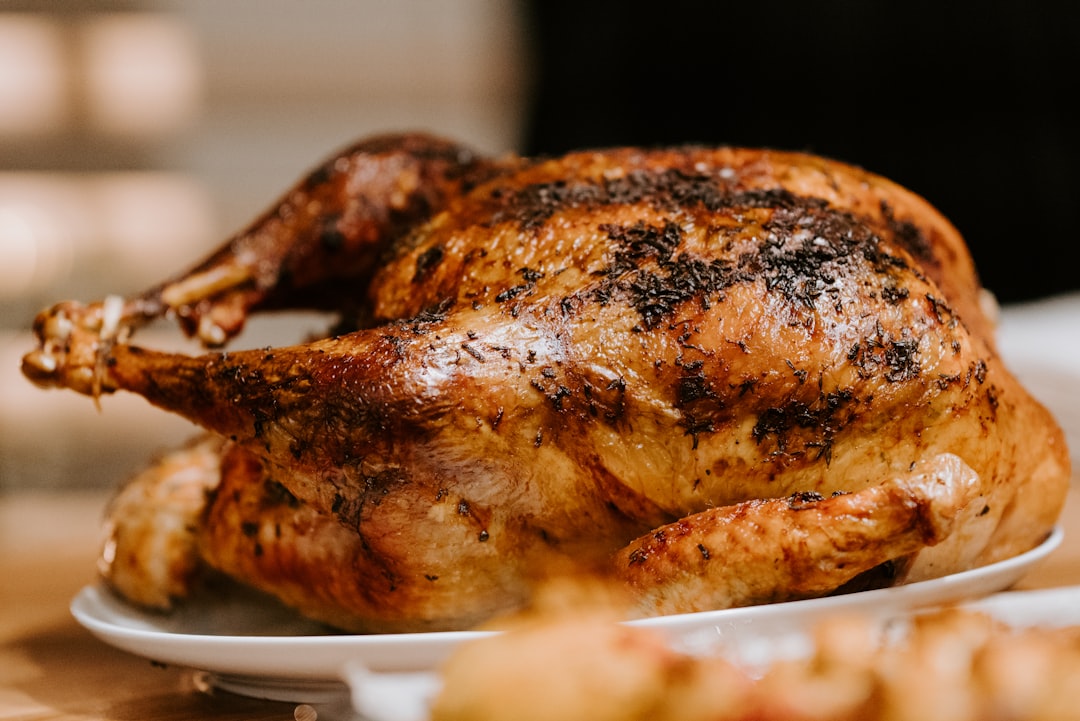
#ExpertSpotlight: Why Do We Eat Turkey at Thanksgiving?
Thanksgiving is all about tradition — family gatherings, fall colours, and the annual moment where someone at the table says, “I swear the turkey was bigger last year.” But why this bird? Why not ham, roast beef, or something simpler that doesn't require hours of basting, brining, and YouTube tutorials from chefs with suspiciously perfect kitchens? It turns out, the turkey’s rise to holiday fame is a tale packed with practicality, politics, early marketing, and a few misconceptions that have stuck around longer than the leftovers. Turkey: The Accidental Icon While popular myth suggests the Pilgrims dined on turkey in 1621, historical accounts are vague. They definitely ate wild fowl — which could’ve been turkey, duck, or goose. But practical realities sealed the deal later on: Turkeys were plentiful: In the 1800s, wild turkeys roamed North America in massive numbers. They were big, available, and cheaper to raise than cows or pigs. Big bird = big table: A turkey could feed a crowd without sacrificing dairy-producing animals. Practicality wins again. Seasonal timing: Turkeys matured in the fall, just in time for an annual feast. Nature set the menu before Pinterest ever could. Sarah Josepha Hale: The 19th-Century Queen of Thanksgiving One of the biggest reasons turkey ended up on the national table? A woman named Sarah Josepha Hale — journalist, author, and relentless advocate for making Thanksgiving a national holiday. Hale spent decades campaigning, writing hundreds of letters, and filling her magazine with Thanksgiving recipes (including turkey). When Abraham Lincoln finally proclaimed the first national Thanksgiving in 1863, Hale’s influence helped cement turkey as the centrepiece. In other words: The “Mother of Thanksgiving” was also the Mother of Modern Turkey Marketing. The Power of Tradition (and Leftovers) By the 20th century, turkey was the default. Norman Rockwell painted it. Grocery stores promoted it. Manufacturers created special roasting pans for it. And millions of families quietly wondered whether it was worth the effort. Yet the turkey holds its place because: It symbolizes abundance It satisfies enough people to avoid mutiny Its leftovers power the real Thanksgiving tradition: sandwiches Great Story Angles for Journalists The forgotten role of Sarah Josepha Hale — the woman who shaped a national holiday How turkeys became big business — and how Thanksgiving drives Canada/U.S. poultry economics Turkey myths vs. facts — no, tryptophan alone doesn’t knock you out How immigrant communities reinterpret Thanksgiving menus What the “perfect” turkey says about North American food culture Why It Matters Today Thanksgiving remains a cultural anchor — a moment where millions gather over a shared meal whose main dish has become iconic, symbolic, and occasionally overcooked. Understanding how turkey became the star of the table opens conversations about food history, national identity, environmental sustainability, cultural adaptation, and of course… the annual debate over stuffing inside or outside the bird. For journalists exploring food history, cultural traditions, or holiday trends, culinary experts on ExpertFile can provide deeper context, historical insight, and delicious perspectives to bring your stories to life. Find your expert here: www.expertfile.com

Government Plays Catch Up After End of Shutdown
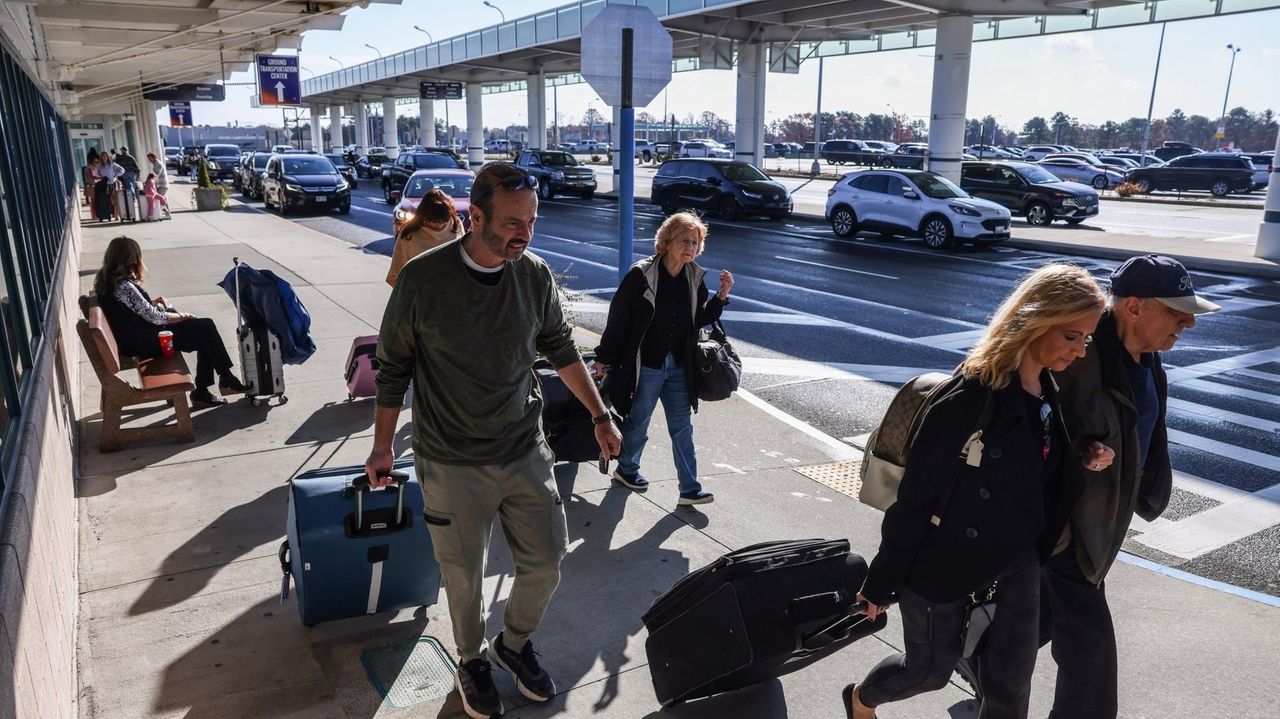
Dr. Anoop Rai, professor of finance at Hofstra’s Frank G. Zarb School of Business, was interviewed by Newsday about the lasting economic impact of the recent federal government shutdown, the longest in the history of the United States. Dr. Rai told Newsday that the period of economic uncertainty caused by this latest shutdown is a “blip” and he expects a quick rebound as government spending resumes. “In the broad scheme of things, everything will come back to normal with a slight dip in [gross domestic production], but the question is — was it necessary?” he said. “The disruption the shutdown has caused should be measured in terms of the pain it has inflicted on a lot of people.”



A popular on-the-go sandwich is now the subject of a mega trademark lawsuit between two food industry giants. The J.M. Smucker Company, more commonly known as Smucker's, recently filed a trademark lawsuit against grocery chain Trader Joe's over what it alleges is infringement upon its iconic billion-dollar investment: the Uncrustables sandwich. Smucker's seeks to obtain unspecified monetary damages from Trader Joe's, as well as profit from its similar product. But beyond the novelty of the sandwich suit lies a complex case built around a lesser-known morsel of trademark law, says Waseem Moorad, Esq., assistant professor of Law at Villanova University Charles Widger School of Law and director of the school's Intellectual Property Clinic. Professor Moorad, a former U.S. Patent and Trademark Office Patent (USPTO) examiner, recently discussed the actual claims of the lawsuit, and how both parties are preparing for a potential trial. Q: Since this lawsuit was filed, it has been a popular topic of public discourse, much of which has centered on the product—a crustless peanut butter and jelly sandwich—itself. Is that what this is truly about? Professor Moorad: Much of the commentary has been focused on the argument of whether Smucker's is permitted to have a monopoly of peanut butter and jelly sandwiches, or if Trader Joe's can actually infringe upon the Uncrustables product without necessarily using the actual trademarked name. While both discussions are legitimate conversations folks could have while munching on the delicious snack products, they are not necessarily the relevant legal claims at the crux of this lawsuit. Q: Before we get into what those relevant legal claims are, Smucker's has filed dozens of trademarks in its 128-year history. What sorts of intellectual property do these trademarks generally protect? PM: Most of their trademarks filed with the USPTO are registered to protect against competitors from using words, logos, slogans, symbols and other materials that are linked to the brand name of the company, its affiliates, or its respective products. Well-known examples include Smucker's, Folgers, Jif and, of course, Uncrustables. If a competing company has a brand or a product that has a similar sounding name or appearance, such as "Giff Peanut Butter," then Smucker's could sue that company for trademark infringement. That name is not only infringing upon a trademark that Smucker's has federal protection over, but also is in the same related industry (food products), within which Smucker's has protection. Q: But Trader Joe's did not necessarily infringe on any trademarked words, symbols, slogans or the like. What, then, is the basis for the claims of infringement? PM: The issue is related to a deeper subset of trademark law, specifically the concept of "trade dress." Trade dress is the intellectual property associated with the visual and aesthetic characteristics of a product or its related packaging that allows a consumer to know with whom that product or packaging is associated. For example, Coca-Cola's name, which is federally protected, is well known as a registered trademark; however, the Coca-Cola bottle, with the curvy appearance where it gets slimmer in the middle, is an example of a registered trade dress belonging to Coca-Cola. If there was no logo or word mark on the bottle, the average consumer would still be able to recognize it as a Coke bottle. There are several trademarks that Smucker's owns that are related to the trade dress of its products. Smucker's isn't alleging that Trader Joe's is copying any of the branding names of their products; they are accusing their competitor of mimicking the trade dress or aesthetic appearances, textures and characteristics of its Uncrustables products and packaging. Q: What specific trade dress trademarks are they claiming have been infringed upon? PM: There are at least two registered trademarks that Smucker's is drawing legal attention to. In 2002, Smucker's had trademarked the image of an Uncrustables sandwich that has pie-crimping indentations or marks along the circumference of the sandwich, and in 2019, the company trademarked the image of an Uncrustables sandwich with a bite taken out of it. Smucker's argument is that the Trader Joe's packaging for a similar crustless peanut butter and jelly shows an image of a sandwich with a bite taken out of it, as well as the crimping along the outer edges. Q: How does one make a legal case out of something like this? PM: In order to effectively file a trademark infringement lawsuit, the plaintiff must not only show that their federally-protected intellectual property rights are being infringed upon, but also demonstrate that as a result of this infringement, the customer or consumer is being confused. Smucker's alleges that as result of Trader Joe's actions, customers are now confused over the product and are purchasing Trader Joe's peanut butter and jelly sandwiches thinking they are actually Smucker's Uncrustables sandwiches. Smucker's is of the belief that if the Trader Joe's packaging did not show pie-like crimped edges and the image of the sandwich with a bite taken out of it, confused consumers would not have purchased the Trader Joe's products and would have instead purchased Smucker's Uncrustables. It is this argument that will be the crux of the court cases to follow. Q: Assuming this goes to trial, how will the two parties prepare and what are some of the challenges for Smucker's as plaintiff? PM: Part of the case on Smucker's end will be to gather customer feedback or testimony that demonstrates confusion in the marketplace as a result of the similar packaging and trade dress. Trader Joe's will focus on the fact that even though the packaging may be similar, there would be no reason or basis for a customer to be confused between a Trader Joe's-branded product and a Smucker's-branded product. As the plaintiff in this case, the burden shall be on Smucker's to prove the confusion element necessary to have trademark infringement. The Trader Joe's product clearly says Trader Joe's, and the chain has a marketplace reputation for selling its own products rather than other-branded products. The challenge in such a scenario will be to prove, despite this, that customers purchasing this product would still have gotten confused and either assumed that they were purchasing Uncrustables, or mistakenly believed that Uncrustables may now have a commercial relationship with Trader Joe's.
