
Experts Matter. Find Yours.
Connect for media, speaking, professional opportunities & more.

Preacher Archives Add New Element to Baylor University’s Black Gospel Music Restoration Project
The Black Gospel Music Restoration Project at Baylor University is preserving more than just gospel music. In the past few years, Baylor journalism professor and former Billboard gospel music editor Robert Dardenand a team from the Baylor Libraries have undertaken the project of restoring and preserving recorded sermons from black preachers in addition to the gospel music. While both are equally important to preserve, finding sermons to preserve comes with a unique set of challenges. Darden said the idea for preserving sermons started about four years ago, when the BGMRP team was in contact with the daughter of the Rev. Dr. Marvin Griffin, former pastor of New Hope Baptist Church in Waco. Griffin was a renowned Civil Rights leader in Central Texas and boasts a list of significant firsts, including first black man to earn a degree from Southwestern Baptist Theological Seminary and first African-American president of the Austin Independent School District board of directors. Darden said somebody mentioned in passing that they kept Griffin’s sermons and said he ought to hear them because they are full of music. “All black preachers sing, and all black singers preach,” Darden said. “That got me thinking – nobody has been collecting the black preaching from the Civil Rights movement, other than Dr. King. All these incredible heroes who were preaching around the rest of the country, there’s not a collection of their work. So, I met with the other folks in the Black Gospel project, and we agreed that in addition to the music, we ought to be trying to collect preaching.” Many of these sermons had been recorded on vinyl, and Darden said some have even speculated that it was black preaching that started black gospel music in the 1930s. He said some records that were just a black preacher preaching for two and a half minutes on each side sold half a million copies – even during the Great Depression. Digitizing sermons from different formats When the BGMRP was founded in the Baylor Libraries in 2005, the bulk of incoming materials focused on recorded gospel music. Over the ensuing decade, the BGMRP team realized they already had hundreds of vinyl LPs from famous preachers in their collection. Shortly after, they started receiving sermons in many different formats. Darryl Stuhr, associate director of the Libraries’ digital preservation services, consulted with Darden and together they decided they needed a collection to show to preachers and their families who were not familiar with the projects, in hopes of convincing them to trust the project with their sermons long enough to digitize them. Darden worked with two in particular – the Rev. E.E. Jones in Shreveport, Louisiana, and the Rev. Clay Evans in Chicago, who is still preaching at 93-years-old. “Evans) was one of only two preachers who helped Dr. King in Chicago during those really rough times, and they had collected video cassettes of him back into the ‘70s,” Darden said. “That’s the good news. The bad news is they kept them in unairconditioned or unheated warehouses.” Darden said the BGMRP spent lots of money getting these cassettes stabilized enough to play them even just one time so they could be digitized. Using technology at the Libraries’ Riley Digitization Center, audiovisual digitization staffers Stephen Bolech, Travis Taylor and Hannah Engstrom are able to rescue the recorded sermons from other formats as well, including videocassette, film and digital audio tape. The wide range of formats the BGMRP team can work with means a greater number of sermons can be saved, Stuhr said. “They’re not all in the best condition, but they’re just thrilling because (Evans’ church) is one of the largest historic African-American churches in just full 1970s regalia. We got (Jones and Evans) and we’ve been using those to approach other preachers and their families now. This is already the largest collection in the country, and we just started,” Darden said. Recently, Darden got a call from PBS. Dr. Henry Louis Gates of the TV series “Finding Your Roots,” whom Darden quotes in his books, will have a new six-part series on the history of African-American churches in America debuting in 2020. Darden said they contacted him about providing materials for the show and contacts of people. The BGMRP already has made hundreds of copies for PBS and is communicating about how they can help. “I’m hoping they’re going to come down and do some filming here as well, because a lot of the stuff we have is old bulletins and the sheet music – we just have everything. Sure, we can digitize it, but if they came down, they could array it in such a way from an artistic standpoint,” Darden said. Search continues Darden got together with some of the “preaching folks” at Baylor and put together a top 10 wish list of influential black preachers of the past 50 years whose sermons they would like to digitize. “I just think God put me in a place where I could facilitate, rather than me initiate, and it was God’s idea apparently, because it wouldn’t have worked this well otherwise,” Darden said. Darden said new vinyls continue to come in every few days, and it is like Christmas for him to go see what is new. “I don’t mind not knowing every artist or every preacher – there’s hundreds and thousands of them,” he said. “But what scares me is when I pull a piece of vinyl out and it’s a label that I don’t know, which means there’s another whole line of that label that we’ve never heard of. So here we’re sitting 15 or so years into this project, and I don’t know if we have 1 percent of what’s out there – 10 percent? There’s no database. Nobody knows.” “It’s unlike every other kind of music. Nobody ever made a discography of gospel music,” Darden said. “So, whether we mean to or not, we’re actually putting that together as well. Trying to figure out how many Andraé Crouch albums, how many James Cleveland, how many Rosetta Tharpe, and now with preaching, it could go on forever. It’ll be going, hopefully, long after I’m gone.” For more information or to learn how to donate materials, visit the Black Gospel Music Restoration Project at www.baylor.edu/library/gospel or email digitalcollectionsinfo@baylor.edu.


Baylor’s Jeff Levin Named a Fellow of Prestigious International Society
Baylor scientist Jeff Levin, Ph.D., M.P.H., has been invited to become a Fellow of the prestigious International Society for Science and Religion (ISSR), a multidisciplinary learned society based at Cambridge University. Founded in 2002, ISSR is the world’s preeminent scholarly organization devoted to the intersection of science and religion. The Society has only about 200 Fellows, mostly from the physical and biological sciences, philosophy, history and theology. Levin is one of the few Fellows with a background in the biomedical sciences. Levin, an epidemiologist and religious scholar, holds a distinguished chair at Baylor, where he is University Professor of Epidemiology and Population Health, professor of medical humanities and director of the Program on Religion and Population Health at the Institute for Studies of Religion. He also serves as adjunct professor of psychiatry and behavioral sciences at Duke University School of Medicine and as an affiliated member of the Center for Medical Ethics and Health Policy at the Baylor College of Medicine. Levin is a founding father of the field of research devoted to the influence of religious faith and spirituality on physical and mental health. He has been conducting studies on this subject since the early 1980s. He came to Baylor in 2009. Levin’s work “is the culmination of a lifetime of diligent scholarship, for which he is rightly renowned worldwide, said Stephen G. Post, director of the Center for Medical Humanities, Compassionate Care and Bioethics at Stony Brook University, and an ISSR Fellow. “It is hard to imagine that any one scholar could have made such a pioneering contribution across this interface, but Jeff has been digging deep for nearly 40 learned years,” Post said. Levin’s colleagues at Baylor were excited to hear about this honor. “This is an amazing honor for a world-class scholar. This recognition is a true testament to his many important publications and remarkable career,” said Byron Johnson, Ph.D., co-director of ISR and Distinguished Professor of the Social Sciences. Among the ISSR’s distinguished Fellows are several Templeton Prize laureates, Gifford lecturers and leading academic scientists and theologians in Europe and North America. “I never expected this and wasn’t sure I was even on their radar,” Levin said. “The science and religion field has become a major intellectual endeavor, but the subject of religion and health up to now has not really been acknowledged by the field or accepted in it. So this is a first—an honor for me, for sure, but also recognition of the work that so many of my colleagues and I have been doing since the 1980s.” Levin has been published in more 220 scholarly publications, including 11 books. His most recent book is “Religion and Medicine: A History of the Encounter Between Humanity’s Two Greatest Institutions,” forthcoming this fall from Oxford University Press. ABOUT BAYLOR UNIVERSITY Baylor University is a private Christian University and a nationally ranked research institution. The University provides a vibrant campus community for more than 17,000 students by blending interdisciplinary research with an international reputation for educational excellence and a faculty commitment to teaching and scholarship. Chartered in 1845 by the Republic of Texas through the efforts of Baptist pioneers, Baylor is the oldest continually operating University in Texas. Located in Waco, Baylor welcomes students from all 50 states and more than 90 countries to study a broad range of degrees among its 12 nationally recognized academic divisions. ABOUT THE BAYLOR INSTITUTE FOR STUDIES OF RELIGION Launched in August 2004, the Baylor Institute for Studies of Religion (ISR) initiates, supports and conducts research on religion, involving scholars and projects spanning the intellectual spectrum: history, psychology, sociology, economics, anthropology, political science, epidemiology, theology and religious studies. The Institutes mandate extends to all religions, everywhere, and throughout history, and embraces the study of religious effects on prosocial behavior, family life, population health, economic development and social conflict.


It was a train running full speed and showed no signs of stopping – but America’s economy hit a bump last week and it sent a lot of people from Wall Street and beyond into a panic. The 800-point drop in the Dow Jones seemed to be the first sign of another severe recession. But before everyone cashes out, experts from Western Governors University are hoping we take a look back through the ages before rushing to worry. “What does history teach us? Even before the Great Depression of the 1930s, Nicolai Kondratieff discovered that the capitalist economy, going back to the 18th century was characterized by waves, or business cycles,” says Dr. Rashmi Prasad, Dean and Academic Vice President of Western Governors University's College of Business. “The Federal Reserve, under leadership of Ben Bernanke, claimed that while the business cycle had not been repealed, a ‘Great Moderation’ had emerged in the world post-1982. Independent central banking and the rise of the service economy were among the reasons cited. In a great irony of history, Bernanke was front and center as Chairman of the Federal Reserve during the ‘Great Recession’ of 2008-2009. Business cycles seem to be inevitable for capitalist economies. Will we return to the Great Moderation of 1982-2007, or are we in a new period of regular Great Recessions? Central Banks stabilize and soften the down-cycles of recessions, but the price of managing the Great Recession of 2008-09 has been the dramatic expansion of central bank balance sheets–no new investment cycles–property or finance often leads to recession.” So, where do we stand and what can we expect in the short-term? Prasad adds this perspective: “Conventional economic thinking indicated inflation by now, which may have added to interest rates and constrained the amount of debt that was sustainable. Rapidly rising interest rates posed the risk of a deep and extended downturn. If interest rates can be managed and kept low, then the next down-cycle could be shallowed and prolonged as monetary policy has little scope and fiscal deficits are already very high. Risks for a major downturn exist in extremely high debt levels and central bank balance sheets, but still may be a decade or two away, awaiting triggers that we cannot yet predict.” Are you a journalist covering the economy and do you need expert perspective and opinion for your stories? That’s where Western Governor’s University can help. Dr. Rashmi Prasad is Dean and Academic Vice President of Western Governors University's College of Business. He is an expert in the fields of economic and financial data and business analytics. Dr. Prasad is available to speak with media regarding the state of America’s economy – simply click on his icon to arrange an interview.

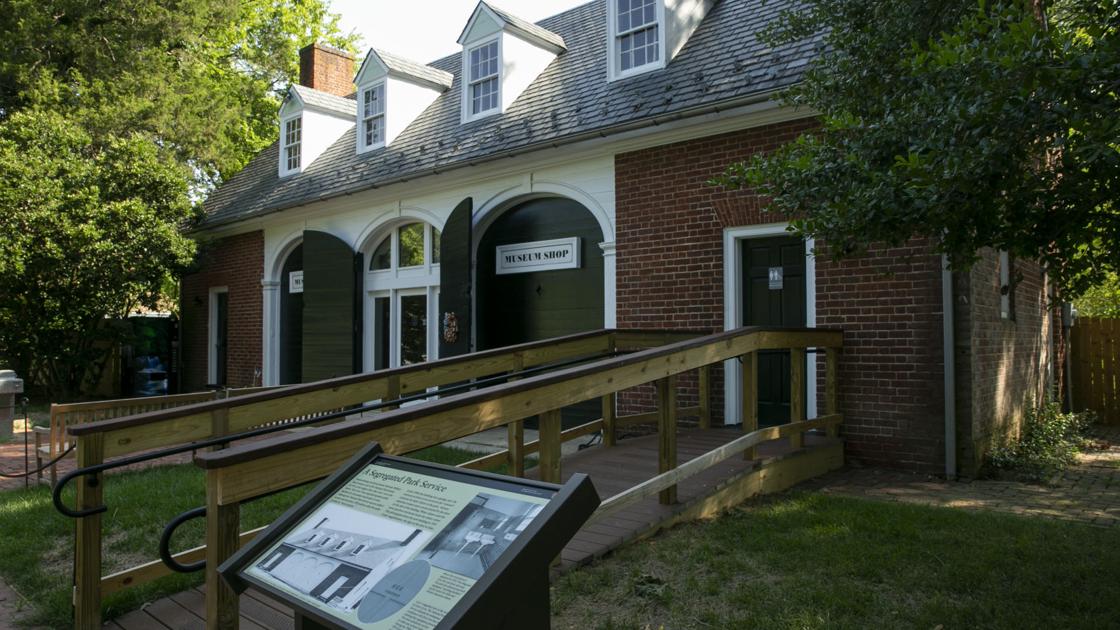
Racial segregation and National Parks – UMW experts are lending their expertise to the project
It’s a time of American history that is still raw and painful – segregation. It is, however, even more important to remember and preserve these moments so the country can move forward and learn from its past. It’s a project that University of Mary’s Washington’s Erin Devlin has taken on in collaboration with federal government. “The National Park Service has installed a wayside exhibit outside the Fredericksburg Battlefield Visitor Center on the history of segregation at Fredericksburg and Spotsylvania National Military Park. The exhibit highlights a former garage that in the 1930s and 1940s housed segregated restrooms for African American visitors. One of those restrooms is still in use and retains the original tile and fixtures. The larger building is now the park’s gift shop and bookstore. The new exhibit was a collaborative effort between the National Park Service and the University of Mary Washington to highlight surviving historic resources related to the local and national story of racial segregation at national parks. Erin Devlin, assistant professor of history and American studies at UMW, is working with the NPS to develop a historic resource study that will examine the practice of racial segregation in Virginia’s national parks during the first half of the 20th century.” August 06 – Fredericksburg.com Are you a journalist covering American history, or the place racial segregation has played in our country’s history? If so – let our experts assist with your stories. Erin Devlin's research focuses on race, public memory, and social justice, and she offers courses in both history and American studies. She is currently working on a historic resource study with the National Park Service focused on segregation and African-American visitation in Virginia’s national parks. Dr. Devlin is available to speak with media regarding this topic – simply click on her icon to arrange an interview.



University of Rochester's John Covach gives perspective on Beatles Abbey Road Anniversary
September 26 marks the 50th anniversary of the worldwide release of the Beatles’ Abbey Road. While Let It Be was released in 1970, most of the tracks on that album were recorded earlier, making Abbey Road the band’s last album project. John Covach, director of the Institute for Popular Music at the University of Rochester, coauthor of What’s That Sound: An Introduction to Rock and Its History, and Beatles academic expert, notes: “It’s definitely the Beatles’ last statement. You’ve got a band that’s breaking up and everyone knows they’re breaking up. They’re arguing with each other, suing each other, and it’s ugly and goes against the band’s legacy. This all happens in 1969, so they decide to go back into the studio and do one last record to leave on a high note, which is Abbey Road. And there’s this moment where they come out with this album that it’s back to form; just a fantastic Beatles project after the last project had failed. Abbey Road is the group playing together, singing together, and working together in a way that they haven’t really done for some time and putting their personal differences aside.” The University of Rochester’s Institute for Popular Music and Eastman School of Music will host The Abbey Road Conference, from September 27 to 29. The conference will feature speakers Ken Townsend, recording engineer and former Abbey Road manager; Andy Babiuk, author of Beatles Gear, Walter Everett, author of The Beatles as Musicians; and Kenneth Womack, author of Maximum Volume: The Life of Beatles Producer George Martin.



Social issues and boosting a brand – More companies taking a stand
Procter & Gamble this weekend put out a full-page ad in the New York Times supporting equal pay – In fact, the company urged the US Soccer Federation to “be on the right side of history.” P & G also gave $529,000 (which equates to $23,000 for each of the 23 players on the United States Women’s National Soccer Team) to the Players Association to help close the gender pay gap. Indiana University Kelley School of Business clinical professor of marketing Kim Saxton says this is an excellent move for Secret and P & G. “This is brilliant. The Secret brand is all about being strong but 'made for a woman.' It makes sense for the brand to stand up for the very women it serves,” said Saxton. “I was a bit surprised at one level, because P & G is not typically a risk-taking brand. But as long as they stay consistent to the brand, know their target audience and what is important to that audience – which this clearly does -- It’s a brilliant move.” “We now have brands who are willing to take a stand on social issues,” Saxton continued. “In the past, brands may have steered clear of jumping into the conversation if it could offend someone. Now, brands are realizing that coming down on one side of a cause or another has worked well for Nike. Nike has taken flack for taking a stand on a number of issues, but they’ve stood strong and decided that’s what their brand’s about. If you help your target audience accomplish their goals, they will support you back, and that’s what’s happening here." Pay equity is just one issue that has come to the forefront as of late. Nike has also seen its brand benefit substantially when it decided to express its support for former NFL quarterback- turned-activist Colin Kaepernick. In fact, being on the ‘right’ side of that issue has some analysts pointing out it boosted the company’s value by close to 3 billion dollars. Social issues and marketing are emerging as a new trend. There are rewards, but there are also serious consequences as well. If you are a reporter covering this topic -- let our experts help explain. Kim Saxton is a marketing strategy professor who believes marketers should make data-driven decisions to improve their effectiveness. Kim is available to speak with media regarding this topic – simply click in her icon to arrange an interview.

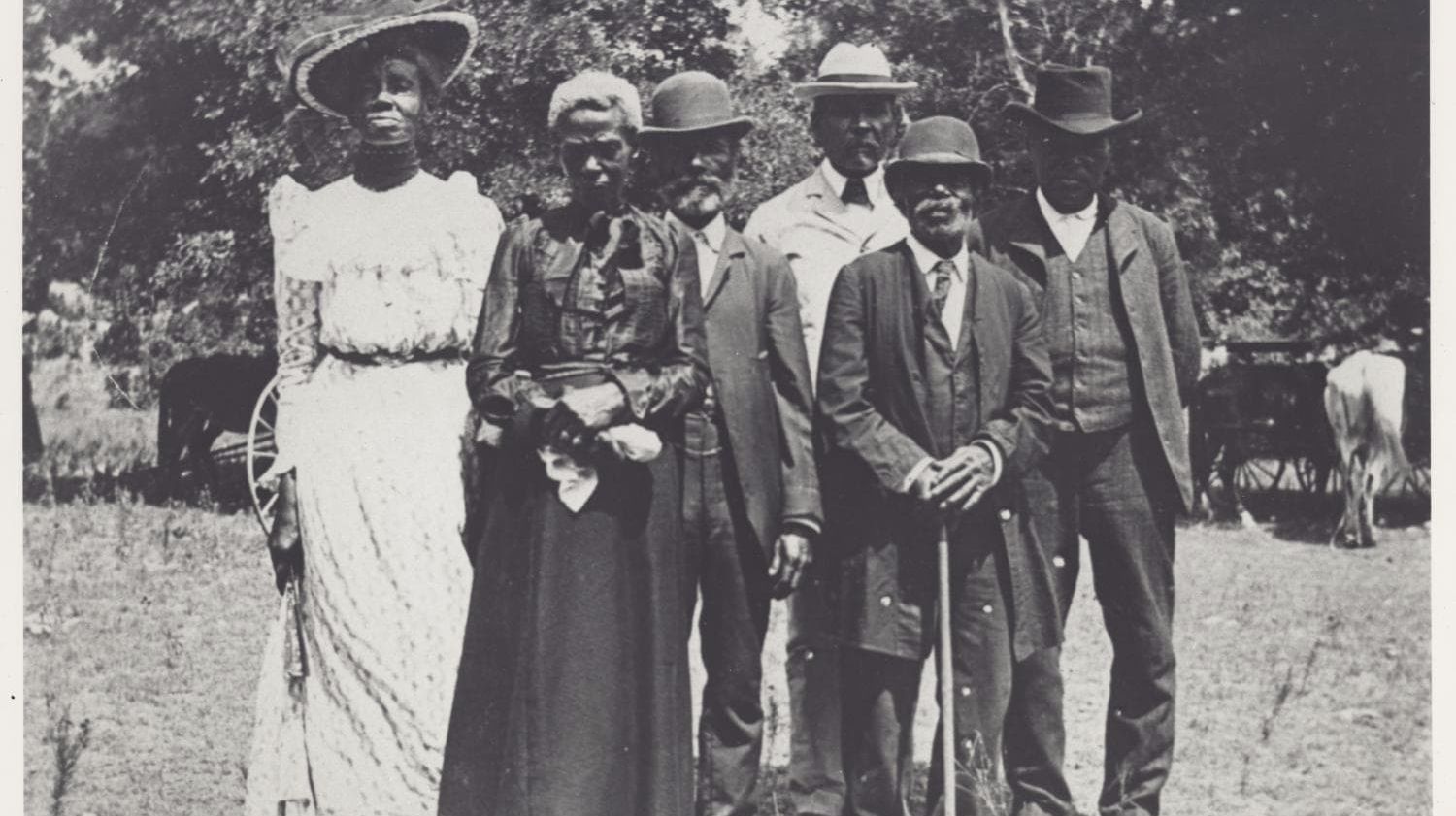
Juneteenth: Our experts can explain the history, meaning and truth behind this historic moment
Most will know that Abraham Lincoln issued the Emancipation Proclamation on Jan. 1, 1863. It’s taught in schools and is even part of the Disney experience. But fewer know or are even taught that it took more than two and a half years before a large number of enslaved people even knew they were free. It’s an astounding and sad part of our collective history that is finally being told on a broader platform. It wasn’t until June 19, 1865, that many enslaved people were finally told they were free. What followed was by no means a celebration or easy life for those slaves who were finally broken from the bonds of their owners. They faced lynching, murder, violence and what would be more than 100 years of segregation and discrimination. Across the country, the day will be recognized with various forms of reflection and celebration. Though Texas was the first state to recognize Juneteenth as a state holiday, it meant only partial staffing was required and most government offices and agencies stayed open. Across the country, more than 40 states operate in similar fashion. As America reconciles with its past – is it time Juneteenth was given more attention? Are children taught about the hard and painful journey most African Americans had to take between now and when they were set free? Does it need to be recognized as a national holiday? What do our educators and legislators need to do to make sure Juneteenth is known on a wider scale? There are a lot of questions to be answered – and that’s where the experts from Augusta University can help. Professor Seretha Williams is an expert in Africa and African Diaspora, Digital Humanities, and Digital Publication. She is available to speak with media regarding Juneteenth – simply click on her icon to arrange an interview.


The ‘Heaven 11’: Gospel Music Expert Lists 11 Most Influential Black Gospel Songs
June is African American Music Appreciation Month Photo by Robert Rogers, Baylor Marketing & Communications Baylor Professor Robert Darden attends Baylor University's 2019 Pruit Symposium, "Lord, Make Me An Instrument: Black Sacred Music at the Intersection of Gospel and Jazz." WACO, Texas (May 31, 2019) – Robert F. Darden, professor of journalism, public relations and new media at Baylor University and a former gospel music editor for Billboard Magazine, is leading a national movement to preserve the fast-disappearing legacy of African American sacred music on vinyl. To celebrate African American Music Appreciation Month in June, Darden, who is founder and director of Baylor’s Black Gospel Music Restoration Project, compiled the “Heaven 11” – a list of the 11 most influential black gospel songs. “There is no way to quantify the ‘greatest’ gospel song of all time, but certain songs have been more influential than others through the years,” said Darden, who selected songs from the 1940s through the 1980s. (Listen to the “Heaven 11” on this Spotify playlist, created by Baylor Proud.) The list includes Darden’s comments about each selection: 1. “Move on Up (A Little Higher)” “The Queen of Gospel Mahalia Jackson’s first big hit, and one of the best-selling gospel songs of all time. It was also understood to be an early ‘Freedom Song’ in the African-American community.” 2. “Take My Hand, Precious Lord” “Perhaps the best-known, most beloved of all gospel songs. Written by Thomas Dorsey after the loss of his wife and infant child, it is still sung today at virtually every African-American funeral service in the country.” 3. “Oh Happy Day” “This song by Edwin Hawkins was the first gospel song to be a hit single in the 1960s, and had a revolutionary combination of gospel choir, stirring chorus and a thoroughly modern beat.” 4. “The Reason Why We Sing” “Kirk Franklin did to the ‘80s and ‘90s what Hawkins did to the ‘60s and Andrae Crouch did to the ‘70s, combined straight-ahead gospel with the beat of the day, while paying tribute to the old gospel classic, ‘His Eye is on the Sparrow.’” 5. “People Get Ready” “This tune by Curtis Mayfield is not really a gospel song, but it was so compelling that it was adopted by both the Civil Rights Movement and the African-American church. There are a number of great versions, including the Chambers Brothers, the Blind Boys of Alabama and even Rod Stewart.” 6. “We Shall Overcome” “This is the ‘signature’ song of the Civil Rights Movement, an adaptation of an old gospel tune that has been honed by the fire and blood of a thousand movement events and is still sung by oppressed people around the world.” 7. “Peace Be Still” “This song by the Rev. James Cleveland and the Angelic Choir of the First Baptist Church of Nutley, New Jersey, is the song and the arrangement that made young black people want to join mass choirs and sing. After the assassination of President John F. Kennedy, ‘Peace Be Still’ was the gospel anthem that the black church turned to.” 8. “Through It All” “Andrae Crouch and the Disciples forever changed gospel music, opening it up lyrically and musically. He was also a brilliant composer – you could just as easily substitute “My Tribute,” “The Blood,” “Soon and Very Soon” and any one of several other enduring classics here.” 9. “Touch the Hem of His Garment” “This song by the Soul Stirrers, featuring Sam Cooke, helped invent the hard-charging gospel quartet sound. The popularity of this song helped convince Cooke, the writer and featured singer, to launch a mainstream performing career.” 10. “Mary, Don’t You Weep” “The great old spirituals often make great gospel songs. This is one by the Caravans, featuring Inez Andrews, and is one of my personal favorites.” 11. The next great gospel song “We haven't heard it yet. Few people still alive even know of its existence. But it could be in the next batch of long-lost gospel classics by a hitherto unknown gospel artist donated to the Black Gospel Music Restoration Project.” Search-and-rescue mission to preserve black gospel music Darden founded Baylor’s Black Gospel Music Restoration Project (BGMRP) more than a decade ago in a search-and-rescue effort to identify, acquire, preserve, digitize and catalog recordings from the black gospel music tradition. This music, from the Golden Age of Gospel from 1945 to 1975, was quickly vanishing as albums made the transition to CDs. “Thousands of at-risk songs have been saved for future generations,” Darden said. “These recordings are priceless, irreplaceable and historic in a way that scholars are only now realizing.” Through the work of the Baylor Libraries’ Digital Projects Group, recordings from the BGMRP are available online in the Baylor Libraries Digital Collection, and in some cases includes other materials, such as taped interviews, photographs, press packets, tour books and programs, newspaper and magazine clippings and sheet music. Music from the BGMRP also has been included in a permanent exhibit featuring African-American musical history at the Smithsonian Institution’s National Museum of African American History and Culture, which opened in 2016 in Washington, D.C. The interactive exhibit, “Musical Crossroads,” has featured these key recordings from the BGMRP: · “The Old Ship of Zion” by The Mighty Wonders of Aquasco, Maryland (1972) · “Amen” by Wings over Jordan (1953) · “I Won’t Be Back” by The Caravans (1962) · “Over My Head” by Wings Over Jordan (1953) · “There’s a Tree on Each Side of the River” by The Davis Sisters (1957) Visit Baylor’s Black Gospel Music Restoration Project website to learn more and to listen to the collection of digitized recordings. ABOUT BAYLOR UNIVERSITY Baylor University is a private Christian University and a nationally ranked research institution. The University provides a vibrant campus community for more than 17,000 students by blending interdisciplinary research with an international reputation for educational excellence and a faculty commitment to teaching and scholarship. Chartered in 1845 by the Republic of Texas through the efforts of Baptist pioneers, Baylor is the oldest continually operating University in Texas. Located in Waco, Baylor welcomes students from all 50 states and more than 90 countries to study a broad range of degrees among its 12 nationally recognized academic divisions.

United Nations Report Warns of Potential Extinction of One Million Plant and Animal Species
The United Nations has issued an assessment sounding the alarm that one million plant and animal species are at risk of extinction due to human-related changes to the Earth’s natural landscapes. This poses a dire threat to ecosystems upon which people all over the world are dependent for survival, according to a New York Times report. The human degradation of the environment has further been exacerbated by global warming, it added. “Biodiversity is caught between the stark, local effects of human action, like deforestation, and the diffuse but steadily worsening global effects like climate change. This report says the combination is more devastating than the sum of its parts,” stated Adam Langley, PhD, an associate professor in Villanova University’s Department of Biology. Consumerism is a driving factor in the rapidly deteriorating situation, Dr. Langley said. “It’s becoming clear that no amount of information can overwhelm the will of the consumer, whether it's the greed of the wealthy or desperation of the poor. Producers and consumers act out of personal interests, not out of their fondness for wildlife.” Government action must lead the way in alleviating the severity of the direction in which biodiversity loss is headed, according to Dr. Langley. “To make the drastic changes we need, the solutions must come from the top. Governments must recognize the enormous subsidy we receive from intact ecosystems in the form of food, fiber, clean water and air. In our world, valuing biodiversity means putting a price on it—and paying the price when we degrade it.” He added, “When I see reports like this, I’m struck that, in the history of Earth, we are the first species that is able for foresee an extinction event. We can predict it in painful detail. Avoiding that demise would be truly unique, but we’ve yet to see if human nature has that capacity.”


Notre Dame Fire Marks ‘Dark Day,’ But Beauty Will Emerge, Baylor Architectural Historian Says
In the wake of a massive fire that devasted Paris’ iconic Notre Dame Cathedral on Monday and captured eyes and prompted tears across the globe, a Baylor University expert in architectural history said beauty can emerge from the ashes. Elise King, M.I.D., M.A.,, assistant professor of interior design in Baylor’s Robbins College of Health and Human Sciences, is an architectural and design historian. “Something I find comforting is that when you study architecture and design throughout history, there are numerous examples demonstrating that destruction, chaos and loss can beget inspired beauty. No matter the damage, this will not be the end of Notre Dame’s story,” King said. “Architecture isn’t static; it’s designed to adapt and change. The more significant the structure, the more likely its legacy will continue in some built form,” she said. “Whether it’s reconstruction, preservation and restoration, new construction or, more likely, some combination of strategies, Île de la Cité will not be without its cathedral.” French President Emmanuel Macron said Tuesday that he hopes the 850-year-old building could be rebuilt within five years. “We will rebuild the cathedral and make it even more beautiful,” Macron said, according to a story in The Wall Street Journal. King said that the Notre Dame the world has come to know from pictures or personal visits is not the Notre Dame of the 12th Century. “The beloved gargoyles, for example, were added in the 19th century during Viollet-le-Duc's controversial ‘restoration' of the cathedral,” she said. “There is no doubt that today will be remembered as a dark day in Notre Dame’s history. But already there is light, as groups of Parisians came together tonight to sing ‘Ave Maria’ on the sidewalk in front of the smoldering edifice. And if the damage is severe, I hope the destruction will inspire new and innovative design solutions.” ABOUT BAYLOR UNIVERSITY Baylor University is a private Christian University and a nationally ranked research institution. The University provides a vibrant campus community for more than 17,000 students by blending interdisciplinary research with an international reputation for educational excellence and a faculty commitment to teaching and scholarship. Chartered in 1845 by the Republic of Texas through the efforts of Baptist pioneers, Baylor is the oldest continually operating University in Texas. Located in Waco, Baylor welcomes students from all 50 states and more than 90 countries to study a broad range of degrees among its 12 nationally recognized academic divisions.
