
Experts Matter. Find Yours.
Connect for media, speaking, professional opportunities & more.
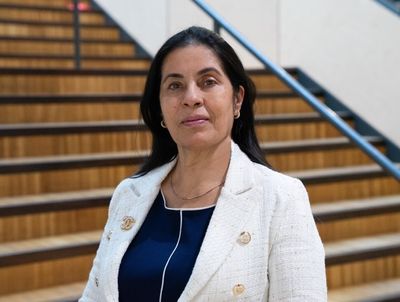
Professor Sangeeta Khorana made a Fellow of the Academy of Social Sciences
Professor Sangeeta Khorana, professor of international trade policy at Aston University, has been made a Fellow of the Academy of Social Sciences Fellows are elected for their contributions to social science, including in economic development, human rights and welfare reform The 2025 cohort of 63 Fellows will join a 1,700-strong Fellowship with members from academia, the public, private and third sectors. Professor Sangeeta Khorana, professor of international trade policy at Aston University, has been made a Fellow of the Academy of Social Sciences as part of the Autumn 2025 cohort. The 63 new Fellows have been elected from 39 UK organisations, comprising 29 higher education institutions, as well as think tanks, non-profits, business, and from countries beyond the UK including Australia and China. The Academy of Social Science’s Fellowship comprises 1,700 leading social scientists from academia, the public, private and third sectors. Selection is through an independent peer review which recognises their excellence and impact. Professor Khorana has more than 25 years of academic, government and management consulting experience in international trade. She has worked for the Indian government as a civil servant and on secondment to the UK Department for Business and Trade. Her expertise includes free trade agreement (FTA) negotiations and World Trade Organization (WTO) issues. As well as sitting on various expert committees, Professor Khorana is an advisor on gender and trade to the Commonwealth Businesswomen’s Network in London and serves on Foreign Investment Committee of the PHD Chambers of Commerce and Industry, India. The Autumn 2025 cohort of Fellows have expertise in a range of areas including educational inequalities, place-based economic development, human rights protection, the regulation of new technologies, and welfare reform, highlighting the importance, breadth and relevance of the social sciences to tackling the varied challenges facing society today. As well as excellence in research and professional applications of social science, the new Fellows have also made significant contributions beyond the academy, including to industry, policy and higher education. Professor Khorana said: “I am deeply honoured to be elected a Fellow of the Academy of Social Sciences. This recognition underscores not only the importance of international trade policy as a driver of inclusive and sustainable growth, but also the role of social sciences in shaping fairer and more resilient societies. At Aston University, my research seeks to bridge academia, government and industry to inform evidence-based trade policy for global cooperation. I am proud to contribute to the Academy’s mission of demonstrating how social science knowledge and practice can address some of the most pressing challenges of our time.” President of the Academy, Will Hutton FAcSS, said: “It’s a pleasure to welcome these 63 leading social scientists to the Academy’s Fellowship. Their research and practical applications have made substantial contributions to social science and wider society in a range of areas from international trade policy and inclusive planning systems through to innovative entrepreneurship and governing digital technologies. We look forward to working with them to promote further the vital role the social sciences play in all areas of our lives.”



Video Insights: How Senior Management Teams Can Respond to Tariffs
Companies around the world are facing increasing uncertainty brought on by the unpredictable and rapid shifts in tariff policies. As a result, corporate leaders are seeking ways to adapt and respond to the sudden and unprecedented changes in the international trade landscape. In this video, Brian Gleason, John Peiserich, James E. Malackowski, and Livia Paggi – experts in turnaround, supply chain, intellectual property, and political risk – discuss key strategies for senior management teams to address evolving tariff policies, including: • Updating business forecasts and understanding company liquidity • How companies can optimize their intellectual property (IP) value and mitigate risk • How to approach the unique risks associated with planning and permitting for capital projects • How to manage geopolitical volatility from shifting tariffs in the dealmaking process To view more of our Tariffs and Trade Series expert analysis and commentary, visit: Looking to know more or connect with John Peiserich, Livia Paggi and James E. Malackowski? Simply click on either expert's icon now to arrange an interview today. If you are looking to connect with Brian Gleason - contact : Kristi L. Stathis, J.S. Held +1 786 833 4864 Kristi.Stathis@JSHeld.com


Tariffs and Trade Series - The Potential Impacts of Tariffs and Global Trade Shifts
This is the first installment in a series examining the multifaceted impacts of tariff and trade policies. By delving into the nuances of these policies, we aim to provide valuable insights and perspectives that will inform strategic business decision-making and foster resilience in an increasingly volatile global market. Future papers in this series will explore the specific implications for key sectors such as agriculture, energy, and construction, offering targeted analysis and recommendations to help businesses navigate and thrive amidst evolving trade landscapes. The global trade landscape is experiencing rapid shifts driven by escalating tariffs, geopolitical realignments, and supply chain disruptions. In North America, businesses must navigate changing US trade policies, evolving trade agreements such as the United States-Mexico-Canada Agreement (USMCA), and the broader implications of international trade tensions. These developments may have significant economic implications which impact supply chains, regulatory compliance, financial strategies, and heighten geopolitical risk. Trade policies across the world are being redefined, with tariffs increasingly used as economic and political tools. The US, China, and the European Union are at the center of these shifts, reshaping global supply chains and trade routes. Businesses must reassess their sourcing strategies, financial models, and regulatory compliance efforts in response to these evolving dynamics. In North America, the US has intensified its use of tariffs, impacting trade with Canada, Mexico, and numerous global partners. While these policies aim to boost domestic industries, they have introduced supply chain challenges and regulatory complexities. As a result, companies must proactively adapt to maintain operational efficiency and financial stability. This article examines the challenges and opportunities that may arise from these trade shifts and provides insights for businesses to mitigate risks and maintain competitiveness. At J.S. Held, we help businesses navigate these challenges by providing insights into regulatory changes, trade risks, and strategic adaptations to ensure long-term resilience. "With the sweeping April 2 tariff announcement, U.S. trade policy has entered a new phase. One where national security, economic leverage, and regulatory unpredictability intersect. Businesses are now navigating not just targeted tariffs, but a universal cost layer that may touch nearly every sector. The urgency to adapt through exemption strategies, supply chain restructuring, and trade compliance has never been greater." The full report is accessible below, and is a must read for anyone covering the impacts of the tariffs announced by President Trump on April 02, 2025. Looking to know more or connect with Andrea Korney? Simply click on the expert's icon now to arrange an interview today. For any other media inquiries - contact : Kristi L. Stathis, J.S. Held +1 786 833 4864 Kristi.Stathis@JSHeld.com


ExpertSpotlight: Tariffs and Trade Wars
Tariffs and trade wars have long been powerful tools in international relations, influencing everything from consumer prices to global supply chains. As nations impose duties on imports and retaliate with countermeasures, economies can experience ripple effects that impact businesses, jobs, and everyday consumers. Understanding how tariffs work and why trade wars escalate is essential for grasping the complexities of global commerce and national economic policies. With ongoing disputes between major economies, this topic remains highly relevant to the public. Key story angles include: What Are Tariffs and How Do They Work? A breakdown of tariffs, their purpose, and their impact on industries and consumers. Historical Trade Wars and Their Consequences: Examining past trade disputes, their economic fallout, and lessons learned. U.S.-China Trade Relations: Analyzing the impact of tariffs between the world’s two largest economies and their influence on global markets. The Role of Tariffs in Domestic Job Creation: Investigating whether tariffs protect local industries or lead to unintended economic consequences. How Trade Wars Affect Everyday Consumers: Exploring how tariffs on goods like electronics, food, and automobiles translate to higher prices. The Future of Global Trade Agreements: Discussing potential shifts in international trade policies and their implications for businesses and governments. As countries navigate economic policies in an increasingly interconnected world, tariffs and trade wars remain central to discussions on financial stability, political strategy, and economic growth. Connect with an expert about trade and tariffs: To search our full list of experts visit www.expertfile.com


Georgia Southern welcomes Georgia state leaders on Wexford Campus in Ireland
Georgia Southern University’s Wexford Campus in Ireland has been invigorating educational, civic, business and trade opportunities between Ireland’s southeast region and the state of Georgia since its establishment in 2022. The bicultural partnership has drawn the attention of state leaders in Georgia, prompting a recent visit to the international campus where Georgia Southern and its Irish partners welcomed the delegation. “We hosted legislators and leaders of industrial development and enterprise organizations,” said Howard Keeley, Ph.D., director of Georgia Southern’s Center for Irish Research and Teaching (CIRT). “These Georgia stakeholders believe that what Georgia Southern is doing in Ireland is important. One of the major concepts behind the Wexford Campus is that it’s a true campus, not just a study-abroad venue. So we’re pursuing several streams of activity. One is teaching and another is research. Another one is economic development, which includes internships and community engagement. We want to be in the community; therefore, to have leading constituents from a variety of industries in Georgia was very gratifying.” Among the attendees were U.S. Congressman Earl L. “Buddy” Carter; Georgia Department of Economic Development Commissioner Pat Wilson and five members of his senior staff, as well senior officials from electrical utilities, including Georgia Power; Trip Tollison, CEO of Savannah Economic Development Authority; Teresa MacCartney, chief operating officer for the University System of Georgia; and Georgia Rep. James Burchett (‘04), along with 10 additional members of the Georgia House of Representatives. “The main thing we wanted to do is show them what the student experience is like,” said Keeley. “We care about our students, and, using philanthropic funds, we’ve invested in a beautiful set of buildings, including one, built in 1886, that will house 50 students at a time. Each year, our goal is full capacity over six minimesters for a total of 300 Georgia Southern students. Historically a religious convent, that structure should open in spring 2026, after extensive remodeling. Many Georgia Southern students, including construction management and interior design majors, are gaining valuable professional skills by contributing to the endeavor.” The Wexford Campus already features the Learning Center, a historic administrative complex constructed in 1812 that has been transformed into a contemporary, high-tech educational space where students learn from local and international experts. They also present their research to peers and visiting Georgia Southern alumni while participating in high-impact experiential learning within the region. Visiting delegates were pleased to learn about the Honors College Global Scholars Program, which hosts 24 Honors College students who, taking an interdisciplinary approach, explore two themes for six weeks each spring in Ireland. This year, a prominent topic of study was sustainability in agriculture. One of Georgia Southern’s European research partners, South East Technological University Ireland, helped guide the students as they compared sustainability challenges along the coasts of Georgia and southeastern Ireland. The students drew on various research efforts, including important knowledge generated by Georgia Southern’s Institute for Water and Health. Similar integrated concepts also inform the summer and fall offerings. In 2024, they included two undergraduate global business courses, as well as the first Europe-based course from the MBA program at Georgia Southern’s Parker College of Business. One focus for the MBA students was Rosslare Europort, just south of Georgia Southern’s Wexford Campus, which has become Ireland’s fastest-growing port as multiple new direct routes to continental Europe have opened in response to Brexit. At a workshop facilitated by a top Rosslare Europort official, the MBA students explored international trade, logistics and supply chain management and the European regulatory environment. Spanning undergraduate, graduate and doctoral levels, the Wexford Campus has also provided courses in accounting, philosophy, sociology, geography, environmental biology, tourism and public health, among other disciplines. Shadowing Irish experts, population health science students from the Waters College of Health Professions focused on designing and delivering preventative-health programs, a critical matter in both Ireland and Georgia. “One of the metrics we use to measure success in Ireland is asking what makes it worthwhile for students to complete the course in Ireland as opposed to staying in the United States,” posed Keeley. “The bottom line is that we’re trying to provide a range of courses that look like Georgia Southern and that meet the degree needs, but also the employment needs in the state of Georgia. We’re always looking at how we can make our students more competitive, deepen their knowledge and give them as much hands-on experience as possible. This is really one of the things that we hope is a differentiator for us.” Notably, annual scholarships are available for the Honors College Global Scholars Program, Department of Political Science and International Studies students and Irish Studies students thanks to generous donations from alumni. In addition, philanthropic support has provided $1,000 to each participating student to offset the cost of transatlantic air travel. “The Wexford Campus’ directives exemplify Georgia Southern’s mission of providing holistic educational opportunities for our students to excel and grow,” said Annalee Ashley, Ed.D., Georgia Southern Vice President for External Affairs, Communications, and Strategic Initiatives, who participated in the trip. “Employers value global consciousness and intercultural skills when hiring, and our students who study abroad can enhance their skills, intellect and hireability in the marketplace. We are proud to serve Georgia and the entire southeastern region in this unique way, and to be supported by the state of Georgia as the University moves toward an R1 designation.” Beyond the campus, the group explored Johnstown Castle, an environmental and agricultural research center and heritage venue, as well as the Dunbrody Emigration Experience Center, whose newest permanent exhibition, Savannah Landing, is based on research by Georgia Southern students. The work highlights more than 170 years of historical ties that connect Savannah and Wexford, where hundreds boarded ships and crossed the Atlantic Ocean to arrive in Georgia’s coastal city in the mid-19th century. The centerpiece project, which was celebrated by the Irish prime minister at a ribbon-cutting in August, was made possible by $832,000 in research-grant funding, secured by the Dunbrody Center and Georgia Southern’s Center for Irish Research and Teaching. “Our guests got to experience history and understand the unique story that connects County Wexford to Savannah and, by extension, the state of Georgia,” noted Keeley. “Furthermore, they were able to see more than three-quarters of a million dollars of investment in Georgia Southern student work. That was super exciting.” The legislative group also met with Georgia Southern’s Irish partners, who shared what this relationship means to the people of Wexford and its hinterland, Southeast Ireland. “We invited all the players onto the field to strategically advance themes of education, economic development, and civic and cultural engagement,” said Keeley. “I believe they concluded that Ireland is a fit. It boasts a thriving economy that is modern, global and innovative. It’s the youngest economy in Europe in terms of workforce, and Ireland is one of the biggest investors in the U.S. economy.” Georgia Southern leadership and local Irish legislators, including four members of the Irish House of Representatives, Senator Malcolm Byrne and members of Wexford County Council, hosted Georgia’s VIPs with open arms. “They wanted to rally around us in the way that a family will rally around you,” said Keeley. “They couldn’t have done more. They totally rolled up their sleeves. It was a complete partnership hosting, and we were able to demonstrate that our network is so solid.” Wexford County Council leader Pip Breen shared opportunities for deeper connections with the Georgia delegation through the Irish nonprofit TradeBridge. Established in 2018, the entity facilitates trade and investment between the southeastern regions of Ireland and Georgia by developing new export markets and job creation opportunities. The trade corridor opens doors for southeastern Irish companies to establish a supportive base in southeastern Georgia, while also creating similar coordinates for companies based in southeastern Georgia to enter the European Union marketplace. Keeley, who was awarded the Presidential Distinguished Service Award for the Irish Abroad from the Government of Ireland in 2023, is a board member. “Georgia Southern’s footprint in southeastern Ireland is an important one for students and for the state of Georgia,” said Ga. Rep. Burchett. “The strides they are making not only allow students to participate in research in engineering, coastal sustainability, history and other important areas of study, but they also directly drive trade and investment opportunities between the southeastern regions of Georgia and Ireland. This was an amazing visit and we value our friendships within the Irish community.” Following the event, Burchett returned the hospitality with an invitation for Wexford County Council members to be recognized in person on the floor of the Georgia General Assembly in March 2025. “They very enthusiastically accepted the invitation,” Keeley shared. “I think when you’re involved in education, when you’re doing business and when you’re building out opportunities, the most important single thing is friendship and like-mindedness. You cannot achieve anything otherwise. There has to be this human-to-human connection. There has to be genuine mutual respect and mutual affection, and that was just in spades.” Georgia Southern’s Wexford Campus was featured on the national Irish TV program, “Nationwide.” You can see it here: Looking to know more, then let us help. Howard Keeley, director of Georgia Southern’s Center for Irish Research and Teaching, is available to speak with media. Simply click on his icon now to arrange an interview today.


Sunday is the anniversary of Brexit - We're here with expert insights if you're covering
The United Kingdom's exit from the European Union, commonly known as Brexit, stands as one of the most significant geopolitical events of the 21st century. This topic matters to the public because it encompasses profound implications for international trade, immigration, legal frameworks, and political alliances. The ripple effects of Brexit are felt not only within the UK and the EU but also globally, making it a critical issue for journalists to cover. Brexit's impact spans numerous sectors and societal issues, providing a wealth of story angles, including: The economic impact of Brexit on the UK, EU, and global markets Changes in immigration policies and their effects on individuals and industries The evolving political landscape in the UK, including the rise of nationalism and regional independence movements The legal challenges and adaptations post-Brexit, particularly concerning trade agreements and regulatory standards The social and cultural consequences of Brexit, including shifts in public opinion and societal division The future of UK-EU relations and their broader implications for international diplomacy and cooperation As we continue to navigate the complexities of Brexit, journalists have the opportunity to explore these diverse and critical narratives, offering in-depth insights into the ongoing and far-reaching impacts of this historic event. Connect with an Expert about Brexit: Dr David Lowe Senior Research Fellow · Leeds Beckett University Dr Oleksandr Shepotylo Senior Lecturer, Economics, Finance and Entrepreneurship · Aston University Dr Patrycja Rozbicka Senior Lecturer · Aston University Dr Jo Michell Associate Professor of Economics · UWE Bristol Patrick L Young Executive Director · Derivatives Vision To search our full list of experts visit www.expertfile.com Photo credit: Rocco Dipoppa

The event is aimed at supporting businesses in applying for the 2025 King’s Award for Enterprise The masterclass will feature presentations from the West Midlands Lieutenancy How to be a winner will be held on Friday 10 May 2024. The Centre for Research in Ethnic Minority Entrepreneurship (CREME) at Aston University is to host a special masterclass to encourage and support companies to apply for a prestigious business award. The King’s Awards for Enterprise are for outstanding achievement by UK businesses in the categories of innovation, international trade, sustainable development and promoting opportunity through social mobility. The event, How to be a winner, will be held on Friday 10 May 2024 from 15:00 to 17:00 BST at Aston University’s headquarters in John Cadbury House in Birmingham. CREME, in collaboration with the West Midlands Lieutenancy, is hosting this masterclass to guide businesses through the application process and share insights from previous award winners. Applications for the 2025 King’s Award for Enterprise open in May 2024. Organisations who receive a King’s Award are presented with the award at their company by one of The King’s representatives, a Lord-Lieutenant, are invited to a Royal reception, able to fly The King’s Awards flag at their main office, use the emblem on their marketing materials and are given a Grant of Appointment (an official certificate) and a commemorative crystal trophy. The awards are valid for 5 years. The masterclass will feature a presentation by the West Midlands Deputy Lieutenants’ John Wood and Tom Westley, who will provide a detailed overview of the application process. Additionally, attendees will have the opportunity to hear firsthand from past winners about their journey to success and the tangible benefits derived from winning a King's Award for Enterprise. Professor Monder Ram OBE DL, director of CREME, said: “The King's Award for Enterprise is without a doubt the most prestigious accolade that any UK company can receive. The boost to your business, particularly internationally, and to company morale is immense. “I encourage West Midlands-based businesses to join us for this insightful event which will be an excellent opportunity to learn from industry experts and gain valuable knowledge on how to position your business for success.” The masterclass is free to attend and interested parties can register their interest here. Eligibility for the categories can be checked here.


The EU-UK Trade and Cooperation Agreement is costly, what does the UK need to do? | Aston Angle
As far as trade is concerned, the EU exit has been rather costly to the UK. At the Centre for Business Prosperity, we have been tracking the performance of UK trade in recent years. The UK’s trade dropped sharply during COVID. Like other nations, this was due to the global recession and supply chain disruptions. However, the UK failed to recover and enjoy the boom, despite the tariff-free terms of trade in goods set out in the EU-UK Trade and Cooperation Agreement (TCA). The UK now trades less with the EU, its largest trading partner, than in 2019. During the same period, Germany and the Netherlands grew trade with the EU by nearly a quarter, and US trade with the EU has also grown considerably. Reports suggest, including those from the British Chambers of Commerce, that exporting to the EU has become much more costly and in some cases, unviable. It appears that the “certainty” provided by the TCA has not reversed the declining trend of the UK-EU trade so far. Our new paper for the Enterprise Research Centre (ERC) has found that UK exports experienced a large, negative, statistically significant decline in 2021 at the end of the transition after the EU-UK Trade and Cooperation Agreement (TCA) was put into force. We estimate that this amounts to a 22% reduction in exports to the EU and a 26% reduction in imports from the EU over the first half of 2021, relative to the counterfactual scenario of the UK remaining in the EU. How did this happen? After all, the TCA ensures that goods moving between the UK and the EU have no tariffs or quotas, so long as the rules of origin are complied with. Rules of origin help you work out where your goods originate from and which goods are covered in trade agreements. Our research found that non-tariff measures (NTMs) were responsible for the adverse TCA effect on UK trade with the EU and that the magnitude of loss was significant. It was equivalent to a reduction of £12.4 billion in UK exports over the first six months period of 2021. This equals 16% of UK total exports in the first half of 2019 and 70% of the documented total reduction in the EU exports in the same period. A number of factors can be attributed to the decline of UK exports to the EU. In particular, the increased trade frictions that occurred mainly due to sanitary and phytosanitary (SPS) and technical barriers to trade (TBT) as a result of entering the TCA. Sanitary and Phytosanitary (SPS) measures refer to the EU controls to protect animal, plant or public health. And technical barriers to trade (TBT) refers to mandatory technical regulations and voluntary standards that define specific characteristics that a product should have, such as its size, shape, design, labelling/marking/packaging, functionality or performance. On average, for the first six months of 2021, a 1% increase in SPS resulted in a 13–15% reduction in exports to the EU, most notably in the food and drink, wood and chemicals sectors. Furthermore, a 1% increase in TBT led to a 2–3% reduction in exports, especially in metals, equipment, machines and miscellaneous industrial products. What next? Since the post-Brexit dysfunctions are now diagnosed, in theory we could move on. The UK can directly tackle the trade challenges, so long as other things, such as politics, do not stand in the way. Fundamentally, what needs to happen is the removal or relief of the root causes coded by the TCA – the trade barriers newly erected. This is a key task; it is challenging but not impossible. Trade frictions due to the SPS measures are an acute problem of Brexit. Reducing some of the non-tariff measures between the EU-UK would help by exploring other mechanisms such as equivalent SPS measures or other ways to reduce businesses burden to a minimum. The technical barriers to trade are more complicated and challenging and they could potentially cause significant damage to the UK economy. Despite its limitation, maintaining and broadening the established arrangements of the current TCA provision, through some form of mutual recognition of specific practices or international regulations for selected sectors, should be the ambition of UK government to help ease the TBT trade barriers. Future EU-UK co-operation is critical and mutually beneficial but requires political will and strong leadership. In the short and medium term, supporting firms should be the priority, especially small- and medium-sized firms that are productive enough to have exported to the EU in the past, but now face hurdles to continue exporting. These firms tend to be limited on resource but have the infrastructure and ambition to internationalise. Targeted support for specific challenges could be also fruitful. The UK Department for International Trade Export Support Service, the British Chambers of Commerce and local growth hubs have the expertise and experience to help firms export. Therefore, resources should be made available to allow for customised and responsive support with exports, as well as taking advantage of technologies that can identify and reach businesses who require support. Provision should also be made to collect feedback on the quality of the support provided, to enable further improvement. Helping businesses continue to access EU markets, while enabling the economy to take advantage of welfare-enhancing benefits from trade, remains imperative. Given the economic benefits of the roll-out, the new free trade agreements are expected to be limited and effective only in the long term. UK domestic policies should be the focus to improve the competitiveness of exporters and their ecosystem. By Professor Jun Du Director of the Centre for Business Prosperity Professor of Economics, Finance and Entrepreneurship, Aston Business School Lecturer in Politics and International Relations School of Social Science and Humanities Dr Oleksandr Shepotylo Senior Lecturer, Economics, Finance and Entrepreneurship, Aston Business School


International trade expert on U.S.-China trade relationship
Timothy Meyer, professor of law, is available for commentary on U.S. Trade Representative Katherine Tai's assessment of China's unfair trade practices. Tim is an expert in public international law, with a specialty in international trade. His current research examines how international economic agreements relate and respond to concerns about economic opportunity and inequality. He can discuss: Economists' longstanding monitoring of the data, which clearly finds that China is not living up to its commitments. How Tai's comments point to the Biden administration taking a hard line on China - potentially even a harder line than the Trump administration was willing to take regarding enforcement.


Aston University to officially launch Cyber Security Innovation Centre at Birmingham Tech Week
It will take place at Conference Aston on 13 October, during Birmingham Tech Week 2021 Line up of speakers includes experts from Security Exports Department for International Trade, DCMS and the IoD The event will be of relevance to companies, alumni, academic staff interested in cybersecurity. The Cyber Security Innovation (CSI) Centre at Aston University will host its inaugural event during Birmingham Tech Week 2021. The CSI Centre, established in 2020, brings together stakeholders from industry, government and leading cyber security research institutions with the aim to deliver industry-aligned research outcomes. CSI members include globally-recognised academics undertaking research projects that address real-world cyber security challenges through innovative solutions. Cyber (In)Security, Requires a Robust Approach Through Continuous Innovation, will see a broad range of contributors taking part across the face-to-face event on 13 October. They include speakers from the UK Defence and Security Exports Department for International Trade, the Institute of the Directors (IoD), Cyber Senior Policy Lead, DCMS, Opel/Vauxhall and Professor Vladlena Benson, Director of CSI Centre. Professor Vladlena Benson, director of the CSI at Aston Business School, said: “I am delighted to officially launch the CSI Centre at Conference Aston during Birmingham Tech Week 2021 and am looking forward to welcoming everyone to our first face-to-face event. “This is a wonderful opportunity to meet face-to-face with industry-leading experts, academics and start-ups. With most of the UK confined to working from home for over a year, there is no better opportunity to meet and build relationships with the people who can help business owners grow, innovate and make their companies more resilient. “Statistics shows that UK small businesses are successfully hacked every 19 seconds2 and new certification standards coming into play for consumer IoT devices and cyber-physical access control systems. It is time to find a robust approach maximising the effectiveness of cybersecurity investment now. “The bad guys are winning the cyber security war - the good guys need to do better. Although organisations are investing more and more in cyber security, the average number of days to detect a breach is increasing year on year, not reducing. So, we need to do something different.” To attend the event on 13 October 2021, you can sign up HERE.
