
Experts Matter. Find Yours.
Connect for media, speaking, professional opportunities & more.

Is This Bitcoin's Time to Shine?
Bitcoin was invented in 2008 and launched in 2009, but after years of skepticism, it's finally becoming a part of mainstream conversation. The cryptocurrency's value has continued to rise since 2017, but with the start of 2021, its price has surged and many more companies are looking for ways to get involved. Tesla and Square have invested. (You can even buy a Tesla with bitcoins.) Goldman Sachs and JPMorgan are exploring ways to meet customer demand for cryptocurrency investment. A National Football League player converted half of his salary into bitcoins. And Major League Baseball's Oakland Athletics are offering a suite for the 2021 season at the price of one bitcoin. So, if it's been around for so long, why are we only seeing this mainstream push now? "I think the Bitcoin ecosystem is developing to the point where people can start to think about using it as a currency," said John Sedunov, PhD, an associate professor of finance who studies Bitcoin. "However, the price still remains volatile, and it isn't clear that the currency can maintain its current $50,00-to-60,000 value." While there are companies adopting and investing now, this will still be a gradual process, Dr. Sedunov says. "As businesses become better able to accept the currency, and perhaps more importantly better able to withstand and manage the volatility of Bitcoin, then the currency will become more widespread in its use. The process would be expedited if the entire supply chain accepted Bitcoin, rather than just the retailer and the end of the chain. This would smooth the process and allow people to utilize the currency without as much concern for converting it." Additionally, Dr. Sedunov notes that there needs to be a continued evolution of the ability of firms to accept and manage the currency, in addition to a reduction in the volatility of the currency. Smaller businesses may be at much more of a risk than large corporations and banks if there is price instability. But the value of Bitcoin won't be this high forever. As the country and economy continue to deal with the impact of the pandemic, there are growing concerns that inflation could be next, pushing consumers to other options, like cryptocurrency. "When the pandemic ends and there is, perhaps, more economic stability, Bitcoin's value will wane a bit, but I don't think it will fade to nothing," Sedunov notes. "The big question mark, to me, is the U.S. Dollar and inflation. Inflation expectations are rising, and this only pushes people more toward alternatives. If this trend continues, then perhaps economic stability will be a bit lower, and more people will flock toward Bitcoin."



What’s it all mean as ‘Big-Tech’ pivots to privacy? Let our Experts help explain if you are covering
The business of the internet as we know it, is about to change. As companies in the past have thrived, boomed, and found serious cash and success harvesting your data – that model may soon be coming to an end. With companies like Google and Apple leading the way, odds are a serious transformation is about to come and the know that notice has been served, it is getting a lot of attention. The decision, coming from the world’s biggest digital advertising company, could help push the industry away from the use of such individualized tracking, which has come under increasing criticism from privacy advocates and faces scrutiny from regulators. Google’s heft means the change could reshape the digital ad business, where many companies rely on tracking individuals to target their ads, measure the ads’ effectiveness, and stop fraud. Google accounted for 52% of last year’s global digital ad spending of $292 billion, according to Jounce Media, a digital ad consultancy. About 40% of the money that flows from advertisers to publishers on the open internet—meaning digital advertising outside of closed systems such as Google Search, YouTube, or Facebook—goes through Google’s ad buying tools, according to Jounce. March 03 – The Wall Street Journal. But what will this mean for powerhouses like Facebook or the multitude of apps and carriers who rely on data, and the money that comes with it to succeed? What lies ahead will be interesting, and if you are a journalist looking to cover this topic – then let our experts help. Vilma Todri is an Assistant Professor of Information Systems & Operations Management at Emory University’s Goizueta Business School. Previously, she worked for Google where she was developing integrated cross-platform advertising strategies for large business clients that partnered with Google and recently wrote a comprehensive paper on this very topic. Vilma is available to speak with media about this subject – simply click on her icon now to arrange an interview today.


Heads up CFOs: The capital asset pricing model still rules
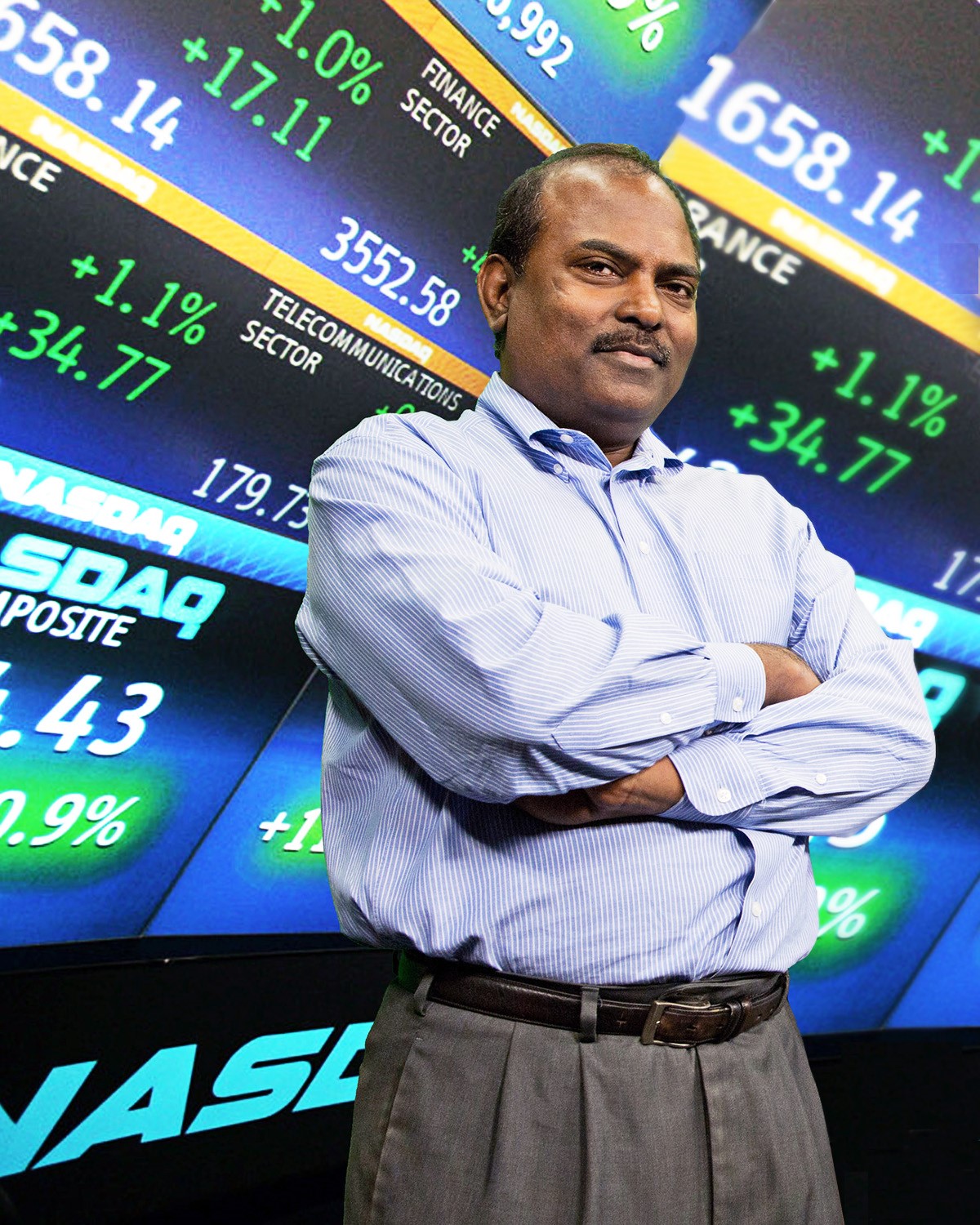
Firms invest in various things: bonds, stocks or other assets—new stores, new premises or even other firms. And they do so to earn maximum value from available cash that would otherwise be idle. For example, for the last five years Walmart generated an annual cash flow of more than $25 billion from its operations. The retailer has the option to channel this cash into opening new stores, ultimately growing its business and profits. Alternatively, Walmart can pay the cash out to its shareholders in the form of dividends, or through share repurchases. So far, it’s been productive. However, this win-win scenario is contingent on successfully navigating a number of complexities. Primary among these is that to invest optimally, you first need to determine the correct hurdle rate for that investment. Hurdle rates are the minimum rates of return that firms seek on their investments. The hurdle rate is the appropriate compensation commensurate with the investments’ risk. Therefore, the higher the risk, the higher the hurdle rate needs to be. For instance, a hurdle rate of 10% means that for every $100 invested, you would expect to earn an average of $10 average per year. But it’s tricky. You have to calculate the right hurdle rate that would add the most value for your shareholders—the optimal rate of return for you and your business. Too high and there’s risk of missing out on a good investment. If your right hurdle rate is 10%, but you mistakenly opt for 15%, you’re likely to ignore any investment that is projected to earn you less than 15%, but more than 10% is likely to be missed. As a result, you’ll end up leaving money on the table. Too low a hurdle rate and you’re in danger of burning money. Again, supposing your hurdle rate should be 10%, but you set it at 5%, you’re likely to end up investing in things with a suboptimal return. In the end, you’re wasting your cash on low value investments when you could be paying it directly to your shareholders in dividends and giving them the chance to earn 10% return on their own. For the last 50 years, the financial world has built models to calculate hurdle rates and rates of return. But which one works best? Shedding critical new light on this is a recently published paper by Narasimhan Jegadeesh, Dean’s Distinguished Chair of Finance at Goizueta, entitled “Empirical tests of asset pricing models with individual assets.” Jegadeesh and his co-authors developed new statistical methods to differentiate among a raft of new models that have been developed in recent years and to compare their efficacy to that of the Capital Asset Pricing Model (CAPM), a model introduced in the 1960s. What they found is that none of the newer models work any better than the CAPM in determining the appropriate hurdle rate or rate of return of an asset. That paper is attached and is required reading for CFOs and anyone interested in the Capital Asset Pricing Model. If you are looking to know more, or if you are a journalist interested in covering this important aspect of business and investing – then let our experts help. Narasimhan Jegadeesh is Dean’s Distinguished Chair of Finance at Goizueta. He is a renowned expert in this field and has been published extensively in the Journal of Finance, the Journal of Financial Economics, the Review of Financial Studies and other leading academic finance journals. His research has been discussed in several publications including Businessweek, The Economist, Forbes, Kiplinger's Personal Investments, Money, New York Times, and Smart Money.


With 2018 in full swing there’s no sign that the issue of fake news is going away. In fact, it continues to plague major social platforms such as Facebook as well as the traditional media players. This erosion of trust begs the question – how can we ensure the right experts on important topics are at the center of the conversation? If your organization has experts, there is a silver lining. There has never been a more important time for experts – the real ones – not the “fake it till you make it” collection of posers and promoters that have read a blog on personal branding. We’re talking about the people who have put in their 10,000 hours of researching, building and publishing. Presenting your top people in a more visible, engaging and approachable way presents huge opportunities for you to build trust and deepen relationships with a variety of audiences, including customers and partners – not just the media. However, to really capitalize, you have to look closely at how audiences interact with your expert content. Based on our work with thousands of experts and their organizations, we’ve prepared a list of key trends and predictions you need to watch if you’re a communications and digital media professional. Trend 1: Organizations are measuring their “Internal Bench Strength”. The power behind any organization is its people, but many organizations fall short in taking stock of their roster of experts who are capable of building voice and reputation with key audiences. Communicators are increasingly turning to internal pulse surveys and annual assessments that better identify competencies, professional interests and attitudes across the organization. Smart organizations are using surveys to create an efficient roster of internal experts and match them to the news cycle. Identifying a “core group” of go-to experts who will best benefit from programs such as media training and carefully mapping key topics to experts will ensure the organization is aligned to support communications objectives – both for proactive story development and responding quickly to breaking news opportunities. Trend 2: Organizations are starting to function more like newsrooms. As newsrooms in the print and broadcast world continue to be streamlined and downsized, organizations can play a key role in helping journalists by making relevant content and credible sources more accessible. Incorporating better search features that allow journalists to quickly find experts using simple keyword searches is an important starting point. Showcasing experts in the context of key news events in a content hub with interesting story angles are increasing in popularity Trend 3: Next generation newsroom platforms will change how media find expert sources. Journalists have a challenging role today amidst a backdrop of fake news and increasing cynicism about the credibility and sources of information. They still have the same day deadlines, but with an increased responsibility to get the story right, so reliable sources are critical to their success. So it’s not surprising that journalists, television bookers and producers are gravitating to solutions that make it easier for them to discover, evaluate and connect with expert sources. We recently integrated our ExpertFile global directory into the Associated Press newsroom software which is used by thousands of print, broadcast and digital newsrooms around the world. The AP, as the world’s leading news organization, recognizes the pressures that publishers and broadcasters are under. They are committed to technology advances that help news organizations. Few journalists have the time to rummage around in poorly designed corporate websites and university faculty directories looking for the best expert. And if you think it’s just junior reporters using these online tools think again. We’re seeing seasoned journalists from top media outlets including The New York Times, CNN, Time Magazine, NBC, The Washington Post, the BBC, NPR Radio and the CBC making regular use of the ExpertFile platform. The bottom line: If you aren’t thinking about broader distribution of your expert content beyond your website you are missing out. Trend 4: New search technologies are helping organizations cut through the content clutter. Searching for the right person based on attributes such as key topics, publications, or geography inside an organization remains a challenge – even for those organizations that have invested heavily in content management solutions and intranet platforms. The organic and onsite search user experience has become a top issue for marketing and IT teams. Audiences who have been spoiled by “Google-like simplicity” expect to find relevant information, or they’re gone within seconds. That’s why many organizations are investing in new search technologies powered by machine learning to provide faster discovery and connections with their subject-matter experts. Last year we built Elasticsearch features right into our platform to save our clients the time and money of doing this for themselves. Search remains one of the biggest opportunities to quickly drive more market attention and audience engagement, as well as to improve internal collaboration between experts. Trend 5: Video will continue to outperform all other forms of content. There’s nothing quite like video to drive the value of owned content. But remember that video is becoming essential to boosting earned media. We’re continually impressed by the new research that continues to emerge on the power of video content. Last fall, LinkedIn reported audience engagement numbers for its new video feed feature that showed 20 times more engagement for video vs. all other forms of content on its platform. As more audiences demand video content, so does the demand in television newsrooms for broadcast-ready experts. That’s why we also partnered with Dejero to help broadcasters who use their platform to search for experts suitable for interviews. If you are looking to get more television coverage, then you have to invest some of your budget on video to showcase your experts. We predict that the most successful organizations will adopt a video-centric approach to storytelling, creating snackable multimedia content that connects with a range of audiences. Many marketers are overthinking video as something requiring a massive production with a big annual shoot”. That doesn’t work for audiences such as journalists who are feeding a real-time news cycle. Our simple advice – look carefully at your video strategy and identify opportunities to use video across your digital properties in areas such as your homepage, media room and even landing pages. We’re interested to hear how your organization is capitalizing on these trends to better promote your experts to key audiences. For more information on how ExpertFile can help your organization incorporate the latest software and services innovations into your thought leadership and expert marketing strategies please drop us a line at dtaenzer@expertfile.com.



Working with Faculty Experts to Build Reputation and Market Visibility
The Baylor University Playbook Featured in CASE Currents Magazine PHOTO CREDIT: BAYLOR UNIVERSITY MEDIA COMMUNICATIONS As traditional and social media organizations such as Facebook race to expose and disrupt the onslaught of “fake news”, a major opportunity exists for higher education institutions to more prominently feature their research and expert opinion to quell this steady flow of misinformation. We know that the gold standard of news reports and social media posts are substantiated with expert research and opinion. What gets in the way of comprehensive reporting and dialogue? It’s often the lack of input from great institutions and their experts. More than ever, traditional media organizations need to provide a steady flow of credible information to trump the influx of unsubstantiated content. But the media (from local mainstream editors to award-winning international investigative journalists) struggle with big challenges: growing editorial demands, small budgets, little time, limits to accessing information – all restricting their ability to pursue new research, data and expertise. So how do they get around this and cut through the clutter? A lot of the responsibility falls on organizations to be more approachable to journalists to help them with expert sources. Schools doing this well are already boosting their reputation with media and other key audiences by showing the relevance of their institution and faculty. In this month’s CASE Currents magazine, a feature article titled “Are Your Professors Ready for Their Close-Up?” Eric Eckert, Baylor University’s Assistant Director of Media Communications and Faculty Development, shares with other institutions the process his team took to prepare its faculty experts for the media spotlight with an in-house training program and the necessary tools to succeed. the Baylor playbook is a great read for any organization looking to boost media coverage and build reputation. Eckert, whose list of responsibilities at the university includes “Faculty Experts”, notes: “We demonstrate our commitment to this program by investing in tools that spread awareness of our researchers’ work. In addition to the time we devote to training and promoting our faculty members, in 2017 our office started using ExpertFile, a content marketing platform that includes the capability to create dynamic faculty profiles that expose our professors to a wider audience of journalists. We can also manage media inquiries through the platform. The software has reduced the time we spend updating faculty profiles. We can quickly add photos, videos, and links to an expert’s media hits and create faculty spotlights—a feature that helps us rapidly promote a professor’s expertise to take advantage of breaking news.” ExpertFile worked with Baylor to develop a searchable platform and content placements for their experts integrated into the Baylor website. To extend the reach beyond the website, Its experts are now also synchronized with the ExpertFile global experts directory and are also visible to thousands of newsrooms throughout the world through our partnerships with the Associated Press and Dejero. Eckert goes on to explain his organization’s use and success with ExpertFile Spotlight. Spotlight is a unique content hub solution that is growing in popularity with marketing teams looking to quickly feature their experts in the context of breaking news, emerging stories, valuable research and newsworthy events. Virtually all of our clients are seeing the importance of providing relevant story angles that can be produced to help journalists on same day deadlines. Eckert goes on to speak of his experience with Spotlights: “In September 2017, we created a spotlight to distribute a Baylor law professor’s comments on President Donald Trump’s decision to withdraw authorization for the Deferred Action for Childhood Arrivals program. A media inquiry received through ExpertFile resulted in a guest appearance on a nationally syndicated radio program in Canada.” Other coverage generated recently by the Baylor team includes: Are you ‘phubbing’ right now? What it is and why science says it’s bad for your relationships The Washington Post You might be cheating on your spouse with your smartphone The Toronto Star Four bad habits that executives should nix The Economist Can ‘bedtime’ teas really help you fall asleep faster? Women’s Health The better way to take a break Fast Company The profile that experts develop through thought out programs such as Baylor’s can extend well beyond media to other key stakeholders, including potential research partners, funders, event organizers, student enrollment and employee recruitment. How are your marketing, communications and media relations’ teams working with your experts across the campus to build market visibility and reputation for your institution? We’d like to know. For more information on how ExpertFile Spotlight works or to read more success stories please drop me a line at Deanne Taenzer at dtaenzer@expertfile.com


Full speed ahead or time to pump the breaks when it comes to investing in ride-share companies?
There’s been a lot of talk and even some screaming from early investors about the state of ride-share stocks like Uber and Lyft. Since its IPO, Uber has been a rollercoaster ride for those who got in early. “When Uber stock (UBER) went public on May 10, it looked like a disaster. At minimum, underwriters look for a stock to close slightly above its offering price. Uber’s shares dropped 7.6% to $41.60 in the first day of trading and closed well below the offering price of $45. But a funny thing has happened since. After closing down as much as 18% from its IPO price, Uber stock has rallied 21% to close at $44.92 per share on Thursday. The stock eclipsed the IPO price during intraday trading for the first time on Wednesday and closed at exactly $45 that day.” June 07 – Barron’s But let’s be honest, unless you’ve got a crystal ball or a time machine – any stock is a gamble. How the market reacts, how the company performs and even how CEOs behave can dictate big gains or drastic falls. Steve Jones is a Professor of Finance at Indiana University's Kelley School of Business – he lent his perspective to the topic. “As far as which stocks to buy, there are never right or wrong answers – It’s just a question of a person being able to assess risk or potential returns. The IPO prices indicate the market has discounted Uber and Lyft stocks and sees them as riskier than originally perceived to be. Now, they do offer potential for a good return… For example, Facebook stocks dropped then rebounded… Google dropped then rebounded. Lots of stocks that have not done well at first have come back. Will that be these two? "I think there’s potential for it. On the other hand, we have this situation where analysts are critical of the business models of both these companies. It’s not clear Uber drivers are going to sign up to do this in the long run at these kind of wages, and if they can’t underpay drivers, how do they make money? There is a criticism going on of the business model here, and if this model can become profitable, I think the stocks will take off. It’s questionable though, whether that’s possible or not. That’s what the market is going back and forth on right now.” Are you covering the track Uber investors are on, other IPO’s or companies that are disrupting not just the marketplace but also the stock market? Then let our experts help with your stories. Steve L. Jones is an expert in the areas of asset valuation, corporate finance, financial markets, and investment management. He’s available to speak with media regarding these topics – simply click on his icon to arrange an interview.


Trained and happy - are you investing in your staff?
A new report released this June overwhelmingly shows that Canadian companies need to invest in their employees if they want to grow. The Navigator: Made for the Future Report surveyed 2,500 businesses in 14 countries and territories - 200 of them in Canada. The survey found that in Canada: Nearly half of those surveyed plan to boost spending on skills training for their staff in the next two years. 47% said their companies planned to spend more on training employees. 42% said they'd spend more on employee satisfaction and well-being. While 54% of the surveyed Canadian business leaders said their companies would make investments that fall under the category of research, innovation and technology, Dan Leslie, deputy head of commercial banking for HSBC Bank Canada, said the results show that technology is only half the story. "Tech adoption brings improvements but also creates the need for new skills," Dan said. "The priorities have shifted since some of our last surveys away from trade or capital investment and more toward investment around the well-being of their workforce." "Given labour market experts predict that many of the jobs people will hold in the future haven't even been invented yet, investing in adaptable employees is good business sense", Dan said. CBC June 26 How much should businesses be investing? What's the cost of programs and training? Is there a tax benefit or assistance small companies can access to assist with costs? Does location play a factor? There are many questions to be answered, and that's where our experts can help. Andrea Bruley, Senior Manager at Freelandt Caldwell Reilly LLP, is an expert in the areas of owner managed business, mentorship, accounting and not-for-profit accounting. You can contact Andrea regarding this topic by clicking the contact button below. Sources:


Why it just makes ‘cents’ to know your financial ABCs early in life – let our expert explain.
Managing money, understanding interest and how to avoid debt – all these elements make up some of the very basics of financial literacy. However, despite a humming economy and record low unemployment, more and more Americans are falling deeper into debt. Just recently, CBS News reported that roughly 4 in 10 Americans can’t cover an unexpected bill of 400 dollars. Something desperately needs to be done about not just how we are handling our money – but when we are taught the how banking, money and personal finances work. It’s a topic of concern and one that is gaining traction. Showbiz moguls Will Smith and Nas invested in a financial literacy app for teens (see attached article). The issue is finally on the radar of leaders in Washington and throughout the country as well, with 19 states now requiring financial education to graduate, according to the Council for Economic Education, up from 13 in 2011. Can these efforts make a real impact and reverse the tide of financial illiteracy? How did America get to this point? Is this about our spending habits and access to credit or a lack of education? And if we don’t correct the curse – what could it mean for our economy? There are a lot of questions and that’s where our experts can help! Professor Jonathan Clarke is an award-winning teacher and researcher in the fields of investment banking, finance and analysis. Clarke created a personal finance course that is offered to all Georgia Tech students that provides the importance of budgeting, basics of credit, as well as more advanced financial topics such as investing and trading. He’s an expert in the field and is available to speak with media about economics and the importance of financial literacy – simply click on his icon to arrange an interview. He has also developed a one-week summer course for high school students – Wall Street on West Peachtree and annually assists the Boy Scouts with obtaining their finance badge.


New book reveals how to successfully navigate the uncertainties that sink most startups
INDIANAPOLIS – Research shows that the majority of startups fail. Even more never get off the ground. So how do you avoid the pitfalls that come with navigating the uncertainties of a startup? A new book entitled The Titanic Effect: Successfully Navigating the Uncertainties that Sink Most Startups, guides early-stage startups and their supporters through the challenges they will encounter as they begin building their venture. Startups are inherently uncertain. Decisions have to be made with incomplete information. These decisions result in unanticipated consequences –- problems that lurk beneath the surface. The book draws on lessons learned from the Titanic, which sunk in 1912 not only because it hit an iceberg, but because of a number of decisions that interacted to create one of the largest maritime disasters. A series of trade-offs and choices in the design, building and operating of the Titanic magnified the catastrophic consequences. Co-authors M. Kim Saxton, clinical professor of marketing at the IU Kelley School of Business, Todd Saxton, associate professor of entrepreneurship and strategy at the IU Kelley School of Business, along with serial entrepreneur Michael Cloran, who has founded multiple startups, leverage decades of startup experience to reveal the often-overlooked human, marketing and technical “hidden debts” that sink startups, while drawing parallels to little known parts of the original Titanic story. “The idea for this book came from a conversation about ‘technical debt,’ often used in a software development context, in which shortcuts taken early in a startup’s life limit potential later,” said Todd Saxton. “But this challenge isn’t unique to product development; it applies to other domains as well. That led us to broaden the idea to a more holistic one—That we call in our book ‘hidden debt,’ or debts that are beneath the surface but can limit growth or sink even the most promising startup.” “Most books about entrepreneurship and startups are ‘how-to’s,’ detailing all the things you have to do to succeed when creating your own venture. Our book tells you what not to do, and it shows you how to identify the potential issues that could keep you from being successful,” said Michael Cloran. The Titanic Effect explains that taking on these hidden debts is inevitable, but startups must be careful to recognize that debt and take steps to mitigate the risks. “Over our more than 20 years of working with student, alumni and venture community startups—and helping launch and investing in them as well--we have seen the same patterns of mistakes repeated over and over again,” explained Kim Saxton. “We made a list of the most common startup mistakes, and that’s the main focus of this book. Our goal is to bring these so-called ‘icebergs’—or ‘debt-bergs,’ as we call them—out of hiding. Debt is not necessarily bad as long as you recognize, measure and manage it.” “Entrepreneurs make a lot of decisions under uncertainty, and often, they don’t fully understand the consequences of those decisions,” Saxton added. “Each decision has the potential to either enable – or hamper – future potential. At best, the wrong decision could limit how the startup can grow. At worst, it could cause ventures to sink.” The Titanic Effect is available as an e-book and will be available June 2019 in print. For more information, head to the book’s website here.

A study conducted ahead of CAA’s Worst Roads campaign underscores how Ontarians feel about the state of their roads. Seventy-one per cent of those surveyed say they are concerned about the condition of roads, while 60 per cent of respondents don’t believe that roads are being repaired in a timely manner. The data reinforces the campaign’s importance, says Raymond Chan, government relations specialist for CAA South Central Ontario (CAA SCO). “The simple act of participating in the CAA Worst Roads campaign can help various levels of government understand what roadway improvements are top of mind for road users, and where improvements could be prioritized.” The study also found that while most regularly see roads in need of repair, 67 per cent of respondents stated they took no action to get them repaired. The CAA Worst Roads campaign is designed to be an easy forum for Ontarians to engage and take action on issues that impact them. “We want to know what roads are seen as pain points for Ontarians. Whether the issue is congestion, potholes, road signage or challenges around pedestrian and cycling safety, CAA wants to hear from you," says Chan. Investing in infrastructure improvements, including the proper maintenance of roads and bridges, is important to the vitality of local communities. CAA continues to advocate for longer-term dedicated infrastructure funding to help municipalities prepare, plan, budget and execute on repair backlogs and capital projects. Repaving and repair work has been completed on many of the roads that have appeared on Ontario’s CAA Worst Roads list. Some examples include: Burlington St. E., Hamilton This Hamilton road has appeared on the annual list since 2008. It received the dubious honour of Ontario's Worst Road in both 2017 and 2018, thanks in part to potholes and crumbling pavement. A total of $3.3 million has been allocated to resurface and replace the lower part of Burlington St. E. with fresh pavement in 2018/2019. Duckworth St., Barrie This Barrie roadway claimed the third spot in the 2018 campaign. The first phase of a $10.3M reconstruction of Duckworth St. began last fall and the second phase will begin this spring. Improvements of Duckworth St. between Melrose Ave. and Bell Farm Rd. are planned for completion in 2020. Dufferin St., Toronto Topping the list from 2012 to 2014, Toronto’s Dufferin St. has continued to appear on the Top 10 list of Ontario’s Worst Roads. As part of the City of Toronto’s Capital Works Program, Dufferin St. from Dundas St. W. to Bloor St. W. was repaved and sections of damaged curb and sidewalk were replaced. CAA SCO is calling on Ontarians to vote for their Worst Road today and join the community of drivers, cyclists and pedestrians committed to improving Ontario’s roads. Nominations for CAA’s Worst Roads can be cast at caaworstroads.com until April 26. To encourage participants to act on their concerns, they will be entered into a grand prize draw to win free gas for a year, or one of 10 secondary prizes. Once voting closes, CAA will compile a list of the 10 worst roads in Ontario, along with the worst roads in regions across the province. The regional top five lists will help shine further light on the state of local roads in municipalities across Ontario. CAA will present the list of 2019 Worst Roads to local and provincial officials to help inform future funding and planning decisions. About the Survey This study was conducted online by Campaign Research between February 15-20, 2019 among a sample of 1,515 Ontario residents who were 18 years of age or older. A probability sample of this size would have a margin of error of +-2.5% 19 times out of 20. About CAA South Central As a leader and advocate for road safety and mobility, CAA South Central Ontario is a not-for-profit auto club which represents the interests of 2 million members. For over a century, CAA has collaborated with communities, police services and government to help keep drivers and their families safe while travelling on our roads.
