Experts Matter. Find Yours.
Connect for media, speaking, professional opportunities & more.

Downsizing: The Biggest Retirement Myth We Keep Repeating
I have a friend who announced she was downsizing the way some people announce a move to Tuscany. Lightness. Optimism. A touch of smugness. Six months later, she called me from her condo and whispered, “Sue… I think I bought a very expensive closet with a concierge.” Welcome to downsizing, the most celebrated, most recommended, and most wildly misunderstood retirement strategy in Canada. Like most things that sound simple, it works beautifully until you look a little closer. I spent a decade in the reverse mortgage industry watching this play out. Clients would come in — smart, capable, financially savvy people — who had spent years being told their retirement plan was simple: sell the big house, buy something smaller, pocket the difference, and ride off into the sunset. Many of them were sitting across from me because that plan had not worked the way anyone promised. The advice was decades old. Their lives were not. Two Retirees. Same Strategy. Completely Different Outcomes. Let me introduce you to Carol and Robert, whose stories say everything. Carol did everything right. She sold her long-time home, bought a sleek condo, freed up some equity, and checked every box on the “responsible retirement” list. On paper, it was a perfect move. In practice, she lost her community, her routines, her doctor, and a piece of her identity. She found herself sitting in a condo surrounded by unpacked boxes, wondering how a smart financial decision could feel so much like a personal loss. Robert also did everything right, but his story unfolded differently. He sold his home, moved closer to family, bought something smaller, and banked a meaningful sum. What he gained had very little to do with the numbers. He gained connection, belonging, and a life that felt fuller, not smaller. The strategy was identical. The outcomes were not. That is the uncomfortable truth about downsizing. It is not a formula. It is a life decision disguised as a financial one. The Downsizing Math People Love to Quote For decades, downsizing earned its reputation honestly. Retirement was shorter, often fifteen to twenty years. Pensions were stable. Housing was affordable. Families lived closer together. Selling your home and buying something smaller freed up real capital and meaningfully cut expenses. It was practical, logical, and often the right call. Fast forward to today, and almost none of those conditions still apply. Retirement now runs twenty-five to thirty-five years — a span longer than most people’s careers were when this advice was invented. Defined benefit pensions have largely become a public sector privilege. In the 1970s, 90% of private-sector workers with a workplace pension had a defined-benefit plan. Today, that figure has dropped to roughly 40%, and that’s only among the shrinking share who have any pension plan at all (Canadian Centre for Policy Alternatives, 2025). Housing prices have surged far beyond income growth. Real estate now accounts for over half of household wealth in Canada. Meanwhile, according to Statistics Canada, the average Canadian at sixty-five has approximately $272,000 in retirement savings, while estimates for a comfortable retirement often exceed $1 million. That is not a gap. That is a canyon. This gap turned the family home into something it was never designed to be. Not just a place to live, but a retirement plan. And once that shift happened, we collectively made a convenient assumption: the only way to access that wealth is to sell the house. That assumption is where things begin to unravel. The four assumptions that made downsizing work are no longer as reliable as they once were. 1. Smaller homes are cheaper. In many markets, the opposite is true. Smaller properties often command higher prices per square foot, and retirees now compete with first-time buyers and investors for the same limited inventory. That charming condo may cost nearly as much as the house you just sold. 2. Selling releases meaningful capital. Transaction costs alone can consume eight to twelve percent of the home’s value. Commissions, legal fees, land transfer taxes, moving costs, repairs. What looks like a windfall on paper can shrink dramatically before you ever see the money. 3. New home costs will be lower and more predictable. Condo fees, special assessments, and rising insurance costs tend to quietly escalate. What was supposed to simplify your financial life can quietly complicate it. 4. The process is straightforward. Market timing plays a much larger role than most people realize. Selling in a soft market while buying in a strong one can erode value on both sides. Downsizing is not just a financial decision. It is a transaction with real timing risk. When all four of these assumptions weaken at once, the outcome can be very different from what was promised. And yet, despite the evidence, the advice has not changed. We still tell people to “just downsize,” as though the calendar hasn’t moved since 1987. Nostalgia is not a strategy. The Part Nobody Puts in the Spreadsheet Here is what the financial projections consistently leave out: the emotional weight of this decision is enormous, and most people dramatically underestimate it. We are not talking about a slight reluctance to pack boxes. We are talking about the deep, visceral human attachment to home. The place where you raised your kids, hosted Thanksgiving, walked the dog, and knew every creak in every floorboard. The urge to age in place is powerful, primal, and not remotely irrational. And when we dismiss it with a spreadsheet, we are not being helpful. We are being reckless. And here is the harder truth: to make the numbers actually work, people often need to move two or three hours away into smaller communities where housing is genuinely cheaper. That means leaving your neighbourhood, your friends, your church, your yoga class, your doctor of twenty years, and your very carefully curated hairdresser. (Finding a new hairdresser in a rural town? That is not a life transition. That is a medical emergency.) Re-establishing a full support network in an unfamiliar community is daunting and exhausting work for anyone at any age. It often requires the senior to resume regular driving, something many are quietly hoping to scale back. And then there is healthcare. Access to specialists, familiar family physicians, and hospital services is non-negotiable for most people over sixty-five. It does not figure neatly into a spreadsheet, but it absolutely figures into the decision. I have never once met a senior who said, “You know what, I’m really glad I had to find a new GP at 72.” The urge to stay put almost always wins. Here is something worth sitting with: every older person knows what it is like to be young, but no young person knows what it is like to be old. That asymmetry matters enormously in this conversation. A well-meaning adult child running scenarios on a laptop has never felt the specific, irreplaceable comfort of a neighbourhood they have lived in for thirty years. Really listening — not just problem-solving — can bridge that gap. Because retirement is a family affair. And the families who navigate it best are the ones where everyone feels heard before anyone pulls out a spreadsheet. The Conversation That Actually Needs to Happen Financing retirement is not a binary choice. Downsize or don’t. That framing does everyone a disservice, and spoiler alert: the senior will almost always choose not to downsize. The real question is what happens next, because “stay put and hope for the best” is not a retirement plan. It’s a wish. The more useful conversation is about how to create cash flow while staying put. And that conversation is a minefield if you are not prepared. Here is the first obstacle: suggesting any kind of loan to finance retirement is a spectacular lead balloon. These are people who spent forty years lecturing their kids to pay off their mortgages and eliminate debt. Debt is the villain in their financial story. It is a bug, not a feature. So when you walk in and suggest that borrowing against their home might be the solution, their internal switchboard immediately puts that call on permanent hold. And if you mention a reverse mortgage? The Cybertruck of mortgages. The product everyone has an opinion about and almost no one fully understands. You will get one of two responses: the “talk to the hand” or the look usually reserved for the person who reheats leftover fish in the office microwave. Is some of that resistance rational? Absolutely. But is some of it just fear in a hat — old anxiety dressed up as financial principle? Also yes. This is why the key is to ask, not tell. The moment you lead with a product, you’ve lost the room. Lead with questions instead: • What are your actual cash flow needs? • How are you planning to meet them? • Are you carrying debt that is quietly strangling your monthly budget? • Do you need a lump sum, or do you need more reliable monthly income? The answers look very different, and they lead to very different solutions. If the goal is to free up monthly cash flow, paying off high-interest debt using home equity may deliver an immediate and meaningful result. A home equity line of credit can do that cleanly. If the goal is ongoing income, a reverse mortgage can provide tax-free monthly payments or a lump sum without requiring a move or a monthly repayment. If there is room on the property, a secondary suite or an addition can generate rental income and potentially add long-term value. For those comfortable thinking a few steps ahead, using a reverse mortgage or HELOC to purchase an annuity or a small rental property creates a stream of sustainable income that has nothing to do with square footage. None of these options shows up in the standard “should I downsize?” conversation. They should. The biggest financial mistake most retirees make is not the decision they choose. It’s the options they were never shown. Back to Carol and Robert Their outcomes were not the result of luck or timing. They were the result of alignment. Robert moved toward what he wanted. Carol moved away from what she felt she should. One decision created a sense of expansion. The other created a sense of loss. No spreadsheet captures that distinction. But it is the distinction that matters most. Downsizing is neither inherently good nor bad. It is simply a tool. When it is driven by clear goals, realistic assumptions, and an honest accounting of both the financial and emotional realities, it can be genuinely transformative. When it is driven by habit, pressure, or advice that stopped aging well some time ago, it tends to lead somewhere Carol knows well. So before you follow the script, pause long enough to ask a different question. Not “Should I downsize?” but “What do I actually need, and what are all the ways I can get there?” Retirement is not about having less space. It is about having more life. The right strategy is the one that gets you there without sacrificing everything that makes life worth living in the first place. Your community. Your doctor. Your Sunday routine. Your hairdresser who finally knows exactly what you mean by “just a trim.” Downsizing is a tool. Like a hammer. Enormously useful when you actually need a hammer. Spectacularly unhelpful when what you really need is a different plan. The goal was never to end up with less. It was to end up with enough. Ask better questions. You’ll get better answers. And maybe keep your hairdresser’s number. Sue Don’t Retire…Re-Wire!!! My Book is Now Available for Pre-Order I hope you will consider pre-ordering a copy of Your Retirement Reset for you, a friend, or a loved one. It will be on store shelves on September 8, 2026 - You can now order on the ECW Press site here. And if you love supporting Canadian booksellers, please also check with your local independent bookstore.


From Amateur Passion to Global Science: How Meteorites Tell the Story of Our Solar System
A recent article in Texas Highways traces how Oscar Monnig, a Fort Worth businessman with no formal scientific training, built one of the most significant meteorite collections in the United States. Beginning in the 1930s, Monnig identified and acquired rare space rocks, often working directly with scientists and collectors, ultimately assembling a collection that would later be donated to Texas Christian University. Today, that legacy is carried forward, and elevated, by Rhiannon Mayne, curator of the Oscar E. Monnig Meteorite Collection and Gallery. Mayne frames Monnig not just as a collector, but as a foundational figure in modern meteoritics whose contributions continue to enable global research. As she notes, his collection ensures that “decades from now” scientists worldwide will still be able to study these materials. “He was definitely one of the most important meteorite collectors of the 20th century,” says Rhiannon Mayne, the curator of the Oscar Monnig Meteorite Collection and Gallery at TCU. She adds that, although he was not a scientist, his gift enables ongoing research in meteoritics. “Decades from now, people all over the world will get to request samples to study because of him.” Expert Insight: Turning a Private Collection into a Global Research Engine Mayne’s role is central to transforming Monnig’s passion project into a living scientific asset. Under her leadership, the collection, now one of the largest university-based meteorite repositories in the world supports both cutting-edge research and public engagement. Her work highlights a key insight: meteorites are not just curiosities, but critical records of planetary formation. By studying them, scientists can access information about the early solar system, and even Earth’s own origins that is otherwise impossible to obtain. Rhiannon Mayne is the curator of the Oscar E. Monnig Meteorite Collection, one of the world’s largest university-based meteorite collections, which also includes a world-class museum. View her profile The article ultimately becomes a story about continuity—how individual curiosity evolves into institutional impact. Monnig’s amateur pursuit laid the groundwork, but it is experts like Mayne who translate that legacy into ongoing discovery, education and global collaboration. In that sense, Mayne embodies the bridge between past and future: preserving a historic collection while ensuring it remains scientifically relevant, accessible and inspiring for the next generation of researchers.



ChristianaCare Advances New Health Campus in Camden, Delaware to Close Care Gaps
ChristianaCare has taken another major step to expand access to high quality care across Delaware by submitting a Notice of Intent to the Delaware Health Resources Board to develop a new health campus in Camden. Like the Georgetown campus announced in February, the proposed campus will include a health center and a neighborhood hospital and is part of the $865 million statewide commitment announced last July. “For many people in central Delaware, getting timely emergency or specialty care can still mean long drives or long waits,” said Janice E. Nevin, M.D., MPH, president and CEO of ChristianaCare. “We are investing in facilities that bring care closer to where people live. This campus reflects our commitment to ensuring every Delawarean, no matter their ZIP code, can count on timely, compassionate, high-quality care close to home.” Closing Care Gaps in Central and Southern Delaware The approximately 38,000‑square‑foot Camden campus will be located on the west side of Route 13, just south of Lochmeath Way. It is expected to open in late 2028 or early 2029 and will bring primary care, specialty care and outpatient services together in one location, supported by eight emergency department beds and eight inpatient beds. The project will create 83 new jobs for the community, including 60 positions at the neighborhood hospital and 23 at the health center. Kent and Sussex counties are both designated as Medically Underserved Areas by the Health Resources and Services Administration. At the same time, the region is growing quickly. By 2030, the population in central and southern Delaware is expected to increase by 8 percent, with residents aged 65 and older growing even faster, by 22 percent. Shortages in primary care, behavioral health and specialty services have forced many residents to travel long distances for care. The Camden campus will help change that by bringing essential services closer to home. Expanding Capacity on a Strong Foundation The Camden campus represents a $58.1 million investment and reflects ChristianaCare’s focus on access, coordination and community need. ChristianaCare already provides a broad range of services in Kent County, including primary care, specialty care, behavioral health, rehabilitation, home health, hospice and virtual care. The Camden campus will build on this foundation by increasing capacity and making care more convenient as demand grows. Partnering to Deliver Care Close to Home ChristianaCare is partnering with Emerus Holdings, Inc. on the neighborhood hospital component. Emerus is the nation’s leading developer of this model, with 49 acute care facilities across the country. “Communities are stronger when people can depend on care close to home,” said Vic Schmerbeck, CEO of Emerus Holdings, Inc. “We are proud to partner with ChristianaCare to deliver a neighborhood hospital that provides high quality care in a setting designed around the needs of the community.” Growing Access Across the Region The ChristianaCare Georgetown campus is planned for 20769 DuPont Boulevard at an estimated cost of $65.1 million. ChristianaCare is also expanding this innovative care model beyond Delaware. In July 2025, the system opened a neighborhood hospital at its West Grove Campus in southern Chester County, Pennsylvania. Additional campuses are planned in Springfield and Aston in Delaware County, Pennsylvania.


MEDIA ADVISORY: Your Retirement Reset Book
Cover art has been finalized and Your Retirement Reset (ECW Press) is now heading to print ahead of its September 8, 2026 release date. Pre-orders are now available on the ECW Press website. Written for Canadians navigating the realities of modern retirement — and the adult children supporting them — Your Retirement Reset delivers a clear, practical roadmap for converting home equity and other assets into lasting financial security. It tackles the defining challenges of today's retirement landscape: longer lifespans, eroding purchasing power, vanishing pensions, and the near-universal desire to age in place. Susan Pimento brings decades of experience in the financial industry to a conversation that's long overdue — one that goes beyond saving to address how Canadians can strategically and safely spend what they've built. Susan Pimento is available for media interviews and speaking engagements. To arrange, contact: Jennifer Smith ECW Press jsmith@ecwpress.com

U.S. National Debt: How to Stop the Bleeding
The U.S. national debt exceeding the size of the American economy is a dubious milestone that has sparked alarm and confusion among policymakers who are asking how worried they should be and what can be done to stop the bleeding. David Primo, a political scientist and professor of business administration at the University of Rochester and a fiscal policy expert who has testified before Congress on the national debt, says Americans should be very concerned about the debt and, at the same time, know there is a solution. “The federal budget outlook is grim and threatens the economic future of the United States,” says Primo, the author of Rules and Restraint: Government Spending and the Design of Institution (University of Chicago Press). “If Congress waits to act, Americans will need to give up a bigger piece of the nation’s economic pie to stabilize the country’s finances.” Primo says a solution lies in a constitutional amendment restraining the federal budget. Specifically, such an amendment would clearly define spending and revenue, set spending limits based on a multiyear period, and allow for waiving the limit only with a large supermajority in Congress. “As it stands, Congress is constitutionally incapable of tying its own hands, making it difficult for legislators to implement durable changes to the federal budget,” Primo says. Recent data show the national debt has crossed 100% of the GDP threshold — roughly $31.27 trillion versus $31.22 trillion in economic output — marking the highest peacetime level in U.S. history. The Congressional Budget Office has projected that debt levels, if left unchecked, could reach 181% of GDP in the next 30 years. Primo says delaying implementing a solution raises the risk of increased interest rates, which would, in turn, reduce investment and, ultimately, economic growth. For journalists covering deficits, tax policy, and the long-term economic outlook, Primo offers key expertise and a clear lens on: • The implications of national debt exceeding GDP • Constitutional and institutional approaches to fiscal reform • Fiscal policy and political incentives “The United States is in precarious fiscal health,” Primo told Congress in 2023. “In the absence of a constitutional amendment, I fear it will take a fiscal crisis before Congress acts. Nobody wants that.” Connect with Primo by clicking on his profile.


ExpertSpotlight: From Revolution to Ritual: The Enduring Power of May Day Parades in Russia
Each year on May 1, images of grand parades, waving flags, and tightly choreographed displays evoke a powerful legacy rooted in ideology, identity, and statecraft. In Russia, May Day—known as International Workers’ Day—has evolved from a revolutionary rallying point into a symbolic expression of national unity, political messaging, and historical continuity. Origins in Revolution and Worker Solidarity May Day celebrations in Russia trace their roots to the late 19th century, inspired by international labour movements advocating for workers’ rights—particularly the push for the eight-hour workday. Following the Russian Revolution, the holiday was institutionalized by the Bolsheviks as a cornerstone of socialist identity. Under leaders like Vladimir Lenin, May 1 became more than a labour holiday—it was a stage for demonstrating the strength and unity of the working class under communist rule. Early celebrations blended grassroots enthusiasm with emerging state control, reinforcing the ideological foundations of the new Soviet state. The Soviet Spectacle: Power on Display During the era of the Soviet Union, May Day parades transformed into highly orchestrated spectacles. Held prominently in Red Square, these events showcased military hardware, industrial achievements, and mass participation from workers, students, and state organizations. Under Joseph Stalin, the parades took on an increasingly propagandistic tone, emphasizing Soviet strength both domestically and to the outside world. Precision choreography, symbolic imagery, and sheer scale reinforced narratives of unity, productivity, and ideological superiority during the Cold War. Post-Soviet Transition: From Ideology to Identity Following the collapse of the Soviet Union in 1991, the meaning of May Day in Russia shifted significantly. While it remains a public holiday, its overt ideological messaging has softened. Today, events often blend labour advocacy, political expression, and seasonal celebration. Modern observances frequently include rallies organized by trade unions such as the Federation of Independent Trade Unions of Russia, alongside state-supported demonstrations that emphasize national unity and economic stability under leaders like Vladimir Putin. Why May Day Still Matters May Day parades in Russia continue to serve as a barometer of the country’s political and social climate. While the overt revolutionary fervor of the early 20th century has faded, the event remains deeply symbolic: Historical Continuity: A living link to the Soviet past and its defining narratives Political Messaging: A platform for governments to project stability and cohesion Labour Identity: An enduring reminder of workers’ rights and collective action Cultural Tradition: A widely recognized public celebration marking the arrival of spring Expert Insight What makes May Day in Russia particularly compelling is its adaptability. Across more than a century, it has shifted from protest to propaganda to public ritual, each iteration reflecting the priorities of the state and the sentiments of its people. Connect with more experts here: www.expertfile.com

TCU Nutritional Sciences Expert Discusses New US Dietary Guidelines
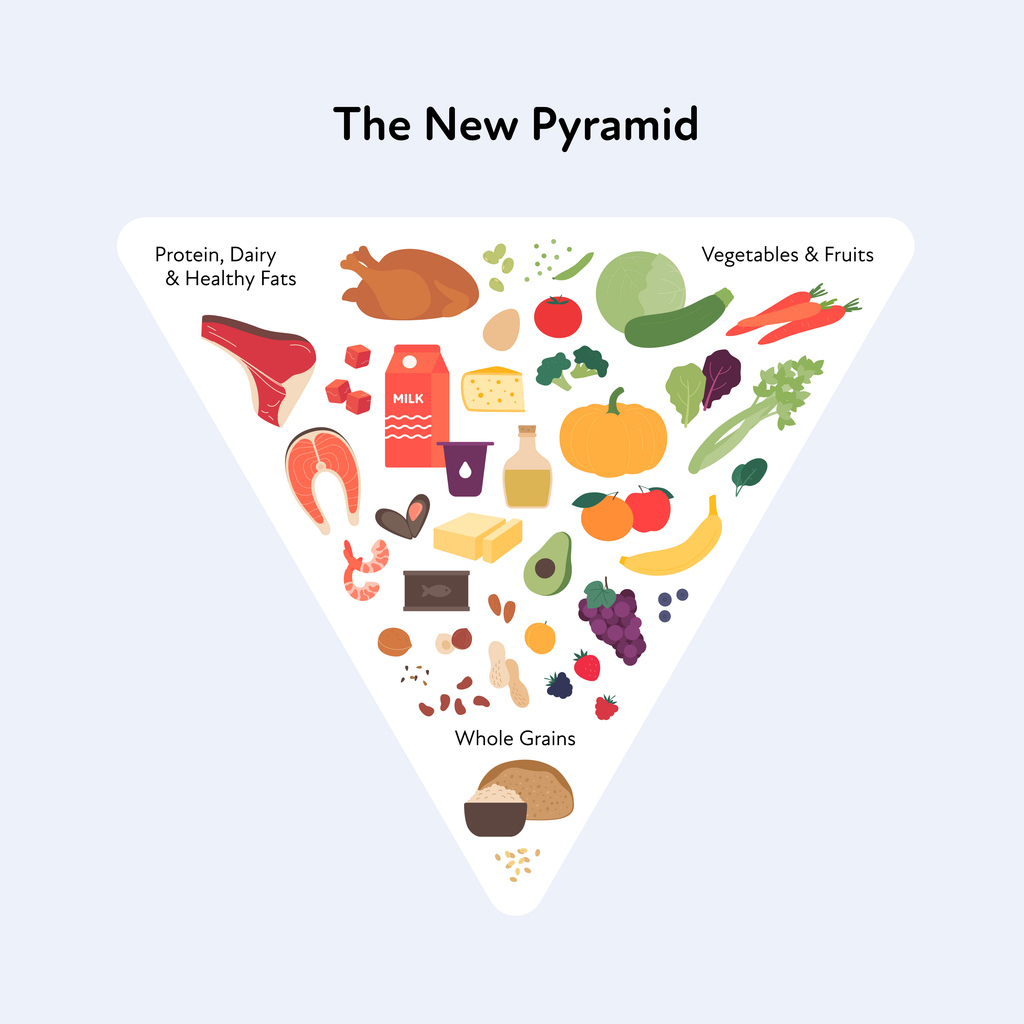
As updated federal recommendations roll out, Samantha Davis highlights gaps between science and messaging. When the 2025-2030 Dietary Guidelines for Americans were released, the message seemed straightforward: Eat more whole foods and reduce processed ingredients and sugar intake. But for Samantha Davis, professor of professional practice in nutritional sciences in TCU’s Louise Dilworth Davis College of Science & Engineering, a closer look reveals a more complicated picture. “These guidelines influence far more than individual choices,” she said. “They shape what’s served in schools, child care programs and federal nutrition programs nationwide. That’s why it’s so important to ensure the recommendations and the messaging are aligned with the science.” A Growing Public Health Challenge The conversation comes amid rising concerns about chronic disease in the United States. More than 70% of American adults are overweight or obese, and nearly one in three adolescents has prediabetes. At the same time, almost 90% of health care spending is tied to chronic disease. “These are not small trends,” she said. “Nutrition guidance plays a significant role in how we respond.” When the Math Doesn’t Match the Message While the guidelines recommend limiting saturated fat to 10% of daily calories, following the suggested servings, particularly for animal proteins and full-fat dairy, the numbers do not add up. “When you actually break it down, those recommendations can push intake closer to 20%,” Davis said. “The math is not mathing.” That gap raises concerns for heart health, as higher saturated fat intake is associated with elevated LDL cholesterol and increased cardiovascular risk. Rethinking Protein in the American Diet The updated guidelines increase protein recommendations, in some cases significantly. However, protein deficiency is not a widespread issue in the United States. “The idea that more protein automatically leads to more muscle is a misconception,” she said. “Exercise builds muscle. Protein supports maintenance and repair.” Davis also notes that protein is found across a variety of foods, including grains and vegetables, reinforcing the importance of balance ahead of overemphasis. Not All Fats Function the Same The guidelines encourage incorporating “healthy fats,” but distinctions between fat types may not always be clear. “There’s important nuance here. Some fats support heart health, while others are linked to increased risk. That difference matters,” she said. “If we’re trying to address obesity at a population level, we need to consider where calories are coming from.” For most people, nutrition guidance is distilled into quick takeaways and simplified messaging. “People remember what they see and hear in an instant,” she said. “If those messages aren’t clear or consistent, it can lead to confusion.” Her advice remains grounded in fundamentals: Focus on whole, minimally processed foods and look beyond trends for long-term health. Davis’ expert perspective was also featured in Fort Worth Weekly, contributing to the broader conversation about how national nutrition guidance shapes everyday life.

Get Over It: Pluto Isn't A Planet!
Put down the protest signs already. Retire the “Save Pluto” pins. Step away from the planetary outrage. Seriously. So says University of Rochester astrophysicist Adam Frank in his latest column in Forbes. Frank explains that the real story behind Pluto being stripped of its planetary status in 2006 isn’t about what Pluto lost, but what scientists found. Pluto made news recently when NASA Administrator Jared Isaacman replied to a Florida girl’s handwritten plea to restore Pluto’s designation as a planet, saying he supported such a move. Frank has one word for Isaacman: Stop! “Now Isaacman seems like a good guy and I sure don’t want to make little kids cry,” Frank writes. “Still, there’s an amazing science reason why Pluto got kicked out of the planet club.” For decades, Frank explains, we thought the solar system ended with the nine familiar planets, with Pluto being the most distant. But beyond Neptune lies the Kuiper Belt, a vast expanse filled with icy remnants from the birth of the solar system. These objects are essentially the leftover building blocks of planets. Pluto, it turns out, is one of them. That matters because this cosmic debris holds crucial clues about how planets form. Studying Pluto and its neighbors helps scientists understand the origins of Earth and the potential for life elsewhere in the universe. So, Pluto isn’t an outcast; it’s a key witness to our cosmic history. It belongs to a newly understood class of worlds that are central to modern astronomy. Rather than mourn Pluto’s status and push for restoring its former title, Frank suggests we celebrate its reclassification as the moment astronomers realized the solar system is far richer than they had ever imagined. If you’re a journalist looking for an expert to talk about Pluto — or planets and worlds formerly known as planets — Frank is your scholar. He is a frequent contributor to the likes of CNN, The New York Times, The Atlantic, and MSNBC, and can help your audience make sense of our vast universe.


Seeing Green: Chemistry Professor Transforming Undergraduate Research at TCU
When it comes to advancing both student success and world-class research, Kayla Green embodies how the two can go hand in hand. The chemistry professor and assistant dean of undergraduate affairs at the Louise Dilworth Davis College of Science & Engineering has built an internationally recognized research program while mentoring the next generation of scientists and reshaping how chemistry is taught at Texas Christian University. Her leadership weaves together research and mentorship in ways that have elevated the department’s impact. With more than $2.5 million in external funding and a track record of collaboration around the globe, Green’s work has not only advanced the field of inorganic chemistry, particularly as applied to neurodegenerative diseases and catalysis, but also strengthened TCU’s standing as a hub for undergraduate research excellence. “In the summer heading into my junior year, I began working on what would be my research project in Dr. Green’s lab … that would use iron as a catalyst in molecules. I would end up presenting that research in my senior year,” said Jack Bonnell ’24, a John V. Roach Honors College laureate. Iron is more affordable, more available and less societally problematic than preexisting palladium- or platinum-based molecules. “By the end of my senior year, I was able to achieve comparable results with my iron catalyst as you could achieve with palladium or platinum,” said Bonnell, now a second-year medical student at the Anne Burnett Marion School of Medicine at TCU. “That was a pretty cool moment in my research, to be able to put it up there in comparison to those.” Since joining TCU in 2010, Green has mentored more than 50 undergraduate students in her lab, many of whom have gone on to publish their work, present at national conferences and pursue medical or doctoral degrees. She has also been instrumental in creating programs that prepare students to succeed in challenging classes and stay the course in scientific disciplines. “Dr. Green’s vision and drive have strengthened the foundation of our college,” said T. Dwayne McCay, interim dean of the Davis College of Science & Engineering. “Her ability to inspire students and colleagues alike reflects the kind of leadership that propels our mission forward.” Lifting Them Up One of Green’s most impactful initiatives is Chemistry Boot Camp, a program she developed with colleagues Ben Janesko and Heidi Conrad to help incoming students build confidence before their first chemistry class. “The boot camp helps lift them up, and it’s really helped with retention of students in pre-health and science fields,” said Timothy Barth, psychology professor and associate dean of graduate affairs in Davis College. “She didn’t have to do this; she created it because of her commitment and dedication to the students.” Green’s innovative use of grant funding has expanded laboratory resources, supported student travel to conferences and strengthened research collaborations. The result is a department that rivals larger institutions in both output and opportunity. “Davis College does a fantastic job on undergraduate research training,” Green said. “We are a powerhouse.” For Green, teaching and research are inseparable. Her classroom and laboratory experiences are deliberately interconnected, allowing students to see how chemistry concepts play out in the real world. “Going into a lot of these complicated diagnoses and being able to break them down into digestible pieces of information for patients is a skill that I definitely can see as useful in my future as a physician,” Bonnell said. As much as the material itself, he credits Green’s mentorship and the opportunities she provided for his preparation for medical school. “I had only taken Dr. Green’s general chemistry course in my first semester as a freshman at TCU. I joined her lab in the spring semester of my freshman year, and I knew only the bare minimum about chemistry. I was in meetings with graduate students who had been working on projects for years,” Bonnell said. “At the beginning, she bounced me around, and I worked with different graduate students to learn all the different things they were doing to find my best fit.” That blend of rigor and encouragement has become a hallmark of her approach and a model for other departments seeking to integrate research more deeply into the undergraduate experience. Building on Success Green’s excellence has earned her wide recognition, including honors from the American Chemical Society (Emerging Investigator and Women Chemists Rising Star awards), TCU’s Deans’ Award for Research and Creative Activity and, most recently, the Chancellor’s Award for Distinguished Achievement as a Creative Teacher and Scholar. She now brings that same analytical insight and collaborative spirit to her position as the college’s assistant dean of undergraduate affairs, a role she began this academic year. “We’ve already begun to experience her decision-making and analysis as part of the dean’s team,” Barth said. “In a short period of time, she’s proving to be an amazing and remarkable administrator.” Looking ahead, Green continues to build on her success through a National Institutes of Health R15 AREA grant, which supports undergraduate research and provides students with opportunities to contribute to federally funded science. “TCU Chemistry has an incredible record of placing students in medical school, Ph.D. programs and research labs across the country,” Green said. “It’s rewarding to see our students thrive in environments that started with their hands-on experiences here.”


How the Class of 2026 can keep resumes out of the digital black hole
Students set to graduate this May are entering a job market where the rules of engagement are being rewritten in real-time. AI is both friend and foe, and ghosting has become the norm. University of Delaware career expert Jill Panté shares how college students can navigate these challenges in a rapidly shifting economy. Panté, director of the Lerner Career Services Center at UD, can apply her expertise to the following: The AI recruitment gap • How to prevent resumes from falling into the "digital black hole" of automated tracking systems. • Current recruitment in 2026 is heavily filtered by AI. If resumes don't mirror the language of the job description, a human might never even see it. • In 2026, AI is the gatekeeper. Students who aren’t using AI for assistance are working twice as hard for half the results. However, the goal is to use it as a co-pilot, not an autopilot. Beat the bots (tailor your content) • Use tools like Resume Worded or Generative AI like Microsoft Co-Pilot or Gemini to see how resumes stack up against specific job postings. • It is better to send five highly tailored, thoughtful applications than 50 generic ones that get auto-rejected by an algorithm. • Use AI to run a mock interview based on the job description and company. The "hidden” job market • If a "job search" consists solely of clicking "Easy Apply" on LinkedIn for six hours a day, it’s not searching; it’s just doom-scrolling with a resume. Roughly 80% of your time should be spent talking to humans. The other 20% should be spent on applications and research. • Find the recruiter or a department head on LinkedIn. Send a brief (2-3 sentence) note reiterating your interest. • Leverage alumni networks through LinkedIn. Narrative branding • Especially for Gen Z: Hiring managers don't just want to know what you did; they want to know the impact you made. • Instead of saying "Responsible for social media,” say "Increased engagement by 40% over 3 months by implementing a new video strategy." • Always lead with results (LinkedIn, resume, Interviews) to showcase the value you bring. Workforce anxiety • Managing the mental toll of the modern, high-speed job search and the professional "ghosting" epidemic. • Establish a personal "Board of Directors" to provide a balance of support, accountability and feedback. • Maintain momentum by volunteering, attending local networking events and learning new skills on platforms like LinkedIn Learning and Coursera. To reach Jill Panté directly and arrange an interview, visit her profile and click on the “contact” button.