
Experts Matter. Find Yours.
Connect for media, speaking, professional opportunities & more.

Is This Bitcoin's Time to Shine?
Bitcoin was invented in 2008 and launched in 2009, but after years of skepticism, it's finally becoming a part of mainstream conversation. The cryptocurrency's value has continued to rise since 2017, but with the start of 2021, its price has surged and many more companies are looking for ways to get involved. Tesla and Square have invested. (You can even buy a Tesla with bitcoins.) Goldman Sachs and JPMorgan are exploring ways to meet customer demand for cryptocurrency investment. A National Football League player converted half of his salary into bitcoins. And Major League Baseball's Oakland Athletics are offering a suite for the 2021 season at the price of one bitcoin. So, if it's been around for so long, why are we only seeing this mainstream push now? "I think the Bitcoin ecosystem is developing to the point where people can start to think about using it as a currency," said John Sedunov, PhD, an associate professor of finance who studies Bitcoin. "However, the price still remains volatile, and it isn't clear that the currency can maintain its current $50,00-to-60,000 value." While there are companies adopting and investing now, this will still be a gradual process, Dr. Sedunov says. "As businesses become better able to accept the currency, and perhaps more importantly better able to withstand and manage the volatility of Bitcoin, then the currency will become more widespread in its use. The process would be expedited if the entire supply chain accepted Bitcoin, rather than just the retailer and the end of the chain. This would smooth the process and allow people to utilize the currency without as much concern for converting it." Additionally, Dr. Sedunov notes that there needs to be a continued evolution of the ability of firms to accept and manage the currency, in addition to a reduction in the volatility of the currency. Smaller businesses may be at much more of a risk than large corporations and banks if there is price instability. But the value of Bitcoin won't be this high forever. As the country and economy continue to deal with the impact of the pandemic, there are growing concerns that inflation could be next, pushing consumers to other options, like cryptocurrency. "When the pandemic ends and there is, perhaps, more economic stability, Bitcoin's value will wane a bit, but I don't think it will fade to nothing," Sedunov notes. "The big question mark, to me, is the U.S. Dollar and inflation. Inflation expectations are rising, and this only pushes people more toward alternatives. If this trend continues, then perhaps economic stability will be a bit lower, and more people will flock toward Bitcoin."



Villanova University Professor Breaks Down Wage Gaps as Equal Pay Day Approaches
March 24 marks Equal Pay Day, dedicated to public awareness of the difference in average earnings between men and women. This will be the 25th Equal Pay Day since it was created by the National Committee on Pay Equity. David Anderson, PhD, is an associate professor of analytics at the Villanova School of Business, whose academic research focuses on how companies can measure and address gender pay gaps. (Along with his doctoral advisor, Dr. Anderson also started PayAnalytics, which helps companies measure and close gender and racial pay gaps. They've worked with companies that have from 40 to 100,000 employees to help them close pay gaps.) He explains that there are two key numbers to consider regarding pay gaps: "The 'raw' or 'unadjusted' pay gap is the number when we say, 'women earn 77 cents on the dollar compared to men,'" said Dr. Anderson. "The second is the 'adjusted' pay gap, which is typically smaller, in the single digits of percentages. This is what equal pay for equal work laws usually target." Anderson notes that these divides are calculated differently: "The unadjusted pay gap is a society issue in terms of who has access to education and opportunity, who gets promoted and which types of work are paid more or less money. The adjusted pay gap is calculated within companies and measures how much less women are paid on average compared to men with similar qualifications doing similar work. These are driven by such things as access to overtime, but also this is where bias comes into play—both individual bias and systemic bias." The intersection of gender and sexuality poses additional influence on pay gaps (as well as other workplace discrepancies), and progress on addressing wage gaps is also changing due to our current world. "I think with COVID and the impact it has taken on women's careers, particularly on mothers, it is quite likely we are moving backwards right now," said Dr. Anderson. So how do we combat these gaps? Dr. Anderson believes one step is instituting company regulations. "There's a ton of work on the adjusted pay gap, but very little on the raw pay gap. This is understandable—no one company can fix the unadjusted pay gap by itself, but they can be expected to meet equal pay for equal work requirements. The adjusted pay gap is a company-level responsibility, so it is a really nice target for regulations, while the unadjusted pay gap requires broader social changes, e.g., more flexible parental leave and more access to managerial positions." For the future, Dr. Anderson predicts changes due to COVID: "I think on the domestic front the effects of COVID will definitely make things worse in the short-term. But I think equal pay is on the Biden administration's agenda, so there's probably going to be forward movement on that front on a national level as well as in states, such as California, Massachusetts and New York, that are passing and enforcing stricter laws which will start to have an impact as well," said Dr. Anderson.

What’s it all mean as ‘Big-Tech’ pivots to privacy? Let our Experts help explain if you are covering
The business of the internet as we know it, is about to change. As companies in the past have thrived, boomed, and found serious cash and success harvesting your data – that model may soon be coming to an end. With companies like Google and Apple leading the way, odds are a serious transformation is about to come and the know that notice has been served, it is getting a lot of attention. The decision, coming from the world’s biggest digital advertising company, could help push the industry away from the use of such individualized tracking, which has come under increasing criticism from privacy advocates and faces scrutiny from regulators. Google’s heft means the change could reshape the digital ad business, where many companies rely on tracking individuals to target their ads, measure the ads’ effectiveness, and stop fraud. Google accounted for 52% of last year’s global digital ad spending of $292 billion, according to Jounce Media, a digital ad consultancy. About 40% of the money that flows from advertisers to publishers on the open internet—meaning digital advertising outside of closed systems such as Google Search, YouTube, or Facebook—goes through Google’s ad buying tools, according to Jounce. March 03 – The Wall Street Journal. But what will this mean for powerhouses like Facebook or the multitude of apps and carriers who rely on data, and the money that comes with it to succeed? What lies ahead will be interesting, and if you are a journalist looking to cover this topic – then let our experts help. Vilma Todri is an Assistant Professor of Information Systems & Operations Management at Emory University’s Goizueta Business School. Previously, she worked for Google where she was developing integrated cross-platform advertising strategies for large business clients that partnered with Google and recently wrote a comprehensive paper on this very topic. Vilma is available to speak with media about this subject – simply click on her icon now to arrange an interview today.



What We Can Learn From Celebrating Irish-American Heritage Month
About two weeks ago, President Joseph Biden declared March 2021 Irish-American Heritage Month. In an official statement, the president said, "We owe a debt of gratitude to the Irish-American inventors and entrepreneurs who helped define America as the land of opportunity... The fabric of modern America is woven through with the green of the Emerald Isle." As the director of the Center for Irish Studies at Villanova University, an institution founded by Irish Augustinians to educate the children of Irish immigrants, Joseph Lennon, PhD, agrees. He hopes to use this presidential declaration as an opportunity to expand the conversation around what it means to be of Irish descent beyond wearing green and watching the annual St. Patrick's Day parade. The way Dr. Lennon sees it, "there is much more to Irish America than a parade and parties." With such a rich history of Irish immigrants and their descendants living in and contributing to the development of the United States, Dr. Lennon sees March 2021 as an important time to reflect on the "contributions and travails of this ethnicity" in a way that reaches beyond "silly slogans and marketing schemes." He reminds us, "there are over 30 million Irish Americans. The Irish contributed massively to the infrastructure of industrial America and later to the civil, education and business worlds—not to mention the Catholic Church." Dr. Lennon also hopes this month will help redefine the larger notion of what it looks like to be Irish and American. He notes that "38% of African Americans have Irish ancestry," but acknowledges that "this is a complicated issue," since in some cases this may stem from abuses suffered during the American practice of slavery. It is important conversations like these that Dr. Lennon wants to bring to light during Irish-American Heritage Month, and he stresses that "more research is needed into understanding this history—as well as the unions between Irish immigrants and northern-bound African Americans during the late nineteenth century." Per Dr. Lennon, these historical events are tied to our present day. He sees a need for "the level of recent racist attachments to Irishness... to be confronted with historical knowledge and anti-racist understandings." With such important issues in mind, Dr. Lennon wants to impart that "the Irish diaspora is global and diverse and Irish culture runs much more deeply and broadly in America than we might guess by just attending the St. Patrick's Day celebrations." He adds, "I'm curious to see if the conversation continues past St. Patrick's Day this year." Despite most St. Patrick’s Day events and programs being virtual in 2021, there are many opportunities to celebrate Irish-American heritage this year. At Villanova, the Center for Irish Studies is hosting a virtual St. Patrick's Day Celebration called "Links Across the Atlantic" on Wednesday, March 17, from 10:00 a.m. to 9:00 p.m. This free celebration will include live entertainment segments, from an Irish breakfast tutorial with study abroad director Mary Madec to lunchtime laughs with actor Johnny Murphy, and will culminate with a streamed Irish music fèis (or festival) in partnership with Tune Supply, featuring We Banjo 3, the Friel Sisters and One for the Foxes! For more information or to register for this event, please click here.


Why online recommendations make it easier to hit “buy”
When it is time to buy something online, perhaps a coffee maker, you might head to Amazon and browse items for sale. One particular model might spark interest. The product page may contain recommendations for other goods: complementary products such as coffee filters; or recommendations for different, competitor coffee maker brands offering unique features and prices. E-commerce websites commonly use product recommendations — called co-purchase and co-view recommendations — to keep users locked into the sales funnel and increase customer retention. But what impact do these types of recommendations actually have on consumers? How do they influence one’s willingness to pay for the original product searched? In fact, the level of influence depends on how close a consumer is to making that purchase, says Jesse Bockstedt, associate professor of information systems & operations management at Emory’s Goizueta Business School. In addition, what type of recommendation the consumer sees plays a role in purchasing as well. To shed empirical light on this, Bockstedt teamed with Mingyue Zhang from the Shanghai International Studies University. “We were curious. We knew that recommendation systems are integral to how consumers discover products online – a good 35 percent of Amazon sales can be attributed to recommendations, for instance,” Bockstedt says. “But we knew a lot less about how recommendations change consumer behavior in relation to a focal product.” Specifically, the researchers were interested in looking at the effect of complementary versus substitutable products, and what impact the price of these types of products had on consumer behavior. They also wanted to know whether these effects were more or less amplified depending on whether consumers were at the exploratory phase in the buying process or ready to go ahead and make the purchase. To unpack the dynamics at play, Bockstedt and Zhang ran two experiments that simulated the online purchasing experience. The researchers had volunteers go through the process of evaluating different products and then report back on how much they were willing to pay for each. “We asked volunteers to look at a product page for a computer mouse, and we randomly assigned different recommendations to that page – some that were for other mice, and others that were for goods and products that would complement the original mouse. Going through the experiment, we also manipulated the price that volunteers saw on different pages, both for the recommended substitute and complementary products,” he says. “Finally, we looked at the effect of timing and the sales funnel. In one case we had volunteers look for a highly specific mouse and recommended a particular product page to them. To simulate the more exploratory phase, we gave them many pages and asked them to click on the one they found most interesting.” In total, Bockstedt and Zhang put 200+ volunteers through the replica virtual purchasing experience and recorded their willingness to pay the advertised price for the focal product on scale of 0 to 100, depending on what they had seen and the point in the sales funnel they had seen the recommendations. If you are looking to learn more about this research and the results, Emory has a full article published for reading and review. If you are a journalist looking to cover this topic or if you are simply interested in learning more, then let us help. Jesse Bockstedt, associate professor of information systems and operations management at Emory’s Goizueta Business School. He is available to speak with media, simply click on his icon now – to book an interview today.

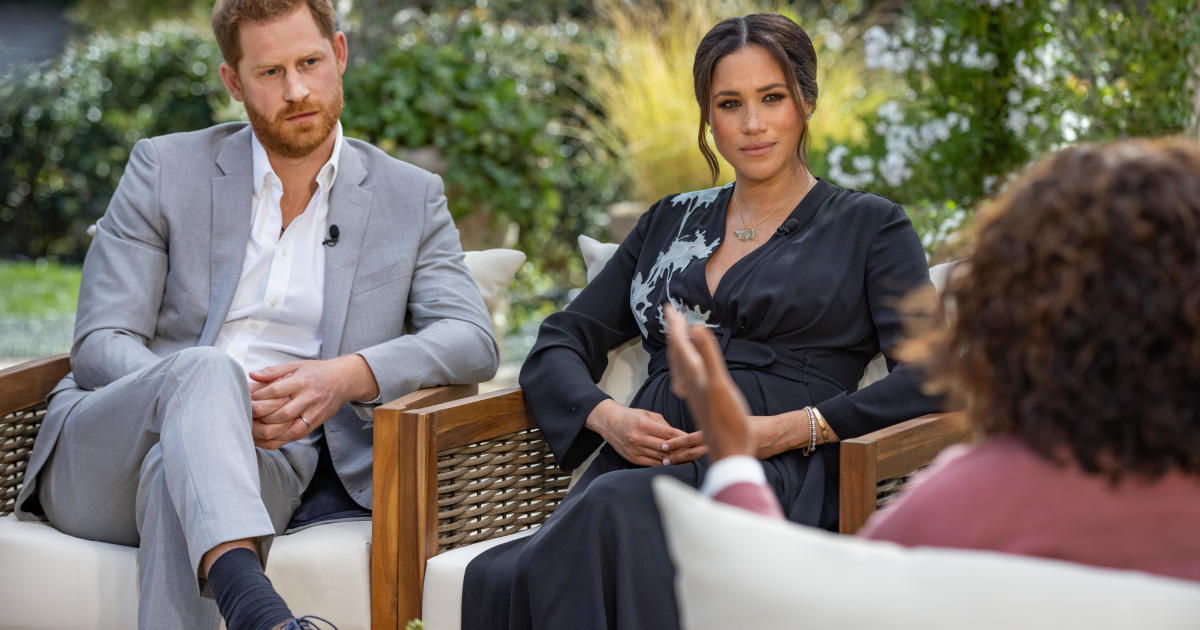
It was hyped, promoted and delivered a ratings bonanza for CBS. Oprah Winfrey’s exclusive, no-holds barred interview with Meghan Markle and Prince Harry, left many aghast by her revelations of mistreatment, constant abuse in the media and even Meghan's experience of racism when it came to the status, security and skin color of her then unborn son. Even the day after, Oprah, praised for her masterful interviewing skills, is still revealing excerpts that shine a brighter light on the situation. The Duchess of Sussex claimed the press team that would defend the royal family "when they know something's not true" failed to come to their defense. Winfrey asked Prince Harry if he hoped his family would ever acknowledge that the differences in treatment were over race. "It would make a huge difference," he said. "Like I said, there's a lot of people that have seen it for what it was… like it's talked about across the world." The people who do not want to see it, Harry claimed, "choose not to see it." March 08 – CBS News The interview has the public discussing racism and misogyny and how these are playing out in the Royal Family dynamics and the British press. And if you are a journalist looking to explore this issue, then let our experts help. Dr. Adria Goldman’s research explores the intersectionality of race, gender, culture and its connection to communication and media. She enjoys examining media’s impact on perceptions, construction of identity, social relationships and belief systems. Dr. Goldman is available to speak with media regarding Oprah Winfrey's interview with Meghan Markle and Prince Harry and what it means when it comes to race, royalty and what impact it may have on the couple and the Royal Family moving forward. If you are looking to arrange an interview, simply click on her icon now to book a time today.



Telecommuting Expert Predicts Permanent Changes to Work After the Pandemic
With the sudden shift to remote work brought about by the COVID-19 pandemic, many corporations have had to quickly assemble a patchwork of policies, procedures, and technologies. Timothy Golden, a professor in the Lally School of Management at Rensselaer Polytechnic Institute, foresees that many companies will adopt remote work on a permanent basis, and need to devote considerable attention and focus to systematically assessing the lessons they have learned. Golden is a leading expert in the field of telecommuting, telework, and the relationship between technology and managerial behavior. With more than 20 years of experience studying the impact of remote work on corporations and individuals, Golden’s insights about the future are rooted in a deep understanding of the history of remote work. In the wake of the pandemic, Golden envisions companies adding a Chief Remote Work Officer, who is responsible for maintaining the effectiveness of the company’s remote work program, to their C-Suite. This person will likely be a boundary spanner who garners resources and support from across silos in the company to ensure remote work remains effective in its long-term implementation. With the continuing importance of remote work, the Chief Remote Work Officer will need a seat at the executive table to ensure it receives the attention it needs. With remote work becoming even more firmly engrained in corporate cultures, Golden expects changes in the ways employees interact. With large numbers of employees continuing to work remotely, employees will expect support for this work mode in many forms — from promotion opportunities and performance metrics, to mentoring and technology support. Another implication of remote work going forward is that the demand for real estate will change, and companies will see real estate as platforms for collaborative work, rather than simply for work. With a significant permanent portion of the workforce likely to remain as remote workers, companies will be able to scale back their real estate yet also reallocate existing spaces to ones that are used for more collaborative interactions, rather than simply offices for individualized working. Golden is available to speak about these and other aspects of the future of remote work, as well as specific lessons he has learned through decades of studying this topic.



Personality matters: the tie between language and how well your video content performs
Why does one piece of online video content perform better than another? Does it come down to its relevance, production values, and posting and sharing strategies? Or are other dynamics at play? There are plenty of theories about what, when and how to post if you want to drive the performance of your video. But new research by Goizueta’s Rajiv Garg, associate professor of information systems and operations management, sheds empirical and highly nuanced new light on the type of language to inject in a content if you really want to accelerate consumption. And it turns out that a lot of it depends on personality. Together with Haris Krijestorac of HEC Paris and McCombs’ Maytal Saar-Tsechansky, Garg has run a large-scale study, analyzing the words spoken and used in speech-heavy videos posted to YouTube, and then organizing those words by personality – how they “score” in terms of the so-called Big Five personality traits. “The Big Five is a system or taxonomy that has been used by psychologists and others since the 1980s to organize different types of personality traits. These traits are extroversion, agreeableness, openness, conscientiousness, and neuroticism,” says Garg. “In previous research into video content performance, we’ve looked into mechanisms such as posting and re-posting on different channels and how they impact the virality of one video over another. But we were intrigued by the role of language and how different words map to these personality traits, which in turn might have an impact on user emotion or response.” Emory has this entire comprehensive article that includes more details on the Big Five and it is available for reading here: If you are a journalist looking to cover this topic – then let our experts help with your story. Rajiv Garg from Emory’s Goizueta Business School is available to speak with media – simply click on his icon now to arrange an interview today.


A federal budget is coming soon – and as Canada is still stuck in the grips of COVID-19 and the thin ice its economy is still walking on, it is expected sooner or later, the tab will have to be paid and that bill will be satisfied with taxes. Recently, Don Scott, Director of Tax Services at Welch wrote an insightful piece where he lends his many years of wisdom, experience and perspective to share what he thinks will be how Canada’s federal government digs itself out of what has been more than a year of bills and bailouts. In his piece, he looks at whether or not the government will raise such revenue streams as: corporate and business tax rates personal income taxes capital gains principle residence redemptions and even the GST It’s required reading for anyone interested in the finances of the federal government – and if you are a journalist looking to cover this topic, then let us help. Don Scott is the Director of Tax Services at Welch and is a nationally recognized expert for his extensive knowledge in the area of Personal and Corporate Tax Planning. Don is available to speak with media regarding the upcoming budget, to arrange an interview today – simply click on his icon now.


What’s next for Myanmar? Our expert can help if you are covering.
The troubled and fledgling democracy that existed in Myanmar has been overtaken by a military coup. The tiny South-Asian country is no stranger to military dictatorships and the uprisings occurring are the third time in recent history that the country has been in disarray. The reason for the interventions, as it’s being spun by the military, is to preserve the concepts of democracy with the promise of new elections on the horizon. “The Burmese military has long considered itself as the principle protector of the Myanmar nation, and they have treated internal critics and democratic reformers as enemies of the nation,” said Dr. Andrew Goss,” chair of the Department of History, Anthropology and Philosophy at Augusta University. “While the partial democratic reforms instigated by the military a decade ago gave many hope that Myanmar was changing, the election last year did not produce the results the military expected.” In his first televised address since the takeover, Min Aung Hlaing, a career military officer who is commander in chief of Myanmar's armed forces, repeated claims of fraud in November's election, and said the military will hold new elections and transfer power to the winner. He did not specify when those elections would take place, though the military had previously declared a year-long state of emergency. The military has imposed numerous restrictions on gatherings and activities in the country's largest cities of Yangon and Mandalay, effective Monday until further notice. Restrictions include an 8 p.m. to 4 a.m. curfew, as well as a ban on motorized processions and gatherings of more than five people. They are effective on a township-by-township basis. In his address, Min Aung Hlaing said an electoral commission did not properly investigate irregularities over voter lists or allow fair campaigning, according to the BBC, which notes that the commission did not find evidence to support claims of widespread fraud. He also promised that a reformed commission would oversee another election, and spoke of achieving a "true and disciplined democracy." But when those elections will happen and who will be able to seek office have yet to be explained. The situation has garnered international attention and condemnation – and if you are a journalist covering these ongoing developments in Myanmar, then let our experts help with your coverage. Dr. Andrew Goss is a renowned expert in Asian history and can speak to reporters covering the events taking place now. To arrange an interview with Dr. Goss, simply click on his name.

