
Experts Matter. Find Yours.
Connect for media, speaking, professional opportunities & more.

Racial and LGBT bias persists in ridesharing drivers despite mitigation efforts
Despite efforts by ridesharing companies to eliminate or reduce discrimination, research from the Indiana University Kelley School of Business finds that racial and LGBT bias persists among drivers. Platforms such as Uber, Lyft and Via responded to drivers' biased behavior by removing information that could indicate a rider's gender and race from initial ride requests. However, researchers still found that biases against underrepresented groups and those who indicate support for the LGBT community continued to exist after drivers accepted a ride request -- when the rider's picture would then be displayed. In other words, their efforts shifted some of the biased behavior until after the ride was confirmed, resulting in higher cancellation rates. Understanding whether bias has been removed also is important for ridesharing companies as they not only compete against each other but also with traditional transportation options. "Our results confirm that bias at the ride request stage has been removed. However, after ride acceptance, racial and LGBT biases are persistent, while we found no evidence of gender biases," said Jorge Mejia, assistant professor of operations and decision technologies. "We show that signaling support for a social cause -- in our case, the lesbian, gay, bisexual and transgender community -- can also impact service provision. Riders who show support for the LGBT community, regardless of race or gender, also experience significantly higher cancelation rates." Mejia and co-author Chris Parker, assistant professor in the information technology and analytics department at American University in Washington, believe they are the first to use support for social causes as a bias-enabling characteristic. Their article, "When Transparency Fails: Bias and Financial Incentives in Ridesharing Platforms," is published in Management Science. They performed a field experiment on a ridesharing platform in fall 2018 in Washington, D.C. They randomly manipulated rider names, using those traditionally perceived to be white or Black, as well as profile pictures to observe drivers' behavior patterns in accepting and canceling rides. To illustrate support for LGBT rights, the authors overlaid a rainbow filter on the rider's picture profile. "We found that underrepresented minorities are more than twice as likely to have a ride canceled than Caucasians; that's about 3 percent versus 8 percent," Mejia said. "There was no evidence of gender bias." Mejia and Parker also varied times of ride requests to study whether peak price periods affected bias. They found that higher prices associated with peak times alleviated some of the bias against riders from the underrepresented group, but not against those who signal support for the LGBT community. They believe that ridesharing companies should use other data-driven solutions to take note of rider characteristics when a driver cancels and penalize the driver for biased behavior. One possible way to punish drivers is to move them down the priority list when they exhibit biased cancellation behavior, so they have fewer ride requests. Alternatively, less-punitive measures may provide "badges" for drivers who exhibit especially low cancellation rates for minority riders. But, ultimately, policymakers may need to intervene, Mejia said. "Investments in reducing bias may not occur organically, as ridesharing platforms are trying to maximize the number of participants in the platform -- they want to attract both riders and drivers," he said. "As a result, it may be necessary for policymakers to mandate what information can be provided to a driver to ensure an unbiased experience, while maintaining the safety of everyone involved, or to create policies that require ridesharing platforms to monitor and remove drivers based on biased behavior. "Careful attention should be paid to these policies both before and after implementation, as unintended consequences are almost sure to follow any simple fix."

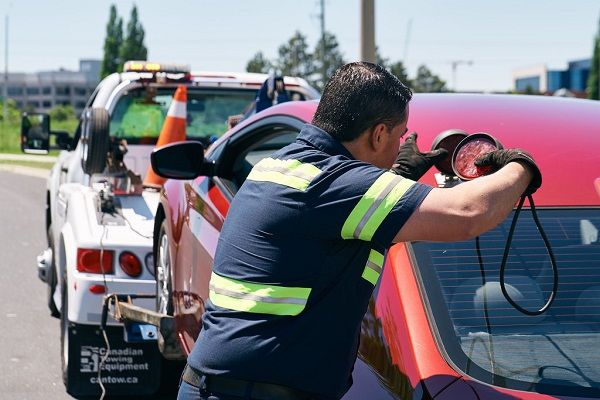
MEDIA RELEASE: CAA study reveals a majority of Ontario drivers favour provincial towing oversight
A recent study conducted on behalf of CAA South Central Ontario (CAA SCO) indicates that 90 per cent of Ontario drivers agree with regulations such as tow truck licensing, certification and provincial oversight. The study, commissioned in April 2020, revealed that only 1 out of 5 Ontario drivers feel “very protected” under the current system. “Consumers should have the confidence that they will be protected regardless of where in the province they are and what kind of towing services they may require,” says Teresa Di Felice, assistant vice-president of government and community relations. The study also showed that half of Ontario drivers believe that tow trucks in Ontario are licensed. This is not the case. A lack of provincial oversight in the towing industry has led to a municipal patchwork of bylaws, which includes inconsistent towing rates, processes, and standards. It has also left motorists unsure on what the rules are, and how to protect themselves from fraudulent activities particularly when it comes to collision tow services. At present, only 18 of Ontario’s 444 municipalities have bylaws regulating towing. That is less than five percent of all communities across the province. “Provincial oversight should provide consistent levels of training for operators, ensure the vitality of an important service on Ontario roads, establish penalties for those that do not follow the rules and recognize people drive outside of cities boundaries.” Some other interesting facts from the study are: An overwhelming majority (91%) of the respondents oppose the idea of anyone driving a tow truck without specific tow truck driver education or training. More than 4 out of 5 respondents agree that the cost of towing and related fees can be misleading. In June, the Ontario government announced its commitment to assemble a task force to review and reform the towing industry. For over a decade, CAA has been advocating for changes to the towing industry. The announcement of a provincial task force is a strong step in the right direction. As part of the journey toward a fair towing framework, please join CAA, the Ontario Provincial Police (OPP) and the Provincial Towing Association of Ontario (PTAO) for a virtual discussion on the challenges of the towing industry and an overview of what the future of towing could entail. The virtual townhall will take place on Wednesday, August 12, 2020 from noon to 1:30 p.m. To register and for more information, visit: https://www.caasco.com/blog/News/government-focuses-on-the-towing-industry-have-your-say The statistically representative study, commissioned by CAA SCO and conducted by Campaign Research between April 21st to 24th, 2020, surveyed 5,003 Ontarians that hold a valid driver’s license. The study was conducted through online surveys. A probabilistic sample of a similar size would have a margin of error of plus or minus 1.4%, 19 times out of 20.



Cancellation of non-conference college football games may lead to a new battle in the courtroom
The Big Ten Conference's decision to cancel all non-conference football games for the upcoming season -- and the possibility that schools in other major conferences may soon follow -- raises a number of potential legal issues, says Nathaniel Grow, associate professor of business law and ethics at the Indiana University Kelley School of Business. “Depending on the terms of the schools' college football scheduling agreement, the university cancelling the game may still owe the other school some level of compensation for breaking the agreement,” Grow said. “If the cancelling university refuses to pay, then it would not be surprising if the other school would elect to file a lawsuit.” A nationally recognized expert in the field of sports law, Grow studied has studied this issue, the subject of a 2010 article in the Journal of College and University Law. "The ultimate outcome of such a lawsuit would hinge largely on the specific terms of two affected schools' contract. In general, though, two provisions of the contract would likely prove to be the most important. First, most scheduling agreements will include some sort of liquidated damages provision, a clause that specifies that one side of the agreement must pay the other party a certain amount of money should the contract be broken. Often times, these contracts will provide that the breaching party must only pay the other school in the event that the opponent is unable to replace the cancelled game on its schedule with one against a sufficiently suitable alternative opponent. "The other relevant clause in these scheduling agreements is likely to be the force majeure provision, sometimes referred to as an ‘Act of God’ clause. Under these provisions, schools may be excused from cancelling a game without penalty if circumstances arise that make playing the game unduly difficult or impossible (for instance, a hurricane or other major weather event). The applicability of such a provision will also vary depending on the specific wording employed in the contract, and whether the clause permits a team to cancel a game on the basis of either a pandemic or a change in conference policy regarding the playing of non-conference games." Grow can be reached at 812-855-8191 or grown@iu.edu.

Joke or not – could Kanye play spoiler in the 2020 election?
It’s set the internet abuzz – and as rap superstar Kanye West (with the help of his wife Kim Kardashian West and billionaire Elon Musk) took to Twitter to declare his intentions to run for president this November. One small problem – West has missed several key deadlines to get on the ballot. However, if he is determined to run, he can ‘t run in key states like Texan, New York or North Carolina. This all seems silly right now, but if the sometimes controversial and very unpredictable celebrity makes a run, in the end – who would it help and who would it hurt? Could West’s popularity siphon off votes from Joe Biden key battleground areas? Or would a West campaign steal the attention and airtime away from Donald Trump leaving him to pitch policy and drastically reducing his reach? In a year that knows nothing normal, if you are covering Kanye West and the 2020 election – let our experts help. Mark Caleb Smith is the Director of the Center for Political Studies at Cedarville University. Mark is available to speak with media regarding this topic and any aspects about the upcoming election. Simply click on his icon to arrange an interview.


Is there a path to a successful and productive life after imprisonment?
On July 8, Savannah Mayor Van Johnson announced the formation of a new task force focused on helping those formerly incarcerated or with a criminal history seek productive futures when they return to society. The Advocates for Restorative Communities in Savannah (ARCS) will bring together experts, including formerly incarcerated people, who currently work with those in the justice system. The goal is pooling their collective experiences to best serve those returning to Savannah from prison and help them toward a path of success. Georgia Southern University's Maxine Bryant, Ph.D., senior lecturer, Department of Criminal Justice and Criminology, is playing a lead role in the task force. According to Bryant, about 4% of all those in Georgia’s prisons call Chatham County home. Bryant says last year Georgia’s Department of Corrections reported there were around 53,000 people inside their prisons. “Four percent, that’s about 2,000 people, people who are currently incarcerated are probably going to be returning back to Chatham County,” said Bryant. “You add that year after year after year, and then it becomes clear that if we don’t do something, we are a part of the problem, and not the solution.” Bryant added two out of every three people who are released are rearrested within three years. “Not all of those arrests are new crimes,” she said. “Some of them are technical difficulties, technical violations. They couldn’t pay a fine because they didn’t have a job.” June 08 - WTOC TV If you are a journalist and would like to learn more about this program or this topic – then let our experts help. Maxine Bryant’s research interest specifically focuses on factors contributing to the successful community reintegration of released prisons. Specifically, she has written and presented on transitional jobs for newly released prisoners, the role of the Black church in successful offender reintegration, the impact of unaddressed childhood trauma and barriers to successful offender reintegration. She is available to speak with media any time – simply click on her icon to arrange an interview today.


Clarifying the electoral college before this November’s election – let our experts explain
With a divisive and hyper-charged election on the horizon in America, the Supreme Court may have done the country a favor and avoided a constitutional crisis before it happened. The court delivered a unanimous opinion on faithless electors and how those who represent states are to cast their votes in the electoral college. The Supreme Court ruled unanimously Monday that a state may require presidential electors to support the winner of its popular vote and may punish or replace those who don’t, settling a disputed issue in advance of this fall’s election. Justice Elena Kagan wrote for the court as it considered for the first time the issue of “faithless electors” and whether the Constitution sees members of the electoral college — whose votes ultimately elect the president — as representatives of the intent of their state’s voters or as independent thinkers. The Washington state law at issue “reflects a tradition more than two centuries old,” Kagan wrote. “In that practice, electors are not free agents; they are to vote for the candidate whom the State’s voters have chosen.” In layman’s terms, it simply means representatives to the electoral college are not casting a vote of conscience, but a vote that follows the will and intentions of the popular vote of each specific state. Popular votes and the electoral college have been hotly debated topics during this century’s elections, and if you are a journalist covering this Supreme Court decision or have questions about the upcoming elections – then let our experts help. Dr. Craig Albert is an expert in American politics and he is available to speak with media – simply click on his name to arrange an interview today.


As China clamps down on Hong Kong – Is Taiwan next?
As protests erupt again across Hong Kong against the recent imposing of new security laws essentially giving Beijing unprecedented powers – it has some worried about what is next as China pursues it’s One-China policy. In Taiwan people are watching, and concern is growing. Professor Elizabeth Freund Larus teaches political science at the University of Mary Washington and is an #expert on China and the field of Asian studies. She has also been interviewed by media such as CNBC, The Diplomat and CBN News regarding this topic. She has noted that the developments in China, especially with regards to Hong Kong and Taiwan are catching global attention and will impact economies and governments across the globe. Beijing has taken an especially hard line towards Taiwan since the 2016 election of President Tsai Ing-wen of the Democratic Progressive Party (DPP), ramping up military, economic and diplomatic pressure. Tsai views Taiwan as a de facto independent nation and not part of "one China". But the pressure campaign has done little to endear China to Taiwan's 23 million people. In January, Tsai won a second term with a historic landslide and polls consistently show a growing distrust of China... Social media is filled with messages of support for Hong Kong's democracy movement. Some back Taiwanese independence, or highlight China's rights abuses in regions such as Tibet and Xinjiang. Wendy Peng, a 26-year-old magazine editor who said she often shared pro-Hong Kong democracy messages on social media, said she would now avoid visiting the city. "The national security law makes me wonder how far would China go. Right now I don't see a bottom line and there's probably none. I think it's possible they will target Taiwan next," she said. July -7 Yahoo! New/AFP If you are a reporter covering this progressing story – then let our experts help. Elizabeth Larus is available to speak to media, simply click on her icon to arrange an interview.



New System of Infrared Sensors Maintains Privacy While Keeping Patients Safe
Short of cameras, there are few tools at the disposal of health care providers or loved ones to remotely monitor patient safety within hospitals and assisted living care facilities. This challenge was on Bob Karlicek's mind when he and a team of other researchers developed a new system of infrared sensors that is able to provide real-time data about a person’s movements in a room while also maintaining their privacy. “We can thread this balance of information and privacy,” said Karlicek, the director of the Center for Lighting Enabled Systems & Applications (LESA). “It turns out that lighting and light field sensing give us a tremendously powerful tool for figuring out where people are and estimating what they are doing, but without creating an image of who they are.” The system relies on what Karlicek calls occupant-centric control. More specifically, a set of sensors uses infrared light to measure distances between sensors and objects in order to identify where someone may be in a room. This information can help determine if a person is standing, sitting, or lying down on the floor. It can also distinguish between where people are standing and how they are interacting with other people. Such measurements could alert a caregiver that someone has fallen or document the last time someone checked on their loved one. The use of infrared light to measure distance is not a new concept. What’s novel about this approach, Karlicek said, is the development of a very inexpensive sensor that has data analytics built right into it, allowing the sensors to collect data, process it, and communicate with each other in order to track movement within a room. Karlicek is available to discuss this technology and other efforts LESA is working on to make buildings more capable, efficient, and helpful to the people who use them.



Overshadowed by COVID – The opioid pandemic is still taking its toll across America
For more than two decades opioids have been ravaging American cities, towns, and communities. It prompted national attentions and official commissions advising the President. But lately, as the world has turned almost all its focus on COVID-19, the opioid issue has been sitting in the shadows. Not necessarily idle or waiting, but just no longer the topic of a national conversation to find a cure. Before COVID-19 turned our nation upside-down, policymakers were taking steps to help patients access evidence-based treatment for opioid use disorder. This included focusing on removing health insurers’ barriers to medication and requiring insurers to provide parity for mental illness and substance use disorders — and holding them accountable for violations of the law in Massachusetts, Pennsylvania and New Hampshire, to name a few recent examples. While we continue to take steps to address COVID-19 to help keep the public safe, the American Medical Association has seen reports from more than 30 states concerning increases in opioid-related mortality, mental health crises, suicide and addiction-related relapse. Reports are from every region in the nation. This includes a 20 percent increase in calls to the Jacksonville, Fla., fire department concerning overdoses; an “unusual spike” in overdoses in DuPage County, Ill.; increased emergency department visits in coastal North Carolina and spikes in fentanyl-related overdoses in Seattle. Georgia, too, has not been spared, causing increased concern for many. - Dr. Patrice A. Harris is the immediate past president of the American Medical Association and chair of the AMA Opioid Task Force. So – at what cost or how far back have efforts been set by COVID-19? And how much harder will it be for America to regroup and take on its addiction to opioids? There are a lot of questions to be asked – and if you are a journalist covering this topic or looking to learn more about the state of the opioid epidemic in America – then let our experts help. Justin Cole is an expert in clinical pharmacy, Pharmacogenomics, and the pharmacy industry. Justin has been following this issue closely and is available to speak with media. Simply click on his icon to arrange an interview today.

Maintaining intimacy in your relationship while in COVID quarantine
Whether you’re social distancing, in quarantine, or in lock down like I am here in Barcelona, I have been thinking about how we can all keep up our intimate relationships with ourselves and our partners during this time. It’s important for us to try to find joy and satisfaction in our daily routines (indoors). So I have put together an intimacy guide to help us all get through this period – whether you’re single, a couple living together or part of a couple living apart there should be something to help you. For the couples living together I can assure you that Netflix & Chill will get boring pretty quickly, so work your way through this list and keep the intimacy spark alive while you’re both stuck indoors. 1. Take a shower together and have some good, clean fun in the bathroom. 2. Cuddle through it. We’re all for social distancing but if you live with your partner, now is not the time to stop cuddling. 3. Sleep in different beds. Sometimes its good to have time apart and a good night’s sleep in separate beds. It can make it even more special when you do actually share a bed together. 4. Give each other massages with some natural oils. 5. Watch some adult movies together and maybe act out some of the moves after. For couples living apart I know it must be tough if you’re living apart and you can’t see each other due to quarantine, but thanks to technology there are lots of ways you can remain intimate with your partner, no matter the distance. 1. Send nudes! Need I say more? And while you’re at it you can send some intimate texts telling your partner exactly what you’d like to be doing if you were together. 2. Video call and enjoy being in each other’s company. 4. Write a list of all the intimate things you want to try together after quarantine. 5. Do the test to find out your love languages and learn about each other’s. 6. Ask each other the infamous 36 questions that lead to love. 7. Send each other love letters (via email if you can’t post!) For single (or self-partnered) people Now is the perfect time to fall even more in love with yourself… 1. Please, repeat after me: Don’t text your ex! Now is not the time to overthink your beak-ups and send a message to your ex. 2. Explore your body and re-discover your pleasures. Touch new parts of your body and find new erogenous zones. 3. Write a bucket list of all of the things you want to try alone. 4. Have a date night with yourself. Cook yourself a nice meal, listen to music, drink wine, massage your feet and write a list of all of the things that you love about yourself!
