
Experts Matter. Find Yours.
Connect for media, speaking, professional opportunities & more.

Baylor Horror Film Expert Lists 10 Movies 'Everyone Should See'
October brings pumpkin spice, changing leaves, cooler temperatures and Halloween. And Halloween, of course, brings horror films. James Kendrick, Ph.D., associate professor of film and digital media in Baylor University’s College of Arts & Sciences, is a Hollywood film historian and an expert on cult and horror films. While horror is not everyone’s favorite genre, Kendrick says, horror films are known to have a universal appeal. “We all know what it means to be frightened, to feel dread, to want to look away,” Kendrick said. “On some level we all fear death and are aware of our human mortality, and the best horror films engage that fear in complex and challenging ways.” In honor of Halloween, Kendrick has developed a list of 10 horror classics he says “everyone should see.” 1. Nosferatu (F.W. Murnau, 1922) 2. The Bride of Frankenstein (James Whale, 1935) 3. Cat People (Jacques Tourneur, 1942) 4. Psycho (Alfred Hitchcock, 1960) 5. Night of the Living Dead (George A. Romero, 1968) 6. The Exorcist (William Friedkin, 1973) 7. Suspiria (Dario Argento, 1977) 9. The Shining (Stanley Kubrick, 1980) 10. The Babadook (Jennifer Kent, 2014) James Kendrick, Ph.D., serves as associate professor of film and digital media in Baylor University’s College of Arts & Sciences. Kendrick’s primary research interests are post-Classical Hollywood film history, violence in the media, cult and horror films, media censorship and regulation and cinema and new technologies. He has authored three books: Darkness in the Bliss-Out: A Reconsideration of the Films of Steven Spielberg, Hollywood Bloodshed: Violence in the 1980s American Cinema and Film Violence: History, Ideology, Genre. In addition to this, he is also the film and video critic for the website Qnetwork.com. Kendrick is a member of the Society for Cinema and Media Studies, the University Film and Video Association and the Online Film Critics Society. Source:



Movies like “Marshall” that are built around actors of color (Chadwick Boseman plays the iconic attorney) and have appeal to consumers of color historically see a significant surge in ticket sales in weeks five through eight – if producers are willing to keep them in theaters that long and allow for word-of-mouth advertising to build, said Tyrha Lindsey-Warren, Ph.D., clinical assistant professor of marketing in Baylor’s Hankamer School of Business. She studies consumer behavior, multicultural media, movies and entertainment. “I believe that Hollywood often pulls movies starring women and actors of color out of the theaters way too soon and before word-of-mouth has time to fully spread,” Lindsey-Warren said. “In my opinion, and according to our studies, Hollywood is leaving a great deal of money on the table.” Movies built around actors of color typically make money – in many cases as much or more than five times the budget, she said. For example, the 2017 comedy “Girls Trip,” which was built around four African-American female leads, was made for $19 million and has grossed more than $100 million at the box office. A challenge, Lindsey-Warren said, is that Hollywood expects to make its money back in the opening weekend. That strategy often doesn’t translate well to consumers of color. She cited a Nielsen study that showed African-Americans make an average 6.3 trips every year to see movies, and they tend to strongly support movies where there are characters like themselves and to whom they can relate. But they don’t rush to theaters for premier weekends. “Historically, African-American consumers have not been such early adopters of seeing movies on opening weekend and have typically waited to hear from trusted sources, by way of word-of-mouth, if the movie is worth seeing,” she said. “I call this behavior giving word-of-mouth time to spread. These are insights that Hollywood has not fully embraced regarding consumers of color and for movies built around actors of color.” Source:


Seeing the light of neutron star collisions
UNIVERSITY PARK, Pa. — When two neutron stars collided on Aug. 17, a widespread search for electromagnetic radiation from the event led to observations of light from the afterglow of the explosion, finally connecting a gravitational-wave-producing event with conventional astronomy using light, according to an international team of astronomers. Previous gravitational-wave detections by LIGO (Laser Interferometer Gravitational-Wave Observatory) and Virgo, a European observatory based in Pisa, Italy, were caused by collisions of two black holes. Black hole collisions generally are not expected to result in electromagnetic emissions and none were detected. "A complete picture of compact object mergers, however, requires the detection of an electromagnetic counterpart," the researchers report online today (Oct. 16) in Science. The Aug.17 detection of a gravitational wave from the collision of two neutron stars by gravitational wave observatories in the U.S. and Europe initiated a rapid cascade of observations by a variety of orbiting and ground-based telescopes in search of an electromagnetic counterpart. Two seconds after detection of the gravitational wave, the Gamma Ray Burst monitor on NASA's Fermi spacecraft detected a short gamma ray burst in the area of the gravitational wave's origin. While the Swift Gamma Ray Burst Explorer — a NASA satellite in low Earth orbit containing three instruments: the Burst Alert Telescope, the X-ray Telescope and the Ultraviolet/Optical Telescope — can view one-sixth of the sky at a time, it did not see the gamma ray burst because that portion of the sky was not then visible to Swift. Penn State is in charge of the Mission Operations Center for Swift. The satellite orbits the Earth every 96 minutes and can maneuver to observe a target in as little as 90 seconds. Once the Swift team knew the appropriate area to search, it put the satellite's instruments into action. Swift is especially valuable in this type of event because it can reposition to a target very quickly. In this case, the telescope was retargeted approximately 16 minutes after being notified by LIGO/Virgo, and began to search for an electromagnetic counterpart. Read more about Swift's involvement in detecting the neutron star collision here: https://www.eurekalert.org/pub_releases/2017-10/ps-stl101617.php To speak with Penn State's Swift researchers, contact Joslyn Neiderer at jms1140@psu.edu. Source:


These days, it doesn’t take much to turn a civil conversation into a full-blown catastrophe. Just mention the words “climate change” and feathers can start to ruffle. But it doesn’t have to be that way, says Dan Peppe, Ph.D., climate change expert and associate professor of geosciences at Baylor University. His research focuses on understanding how plant and animal communities have responded to changes in climate throughout Earth’s history. “Climate change is a fundamentally important issue to our society and is vital for us to have open and honest discussions about it and its potential impacts,” Peppe said. He said the best place to start such a dialogue is with scientific observation. Have a discussion about increases in temperature, he said. Understand what scientists are saying about those temperature changes and their effects. The trick to keeping this cordial? Keep politics out. “All of this conversation is a scientific one based on observation, and as such, shouldn't be a political one,” he said. “Once that baseline is established, we can then begin a conversation of the many possible ways to address those risks.” Peppe said there is often more than one solution to issues of climate change, but people need to listen to each other. “Hopefully there can be a respectful and civil conversation around those potential solutions,” he said. As part of Earth Science Week, Peppe is taking part in the Earth Science Symposium at The Mayborn Museum in Waco, Texas, where he will moderate a panel discussion on climate change. Panelists will discuss the science of climate change, the risks associated with it, and some of the potential solutions. “We hope that this will be a really productive discussion, and one in which the audience can participate,” Peppe said. Source:


Women in the Workplace – Still an Unfair Playing Field
It’s a trend that has many reeling and wondering how to correct: many women working in the financial services industry on Wall Street today don't believe there are opportunities to advance to the most senior positions. This comes as corporate, academic and government leaders push for greater gender diversity at American companies. A study by Lean In released today showed some startling statistics. Women in the Workplace 2017 took pipeline data from 222 companies employing more than 12 million people. As well, more than 70,000 employees completed a survey designed to explore their experiences regarding gender, opportunity, career and work-life issues. The results were not good. The report showed: “Women remain significantly underrepresented in the corporate pipeline. From the outset, fewer women than men are hired at the entry level. At every subsequent step, the representation of women further declines, and women of color face an even more dramatic drop-off at senior levels. This disparity is not due to company-level attrition or lack of interest: women and men stay at their companies and ask for promotions at similar rates.” In fact, from entry level, women represent 47 percent of all entry level hires, but only one in five women will become a C-Suite leader. For women of color, that number diminishes to one in 30. The report also shows that women are less likely to be promoted, receive raises or be supported throughout their careers. So, what will it take to reverse this trend and make corporate America an equal playing field for all? What barriers need to be removed and what policies need to be changed? Is this a cultural shift, should it be regulated and can it be done? The situation is clearly unfair and there are many questions to be asked. Yet answers and solutions are by no means simple or easy to come by. That’s where experts from Missouri State University can help. Dr. Shannon Wooden is a gender studies expert. She is also a published author. Dr. Wooden can speak about the gender pay gap and why companies need more female representation in senior and board levels. Click on her icon to contact her. Source:

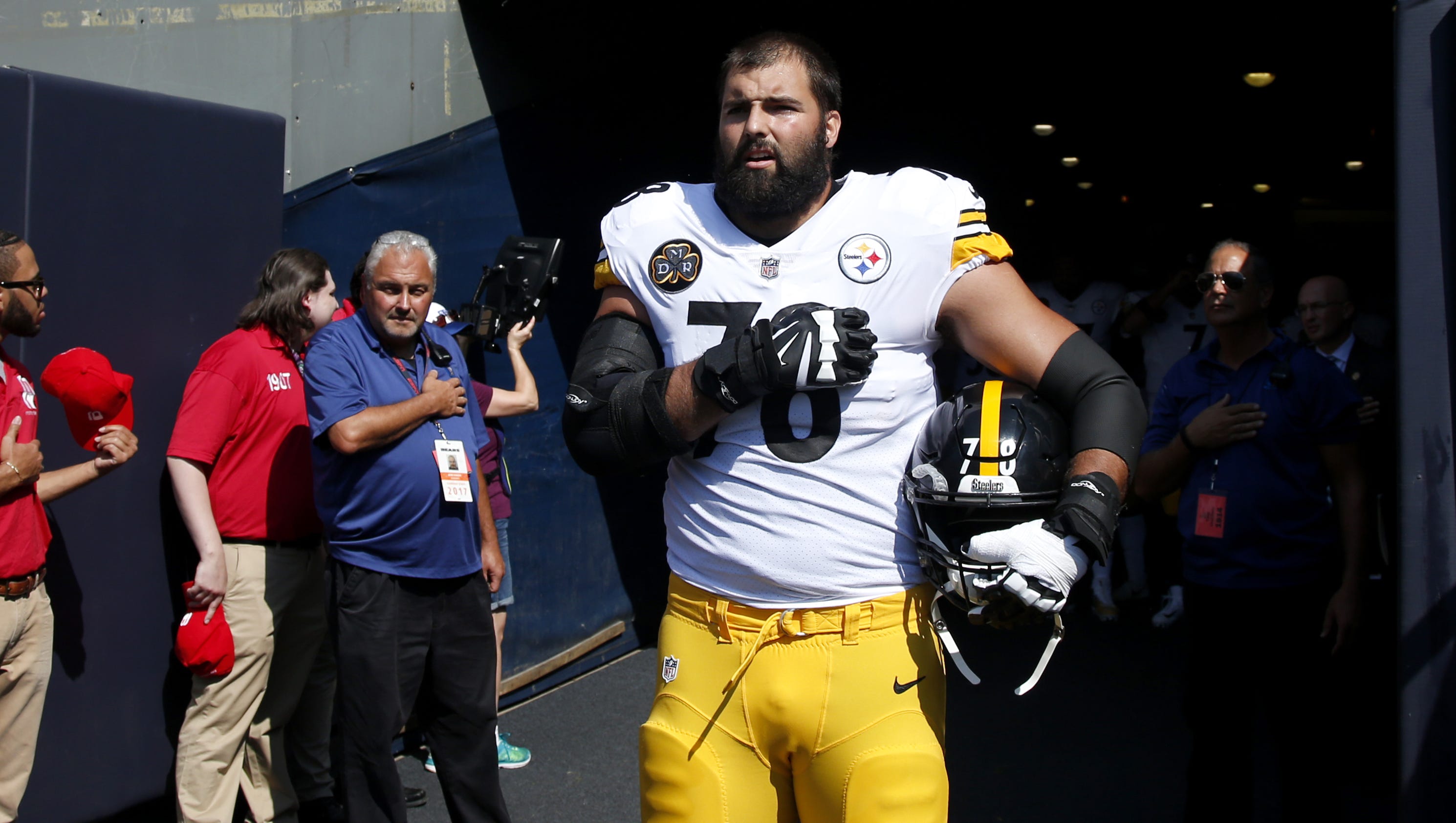
Impact of Protests on NFL Brand? Baylor Sports Sales Expert is Watching How 'Generations' Respond
Kirk Wakefield, Ph.D., is the Edwin W. Streetman Professor of Retail Marketing and director of Baylor University’s Sports Sponsorship & Sales program. He is an oft-quoted expert on marketing and branding of professional sports teams and serves as publisher and editor of The Baylor S3 Report (www.baylors3.com), the industry-leading publication featuring best practices in sports sales and marketing. In response to this weekend’s protests during many of the NFL games, Wakefield said he is closely watching the “generations” of fans, particularly the season ticket holders. He explained that the average NFL season ticket holders are male, in their 40s and have a household income of more than $100,000. “I think the question is if the NFL can truly use this as a unifying rather than divisive tool. The dilemma is that the season ticket holder base is older and more prone to see it as divisive and offensive. But the younger set, tomorrow’s fan base, is likely to side with the players. So, brand equity could erode among current season ticket holders and, at the same time, gain interest and support from millennials – who have not been watching or attending as much.” Wakefield’s research in retailing covering more than two decades focuses primarily upon sports psychology, team sports marketing, entertainment marketing, and fan and consumer response to pricing and promotional tools. He has conducted fan research in almost every venue in sports including the NBA, NFL, MLB, MLS, NHL, and NASCAR. Source:

Will Sept. 25 be Kurdish Independence Day?
On Sept. 25, a lot of the world’s important eyes will be watching the results of a referendum few have heard about. The Kurdistan Region of Iraq (KRI) is finally holding a referendum on its independence. It’s a referendum many object to – including those in Baghdad and in the United States. There are concerns that this path to independence will not be a smooth one and could further destabilize this already tumultuous region. Efforts and negotiations are ongoing in hopes that this historic vote can be delayed or even postponed. The stakes in this are high. In this region, relationships between the Kurds and Turkey are not good. Separating from Iraq could also see consequences. The threat of violence is very real and who will be there to support an independent KRI is also in question. There are many pieces at play. This involves a century of history, territory and tribalism all in an area that cannot afford another conflict. So, will the referendum take place even though Iraq's Supreme Court on Monday ordered the suspension of the referendum? If it does, what will be the outcome? Can America not support a group of people using democracy to determine its own fate? Are the costs of preventing this referendum worth it in the long run? How will the referendum affect politics in the Middle East and globally? Missouri State University’s Dr. David Romano, an expert in Middle Eastern politics, particularly the Kurdish region, is available to provide his insights on this complex and developing issue. He has been contributing to international discussion on this topic in his weekly column on Rudaw. Romano spent six months last year in Iraqi Kurdistan, behind the lines near Mosul. He believes the time is right for Kurdish independence. It’s also relevant to American interests due to the oil market and the international political landscape. Click on his icon to arrange an interview. Source:

New iPhone X Announcement Sparks Talk of Smartphone Use and Addiction - Baylor Experts Can Weigh In
James A. Roberts, Ph.D., The Ben H. Williams Professor of Marketing, and Meredith David, Ph.D., assistant professor of marketing, in Baylor University's Hankamer School of Business, actively research the effects of smartphones on consumers. Their findings regarding "phubbing" -- phone snubbing -- and how that practice can damage relationship and lead to depression have garnered national and international attention. Building on their "phubbing" research and the damage it does to relationship, they more recently found that the circle nearly completes itself as the offended parties frequently jump online to find affirmation in the likes and shares and positive comments of social media. “Although the stated purpose of technology like smartphones is to help us connect with others, in this particular instance, it does not,” David said. “Ironically, the very technology that was designed to bring humans closer together has isolated us from these very same people.” Roberts authored the book “Too Much of a Good Thing: Are You Addicted to Your Smartphone?” Source:

