
Experts Matter. Find Yours.
Connect for media, speaking, professional opportunities & more.

The Fatima Apparitions - Historical and Spiritual Significance
The Fatima apparitions hold profound importance for millions worldwide, representing a convergence of faith, spirituality, and historical events. This event matters to the public as it embodies themes of devotion, miracles, and the enduring power of belief. The story of Fatima offers numerous compelling angles for journalists to explore, appealing to a broad audience: The historical context and significance of the Fatima apparitions Personal testimonies and accounts of those who witnessed the events The impact of Fatima on religious practices and devotion Continuing pilgrimage and commemorative events at the Fatima shrine Interpretations and debates surrounding the messages conveyed at Fatima Cultural and societal influences of the Fatima apparitions on art, literature, and popular culture As we reflect on the Fatima apparitions, journalists have an opportunity to delve into these multifaceted narratives, uncovering the enduring legacy and spiritual resonance of this remarkable event. Connect with an Expert about the Fatima Apparitions: Timothy Matovina Chair, Department of Theology · University of Notre Dame Massimo Faggioli, PhD Professor of Theology and Religious Studies | College of Liberal Arts and Sciences · Villanova University Francis Beckwith, Ph.D. Professor of Philosophy & Church-State Studies, Affiliate Professor of Political Science · Baylor University Brett C. Hoover Associate Professor of Practical/Pastoral Theology & Graduate Director · Loyola Marymount University To search our full list of experts visit www.expertfile.com Photo Credit: Mateus Campos Felipe


The Golden Spike and railroad history are not merely relics of the past; they represent pivotal moments in human innovation and connectivity that continue to shape our present and future. This event matters to the public because it commemorates the completion of the first transcontinental railroad in the United States, symbolizing unity, progress, and the spirit of exploration. Delving into this historical milestone offers numerous story angles that captivate a broad audience: The impact of railroads on westward expansion and economic growth Stories of perseverance and labor in building the transcontinental railroad Technological advancements in railway engineering and construction Cultural and social transformations brought about by the railroad Environmental implications of railroad expansion and modern-day sustainability efforts Tourism and heritage preservation initiatives centered around railroad history As we celebrate the Golden Spike and reflect on railroad history, it's an opportune time for journalists to explore these multifaceted narratives that resonate with audiences worldwide. Connect with an Expert about transportation and railroad history: Allan Zarembski Professor of Practice Civil and Environmental Engineering; Director, Railway Engineering and Safety Program · University of Delaware James Kieselburg Director · Milwaukee School of Engineering James McCommons Associate Professor · Movable Type Management Danaya Wright Professor/Director · University of Florida To search our full list of experts visit www.expertfile.com Photo Credit: Tom Barrett

300 million tonnes of rice straw are burned after harvest in Asia every year Aston University will be contributing to new international project to unlock renewable energy potential Its researchers will lead on calculating the greenhouse gas emissions savings of new systems. Aston University researchers are helping to make rice straw processing in India and the Philippines less environmentally damaging. The University will be contributing to a new international collaboration, the Renewable, Inclusive Carbon-negative Energy (RICE) project, funded by Innovate UK Energy Catalyst programme to unlock renewable energy for rice farmers. Already the University has worked with UK company Straw Innovations in the Philippines and now the two are expanding their collaboration to benefit more of the continent. Aston University working with UK company Straw Innovations and Indian enterprise, Takachar Rice straw is a crop waste byproduct and each year across Asia 300 million tonnes of it go up in smoke when burnt after harvest. This releases emissions and air pollutants that triple risks of increased respiratory diseases and accelerate climate change. India and the Philippines are the world’s second and eighth largest rice producers respectively and together they produce 130 million tonnes of both rice and straw per year. Aston University and Straw Innovations and will be collaborating with an Indian award winning small and medium sized enterprise, Takachar. The firm has developed small scale, low-cost, portable equipment which can convert agricultural waste on-site into higher value bioproducts such as fertilizer blends, chemicals and biofuels. "The company will develop a super-sized version which is 10 times bigger than their current device, make it adaptable to rice mills, and will send it to Straw Innovations, so the two firms can test out different business models for farmer adoption/benefit. Straw Innovations will also send their machines from the Philippines to India mid-project and the two countries will test out different business models for farmer adoption/benefit. And for the first time they will tap into the heat produced in the waste process to dry rice, instead of using diesel or kerosene. University researchers will lead on assessing the sustainability of the project, calculating the greenhouse gas emissions savings of the new systems introduced by Straw Innovations and Takachar. Sustainability expert Dr Mirjam Röder will also engage with the farming community and rural stakeholders to quantify how the systems can increase farmer incomes, equality of opportunity, food security and decarbonisation benefits, whilst highlighting any trade-offs. Dr Röder who is based at Aston University’s Energy & Bioproducts Research Institute (EBRI) said: “Environmentally, rice produces 48% of all global crop emissions, due to methane from flooded fields. This is halved when the straw is removed and reduced further when its carbon is stored in biochar. We are aiming for carbon negative which means removing carbon dioxide (CO₂) from the atmosphere or sequestering more CO₂ than is emitted. “Our new research leads on from our rice straw bio gas hub project with Straw Innovations, SEARCA and Koolmill and we’re pleased to be building further relationships with new partners in India. In January Biomass and Bioenergy published a paper about the topic written by Dr Röder, the director of EBRI Professor Patricia Thornley and Craig Jamieson of Straw Innovations called The greenhouse gas performance and climate change mitigation potential from rice straw biogas as a pathway to the UN sustainable development goals. Craig Jamieson from Straw Innovations said "We’ve been pioneering rice straw work with the team at Aston University for the past seven years. We're delighted to continue that strong partnership and widen it to include Takachar in this new project. “Takachar is a leader in making biochar from crop residues and our partnership with them is very strategic. We look forward to combining our new improved straw harvesting technology with their scaled-up biochar production. It will be a step change, creating a new, more efficient system for carbon negative energy and soil improvement for rural communities across Asia." Vidyut Mohan who founded Takachar said: “We are excited to partner with Aston University and Straw Innovations. “Our combined solutions can significantly move the needle in reducing crop residue collection costs and biochar production costs for carbon removal." Notes to Editors Rice straw is a crop waste byproduct and each year across Asia 300 million tonnes of it go up in smoke when burnt after harvest https://tinyurl.com/2afjhhsj To read The greenhouse gas performance and climate change mitigation potential from rice straw biogas as a pathway to the UN sustainable development goals visit https://www.sciencedirect.com/science/article/pii/S0961953424000254, Biomass and Bioenergy Volume 182, March 2024, 107072 Mirjam Röder and Patricia Thornley Energy & Bioproducts Research Institute (EBRI), College of Engineering and Physical Sciences, Aston University, Aston Triangle, Birmingham, B4 7ET, United Kingdom Craig Jamieson Straw Innovations Ltd., Lawes Open Innovation Hub, Rothamsted Research, West Common, Harpenden, HERTS, AL5 2JQ, United Kingdom https://doi.org/10.1016/j.biombioe.2024.107072 About Aston University For over a century, Aston University’s enduring purpose has been to make our world a better place through education, research and innovation, by enabling our students to succeed in work and life, and by supporting our communities to thrive economically, socially and culturally. Aston University’s history has been intertwined with the history of Birmingham, a remarkable city that once was the heartland of the Industrial Revolution and the manufacturing powerhouse of the world. Born out of the First Industrial Revolution, Aston University has a proud and distinct heritage dating back to our formation as the School of Metallurgy in 1875, the first UK College of Technology in 1951, gaining university status by Royal Charter in 1966, and becoming The Guardian University of the Year in 2020. Building on our outstanding past, we are now defining our place and role in the Fourth Industrial Revolution (and beyond) within a rapidly changing world. For media inquiries in relation to this release, contact Nicola Jones, Press and Communications Manager, on (+44) 7825 342091 or email: n.jones6@aston.ac.uk




Understanding the red flags: Signs of intimate partner violence explained by an expert
Intimate partner violence is a serious and widespread issue that affects millions of individuals every year. Angela Hattery, professor of women and gender studies at the University of Delaware and co-director of its Center for the Study & Prevention of Gender-Based Violence, can talk about ways to spot warning signs in an effort to prevent further harm and provide support to those in need. "When we think about the warning signs, especially for progressing to lethal violence, the absolute top early warning sign is strangulation,” Hattery recently said to The 19th, a nonprofit newsroom focused on women and LGBTQ+ people. In an article on the recent passing of O.J. Simpson, she noted that "the Simpson trial was a missed opportunity" and "While the nation debated Simpson’s guilt or innocence, it overlooked the signs of intimate partner violence that his wife had reported before her murder." Hattery's expertise has appeared in a number of outlets including The Conversation and New York Public Radio, an NPR affiliate. She can be reached by clicking her "View Profile" button.


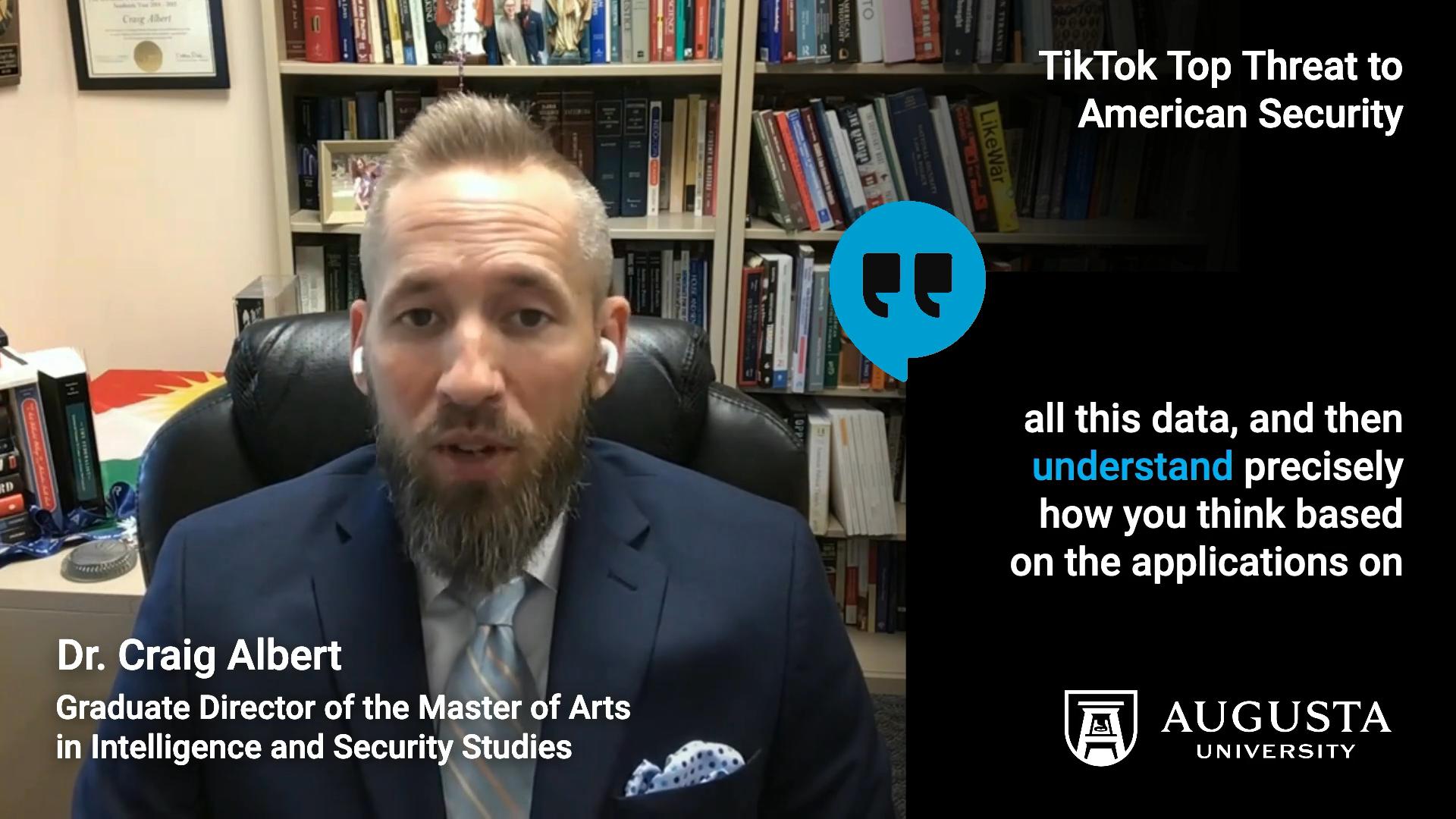
Time to talk about Tik Tok? Dr. Craig Albert explains the reasons we need to know more about the app
Earlier this week, TikTok said they were suing the U.S. government to stop a bill passed last month seeking to force ByteDance, TikTok’s Chinese to sell the app or have it banned. The lawsuit, filed in the U.S. Circuit Court of Appeals for Washington, D.C., argues that the bill violates constitutional protections of free speech. The suit calls the law an “unprecedented violation” of the First Amendment. Lawsuits and rhetoric aside - there are serious concerns about TikTok and Dr. Craig Albert is lending his expertise to explain what is going on behind the screens of the popular app. Read more about the dangers of TikTok here Read more from Albert about Informational Warfare here Read more from Albert about deepfakes here Craig Albert, PhD, is director of the Master of Arts in Intelligence and Security Studies at Augusta University. He is a leading expert on war, terrorism and American politics. AI and the upcoming election is a serious topic. Albert is available to speak with media – simply click on his name to arrange an interview today.


Homes heated by human sewage could be a reality thanks to Aston University
Project to transform sewage sludge into clean water and energy awarded a share of £4.5 million by Ofwat Involves extracting energy from the waste produced during sewage and water treatment Gases obtained can be used to power engines or heat people’s homes. An Aston University project that could transform sewage sludge into clean water and energy has been awarded a share of £4.5 million by Ofwat. The University project with engineering consultancy ICMEA-UK involves extracting energy from the waste produced during sewage and water treatment and transforming it into hydrogen and/or methane. The gases can then be used to power engines or heat people’s homes. The aim is to create a sustainable and cost-efficiently run wastewater processes, plus extra energy. The initiative was one of ten winners of Ofwat’s Water Discovery Challenge, of which the Aston University scientists and two industrial partners have been awarded £427,000. Dr Jude Onwudili based at Aston University’s Energy and Bioproducts Research Institute (EBRI) is leading the team of scientists who will work with the partners to develop a trial rig to transform solid residues from wastewater treatment plants to hydrogen and/or methane. The two-stage process will involve the initial transformation of organic components in the sludge into liquid intermediates, which will then be converted to the fuel gases in a second stage. The project is called REvAR (Renewable Energy via Aqueous-phase Reforming), and Dr Onwudili will be working with lead partner and engineering consultancy company ICMEA-UK Limited and sustainable infrastructure company Costain. REVAR combines the use of hot-pressurised water or hydrothermal conditions with catalysts to achieve high conversion efficiency. The technique can treat sewage sludge in just minutes, and it is hoped that it will replace existing processes. In 2013, a Chartered Institution of Water and Environmental Management report stated that the sector is the fourth most energy intensive industry in the UK. Dr Onwudili said: “This project is important because millions of tonnes of sewage sludge are generated in the UK each year and the water industry is struggling with how to effectively manage them as waste. “Instead, they can be converted into valuable feedstocks which are used for producing renewable fuel gases, thereby increasing the availability of feedstocks to meet UK decarbonisation targets through bioenergy. “We will be taking a waste product and recovering two important products from it: clean water and renewable energy. Overall, the novel technology will contribute towards meeting UK Net Zero obligations by 2050 and ties in with the University’s purpose to make our world a better place through education, research and innovation.” The Water Discovery Challenge aims to accelerate the development and adoption of promising new innovations for the water sector. Over the next six months, winners will also receive non-financial support and will be able to pitch their projects to potential water company partners and/or investors. The 10 winning teams are from outside the water industry and were chosen because of their projects’ potential to help solve the biggest challenges facing the sector. The competition is part of the Ofwat Innovation Fund, run by the water regulator Ofwat, with Challenge Works, Arup and Isle Utilities and is the first in the water sector to invite ideas from innovators across industries. Helen Campbell, senior director for sector performance at Ofwat, said: “This competition was about reaching new innovators from outside the sector with different approaches and new ideas, and that’s exactly what the winners are doing. “The products and ideas recognised in this cross-sector challenge will equip water companies to better face challenges of the future – including achieving sustainability goals and meeting net zero targets – all while providing the highest-quality product for consumers.” ENDS A Blueprint For Carbon Emissions Reduction in the UK Water Industry The Chartered Institution of Water and Environmental Management https://www.ciwem.org/assets/pdf/Policy/Reports/A-Blueprint-for-carbon-emissions-reductions-in-the-water-industry.pdf Ofwat Innovation Fund Ofwat, the Water Services Regulation Authority for England and Wales, has established a £200 million Innovation Fund to grow the water sector’s capacity to innovate, enabling it to better meet the evolving needs of customers, society and the environment. The Innovation Fund, delivered in partnership with Challenge Works (formerly known as Nesta Challenges) and supported by Arup and Isle Utilities, is designed to complement Ofwat’s existing approach to innovation and to help deliver against Ofwat’s strategy which highlights the role of innovation in meeting many of the challenges the sector faces. About ICMEA-UK Based in Sheffield, in the North of England, ICMEA-UK is the UK arm of an established Italian innovative engineering company - ICMEA SRL. They are an innovative Engineering consultancy company, and work in partnership with a range of other organisations to provide innovative, bespoke solutions to problems where an Engineering solution is required. About Costain Costain helps to improve people’s lives by creating connected, sustainable infrastructure that enables people and the planet thrive. They shape, create, and deliver pioneering solutions that transform the performance of the infrastructure ecosystem across the UK’s energy, water, transportation, and defence markets. They are organised around their customers anticipating and solving challenges and helping to improve performance. By bringing together their unique mix of construction, consulting, and digital experts they engineer and deliver sustainable, efficient, and practical solutions. About Aston University For over a century, Aston University’s enduring purpose has been to make our world a better place through education, research and innovation, by enabling our students to succeed in work and life, and by supporting our communities to thrive economically, socially and culturally. Aston University’s history has been intertwined with the history of Birmingham, a remarkable city that once was the heartland of the Industrial Revolution and the manufacturing powerhouse of the world. Born out of the First Industrial Revolution, Aston University has a proud and distinct heritage dating back to our formation as the School of Metallurgy in 1875, the first UK College of Technology in 1951, gaining university status by Royal Charter in 1966, and becoming The Guardian University of the Year in 2020. Building on our outstanding past, we are now defining our place and role in the Fourth Industrial Revolution (and beyond) within a rapidly changing world. For media inquiries in relation to this release, contact Nicola Jones, Press and Communications Manager, on (+44) 7825 342091 or email: n.jones6@aston.ac.uk


Today is Victory in Europe Day (VE Day) - Our history #experts are here to help with your stories
Victory in Europe Day marks a monumental moment in human history, signifying the end of World War II in Europe and the dawn of a new era of peace and reconstruction. This event matters to the public as it commemorates the sacrifices made by millions and celebrates the triumph of freedom over tyranny. VE Day offers a plethora of compelling story angles that resonate with a broad audience: The human stories behind the victory: tales of courage, resilience, and sacrifice The significance of VE Day in shaping post-war geopolitics and international relations Commemorative events and ceremonies honoring veterans and their legacies Reflections on the lessons learned from World War II and their relevance today The cultural impact of VE Day on art, literature, and popular culture Continuing efforts for reconciliation and remembrance across generations As we mark Victory in Europe Day, journalists have an opportunity to delve into these rich narratives, shedding light on the enduring legacy of the Greatest Generation and the ongoing quest for peace and freedom worldwide. Connect with an Expert about WWII and Victory in Europe Day (VE Day): Colin Rafferty Associate Professor · University of Mary Washington Patrick Jung, Ph.D. Professor · Milwaukee School of Engineering Marc Gallicchio, PhD Professor and Mary M. Birle Chair in History | College of Liberal Arts and Sciences · Villanova University Kara Dixon Vuic LCpl. Benjamin W. Schmidt Professor of War, Conflict, and Society in 20th-Century America · Texas Christian University Stephen Sloan, B.B.A., M.A., PhD. Director of Institute for Oral History, Associate Professor of History · Baylor University To search our full list of experts visit www.expertfile.com Photo Credit: Galt Museum & Archives
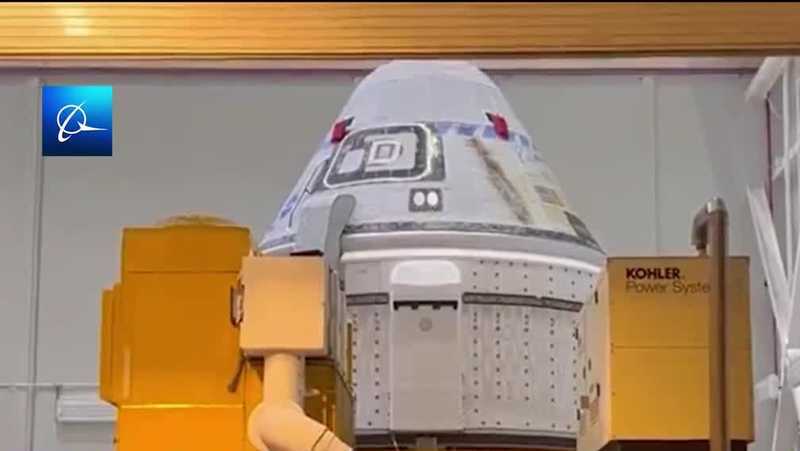
Ready for takeoff! The Starliner is set for its first mission to the ISS
Since 2011, any American astronaut looking to get to or from the International Space Station (ISS) had to lift off from the Baikonur Cosmodrome, a spaceport operated by Russia within Kazakhstan. It was the only way to get up into space - for now. It's why almost a decade ago private sector companies Boeing and SpaceX were engaged by NASA to develop a new way to get to the ISS from American soil. All of that is about to change, and all eyes have been on Boeing's Starliner as it readies to take flight with a crew for the first time. Florida's Tech's Don Platt , the Director of the Spaceport Education Center, has also been busy as the media coverage has been intense. “In this case, NASA is truly buying a service and it’s up to the company to get it all right. With just some oversight," said Don Platt, of Florida Tech. Starliner rolled out to Launch Complex 41 in the early morning on Tuesday. It will be positioned atop a ULA Atlas 5 rocket for the planned liftoff on May 6 from the Cape Canaveral Space Force Station. As Platt explained, Starliner is a critical second option for NASA. “With all the success of SpaceX has had recently, we can’t simply rely on SpaceX to provide all services to the American space program," Platt said. This is the first flight of Starliner with a crew onboard so it’ll be the first time for it to fly in this configuration. During these test missions, there are always lessons to be learned. “We are all aware of some of the issues the Boeing company has experienced in the last couple of years. And to have a successful test flight here with astronauts onboard is a definite plus from PR aspect,” Platt said. Two seasoned NASA astronauts will be the first to take a ride in Starliner up to the ISS; Suni Williams and Barry “Butch” Wilmore. They’ll be up there for eight days on this test mission and if all goes well, the first Starliner mission on NASA crew rotation up to the ISS will come next spring. -- April 16 - NBC News Getting to the ISS, Moon and even Mars are getting a lot of attention lately. If you're a journalist look to cover the topic, let us help. Dr. Don Platt's work has involved developing, testing and flying different types of avionics, communications, rocket propulsion systems as well as astrobiology/biotechnology systems and human deep space exploration tools. Don is available to speak with media anytime. Simply click on the icon below to arrange an interview today.


This Is a Critical Moment: Delaware Must Not Go Backward in Health Equity
The proposed Delaware House Bill 350 is well-intended but would have terrible consequences for Delaware’s most vulnerable populations. There is a better way. By LeRoi S. Hicks, M.D., MPH, FACP As a Black physician who has dedicated his 25-year career to understanding and addressing health equity, I am deeply concerned about Delaware’s proposed House Bill 350, which aims to address rising health care costs by establishing a body of political appointees that would oversee the budgets of Delaware’s nonprofit hospitals. While the goal of bending the cost curve in health care may be well-intentioned, this bill will have horrific consequences for Delaware’s most vulnerable populations, including Black people, Hispanic people and other groups that have been traditionally underserved in health care. We can and must work together to solve this problem and provide the right care, in the right place, at the right time. A tale of two cities To borrow a phrase from Charles Dickens, Delaware, like much of America, is a tale of two cities. The experience of life—including a healthy, safe environment and access to good-quality health care—is vastly different depending on where you live and your demographic background. In the city of Wilmington, for example, ZIP codes that are just a few miles apart represent more than 20 years difference in life expectancy. This is not OK—it’s a sign that we have serious structural problems in our communities that are causing harm to people and making their lives shorter. Importantly, chopping $360 million out of Delaware’s hospital budgets, as House Bill 350 would do in year one, is not going to help this problem—it’s going to make it worse. And in doing so, it would ultimately make health care in Delaware more expensive—not less expensive. The key to lowering health care costs is to improve quality, access and equity Data show that about 5% of patients in the United States account for more than 50% of all health care costs. These are primarily patients who have complex and poorly managed chronic conditions that cause them to end up in the most expensive care settings—hospitals, operating rooms, emergency departments. The key to driving down health care costs is to improve quality and equity so that everyone is supported in achieving their best health, and these high users of the most expensive kinds of care are better supported in managing their health conditions such as diabetes or heart failure in the appropriate way. In doing so, they prevent the need for costly emergency or “rescue” care. Let’s do more—not less—of what we already know works Health care is not a one-size-fits-all industry. The delivery of care for patients across a diverse population requires multiple interventions at the same time. These interventions are designed not only to improve the quality of care but also to close the gap in terms of health care disparities. That’s important, because when we improve care and outcomes for the most vulnerable populations, we tend to get things right for everyone. One type of intervention is about doing exactly the right things for a patient based on the evidence of what will help—and doing nothing extra that will cause harm or generate additional costs without providing additional benefit. An example of this might be ensuring that every patient who has a heart attack gets a certain drug called a beta blocker right after their heart attack, and they receive clear guidance and support on the actions they must take to reduce their risk of a second heart attack, such as regular exercise and good nutrition. The second type of intervention is for the highest-risk populations. These are patients who live in poor communities where there are no gyms and no grocery stores, and people commonly have challenges with transportation and lack of access to resources that makes it difficult—sometimes impossible—to follow their plan for follow-up care. They lack access to high-nutrient food that reduces their risk of a second heart attack. They also live in areas where there are fewer health care providers compared to more affluent areas. These interventions tend to be very intensive and do not generate income for health systems; in fact, they require significant non-reimbursed investment, but they are necessary to keep our most vulnerable patients healthy. The medical community has developed interventions for these populations that are proven to work. A local example is the Delaware Food Pharmacy program, which connects at-risk patients with healthy food and supports their ability to prepare it. The program helps patients improve their overall health and effectively manage their chronic conditions so they can prevent an adverse event that would put them back in the hospital or emergency department. When we work together, we succeed We’ve seen incredible examples of how this work can be successful right here in Delaware. Delaware was the first state in the country to eliminate a racial disparity in colorectal cancer, and we did this by expanding cancer services, including making it easy for vulnerable people to get preventive cancer care and screenings. This is an incredible success story that continues to this day, and it was the result of thoughtful, detail-oriented partnerships among the state and the health care community. The work continues as we collaborate to reduce the impact and mortality of breast cancer in our state. Unfortunately, these kinds of interventions are the first thing to go when health care budgets get slashed, because they don’t generate revenue and are not self-sustaining. These kinds of activities need to be funded—either through grants or an external funder, or by the hospitals and health care systems. By narrowly focusing on cost, we risk losing the progress we have made Delaware House Bill 350, as it’s proposed, would cause harm in two ways: First, it would compromise our ability to invest in these kinds of interventions that work. Second, it increases the risk that higher-cost health services and programs that are disproportionately needed by people in vulnerable communities could become no longer available in Delaware. In states where the government has intervened in the name of cutting costs, like Vermont and Massachusetts, we see the consequences–less quality and reduced equitable access to much-needed services. House Bill 350 will widen the gap between those who have means and those who are more vulnerable. These changes will lead to increased disease burden on these populations. They will end up in the emergency room more and hospitalized more, which is by far the most expensive kind of care. That’s not what anyone wants—and it’s the opposite of what this bill was intended to accomplish. At this moment, in Delaware, we have an opportunity to put our state on a sustainable path to better health for all Delawareans. House Bill 350 is not that path. However, the discussion that House Bill 350 has started is something that we can build on by bringing together the stakeholders we need to collaborate with to solve these complicated problems. That includes Delaware’s government and legislators, the hospitals and health centers, the insurance, pharmacy and medical device industries, and most importantly, patients and the doctors who care for them. LeRoi Hicks, M.D., is the campus executive director for ChristianaCare, Wilmington Campus.


Innovative EEG Brain Monitoring Program Provides Optimal Care for Critically Ill Patients
ChristianaCare has launched an innovative electroencephalogram (EEG) brain monitoring program that represents a significant leap forward in the diagnosis and management of neurological conditions. The easy-to-use EEG program is the first of its kind that can be performed at the bedside to measure the electrical activity of the brain, providing a vital sign for brain function to help diagnose seizures more quickly. ChristianaCare is the first hospital system in Delaware to use the Ceribell point-of-care EEG monitoring system, which can reduce the time it takes to diagnose certain neurological conditions from hours to mere minutes. Using the system, clinicians have immediate access to EEG information so they can triage at-risk patients in just five minutes and monitor patients for treatment optimization. “With this new program, our team of expert clinicians will have the diagnostic information they need to provide high-risk patients with the right care at the right time, ensuring the best outcomes for our patients and their families,” said Kim Gannon, M.D., Ph.D., service line leader for Neurosciences at ChristianaCare. New technology detects ‘silent seizures’ Critically ill patients are at high risk of harmful brain electrical discharges called seizures. Some of these patients experience a type of “silent seizure” with no noticeable symptoms (non-convulsive) that can only be detected using EEG. If prolonged, non-convulsive seizures can lead to permanent brain injury and higher risk of morbidity and mortality. Demonstration of EEG device on patient at ChristianaCare Newark Campus. As a result, guidelines from the Neurocritical Care Society recommend EEG should be initiated within 15-60 minutes when these seizures are suspected. Meeting these guidelines has proven difficult due to the limitations of conventional EEG systems, which were not designed for use in emergency situations. Even top academic centers that have 24/7 EEG capabilities may experience wait times of four hours or more for conventional equipment. When relying on clinical judgement alone while waiting for these conventional EEG systems, diagnostic accuracy has been shown to be only slightly better than chance (65%). The value of this new technology for patients is that it provides accurate results quickly so that the care team can intervene early. “The neuroscience and critical care teams at ChristianaCare believe that ‘time is brain’ not only applies to stroke but also when dealing with seizure,” Gannon said. Gannon is referring to the fact that for every minute that passes when someone is having a stroke, 1.9 million brain cells are lost, increasing the chance of disability or death. That same kind of speed and urgency can now more easily be brought to bear for patients when a seizure is suspected. “This monitoring system is easy to use and can be set up in about five minutes,” said Richard Choi, D.O., medical director of the Neurocritical Care Unit at Christiana Hospital. “It consists of a simple headband, pocket-sized recorder with intuitive software and an on-line portal for remote viewing. Using the system, we can review EEG data, assess response to treatment and optimize care, all in real-time.” Neurosciences at ChristianaCare ChristianaCare’s multidisciplinary neurosciences team provides comprehensive and advanced care for neurologic illnesses across the acute and ambulatory settings. As the largest and most comprehensive neurology practice in Delaware with more than 55,000 patient visits last year, ambulatory subspecialties include stroke, epilepsy, multiple sclerosis, movement disorders, neuromuscular disorders, headaches/migraines, pediatric neurology and Botox specialists. The inpatient team of experts includes neurosurgeons, neurointerventional surgeons, neurocritical care physicians and vascular neurologists. The Newark Campus serves as the only comprehensive stroke center in the state and includes the only Epilepsy Monitoring Unit in Delaware.
