
Experts Matter. Find Yours.
Connect for media, speaking, professional opportunities & more.

Sunday is Cinco de Mayo. Do you know the history behind the day?
Celebrated annually on May 5th, Cinco de Mayo commemorates the Mexican army's victory over French forces at the Battle of Puebla in 1862. While often associated with festive gatherings and cultural celebrations, Cinco de Mayo also holds significant relevance beyond its historical origins, offering various story angles that appeal to a broad audience. Cultural significance and heritage preservation: Explore the historical context of Cinco de Mayo and its importance in Mexican culture, highlighting the traditions, food, music, and art associated with the holiday. Immigration and identity: Examine how Cinco de Mayo is celebrated in different parts of the world, particularly in the United States, and its role in shaping the Mexican-American identity and fostering cross-cultural understanding. Political implications and national pride: Investigate the political undertones of Cinco de Mayo, considering its significance in Mexican nationalism and its portrayal in international relations. Economic impact and tourism: Analyze the economic implications of Cinco de Mayo festivities, including the boost in tourism, sales of Mexican-themed products, and the commercialization of cultural heritage. Education and historical awareness: Discuss the educational value of Cinco de Mayo in schools and communities, examining how it promotes historical awareness, tolerance, and multiculturalism. Social justice and activism: Explore how Cinco de Mayo intersects with social justice movements, addressing issues such as immigration reform, cultural appropriation, and representation in media and politics. By covering these angles, journalists can provide their audiences with a deeper understanding of Cinco de Mayo beyond its surface-level festivities, fostering meaningful dialogue and engagement with the holiday's historical, cultural, and societal significance. Connect with an Expert about Cinco de Mayo: Margarita R. Ochoa Associate Professor and Associate Chair of History · Loyola Marymount University Timothy Matovina Chair, Department of Theology · University of Notre Dame Rodrigo Vargas Professor, Ecosystem Ecology and Environmental Change · University of Delaware Heather Chiero, PhD Associate Professor of History, Anthropology and Philosophy · Augusta University To search our full list of experts visit www.expertfile.com Photo Credit: Daniel Lloyd Blunk-Fernández


Researcher develops microrobots to battle cancer with unique precision
Magnetic robots that can target cancer cells are nothing new. But the patented microrobots developed by the University of Delaware's Sambeeta Das can be guided with a magnetic field to deliver medication to cells – or to destroy infectious cells, such as cancer – inside the body. To mark the launch of National Inventors Month, Das, assistant professor of mechanical engineering, shared her journey toward invention. Q: Tell us about your patented invention on microrobots for cancer research. What problem were you trying to solve? Das: One of the biggest issues with cancer research is the ability to target cancer cells without harming healthy cells. Cancer cells are sneaky, and they have evolved ways of hiding from the body’s immune cells. A big part of our research focuses on targeting, specifically precision targeting. We want to be able to target a single cell in a mass of cells, whether that is a single cell in a mass of cancer cells or whether it is a single abnormal cell surrounded by healthy cells. To do this, we use magnetic microrobots that can be driven inside the body by magnetic fields to a particular cell location. Magnetic fields are biocompatible, meaning they are not harmful to biological tissues, and our microrobots are very small, around 20 microns, which is about the size of a single bacteria cell. We can load our microrobots with various drugs and modify their surface in such a way that when the robots come in contact with the cells we are targeting, they can kill the target cell or perform some other function. Q: How is this solution unique? Das: Other people have made magnetic microrobots, but our system is unique since it allows us to do automatic targeting with a lot of precision. For example, a person operating our microrobots can just point to a cell and our system will drive the microrobot there. Additionally, the instrument we have made and patented is an all-in-one portable device that can be used anywhere. We don’t need a separate microscope, camera or software, it is all built in and very user friendly. Anyone can use it. This makes it super portable, which means quick solutions for health practitioners. In addition, poor and resource challenged areas can also be accessed with this portable solution. Q: What drives you toward invention? Das: I like to solve problems, and I like seeing something come together from nothing. I am very interested in problems that affect human health and longevity, particularly those that affect the common person. Q: How do you approach solving a problem, and whose support has been critical along the way? Das: One thing I have realized is that it is imperative to ask the right question to solve a problem. You must really get to the core of the issue. The second thing is to always keep the end user in mind. So, it’s kind of a two-pronged approach—looking from both ends of the problem. For support, I would say my team members and my collaborators. Their support has been invaluable in helping me solve the problems that I want to solve. In fact, my graduate students keep a running list of crazy ideas that they have come up with. It helps us look at problems in a unique way and come up with innovative solutions. Q: Not every invention makes it. How do you deal with failure? Das: The way that I start working on a problem is to assume that whatever we do, we are going to fail. I always tell my students that their first couple of experiments or designs will always fail. But failure is essential because it will teach you what not to do. And knowing what not to do is sometimes the critical part of the invention process. The failures inform us about the ways of not doing something which means now there is another way of doing something. Q: What is the best advice you’ve ever received? Das: The best career advice I’ve ever received is that there is always another way. If you run into roadblocks there is always another answer, there is always another opportunity. So we just need to keep going and trying new and crazy ideas. Q: How are inventive minds created – is it innate or can it be developed? How do you encourage innovation among your students? Das: That’s an interesting question and honestly, I am not sure. I do believe in what Edison said, “Genius is 1% inspiration and 99% perspiration.” He is a known inventor, so I would go with his interpretation on this. As for my students, I give them lots of freedom. I think freedom is essential in encouraging innovation. The freedom to come up with crazy ideas without anyone saying that won't work and the freedom to fail—multiple times. Das is available for interviews to talk about her microrobots and other projects at UD. To reach her, visit her profile and click the "contact" button.



The ChristianaCare Hospital Care at Home program, a national leader in providing acute care in a place most familiar to patients – their own homes – has reached a new milestone with more than 1,000 admissions since opening in December 2021. ChristianaCare’s innovative program enables patients with common chronic conditions, such as congestive heart failure and diabetes complications, as well as infections like pneumonia, to receive hospital-level care at home through virtual and in-person care provided by a team of physicians, nurse practitioners, paramedics and others. Technology kits deployed to patient homes ensure round-the-clock access to a health care professional, along with twice daily visits from caregivers, medication deliveries and mobile laboratory services. ‘Absolutely amazing’ for patients Patients are evaluated for the hospital care at home program when they come to Wilmington or Christiana hospital emergency departments. Those who can be treated at home receive a technology kit that connects them to the command center, powered by the ChristianaCare Center for Virtual Health. With a touch of a button, they can access an expert team of ChristianaCare doctors and nurses. But hospital care at home isn’t just virtual care — the technology supports an entire care team that works inside the patient’s home and remotely to provide optimal support at all times — just like in a hospital. Carol Bieber, whose 98-year-old father Bill has been a hospital care at home patient, sees the difference it makes for him to wake up in his own bed, sit in his own living room and still get the care he needs to get better. “The whole hospital care at home experience is really calm and easy and familiar to him,” said Bieber, who lives in Newark, Delaware. “My dad is a people person, so to be able to connect with everybody who comes in to see him or talk to him on the screen is just amazing.” Innovative solutions for in-home care ChristianaCare’s Hospital Care at Home program was developed in 2021 after the Centers for Medicaid & Medicare Services (CMS) began the Acute Hospital Care at Home waiver program to allow Medicare beneficiaries to receive acute-level health care services in their home. U.S. Sen. Tom Carper, who represents Delaware, worked to pass the bipartisan “Hospital Inpatient Services Modernization Act” in 2023 that extended this program. Last month. Sen. Carper introduced the bipartisan “At-Home Observation and Medical Evaluation (HOME) Services Act” that would expand this lifesaving and cost-saving program. “Hospital at Home – which grew out of the COVID pandemic – was an opportunity for us to meet seniors where they are,” Carper said. “It has delivered positive outcomes, higher patient satisfaction, and saves money.” Sarah Schenck, M.D., FACP, executive director of the ChristianaCare Center for Virtual Health, said the hospital care at home program has yielded lower readmission rates than brick-and-mortar hospitals. Patient experience scores are about three times higher than a national average traditional hospital experience. “We’ve been conditioned to believe that care only happens within the four walls of a hospital. For our patients who have loved ones at home or their pets, a favorite chair or favorite food, they’re now able to have all of that as they heal,” Schenck said. “Once our patients have experienced this, what we hear from them is that they are truly grateful.” Promoting healing – at home Helping patients recover in their homes also has been transformational for caregivers who get to see a different side of their patients and better understand what they need to successfully recover. “I can’t express how much I enjoy the patients and their families,” said Heather Orkis, a paramedic with Hospital Care at Home. “To be able to enjoy the family and see these people get better in their own homes, with their families, their grandkids, their dogs, their cats – it’s just a completely different kind of medicine.” For Bill Bieber’s family, hospital care at home is more than health care. “It’s just the best thing ever,” Carol Bieber said.


Dr Carl Senior identified two types of smile – affiliative and reward – given by political leaders during the last UK general election in 2019 The eventual winner, Boris Johnson, was found to display the affiliative smile, which acts to align voter behaviour The study is the first to look at how supporters of election losers react to the eventual winner. New research led by Aston University’s Dr Carl Senior has found that the type of smile used by a political leader can influence voters to support them and their political agenda. There are many different types of smile, and the researchers, which also included Professor Patrick Stewart from the University of Arkansas, US, Professor Erik Bucy from Texas Tech University, US, and Professor Nick Lee from Warwick Business School at the University of Warwick, UK, focused on two in particular – the ‘reward’ smile and the ‘affiliative’ smile. They used videos from political leaders from the 2019 UK general election, which was won by the Conservative party, then led by Boris Johnson. The Labour party, then led by Jeremy Corbyn, came second. Jo Swinson was the leader of the third-placed Liberal Democrat party. The ‘reward’ smile is the genuine, or felt smile, associated with joy and enthusiasm. It is the smile most likely to be contagious with onlookers, and has been linked to higher levels of trust. The ‘affiliative’ smile, meanwhile, communicates approachability, acknowledgement, and appeasement. It is associated with an affinity towards the onlooker and is thought to be important for developing cooperative relationships. The researchers selected volunteers professing to be supporters of each of the three main parties and showed them the same video footage of the three leaders – Johnson, Corbyn and Swinson – before and after the 2019 election. The team assessed the emotional response to the different smiles for the candidates, whether positive (happiness and affinity) or negative (anger and distress). When shown footage of election winner Johnson’s affiliative smile after the election, people in all groups showed an increase in happiness and affinity compared to when they were shown the footage before the election. Supporters of the losing parties showed an overall decrease in the negative effect. It was only this affiliative smile which was found to act as a mechanism to align voter feelings and behaviour to the dominant, or winning, political message. The reward smile did not have the same effect. Supporters of Labour showed an increased level of anger and distress when viewing Johnson’s reward smile after the election compared to before it. The effects for Corbyn and Swinson were less marked, showing that they failed to significantly change voters’ responses to them. Their appeal was somewhat fixed and failed to match Johnson’s charm. Johnson tapped into the voters’ feeling of annoyance about the slow Brexit process with his ‘Get Brexit done’ slogan, while Corbyn’s position was ambiguous. Swinson’s party was pro-Europe but lacked Johnson’s performative abilities to link a strong message to his nonverbal communication. Previous work by various researchers has shown that observers judge leadership traits and behaviour, or a lack thereof, from non-verbal cues such as facial expressions. However, there has, until now, been little research outside the US on the effect of facial displays on voter behaviour. Dr Senior said: “The human smile can convey both rewarding and affiliative social intent and thus has significant utility in politics, where the ability to bond with and reassure voters is vital to electoral success. We are in an unprecedented year as there are numerous elections scheduled to take place across several continents. The outcome of these campaigns will have a significant impact on millions of people across vast geopolitical regions. Given that almost all politicians involved in these election campaigns will make full use of broadcast media to reach voters, it is crucial to understand the effectiveness of their non-verbal displays in shifting voting preference.” Professor Lee said: “The individual appeal of party leaders has become increasingly influential. A smile can’t win an election on its own. But Johnson’s personal appeal transcended party policies, connecting with people who hadn’t planned to vote for him. “The upside for today’s politicians is that charisma is not an innate quality. It can be taught. By paying attention to their facial behaviour and ensuring they display the right smile in the right context, they can still leverage the power of emotional responses. It is something leaders of all organisations can learn.” The researchers say more work is required to understand how smiles work together with other verbal and nonverbal displays to generate affinity in voters and convey social dominance to other leaders. PLOS ONE DOI: 10.1371/journal.pone.0301113

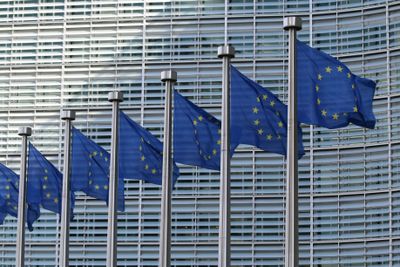
Two decades ago, the European Union welcomed ten new member states, including Cyprus, Czech Republic, Estonia, Hungary, Latvia, Lithuania, Malta, Poland, Slovakia, and Slovenia. This historic expansion not only reshaped the geopolitical landscape of Europe but also holds significance for global politics, economics, and cultural integration. Understanding this event's importance requires recognizing its impact on various fronts, from fostering regional stability to influencing trade dynamics and promoting cross-cultural exchange. Key sub-topics that may interest journalists and the public include: European Integration and Unity: Exploring how the expansion has contributed to the European Union's efforts towards unity, cooperation, and peace among member states. Economic Implications: Analyzing the economic effects of the expansion on both existing and new member states, including trade patterns, investment flows, and disparities in development. Political Dynamics: Investigating the political changes within the European Union, such as shifts in power dynamics, decision-making processes, and the challenges of governance in a larger union. Cultural Exchange and Identity: Examining the cultural exchange and diversity resulting from the inclusion of new member states, and how it has enriched the European cultural tapestry. Challenges and Achievements: Assessing the successes and ongoing challenges faced by the European Union post-expansion, including issues related to migration, integration, and institutional reforms. Future Prospects: Speculating on the future of the European Union, considering factors like potential further expansions, the rise of Euroscepticism, and the Union's role in global affairs. The 20th Anniversary of the Expansion of the European Union marks a significant milestone in the continent's history, offering journalists and the public alike a chance to reflect on the achievements, challenges, and the future trajectory of European integration. Connect with an Expert about the EU: Carolyn Dudek Professor of Political Science · Hofstra University Dr Martin Brenncke Lecturer in Law · Aston University David R. Dorondo Professor · Western Carolina University To search our full list of experts visit www.expertfile.com Photo Credit: Guillaume Périgois

Success Is Sweet: Ferrero's Crown Jewel, Nutella, Turns 60
Six decades ago, on April 20, 1964, the first jar of Nutella left Gruppo Ferrero's factory in the Italian town of Alba. In its gooey wake, the chocolate-hazelnut treat would spread across continental Europe, and then the world, like a healthy schmear on toast. Today, Nutella is the crown jewel of Ferrero's confectionary empire, propping up a business that generates roughly 17 billion euros in revenue each year. Annually, a whopping 365,000-plus tons of the stuff are sold across 160 countries, and nearly one quarter of all hazelnuts harvested are devoted to its production. Luca Cottini, PhD, is an associate professor of Italian in Villanova University's College of Liberal Arts and Sciences and an expert on modern Italian culture, history and society. He also is the author of a book on Michele Ferrero, the mastermind behind Nutella and its meteoric rise: Il fabbricante di cioccolato. To mark the iconic Italian brand's 60th anniversary, Dr. Cottini shared some thoughts on its Willy Wonka-like creator, early (accidental) origins and recipe for international success. Here's a taste: Q: According to Business Insider, a jar of Nutella is sold every 2.5 seconds—just about the time it takes to finish this sentence. How did we get so "nuts" for Nutella, anyway? Dr. Cottini: Well, much of the success of Nutella relates to its novelty, to the idea of spreadable chocolate. At one point, to think that spreading chocolate would be popular was as crazy as to predict that spreadable coffee would be a hit. The idea developed because, in the mid-to-late 1940s, Michele Ferrero's father Pietro was to combine the scarcity of cocoa in his area with hazelnuts, which was the ingredient most available in Alba. It seemed like condemnation that they should have only hazelnuts. Well, he combined them with cocoa to produce this mix—it's called "gianduja" in Italian—and he sold it. But when the Ferreros sold it in southern Italy, they had a problem: The chocolate was melting with the summer heat; and a lot of the workers in Naples, to not waste it, started to spread it on slices of bread. And it's interesting. The Ferreros have a completely non-moralistic approach to failure. You sell chocolate; it melts. This is somewhat embarrassing. But their approach was instead to see this situation as the beginning of a new idea, of a new concept. Q: Is Nutella's story unique in this respect? DC: Several Italian innovators have similar stories to the Ferreros', especially during the 1930s. [Salvatore] Ferragamo, for instance, developed the wedge shoe because there was a shortage of steel, with an embargo imposed on Italy. So, he used Sardinian cork as a replacement, and that generated the wedge shoe. [Guccio] Gucci, during a leather shortage, started using hemp and decorating the hemp with a double "G," and that became the trademark of the company. [Alfonso] Bialetti, who produced the modern coffeepot, used the only metal that was allowed during Fascism, which was aluminum, since the Partito Nazionale Fascista would not import iron or prime metals. But Bialetti took this poor, hybrid ore and made it something that could become valuable. And so, he invented the moka coffeepot in 1933, which is one of the symbols of Italian design. That’s one of the keys of the Italian model of entrepreneurship: producing objects that are not just trendy for one season, but eventually become evergreen or classic. Q: What inspired the name "Nutella?" DC: It was the product of 18 years of research. For all intents and purposes, "Nutella" first came out in 1946. It was called "SuperCrema" and, before that, "Cremalba." But in 1962, there was a law in Italy that prevented companies in the food industry from using prefixes like "super" or "extra." So, that led Ferrero—by then, under the leadership of Michele Ferrero—to figure out a new alternative to SuperCrema. At the same time, the company was expanding into Germany and France, and they needed a brand name that could be pronounced easily. So, Ferrero joined the "ella" sound from mozzarella, stella, caramella—Italian words that people could recognize—with the word "nut," like the English "nut," which gave their product an international feel. It's really a "glocal" [global and local] name. It was conceived as a very rooted enterprise with a global horizon. Q: In 1964, were Ferrero's global ambitions practical? DC: It was honestly a bit of a gamble. In 1957, the European Economic Community was established, which is the beginning of the European Union. And that same year, Michele Ferrero organized in Rome the first conference of his company, which was by then somewhat national, to plan exportation in Europe. In the Italy of the 1950s and 1960s, this was very pioneering. Michele Ferrero was actually one of the first businesspeople to export products to Germany in the 1950s, at a time when there was a lot of resentment against Italians because of everything that happened during the Second World War. So, he entered this incredibly difficult market, and still today, Ferrero and Nutella are strong. Q: What do you think accounts for Nutella's continued popularity, 60 years after its introduction? DC: Michele Ferrero thought of his products as speaking products. It's something very common to the automobile industry in Italy. This is characteristic of Ferrari and Lamborghini; they produce cars that are appealing not just because they're "super cars," but because they say something. Nutella is a food that says something. When someone puts it on the table, it compels people to jump in and share their own stories—of trying it with a friend, of having it on a hike or of taking part in "Nutella Day." Today, if you're in the market for a chocolate-hazelnut spread, you might find products that are even better than Nutella. Actually, surely better. But they will never replicate the appeal and the grasp that Nutella has. Because Nutella has that aura of storytelling and mythmaking other products simply don't have.


Veterinary deal would increase UK agrifood exports to EU by more than a fifth, research shows
A veterinary deal would increase agri-food exports from the UK to the EU by at least 22.5%, say researchers Agri-food exports overall are worth £25 billion to the UK economy, but the two years since the new trading rules were put in place have seen a fall of 5% in exports to the EU from 2019 levels, during a period where the sector has otherwise grown. Team from Aston University and University of Bristol have analysed trade deals and export figures worldwide to estimate impact of a new veterinary deal on UK–EU exports A veterinary deal with the European Union could increase UK agricultural and food exports by over a fifth, according to new research. The team, from Aston University’s Centre for Business Prosperity and the University of Bristol, analysed the agricultural and veterinary aspects of trade deals around the world to estimate their impact on exports. They then modelled the potential impact of different types of agreement on UK exports to the EU. Veterinary Agreements specifically focus on regulations and standards related to animal health and welfare, as well as to the safety of animal-derived products such as meat, dairy, and seafood. They aim to align, harmonise, or recognise veterinary requirements and certifications, and reduce the number of inspections between countries to facilitate the safe and efficient trade of live animals and animal products. The EU–UK Trade and Cooperation Agreement (TCA), implemented in January 2021, eliminates tariffs and quotas but does not remove non-tariff barriers to trade. These can be particularly burdensome for agricultural and animal-derived food (agri-food) exports, involving complex rules and requirements, production of extensive documentation and veterinary checks. The UK agri-food sector is a cornerstone of the UK economy, with exports worth £25 billion and employing 4.2million people. Although the sector is growing overall, exports to the EU shrank in 2022 by 5% compared to 2019, in part due to the new trade arrangements. This has led to calls for an EU–UK veterinary agreement from business and agri-food organisations, including the Confederation of British Industry, British Chambers of Commerce, UK Food and Drink Federation, Chartered Institute of Environmental Health and British Veterinary Association. Analysing data from the World Bank on 279 trade agreements and export statistics from over 200 countries, the researchers found that shallow agreements, that went little further than provisions already covered by World Trade Organisation (WTO) rules, had significant negative impacts on agri-food exports. However, where trade agreements went beyond WTO provisions to include more commitments on sanitary and phytosanitary (SPS) measures (which aim to protect countries against risks relating to pests, diseases and food safety) and were legally enforceable, they had a robust, positive impact on exports, particularly exports of animal products and food. Applying this to the UK–EU relationship, the team estimate that a veterinary agreement that went beyond the existing TCA provisions would increase agri-food exports from the UK to the EU by at least 22.5%. Imports from the EU would also increase by 5.6%. In the 203 countries studied for the research, positive effects of deep trade deals that included provisions on agriculture took between 10 and 15 years to manifest. But the UK might not have to wait so long, according to report co-author Professor Jun Du, Director of Aston University’s Centre for Business Prosperity. “There is no blueprint out there that mirrors the UK–EU relationship. Most veterinary agreements are agreed as part of a trade deal between countries that haven’t previously had close alignment and it takes a while for the benefits to take effect. “Until recently, the UK had frictionless agri-food exports to the EU, so it’s possible that a supplementary veterinary agreement to reduce some of the frictions created by Brexit could allow trade that previously existed to pick up again quite quickly.” However clear the economic arguments, the legal and political barriers to a veterinary agreement still remain. The researchers address these in their report, suggesting that the best format for the additional measures would be as a supplementary agreement to the TCA. The key question for the UK government in negotiating such an agreement would be what the EU demanded in return. “The closest model is the EU-Swiss relationship, which sees Switzerland largely follow EU law,” said report co-author from the University of Bristol, Dr Greg Messenger. “That’s unlikely to be an option for the UK. As we wouldn’t expect to eliminate all paperwork, we could both agree that our rules meet each other’s standard for phytosanitary protection. As most of our rules are still essentially the same as the EU, that wouldn’t require any major change, though we’d have to agree a greater level of coordination in relation to the development of new rules.” The report was written jointly by Professor Du, Dr Messenger and Dr Oleksandr Shepotylo, senior lecturer in economics, finance and entrepreneurship at the Centre for Business Prosperity, Aston Business School.


Dr Raghunath Anant Mashelkar delivered the 2024 Aston University Annual Distinguished Lecture He has been president of the Indian National Science Academy and director general of the Indian Council of Scientific and Industrial Research and has received multiple honours and awards He was also presented with an honorary professorship in recognition of his outstanding contribution to academia and beyond. Dr Raghunath Anant Mashelkar delivered Aston University’s 2024 Annual Distinguished Lecture to more than 70 invited guests on 22 April. One of the world’s renowned figures in polymer science, research leadership and intellectual property rights, Dr Mashelkar, a chemical engineer, is a global leader and inspiration in his native India and the wider international research community. In recognition of his outstanding contribution to the research community, Dr Mashelkar was bestowed with an honorary professorship at the end of the lecture by Professor Aleks Subic, Vice-Chancellor and Chief Executive of Aston University. The title of Dr Mashelkar’s lecture was ‘Trapeze Artistry in Biomimetic Smart Gels’. ‘Smart gels’, made from synthetic polymers (types of plastics), can be developed with specific functional properties, such as reacting to changes in temperature and pH. Whilst Director at India’s National Chemical Laboratories, Dr Mashelkar led work which discovered smart gels which can mimic biological functions (biomimetic), including being self-healing, self-organising, and acting as enzymes in chemical and biological processes. Their properties can be reversibly switched on or off, or they can change volume or shape, through the use of pH or temperature, the ‘trapeze artistry’ of the title, giving them many uses. This included temperature-responsive comfortable insoles for diabetic feet, drilling fluids which can quickly, but reversibly, plug an oil well, and medical devices for the digestive system, which resist the acidic environment of the stomach to deliver drugs, but dissolve harmlessly in the alkaline environment when they leave the stomach. One of the defining factors of Dr Mashelkar’s work has been serendipity. He told the story of a smart gel that dried to become a completely different shape when dried in his laboratory’s old oven rather than the new oven. One of his research team discovered this was due to the presence of copper ions from corrosion in the oven, which changed the way the molecules arranged themselves and led to a whole new area of research on polymer self-assembly. As he said: “Eyes do not see what the mind does not know. Look at the 'failed' experiment very carefully, maybe the next big breakthrough is waiting there!” Dr Mashelkar also spoke on his life story, from a young boy in India, attending the local municipal school, to addressing thousands of the world’s best minds at places like the World Economic Forum and the World Bank. His great passion now is ‘Gandhian Engineering’ based on the principle of more performance, from fewer resources, for more people. He created the Anjani Mashelkar Award, named after his mother, for the best low-cost, high-technology innovations. Winners have included an Internet of Things-based maternal healthcare system for rural areas and a smartphone app to assess lung health. Dr Mashelkar is proud of his work on Gandhian Engineering. Speaking after the lecture he said: “Rising inequalities create social disharmony. Now, you can’t make the inequalities vanish because you can’t make poor people rich overnight. What is needed is access. Can we give access equality, despite the income inequality? And that’s the principle of Gandhian Engineering. In my lecture I showed a photograph of a poor lady in a hut with a mobile, and a rich lady from a city who also had a mobile. This is equal access. It was not possible previously when mobiles were so expensive. In India now we have good public infrastructure. Data is now Rs 4 per GB and wireless is free. Once you start giving access, there is a parity.” Professor Subic said: “It was a privilege and a pleasure to welcome such a celebrated scientist as Dr Mashelkar to give the Aston University Annual Distinguished Lecture this year. Once again, we have brought a renowned international leader to engage with our community and present some of the most exciting research going on in our world today, while also inspiring the next generation of researchers and international citizens. I am deeply honoured that Dr Mashelkar has accepted an honorary professorship from Aston University in recognition of his international standing and significant contributions to scientific research and innovation.” The distinguished lecture series was established by Professor Subic in 2023. It brings influential speakers to the University to address major scientific breakthroughs, as well as social, cultural and policy issues. The first distinguished lecture was given by Nobel Laureate Peter Agre in 2023. Speaking after the lecture, Dr Mashelkar said: “I am absolutely honoured to get this honorary professorship from Aston University. Aston University is excelling in a number of areas. In terms of its future, I consider that to be very bright for the simple reason that the University’s dynamic Vice-Chancellor is making big changes with speed and skill, with expansion, inclusion and excellence. To be honoured with an honorary professorship is one of the greatest satisfactions and fulfilments of my life.” The lecture was followed by a drinks reception to allow guests to meet Dr Mashelkar and further discuss his work. A video recording of the 2024 Annual Distinguished Lecture will be made available on the University website at a later date.

Aston Business School postgraduate team reaches final of global business simulation competition
Hein, Hussein and Shristi The Universities Business Challenge Global Masters is a team-based business simulation event where participants act as a board of directors The competition offers postgraduate students the opportunity to develop the skills needed for the working world The Grand Final will take place in Southampton on Friday 26 April 2024. A team of postgraduate students from Aston Business School has secured a spot in the Grand Final of the Universities Business Challenge (UBC) Global Masters competition. The competition is a team-based business simulation that provides participants with the opportunity to act as a board of directors who have taken responsibility for improving the performance of a company. Team 'GJ1' from Aston Business School, comprising Hussein Mohammedali Rangoonwala (MSc International Business), Hein Htut Tin (MSc Investment Analysis) and Shristi Shrestha (MSc Investment Analysis), with the guidance of their staff mentor Adriana Braje demonstrated exceptional performance throughout the competition's qualifying rounds. The competition offers postgraduate students a unique opportunity to develop the skills that they will need when moving into the working world and consists of 80 teams, drawn from a wide range of UK and Irish universities. Adriana Braje, a teaching fellow in marketing at Aston Business School, said: “I'm feeling really proud as a mentor seeing my students reach the final of the UBC competition. “Their dedication and teamwork have been outstanding, and I'm excited to see them shine even brighter in the final round.” Professor Zoe Radnor, Pro Vice-Chancellor and Executive Dean for the College of Business and Social Sciences at Aston University, said: “I am pleased to see our students excel on a global platform like the UBC Global Masters competition. “This accomplishment reinforces our position as a leader in business education and highlights the calibre of talent nurtured at Aston Business School, which is commitment to academic excellence and competitive spirit. “It reflects our commitment in our Aston 2030 strategy to ensuring our students are ready for work and life. “I wish the team all the best of luck for the final.” The Grand Final will take place in Southampton on Friday 26 April 2024.

Aston University MBA programmes excel in global Eduniversal Rankings
The Aston Online MBA has been placed 1st in the UK and 24th in the world in the Part-Time MBA rankings The full-time MBA was ranked 4th in the UK and top 20 position in Europe The Eduniversal rankings provide a comprehensive evaluation of Masters and MBA programmes across the globe. Aston University has seen success in the latest Eduniversal rankings, with two MBA programmes securing positions in the global or European top 25. The Aston Online MBA has been placed 1st in the UK and 24th in the world in the Part-Time MBA rankings. The full-time MBA was ranked 4th in the UK and secured a top 20 position (19th) in Europe. It is the latest global accolade for Aston Business School, which is part of an elite group of global business schools that hold the gold standard of ‘triple-crown’ accreditation from AACSB, AMBA and EQUIS, having risen to 66th in the world in the 2024 QS World Subject rankings for business and management studies. Additionally, the MSc Entrepreneurship & International Business has climbed to 25th in the world and 2nd in the UK, while the MSc in Supply Chain Management has risen to 37th worldwide and 2nd in the UK. The Eduniversal rankings provide a comprehensive evaluation of the top 5,820 Masters and MBA programmes, spanning 56 fields of study and covering 153 countries/regions across nine geographic zones, offering a comprehensive view of excellence in higher education globally. Annually, over 20,000 postgraduate programmes from around the globe undergo evaluation. The rigorous assessment process involves collaboration with representatives from leading academic institutions worldwide, alongside 5,000 international recruiters and 100,000 current or recent graduates from these programmes. Professor Aleks Subic, Vice-Chancellor and Chief Executive of Aston University, said: “These latest rankings underscore Aston University’s ongoing commitment to excellence and are a testament to the dedication and hard work of our outstanding staff, students and stakeholders. “It is just the latest in a series of external accolades recognising our success, following the recent announcement of our success in the 2024 QS World Rankings by Subject, which placed business and management studies in the top 8 in the UK and 66th in the world. “These achievements show our Aston 2030 Strategy in action and our dedication to providing an outstanding education for our students at world-leading standard.” Professor Zoe Radnor, Pro Vice-Chancellor and Executive Dean for the College of Business and Social Sciences at Aston University, said: “I am delighted to see the Aston Online MBA and full-time MBA recognised in these latest rankings. “We take pride in our programmes, which are consistently recognised by the world's most prominent rankings as being at the forefront of business education and accredited by AMBA. “We have a strong track record of MBA employability with our graduates going on to excel across the business sectors in companies across the world, and these rankings recognise the hard work of everyone at the University to make that happen.”