
Experts Matter. Find Yours.
Connect for media, speaking, professional opportunities & more.

The Secret to Happiness? Feeling Loved.
After more than 50 years studying close relationships, University of Rochester psychologist Harry Reis has reached a deceptively simple conclusion: Happy people feel loved. That conclusion became the jumping-off point for a new book Reis co-wrote, “How to Feel Loved: The Five Mindsets That Get You More of What Matters Most” (Harper 2026), which blends decades of research on happiness and human connection. In it, Reis and his co-author, Sonja Lyubomirsky, a psychologist at the University of California, Riverside, outline five research-backed mindsets that strengthen connection: sharing authentically, listening to people, practicing radical curiosity, approaching others with an open heart, and recognizing human complexity. The book was recently featured in The New York Times, which noted that the authors contend giving and receiving love function together like a seesaw: You lift a person up with the weight of your curiosity and attentiveness — and they do the same in turn. “The other side is very important also,” Reis told The Times. “To be sharing what’s important to you, to be sharing what you’re concerned about, so it can really become a two-way street.” Reis, who leads groundbreaking research on close relationships, is available to discuss: • The science of feeling loved vs. being loved • How digital distraction undermines connection • AI companionship and its psychological limits • Practical ways to build stronger, more resilient relationships • The link between love, happiness, and health Journalists writing about love and relationships can contact Reis by clicking on his profile.



A future in pharmacy, made possible by support and mentorship
A freshman chemistry major from Hinesville, Georgia, Geovanii Pacheco already has his sights set on a career in pharmacy. His ambition is rooted not just in a love for science, but in personal experience. Growing up, his family spent countless hours navigating prescriptions and insurance coverage for his older brother, Devin, who has autism. During those moments, one pharmacist consistently stood out. This was someone who advocated for his family, helped them through paperwork and made sure Devin got the medication he needed. “It really resonated with me,” Pacheco said. “As a pharmacist, I’d like to embody what she did for us, for others as well.” That goal brought Pacheco to Georgia Southern University where he is now supported by the National Science Foundation’s S-STEM Scholarship Program Award. This is a nearly $2 million grant designed to support Pell-eligible students pursuing degrees in biochemistry, biology, chemistry, geosciences, mathematics, physics or sustainability science. For Pacheco, the program has been nothing short of life-changing. “I can say that I’m not going to college with any financial stress,” he said. “I have no money coming out-of-pocket.” Administered through Georgia Southern’s College of Science and Mathematics, the federally funded program provides last-dollar scholarships that cover remaining costs after Pell Grants and other aid are applied. In addition to financial support, the program pairs students with dedicated faculty mentors and offers structured programming aimed at retention, professional development and long-term success. Sara Gremillion, Ph.D., professor of biology and principal investigator on the grant, said the goal is to ensure that students don’t just enroll in college, but that they also thrive once they arrive. “They may not have a strong expectation about what to expect in college,” said Gremillion. “This program not only removes financial barriers, but it also surrounds students with the support they need to navigate college and plan for their future.” Pacheco has felt that impact from day one. Thanks to the program, he moved into his residence hall a week early to attend a one-week Basebamp program to jump start his college experience. There, he met fellow scholarship recipients and connected with his faculty mentor before classes even began. His mentor, Shainaz Landge, Ph.D., associate professor of chemistry, has helped connect Pacheco with opportunities from joining the Student Affiliates of the American Chemical Society to learning about upcoming pre-pharmacy organizations and undergraduate research. “Students such as Geovanii serve as prime examples of the fulfillment derived from mentorship and teaching,” said Landge. “Their growth and engagement highlight the critical role that effective mentorship plays in fostering both academic development.” That blend of mentorship and financial support is exactly what the grant was designed to provide. Over five years, the program will serve dozens of students in eligible majors such as chemistry, biology, biomedical science, biochemistry, physics, mathematics, sustainability science and geoscience. Each student receives individualized scholarship support, up to $15,000 per year, based on need, along with a faculty mentor who stays with them throughout their undergraduate journey. For Pacheco and his family, the scholarship brought immediate relief. He vividly remembers opening the acceptance email with his mother and scrolling down to see the financial aid details. “She was tickled, let me tell you,” he said. “It lifted so much stress off her shoulders. It was life-changing.” Applications to be part of the next cohort of COSM S-STEM Scholars are open until Feb. 1, 2026. Eligibility requirements, necessary documentation and other information can be found at this webpage. Looking to know more about Georgia Southern University or the National Science Foundation’s S-STEM Scholarship Program Award? Simply contact Georgia Southern's Director of Communications Jennifer Wise at jwise@georgiasouthern.edu to arrange an interview today.

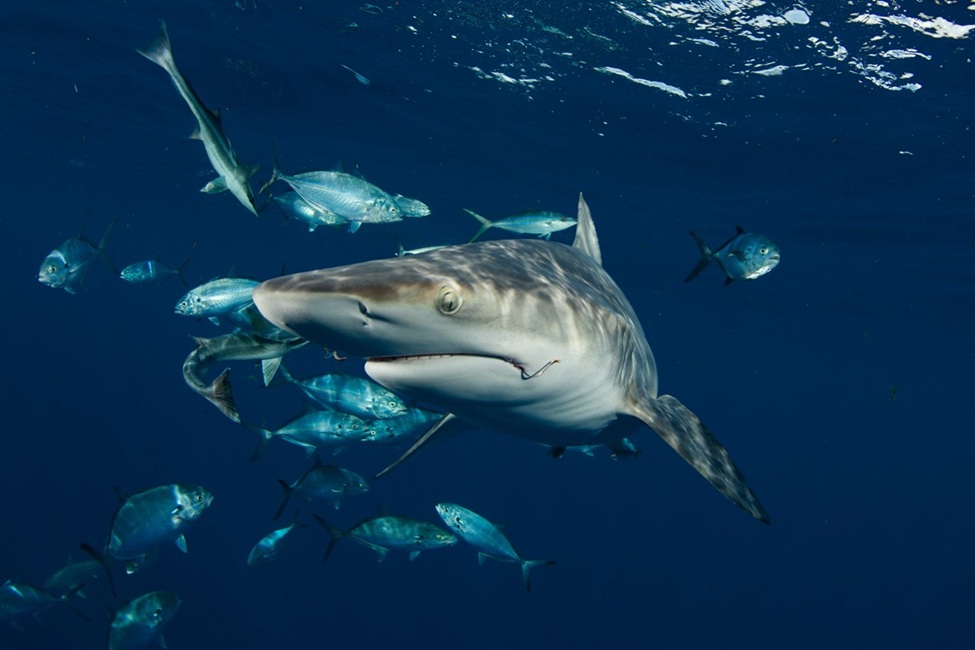
FAU ‘Shark-Repellent’ Method Can Reform Fisheries by Curbing Bycatch
Study Snapshot: Shark bycatch is a major global problem, with millions of sharks caught unintentionally each year in fisheries targeting tuna, swordfish and other species. Even in U.S. waters, sharks are frequently caught on longlines, and many are discarded dead. Because sharks grow and reproduce slowly, these high bycatch rates threaten already vulnerable populations and disrupt marine ecosystems. Researchers at FAU’s Charles E. Schmidt College of Science have developed a patent-pending zinc-and-graphite device to address the problem. The metals generate a small electric field that repels sharks from baited hooks while leaving target species unaffected. In Florida field trials, the device reduced shark bycatch by more than 60%. Inexpensive, scalable and practical for fishers, this technology has the potential to dramatically reduce bycatch and support more sustainable fisheries. For decades, sharks have been the unintended victims of longline fisheries aimed at tuna and swordfish. Rising accidental catches have contributed to population declines and created serious challenges for both conservation and commercial fishing. And the impacts go beyond the sharks themselves – every time a shark takes the bait, hooks are lost to target species, gear gets damaged, costs climb, and crews face added risks when handling or releasing the animals. Although some gear modifications can reduce bycatch, they often also cut into catches of valuable species, making it hard to protect sharks without putting fisheries at a disadvantage. To tackle this challenge, researchers at Florida Atlantic University’s Charles E. Schmidt College of Science have developed an innovative, patent-pending shark deterrent. The device works by pairing zinc and graphite in seawater. The zinc reacts with the graphite to produce a small electric field in the surrounding seawater through a galvanic chemical reaction. This electric field can be detected by the sharks, repelling them from the bait without affecting target fish. To test the efficacy of the zinc/graphite treatment at deterring elasmobranch species, longline fishing gear was deployed to target demersal sharks (live and hunt near the sea floor) off the Florida panhandle and Massachusetts, and pelagic sharks (live and hunt in open water) in the Gulf of America. The results of the field trials, published in the Canadian Journal of Fisheries and Aquatic Sciences, delivered striking results. In Florida, the zinc/graphite treatment reduced the catch of coastal sharks on demersal longlines by 62% to 70% compared to untreated hooks. The effect was particularly strong for Atlantic sharpnose (Rhizoprionodon terraenovae) and blacktip sharks (Carcharhinus limbatus), two common coastal species. “Sharks have an incredible ability to sense even the smallest electric fields, and our tests show that this new approach can be used to keep them away from baited hooks,” said Stephen Kajiura, Ph.D., senior author, inventor and a professor in the FAU Department of Biological Sciences. “At the same time, important target species like tuna and swordfish are completely unaffected. What makes this approach so exciting is its practicality – zinc and graphite are inexpensive, widely available, and already familiar to fishers because zinc is commonly used to prevent corrosion on boats. This means it could be adopted quickly and cost-effectively, providing a real solution to reduce shark bycatch while supporting sustainable fisheries.” Importantly, the treatment did not reduce catches of commercially important fish species. Preliminary pelagic trials suggest swordfish and yellowfin tuna were caught at similar or slightly higher rates on treated hooks, showing the approach could protect sharks without hurting the catch of target species. The study also outlines practical considerations for real-world use. Because the electric field is strongest close to the hook, each line would need its own zinc-graphite device. The zinc anode slowly wears down, but it’s cheap and easy to swap out. Shark bycatch is a widespread and pressing problem, both in the United States and around the world. Globally, millions of sharks are caught unintentionally every year in fisheries targeting other species, and some estimates suggest tens of millions fall victim to bycatch annually. In U.S. waters, despite strict regulations, sharks are still caught incidentally on longlines and other gear. Because sharks reproduce slowly and have long lifespans, these high bycatch rates can push populations toward dangerously low levels. The scope of shark bycatch, from small coastal fisheries to large international fleets, makes it a global conservation challenge with serious ecological consequences. “Our approach could be scaled up to pelagic longline fisheries, where millions of sharks are caught as bycatch annually,” said Kajiura. “Even a 60% to 70% reduction in shark bycatch, like that observed in Florida demersal trials, could have a dramatic impact on global shark populations. The zinc/graphite treatment offers a practical, affordable and environmentally responsible tool for reducing shark bycatch while maintaining commercial catch rates.” Study co-authors are FAU graduate students Tanner H. Anderson and Kieran T. Smith; co-inventor on the patent application; Cheston T. Peterson, a Ph.D. student at Florida State University; Bryan A. Keller, Ph.D., a foreign affairs specialist at NOAA Fisheries; and Dean Grubbs, Ph.D., a full research faculty and associate director of research at FSU. This research was supported by the Florida SeaGrant awarded to Kajiura and Grubbs. The patent-pending device works by pairing zinc and graphite in seawater, creating an electric field that can be detected by the sharks, repelling them from the bait without affecting target fish.



How AI can improve poor leadership writing and boost productivity
Poor written communication from leaders can create the kind of confusion it intended to avoid. University of Delaware career expert Jill Gugino Panté suggests using AI to sharpen emails, clarify expectations and reduce unnecessary calls. Getting through to employees with strong messaging can boost productivity by saving time and reducing unwanted meetings, she says. Panté, director of UD's Lerner Career Services Center, says that good leadership writing should be direct and outcome-driven, with no fluff, and offered the following advice for improvement. ✅ Don’t bury the lead. Start with what decision needs to be made, what action is required, and the deadline. If your writing doesn’t reduce ambiguity, it’s going to add to it. Vague communication can create interpretation gaps which, in turn, can create more meetings. When ownership isn’t defined, decisions aren’t documented, or outcomes aren’t clear, teams default to “Let’s hop on a call.” Meetings then become the fallback for unclear thinking. ✅ Generative AI can be a powerful clarity tool if it’s used intentionally. When used well, it can sharpen your ask and structure communication for action. The key is prompting it to refine your message, not just polish it. Leaders can use prompts like: • “Rewrite this message so the action, owner, deadline, and success metrics are explicitly stated" • “What assumptions or ambiguities exist in this message?” ✅ Good writing can replace unnecessary meetings. If communication is not direct, outcome-driven, and structured for action, it will cost you time somewhere else. Here are some practical actions that leaders can make in their writing: • Start with the Ask - Be explicit about what decision or action is needed. Don’t make people search for it. • Define Outcomes - Clarify deliverables, timelines, budgets and state what success looks like. • Clarify Ownership - Identify who is responsible for the request. • Document Decisions - Write down what has been decided and reiterate next steps, owners, and deadlines. To connect with Panté directly and arrange an interview, visit her profile and click on the "contact" button. Interested media can also send an email to MediaRelations@udel.edu.



Scientist’s cat, again, helps discover new virus
Pepper, the pet cat who made headlines last year for his role in the discovery of the first jeilongvirus found in the U.S., is at it again. This time, his hunting prowess contributed to the identification of a new strain of orthoreovirus. John Lednicky, Ph.D., Pepper’s owner and a University of Florida College of Public Health and Health Professions virologist, took Pepper’s catch — a dead Everglades short-tailed shrew — into the lab for testing as part of his ongoing work to understand transmission of the mule deerpox virus. Testing revealed the shrew had a previously unidentified strain of orthoreovirus. Viruses in this genus are known to infect humans, white-tailed deer, bats and other mammals. While orthoreoviruses’ effects on humans are not yet well understood, there have been rare reports of the virus being associated with cases of encephalitis, meningitis and gastroenteritis in children. “The bottom line is we need to pay attention to orthoreoviruses, and know how to rapidly detect them,” said Lednicky, a research professor in the PHHP Department of Environmental and Global Health and a member of UF’s Emerging Pathogens Institute. The UF team published the complete genomic coding sequences for the virus they named “Gainesville shrew mammalian orthoreovirus type 3 strain UF-1” in the journal Microbiology Resource Announcements. “There are many different mammalian orthoreoviruses and not enough is known about this recently identified virus to be concerned,” said the paper’s lead author Emily DeRuyter, a UF Ph.D. candidate in One Health. “Mammalian orthoreoviruses were originally considered to be ‘orphan’ viruses, present in mammals including humans, but not associated with diseases. More recently, they have been implicated in respiratory, central nervous system and gastrointestinal diseases.” The Lednicky lab’s jeilongvirus and orthoreovirus discoveries come on the heels of the team publishing their discovery of two other novel viruses found in farmed white-tailed deer. Given the propensity of viruses to constantly evolve, paired with the team’s sophisticated lab techniques, finding new viruses isn’t entirely surprising, Lednicky said. “I’m not the first one to say this, but essentially, if you look, you’ll find, and that’s why we keep finding all these new viruses,” Lednicky said. Like influenza virus, two different types of orthoreovirus can infect a host cell, causing the viruses’ genes to mix and match, in essence, creating a brand new virus, Lednicky said. In 2019, Lednicky and colleagues isolated the first orthoreovirus found in a deer. That strain’s genes were nearly identical to an orthoreovirus found in farmed mink in China and a deathly ill lion in Japan. How in the world, the scientific community wondered, could the same hybrid virus appear in a farmed deer in Florida and two species of carnivores across the globe? Some experts speculated that components of the animals’ feed could have come from the same manufacturer. With so many unanswered questions about orthoreoviruses and their modes of transmission, prevalence in human and animal hosts and just how sick they could make us, more research is needed, DeRuyter and Lednicky said. Next steps would include serology and immunology studies to understand the threat Gainesville shrew mammalian orthoreovirus type 3 strain UF-1 may hold for humans, wildlife and pets. For readers concerned about Pepper’s health, rest assured. He has shown no signs of illness from his outdoor adventures and will likely continue to contribute to scientific discovery through specimen collection. “This was an opportunistic study,” Lednicky said. “If you come across a dead animal, why not test it instead of just burying it? There is a lot of information that can be gained.”



Epidemiologist: Winter Olympics fortunate to dodge norovirus outbreak
Finland's Olympic women's hockey team overcame a norovirus scare last week, but they couldn't get past Team USA, who shut them out 5-0 Saturday in Milan. The University of Delaware's Jennifer Horney can discuss the difficult-to-contain virus, which also hit the Winter Games in 2018. - Horney, a professor of epidemiology at UD, said that the outbreak – which forced Finland to cancel its first game after 13 players had either been infected or quarantined – is not surprising. Norovirus spreads rapidly in crowded environments through direct contact with surfaces or airborne droplets. - It is difficult to limit the spread of norovirus, as witnessed by the major outbreak that spread at the 2018 Winter Olympics in South Korea. - Consideration is often given for the potential of these types of outbreaks being intentional, which requires public health to work closely with law enforcement. To reach Horney directly and arrange an interview, visit her profile and click on the "contact" button. Interested journalists can also send an email to MediaRelations@udel.edu.


Most patients taking popular weight loss and diabetes medications such as Ozempic and Wegovy can safely continue them before gynecologic surgery, according to a new journal article from ChristianaCare published in Obstetrics & Gynecology. The review found that serious anesthesia risks linked to these drugs are uncommon for most patients and can usually be managed through individualized planning rather than stopping the medication. The paper is the first to take a focused look at glucagon-like peptide-1 receptor agonists, commonly called GLP-1 drugs, in gynecologic surgery. These medications were first approved to treat diabetes and are now widely used to support weight loss and metabolic health, which refers to how the body processes sugar and energy. “Our study shows that the evidence does not support routinely stopping these medications before surgery and that the actual risk is low for most patients,” said Michelle Pacis, M.D., MPH, senior author of the study and a minimally invasive gynecologic surgeon at ChristianaCare. Why these medications raised concerns GLP-1 drugs work in part by slowing how quickly the stomach empties. This helps patients feel full longer, but it also raises concerns for surgery. Doctors worry that food remaining in the stomach could increase the risk of aspiration, when stomach contents enter the lungs during anesthesia. Because of this, early recommendations often advised stopping GLP-1 medications before surgery. The ChristianaCare review found that this approach was largely based on caution rather than strong evidence. The authors reviewed data from multiple studies, including large patient groups, that examined outcomes in people taking GLP-1 drugs during procedures. While some studies showed higher amounts of stomach contents, aspiration events were rare and occurred at rates similar to patients who were not taking the medications. New guidance reflects a change in thinking Recent national guidance from several medical societies now recommends a more tailored approach. Most patients can continue GLP-1 medications before surgery. For patients with higher risk factors, such as significant stomach symptoms or known delayed digestion, simple precautions can reduce risk. These precautions may include a clear liquid diet for 24 hours before surgery or closer monitoring during anesthesia. A clear liquid diet includes fluids like water, broth and clear juices. “This shift recognizes both the benefits of these medications and the importance of patient-specific decision making,” Pacis said. Why this matters for gynecologic surgery Many gynecologic surgeries require patients to be positioned in ways that can affect breathing and circulation. At the same time, many patients needing these procedures also have obesity or diabetes, which can increase surgical risk. GLP-1 medications can improve blood sugar control and support weight loss, helping patients enter surgery in better overall health and enhance recovery. Stopping these drugs without a clear reason may work against those benefits. Practical steps to support patient safety The study outlines several strategies care teams can use when patients remain on GLP-1 medications. These include thoughtful anesthesia planning, careful monitoring of heart and lung function, and, in select cases, the use of ultrasound to check stomach contents before surgery. “The goal is not to ignore risk, but to manage it wisely,” Pacis said. “For many patients, continuing these medications supports safer surgery and better recovery.” The authors note that more research is needed, particularly studies focused specifically on gynecologic surgery. Still, the findings offer clarity for patients and clinicians navigating a rapidly changing area of care. “This review helps bring evidence and balance to an issue that has caused a lot of confusion,” Pacis said. “It supports keeping patients on therapies that benefit their health whenever it is safe to do so.”


ExpertSpotlight: The Surprising (and Slightly Dark) History of Valentine’s Day
Valentine’s Day may now be synonymous with chocolates, flowers, and heart-shaped everything, but its origins are far more complex, blending ancient Roman traditions, Christian martyrdom, and medieval storytelling. What began as a mid-winter festival tied to fertility and renewal eventually evolved into a celebration of romantic love - one shaped as much by poets and pop culture as by saints and religious history. Ancient Roots: Before Romance, There Was Ritual Long before Valentine’s cards, ancient Romans celebrated Lupercalia, a mid-February festival focused on fertility, purification, and the coming of spring. The event included symbolic rituals meant to ward off evil spirits and promote health and fertility, far removed from today’s candlelit dinners. As Christianity spread through the Roman Empire, many pagan festivals were re-interpreted or replaced with Christian observances, laying the groundwork for what would become Valentine’s Day. Who Was Valentine, Anyway? There isn’t just one Valentine. Historical records point to multiple early Christian martyrs named Valentine, the most famous being Saint Valentine, executed in the 3rd century CE. One popular legend claims he secretly performed marriages for young couples despite a Roman ban, acts that ultimately led to his execution. While historians debate the accuracy of these stories, they helped cement Valentine’s association with love, sacrifice, and devotion. Love Enters the Story: Medieval Poets Change Everything Valentine’s Day as a romantic holiday didn’t truly take shape until the Middle Ages. English poet Geoffrey Chaucer is often credited with linking February 14 to romantic love in his poetry, helping popularize the idea that it was the day birds chose their mates. From there, the connection between Valentine’s Day and courtly love spread across Europe, especially among the nobility, eventually giving rise to handwritten love notes and tokens of affection. From Handwritten Notes to Hallmark By the 18th and 19th centuries, Valentine’s Day had become a popular occasion for exchanging cards, flowers, and gifts. The Industrial Revolution made printed cards widely available, transforming a once-elite tradition into a mass-market celebration. Today, Valentine’s Day is a global cultural phenomenon, equal parts romance, commerce, and tradition, evolving to include friendships, self-love, and inclusive expressions of connection. It isn’t just about romance, it reflects how traditions evolve over time, absorbing layers of culture, religion, and storytelling. Understanding its history helps explain how societies redefine love, relationships, and celebration across generations. Our experts can help! Connect with more experts here: www.expertfile.com


What Time Should You Actually Turn Off Your Phone at Night?
Everyone’s heard you’re “not supposed to be on your phone before bed” but what does that actually mean in 2026? Most major sleep organizations now recommend putting devices away at least 30–60 minutes before bedtime to protect melatonin and help the brain wind down. The National Sleep Foundation and the American Academy of Sleep Medicine both advise turning off screens about an hour before bed; other experts say a 30–60 minute window is the minimum. (Advisory) Research on blue light shows that evening screen exposure suppresses melatonin and delays sleep, especially when you’re scrolling something stimulating. (Sutter Health) Psychotherapist Harshi Sritharan, MSW, RSW, who specializes in ADHD and digital dependency, puts it bluntly: “To ensure quality sleep and peak performance—whether in sports, work, or school—avoid using your phone after 11 p.m.” For teens and adults with ADHD or anxiety, she says, late-night doomscrolling is especially brutal: screens keep dopamine and stress high at exactly the time the nervous system should be powering down. Harshi says: "The quality of sleep determines your level of executive functioning the next day" She also makes an important distinction: if you are on a device in the evening, active use (choosing a show, talking to friends, looking up something specific) is less harmful than passive use: “Don’t do passive tech use — that doom scrolling, content just being thrown at you,” Sritharan says. “Be more active about your tech use.” That kind of passive feed is more likely to serve up emotionally intense content kids didn’t ask for and aren’t ready to process. You Don’t Need a Perfect Curfew to See Results The good news: the science suggests you don’t have to quit completely at night to feel a difference. A JAMA Network Open study on young adults found that reducing social media use for just one week — not going cold turkey — led to about a 24.8% drop in depression, 16.1% drop in anxiety and 14.5% improvement in insomnia symptoms. Offline.now founder Eli Singer argues that the real challenge is confidence, not willpower. Their data show 8 in 10 people want a healthier relationship with tech, but more than half feel too overwhelmed to know where to start. The platform’s behavior data also show that late afternoons and evenings are when phones dominate use and when people are actually most motivated to make changes. We have less in the tank at night, don't trust willpower to transition off. Have a system/routine of pre-decided of low-effort (potentially fun) activities to help the transition off phones. “We tell people: don’t start with a perfect 8 p.m. curfew,” Singer says. “Start with one realistic phone-off window — even 30 minutes before bed — and prove to yourself you can protect that. That first win matters more than an ideal schedule you’ll never keep.” A Simple, Science-Aligned Answer For most people, Offline.now’s experts land on a practical, high-compliance answer to the question “What time should I turn off my phone?” Aim to put your phone away 30–60 minutes before your target bedtime Make everything after that screen-free by default (books, stretching, music, talking, journaling) If you must be on a device late, keep it brief, low-drama and intentional — no infinite feeds, no emotionally loaded content It’s a small change, but in the context of a day where we’re already on screens for roughly 10 of our 16 waking hours, that last hour matters. Featured Experts Harshi Sritharan, MSW, RSW – Psychotherapist specializing in ADHD, anxiety, insomnia and digital dependency. She explains how late-night and early-morning phone use hijack dopamine, disrupt sleep and make it harder for kids and adults to function the next day. Eli Singer – Founder of Offline.now and author of Offline.now: A Practical Guide to Healthy Digital Balance. He speaks to the platform’s behavioral data on when people are most ready to change, and how 20-minute micro-experiments (like one phone-off window at night) build real confidence over time. Expert interviews can be arranged through the Offline.now media team.




When you are first introduced to expertise marketing it can be hard to imagine that there are experts hiding within your organization. We tend to think of experts as a small group at the top but in reality that is just the tip of the iceberg. Across teams and departments there are people with the knowledge, skills and experience to contribute to meaningful conversations with your audiences. These individuals may not always carry the title of expert but their perspectives can help explain complex issues, contribute to research and shape the content your organization produces. When their expertise is recognized and supported it can help build trust with key audiences including media, industry partners and prospective clients. The challenge many organizations face is knowing how to assess expertise in the first place. To identify these hidden experts and understand the role they can play in an expertise marketing program it helps to start with a simple question. What actually makes someone an expert? The 7 Attributes of Expertise By definition an expert is someone with comprehensive or authoritative knowledge in a particular area of study. While formal education and certifications can be important starting points many fields do not have a clear set of criteria that determines expertise. In practice expertise develops through a combination of training, research, professional experience and real-world application. It is also shaped by the level of trust and recognition someone has earned within their profession or community. When evaluating expertise across your organization it is important to consider the different roles people can play. Many individuals have invested years developing deep knowledge in their fields but not everyone is interested in speaking at conferences or appearing in the media. That does not reduce the value of their expertise. Many contribute through research, insights and content development that support broader visibility for the organization. Here are several attributes that help define expertise and the roles people can play within an expertise marketing strategy. Authority: Has a reputation with an audience as a trusted source of insight and perspective. Advocate: Demonstrates a commitment to advancing a professional community or area of practice. Educator: Teaches and inspires others through lectures, presentations or classroom instruction. Author: Develops articles, commentary or thought leadership that expands their reach and influence. Researcher: Generates new insights through research, analysis or field work. Practitioner: Applies specialized knowledge in a professional setting by delivering services or solutions. Graduate: Has formal education or professional training that demonstrates proficiency in a subject area. Understanding these attributes helps organizations see that expertise exists across many roles. Once those individuals are identified the next step is determining how their expertise can contribute to broader visibility and engagement. The 4 Levels of Expertise Understanding how to promote expertise is an emerging discipline for many organizations. Unlike traditional career paths expertise does not always follow a predictable hierarchy. When we consider which experts are most visible to audiences it becomes clear that visibility is not always tied to seniority or authority within an organization. Professionals at many stages of their careers are now sharing insights through social networks, industry publications and personal platforms. This means that a senior researcher with decades of experience and a younger professional actively sharing insights online could have a similar level of visibility. Because visibility is influenced by personal motivation and interest in public engagement many organizations recognize the need to better identify and support experts across their teams. Doing so helps ensure that valuable knowledge is not overlooked and that more voices can contribute to meaningful conversations. The framework below can help organizations take inventory of their expertise and develop a path for individuals who are interested in contributing content and building visibility with key audiences. Now that we’ve provided a broader picture of what expertise looks like, it’s time for you to ask, “How does my organization stack up?” Bench Strength: Taking Stock of Expertise Across Your Organization Expertise is in high demand. Audiences are looking for credible voices who can provide context and insight on complex issues. For organizations, this means it is critical to understand how their collective expertise can be channeled into meaningful conversations with their audiences. As you review the attributes and levels of expertise outlined above you may begin to recognize individuals within your organization who have valuable knowledge but may not have been considered visible experts before. Identifying these individuals is an important first step but recognition alone is not enough. Mobilizing expertise marketing requires support and investment from leadership across the organization. Senior leaders will want to understand the value of elevating internal expertise and how it contributes to reputation, visibility and opportunity. The organizations that succeed are those that recognize expertise as a strategic asset and take deliberate steps to surface it, support it and share it with the audiences who are actively searching for it. The Complete Guide to Expertise Marketing For a comprehensive look at how expertise marketing benefits the entire organization and drives measurable return on investment, follow the link below to download an industry-focussed copy of ExpertFile’s Complete Guide to Expertise Marketing: The Next Wave in Digital Strategy

