
Experts Matter. Find Yours.
Connect for media, speaking, professional opportunities & more.
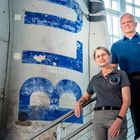
One year after his pioneering flight aboard Blue Origin’s New Shepard rocket, University of Florida space biologist Rob Ferl, Ph.D., is still processing what it meant — not just for his career, but for science itself. “What stands out the most is just the overwhelming gratitude,” Ferl said. “It was such an amazing opportunity for a scientist to go to space and actually do science.” Ferl, a professor in UF’s Horticultural Sciences Department, Director of the Astraeus Space Institute, and Assistant Vice President of Research, became one of the first space biologists to fly alongside his own experiment — a moment that marked a new era in researcher-led missions. His suborbital journey provided a rare opportunity to study how terrestrial biology responds to the very first moments of spaceflight. “For decades, space biology has relied on professional astronauts to carry out experiments designed by scientists on Earth,” Ferl explained. “But to truly understand how biology works in space, I believe you - as the scientist - have to be there. You have to feel the environment.” This September, Ferl and longtime collaborator Anna-Lisa Paul, Ph.D., will be back at Blue Origin’s West Texas launch site, continuing their work with a new series of plant experiments. Ferl and Paul, who directs UF’s Interdisciplinary Center for Biotechnology Research and is a professor in Horticultural Sciences, are tracking fluorescently tagged genes in Arabidopsis plants to study how gene expression changes during the rapid shift from Earth’s gravity to the microgravity of spaceflight and back again. It’s a full-circle moment for Ferl, who remains deeply engaged in the same questions that sent him to space a year ago. Unpacking the Transition from Earth to Space Ferl’s experiment focused on the early metabolic responses of plants during the critical transition from Earth’s gravity to the weightlessness of space. “The scientific community has accumulated plenty of data comparing biology in orbit with that on Earth,” he said. “But we’ve known almost nothing about what happens in those first few minutes as organisms enter space and are exposed to microgravity.” Initial results from the flight reveal intense metabolic changes in the early moments of spaceflight. These changes are distinct from, but connected to, the long-term adaptations seen in orbit. Early Findings, Future Impact While the data from Ferl’s experiment are still on the way to being published, the findings are already shaping the direction of ongoing research. The work contributes to a growing understanding of how terrestrial life, from plants to humans, shares fundamental pathways in responding to the space environment. “This has real implications for the future of space missions,” Ferl noted. “As we send more people and more biology into space in support of exploration, we need a comprehensive understanding of how living systems adapt — right from the start.” Ferl and his team will return to Blue Origin’s launch site in Texas in September to continue their research, sending an uncrewed payload of plants into suborbital space. The flight carries no humans—but it does carry an automated experiment designed to advance their understanding of plant biology in space. It’s part of a broader effort to refine what Ferl calls “researcher-tended missions.” A New Course for UF Space Science The mission has not only shaped the trajectory of Ferl’s research, it has also energized Astraeus and the university’s space biology efforts. “This is about building a new kind of science culture,” Ferl said. “One where the scientists are embedded in every part of the mission, from experiment design to the moment of launch.” As the one-year anniversary of his flight approaches, Ferl remains focused on pushing the boundaries of what science in space can be. But he hasn’t forgotten the magnitude of the moment. “Even a year later,” he said, “the most powerful thing I feel is just: thank you. Thank you for the chance to go, to see it for myself, and to bring that knowledge back to Earth.”



It's Sports Science Week on The Academic Minute -- an entire week dedicated to UConn experts
The Academic Minute is a two-and-a-half minute daily brief featuring researchers from colleges and universities around the world, keeping listeners abreast of what’s new and exciting in the academy. A different professor is featured each day, offering updates on groundbreaking research and how it helps us better understand the world around us. Hosted by Dr. Lynn Pasquerella, president of the American Association of Colleges and Universities, The Academic Minute airs on 70 stations around the United States and Canada, and twice daily on it's home station WAMC - Northeast Public Radio. This week, the entire program was focused on the science of sport with a new featured UConn expert each day. Monday Julie P. Burland, director of research at the Institute for Sports Medicine, examines how to predict in-season injuries for athletes. Tuesday Jennifer B. Fields, Assistant Professor in the Department of Nutritional Sciences, investigates why so many young athletes are flunking nutrition. Wednesday Dimitris Xygalatas, associate professor of anthropology, looks at sports fans for clues on how social rituals bind us together. Thursday Rebecca L. Stearns, associate professor-in-residence in the Department of Kinesiology, details potential strategies to prevent sudden deaths in sports. Friday Robert Huggins, assistant professor in the Department of Kinesiology, examines why there aren’t more athletic trainers on-hand at sporting events.



West Michigan Home to Largest Temporary Butterfly Exhibit
We all look for signs of spring that herald the changing of seasons – buds bursting on trees, plants pushing out of the ground, and migratory birds returning. But there is another sure sign of spring, and it takes place annually at Frederik Meijer Gardens & Sculpture Park in Grand Rapids, Michigan – Fred & Dorothy Fichter Butterflies Are Blooming (March 1-April 30). The largest temporary tropical butterfly exhibition in the United States, Butterflies Are Blooming welcomes visitors into the 80-degree, five-story, 15,000-square-foot Lena Meijer Tropical Conservatory that is a paradise for thousands of butterflies flying freely all around. More than 7,000 chrysalides representing over 60 species travel to Frederik Meijer Gardens & Sculpture Park throughout the exhibit's duration from tropical countries including Belize, Brazil, Costa Rica, Ecuador, Kenya, Malaysia, and the Philippines. Steve LaWarre is the Senior Vice President at Frederik Meijer Gardens & Sculpture Park, where his visionary leadership and passion for botanical excellence have been instrumental in shaping Meijer Gardens' stunning landscapes and ensuring operational excellence. View his profile “Butterflies at Meijer Gardens is a quintessential springtime tradition for families across West Michigan and beyond, and we look forward to ushering in the start of our fourth decade of offering this magical tradition,” said Steve LaWarre, senior vice president at Meijer Gardens. Click on the link to learn more: 7,000 butterflies from 4 continents will soon fill Frederik Meijer Gardens, MLive, Feb. 17, 2026 The exhibition also offers guests up-close experiences at butterfly feeding stations, where tropical fruit slices and nectar-rich plants attract the butterflies, and at the Observation Station, where 1,200 chrysalides arrive at Meijer Gardens each week and transform into butterflies and moths. Additionally, the exhibition features vibrant floral displays, including arches of foliage and blooms in varied hues; unique nectar plant varieties; and colorful arrangements of air plants, bromeliads, and orchids. Guests also can visit the butterfly release stations to watch newly emerged butterflies make their debut and take their first flight as the stars of the show. “Guests can partake in everything from an immersive visit to the tropical conservatory with thousands of butterflies overhead, to a butterfly-themed program such as our new Bourbon & Butterflies events this year," said LaWarre. If you are looking to cover spring-related garden stories, including about Butterflies are Blooming, connect with Steve below.



Iran Conflict Intensifies Focus on Affordability
Professor of Finance Anoop Rai spoke to Newsday about economic fallout from the Iran campaign, which is refocusing attention on rising costs at a time when affordability was already a top concern, locally and nationally. If the economy cools down, it could reduce the state’s tax revenues, and any actions lawmakers take to further help with affordability could lead to greater deficits, said Dr. Rai. “Then it becomes more like a philosophy. Do you help now during bad times and then try to recover later, or stick to your principles and say ‘tough luck’?”

-fotor-20250826990.jpg)
How a UF reading program is reaching classrooms worldwide
For more than 25 years, Holly Lane, Ph.D., has been laser-focused on a global educational goal: to ensure that students worldwide have access to information about reading. Her passion project, known as the University of Florida Literacy Institute, or UFLI, has already improved the literacy skills of more than 10 million children. What began as a modest classroom tool now has a Facebook community of over 273,000 members; 18 million online toolbox views; and more than 500,000 instructional manuals in classrooms. And as the UFLI brand gains traction, Lane continues to champion what the acronym means and why the program has been so life-changing. “When you learn to read, you fly,” said Lane, who serves as the UFLI director and a professor of special education at UF. UFLI is an ongoing effort by UF faculty and students to improve literacy outcomes for struggling students by addressing two key areas: reader development and teacher development. The program began in 1998 as a tutoring model for beginning readers working with Lane’s pre-service teachers. The idea was that, if teachers understood how to employ effective, evidence-based practices in a one-on-one tutoring session, they could transfer those skills to their small-group or classroom instruction. However, some teachers struggled to make that transition, so a dedicated small-group lesson model was created. That foundation eventually expanded into a dyslexia support program and caught the attention of a surprising partner, best-selling author and philanthropist James Patterson. Known worldwide for his literacy advocacy and generous support of reading initiatives, Patterson has become a key benefactor for the program. When the COVID-19 pandemic hit, a challenge turned into a breakthrough. UFLI started its Virtual Teaching Resource Hub and, in the first week, about 70,000 teachers visited the site and downloaded materials. The turning point came when a school in St. Augustine reached out to UFLI, asking for professional development. “I said, ‘Well, what if we planned the lessons for you instead of teaching you how to plan these lessons?’” Lane said. What followed was what Lane called her “accidental phonics program.” “They ended the year with the best scores they'd ever seen, better than their pre-COVID scores, and that was unheard of,” Lane said. That success led to an effective district-wide pilot in Alachua County with 21 elementary schools. UFLI leaders decided to publish the contents of the program and create a manual that individual teachers could purchase. This concept boomed, and the program even made waves overseas. “Starting with the virtual teaching hub… we had a huge following in Perth and in Melbourne, and now we have an Australian edition of the manual,” Lane said. “We’ve been in every state and every Canadian province and territory, but we're also now in something like 60-some other countries.” Patterson has continued his support by directing efforts toward expanding UFLI’s reach in Florida, aiming to bring the program to every district in the state. Looking ahead, Lane is especially excited about UFLI’s new technology. “We're calling it our assessment and planning portal,” Lane said. “Teachers assess two skills a week, and they enter their data into this program and it spits out small-group lesson plans for the following week that target specific needs of their students.” The data input system is highly advanced, requiring the teacher to simply hold up work in front of a webcam, and the system then reads the student handwriting and imports the data. The program’s structure also ensures that students apply new concepts daily and revisit them regularly. But behind it all is a deeply connected community. For Lane, the success of UFLI boils down to people. “We have an amazing team here,” Lane said. “If anything, that's my superpower, finding really good people who are really good humans but also really good at what they do.” For more information about UFLI, visit ufli.education.ufl.edu.


MEDIA RELEASE: Manitobans paying more for vehicle repairs as CAA Worst Roads campaign launches
Submitted photo of Saskatchewan Avenue, Winnipeg’s Worst Road in 2025. Manitobans are paying more out of pocket to fix their vehicles as concerns about road conditions continue to grow, according to new survey data released as CAA Manitoba launches its annual CAA Worst Roads Campaign. The survey found 92 per cent of Manitobans are concerned about the state of roads in the province and are spending an average of $944 to repair vehicle damage caused by poor road conditions. This is $122 more than last year, when the average repair cost was $882. As Winnipeg grows and congestion worsens, fixing key trade and connector routes isn’t just about road conditions; it’s about protecting the economy, keeping our city moving, and prioritizing affordability. “Most of the roads people flag as priorities are the same routes our supply chain depends on, they’re how goods get in, out, and across the province,” says Ewald Friesen, manager, government and community relations for CAA Manitoba. “With Manitoba’s growing population, especially in Winnipeg, there is a need for improved infrastructure.” At the same time, the rising cost of living has made consumers more mindful of their spending, and people are opting to keep their cars longer rather than buy a new one. Poor roads increase the wear and tear of tires, lead to higher fuel consumption, and increase the risk of other costly repairs. Nearly half of drivers (45 per cent) reported experiencing vehicle damage due to poor road conditions, with potholes cited as the leading cause, accounting for 86 per cent of damage. Most drivers (75 per cent) are paying for repairs out of pocket; 12 per cent filed a claim with Manitoba Public Insurance. Another 14 per cent said they chose not to repair the damage, up six per cent from last year. Despite widespread frustration, the survey suggests most concerns are not reaching decision-makers. It found that 85 per cent of Manitobans commonly complain about road conditions to a spouse, coworker or mechanic rather than to the governments responsible for road maintenance. Manitobans encouraged to nominate roads most in need of repair “The Worst Roads campaign is a proven platform that gives Manitobans a voice and helps governments identify the roads causing the most frustration,” says Friesen. “We know it works because we see governments prioritize budgets and move up road repairs every year after appearing on the list.” Manitobans can nominate any road for issues, including potholes, congestion, faded road markings, poor signage, traffic light timing, and pedestrian or cycling infrastructure. CAA Manitoba is encouraging all road users to participate. Nominations are open at www.caaworstroads.com from March 17 to April 10. Once nominations close, CAA Manitoba will release a list of the top 10 worst roads in the province, along with regional lists. CAA conducted an online survey with 649 CAA Manitoba Members between January 6 to 14, 2026. Based on the sample size and the confidence level (95 per cent), the margin of error for this study was +/-3 per cent.



Workplace jargon hurts employee morale, collaboration, study finds
You’ve probably heard it before in a meeting: “Let’s touch base offline to align our bandwidth on this workflow.” Corporate jargon like this is easy to laugh at — but its negative impact in the office can be serious. According to a new study, using too much jargon in the workplace can hurt employees’ ability to process messages, leading them to experience negative feelings and making them feel less confident. In turn, they’re less likely to reach out and ask for or share information with their colleagues. “You need people to be willing to collaborate, share ideas and look for more information if they don't understand something at work,” said Olivia Bullock, Ph.D., an assistant professor of advertising at the University of Florida and co-author of the new study. “And jargon might actually be impeding that information flow across teams.” Age made a difference, though. Older workers had a harder time processing jargon, but were more likely to intend to ask for more information to clarify the message. Younger employees were less likely to seek and share information when confused by jargon. “It gives credence to the idea that younger people are more vulnerable to these workplace dynamics,” Bullock said. “If you're onboarding younger employees, explain everything clearly.” Bullock and her co-author, Tiffany Bisbey, Ph.D., an assistant professor at George Washington University, published their findings Aug. 25 in the International Journal of Business Communication. An expert in communication research, Bullock has long studied jargon’s negative effects for talking about health and science. Then, faced with jargon in her own work, she started to ask how these arcane, technical words might get in the way of a smooth workplace. To find out, Bullock surveyed nearly 2,000 people who were told to imagine they had just started a new job and received an email with important directions. Half had to navigate a jargon-filled message about “intranets” and “EFT” payments. The other half had that jargon translated back into plainer language. The message packed with jargon, not surprisingly, made it harder for people to process the information, which can throw off an entire workday. “It doesn't just make them feel bad about the information they've been given. It makes them feel bad about themselves,” Bullock said. The study then asked people how they would respond to the jargon. The impenetrable language made them feel insecure and less likely to ask for help right when they needed it the most. “They weren’t as willing to collaborate,” Bullock said. “If you can’t ask for more information or share that information downstream, you’re creating silos, and that’s disrupting your workflow and environment.” Having studied jargon for so long, Bullock has one piece of advice for employers and employees alike. “Always reduce jargon,” she said. “The benefit of using jargon doesn’t outweigh the cost.”


With lasers, smoke and a wind tunnel, UF helps federal agency investigate deadly Hurricane Maria
As Floridians brace for hurricanes amid the wild weather of 2025, some University of Florida researchers have their eyes on 2017’s Hurricane Maria, the deadly Category 4 storm that pummeled Puerto Rico. Engineering professor and natural hazards researcher Brian Phillips, Ph.D., is leading UF’s efforts in a Hurricane Maria investigation conducted by the National Institute of Standards and Technology, known as NIST. The goal is increased safety and resilience amid deadly conditions. Maria killed nearly 3,000 people and caused more than $90 billion in damage. Most of the island’s wind sensors and weather stations failed as the storm raged, leaving responders and investigators with few reliable weather measurements. What went wrong? Phillips and UF storm researchers are helping answer that question — and provide safety and structural recommendations — as part of NIST’s Hurricane Maria investigation. The full report will be released in 2026, but NIST recently published preliminary findings; some of the hazard and structural load data was derived from wind tunnel tests at UF's NHERI Experimental Facility in the Powell Family Structure and Materials Laboratory on UF’s East Campus in Gainesville. “Our wind tunnel has a strong reputation in the wind-engineering community for its unique flow control and measurement capabilities We worked with NIST to develop a test campaign to study the wind conditions Puerto Rico’s mountainous terrain and the resulting loads of critical infrastructure,” said Phillips, a civil and coastal engineering professor with UF’s Engineering School of Sustainable Infrastructure & Environment. “UF,” he added, “has one of the premier research wind tunnels in the country and it enables us to pursue impactful research like this.” As part of the NIST investigation, Phillips and his team created 1-to-3100 scale topographic models of regions in Puerto Rico — about 12 kilometers shrunk down to four meters, Phillips said. They set up those models in the wind tunnel and replicated wind flow over the topography. “These initial tests were designed to understand the influence of the complex topography had on the wind,” Phillips said. Flow was measured using velocity probes and particle image velocimetry (PIV). These topographic model tests were followed by 1-to-100 scale tests on models of two hospitals in Puerto Rico. In addition to surface pressure measurements, the team conducted qualitative flow visualization tests using smoke, lasers, and high-speed cameras. “The capabilities of the UF wind tunnel enabled us to investigate the hurricane winds at two different scales,” said NIST’s lead Hurricane Maria investigator, Joseph Main, “so we could measure how the winds were accelerated by Puerto Rico’s mountainous topography and then how those winds translated into loads on critical buildings.” Maria’s flooding blocked roads to hospitals and shelters. The hospitals themselves were heavily damaged by the storm, NIST reported. Reduced access to healthcare was a major factor in the death toll. “It's good to take a step back,” Phillips said about the overall investigation. “Researchers are approaching the disaster from multiple angles, including the better understanding of the hazard, the performance of critical infrastructure, public response and recovery. “This holistic approach is needed to capture the complete picture and maximize what we can learn from the event. UF's primary contribution was understanding the hurricane wind field and the resulting structural loads, which is a critical piece of that puzzle.” In finding infrastructure vulnerabilities, researchers contend the goal is integrating their findings into design standards for Puerto Rico’s unique topography and building codes. The findings also could be valuable to other storm-prone regions with complex topography. NIST launched the investigation in 2018, noting Hurricane Maria “set off a cascade of building and infrastructure failures across Puerto Rico that had lasting impacts on society, including health care, business and education.” “Our goal is to learn from that event to recommend improvements to building codes, standards and practices that will make communities more resilient to hurricanes and other hazards, not just in Puerto Rico but across the United States,” Main said. The complete report is scheduled to be released in 2026, and NIST noted some findings may change before its release. But in July, NIST released some preliminary findings. They include: Peak wind speeds over flat terrain reached 140 mph. They accelerated to over 200 mph in some areas due to the steep hills and mountains. The mountains also intensified the rainfall, which reached 30 inches in some areas. Only three out of 22 weather stations were fully functional during the hurricane. 95.3% of schools on the island lost power for an average of over 100 days. “One important preliminary finding from the study is that emergency preparations work,” NIST reported. “Businesses, schools and hospitals that took specific measures to prepare before Hurricane Maria were able to resume operations more quickly” said Maria Dillard, NIST’s associate lead Hurricane Maria investigator. Preparations included pre-established emergency plans, designated risk mitigation funds and backup power sources.


Expert Q&A: What is Soft Diplomacy and how does it impact classrooms?
"Right now, storytelling is critical. Language learning is highly personal, and it’s the person-to-person relationships that grease the wheels," says Cheryl Ernst, director of the English Language Institute at the University of Delaware. She recently published English Language Programs as Facilitators of Soft Diplomacy in Innovations in Star Scholars Press. Here's how she's discussing this important topic. Q: What is the focus of this research, and why is it important? Ernst: ELI and other English language programs provide the ideal space for communication development, cross cultural appreciation, gaining life skills, and raising awareness about people beyond the media. Post pandemic, we’re hearing across campus how individuals feel less connected, and in English language classrooms, connection is critical. Language is only learned through production and practice since it’s a skill that needs to be honed. In language, there is no such thing as perfect. In our classrooms, English is the common goal, and everyone comes to that space at their own levels and overflowing with imperfection. Our students learn to use their vulnerability as a tool. They learn the value of a growth mindset living in a culture that is different from their own, and with that comes an appreciation for difference, respect for others, trust, human-to-human communication. Q: What inspired this research? Ernst: More than 30 years of observation, conversations, experiences, and personal relationships. There was no term to describe the skills English language programs teach beyond grammar (what’s perceived, anyway). Terms like personal diplomacy, person-to-person diplomacy, civic diplomacy, and the like happens all the time and oversimplifies what we do. In my readings, I started to see overlaps between soft power and diplomacy, which led to the concept of Soft Diplomacy. Then what distinguishes Soft Diplomacy from other more common monikers are the variety of skills that happen organically in our classrooms that we rarely acknowledge and students may not recognize. Q: What are some key findings or developments? Ernst: Institutionally, ELPs can do better highlighting the skills beyond English that we teach organically or deliberately. Q: How could this work potentially impact the field or the wider public? Ernst: Respecting ELPs for the space they provide and the skills they offer. It’s not “just English,” rather is learning to communicate in a common language and with people from around the globe. I’d like people to realize that relationships are foundational, that there are common values across nations and that differences are not bad. What version of English is “correct” British or American dialects (the New York? Wisconsin? Alabama? Iowa?). Q: What are the next steps or upcoming milestones in your research? Ernst: A former student and I have launched a podcast series called Soft Diplomacy in Action that focuses on personal stories from those who work in international education. We’ve interviewed an ELI associate professor from Morocco, the UD coordinator of the Mandela Fellows program, a professor who sees (and lives) the diplomatic value of sports, and a retired English language professional. We’re looking forward to continuing these conversations with individuals from a variety of disciplines that also work in this space but through different lenses. ABOUT CHERYL ERNST Cheryl Ernst is the director of the English Language Institute at the University of Delaware where she and her colleagues and students practice Soft Diplomacy every day. Her professional areas of interest include program administration and international marketing, teacher training and working with international teaching assistants, curriculum design, and advanced level academic English (graduate levels). To speak with Ernst her work and the importance of Soft Diplomacy, reach out to MediaRelations@udel.edu.


Retirement Maxxing: How Small Decisions Help You Build a Better Future
The basic idea is to pick a corner of your life and optimize it ruthlessly. Sleep maxxing. Health maxxing. Productivity maxxing. In its more extreme corners, people are attempting to optimize their actual physical features. Go ahead and Google "looksmaxxing" if you are curious and have a strong constitution. One influencer named Clavicular — a 20-year-old from Hoboken who claims to have taken a literal hammer to his face to coax a chiselled jawline — has become the reigning king of this particular rabbit hole. Medical experts would prefer you not try that at home. The Globe and Mail published a comprehensive explainer on the whole phenomenon. The Republican National Committee put out a press release praising Donald Trump for "jobsmaxxing" the economy. The Department of Defence posted a soldier with the caption "lethality maxxing." It has become, as one writer put it, the suffix that just will not quit. Retirement Maxxing: because chin waxing, I mean maxxing, was already taken. And yet, buried beneath all the absurdity, the underlying impulse is not entirely ridiculous. Humans want to optimize things. We always have. The real question is whether we are optimizing the right things. Then, as these things sometimes happen, three articles landed in my inbox in the same week and refused to leave my mind. Maxxing. The psychology of future selves. A golfer named Max Greyserman, who sits just one-tenth of a stroke from the top of his sport. I am not a woman who ignores signs. The connection was obvious once I saw it: retirement might be the most important time to apply this kind of thinking. Not the obsessive version involving ice baths and fourteen supplements before breakfast. The practical version. Thoughtful maxxing that quietly stacks the odds in your favour over decades. Retirement isn't just one decision; it's hundreds made over the years, each guiding your future self toward either financial dignity or a Shaggy tribute tour you never signed up for. The “Shaggy Problem”: How Your Retirement Decisions Today Determine Your Financial Security Tomorrow You remember Shaggy. The reggae artist. Enormous hit. "It Wasn't Me." When it comes to retirement, it absolutely was you. Every decision you make today is writing a letter to your future self. Some of those letters are generous and thoughtful. Others arrive decades later, like a bill you forgot to pay, from a creditor with excellent memory and zero sympathy. The seventy-five-year-old version of you hopes the fifty-five-year-old paid attention. The eighty-five-year-old version would very much like functioning knees, a dignified income, and the ability to say "I planned for this" rather than "I did not think it would go this fast." It went that fast. That's why the most useful habit you can develop right now is what I call the future-self test. Before making a major financial or lifestyle decision, pause and ask: how will this look from the other end? Will I still think this tattoo is a good idea when I’m ninety? Will I regret staying in a house that is too large and too expensive for another decade? Will my future self thank me for delaying CPP, or curse me for taking it early because waiting felt uncomfortable? Or as the Beatles asked rather memorably: “when I'm sixty-four, will you still need me, will you still feed me?” The song is charming. The financial planning version is considerably less so if you have not thought it through. The future-self test is not complicated. It is just the habit of writing better letters. What Sports Analytics Can Teach Us About Smarter Retirement Decisions Speaking of decisions that come back to haunt you, let's discuss probabilities. A recent New York Times article about golfer Max Greyserman stopped me mid-scroll (Lindgren, 2026). Not because of the golf — though the golf is fascinating — but because of what it revealed about the gap between what the data says and what people actually do when the stakes are high. Greyserman's scoring average is less than one-tenth of a stroke per round away from the elite level. One-tenth of a stroke. Not a full swing, a putting mistake, or a collapse on the eighteenth. The difference between obscurity and greatness in pro golf is about the time it takes to find your reading glasses. Which, as we've established, were on your head the entire time. Hockey analytics have demonstrated that teams trailing late in a game should often pull the goalie much earlier than the traditional last-ninety-seconds rule. Research indicates that pulling the goalie around the eight-minute mark can significantly boost the chances of scoring, as the extra attacker alters the odds. However, most coaches still wait until the final minute or two. Why? Because if you pull the goalie at eight minutes and lose badly, it can look like you lost your mind. The math checks out, but the optics are terrifying. Soccer offers a similarly uncomfortable example. A widely cited study analysing thousands of penalty kicks found that about one-third of kicks are aimed straight down the middle of the net, yet goalkeepers stay in the centre only around six percent of the time (Chiappori, Levitt, & Groseclose, 2002). Shooting directly down the middle often provides good odds because the keeper has already committed to diving one way or the other. But if the goalkeeper stays put and makes the save, the kicker seems to have tried to outsmart the odds and failed. The math checks out. The optics, however, are still terrifying. Retirement is filled with these moments. And most people make their decisions based on the optics. Common Retirement Decisions Canadians Get Wrong — And What the Data Actually Says: Working a couple of extra years often delivers significantly better retirement outcomes, yet people retire early because they feel emotionally ready. Delaying CPP can greatly increase guaranteed lifetime income, yet many choose to claim early because waiting seems risky. Downsizing can free up cash and lessen financial stress, yet people stay in large homes because selling feels like giving up. Using home equity wisely can boost retirement income, yet many retirees dismiss this option because of a stigma rooted in outdated beliefs rather than current data. In each case, the emotionally comfortable choice is not the one with the best long-term odds. Fear of loss, fear of regret, fear of looking foolish — those emotions sprint ahead of rational thinking every single time. That is why the future-self test matters. Math is universal, but money is deeply personal, and the goal is to let one inform the other before it is too late. The Psychology of Retirement Saving: Why We Treat Our Future Self Like a Stranger The second New York Times article examined the psychology of how we connect with our future selves (The New York Times, 2026). The findings are humbling. Psychologists have discovered that people often see their future self almost like a stranger, which explains why saving for retirement can seem somewhat punishing. It feels less like helping yourself and more like sending a cheque to someone who shares your cheekbones but whose problems seem distant and abstract. Research led by Hal Hershfield found that when people feel more connected to their future selves, they save more and make consistently better long-term financial decisions (Hershfield, 2011). Retirement planning is not just about spreadsheets and withdrawal rates. It is about being genuinely generous towards the person you are becoming. It is a love letter, written in small decisions, over a very long time. So, write a good one. Your future self is counting on you. How to Optimize Your Retirement: A Practical Framework for Canadians If retirement maxxing were a lifestyle trend — and I am formally proposing that it should be — it wouldn’t involve bone-smashing or extreme jawline enhancement. It would look more like this. Health Maxxing: Why Strength and Mobility Are Financial Assets Move your body. Lift weights now and then. Walk up hills. Muscle strength is one of the most underrated assets for retirement that nobody discusses at dinner parties. Research from the National Institute on Aging confirms that strength training improves mobility, balance, and healthy longevity (National Institute on Aging, 2023). These are the very factors that influence whether your later years feel like a gift or a burden. People hesitate over the cost of a gym membership while ignoring the significant long-term benefit of staying upright, independent, and capable. Skipping exercise to save a few dollars is like stepping over a hundred-dollar bill to find a quarter. As Aunt Equity likes to say: be careful not to get out over your skis. (Yes, that was an exercise metaphor. You’re welcome.) Income Maxxing: How to Build Reliable Cash Flow That Lasts Build reliable income streams so you can sleep at night without one eye on the market. Pensions, annuities, dividends, home equity, and carefully structured withdrawals — these all play a role in a well-crafted retirement income plan. The goal isn’t to maximize a single number – it’s to reduce the worry behind all of them. If your retirement plan currently makes you watch financial news at midnight while eating crackers over the sink, something has gone wrong and we should talk. Purpose Maxxing:Why It Matters for Your Health and Longevity Retirement is not a forty-year holiday. Humans need purpose, connection, and something worth getting out of bed for — especially on days when nobody expects you anywhere and the morning is entirely, terrifyingly yours. NIH research consistently shows that social engagement and a sense of purpose are linked to better health and longer life (National Institute on Aging, 2023). Purpose is what makes a retirement that feels like freedom different from one that feels like a long Sunday afternoon with nowhere to go. Somewhere along the way, society decided that aging meant quietly fading into the background. Retirement is when you finally have permission to dye your hair a vibrant colour, volunteer somewhere meaningful, start a project that genuinely excites you, or do all three at once and totally surprise your grandchildren. Purpose is not optional. It is the foundation. Decision Maxxing: How to Overcome Emotional Bias Use data when the stakes are high. Emotions are useful for choosing dessert but much less reliable for planning a thirty-year income. Don't swat away analytics like a fly at a family picnic just because they suggest something uncomfortable. Run projections. Stress-test your plan. Understand probabilities. Pull the goalie early if the math indicates so, even if it looks odd at the moment. Because appearing odd now and being wrong later are not the same thing. Not even close. The Ending That Brings It All Together: Small Decisions That Compound Over Time Here’s what three articles about “maxxing” our future selves, and golf, taught me about retirement. Clavicular is out there taking a hammer to his face in pursuit of optimization. Max Greyserman is grinding for one-tenth of a stroke. Hal Hershfield is reminding us that we treat our future selves like strangers when we should treat them like people we love. And somewhere between all three of them is the retirement insight that really matters: the best decisions compound quietly. Tiny improvements in health, income strategy, purpose, and decision-making build up into dramatically different outcomes over decades. Not because of one dramatic move, but because of many small, sensible ones made with the future in mind. Your future self isn't a stranger waiting to judge you. They are the person you are intentionally becoming, shaped by every decision you make today. Perform the future-self test before making risky decisions like pulling the goalie, shooting down the middle, or getting a tattoo that might lead to an awkward chat with your colonoscopy technician (this is for you, JK). Consider whether your fifty-five-year-old self is being kind to your seventy-five-year-old self. Look at what the data says, not just what feels right. Retirement maxxing isn't about perfection. It's about making small, sensible decisions consistently and thoughtfully over time. Think of it as compound interest for your future self. Einstein allegedly called compounding the most powerful force in the universe. He was talking about money, but he might as well have been talking about the small, steady choices that create a retirement worth living. Your future self will be deeply grateful—having functional knees, a dignified income, and a tattoo they still absolutely love. And when you turn sixty-four, and someone asks how you got there so gracefully, you won't need to channel your inner Shaggy. You just smile and say: It was me! Sue Don’t Retire…ReWire! P.S. Aunt Equity approves. Ready to start retirement maxxing? Here are two things you can do today. Run the future-self test on one financial decision you have been avoiding. Just one. Write down what your seventy-five-year-old self would think of the choice you are leaning toward. You might be surprised what comes up. Move your body and find your people. Join a pickleball club, a walking group, a trivia night, or a bridge league. Laugh often. Sweat occasionally. Your future self needs both, and your colonoscopy technician will be thrilled. Want more insights like this? Subscribe to my free newsletter here, where I share practical strategies, real-world stories, and straight talk about navigating retirement with confidence—not confusion. Plus, all subscribers get exclusive early access to advance chapters from my upcoming book. For Canadians 55+: Get actionable advice on making your home equity work for you, understanding your options, and living retirement on your terms. For Mortgage Brokers and Financial Professionals: Learn how to become the trusted advisor your 55+ clients desperately need (and will refer to everyone they know). This isn't just another revenue stream—it's your opportunity to build lasting relationships in Canada's fastest-growing demographic.

