Experts Matter. Find Yours.
Connect for media, speaking, professional opportunities & more.

Reading for pleasure in free fall: New study finds 40% drop over two decades
A sweeping new study from the University of Florida and University College London has found that daily reading for pleasure in the United States has declined by more than 40% over the last 20 years — raising urgent questions about the cultural, educational and health consequences of a nation reading less. Published today in the journal iScience, the study analyzed data from over 236,000 Americans who participated in the American Time Use Survey between 2003 and 2023. The findings suggest a fundamental cultural shift: fewer people are carving out time in their day to read for enjoyment. “This is not just a small dip — it’s a sustained, steady decline of about 3% per year,” said Jill Sonke, Ph.D., director of research initiatives at the UF Center for Arts in Medicine and co-director of the EpiArts Lab, a National Endowment for the Arts research lab at UF in partnership with University College London. “It’s significant, and it’s deeply concerning.” Who’s reading and who isn’t The decline wasn’t evenly spread across the population. Researchers found steeper drops among Black Americans than white Americans, people with lower income or educational attainment, and those in rural (versus metropolitan) areas — highlighting deepening disparities in reading access and habits. “While people with higher education levels and women are still more likely to read, even among these groups, we’re seeing shifts,” said Jessica Bone, Ph.D., senior research fellow in statistics and epidemiology at University College London. “And among those who do read, the time spent reading has increased slightly, which may suggest a polarization, where some people are reading more while many have stopped reading altogether.” The researchers also noted some more promising findings, including that reading with children did not change over the last 20 years. However, reading with children was a lot less common than reading for pleasure, which is concerning given that this activity is tied to early literacy development, academic success and family bonding, Bone said. Why it matters Reading for pleasure has long been recognized not just as a tool for education, but as a means of supporting mental health, empathy, creativity and lifelong learning. The EpiArts Lab, which uses large data sets to examine links between the arts and health, has previously identified clear associations between creative engagement and well-being. “Reading has historically been a low-barrier, high-impact way to engage creatively and improve quality of life,” Sonke said. “When we lose one of the simplest tools in our public health toolkit, it’s a serious loss.” The American Time Use Survey offers a unique window into these trends. “We’re working with incredibly detailed data about how people spend their days,” Bone said. “And because it’s a representative sample of U.S. residents in private households, we can look not just at the national trend, but at how it plays out across different communities.” Why are Americans reading less? While causes were not part of the study, the researchers point to multiple potential factors, including the rise of digital media, growing economic pressures, shrinking leisure time and uneven access to books and libraries. “Our digital culture is certainly part of the story,” Sonke said. “But there are also structural issues — limited access to reading materials, economic insecurity and a national decline in leisure time. If you’re working multiple jobs or dealing with transportation barriers in a rural area, a trip to the library may just not be feasible.” What can be done? The study’s authors say that interventions could help slow or reverse the trend, but they need to be strategic. “Reading with children is one of the most promising avenues,” said Daisy Fancourt, Ph.D., a professor of psychology and epidemiology at University College London and co-director of the EpiArts Lab. “It supports not only language and literacy, but empathy, social bonding, emotional development and school readiness.” Bone added that creating more community-centered reading opportunities could also help: “Ideally, we’d make local libraries more accessible and attractive, encourage book groups, and make reading a more social and supported activity — not just something done in isolation.” The study underscores the importance of valuing and protecting access to the arts — not only as a matter of culture, but as a matter of public health. “Reading has always been one of the more accessible ways to support well-being,” Fancourt said. “To see this kind of decline is concerning because the research is clear: reading is a vital health-enhancing behavior for every group within society, with benefits across the life-course.”


AI in the classroom: What parents need to know
As students return to classrooms, Maya Israel, professor of educational technology and computer science education at the University of Florida, shares insights on best practices for AI use for students in K-12. She also serves as the director of CSEveryone Center for Computer Science Education at UF, a program created to boost teachers’ capabilities around computer science and AI in education. Israel also leads the Florida K-12 Education Task Force, a group committed to empowering educators, students, families and administrators by harnessing the transformative potential of AI in K-12 classrooms, prioritizing safety, privacy, access and fairness. How are K–12 students using AI in classrooms? There is a wide range of approaches that students are using AI in classrooms. It depends on several factors including district policies, student age and the teacher’s instructional goals. Some districts restrict AI to only teacher use, such as creating custom reading passages for younger students. Others allow older students to use tools to check grammar, create visuals or run science simulations. Even then, skilled teachers frame AI as one tool, not a replacement for student thinking and effort. What are examples of age-appropriate tools that enhance learning? AI tools can be used to either enhance or erode learner agency and critical thinking. It is up to the educators to consider how these tools can be used appropriately. It is critical to use AI tools in a manner that supports learning, creativity and problem solving rather than bypass critical thinking. For example, Canva lets students create infographics, posters and videos to show understanding. Google’s Teachable Machine helps students learn AI concepts by training their own image-recognition models. These types of AI-augmented tools work best when they are embedded into activities such as project-based learning, where AI supports learning and critical thinking. How do teachers ensure AI supports core skills? While AI can be incredibly helpful in supporting learning, it should not be a shortcut that allows students to bypass learning. Teachers should design learning opportunities that integrate AI in a manner that encourages critical thinking. For example, if students are using AI to support their mathematical understanding, teachers should ask them to explain their reasoning, engage in discussions and attempt to solve problems in different ways. Teachers can ask students questions like, “Does that answer make sense based on what you know?” or “Why do you think [said AI tool] made that suggestion?” This type of reflection reinforces the message that learning does not happen through getting fast answers. Learning happens through exploration, productive struggle and collaboration. Many parents worry that using AI might make students too dependent on technology. How do educators address that concern? This is a very valid concern. Over-reliance on AI can erode independence and critical thinking, that’s why teachers should be intentional in how they use AI for teaching and learning. Educators can address this concern by communicating with parents their policies and approaches to using AI with students. This approach can include providing clear expectations of when AI is used, designing assignments that require critical thinking, personal reflection and reasoning and teaching students the metacognitive skills to self-assess how and when to use AI so that it is used to support learning rather than as a crutch. How do schools ensure that students still develop original thinking and creativity when using AI for assignments or projects? In the age of AI, there is the need to be even more intentional designing learning experiences where students engage in creative and critical thinking. One of the best practices that have shown to support this is the use of project-based learning, where students must create, iterate and evaluate ideas based on feedback from their peers and teachers. AI can help students gather ideas or organize research, but the students must ask the questions, synthesize information and produce original ideas. Assessment and rubrics should emphasize skills such as reasoning, process and creativity rather than just focusing on the final product. That way, although AI can play a role in instruction, the goal is to design instructional activities that move beyond what the AI can do. How do educators help students understand when it’s appropriate to use AI in their schoolwork? In the age of AI, educators should help students develop the skills to be original thinkers who can use AI thoughtfully and responsibly. Educators can help students understand when to use AI in their school work by directly embedding AI literacy into their instruction. AI literacy includes having discussions about the capabilities and limitations of AI, ethical considerations and the importance of students’ agency and original thoughts. Additionally, clear guidelines and policies help students navigate some of the gray areas of AI usage. What guidance should parents give at home? There are several key messages that parents should give their children about the use of AI. The most important message is that even though AI is powerful, it does not replace their judgement, creativity or empathy. Even though AI can provide fast answers, it is important for students to learn the skills themselves. Another key message is to know the rules about AI in the classroom. Parents should speak with their students about the mental health implications of over-reliance on AI. When students turn to AI-augmented tools for every answer or idea, they can gradually lose confidence in their own problem-solving abilities. Instead, students should learn how to use AI in ways that strengthen their skills and build independence.


AI gives rise to the cut and paste employee
Although AI tools can improve productivity, recent studies show that they too often intensify workloads instead of reducing them, in many cases even leading to cognitive overload and burnout. The University of Delaware's Saleem Mistry says this is creating employees who work harder, not smarter. Mistry, an associate professor of management in UD's Lerner College of Business & Economics, says his research confirms findings found in this Feb. 9, 2026 article in the Harvard Business Review. Driven by the misconception that AI is an accurate search engine rather than a predictive text tool, these "cut and paste" employees are using the applications to pump out deliverables in seconds just to keep up with increasing workloads. Mistry notes that this prioritization of speed over accuracy is happening at every level of the organization: • Junior staff: Blast out polished looking but unverified drafts. • Managers: Outsource their ability to deeply learn and critically think in order to summarize data, letting their analytical skills atrophy. • Power users: Build hidden, unapproved systems that bypass company oversight. A management problem, not a tech problem "When discussing this issue, I often hear leaders blame the technology. However, I believe that blaming the tech is missing the point; I see it as a failure of leadership," Mistry said. "When already overburdened employees who are constantly having to do more with less are handed vague mandates to just use AI without any training, they use it to look busy and produce volume-based work. Because many companies still reward the volume of work produced rather than the actual impact, employees naturally use these tools to generate slick but empty deliverables." "I believe that blaming the tech is missing the point; I see it as a failure of leadership. Because many companies still reward the volume of work produced rather than the actual impact, employees naturally use these tools to generate slick but empty deliverables." The real costs to organizations and incoming employees Mistry outlines three risks organizations face if they don’t intervene: 1. The workslop epidemic "These programs allow people to generate massive amounts of workslop, which is low-effort fluff that looks good but lacks substance. It takes seconds to create, but hours for someone else to decipher, fact-check, and fix," Mistry notes. "This drains money (up to $9 million annually for large companies) and destroys morale. As an educator, researcher, and a person brought into organizations to help fix problems, I for one do not want to be on the receiving end of a thoughtless, automated data dump, especially on tasks that require real skill and deep thinking." 2. Legal disaster He also states, "When the cut and paste mentality makes its way into professional submissions, the risks to the organization are real and oftentimes catastrophic. Courts have made it perfectly clear: ignorance is no excuse. If your name is on the document, you own the liability. Recently, attorneys have faced severe sanctions, hefty fines, and case dismissals for blindly submitting fake legal citations made up by computers." Click here for a list of cases. 3. A warning for incoming talent For new graduates entering this environment, Mistry offers a warning: Do not rely on AI to do your deep thinking. "If you simply use AI to blast out polished but unverified drafts, you become a replaceable 'cut and paste' employee," he says. “To truly stand out, new grads must prove they have the discernment to review, tweak, and challenge what the computer writes. The hiring edge is no longer just saying, 'I can do this task,' but 'I know how to leverage and correct AI to help me perform it.'" Four ideas to fix it To survive and indeed thrive with these new tools and avoid the unintended consequences of untrained staff, organizations should: 1. Reinforce the importance of fact-checking and editing: Adopt frameworks that teach employees how to show their work and log how they verified computer-generated facts. 2. Change the incentives: Stop rewarding busy work, useless reports, and massive slide decks. Evaluate employees on accuracy and results. 3. Eradicate superficial work: Don’t use automation to speed up ineffective legacy processes. Instead, use it to identify and eliminate them entirely. 4. Make time for editing: Give yourself and your employees the breathing room to actually review, tweak, and challenge what the computer writes instead of accepting the first draft. Mistry is available to discuss: Why AI is causing an epidemic of corporate "workslop" (and how to spot it). The leadership failure behind the "cut and paste" employee. How to rewrite corporate incentives to measure impact instead of volume in the AI era. Strategies for implementing safe, effective AI policies at work. How new college graduates can avoid the "workslop" trap in their first jobs. To reach Mistry directly and arrange an interview, visit his profile and click on the "contact" button. Interested reporters can also send an email to MediaRelations@udel.edu.



Manitobans are still eager to travel, but how and where they’re going is changing, and so are the risks they may not see coming. New survey findings released as part of CAA Manitoba’s Travel Wise Week show a clear shift toward staying closer to home. Sixty per cent of Manitobans prefer travelling within Canada, while just 20 per cent are planning a trip to the United States. Global uncertainty, rising costs, and changing perceptions about international destinations are influencing those decisions. “We’re seeing more Manitobans choosing Canada because it feels familiar and safe,” said Susan Postma, Regional Manager, CAA Manitoba. “But that sense of comfort can lead people to underestimate the financial risks that can still come with travelling, even within our own borders.” Staying in Canada and Leaving Coverage Behind While Canadians feel confident travelling within their own country, many assume “home turf” means low risk. This misconception leaves millions exposed to unexpected costs when trips don’t go as planned. The survey found that 64 per cent of Canadians did not have travel insurance for their most recent trip within Canada. Provincial health coverage often provides only limited protection when travelling outside your home province, and in some cases, does not cover services such as air ambulances, extended hospital stays, or trip interruption costs. Recent media stories have highlighted Canadians facing unexpected medical bills, emergency transportation costs, or sudden trip changes, all during trips that never left the country. “People are often surprised to learn how quickly expenses can add up if something goes wrong,” says Postma. “A simple injury on a hiking trail or a family emergency back home can turn a short trip into a major financial stress.” With recent geopolitical incidents in Cuba, Mexico and the Middle East, CAA’s Travel Wise Campaign is focused on helping Canadians understand risk, avoid misinformation, and make decisions grounded in facts rather than fear or speculation. Here are some tips: Understand what an “avoid non-essential travel” advisory really means: Travel advisories reflect real-time safety risks, and an “avoid non-essential travel” signal indicates rapidly changing conditions that may change quickly, and support may be limited. Know that advisories can affect your insurance and your exit options: Travelling against government advice can limit your travel insurance, including medical care or emergency evacuation. Coverage must be in place before conditions deteriorate. Flexibility is essential; review cancellation and change policies now: Travellers should proactively confirm cancellation deadlines, refund eligibility, rebooking options for all reservations and understand the limits of credit card protections, employee benefits, and pension coverage benefits. Stay connected to Canada while abroad: Canadians should monitor official updates from Global Affairs Canada and register with the Registration of Canadians Abroad service before departure or while on location if something arises. Rely on reputable sources and be cautious of misinformation online: Canadians should rely on official government sources, established travel organizations, and verified news outlets for travel guidance. Additionally, the CAA Air Passenger Help Guide helps you understand your rights when faced with common flight disruptions, such as delayed or cancelled flights or lost bags. The guide can be found at CAA.ca/AirPassengerHelpGuide. For more information on travel insurance and how to stay protected, visit www.caamanitoba.com/travelwise The online survey was conducted by DIG Insights from September 29 – October 8, 2025, with 2,0210 Canadian travellers aged 25 to 64 who have travelled outside their province of residence in the past three years and plan to travel again in the next five years, out of which 137 travellers were from Manitoba or Saskatchewan. Based on the sample size of n=2,021 and with a confidence level of 95%, the margin of error for this research is +/- 2%.)



My MBA at 69: Q1 Results Are In. And Nobody Is More Surprised Than Me
When I wrote my first post about starting an MBA at 69, I was running on caffeine, stubbornness, and a mild identity crisis. I was drowning in software platforms, APA formatting, and the humbling reality that open-book quizzes could still make me sweat. Fast forward to today. I am now 25% complete. Even typing that makes me sit up straighter. More surprising? I am maintaining an A average. Yes. An A. Let that land for a moment. Before anyone faints, let me be clear. I am not retiring my original mantra. "Even C's Get Degrees" still lives on a sticky note in my brain. I repeat it whenever the ego starts strutting around like it owns the place. The goal was never perfection. The goal was sustainable progress and full nights of sleep. The A average is delightful. The mantra is protective. My dog Dottie approves of both. She now perches on the back of the couch while I work, casting supervisory glances in my direction like a very small, very opinionated board member. We are in a much better place emotionally. The household has stabilized. What I did not anticipate was how much this experience would reveal about me. Lesson #1: Experience Is the Assignment Nobody Grades The content is strong. The business frameworks and systems I am learning are elegant. But the real gift has been realizing that my decades of experience give depth to everything I read. When the textbook discusses competitive positioning or industry cycles, I do not see abstract diagrams. I see real businesses. I hear boardroom conversations. I remember decisions that worked beautifully — and others that required creative explanations and, occasionally, some very careful walking back. The theories have texture because I have lived them. This MBA is not separate from my work. It is sharpening it. Every case study filters through the same question: How does this apply to retirees? I cannot turn that lens off. Frankly, I would not want to. At the same time, not every concept survives intact outside the classroom. We are taught that firms must choose clearly between cost leadership and differentiation. Tidy in theory. Messier in practice, where most organizations stumble through imperfect hybrids while real-world pressures refuse to behave according to the textbook. I learn the models thoroughly. I cite them properly. I demonstrate mastery. And yes, after nearly losing my mind over whether a journal article published in 2019 requires a DOI or a retrieved-from URL, I can now format an APA 7th edition reference in my sleep. Whether I want to is another conversation entirely. But maturity lets me see where the models bend. Lesson #2: Selective Excellence Is Not Laziness. It's Wisdom. One of the biggest lessons this term has been prioritization. At 29, I wanted to prove myself. At 69, I want to improve myself. Earlier in life I would have tried to ace everything equally. Today, I allocate energy strategically. Marketing excites me. Strategy energizes me. Organizational behaviour feels like coming home. Those subjects get my full intellectual investment. Accounting gets solid, disciplined, B-minus effort. I say that proudly. Retirement is also selective excellence. You do not need to be good at everything anymore. You get to double down on what lights you up. Coursework. Careers. Life. All of it. But growth is not without discomfort. Lesson #3: The Classroom Has No Hallways Anymore My program is entirely virtual. No hallway conversations. No accidental coffee chats that turn into the best part of your week. Everything happens on screens, and group projects test my patience more than any midterm ever could. I even considered removing my photo from my profile to avoid immediate age assumptions. Then I took a breath and remembered who I am. If someone sees my age and quietly categorizes me as someone's grandmother, so be it. They have never met Aunt Equity when she puts her purse down. For the record: I do not own a purse. In one recent group assignment, a teammate gently pointed out that I had used an em dash in a formal case report. A rookie mistake, apparently. Instead of bristling, I thanked them for the compliment. If I am still making rookie mistakes, I am still capable of growth. That exchange meant more to me than the grade. Lesson #4: The Advantage of Having Nothing Left to Prove Age has given me something powerful: detachment. I am not chasing internships. I am not competing for promotions. I am here because I want to be here, and that freedom changes everything. I can question thoughtfully. I can log off at a reasonable hour. I can engage with students young enough to be my grandchildren without an ounce of ego about it. Mostly. And still, whenever I feel the ego creeping back in about that A average, I whisper: "Even C's Get Degrees." It works every time. Lesson #5: Curiosity Does Not Come With an Expiry Date The deeper curriculum of this MBA has little to do with GPA. It has taught me that humility sharpens thinking. That curiosity does not expire. That stretching intellectually at 69 feels remarkably similar to climbing toward Everest Base Camp at 60. You question your sanity. You adapt. You keep moving. When I look at my latest grades, I do not feel relief. I feel possibility. If I can adapt to new technology, academic writing standards, and Zoom calls at 7 AM, then reinvention is not reserved for youth. It is available to anyone willing to risk being a beginner again. Are You Putting Your Experience To Work? If you are over 60 and thinking about taking a course, writing a book, starting a business, or learning something that scares you a little — here is the truth: Your experience is not a liability. It is leverage. Your decades are not dead weight. They are the whole point. And if you are willing to risk being a beginner again, reinvention will meet you exactly where you are. I am 25% done. Seventy is approaching. The mantra still stands. Remember, even C's Get Degrees. But when you bring seven decades of lived experience into the classroom, the curve has a way of bending in your favour. Now, if you will excuse me, Dottie has just planted herself directly on my laptop and is staring at me with the quiet authority of someone who has already read the syllabus on Google Scholar. Eighteen courses to go. Multiple pots of extra-strong coffee. A carefully curated cocktail of patience, tolerance, and self-care. The honeymoon is officially over. What lies ahead is a full marathon: War and Peace-length reading lists, spreadsheets that test the limits of human endurance, and enough group projects to make a grown woman question everything she knows about herself. Dottie remains unbothered. She has seen me do hard things. She knows I finish what I start. She also knows the whining, complaining, and pleading will eventually stop. (insert slow, world-weary head shake from a very wise ten-pound dog who has heard it all before). Don’t Retire… ReWire! Sue Want to become an expert on serving the senior demographic? Just message me to be notified about the next opportunity to become a "Certified Equity Advocate" — mastering solution-based advising that transforms how you work with Canada's fastest-growing client segment. Here's the link to sign up.


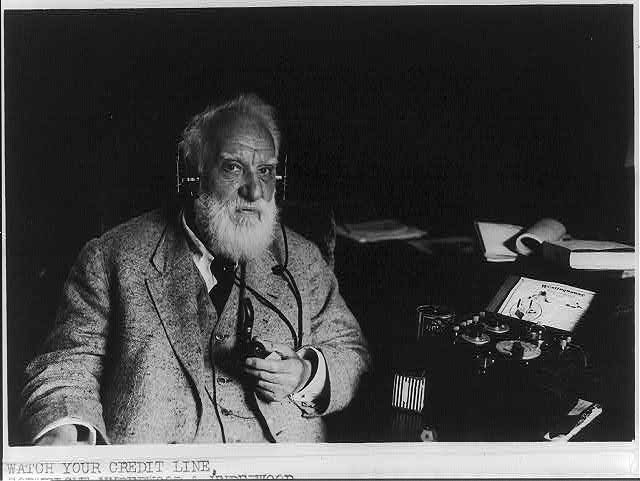
On March 10, 1876, Alexander Graham Bell spoke the first words ever transmitted over telephone: “Mr. Watson, come here; I want you.” This simple request to Bell’s assistant, Thomas Watson, marked a significant milestone in direct person-to-person communication. Now, 150 years later, this message has paved the way for advanced cellular technology in the form of satellites, wireless networks and the personal devices we carry everywhere. For Mojtaba Vaezi, PhD, associate professor of electrical and computer engineering at Villanova University and director of the Wireless Networking Laboratory, Bell’s few words spoken over telephone marked the beginning of an ongoing technological revolution. “One hundred fifty years ago when telephone communication first started, there was essentially a wired line and a transmitting voice,” said Dr. Vaezi. “That simple, basic transmission has transformed the field of communication technology in unimaginable ways.” According to Dr. Vaezi, five shifts have defined the past century and a half of communication technology: wired devices to wireless, analog to digital, voice to data, fixed landlines to mobile phones and human-to-human communication giving way to an increasing focus on machines and artificial intelligence. Early wireless networks were built around one device per person. Today's networks must support multiple devices per person, plus the technology behind innovations such as smart homes, driverless cars and even remote surgery. “Applications are much more diverse now, so communication has to follow,” said Dr. Vaezi. “A big portion of communication now, in terms of number of connections to the network, is from machine to machine—not human to human or even human to machine." The growing number of connections can cause a host of issues for users. When multiple users share the same wireless spectrum simultaneously, their signals interfere with one another—a problem that is becoming more acute as the number of connected devices increases exponentially. Dr. Vaezi’s research at Villanova focuses on developing techniques that allow multiple users to transmit messages on the same frequency at the same time and still be understood. Another vibrant research area of Dr. Vaezi’s involves Integrated Sensing and Communication (ISAC). This field of study focuses on integrating wireless communications and radar so they can function within the same spectrum. “Historically, radar and wireless communication work in different bandwidths or spectrums and use separate devices. Although they are related, they happen in different fields,” said Dr. Vaezi. “Almost every communication scheme that has been developed has focused on this: How can we better utilize the spectrum?” ISAC is increasingly important as new innovations like driverless cars become fixtures in everyday life. These vehicles rely on radar to continuously scan for hazards, and when a hazard is detected, a signal must be sent to trigger safety mechanisms. Currently, the radar and communications systems operate on separate bandwidths using separate hardware. Dr. Vaezi's research explores how both functions could be housed in a single device running on one shared spectrum. Areas of study like Dr. Vaezi’s that focus on machine to machine communication are becoming increasingly relevant as communication technology evolves and moves away from simple person to person messaging. As for the next big milestone in communications, Dr. Vaezi is looking ahead to the implementation of 6G by 2030, though he tempers expectations. For most users, the change will feel modest, amounting to slightly faster device speeds. The most massive shift with 6G will be the amount of added coverage in areas that previously did not have network accessibility. “Say you order a package and it’s coming from somewhere abroad,” explained Dr. Vaezi. “6G will add network coverage over oceans, so you’ll be able to track your package in real time using that satellite technology.” The sixth generation of cellular technology will continue to connect our world and optimize current communications to accommodate more users and devices that need network access each day. It is far different from Alexander Graham Bell’s historic phone call 150 years ago. That brief exchange over a single wired line laid the groundwork for a communications ecosystem that now supports billions of devices, complex data networks and emerging technologies yet to be seen. It also serves as a reminder that despite how far communication technology has come, and how complex it has gotten, it all shares a common, simple goal: to transmit information from one point to another.


Strategic Closure of Strait of Hormuz Puts Pressure on U.S., Threatens Global Oil Trade Stability
Less than a week after the onset of the war in Iran, and amid escalating conflict in the region, Iran effectively closed the Strait of Hormuz to shipping tankers moving oil from the Middle East by threatening attacks against any vessel who entered the waterway. Thus, the small body of water, which moves a large percentage of the world’s crude oil, has become one of the most discussed places in the world in recent days. Frank Galgano, PhD, is a professor of Geography and the Environment at Villanova University. He is an expert in military and Middle East geography and has also studied global maritime shipping and access to natural resources. Dr. Galgano says there geographic, geopolitical, military and economic factors at play, along with widespread potential consequences, as Iran holds steady on their closure of the strait and the U.S. considers how, or if, it will attempt to help escort oil ships through. Geography and Significance of Strait of Hormuz Situated between Iran to the north and Oman and the United Arab Emirates to the south, the Strait of Hormuz is a narrow shipping lane that connects the Persian Gulf to the Gulf of Oman and, further out, the Arabian Sea. It is one of the most vital chokepoints in the Middle East, along with the Suez Canal, Straits of Tiran, Bab al-Mandab and the Turkish Straits. “Right now, because of oil, it is the most important,” Dr. Galgano said. “Every day, roughly 20 percent of global petrochemical use goes through Hormuz.” The strait itself is barely over 20 nautical miles at its narrowest, but only a small portion of that is shipping lanes. Depth constraints limit shipping to two lanes, each two miles wide, with a two-mile buffer between. “You’re essentially looking at all of that shipping constrained to six nautical miles, and the ships are relatively slow,” Dr. Galgano said. “There are usually about 14-25 tankers every 24 hours transiting the Gulf, so there is always a ship in line." By Iran threatening military action against any oil-carrying ships in Hormuz—and by shipping companies refusing to attempt to traverse it— one-fifth of the global oil trade is essentially cut off indefinitely. That is concerning, given that it takes very little to send global oil prices skyrocketing. Dr. Galgano referenced the 2010-11 Somali pirate issue that caused supertankers—which cost upward of $50,000 a day to operate—to be rerouted. “That alone caused gas prices to raise 10 cents per gallon,” he said. In this case, the biggest impact will be felt throughout Asia, which relies more heavily on oil imports. But the U.S., despite being the second-biggest producer of crude oil last year, will still feel significant effects, since oil is traded globally. “It takes these supertankers eight or 12 days to reach the East Coast from Hormuz,” Dr. Galgano said. “So, a few days later you might see diminished supplies, but there is a critical point where we would face a real shortage.” Attempting to Move Ships Through Hormuz Poses Huge Danger Unlike the Iranian-backed Houthi rebels attacks on Israeli ships and those belonging to its allies in the Red Sea last year, Iran itself has far more sophisticated weapons, along with a strong motive to do whatever it can to put pressure on the U.S. and involved allies. In addition to drones designed for attacking ships—like the ones used by Houthis—Iran also possesses Chinese and Russian anti-ship missiles, according to the professor. “Ships are very vulnerable,” he said, then referencing the 2000 bombing of the USS Cole by Al Qaeda operatives. “That was just two guys in a rubber boat with an explosive device, and it almost sunk the whole ship. If one is carrying oil, it becomes almost like a large fuel bomb.” The United States has weighed the idea of sending a convoy to help escort and protect these ships. They did as much in the late 1980s in Operation Earnest Will, in which President Reagan ordered Kuwaiti supertankers—which were being fired at—to reflag under the U.S. flag so the Navy could legally escort them. But weapons technology has changed, and while U.S. naval ships could certainly defend themselves, “supertankers are slow and it is still an incredibly dangerous operation,” Dr. Galgano said. “The convoy would have to be lucky 100 percent of the time. Iran would only have to be lucky once to hit a ship and cause an immediate fiasco, both physically and in the media.” Global Dependance on Shipped Goods According to Dr. Galgano, between 75 and 90 percent of all items you handle on a day-to-day basis come from inside the hull of a ship: shocks on your car, clothes on your back, or components of your computer. When shipment is disrupted, it can cause supply chain and cost issues. “During the pandemic, Ford was waiting on chips for F-150s, and HP was waiting in chemicals to make ink,” Dr. Galgano said. “Even the ship that got stuck in the Suez Canal a few years ago caused $10 billion in losses per day due to the backup.” For commodities like oil, the indefinite inability to utilize perhaps the most important shipping lanes in the world due to large scale conflict quickly raises the economic stakes to even greater levels. “Iran absolutely knows that, and they see this as a bargaining chip,” Dr. Galgano said. “Cause economic pain to force cessation of the attacks.”


Expert Insights: Environmental Risk in Times of Regulatory Change & Litigation Pressure
Environmental risks are becoming a central concern for organizations as regulations tighten, public expectations rise, and litigation related to environmental claims grows more common. Companies today must navigate a complex landscape where regulators, investors, and advocacy groups are paying closer attention to how environmental impacts are managed and reported. Recently, J.S. Held published the article, Environmental Claims and Disputes: Navigating Regulatory Change and Litigation Pressure, led by environmental risk and compliance expert Kimberly Logue Ortega. In this article, experts from J.S. Held share practical insights for insurance professionals and legal advisors on identifying environmental risks across industries and preparing for environmental disputes before they escalate. It examines how this increased scrutiny is creating new legal and financial pressures, particularly when organizations fail to comply with evolving regulations or when environmental claims made in public disclosures are challenged. A key issue is the growing focus on corporate environmental statements and sustainability reporting. Businesses face potential consequences whether they overstate environmental achievements, commonly referred to as “greenwashing" or avoid discussing them altogether. Without strong governance systems, clear internal oversight, and transparent reporting processes, organizations may expose themselves to regulatory penalties, legal disputes, and reputational damage. The article emphasizes that effective environmental governance is no longer simply a compliance exercise but an essential part of responsible corporate management. Kimberly Logue Ortega specializes in environmental risk and compliance. With over fifteen years of experience in the areas of environmental and natural resources law, Ms. Logue provides consulting and expert services for industrial facilities and law firms throughout the country. She has extensive experience with assessing and managing potential and ongoing compliance obligations. She routinely supports clients and media on rulemaking and legislative efforts focused on environmental and natural resources issues. View her profile As environmental regulations and stakeholder expectations continue to evolve, organizations that proactively strengthen their compliance frameworks and reporting practices will be better positioned to manage risk and build trust. The full report offers deeper insights into how companies can navigate regulatory change, reduce exposure to environmental claims, and develop stronger governance strategies in an increasingly complex landscape. To explore the topic further, simply connect with Kimberly through her icon below.



MedPage Today: Ozzy Osbourne shined a light on Parkinson’s stigma
Ozzy Osbourne was best known for two things: his shape-shifting resilience as a pioneer of heavy metal music and, most recently, his remarkable authenticity during his public journey with Parkinson's disease. Osbourne, who passed away on July 22, possessed a unique ability to connect directly with people who were suffering. He was an honest and transparent voice for what it was like to live with a neurodegenerative disease. He was willing to go where others would not, and he took on the stigma of a Parkinson's diagnosis. Stigma remains one of the most underrecognized yet pervasive challenges in Parkinson's disease. Far too often, individuals are made to feel ashamed of their visible symptoms like tremors, facial masking, or soft speech. This reality can lead to social withdrawal, depression, and even delayed medical care. Research has shown that perceived stigma is not only linked to reduced quality of life, but it also correlates with worse outcomes. That's why, when someone like Osbourne rises up and speaks out, it matters. It sends a powerful message that Parkinson's does not define a person, and that no one should suffer in silence. Many people with Parkinson's disease choose to conceal their diagnosis from those closest to them. A recent study published in Scientific Reports found that nearly 23% of participants kept their condition hidden, even from family members. Broader surveys have suggested that more than half of individuals with Parkinson's disease may conceal symptoms, mask tremors, or avoid public situations due to stigma and fear of judgment. People who hide their diagnosis frequently report lower social support, reduced engagement in physical activity, and significantly worse emotional well-being. These findings underscore how pervasive and harmful disclosure avoidance can be.

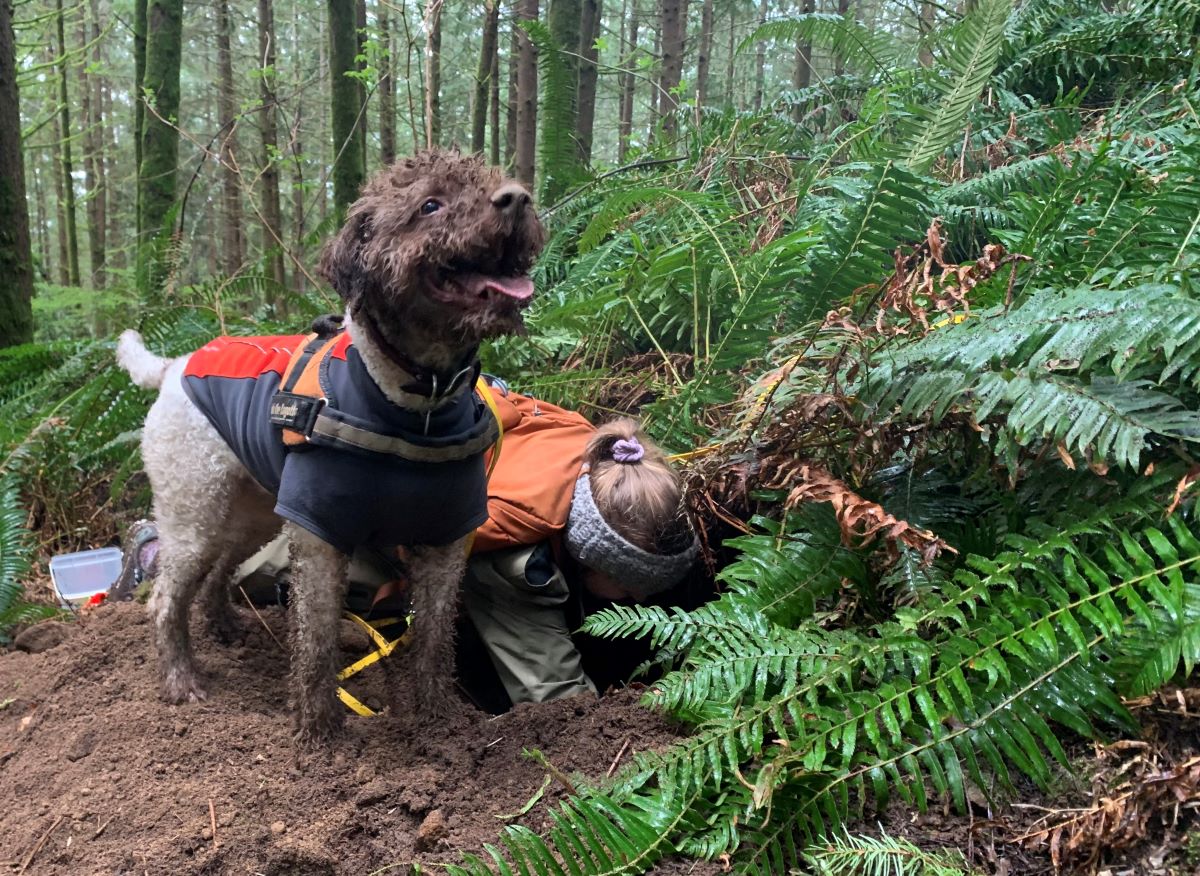
Assisted by sniffer dogs and DNA sequencing, researchers discover three new truffle species
University of Florida biologists studying fungal evolution and ecology have discovered three new truffle species, including one capable of commanding hundreds of dollars per pound within culinary circles. “Our paper confirms what a lot of people had suspected for a long time, which is that the North American truffle species is genetically very distinct from its European relatives.” —Benjamin Lemmond, study co-author and a former UF student The researchers describe their discoveries in a Persoonia. Their work shakes up the Morchellaceae truffle family tree, with key insights related to perhaps the most commercially valuable truffle in North America, the Oregon black truffle. Gourmet chefs, who sometimes grate the odoriferous truffle over dishes or infuse butter with it, have been known to pay as much as $800 per pound for the delicacy. For decades, the Oregon black truffle has been known scientifically as Leucangium carthusianum. It was originally found in Europe and later found in the Pacific Northwest, from California to British Columbia. However, recent genetic testing and field analysis by researchers from UF’s Institute of Food and Agricultural Sciences (UF/IFAS) revealed the North American variety is a distinct species. Scientists are giving this newly recognized species a name honoring the Cascadia region in which it is found: Leucangium cascadiense. “Our paper confirms what a lot of people had suspected for a long time, which is that the North American truffle species is genetically very distinct from its European relatives,” said study co-author Benjamin Lemmond, a former UF student. Lemmond, now a postdoctoral associate at the University of California at Berkeley, began his research into the truffles as a first-year doctoral student studying under professor Matthew Smith of the UF/IFAS plant pathology department. During the COVID-19 pandemic, Lemmond couldn’t access the campus greenhouse where he was conducting an experiment, so Smith secured hundreds of dried truffle specimens from Oregon State University for him to study. The stash included slivers of the Oregon black truffle, a dark-colored, potato-shaped species with tiny, pyramid-shaped warts. When pandemic restrictions relaxed, Lemmond and Smith conducted genetic testing of the Oregon State specimens and others borrowed from Polish, Greek, Italian, French and Japanese collections. Their tests indicated Oregon black truffles from North America had at one point diverged from their European counterparts on the Morchellaceae evolutionary tree, according to the study. They also established the existence of another distinct and very rare species, Imaia kuwohiensis, a pale-colored truffle with dark warts, which is native to threatened spruce-fir habitats in the southern Appalachian Mountains. Their name for the truffle comes from the Cherokee word for the Great Smoky Mountains’ highest peak, Kuwohi. Field tests followed. The researchers wanted to understand the origin of Oregon black truffles’ energy. “Understanding the fundamental, basic biology and life cycle of this truffle is really important,” Lemmond said. “It’s a very valuable commodity, and this knowledge might help us to cultivate the truffle in the future. It also supports long-term conservation and management.” Most gourmet truffles are mycorrhizal, meaning they obtain energy from trees, Lemmond said. It had long been suspected that Oregon black truffles obtain energy through a symbiotic relationship with young Douglas fir trees, but no one had conclusively proven it. Lemmond traveled to the Pacific Northwest and worked with specially trained sniffer dogs capable of detecting truffles buried as deep as 10 inches beneath soil and leaf litter. With the dogs’ help, he unearthed Oregon black truffles nestled among Douglas fir stands. He used fluorescent stain that bonded with the fungal tissue, coloring it green to show where the truffle fungus grew between the cells of the tree root tissue. “The truffle fungi surround the whole root, but the fungus is healthy, and the plant is healthy,” Smith said. “The two trade nutrients back and forth.” DNA sequencing of the roots subsequently proved the truffles rely on the trees as their main source of carbon, according to the study. As the researchers conducted genome sequencing of the Oregon black truffle, they learned of a peculiar find reported by a citizen scientist on iNaturalist, an online science data network: a Leucangium truffle growing among Eastern hemlock trees in Oneida County, New York. It was the first time anyone had ever reported a Leucangium species in the United States, east of the Rocky Mountains, Lemmond said. Lemmond contacted Purdue University, which was preserving the specimen, and requested a sample. The truffle’s physical characteristics, including its dense external hairs and lack of warts, distinguished it from other Leucangium species. DNA analysis confirmed significant variation, too. The researchers named the new truffle species Leucangium oneidaense to recognize the county where it was unearthed. A few years later, just before the researchers submitted their study for publication, someone found a second Leucangium oneidaense specimen growing in Massachusetts, Lemmond said. “It was great timing, and it suggests to me that there are still a lot of undiscovered truffles out there, waiting to be found,” he said.