
Experts Matter. Find Yours.
Connect for media, speaking, professional opportunities & more.

In the news: Chronicle features University of Delaware's Career Center
At the University of Delaware, career-development officials believe in teaching students how networking exists all around them, in both curricular and co-curricular realms, by taking career readiness outside the Career Center and infusing networking principles and practices into academic courses, social activities and alumni events. UD's Career Center was highlighted in a recent Chronicle of Higher Education article for innovative and exemplary networking practices and teachings. “If we get students to not think about networking as this static skill I have to build, and it’s more of a natural part of who I am, and it’s in my toolbox, it becomes less arduous, less scary, and easier to do," Rachel Coppola, UD’s Director of Life Design and Career Integration, said in the featured video. Reporters wishing to speak to career experts can reach out to mediarelations@udel.edu.


Humanities play integral role in the UF Astraeus Space Institute
The ability to imagine has given the human species the power to create, problem solve, empathize, and theorize. In fact, creative imagination can be found at the origin of every modern development throughout time. From medical advancements and the formation of governments to the establishment of the internet and the creation of Beethoven’s Symphony No. 3 — all at first were simply imagined. So, it is not a leap to think that in establishing a space institute at the University of Florida, collaborators would continue to anchor the institution in the human element of imagination. That’s where space exploration began. Ancient Greek philosopher Thales, later known as the father of Greek science and mathematics, questioned the true origins of the universe. Introducing deductive reasoning, Thales sought answers beyond the stories of gods and heroes. Three hundred years later, Aristotle theorized the geocentric layout of the universe with Earth at its stationery core and celestial bodies revolving around it. In the early 14th century, the Italian poet Dante told the story of a vertical journey through the universe, reaching the stars in what he described as paradise. And in the fall of 1609, Galileo began observing the heavens with instruments he created to magnify his view up to 20 times beyond what the natural eye could see. Through his telescope, Galileo observed mountains on the moon, rings around Saturn, and the moons of Jupiter, all evidence that the universe did not revolve around the Earth, but the sun. Inspired by words written in 1865 by Jules Verne in his novel, “De la Terre à la Lune” (From the Earth to the Moon), a 10-year-old Russian boy questioned, could travel be possible beyond the Earth’s atmosphere? Could Verne’s 900-foot-long space gun propel humans — or anything for that matter — through the bonds of gravity and into outer space? Read more here: Looking to know more about the UF Astraeus Space Institute or connect with Rob Ferl, Amy J. Williams or Stephen Elardo? Simply click on either expert's icon now to arrange an interview today.




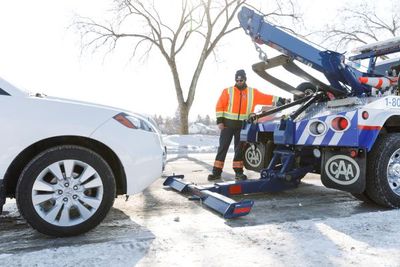
Colder weather will soon to be sweeping across Manitoba, and CAA Manitoba (CAA MB) is reminding drivers to prepare now for the fast-approaching winter season. “Now is the time for motorists to get their winter tires on, check the health of their car battery, and make sure they have an emergency car kit in their vehicle,” says Nadia Matos, manager, external communications for CAA Manitoba. “We want to ensure Manitobans are as ready as possible to drive safely this Winter.” Manitoba is known for cold and snow in the winter months, as well as poor driving conditions. Planning ahead will help make your next winter drive as stress-free as possible. “There’s no better time than now to ensure you and your loved ones are ready to drive safely this Winter,” adds Matos. CAA Manitoba has a list of winter readiness tips to help Manitobans prepare for winter driving. Test your car battery. If necessary, replace it before it fails. Even a fully charged battery can lose up to 30 per cent of its charge in temperatures below zero. CAA Manitoba will test Members’ batteries free of cost during a service call. Make sure you ask for a battery health check when you next perform maintenance on your car. For a listing of CAA's Approved Auto Repair Services (AARS), please visit Approved Auto Repair Service - CAA Manitoba. Install winter tires for better traction. On cold and snowy roads, winter tires can help reduce your braking distance by up to 25 per cent. Members can call CAA before Dec. 12 to have our mobile tire service change them at home for a fee. Ensure you have an emergency car kit. Your kit should include water, non-perishable food, jumper cables, blankets, a flashlight, batteries, waterproof matches, candles, and cat litter to help create traction under your tires. You should also add extra mitts, hats, socks, and footwear to your emergency kit. Have your brakes checked. If you’ve noticed any change in the feel of your brakes, or if they’re squealing or grinding, it may be time to have them serviced. With black ice and unpredictable weather, having good brakes can mean the difference between stopping and sliding. Check your block heater. When you park, is your outdoor plug drawing power? Is your extension cord working with no missing prongs or exposed wires? Check your lighting system. Ensure all your interior and exterior lights are functioning properly. Also, check that your headlights are aimed correctly for safe driving. Top up your fluids. Keep extra fluid in your trunk. Make sure it’s rated for -40ºC. Don’t let your gas drop below half full. Inspect your wiper blades. If you notice streaking on the windshield, check the condition of your blades for fraying or cracking. Remove worn wiper blades and replace them with new ones. Ensure you have the appropriate winter tools. Keep an ice scraper, a small shovel and a snow brush handy in your car at all times. While it’s important to make sure your vehicle is ready to go, it’s also essential for drivers and passengers to be prepared in case of an emergency or if you are stranded. Some additional ways to be prepared include: Keep a cell phone battery bank and a charging cable connected to your vehicle. Download and register for the CAA app and keep your CAA membership card in your wallet or vehicle, so you always know how to contact CAA Manitoba if you are stranded. Check Manitoba 511.ca for road conditions and closures if you head into a rural area. Always tell your loved ones where you plan to go and what your route is before leaving for a longer trip. For more information about driving safely in winter conditions, please visit our winter driving page at caamanitoba.com.



The missing AI revolution: Smarter leadership, not smarter machines, says workforce expert
Artificial intelligence has transformed industries, but its most overlooked potential lies in helping leaders themselves think more clearly and decide more effectively, according to Saleem Mistry, Associate Professor of Management at the University of Delaware’s Alfred Lerner College of Business & Economics. Mistry focuses on enabling leaders to be more productive, think clearly and make better decisions. Focusing on the leader, not just the organization Mistry’s work examines how leaders at every level can use AI to enhance productivity and decision-making. While most organizational conversations about AI focus on operational efficiency or customer service, he argues that the true frontier is leadership productivity. “Leadership productivity directly shapes organizational performance. AI can be transformative when it helps leaders think faster, decide better and regain the time they’ve lost to administration.” – Mistry As a professor of management and leadership, Mistry is often asked how AI will change the workplace. Those conversations usually revolve around automating workflows, not empowering leaders. Yet, as he notes, an MIT report found that 95 percent of generative AI pilots are failing — largely due to the absence of clear business use cases. That insight shaped his direction: leadership itself may be the missing use case. Having spent much of his earlier career in high technology, Mistry saw firsthand that innovation succeeds or fails based on how effectively leaders model new tools. Demonstrating practical applications Mistry recently analyzed the 2024-2025 U.S. Office of Inspector General reports on leadership challenges based. He analyzed each leadership challenge using three guiding questions: 1) Do the problems stem from leaders struggling with time, decisions or task management? 2) How might AI help? 3) Where could AI have the greatest impact? The results included: Executive Example (Amtrak): AI could power a real-time RACI dashboard to clarify accountability, track decisions and eliminate bottlenecks. Mid-Level Example (EPA): “Agentic AI” could cross-check allegations against verified data before termination decisions, preventing ethical and legal missteps. Supervisor Example (CISA): AI could scan incentive data for waste and anomalies, saving hours of manual review. Why it matters By automating repetitive, data-heavy tasks, AI gives leaders something they desperately need: time. Time to think strategically, coach teams and make better decisions. Mistry’s findings link AI adoption directly to mental well-being, arguing that improved decision productivity leads to improved organizational health. “Decision productivity is business productivity. Organizations that make faster, fairer and more informed decisions outperform those that don’t.” – Mistry Next steps: Building the framework for responsible AI leadership Mistry’s next milestone is to develop a set of leadership use cases that can be used by business leaders at all levels where AI can deliver the greatest impact. He is also developing frameworks for responsible AI adoption that help leaders determine when and how to deploy these tools ethically — across decision-making, communication, planning and task management. “AI won’t replace leaders,” Mistry concludes, “but leaders who learn to use AI effectively will outperform those who don’t.” ABOUT SALEEM MISTRY Associate Professor of Management Alfred Lerner College of Business & Economics Mistry’s research focuses on the future of work, with a particular emphasis on how individuals navigate workplace transitions. His research explores how people adjust to both minor and major changes in their careers, such as shifts in jobs, responsibilities, teams or entire organizations. A growing area of his expertise is the strategic use of artificial intelligence to enhance productivity for leaders, teams and human resource professionals. His research connects academic insights with practical applications, helping to shape how people and organizations adapt to an evolving professional landscape. Reporters who would like to speak to Mistry can click on his profile.

MCG scientists investigate arthritis drug’s impact on Alzheimer’s disease
According to the Alzheimer’s Association, more than 7 million Americans are living with Alzheimer’s disease, and one in nine of those people is 65 or older. Although that number is expected to grow, researchers at the Medical College of Georgia at Augusta University are making progress on studies that could turn into life-saving treatments. Qin Wang, MD, PhD, professor in the Department of Neuroscience and Regenerative Medicine at MCG and Georgia Research Alliance Eminent Scholar in neuropharmacology, recently published a study titled “The PKCι‑β‑arrestin2 axis disrupts SORLA retrograde trafficking, driving its degradation and amyloid pathology in Alzheimer’s disease,” in Molecular Degeneration, a leading journal in neurodegeneration. In the study, Wang and her team explored how certain proteins and enzymes interact in the brains of Alzheimer’s patients. Key players include the SORL1 gene, the PKCι enzyme and proteins SORLA, β‑arrestin2 and amyloid. SORL1 encodes SORLA, which helps regulate amyloid. Amyloid can form plaque in the brain, contributing to Alzheimer’s. People with the disease often have lower SORLA levels, which amplifies plaque production. “The goal is to increase SORLA levels in patients with AD. If we can boost it up, that would be great,” Wang said. “But if you want to know how to boost it up, you have to know how it is degraded, so that’s what our work is about – we’re trying to understand how its stability is regulated.” Wang’s research team found that PKCι can add a phosphate group to SORLA, which helps SORLA interact with β‑arrestin2. The PKCι‑β‑arrestin2 axis leads to SORLA degradation, reducing its levels and allowing amyloid plaques to grow unchecked, thereby worsening the disease condition. They discovered this by using biochemical methods and a mass spectrometer managed by Wenbo Zhi, PhD, at the Proteomics and Mass Spectrometry core lab at AU. “We conducted biochemical studies and found that SORLA can be phosphorylated. We identified the phosphorylation site and the interacting enzymes,” Wang explained. “Using the mass spectrometer with PKCι, we saw increased phosphorylation of SORLA at certain sites. Preventing that could stop SORLA degradation.” That’s where a rheumatoid arthritis drug called auranofin comes into play. “While it is an arthritis drug, it can also inhibit the PKCι enzyme,” Wang explained. The team conducted tests using Alzheimer’s mouse models and human iPS cells developed into neurons. For the mouse models, they treated the mice with auranofin for eight weeks, resulting in decreased amyloid levels, reduced neuroinflammation and improved cognitive function. Similar results were seen in human cells with increased SORLA levels and decreased amyloid levels. “A good thing about this is, because this is an FDA-approved drug, it’s ready to be tested in Alzheimer’s patients,” Wang said. “People often worry about drug safety because of long-term use in chronic diseases like Alzheimer’s, but, in this case, existing safety data for chronic use gives a good starting point for testing in Alzheimer’s patients. “I hope a drug company can pick that up for a trial with Alzheimer’s patients because we are trying to translate our bench work all the way to the bedside for treatment,” she continued. The study wraps up a five-year National Institute on Aging grant, a collaborative effort between Wang’s lab and the Kai Jiao, MD, PhD, lab in AU’s Center of Biotechnology and Genomic Medicine. Wang’s team is also working on other grant-funded Alzheimer’s-related projects and hopes to continue making advancements toward finding a cure for this debilitating disease. “All of our projects share the goal of finding a better treatment,” Wang said. “Related to this project in particular, we want to know how the SORLA protein works in different types of brain cells, given the brain’s complexity. Then we can determine how to specifically target that protein to develop more effective therapies.” Qin Wang, MD, PhD, researches the neuropharmacology and signaling mechanisms underlying neurological and psychiatric disorders. If you're interested in learning more about her work or booking an interview, simply click on her icon now to arrange a time to talk.


Why College Students Are Storming Fields More Often
In his most recent Forbes article, Dr. Marshall Shepherd takes a scientific look at why college students and fans storm football fields, blending insights from psychology, meteorology, and social dynamics. He explains that field-storming is not simply a burst of emotion—it’s a predictable outcome of collective excitement and shared identity. After an unexpected win or a high-stakes rivalry game, thousands of people simultaneously experience what psychologists call “emotional contagion,” amplifying feelings of unity and celebration. This shared surge, combined with environmental cues like stadium acoustics and crowd density, transforms the act into what Shepherd calls a form of “social weather event.” “Storming the field isn’t chaos—it’s choreography fueled by emotion and crowd physics.” Shepherd also examines the logistical and safety implications. He notes that while universities often celebrate these spontaneous displays of school pride, they carry risks ranging from crowd injuries to property damage. Yet, institutions are reluctant to ban them outright because these moments reinforce fan loyalty and media attention. Shepherd suggests that the solution lies in better understanding crowd behavior: designing stadiums with safe egress routes, training security teams to manage surges, and anticipating emotional tipping points rather than reacting afterward. “Understanding the science behind fan behavior lets us manage energy, not suppress it.” Ultimately, Shepherd’s piece reframes field-storming as a fascinating mix of culture and physics—where joy, identity, and momentum collide. He urges universities to see these moments not as mere rule-breaking but as opportunities to study human behavior in motion, and to design environments that celebrate passion without compromising safety. Dr. J. Marshall Shepherd is a leading international weather-climate expert and is the Georgia Athletic Association Distinguished Professor of Geography and Atmospheric Sciences at the University of Georgia. Dr. Shepherd was the 2013 President of American Meteorological Society (AMS), the nation’s largest and oldest professional/science society in the atmospheric and related sciences. View his profile here Dr. J. Marshall Shepherd is available to speak with the media about this interesting topic - simply click on his icon now to arrange an interview today.
UF builds community resilience in Jacksonville’s Historic Eastside neighborhood
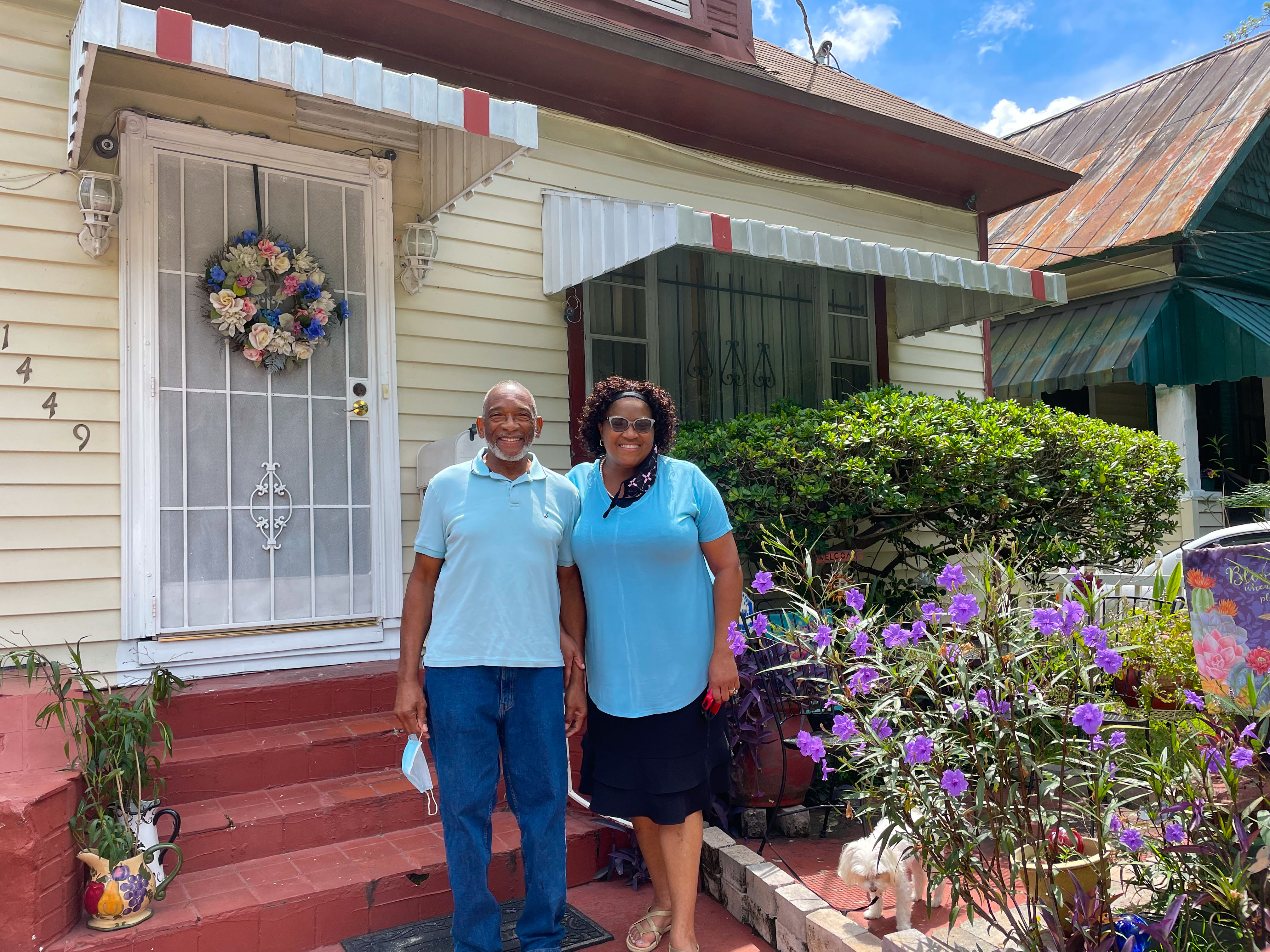
As the University of Florida continues to expand its presence in Jacksonville, Gators are undertaking sustainability projects to improve the city’s neighborhoods. Faculty and students in the College of Design, Construction and Planning’s Florida Institute for Built Environment Resilience (FIBER) have spent the past four years focusing on the role of housing design in community health resilience in Jacksonville’s Historic Eastside neighborhood, interviewing resident stakeholders and collaborating with citywide organizations that are helping to restore older homes. Findings from the UF research will be instrumental in informing future community planning and housing design decisions, potentially leading to more health-centered, sustainable neighborhoods. “Our research in Jacksonville focuses on how we can inform the development of community infrastructure that holistically supports human well-being across mental, emotional, and physical dimensions,” said Lisa Sundahl Platt, Ph.D., a FIBER research faculty member and an assistant professor of interior design at UF, who added that this holistic, health-centered approach is known as salutogenic design. “We are also actively collaborating with community organizations in Jacksonville and researchers from UF to explore improved strategies for designing and constructing community infrastructure that effectively responds to potential hazards.” A community-wide collaboration UF has conducted a pilot study over the past year on the Jacksonville-based Restore, Repair, and Resilience (R3) initiative that is underway in Historic Eastside – surveying residents about how the design quality of their housing and surrounding environments affects their overall well-being. This interdisciplinary project has brought together FIBER and members of the R3 Group – a coalition of organizations that includes the JEA utility company, LIFT JAX (committed to eradicating generational poverty), the Historic Eastside Community Development Corporation, the United Way of Northeast Florida, and Local Initiatives Support Corporation Jacksonville. FIBER-led research has received ongoing support from the Florida Resilient Cities grant, which is funded by the Jessie Ball duPont Fund. The scope of the R3 project is being scaled up through a U.S. Department of Energy grant awarded through JEA, which will allow for an expansion of home revitalization efforts in Eastside Jacksonville. FIBER’s ongoing housing and health community action research on these efforts will be supported through a grant from the LS3P Foundation. “Many residences we evaluated need help with improvements to housing energy efficiency, building ventilation, building shell structural integrity, and materiality,” Platt said. “For example, underperforming flooring material can create potential trip hazards for older adults. Deterioration in interior materials, caused by degrading components of the building envelope, can also lead to mold and mildew growth in interior environments, which can contribute to poor interior environmental quality issues and acute and chronic health conditions.” Respiratory health issues are often caused by material and ventilation design failures, which can affect people of all ages, especially vulnerable populations such as children and older adults. Oftentimes, interior designers see that the environmental risks that compromise human well-being are coming from both the outside and inside of the buildings. “As we continue to address priorities, our focus extends beyond energy and building efficiency to encompass comprehensive factors of built environment resilience that impact overall community health and well-being,” Platt said. “There's still significant progress to be made in the design of sustainable housing that supports community salutogenic health." Keeping residents safe and healthy UF research has continued to prove that interior resilience for living environments plays a vital role in people’s mental and physical health. “People spend roughly 90% of their time indoors, so it is important to understand the types of design conditions and materials that we’re putting into spaces and how they can affect the occupants of those living in said spaces,” said UF student Milena Rodriguez Mendez, who is one of Platt’s graduate research assistants. Students like Mendez are using qualitative and quantitative research methods to engage in collaborative community-led research that includes academics, for-profit organizations, nonprofits, citizen scientists, and neighborhood stakeholders. “I aim to center my work on social justice and equity, and I believe this initiative represents a meaningful step in that direction,” Mendez said. “Our focus is on the residents of this vibrant yet at-risk community.” FIBER researcher Jason von Meding added, “We want to know how future housing policies can address some future health concerns. We have a lot of youth in the community that are participating, which I think is important.” The FIBER housing and health team is actively pursuing additional funding to expand this research, in collaboration with UF Health Jacksonville’s Department of Community Engagement. “Our goal is to develop an open-source online platform that disseminates lessons learned and proof-of-concept findings on the impact of regenerative housing design on human and ecological health,” Platt said. “This resource will be valuable for other cities and neighborhoods facing similar challenges in housing quality, affordability, and accessibility.” Looking to know more about this project or connect with Lisa Platt? Simply click on her icon now to arrange an interview today.


On Sunday, October 19, at 9:34 a.m., four masked individuals surged into the Louvre’s Galerie d’Apollon from a severed, second-floor window. Hurriedly, they smashed open two display cases, seized eight pieces of jewelry, then shimmied down a ladder and sped off on motorbikes toward Lyons. In seven minutes’ time, in broad daylight, they absconded with an estimated $102 million in valuables from the world’s most famous museum. This past Saturday, October 25, French authorities announced the first arrests in connection with the daring heist. However, despite the police’s progress, the country continues to litigate the matter—embroiled in discussions of heritage, history and national identity. Recently, Roderick Cooke, PhD, director of French and Francophone Studies at Villanova University, shared his perspective on the situation as well as the artifacts lost. Q: The Louvre heist has been described as “brazen,” “shocking” and a “terrible failure” on security’s part. Is there any sort of precedent for this event in the museum’s history? Dr. Cooke: Nothing on this scale has ever happened to the Louvre since its founding as a museum during the Revolution. The closest equivalent is the 1911 theft of the Mona Lisa by a former employee who claimed it should be returned to Italy. However, that was one painting, the heist was not committed by organized crime, and the Mona Lisa did not have the renown it enjoys today. The impact of the theft was thus lower, although it did cause major outrage and a sweeping law-enforcement response at the time. Ironically, that theft is often credited with making da Vinci’s painting the global icon it continues to be. Q: What has the reaction to this event been among the French people? DC: It’s harder to get a sense of reactions across French society, because so much of the aftermath has focused on the intellectual milieux’s opinions. And in those realms, it has immediately become a political football. Individuals positioning themselves as anti-elite or anti-status quo, such as Jordan Bardella of the National Rally party, have called the theft a “humiliation,” immediately tying it to French national prestige. Former President François Hollande has conversely and vainly called for the event to be de-polemicized, citing national solidarity. This is happening because the Louvre is one of the most visible manifestations of French soft power—the most-visited museum anywhere on Earth. As such, anything attacking its integrity becomes an attack on the nation, and how individual French citizens feel about the theft is closely tied to their broader view of the nation. Q: Several of the items stolen from the Louvre once belonged to Empress Eugénie. Could you share a bit of information on her story? DC: Eugénie de Montijo was a Spanish aristocrat who married the Emperor of the French, who ruled as Napoleon III between 1852 and 1870. It was a time of authoritarian repression and sham democracy—Napoleon III installed the Empire through a coup. Its clearest legacy is that Paris looks the way it does today largely because of the thorough modernizations overseen by Napoleon III’s appointee Baron Haussmann. So, Eugénie and her now-lost jewels represent a complex point in French history, when culture and the economy developed quickly, but did so in a climate of fear for any French person who opposed the regime too loudly (like Victor Hugo, who went into exile on the Channel Islands and wrote poems savaging Napoleon III and his deeds). Some accused the Empress of being responsible for the more hardline and conservative stances taken by her husband’s government. On a different note, she was a diligent patron of the arts and arguably the most significant figure in the contemporary fashion world, famous for setting trends such as the bustle that radiated across Europe. This explains the mix of anger and admiration that followed her depending on the sphere she was operating in. A new English-language biography argues that far from being a traditionalist, she was a pioneering feminist by the standards of the time. It looks like her historical importance will continue to be debated. Q: Interior Minister Laurent Nuñez described the stolen items as “of immeasurable heritage value.” How significant of a cultural loss do you consider this theft? DC: These jewels are referred to in French as “les Joyaux de la Couronne” (the Crown Jewels), but of course that phrase lands very differently in republican France than it does across the water in the United Kingdom. The items actually represent several different dynasties of French rulers, some of whom came to power through direct conflict with others. The now-ransacked display at the Louvre smoothed over these historical divisions, for which many French people died over the centuries. President Macron referred to the stolen items as embodying “our history,” which is emblematic of the French state’s work to create a conceptual present-day unity out of the clashes of the past. At a time when France is arguably more divided than at any point since World War II, any unitary symbol of identity takes on greater significance. Q: Do you have any closing thoughts on the artifacts taken and what they represent? DC: I’d reemphasize the previous point about the smoothing effect of the museum display on the violent history that made it possible. Much of the reporting on the stolen jewels lists off the different queens and empresses who owned them, without giving readers a sense of the complicated succession of regime changes and ideologies that put those women in power in the first place. The relative stability of the last 60-odd years is an anomaly in modern French history. This set of jewels and the names of their original owners may seem far removed from the concerns of an ordinary French citizen today, but just beneath their surface is a legacy of changing governments and tensions between social classes that survives in new forms in 2025.

Covering Hurricane Melissa? Our Expert is Here to Help with Your Coverage
Hurricane Melissa has exploded into a record-breaking Category 5 storm, tearing through the Caribbean with catastrophic force. It made landfall in Jamaica with sustained winds near 185 mph, unleashing torrential rain, landslides, and widespread destruction across the island — the strongest storm ever recorded there. The hurricane has already caused fatalities in Jamaica, Haiti, and the Dominican Republic, and now barrels toward eastern Cuba and the Bahamas, where mass evacuations are underway. Meteorologists warn of up to 30 inches of rainfall in some areas, storm surges reaching 11 feet along southern coasts, and a severe risk of flash flooding and mudslides due to the storm’s slow, grinding pace. Dr. J. Marshall Shepherd is a leading international weather-climate expert and is the Georgia Athletic Association Distinguished Professor of Geography and Atmospheric Sciences at the University of Georgia. Dr. Shepherd was the 2013 President of American Meteorological Society (AMS), the nation’s largest and oldest professional/science society in the atmospheric and related sciences. View his profile here While Melissa is expected to weaken slightly as it moves north, its enormous size means destructive winds, life-threatening flooding, and dangerous coastal waves will persist through the week — with Bermuda now bracing for potential impact and the U.S. East Coast monitoring for high surf and rip currents as the storm churns offshore. Covering? We can help. Dr. J. Marshall Shepherd is a leading international weather-climate expert and is the Georgia Athletic Association Distinguished Professor of Geography and Atmospheric Sciences at the University of Georgia. His expertise has been sought recently by ABC News, Forbes Magazine and The New York Times. He's available to speak with the media about this ongoing story and storm - simply click on his icon now to arrange an interview today.

The Thrill of Fear: The History and Cultural Significance of Horror Movies
From flickering silent films to today’s big-budget blockbusters, horror movies have always tapped into humanity’s oldest emotion: fear. Across decades, they’ve reflected social anxieties, moral questions, and shifting definitions of what scares us. Yet behind every scream lies a story about culture, creativity, and the psychology of thrill. The Origins of On-Screen Fear Horror cinema began in the early 1900s with short silent films inspired by literature and folklore. One of the earliest, Le Manoir du Diable (1896), often considered the first horror film, introduced audiences to bats, ghosts, and the Devil himself. By the 1920s, German Expressionist films like Nosferatu and The Cabinet of Dr. Caligari used shadow and distortion to create unease, shaping the language of horror still used today. Hollywood’s Golden Age of Horror in the 1930s brought monsters to life — Dracula, Frankenstein, and The Mummy — giving audiences both fright and fascination during a time of global economic depression. These films helped people confront real-world fears symbolically, offering escape through imagination. Fear Evolves with the Times Each generation has reinvented horror to reflect its cultural moment. The 1950s’ atomic-age fears spawned giant monsters and alien invasions. The 1960s and ’70s shifted toward psychological and supernatural horror with classics like Psycho, The Exorcist, and The Texas Chain Saw Massacre — films that exposed anxieties about social change, faith, and violence. The 1980s and ’90s introduced slasher icons such as Halloween’s Michael Myers and A Nightmare on Elm Street’s Freddy Krueger, mixing terror with pop-culture spectacle. By the 2000s, horror had splintered into subgenres — from found-footage realism (The Blair Witch Project, Paranormal Activity) to elevated art-house films like Get Out and Hereditary, which use fear to explore race, grief, and identity. Why We Like to Be Scared Psychologists suggest people enjoy horror because it offers safe danger — a way to experience fear, adrenaline, and relief without real threat. Watching horror triggers the body’s fight-or-flight response, followed by catharsis once the tension resolves. Culturally, it provides a mirror to our collective psyche: what we fear, we face, and what we face, we sometimes conquer. Horror also brings people together — in theaters, at home, or online — to share an intense emotional experience. Whether screaming, laughing, or peeking through fingers, audiences participate in a ritual as old as storytelling itself. The Icons of the Genre Among the most popular and influential horror films of all time: Psycho (1960) The Exorcist (1973) Halloween (1978) A Nightmare on Elm Street (1984) The Silence of the Lambs (1991) The Ring (2002) Get Out (2017) Hereditary (2018) Each left a lasting mark on both cinema and culture — showing that horror, far from being niche, remains one of the most expressive and enduring genres in film history. Connect with our experts about the history and popularity of scary movies and horror flicks: Check out our experts here : www.expertfile.com
