
Experts Matter. Find Yours.
Connect for media, speaking, professional opportunities & more.

It's going to be a busy week in America when it comes to politics. And if you're covering - we have experts who can help with any of your questions or stories. Tom Smith - Professor in the Practice of Finance - Professor Smith is an expert in labor economics, entertainment and healthcare economics, as well as real estate and urban economies. David Schweidel - Professor of Marketing - Professor Schweidel has been closely researching the impact of AI in society, especially elections. He can speak on the impact AI is expected to have in this year’s elections. Professor Schweidel also has extensive work in election marketing. He researched negative campaign advertising and if a negative tone has a positive impact on election results. Ramnath Chellappa - Professor of Information Systems & Operations Management - Professor Chellappa is available to discuss the economics of information security and privacy. He can also discuss the economics and impact of AI. Raymond Hill - Professor Emeritus Hill is available to discuss any issues on the economy related to energy. If you are looking to arrange an interview - simply click any of the listed expert's icons to set up a time today or email Kim Speece for assistance.

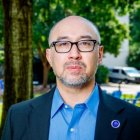



The arrival of a leap year brings with it myths, legends and superstitions about its origin. John Gizis, professor of physics and astronomy at the University of Delaware, takes part in a Q&A to share the truth and science behind this “extra” day added to the Gregorian calendar every four years. Why do we have leap day? Unfortunately, the amount of time the earth takes to go around the sun is not exactly 365 days. It’s off by about ¼ of a day each year. It would be hard to have a calendar for 365 ¼ days. When was the extra day added to the calendar? Julius Caesar introduced the Julian calendar in 46 B.C., which added one extra day every four years. Of course, the year is not exactly 365 ¼ days either, so after a while, that extra time built up. Pope Gregory XIII established the Gregorian calendar [the current calendar] in 1582 to correct the fact that the calendar had gotten off by about 12 days, enough that it was noticeable. How was it noticeable? The seasons were gradually shifting, so that what we think of as summertime in the northern hemisphere had gradually become more like autumn. The shortest day of the year is Dec. 21. Basically, the shortest day of the year drifted and eventually was in early December. How did they institute the reforms? First, they skipped a couple of weeks, so they returned to the original calendar lining up with the sun and stars as it’s supposed to. Then they instituted a couple of rules to keep this from happening again. Leap year happens in years divisible by four, but every 100 years, there is not a leap year. However, every 400 years, you do have a leap year. This happened in the year 2000. And the next time it will happen most of us won’t be around — 2100 will not be a leap year. What would happen if the extra day had not been introduced? If we didn’t have it at all, we would be off by ¼ of a day every year. The seasons would completely shift through the calendar and anything that ties to the seasons would be affected, like farming. It would create havoc with the time to plant and to harvest crops, for example. You also would lose the meaning behind sayings such as “April showers bring May flowers.” Multiply the 2,000 years since it was introduced by ¼ day per year, and that would be 500 days we would have shifted over history. In the northern hemisphere January would have become summer, then gone back to being winter, then shifted off again. Does adding the extra day make up the difference exactly and keep the astral year in sync with the calendar year? Yes, but this relates to a bigger issue. Astronomers want time to match up so that the positions of the stars match up year after year. Because the length of day changes slightly over time, astronomers sometimes would like to add an extra “leap second” to keep the stars in sync with our time system. But adding a second is an annoyance for computer and tech systems. Did you know that people born on leap day are sometimes called “leaplings?” According to Google, in 2020, there were about 5 million people with Feb. 29 birthdays. Do you think they have any advantages or disadvantages to being born on this day? No, I didn’t know that, and I know someone who refused to be induced on that day because she didn’t want confusion for her child, although I think it might be cool. After all, in this day and age, everyone always knows how old they are. To set up an interview with Gizis, visit his profile and click on the contact button.


Florida measles outbreak highlights the cost of vaccine hesitancy
A measles outbreak that started in a Florida elementary school has spread and is now up to ten cases. University of Delaware epidemiologist Jennifer Horney can comment on the outbreak as well as the risk to U.S. eradication status for measles and the role that vaccine hesitancy plays in the emergence and reemergence of vaccine preventable diseases. Vaccine hesitancy is relevant in the Florida case, as the state's top health official defied federal guidance to contain it. Horney has more than 20 years of experience conducting outbreak investigations and providing technical assistance during pandemics to public health groups domestically and internationally. To set up an interview, visit her profile and click the contact button; or, contact UD's media relations office.


Leap year: Tips for using extra day on career and professional development
Having an extra day in a leap year provides you with a unique opportunity to invest time in your career and professional development. Jill Gugino Panté, director of the Lerner Career Services Center at the University of Delaware, offers six ideas to maximize the day. Dedicate time to enhance your skills. It is easy to find free courses, workshops and training videos on just about anything. Take five minutes to reflect on a skill you wish you had or were better, such as, say, Excel. YouTube, TikTok and LinkedIn Learning have hundreds of thousands of videos that can teach shortcuts, visual design, formulas and more. Use the day for networking. Reach out to professionals in your industry and schedule informational interviews. Reconnect with old classmates, former bosses or colleagues from another department and invite them to meet for coffee or lunch. Spend the day talking with someone about your career/professional development goals. Reflect on your career goals. Many of us do not take the time to articulate where we want to be this time next year or even four years from now. Start with three months, then move to six months, then a year. Do you want to learn a new skill? Meet with someone whose career you’ve admired? Change jobs? Ask for a raise? Career development can be thought of as a series of projects because thinking four years ahead can seem a little daunting. However, making goals for the next six months makes the process more manageable and tangible. Update your career documents. This means not only your resume but your LinkedIn profile and professional bio. If you don’t have access to a Career Coach, use Generative AI (like Chat GPT) to help you write better bullet points or update your “About” section on LinkedIn. Keep in mind that AI should be viewed as a supportive tool rather than a replacement for your active involvement in the process. Maintain a personal touch and let your unique personality shine through in your application materials and interviews. Focus on your well-being. How often do we get an extra day to focus on ourselves? And on this particular leap year, you may be feeling stressed and overwhelmed so focusing on career goals isn’t an option. Take the opportunity for self-care – go for a leisurely walk, engage in meditation or stretching exercises, or schedule an online session with a therapist or counselor. Investing time in personal wellness is important to address before you leap into professional development. Make deliberate choices that not only contribute to your career growth but also foster a sense of well-being. Here's a pro tip: mark a "professional/personal development boost" block on your calendar for each leap year, ensuring you fully capitalize on the extra day. This strategic scheduling will serve as a reminder to prioritize both your professional growth and personal wellness. To set up an interview with Gugino Panté, visit her profile and click on the contact button.


Year three: What fate awaits the fighting in Ukraine?
As we enter year three of the war between Ukraine and Russia, the death toll continues to rise, and there doesn’t appear to be any end in sight to the war. Craig Albert, PhD, professor of politics and director of the Master of Arts in Intelligence and Security Studies at Pamplin College of Arts, Humanities, and Social Sciences at Augusta University, said it appears victory does not seem likely for either side, and he expects it to form into a “frozen conflict.” “There are two ways out of this, however,” said Albert. “The first is that the West, mainly the United States, does not continue to arm Ukraine. If this becomes the new normal, then Ukraine will not be able to keep up against Russia and will eventually fall through a war of attrition being waged by Russia.” “The second, less likely but far more threatening scenario, is that Russia expands the war to other states in the area or inadvertently hits a NATO-member state with either kinetic or massive cyberattacks. It may draw NATO into the war directly. In this case, Ukraine takes the advantage, but the war expands to something not seen since World War II.” Albert added that the war is becoming a war of attrition, and, if one side maintains morale, weapons and supply-chain logistics and if one side can maintain air superiority, it’s likely to have an advantage. “If Ukraine manages to get F-16s in the fight sooner rather than later, and longer-ranged missiles are given to them as well, this could cause a stalemate and force Russia into negotiation,” Albert said. He noted Ukraine is making significant gains in the air and has managed to shoot down seven sophisticated aircraft recently, forcing Russian air units to be more cautious about their tactics and even move further away from the frontline. “If this continues, Ukraine can exploit this as Russian forces would likely be left without air cover in future battles.” With everything that has happened in the first two years of the war, it has not deterred Russian President Vladimir Putin from ramping up his resolve. “Putin has doubled-down,” Albert said. “He has increased his forces in the fight, made more aggressive postures to NATO member states and has unleashed his cyber and informational capabilities across the world to take advantage in those realms. Putin continues to pursue pure power politics and is unlikely to back down.” Craig Albert, PhD, is director of the Master of Arts in Intelligence and Security Studies at Augusta University. He is a leading expert on war, terrorism and American politics. This is an important international and national issue. Albert is available to speak with media – simply click on his name to arrange an interview today.


MEDIA RELEASE: CAA Manitoba Survey Reveals Troubling Lack of Travel Insurance Preparedness
A recent member survey conducted by CAA Manitoba has unveiled concerning statistics regarding the lack of travel insurance awareness and preparedness. Despite the financial risks associated with travelling unprotected, the survey found that 38 per cent of members in Manitoba who travel don’t always purchase emergency medical travel insurance, highlighting a potential vulnerability. "In a world of uncertainties, our survey highlights a critical gap in travel preparedness among Manitobans," says Susan Postma, regional manager, CAA Manitoba. "At CAA, we believe in empowering travellers with knowledge so they can explore confidently and securely." The survey also discovered that almost a quarter of respondents (24 per cent) ventured on their last trip outside the province without any form of travel insurance, exposing themselves to potential financial burdens in case of emergencies. CAA Manitoba is launching its inaugural CAA Travel Wise Week In response to these findings, CAA Manitoba is launching its inaugural CAA Travel Wise Week to emphasize the crucial importance of travel insurance education. The campaign aims to inform and educate Manitobans on the risks of inadequate coverage and provide valuable insights into securing appropriate protection for their travel adventures. According to claims data from Orion Travel Insurance, the average cost of a medical claim has increased by 14 per cent since 2019. “Costs associated with everything from an ear infection to the use of an air ambulance have risen over the last few years due to medical inflation, underscoring the continued importance of travel insurance for life’s unexpected complications,” says Postma. As part of the CAA Travel Wise Week, CAA Manitoba has curated a list of the top ten tips to help individuals stay protected against common travel concerns: Top 10 Tips for Travel Protection: Make sure all your documentation is in order before you book. It is recommended passport renewals be completed six months before your planned trip. Your passport should still be valid six months after your travel date, as this is required in several countries. Read up on Government of Canada travel advisories for your destination. Understand the risk level associated with travel to a particular destination by checking the Government of Canada Travel Advice and Advisories website. Individual travel advisories remain on a country-by-country basis. Speak with your physician to discuss your travel plans. Speak to your physician to ensure you are up to date with needed travel vaccines and have them prescribe enough medication for the length of your trip. Ensure all the medication you take is packed in your carry-on and in its original bottles with labels intact. Consider purchasing travel insurance at the time of booking your trip. To lock in the best protection, book your travel insurance at the same time you book your trip. Doing so will give you the peace of mind that both you and your investment are protected. Insurance must be in place before things go wrong for you to benefit from coverage. Know the cancellation policies for everything you booked. Make sure you understand any key dates related to cancellation and changes, this includes accommodation, flights, car rentals, tours, cruises. Get to the airport early. CAA recommends arriving at the airport at least two hours before domestic flight departures and at least three for international flights. Check limits or restrictions. Travel insurance is often touted as a perk for certain credit cards but can be drastically limited to both benefits and the sum insured. Check limits or age restrictions on credit cards, employee benefits, and pensions to determine if you need additional travel insurance coverage. Stay connected. It is important to have access to trusted, up-to-date information while travelling so you can monitor changing conditions and requirements and adapt accordingly. Bookmark the Global Affairs Canada website prior to departure and check it regularly while abroad. It is also a good idea to sign up for Registration of Canadians Abroad. Find these and more information at www.caamanitoba.com/travel Note emergency contact numbers. Provide your travel agent with contact details while travelling abroad and keep all important phone numbers handy; this includes how to call for help and your travel insurance assistance phone number. Protect your ID. Make sure you have a digital version and paper version of your travel insurance wallet card, tickets to various events and attractions and even your passport. You may also want to leave a copy of important paperwork with family members or friends. For more information, visit www.caamanitoba.com/travelwise The survey was an online quantitative survey done with the CAA Members Matter Panel in Manitoba between September 22 - 29, 2023. The margin of error for a sample of this size is plus or minus 4.0% at the 95% confidence level.



MEDIA RELEASE: CAA Survey Reveals Troubling Lack of Travel Insurance Preparedness
A recent member survey conducted by CAA South Central Ontario (CAA SCO) has unveiled concerning statistics regarding the lack of travel insurance awareness and preparedness. Despite the financial risks associated with travelling unprotected, the survey found that 40 per cent of members in Ontario who travel don’t always purchase emergency medical travel insurance, highlighting a potential vulnerability. "In a world of uncertainties, our survey highlights a critical gap in travel preparedness among Ontarians," says Kaitlynn Furse, director of corporate communications at CAA SCO. "At CAA, we believe in empowering travellers with knowledge so they can explore confidently and securely." The survey also discovered that almost a quarter of respondents (23 per cent) ventured on their last trip outside the province without any form of travel insurance, exposing themselves to potential financial burdens in case of emergencies. Additionally, 33 per cent of people who travel with travel insurance relied on the coverage provided by their credit cards, raising concerns about coverage limitations, especially for those over 65. CAA SCO is launching its inaugural CAA Travel Wise Week In response to these findings, CAA SCO is launching its inaugural CAA Travel Wise Week to emphasize the crucial importance of travel insurance education. The campaign aims to inform and educate Ontarians on the risks associated with inadequate coverage and provide valuable insights into securing appropriate protection for their travel adventures. According to claims data from Orion Travel Insurance, the average cost of a medical claim has increased by 14 per cent since 2019. “Costs associated with everything from an ear infection to the use of an air ambulance have risen over the last few years due to medical inflation, underscoring the continued importance of travel insurance for life’s unexpected complications,” says Furse. As part of CAA Travel Wise Week, CAA SCO has curated a list of the top ten tips to help individuals stay protected against common travel concerns: Top 10 Tips for Travel Protection: Make sure all your documentation is in order before you book. It is recommended passport renewals be completed six months before your planned trip. Your passport should still be valid six months after your travel date, as this is required in several countries. Read up on Government of Canada travel advisories for your destination. Understand the risk level associated with travel to a particular destination by checking the Government of Canada Travel Advice and Advisories website. Individual travel advisories remain on a country-by-country basis. Speak with your physician to discuss your travel plans. Speak to your physician to ensure you are up to date with needed travel vaccines and have them prescribe enough medication for the length of your trip. Ensure all the medication you take is packed in your carry-on and in its original bottles with labels intact. Consider purchasing travel insurance at the time of booking your trip. To lock in the best protection, book your travel insurance at the same time you book your trip. Doing so will give you the peace of mind that both you and your investment are protected. Insurance must be in place before things go wrong for you to benefit from coverage. Know the cancellation policies for everything you booked. Make sure you understand any key dates related to cancellation and changes, this includes accommodation, flights, car rentals, tours, cruises. Get to the airport early. CAA recommends arriving at the airport at least two hours before domestic flight departures and at least three for international flights. Check limits or restrictions. Travel insurance is often touted as a perk for certain credit cards but can be drastically limited to both benefits and the sum insured. Check limits or age restrictions on credit cards, employee benefits, and pensions to determine if you need additional travel insurance coverage. Stay connected. It is important to have access to trusted, up-to-date information while travelling so you can monitor changing conditions and requirements and adapt accordingly. Bookmark the Global Affairs Canada website prior to departure and check it regularly while abroad. It is also a good idea to sign up for Registration of Canadians Abroad. Find these and more information at www.caasco.com/travel. Note emergency contact numbers. Provide your travel agent with contact details while travelling abroad and keep all important phone numbers handy; this includes how to call for help and your travel insurance assistance phone number. Protect your ID. Make sure you have a digital version and paper version of your travel insurance wallet card, tickets to various events and attractions and even your passport. You may also want to leave a copy of important paperwork with family members or friends. For more information, visit www.caasco.com/travelwise The survey was an online quantitative survey done with the CAA Members Matter Panel in Ontario between September 22 - 29, 2023. The margin of error for a sample of this size is plus or minus 1.6% at the 95% confidence level.


Acute Care Nursing Goes Virtual
At ChristianaCare, our patients are our number one priority. That perspective keeps us thinking about new ways to deliver care, including those that allow our caregivers to put their knowledge, skills and focus to the best use. Video: ChristianaCare Virtual Acute Care Nursing Virtual acute care nursing is one way we are making sure our caregivers are working at the highest levels to care for our patients in our hospitals. What is virtual nursing? This program allows experienced nurses to practice virtually in another location. Nurses working virtually help nurses at the bedside by documenting health information, such as medication histories; providing patient education; monitoring patient lab work; completing patient admission documentation; and helping with discharge planning and care coordination. Podcast: Virtual Nursing in the Hospital with Michelle Collins and Melanie Ries By working virtually, these nurses help remove some of the documentation burden for our clinical staff while also improving our patient outcomes. For example, a virtual acute care nurse can take the time to explain to a patient what their at-home care plan will look like, when to take their medications or even understand more about their condition. That allows our bedside nurses to keep their focus on the immediate needs of their patients. How does virtual nursing work? If a patient has a question about their medicine or wants to know more about their impending discharge, they can use a computer tablet that’s placed next to their bed to contact their virtual nurse, who will answer the call. Patients want to feel that someone is available to talk with them, and that’s exactly what our virtual nurse program provides. While our bedside nurses work on a unit caring for multiple patients, our virtual nurses care for one patient at a time without distraction. How is ChristianaCare using virtual nursing? We are currently using a virtual nursing care delivery model in more than 500 of our acute care beds – that’s about 41% of all the beds we have in Wilmington and Christiana hospitals. Nearly 19,000 patients have received this kind of innovative care at ChristianaCare. Our patients and nurses have been involved in over 53,000 calls, spending between seven and nine minutes each time they talk. Why does this matter? It’s no secret that nurses have been overburdened with high patient volumes and labor shortages that have affected the entire health care industry. Given this, it’s imperative to think of new models to support our caregivers, ease their workload and make sure we are providing expert care. Improvements in patient care – along with our patient experience scores – show us the value of the program. Virtual nursing allows us to do that. There also are other advantages to virtual nursing. It can be an option for skilled nurses who aren’t able to handle the physical demands of the job since the interaction with patients is through a tablet. Virtual nursing also offers an opportunity to help early-career nurses learn from experienced caregivers. A virtual nurse can provide mentoring to the bedside nurse by acting as an extra set of eyes and ears to help assess a patient or talk through a challenge. This approach can also help retain more of our early-career nurses, which is good news for all of us. We see virtual nursing as another tool to help our caregivers serve with love and excellence. And let’s be honest — we all want good care to be as easy as pushing a button. Thanks to virtual nursing, it is.



Leap Years and the Connection Between Astronomy and Our Lives
Most of us know February 29 as a whimsical anomaly—nothing more than a chance to tease our friends or colleagues born on this day as technically being a quarter of their purported age. But how often do we think about the origins of the day as we now know it? Or about the near-universal implementation of this specific way to keep track of time? Do we ever consider the impact a leap year could have on everyday life? Frank Maloney, PhD, an associate professor of astronomy and astrophysics at Villanova University, has been teaching for nearly 12 leap years (47 years). He is an expert in timekeeping and calendaring, calling them a “fundamental connection to our lives, ruled by the motion of objects in the sky,” because “everyone has to agree what day and time it is.” Dr. Maloney currently teaches a course called “Earth: Our Habitable World,” where he discusses this and other connections between astronomy and people’s lives. In the case of leap years, the astronomical phenomenon from which they originate—the Earth’s time to orbit the sun—is a very important one to accurately track. “You want your calendar to keep pace with the seasons,” Dr. Maloney explained. “There are all sorts of ways of measuring the pace of the Earth around the sun, but the way that [also] keeps pace with seasons is called the tropical year, and unfortunately, there’s not an integer number of days in that year. We can’t ignore it, because after the first year you’re off by a quarter of a day and after four years off by a full day, and so on.” Ancient civilizations were aware there were slightly more than 365 days in a solar year but didn’t know exactly how much more. Gradually, the seasons would become unsynchronized with the calendar, and those various civilizations added days back in at random times to realign. “In those days, it might be possible to leave one area in April, and arrive [somewhere else] the previous December,” Dr. Maloney joked. The concept of a leap year began with the Roman Empire’s implementation of Julius Caesar’s namesake calendar on January 1, 45 B.C.E., at his behest. The Julian calendar was a solar calendar, which consisted of a 365-day year, and a 366-day leap year every four years, without exception. It was often added as a duplicate day in the middle of February. “But a year is not exactly 365 and a quarter days. It’s a little bit less,” Dr. Maloney explained. “By the Middle Ages, it was 10 or so days out of whack with the tropical year. Astronomers would have seen that very easily... but the reason to change it was not there.” Not until the late 16th century, that is. And the reason it did change was because Easter had moved out of line with the vernal equinox. “Nearly all calendars have a mystical, religious or theological component,” Dr. Maloney said. “In the Roman Church, Easter is reckoned as the first Sunday after the first full moon on or after the vernal equinox, or first day of spring.” In order to have Easter fall back in line with the equinox, Pope Gregory XIII issued a papal bull in 1582, which declared a year to be a more accurate 365 days, 5 hours and 49 minutes in length (roughly). What that meant for leap years was that, instead of every four years without exception, they would now occur every four years except on century marks, unless that century mark was divisible by 400. For example, 1900 was not a leap year, but 2000 was. The years 2100, 2200 and 2300 will not be leap years. The global switch to a new calendar was not easy or done in haste. To enact the initial calendar change, 1582 went from October 4 to October 15 to eliminate extra accumulated days. Catholic countries mostly followed suit soon after, but many others resisted, as citizens feared it was a political trick. It took centuries to get to the near-universal use of the Gregorian calendar we have today. Great Britain and other Commonwealth nations did not adopt the Gregorian calendar until 1752. An individual such as George Washington could have been considered to be born on one day in the Julian calendar and have a different birthday in the Gregorian calendar. In the American colonies, September 1752 skipped to the 14th day of the month from the second. The most recent country to switch from the Julian to Gregorian calendar was Greece in 1923. By then, the calendar was roughly two weeks off from the tropical year. In the early 1900s, when globalization was commencing, this was a big deal. “You could get in an airplane and fly someplace, and not even know what day you’d be landing. According to the calendar, it’d be time travel,” Dr. Maloney said. Saudi Arabia still used a few elements of the Islamic calendar for fiscal purposes until 2016, and Afghanistan, Iran, Nepal and Ethiopia are the only countries in the world that do not officially use the Gregorian calendar currently. So, what does all this mean for people today? For starters, historians and genealogists must be careful when studying historical dates and events. For example, a country may have still been using the Julian calendar during a particular time period, or perhaps an event might have occurred during the time days were skipped to make the switch from the Julian to the Gregorian calendars. “If an infant were born [in the American colonies] on the second of September 1752, for example, and died on the 14th, they were not really 12 days old,” Dr. Maloney said. “Or if a war began in a country one day but started on a different day in a different country, it causes confusion.” Leap years and other adjustments to timekeeping can also cause a plethora of computing and software issues, impacting multiple industries. This is especially true in the digital age where time-stamping is so ubiquitous. Case in point, on occasion, we actually have to add a leap second to time to account for the slowing of Earth’s rotation. These leap seconds are added after 11:59:59 on either December 31 or June 30, when needed. “There’s a great deal of controversy about this particular practice,” Dr. Maloney said. “It really confounds software. A jet airplane, for example, can travel a fairly long distance in one second. Time has to be kept now to fractions of seconds, [even for things like] lawsuits and insurance policies. Timekeeping is a very important task for astronomers.” It seems those astronomers have it figured out... for now. Even the Gregorian calendar will eventually need an adjustment, as its margin of error is about 27 seconds per year. That means every 3,236 years—so sometime in the early 4800s—an additional extra day will need to be added somewhere to correct it. Luckily, we have some time to plan ahead.


2024 presidential and Michigan state elections: MSU experts can comment
MSU experts can discuss national political issues to the Supreme Court and constitutional issues to Michigan's state politics and races The 2024 presidential election is in full swing. As President Joe Biden is set to cruise to the Democratic nomination and former President Donald Trump is likely poised to receive the Republican nomination, 2024 is setting up to be a rematch of 2020. Michigan’s primary is now earlier on the calendar, Feb. 27, with the Republicans holding a caucus to award their remaining delegates on March 2. Despite being a presidential election year, Michigan has important statewide elections. An open U.S. Senate seat, vacated by retiring Sen. Debbie Stabenow, could tip the balance of power in the Senate, potentially deciding which party holds the majority. Michigan’s seventh and eight congressional races have incumbents leaving office, making those set to be some of the most nationally watched and funded races nationally. The state House currently has an exact bipartisan split, setting up races with very high stakes. Michigan State University experts are available to comment on many issues of the presidential election including: political parties and their evolution, campaign strategy and polling, Trump’s legal troubles and the U.S. Supreme Court, political diversity and messaging and local elections and voting. Additionally, several of these experts can comment on Michigan’s federal and state elections. General presidential and Michigan election issues Corwin Smidt is an associate professor of American politics and research methods in the Department of Political Science in the College of Social Science. He can comment on national elections and polling for the presidential election as well as statewide elections. Contact: smidtc@msu.edu "Michigan continues to trend toward being a battleground state, but right now it looks like a battle of attrition. Donald Trump's poll numbers really haven't improved as much since 2021 as Joe Biden's have declined, but Governor Whitmer's popularity remains high. The state Republican party continues to have fights over its management and will have a contested and possibly divisive Senate primary. Despite this, Republicans have a chance to pick up seats in the US House and state legislature because of Democratic retirements and ongoing redistricting changes." Matt Grossmann is the director of MSU’s Institute for Public Policy and Social Research and a professor of political science. He is an expert on a broad range of topics surrounding the 2024 election, including political parties ,campaigns and elections. He also oversees survey research, candidate development and legislative training at MSU. Additionally, he can discuss Michigan’s primary and elections. Contact: grossm63@msu.edu “The presidential nomination process evolved out of reforms to the delegate selection process for those conventions, which now means delegates are overwhelmingly selected based on presidential primary results. From the voters’ perspective, it often looks like any other election where you select your preferred candidate. But the parties still have power to coordinate their rules and selection procedures. Michigan has an opportunity to set the terms for future elections, showing that it can become engaged, with diverse interests, and earn the right to vote early in the process in 2028. Since Michigan does not have party registration, voters will be able to participate in the primary of their choice, which has provided an incentive for individuals to vote in the contest that presents the most uncertainty.” Read more from Grossmann on MSUToday. Dante Chinni is a research specialist in MSU’s School of Journalism and is the director of the American Communities Project in the College of Communication Arts and Sciences. He can discuss polling and changes in the parties over time, as well as the voting patterns among groups in specific places. He can also comment on various Michigan political issues. Contact: chinni@msu.edu “In Michigan, and in other states, the 2024 election will be determined by the margin of victory in different kinds of places. Can the Democrats get what they need out of the big city and college town communities, like Wayne, Ingham and Washtenaw counties? Can the Republicans get the numbers they need out of blue-collar middle suburbs, such as Macomb? The turnout and margins in those kinds of places, and others, will determine who wins in November.” Constitutional issues and the Supreme Court Jordan Cash is an assistant professor of political theory and constitutional democracy in James Madison College. He can comment on general requests about the presidency and national elections as well as issues surrounding the Supreme Court. Contact: cashjor1@msu.edu “The 2024 election is already shaping up to be one of the most unusual elections in American history, but one of the most unique aspects is the role that the judiciary is likely to play in the process. With former president and likely Republican nominee Donald Trump facing indictments at both the state and federal levels, the election season is as likely to be punctuated with legal news and updates as it is with campaign speeches and negative advertising. Moreover, the Supreme Court will be critical as it has heard or will likely be hearing cases surrounding whether states can disqualify Trump from the ballot under the 14th Amendment and whether he has absolute immunity from when he was president. When we also consider that President Joe Biden is facing his own investigations from House Republicans, the election seems poised to not only raise the political stakes but also considerable constitutional and legal questions.” Read more from Cash about presidential elections on MSUToday. Brian Kalt is a professor of law and the Harold Norris Faculty Scholar in the College of Law. He can comment on 20th Amendment issues, the electoral college and presidential prosecution and immunities. Contact: kalt@law.msu.edu “A lot of constitutional law questions that seemed purely theoretical are now front and center in our election campaign. Hopefully, the Supreme Court will move quickly and provide some clarity and certainty on these issues so that when November rolls around, voters can make a fully informed choice.” Ryan Black is a professor of American politics in the Department of Political Science in the College of Social Science, and a faculty affiliate in the College of Law. His expertise includes public opinion and the Supreme Court, and he can speak to appointments and vacancies. Contact: rcblack@msu.edu “Results of the 2024 election have the potential to profoundly shift the center of gravity in the politics of appointments to the federal judiciary, which includes, most importantly, the Supreme Court. There is no doubt that a president's most enduring legacy is who they put on the High Court, but confirmation politics today make the partisan makeup of the Senate a prominent roadblock in a president’s path to success.” Erica Frantz is an associate professor of comparative politics in the Department of Political Science in the College of Social Science. She is a specialist on issues and themes relating to authoritarianism. Contact: frantzer@msu.edu “Today’s democracies typically fall apart at the hands of their elected leaders, such that elections are critical focal points for understanding democratic trajectories. Importantly, research shows that where leaders come to power backed by personalist parties – or parties that are synonymous with the leader’s persona – the risk of democratic erosion increases substantially. For the U.S., this implies that the more the Republican Party becomes indistinguishable from Trump, the more American democracy is vulnerable to collapse from within should Trump return to the presidency.” Political messaging and diversity Dustin Carnahan is an associate professor in the College of Communication Arts and Sciences. His work focuses on how exposure to political information influences people’s attitudes, beliefs and decisions. His recent research focuses on how people come to encounter and believe misinformation and the effectiveness of messages designed to correct misinformed beliefs. Contact: carnaha9@msu.edu “While research suggests that political misinformation does not have a profound impact on voters’ decisions, the proliferation of misinformation can have more subtle effects on voters and elections – such as fostering toxic discourse around issues and candidates, promoting political polarization and distracting from more substantive matters. Concerns around misinformation are likely to be of great interest during the upcoming election cycle as advances in AI technology pose significant challenges to voters’ ability to identify what is real and what is fake.” Eric Juenke is an associate professor of American politics in the Department of Political Science in the College of Social Science. He can comment on issues relating to minority candidates, specifically the candidacy and election of minority candidates. Additionally, he teaches in the Chicano/Latino Studies program. Contact: juenke@msu.edu “While we do seem to have a rematch at the top of the ticket, with a vice president who is a woman of color and another vice president who has yet to be announced but could also be a woman candidate, we will be seeing a continued diverse candidate pool this cycle, I expect. It’s still early yet in the congressional races, but there should be a number of high-profile races in the country and in Michigan that should highlight a more diverse candidate pool. While the parties still have a long, long way to go in recruiting and supporting women and racial and ethnic minority candidates to run for office, the trajectory is positive.” Daniel Bergan is an associate professor and the director of master’s studies in the College of Communication Arts and Sciences, who also has an appointment in James Madison College. His research focuses on constituent communications with policymakers. Contact: bergan@msu.edu “When communicating with a policymaker, especially one with whom you disagree, you want to prevent them from discounting your opinion. One way to do this is by citing quality evidence to support your position. When contacting a policymaker about an issue, be aware that they may discount your opinion if they disagree. But note also that carefully crafted communications can convey your position without being written off — and could improve how accurately the policymaker understands public attitudes about public policies.” Read more from Bergan on MSUToday. Importance of local elections Sarah Reckhow is a professor of American politics in the Department of Political Science in the College of Social Science. She can comment on topics related to education policy in the presidential election. She is a specialist on local elections and school board elections. Contact: reckhow@msu.edu “Partisan polarization is having a growing impact on education politics, and we can see growing disagreement between Democrats and Republicans on key issues such as school choice and curriculum. This polarization is playing a role in elections, even nonpartisan school board elections, and it will be an important trend to watch in 2024.” Erin Kramer is the community liaison coordinator for MSU Community and Student Relations. She also advises MSUVote to support students and the local community voting. She can comment on efforts to promote voting efforts and resources that can be offered by universities and municipalities. Contact: kramere6@msu.edu “Michigan State University is home to MSUvote, an Initiative that strives to support students in their civic engagement. Student participation in voting is both a right and a responsibility. MSUvote is committed to getting out the vote,getting out the vote, reducing barriers to registration, and supporting all educational initiatives. Over the years, Michigan State has been fortunate to work with the East Lansing, Lansing, Meridian Township, and Bath Clerks to support our students in exercising their right to vote. Participation is foundational to the function of democracy, and we are committed to supporting students in that activity. MSUvote has hosted registration rallies, absentee parties, and worked to facilitate awareness of elections through multiple campus channels over the years to support participation and education. This year, the MSU STEM Building will be home to one of East Lansing’s Early Voting Centers, it will be operating Saturday Feb. 17 through Sunday Feb. 25.” Top issues for voters David Ortega is an associate professor in the Department of Agricultural, Food and Resource Economics in the College of Agriculture and Natural Resources, where he is also a faculty laureate. He can comment on consumer, producer and agribusiness decisions that affect the agricultural and food sectors, including the cost of food, which remains a concern for many Americans. Contact: dlortega@msu.edu “Persistent high food prices are a constant reminder of the economic difficulties facing voters. Although overall inflation has cooled and grocery price increases have moderated, food costs 25% more today than it did four years ago. And given the frequent nature of grocery shopping, food costs have a disproportionate impact on how voters perceive inflation.” Robert Brathwaite is the associate dean for research and an associate professor with a specialization in international relations in James Madison College. He can comment on foreign conflict and relations, including how it will impact U.S. policy and the presidential election. Contact: brathwa1@msu.edu “As the war between Russia and Ukraine approaches it two-year mark, the political and economic ramifications of this conflict are becoming more profound. Some political dynamics to watch this year associated with this conflict include changes in NATO’s military posture, political unity of the European Union, deepening Sino-Russian strategic cooperation, and the 2024 US presidential election. This conflict will also impact important global economic trends this year that include global energy supplies, food security, technology export controls, and the role of the US dollar in the global economy. More importantly, this ongoing conflict is a catalyst to evolving changes in the global security architecture with costs and consequences that are unknown.” Jason Miller is the interim chairperson of them Department of Supply Chain Management and the Eli Broad Professor in Supply Chain Management in the Broad College of Business. He can comment on various supply chain issues such as the impact of Suez Canal diversions on disruptions and inflation as well as the impact of tariffs on U.S. firms and consumers, as foreign conflict and trade are top of mind this presidential election. Contact: mill2831@broad.msu.edu “Business leader across industries ranging from manufacturing and mining to retailing are closely watching the 2024 election cycle, as the outcome could substantially shape the business landscape in the form of tariffs, foreign policy toward China and Russia, and the extent of military escalation in the Mideast. All of these policies affect strategic, long-term decisions regarding global sourcing, market entry strategies, and capacity and demand planning.” Antonio Doblas Madrid is an associate professor in the Department of Economics in the College of Social Science. He can comment on the economy and the effect of inflation, which remains a top issue for voters this year. Contact: doblasma@msu.edu “The economy and inflation is an issue on the minds of many Americans.Forecasters and market-based measures of expectations both predict that inflation is likely to continue falling gradually in 2024, to about 2.5%. Thus, the inflation shock that hit the economy is expected to continue fading, although it may take some time to go that last mile from 3% to 2%. The Fed also appears to be quite optimistic on inflation, given its latest forward guidance.” Read more from Doblas Madrid on the economy and inflation on MSUToday.
