
Experts Matter. Find Yours.
Connect for media, speaking, professional opportunities & more.

The missing AI revolution: Smarter leadership, not smarter machines, says workforce expert
Artificial intelligence has transformed industries, but its most overlooked potential lies in helping leaders themselves think more clearly and decide more effectively, according to Saleem Mistry, Associate Professor of Management at the University of Delaware’s Alfred Lerner College of Business & Economics. Mistry focuses on enabling leaders to be more productive, think clearly and make better decisions. Focusing on the leader, not just the organization Mistry’s work examines how leaders at every level can use AI to enhance productivity and decision-making. While most organizational conversations about AI focus on operational efficiency or customer service, he argues that the true frontier is leadership productivity. “Leadership productivity directly shapes organizational performance. AI can be transformative when it helps leaders think faster, decide better and regain the time they’ve lost to administration.” – Mistry As a professor of management and leadership, Mistry is often asked how AI will change the workplace. Those conversations usually revolve around automating workflows, not empowering leaders. Yet, as he notes, an MIT report found that 95 percent of generative AI pilots are failing — largely due to the absence of clear business use cases. That insight shaped his direction: leadership itself may be the missing use case. Having spent much of his earlier career in high technology, Mistry saw firsthand that innovation succeeds or fails based on how effectively leaders model new tools. Demonstrating practical applications Mistry recently analyzed the 2024-2025 U.S. Office of Inspector General reports on leadership challenges based. He analyzed each leadership challenge using three guiding questions: 1) Do the problems stem from leaders struggling with time, decisions or task management? 2) How might AI help? 3) Where could AI have the greatest impact? The results included: Executive Example (Amtrak): AI could power a real-time RACI dashboard to clarify accountability, track decisions and eliminate bottlenecks. Mid-Level Example (EPA): “Agentic AI” could cross-check allegations against verified data before termination decisions, preventing ethical and legal missteps. Supervisor Example (CISA): AI could scan incentive data for waste and anomalies, saving hours of manual review. Why it matters By automating repetitive, data-heavy tasks, AI gives leaders something they desperately need: time. Time to think strategically, coach teams and make better decisions. Mistry’s findings link AI adoption directly to mental well-being, arguing that improved decision productivity leads to improved organizational health. “Decision productivity is business productivity. Organizations that make faster, fairer and more informed decisions outperform those that don’t.” – Mistry Next steps: Building the framework for responsible AI leadership Mistry’s next milestone is to develop a set of leadership use cases that can be used by business leaders at all levels where AI can deliver the greatest impact. He is also developing frameworks for responsible AI adoption that help leaders determine when and how to deploy these tools ethically — across decision-making, communication, planning and task management. “AI won’t replace leaders,” Mistry concludes, “but leaders who learn to use AI effectively will outperform those who don’t.” ABOUT SALEEM MISTRY Associate Professor of Management Alfred Lerner College of Business & Economics Mistry’s research focuses on the future of work, with a particular emphasis on how individuals navigate workplace transitions. His research explores how people adjust to both minor and major changes in their careers, such as shifts in jobs, responsibilities, teams or entire organizations. A growing area of his expertise is the strategic use of artificial intelligence to enhance productivity for leaders, teams and human resource professionals. His research connects academic insights with practical applications, helping to shape how people and organizations adapt to an evolving professional landscape. Reporters who would like to speak to Mistry can click on his profile.

UF scientist studies muscle loss in space to benefit astronauts and patients on Earth
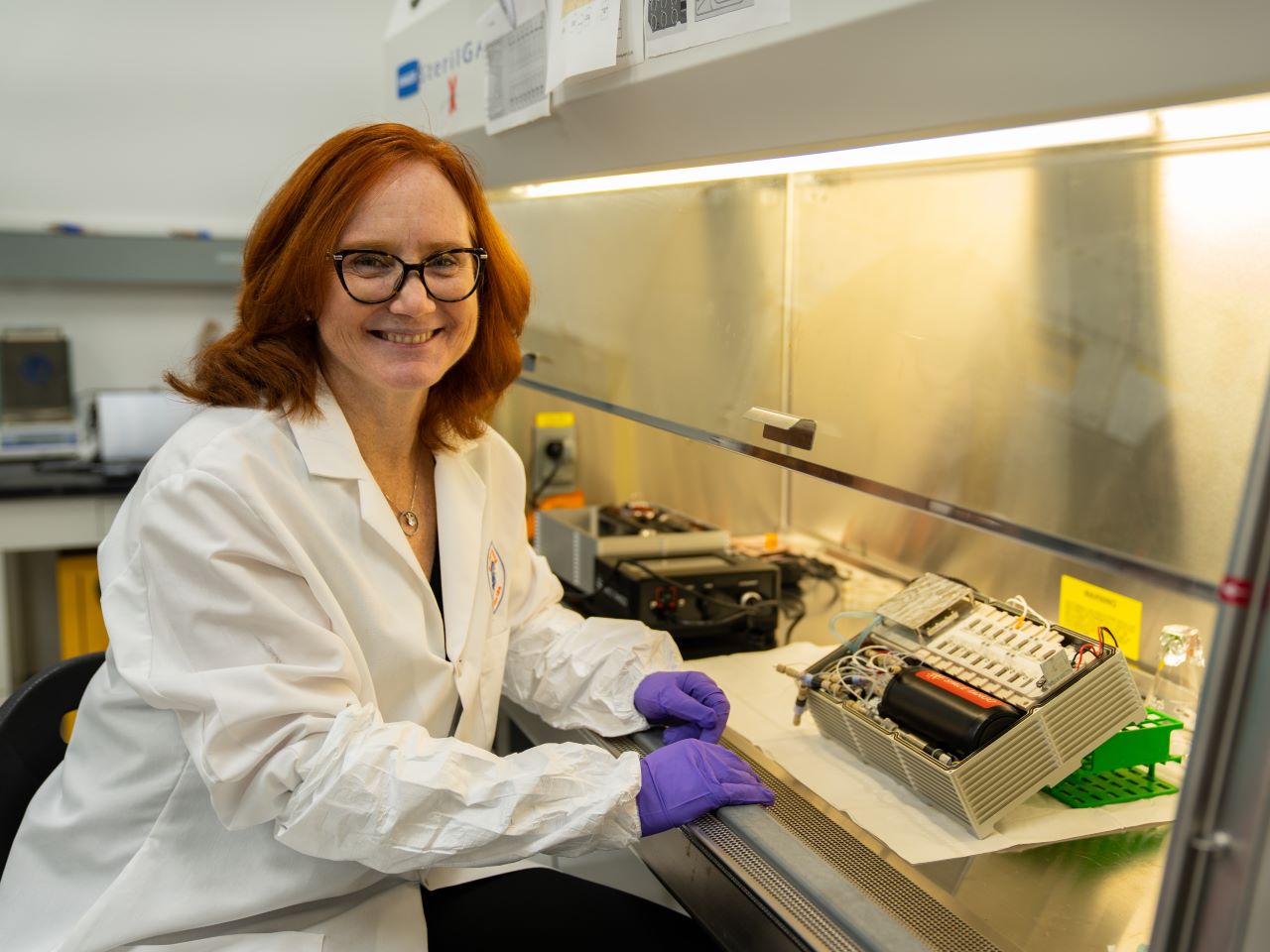
Astronauts traveling to Mars will face many challenges, but one of the most serious is muscle loss during long space missions. A new study led by University of Florida researcher Siobhan Malany, Ph.D., sheds light on how human biology changes in microgravity and could help protect astronaut health while also offering hope for patients with muscle-wasting diseases on Earth. Malany, an associate professor in the College of Pharmacy, a member of UF’s Astraeus Space Institute, and director of the in-space Biomanufacturing Innovation Hub, recently published findings showing how muscle cells adapt in space. Her team studied bioengineered three-dimensional muscle tissues derived from biopsy cells from both younger and older individuals and observed how they responded to electrical stimulation in microgravity. These micro-scale tissues called “tissue chips” were given nutrients and electric pulses autonomously in a miniature laboratory the size of a shoe box called a CubeLab.x. A camera system inside the box recorded the rate of muscle contraction. “This research is about more than just space,” Malany said. “By understanding how muscle tissue deteriorates much faster in microgravity, we can uncover new strategies to address muscle loss that occurs naturally with aging and with age-related diseases here on Earth.” Siobhan Malany studies the effects of microgravity on human muscle biology using an automated tissue chip system. View her profile here The study found that younger muscle tissue showed more pronounced changes in mitochondrial pathways — cellular systems that produce energy — than older tissue did when exposed to microgravity. Researchers also discovered that, on Earth, older muscle tissue responds less to electrical stimulation than younger tissue. But in space, the younger tissue showed a noticeable drop in its ability to contract, suggesting that younger muscle may experience a greater change when exposed to the space environment. These insights may help researchers design new treatments to protect muscles in astronauts during long missions, as well as develop therapies for people experiencing age-related muscle loss on Earth. The project was part of UF’s broader efforts to advance space biology. Through the Astraeus Space Institute, UF brings together experts across disciplines, from medicine and pharmacy to engineering and plant science, to address the unique challenges of space exploration. “UF researchers are helping lay the groundwork for humanity’s next giant leap,” Malany said. “It’s exciting to see our work contribute to both the health of astronauts and the lives of patients back home.” UF’s leadership in space biology is strengthened through collaboration with partners including the Kennedy Space Center Consortium and the Center for Science, Technology and Advanced Research in Space), both initiatives bringing together universities in Florida’s high-tech corridor, government agencies and industry leaders. Malany’s work also builds on long-term collaborations with AdventHealth, using donated tissue samples to model age-related muscle changes in space. Her team also works with SpaceTango, a NASA-certified aerospace company, to design the CubeLab that flew to the International Space Station on multiple SpaceX missions. Looking ahead, Malany and her team are developing new ways to study astronaut-derived cells, including both skeletal and heart muscle, generated from blood samples. These “avatars” could help researchers track changes before, during and after space missions, providing an unprecedented window into how microgravity affects the human body. “Now we can study cells from individual astronauts and see how they respond over time,” Malany said. “This helps us understand the risks of long-term spaceflight and also gives us a platform for testing potential treatments for muscle-wasting conditions on Earth.” By using tissue chips, small, bioengineered devices that mimic the structure and function of human organs, scientists in space can gather data more quickly and accurately than with traditional animal studies, potentially accelerating the discovery of therapies for aging-related muscle loss. Looking to know more about this amazing research or connect with Siobhan Malany - simply click on her icon now to arrange an interview today.



Stepping Away from the Crown: Royals Giving Up Titles and Duties
Just last week, Prince Andrew announced that he would relinquish his title of Duke of York and other honours, citing that the ongoing allegations against him had become a distraction to the work of the royal family. He asserted this step was taken with the King’s agreement, stating he will no longer use the titles conferred upon him—even as he continues to deny any wrongdoing. A Legacy of Abdication and Renunciation Throughout royal history, stepping back from royal life or formally abdicating has taken many forms. The dramatic abdication of King Edward VIII in 1936—who gave up the British throne to marry Wallis Simpson—remains one of the most famous examples. Other monarchs, like Queen Christina of Sweden and Emperor Charles V, also renounced power to pursue personal convictions. Today’s examples are often more nuanced: royals “stepping down” from duties while retaining birthright status. The case of Prince Andrew fits in this evolving pattern of royal redefinition. Why Royals Leave (or Are Pushed Away) Motivations are diverse: personal choice, scandal, pressure, health, or changing views of leadership. Historically, abdications often responded to political crises. Now, with the monarchy under constant media and public scrutiny, stepping back can be seen as damage control or a bid for personal freedom—particularly in cases involving controversy. The Constitutional and Symbolic Ripples When a royal gives up titles or duties, multiple questions emerge: What role remains? (In Andrew’s case, he loses the Duke title but retains his princely status.) How does the monarchy manage public perception, continuity, and precedence? What are the implications for funding, patronages, and official duties? Such departures also force the institution to grapple with legacy, relevance, and the tension between duty and humanity. Monarchy in the Age of Transparency The modern era demands more from monarchy than ever before: accountability, relevance, and adaptability. When royals step aside—voluntarily or under pressure—it reshapes how the public sees royal duty. These shifts reflect broader questions: what role should individuals born into monarchy play? Can institutions evolve while retaining symbolic continuity? Connect with our experts about the history, symbolism, and modern evolution of royal abdications and withdrawals. To see our full database of experts, visit: www.expertfile.com

Nursing researcher receives over $500K in prestigious grants
For the first time in nearly 15 years, a faculty member from Augusta University’s College of Nursing has been awarded a grant from the National Institutes of Health. Blake McGee, PhD, has secured an R03 award of $176,331 from the Eunice Kennedy Shriver National Institute of Child Health and Human Development to study Medicaid’s expanded role in late postpartum maternal health. But he hasn’t stopped there as McGee is also part of the fifth cohort of Betty Irene Moore Fellows, a prestigious program for nurse leaders and innovators that has awarded CON half a million dollars to support his research project and leadership development. McGee, the prelicensure department chair and an associate professor, is collaborating with colleagues from other Georgia universities on both studies, which are occurring simultaneously. “I began my career as an ER nurse and have always wanted to ask bigger questions about the challenges facing patients and how we might best address them as a society,” said McGee, who was recently selected for publication in Blood Advances, the American Society of Hematology’s journal. “As nursing scientists, we are uniquely poised to ask questions about healthcare policy, specifically from the vantage point of the impact that policy choices have on patients and their health outcomes.” This century, the United States has seen rising maternal mortality rates with alarming racial disparities. Over half of these deaths occur in the postpartum period, with 23% occurring more than six weeks after delivery. Medicaid expansion covers pregnant women in households below 138% of the Federal poverty level through postpartum day 60, which has been associated with decreased mortality and reduced racial disparity in maternal death. At the time of grant submission, pregnancy Medicaid eligibility traditionally lapsed 60 days after delivery, leaving postpartum people vulnerable to disruptions in care. McGee’s work aims to identify changes in maternal health care use and health outcomes 60 days to 1 year after delivery that were associated with state Medicaid expansions (2007–19). The team will examine whether the effects of expansion vary by maternal race or ethnicity and will explore whether patient-reported health care access and quality mediate the relationships between expansion and outcomes. “My hope is that after the study we’ll have a better understanding of how health and health care use change for women in this crucial late postpartum period and how they may differ for people of different backgrounds,” said McGee. “Due to the sample design, findings will reliably inform optimal policy for postpartum coverage duration.” He expects this study to provide preliminary data for a future R01-funded study that directly examines the impact of extending the duration of postpartum Medicaid under the American Rescue Plan. As part of the Betty Irene Moore Fellowship, McGee is one of 15 fellows across the nation in a curriculum co-delivered by the UC Davis School of Nursing and Graduate School of Management. A project coordinator from AU’s School of Public Health will also assist with the fellowship project. McGee hopes to involve graduate research assistants or recent alumni as research associates on the team. Specifically, McGee will be studying the Georgia Pathways to Coverage Program, making him one of the only academic researchers in the nation funded to do so. “As a researcher, it is always a privilege to engage in topics that directly impact the current state of health care, and I’m honored to tackle projects that are so relevant to today’s health policy headlines,” he said. Georgia stands out among other states that are exploring an extension of Medicaid to low-income, working-age adults who demonstrate a monthly commitment of 80 hours to an employment-related activity. By studying the effects of this program, McGee predicts the findings will be highly relevant to anticipating the impact of recent Medicaid changes at the federal level and may indicate differences between Pathways participants and those who might qualify but remain uninsured. This focus could provide data that helps the state target enrollment efforts. The state’s own logic model predicts that the program will reduce hospitalizations, and McGee is eager to determine the program’s success. “Our findings should be helpful to the state to better understand those enrolling, what their experience with increased access to care has been and how their health has improved after receiving coverage,” McGee said.



For Trump’s Perceived Enemies, the Process may be the Punishment
This article is republished from The Conversation under a Creative Commons license. Read the original article here. Former FBI Director James Comey pleaded not guilty to two criminal charges in a federal court in Alexandria, Virginia, on Oct. 8, 2025. The charges allege that Comey lied to Congress in September 2020 when he stood by earlier testimony that he did not authorize a leak of an FBI investigation involving Hillary Clinton. Numerous legal commentators on both the left and right have argued that Comey’s indictment is little more than the Trump administration seeking vengeance on one of the president’s perceived enemies. They allege that the president has it out for Comey, who investigated Russian interference in the 2016 presidential election and was fired by Trump in 2017. The president’s own words support the idea that the Trump administration is targeting Comey. In a social media post on Sept. 20, 2025, Trump directed Attorney General Pam Bondi to move forward with prosecutions against Comey, Democratic U.S. Sen. Adam Schiff and New York Attorney General Letitia James: “They’re all guilty as hell, but nothing is going to be done. …JUSTICE MUST BE SERVED, NOW!!!” If the case against Comey is exceedingly weak – and little more than a political prosecution – then, in my view as a scholar of the U.S. legal system, it should result in the dismissal of charges by the judge or a not guilty verdict by the jury. But even when an individual is not convicted, the process of defending against charges can itself be a form of punishment, as renowned legal scholar Malcolm Feeley pointed out almost 50 years ago. Here’s how the criminal justice process punishes even innocent people. The criminal justice process The criminal justice process is complex. After a grand jury returns an indictment at the request of a prosecutor, the accused appears in court for their arraignment. They are informed of the charges against them and typically enter a plea. During what’s called “discovery,” the prosecution and defense investigate the evidence the other side plans to rely on. There are also pretrial motions in which the parties ask judges to dismiss charges and accept or exclude evidence. The defense and prosecution may also meet to discuss a plea bargain, wherein the accused may plead guilty in exchange for a lesser sentence or reduced charges. If there is no plea bargain, then the case moves to trial, which is itself a complicated process. If a defendant is found guilty, they can mount an appeal to higher courts in an attempt to have their conviction overturned. To help navigate this process, criminal defendants typically hire a lawyer. And good lawyers don’t come cheap. Money and time Indigent defendants, who do not have the financial resources to pay their own legal fees, can rely on public defenders paid for by the government. But individuals who can afford to pay for their own lawyer face a substantial financial burden for attorney services and court fees. An experienced criminal defense lawyer can charge more than US$1,000 per hour, with fees quickly adding up. This means that mounting a legal defense can easily cost tens of thousands of dollars. On top of this, it takes a great deal of time to prepare for a criminal case. While lawyers and their staff do much of the legwork for trial preparation, a client works with their attorneys to help formulate a defense. As a result, criminal defendants lose one of the most precious commodities in the world: their time. And this time can come at a tangible cost in the form of lost wages, which harms their day-to-day lives. Put simply, every hour spent preparing for trial is an hour defendants could spend working or enjoying their lives. Stress and embarrassment It’s not pleasant being charged with a crime. The criminal process, which typically lasts months, takes a toll on one’s mental health. This is largely driven by the uncertainty surrounding the outcome of a criminal trial and the possibility of losing one’s freedom if convicted. In addition, there is a social stigma that comes with being accused of a crime. This can result in reputational damage, anxiety and embarrassment. The Trump administration appears to recognize this reality. Several media outlets have reported that FBI leadership had planned a public perp walk for Comey. According to a CBS News report, this was to have included “‘large, beefy’ agents … ‘in full kit,’ including Kevlar vests and exterior wear emblazoned with the FBI logo.” Apparently, the plan was aborted after several FBI supervisors refused to cooperate, viewing it as inappropriate. One agent was disciplined for insubordination after refusing to go along with the plan to embarrass Comey in this way. Not all criminal defendants suffer the same The extent to which criminal defendants experience the criminal justice process as a form of punishment varies from person to person. For high-status people like Comey, lost wages and attorneys’ and court fees may not be that big of a deal. But these costs may be incredibly significant for other people who have been, or are likely to be, targeted by the Trump administration. The high costs of lawyers’ fees are well known to the president. For instance, his political action committee spent millions of dollars on attorneys’ fees in an unsuccessful effort to defend Trump from criminal charges in New York. In addition, people no doubt experience the psychological stress and stigma of a possible criminal conviction differently. But regardless of one’s wealth, the lost time spent preparing a criminal defense is something that cannot be replaced. The recognition that the criminal process is itself a form of punishment is one of the reasons that the Department of Justice has maintained independence from the president. By violating the tradition of staying out of politics, the Justice Department in the Trump administration has opened the door for the president to seek retribution on his perceived political enemies. The mere act of putting them through the criminal process ensures that they suffer, regardless of their guilt or innocence.



Government Shutdown: With Senate in the spotlight, expert Gerald Gamm offers insight
The Senate returned to Capitol Hill on the first day of a government shutdown to vote on two funding bills aimed at getting the government up and running amid an ongoing blame game among congressional leaders. University of Rochester political scientist Gerald Gamm is watching the deliberations and political maneuverings closely and is in a unique position to lend insight on the negotiations and gamesmanship. Gamm is a co-author of Steering the Senate (Cambridge University Press, June 2025). The book has received high praise from a multitude of sources, and has been called "essential reading for all who care — or worry — about the past and future of institutional leadership and capacity on Capitol Hill," "the best book we have about the organizational development of the Senate," and "a masterpiece . . . that unearths new information on the emergence of leadership institutions and the role of parties and showing their relevance for the Senate of today." Gamm is available for interviews and can be contacted by clicking on his profile.



ChristianaCare’s Virtual Primary Care practice at the Center for Virtual Health has earned full accreditation from the National Committee for Quality Assurance (NCQA), placing it among the first health systems in the nation to achieve this distinction. ChristianaCare was one of only 18 organizations invited to participate in NCQA’s inaugural pilot program in 2023 to develop the Virtual Care Accreditation. The recognition affirms ChristianaCare’s leadership role in shaping the future of health care and its commitment to delivering accessible, equitable and patient-centered care through innovative digital platforms. “This accreditation is a powerful validation of our vision to reimagine health care,” said Sarah Schenck, M.D., FACP, executive director of ChristianaCare’s Center for Virtual Health. “We’ve built a model that meets people where they are—at home, at work or on the go—with care that is personal, proactive and powered by love and excellence.” What Accreditation Means for Patients NCQA accreditation underscores that ChristianaCare’s Center for Virtual Health meets rigorous standards for: Clinical quality and safety: clear care protocols, escalation pathways and outcome monitoring. Access and equity: technology, language and disability-inclusive design that extends care to more people. Data privacy and security: strong safeguards to protect personal health information. ChristianaCare’s participation in NCQA’s pilot helped shape the benchmarks now used nationwide. The center delivers comprehensive virtual primary care through a multidisciplinary team that includes physicians, nurses, nurse practitioners, behavioral health specialists, pharmacists and patient digital ambassadors. Virtual Care by the Numbers In 2024, ChristianaCare’s Center for Virtual Health provided more than 7,500 patient visits, reflecting both rapid growth and strong demand for its virtual-first model. Services are offered at no copay to ChristianaCare caregivers and their dependents, while availability continues to expand across Delaware and the region “At ChristianaCare, we believe virtual care isn’t just a convenience, it’s a catalyst for better health outcomes,” said Brad Sandella, D.O., MBA, medical director, Ambulatory Care for the Center for Virtual Health. “This accreditation affirms our commitment to innovation and excellence. We’re proud to be among the pioneers defining what high-quality virtual care looks like in America.” Beginning in 2026, ChristianaCare will expand its Virtual Primary Care practice, giving a broader consumer audience convenient access to primary care. At that time, the service will be covered by most insurance carriers and continue to feature dedicated providers in areas such as behavioral health and neurology. ChristianaCare will also continue working with NCQA and other partners to advance best practices nationwide.


Ashley Panichelli, M.D., has been appointed vice chair of the Department of Family and Community Medicine at ChristianaCare. In this role, Panichelli will support the department’s clinical and academic missions. She will help guide quality and safety initiatives and promote a culture of accountability, learning and psychological safety. She will advance education and professional development across faculty and residency programs, assist with strategic planning, mentorship and peer review, and strengthen collaboration across department leadership, faculty and staff. A Delaware native, Panichelli earned her medical degree from Sidney Kimmel Medical College at Thomas Jefferson University and completed her residency and chief residency in Family Medicine at ChristianaCare in 2018. She joined the residency program’s core faculty that same year and has since held several leadership roles, including clinical lead and associate program director. In 2022, she was named clinical director of Academic and Complex Primary Care, a role she continues to support. Panichelli is a clinical assistant professor at Sidney Kimmel Medical College and has been recognized with several honors, including the Delaware Academy of Family Physicians’ Teacher of the Year award and the Department’s Rising Star award. She completed ChristianaCare’s ACT course, the LEED-R elective, and the Harvard Medical Director Leadership Institute. She was an Emerging Leaders Institute scholar with the American Academy of Family Physicians Foundation. She reports to Erin Kavanaugh, M.D., FAAFP, chair of the Department of Family and Community Medicine.

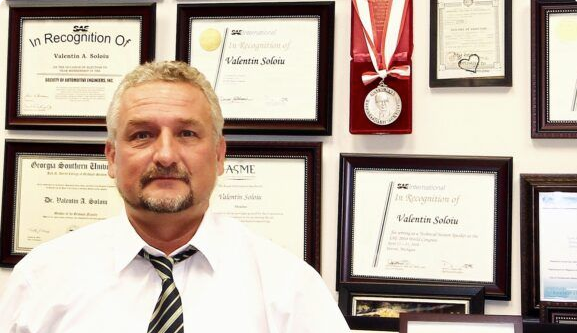
Georgia Southern University’s Allen E. Paulson College of Engineering and Computing and College of Education are teaming up to bring the latest innovative research on renewable energy to STEM educators and their classrooms across Georgia. That’s all thanks to a $600,000 grant from the National Science Foundation to establish the Engaging Educators in Renewable Energy (ENERGY) program. The funds will support a three-year-long initiative that will bring Valentin Soloiu, Ph.D.’s energy research into high school and technical college classrooms. Soloiu and engineering graduate students from Georgia Southern will conduct research related to renewable energy, reducing greenhouse gas emissions, and mitigating climate change, covering topics like renewable and alternative energy (solar and wind), climate change, enhanced energy technologies and the development of sensors and controls for energy applications and smart grids. Soloiu, the Allen E. Paulson Distinguished Chair of Renewable Energy, will be joined by mechanical engineering professor Mosfequr Rahman, Ph.D. and Elise Cain, Ph.D., director of the Educational Leadership Program in the College of Education, in developing the program. “The core requirement is to conduct state-of-the-art, transformative research in science and engineering,” explained Soloiu. “After that is complete, we bring high school and technical college teachers in to translate this research into classroom-ready modules.” Teachers will be selected from a large pool of statewide applicants to work alongside faculty and graduate students from the College of Engineering and Computing. They’ll also receive funds to incorporate that research into their curriculum. Soloiu will oversee the program as the principal investigator, with Cain serving as the education lead, bringing a multidisciplinary approach to the program. “I think interdisciplinary collaborations are vital in academic work,” noted Cain. “Faculty from the Allen E. Paulson College of Engineering and Computing contribute their technical knowledge and skills related to renewable energy, while I bring my College of Education perspectives on educational contexts and pedagogy. Working together allows us to create a robust program with immediate and lasting impacts.” Educators will visit local companies and interact with leaders in renewable energy, such as Gulfstream Aerospace in Savannah, Georgia, and Rolls-Royce Power Systems in Aiken, South Carolina. These experiences are designed to help teachers share career opportunities with students they might not otherwise encounter. “This program reflects the essence of our institutional mission,” said Cain. “It’s about discovery, teaching, and community engagement—all grounded in excellence and innovation.” Soloiu echoed those sentiments. “Many teachers and students in rural areas don’t even know what we do here at Georgia Southern,” explained Soloiu. “By engaging with educators directly, we’re creating awareness, inspiration, and pipelines to higher education and high-tech careers. This is reflective of the University’s dedication to our communities as we move towards R1 status.” Looking to know more about this important research happening at Georgia Southern - Valentin Soloiu is available to speak with media. Simply click on his icon now to arrange an interview today.


Spitting image: What the blunder by Philadelphia Eagles' Carter can teach us about teams
Social media caught fire when Philadelphia Eagles' defensive tackle Jalen Carter got tossed for spitting on Dallas Cowboys' quarterback Dak Prescott before the first snap of this year's NFL season opener. While the impact on the game was obvious, what unfolded on the field of play has lessons for the workplace and the boardroom. The University of Delaware's Kyle Emich can talk about the parallels between the two worlds when individuals let their teams down. Emich, a professor of management in UD's Lerner College of Business and Economics, said emotional events occur all the time in the workplace, especially in board rooms, where the atmosphere is often competitive. "Emotion regulation is a key part of harnessing motivation appropriately in a competitive context," Emich said. • Early on, the Cowboys were able to regulate their emotions to tap into the incident when they roared out to several seamless offensive drives. • Emich says the Eagles' young, inexperienced and not-yet-gelled defensive unit was unable to regulate their emotions and preserve their confidence (collective efficacy) after the incident. They were unable to stop Dallas in the first half. • Carter's act could also have served as an emotion regulation cue for both teams. The Eagles defense was unable to regulate and maintain stability, leading to a number of costly penalties. But the Cowboys seemed to have had the same issue when they retaliated with personal fouls of their own. • In the end, the Eagles were able to come together under the leadership of their coach, Nick Sirianni, and quarterback, Jalen Hurts, to secure a 24-20 victory. To connect with Emich for an interview, visit his profile page and click on the "contact" button.
